In 1986, the Supreme Court barred prosecutors from striking jurors solely because of race.Bloomberg Creative/Getty Images
On April 30, 2026, Texas executed James Broadnax, a Black man who was sentenced to death for the robbery and murder of two men in 2008.
Before the jury was seated, the prosecutor moved to dismiss each of the seven Black people from the jury pool. Citing court documents, CNN noted that he “(utilized) a spreadsheet during jury selection that bolded only the names of every Black juror” and none of the white or Latino people. After defense objections, the judge reseated one Black juror, citing the otherwise all-white jury.
The trial proceeded with 11 white jurors and one Black juror.
James Broadnax was executed in Texas on April 30, 2026.Associated Press/Texas Department of Criminal Justice
A jury with that racial composition is likely to deliberate in a different way than one that is more racially diverse. According to Duke University law professor James Coleman, “Juries with two or more members of color deliberate longer, discuss a wider range of evidence, and collectively are more accurate in their statements about cases, regardless of the race of the defendant.”
A 2012 Duke University study of two Florida counties found that juries “formed from all-white jury pools convicted Black defendants 16% more often than white defendants, a gap that was nearly eliminated when at least one member of the jury pool was Black.”
Broadnax was executed on the 40th anniversary of Batson v. Kentucky, in which the Supreme Court ruled that prosecutors cannot exclude jurors solely on account of their race.
But Broadnax’s case is not an outlier. Similar efforts to “whiten” juries in capital cases regularly occur in states that authorize the death penalty. A 2025 analysis of Alabama’s death row by the Equal Justice Initiative found that across 122 capital cases – involving Black and white defendants in roughly equal numbers – more than one-third were decided by juries with no Black jurors or, like Broadnax’s case, only one.
As a death penalty scholar who has tracked the role of race in the death penalty system, I believed Batson was a step forward in the effort to address a long history of excluding Black people from jury service. But 40 years have shown that Batson merely scratched the surface of the problem.
Before the Civil War, one way this was done was by limiting eligibility for such service to those who could vote. Some states went further, saying only whites could serve on juries. A Tennessee law dating from 1858 is a good example: “Every white male citizen who is a freeholder, or householder, and twenty-one years of age, is legally qualified to act as a grand or petit juror.”
It was only after the Civil War and the passage of the 13th, 14th and 15th amendments to the Constitution that Black people were entitled to serve on juries nationwide – at least in theory.
Some states resisted. For example, West Virginia law specified that “all white male persons who are twenty-one years of age and who are citizens of this State shall be liable to serve as jurors.”
In 1880, 12 years after the ratification of the 14th Amendment – which guarantees equal protection of the law – the Supreme Court struck down that West Virginia law. It did so in the case of a former slave who was convicted in a capital case by an all-white jury and given a death sentence – a preview, I believe, of the kind of thing that happened to Broadnax.
The court held that the West Virginia law that “denies to colored citizens the right and privilege of participating in the administration of the law as jurors because of their color … is, practically, a brand upon them, and a discrimination against them which is forbidden by the [14th] amendment.”
Despite the court’s unequivocal ruling, the door to jury service remained closed to Black people. As legal scholar Sarah Claxton argued in 2022, “States across the country enacted vague and subjective standards for juror eligibility – requiring good moral character, honest and intelligent men, persons having educational qualifications – whose discriminatory application excluded Black citizens from juries.”
In 1965, the Supreme Court refused to remedy the exclusion of Black people from juries that its 1880 decision was supposed to have ended. It held, in Swain v. Alabama, that “a defendant in a criminal case is not constitutionally entitled to a proportionate number of his race on the trial jury or the jury panel.”
Two decades passed before the court again took up the glaring problem of racial discrimination by prosecutors seeking to keep Black people off juries.
In Batson v. Kentucky, the court considered a case in which the prosecuting attorney “used his peremptory challenges to strike all four black persons” in the jury pool and managed to seat an all-white jury. And on April 30, 1986, it reaffirmed that “a State denies a Black defendant equal protection when it puts him on trial before a jury from which members of his race have been purposefully excluded.”
The court then created a process for challenging jury selection. First, the defendant must point to evidence – based on how the prosecutor used their strikes – that suggests racial discrimination. If they can, the prosecutor must then come forward with “a neutral explanation for challenging Black jurors.” Finally, the trial judge weighs all the evidence to decide whether the prosecutor’s stated reason is genuine or a cover for bias. In practice, this means a Batson challenge will fail as long as the prosecutor can offer any nonracial reason for excluding Black jurors, however thin.
When Batson v. Kentucky was decided, Justice Thurgood Marshall warned that the decision would not end racial discrimination in jury selection.Bettmann/Getty Images
When Batson v. Kentucky was decided, Justice Thurgood Marshall, drawing on his years of experience as an NAACP Legal Defense Fund lawyer, warned that the decision would not end racial discrimination in jury selection. “Merely allowing defendants the opportunity to challenge the racially discriminatory use of peremptory challenges in individual cases will not end the illegitimate use of the peremptory challenge,” he explained.
He predicted that “any prosecutor can easily assert facially neutral reasons for striking a juror, and trial courts are ill-equipped to second-guess those reasons.”
In the Broadnax case, prosecutors claimed that their efforts to remove Black jurors had nothing to do with their race. They suggested that they were dismissed because they could not be impartial or they had reservations about the death penalty, disqualifying them from service on a jury in a capital murder trial.
The Batson test has not been much of an obstacle for prosecutors in other capital cases either. In fact, in 2025 the Death Penalty Information Center reported that in the years after Batson, “prosecutors soon learned how to successfully defend race-based challenges, and courts generally accepted even the flimsiest excuses.” That’s why defendants rarely win Batson challenges “despite powerful evidence of racial bias.”
In the 40 years since Batson was decided, the Death Penalty Information Center has identified only 68 cases across 16 states in which a capital defendant succeeded in getting a conviction or death sentence reversed because of racial discrimination in jury selection.
The picture is similar in California, where more comprehensive data exists. According to a 2020 Berkeley Law report, the California Supreme Court reviewed 142 cases involving Batson claims over 30 years and found a violation in only three. At the time the report was published, it had been more than three decades since that court found a Batson violation involving the strike of a Black prospective juror.
Looking at what has happened since Batson v. Kentucky, Elisabeth Semel, a UC Berkeley law professor and co-director of the school’s Death Penalty Clinic, said in an interview with the Death Penalty Information Center that she would give Batson a grade of “F.” As she explained, “It certainly has failed to achieve its promise.”
Austin Sarat does not work for, consult, own shares in or receive funding from any company or organization that would benefit from this article, and has disclosed no relevant affiliations beyond their academic appointment.
US President Donald Trump says the nations could be close to a peace deal. The big issues at stake include the fate of Iran’s nuclear program and reopening the Strait of Hormuz.
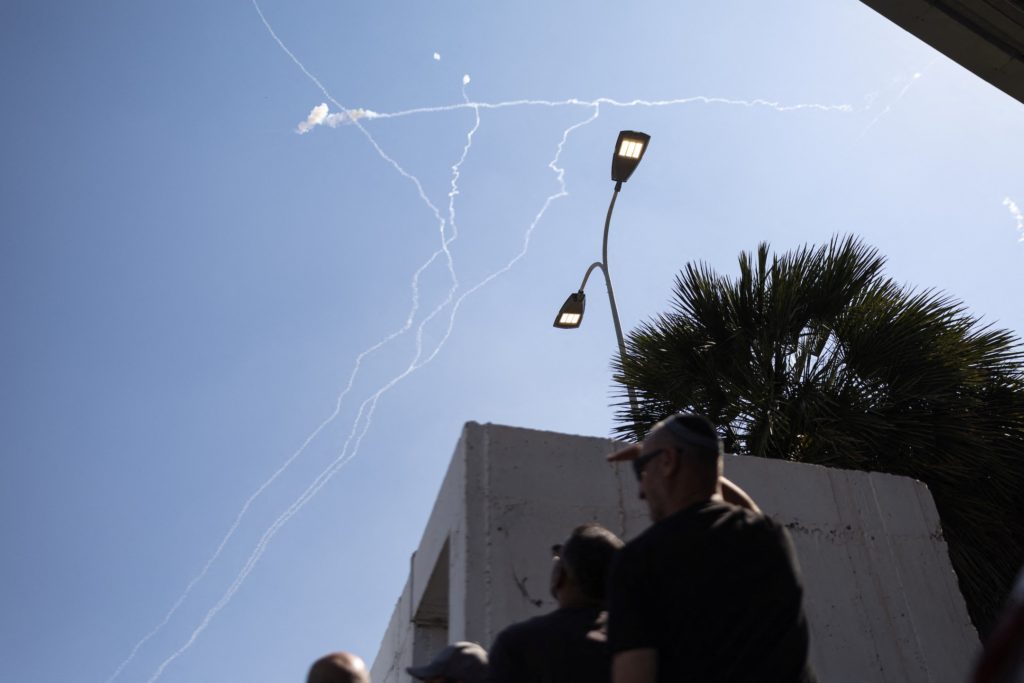
Israel and Iran traded long-range missile strikes for the first time since the ceasefire went into effect two months ago. Both countries appear to have agreed to stop their attacks, but not before sparking fears of a return to full combat in the region. Now, Trump and regional mediators are scrambling to salvage a deal to end the war with Iran. Ali Rogin reports.
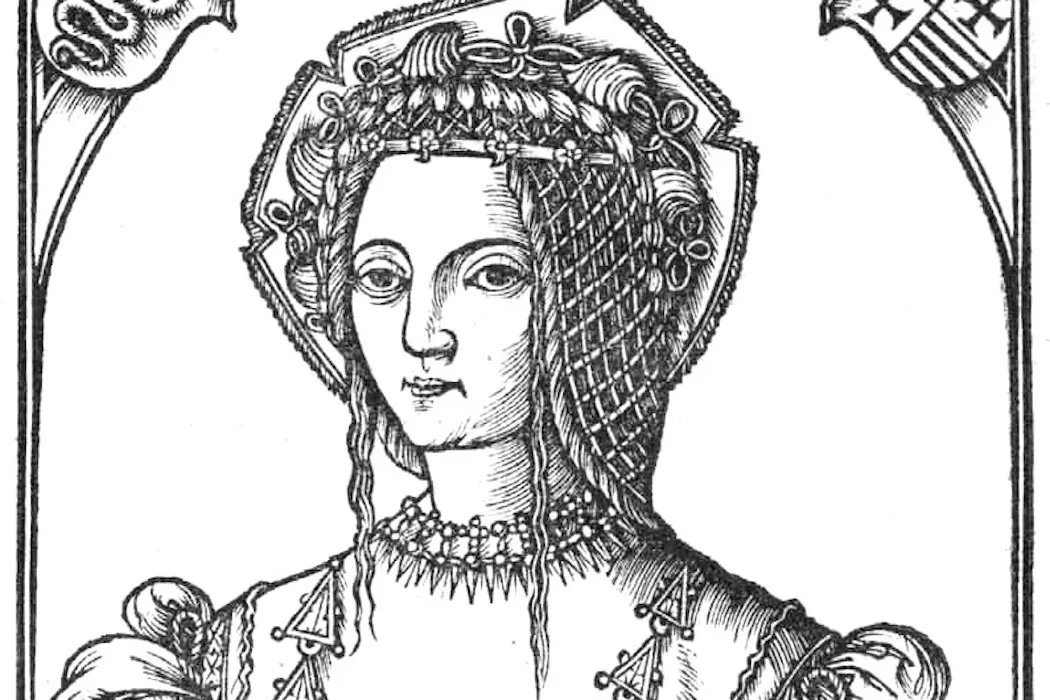
Bona Sforza, woodcut in the De vetustatibus Polonorum liber I. Cracoviae, 1521.Wikimedia Commons, CC BY
Bona Sforza was one of the most remarkable women of Renaissance Europe. Born into one of Italy’s leading ruling families and connected to figures such as Lucrezia Borgia through the tangled politics of Italian dynasties, she became queen consort of Poland and grand duchess of Lithuania.
More than a royal bride, she brought to Poland the administrative, financial and cultural ideas of Renaissance Italy. She understood how wealth, land and government could be used to strengthen a dynasty.
Although never a reigning monarch, Bona became one of the most politically influential women ever to sit on the Polish throne. Admirers praised her intelligence and determination. Critics condemned her as ambitious, overbearing and dangerously powerful. That tension lies at the heart of her story.
The debate over Bona’s legacy raises a question that still resonates today: why are women who wield power effectively so often judged differently from men who do the same?
Training for greatness
Bona Sforza, born in 1494, was the daughter of the Duke of Milan. She arrived in Poland in 1518 as a royal bride of Sigismund I. Contemporary observers praised her intelligence, learning and virtue, qualities they described as “rare among maidens”.
Bona grew up in Bari, Italy. Her mother, Duchess Isabella of Aragon, ruled the duchy of Bari in her own right. She exercised authority with confidence. Isabella ensured that Bona received a humanist education in languages, history, law, moral philosophy and public speaking, preparing her not simply to marry well, but to govern.
Bona’s tutors shaped her view of the world and of herself. They instilled in her the belief that she was “born to rule”, preparing her to see leadership not as a privilege, but as a responsibility.
Government required judgement, alliances and financial skill.
Bona learned to treat land as a working system of connected parts: fields, forests, tenants, mills, markets, workers and, of course, taxes.
Bona used this knowledge to strengthen the Jagiellon dynasty, the ruling family of Poland and Lithuania. She treated royal lands as productive assets, recovering estates that had been lost, leased or mortgaged by earlier rulers.
By 1555, alongside the lands assigned to her as queen, she controlled the revenues of 15 royal towns and 191 villages.
The result was greater dynastic wealth and greater independence and leverage in the royal house dealings with powerful nobles.
Land reforms
Bona’s reforms focused on making royal lands more productive and their revenues more reliable. She recovered lost Crown property, improved record-keeping, and insisted that surveys and legal decisions be documented and enforced.
She also promoted economic development through new settlements, markets, transport links and local infrastructure. These measures increased trade and created new income for the royal family.
Accused of poisoning rivals
Yet the more successful Bona became, the more criticism she attracted. Male nobles did not simply say they opposed higher taxes or the consolidation of the royal domain. They often framed her authority as unnatural.
One of the powerful courtiers, Krzysztof Szydłowiecki, put it bluntly in 1527: “nothing happens without her will”.
Queens were expected to be wives, not political actors. Yet powerful men also accumulated land, built networks and influenced government and church appointments without attracting the same criticism.
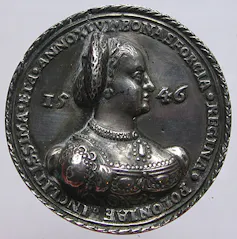
Medal of Bona Sforza by Giovanii Maria Mosca.Wikimedia
After her death in 1557, Bona’s reputation darkened. She was accused of poisoning rivals, practising witchcraft, manipulating politics and corrupting government. Some accusations grew from real political conflicts, but others reflected discomfort with a woman who exercised power so effectively.
Her recovery of royal lands threatened powerful nobles. Critics recast her competence as greed, her authority as overreach, and her political skill as dangerous ambition.
Women in leadership face familiar criticism
Like Bona, women leaders today are still often judged by standards that men rarely face.
A United Nations report on corporate leadership found that across 20 advanced economies, women held only 6% of chief executive officer roles, 7% of board chair roles, and 15% of chief financial officer roles.
Women’s access to capital is another parallel. A report from the Organisation for Economic Co-operation and Development (OECD) on women entrepreneurs found that, in 2024, women were about half as likely as men to report borrowing from a bank to start, run or expand a business. A US report on venture capital funding for tech companies shows progress, with female-founded companies raising a record amount. But the debate continues because access to investment remains uneven.
Modern attitudes to women also matter. A Stanford University institute describes the “likeability penalty”: women leaders who appear competent and assertive can be judged as less likeable, while men often receive praise for similar behaviour.
Five centuries later, the pattern remains familiar. Bona’s wealth, discipline and confidence strengthened the monarchy. They also made her a target. They made her easier to attack.
The question her life leaves us with is simple: when women manage power well, do societies recognise leadership, or do they still call it ambition?
Darius von Guttner Sporzynski receives funding from National Science Centre for the project "Queens consort of Poland in the 15th and 16th centuries as wives and mothers" (2021/43/B/HS3/01490).
The Mexican military captured Audias Flores Silva, alias ‘El Jardinero’, on Monday – one of the top leaders of the Jalisco New Generation Cartel (CJNG).
Flores Silva was considered to be one of the key candidates to succeed alias ‘El Mencho’, the former leader of the CJNG who was killed by authorities in February.
The drug lord’s arrest comes amid a wider crackdown by Mexican security forces against organized crime, driven partly by pressure from Washington.
According to authorities, Monday’s operation did not involve any shooting, injuries, or collateral damage. The military deployment included 120 direct action troops, four close air support helicopters, four fixed-wing aircraft, and two troop transport helicopters, with 400 naval personnel providing support.
The CJNG leader’s more than 60-strong escort group dispersed in different directions upon the arrival of security forces, attempting a tactical distraction maneuver, but the target was located through air and ground tracking.
Official footage of the operation shared by Omar García Harfuch, Secretary of Security and Citizen Protection of Mexico, shows the moment of the capture, with Flores Silva extracted from a roadside drainage conduit, where he was hiding. The arrest happened near El Mirador, a rural community in the western state of Nayarit.
Hours after the news became public, several stores and vehicles were set on fire across Nayarit. While the unrest fell short of the level of retaliation following the killing of ‘El Mencho’ in February 2026, the Government of Nayarit urged citizens to stay in their homes as a preventative measure.
A major blow to CJNG
The arrest was praised by the U.S. Ambassador to Mexico, Ronald Johnson, who congratulated Mexico’s Security Cabinet and Secretary of the Navy.
In 2021, the U.S. Drug Enforcement Agency offered a US$5 million reward for information leading to Audias Flores Silva’s arrest or conviction. Flores Silva was defined as “closely aligned” with former CJNG leader ‘El Mencho’, whose real name is Nemesio Oseguera Cervantes.
In June 2025, the U.S. Department of the Treasury’s Office of Foreign Assets Control (OFAC) sanctioned Flores Silva, identifying him as a CJNG regional commander in charge of significant portions of territory in the states of Zacatecas, Guerrero, Nayarit, Jalisco, and Michoacán.
According to U.S. authorities, Flores Silva was in control of clandestine laboratories producing methamphetamine and other illicit drugs in central Jalisco and southern Zacatecas. In addition, Silva managed the logistics of cocaine trafficking operations from Central America through Mexico to the United States, including the supervision of several clandestine airstrips.
‘El Jardinero’ was also believed to have coordinated a deadly 2015 attack against Mexican police forces in Jalisco that left 15 agents dead.
Flores Silva’s arrest is a hard hit to CJNG, as security analysts considered him a potential successor to the group’s command after the death of ‘El Mencho’ last February.
“Flores Silva was the closest thing the CJNG had to a chief operating officer, the man who once ran Mencho’s personal security, managed the Pacific corridor’s labs and airstrips, oversaw a timeshare fraud network and U.S. money-laundering pipeline, and brokered the alliance with Los Chapitos after the Sinaloa civil war,” Chris Dalby, director of World of Crime and senior analyst at Dyami Security Intelligence, told Latin America Reports.
Authorities dealt a second blow to CJNG yesterday when the Special Forces of the Mexican Army and the National Guard detained César Alejandro N, alias “El Güero Conta”. He was identified as the main financial operator for ‘El Jardinero’ and accused of laundering money through companies and frontmen.
“Losing Silva alongside his financier on the same day hits the CJNG operationally and financially simultaneously. It doesn’t spell an end to the CJNG, however, and may actually help Juan Carlos Gonzalez Valencia secure leadership by removing a rival,” said Dalby.
Featured image description: Wanted poster for Audias Flores Silva, alias ‘El Jardinero’.
Featured image credit: Omar García Harfuch via Facebook.
AGU Advances is excited to announce the journal’s inaugural Early Career Editorial Board! The editors of AGU Advances have selected three early career researchers to join the Early Career Editorial Fellow program:
Huilin Huang
University of Virginia
Yihe Huang
University of Michigan
Danielle Monteverde Potocek
Spark Climate Solutions
They will serve as Associate Editors from January 2026 to December 2027, under the leadership of the mentoring editors: David Schimel (Jet Propulsion Laboratory), Thorsten Becker (The University of Texas at Austin, Jackson School of Geoscience), and Eric Davidson (University of Maryland Center for Environmental Science), respectively. AGU Advances is excited to join AGU journals GeoHealth and JGR: Biogeosciences (Xenopoulos, M. A., and T. H. Nguyen, 2024) in launching an Early Career Editorial Fellow program and grateful to our exceptional Early Career Fellows for volunteering their time in service of scientific publishing. This mentorship program, designed to offer a hands-on approach for researchers interested in editorial roles, will support the next generation of researchers and journal editors and lead to stronger futures for our journals and scientific community.
The Early Career Fellows will work one-on-one with a current AGU Advances Editor.
The Early Career Fellows will work one-on-one with a current AGU Advances Editor to learn about the steps of the editorial process, the ethics of reviewing, and what goes into making a decision on a manuscript. They will also learn about the more challenging elements of the editorial process, such as securing reviewers, addressing conflicting reviews, addressing author and/or reviewer concerns.
As the scientific world, and the world at large, change and shift, so too does the world of academic publishing and the needs of future researchers. By working with these Early Career Fellows, we will gain invaluable insight on how to keep our publications at the forefront for the Earth and space sciences.
Below, we asked the Early Career Fellows about their research interests and what they are excited about as they step into this new role (responses edited for length and clarity):
What is your current role and area of research?
Danie: “My areas of research include: biogeochemistry, geobiology, climate science, and global environmental change. “
Huilin: “My area of research is land-atmosphere interaction especially biosphere-atmosphere interaction and climate modeling.”
Yihe: “My group studies the physical mechanisms of earthquakes and faulting processes using both observational methods (e.g., seismic data analysis) and numerical tools (e.g., earthquake rupture simulation). We’re particularly interested in how fluid, fault zone structure, and fault geometry can affect the nucleation, propagation and arrest of earthquakes and how earthquakes contribute to the strain budget and structural evolution of fault zones and plate boundaries. We also have a broad interest in developing physical tools for seismic hazard mitigation and bridging earthquake science and engineering applications.”
Do you have prior experience as a journal editor?
Danie: “This is my first experience in an editorial role.”
Yihe: “Yes, I’ve been an Associate Editor for JGR: Solid Earth since 2020, and I’ve been an editor for Earth, Planets and Space since last year.”
What interested you in joining the AGU Advances editorial board?
Danie: “I was eager to learn more about the publishing process from the editorial perspective, engage with fellow editors, and contribute to supporting the scientific community. I was also particularly drawn to the structure of the Early Career Board, which offers the opportunity to be mentored by a senior editor and develop editorial expertise before handling manuscripts independently. “
Huilin: “I am drawn to AGU Advances because it prioritizes high-impact studies that fundamentally shift our understanding.”
Yihe: “I’m interested in getting a broader perspective about how an editorial board works, especially for a cross-disciplinary high-impact journal like AGU Advances.”
What would you like to see next from AGU Advances or the AGU journals as a whole?
Danie: “AGU Advances already has a strong focus and track record of publishing research with global relevance and impact. I am excited to support this mission and would also like to see continued expansion of the author base to include more diverse geographies (particularly Asia and Global South) as well as a broader range of career stages.
I would also welcome AGU journals to continue their outreach and engagement with the community that balances traditional hypothesis-driven research with action-oriented perspectives addressing urgent scientific and societal challenges especially considering the rapidly shifting landscape of scientific research.”
Huilin: “I am particularly interested in seeing the conversation toward the use of new technolog[ies] (like AI/ML or new satellite, new models) to advanc[ing] process-level understanding.”
Yihe: “I would like to see editors’ perspectives on how AGU Advances distinguishes itself from other high-impact journals. I would also like to learn how we can advertise and communicate the advantages of publishing in AGU Advances through different avenues.”
We are so appreciative of our volunteer Editors, David Schimel, Thorsten Becker, and Eric Davidson, who will be mentoring our new Early Career Fellows. Here, we asked them what they are looking forward to most about the program:
What outcomes for AGU Advances do you hope to see from the Early Career Board?
Dave: “ECRs provide a fresh view and are often much closer to the methods and science in papers we receive. An ECR and a Board editor have a great combination, experience, perspective and familiarity up close with the work and the community.”
Eric: “The associate editors become interested in being full editors and are well prepared. At a minimum, they have an experience that makes them better authors and reviewers because of the perspective they’ve gained as associate editors.
Why did you decide to become a mentoring editor?
Editing scientific papers can be a true joy of learning and discovery.
Thorsten Becker
Thorsten: “We value a diversity of perspectives and background when assessing contributions during initial and formal review, and it will be terrific to benefit from Yihe’s expertise. Editing scientific papers can be a true joy of learning and discovery, and we think this position will be a great pathway to take on a larger role in this community process while having a somewhat reduced workload and being able to participate in an exchange about best practices and a mentoring system that can hopefully facilitate sharing best practices and insights gained from prolonged work in an editorial role.”
Dave: “Oh, man, when I started as a peer reviewer and then a guest editor, followed by being a member of a board, each step was sink or swim! I am happy to share a few lessons learned but also expect to learn a lot from my ECR’s view from the cutting edge. I think we’ll have fun learning from each other.”
What advice would you give to early career researchers interested in becoming journal editors?
Seeing publishing from the other side is really important for maturing scientists!
David Schimel
Dave: “Being an editor is an amazing way to broader your knowledge and network, but being an editor is serious work, is a paper going to advance science, or, with appropriate guidance could it advance science? Does it build on the literature or ignore relevant work? Accepting/rejecting papers has huge career impact on authors but we have to keep in mind we review papers to advance science, not to play career games, while recognizing publications have become very much about careers with all manner of distorted and perverse incentives. Seeing publishing from the other side is really important for maturing scientists! Also, you learn that ten extra minutes to explain a decision to an author can change a life! I’ve learned a HUGE amount from the peer reviewers and editors of my own papers!”
Eric: “Accept invitations to review manuscripts. Let an editor or EiC know of your interest. Make sure you have the time to do this.”
Citation: Schuette, A., A. Montanari, H. Huang, Y. Huang, D. Monteverde Potocek, T. Becker, E. Davidson, D. Schimel, K. Vrouwenvelder, and S. Dedej (2026), Announcing the inaugural AGU AdvancesEarly Career Editorial Fellows, Eos, 107, https://doi.org/10.1029/2026EO265018. Published on 5 May 2026.
This article does not represent the opinion of AGU, Eos, or any of its affiliates. It is solely the opinion of the author(s).
 Login
Login










 0009-0007-1055-0937), Program Coordinator, AGU Publications; Alberto Montanari (