Reading view

If You Want to Feel Better by Summer, Start With These 10 Things

Camille Styles spring habits

I’ve been saying the same thing over and over again lately: I just want to feel caught up in my life. Not ahead, not on top of everything… just caught up, like there isn’t something waiting the second I finish whatever’s in front of me.

I said this to my boyfriend recently, and he immediately pushed back. There’s always going to be something else, he said—another email, another plan to make, another decision waiting for you at 5 pm. (To be clear, this was not the answer I was hoping for.) The feeling of being caught up isn’t something you arrive at and it stays that way forever. It’s something you keep creating, in small ways, throughout the day—often without realizing it.

That’s what I’ve been paying attention to this spring. A handful of small habits that have changed how I move through my life. I’m showing up differently to my work, my relationships, and even the way I think about things like food and fitness. Everything feels a little more additive and less like something I have to push through.

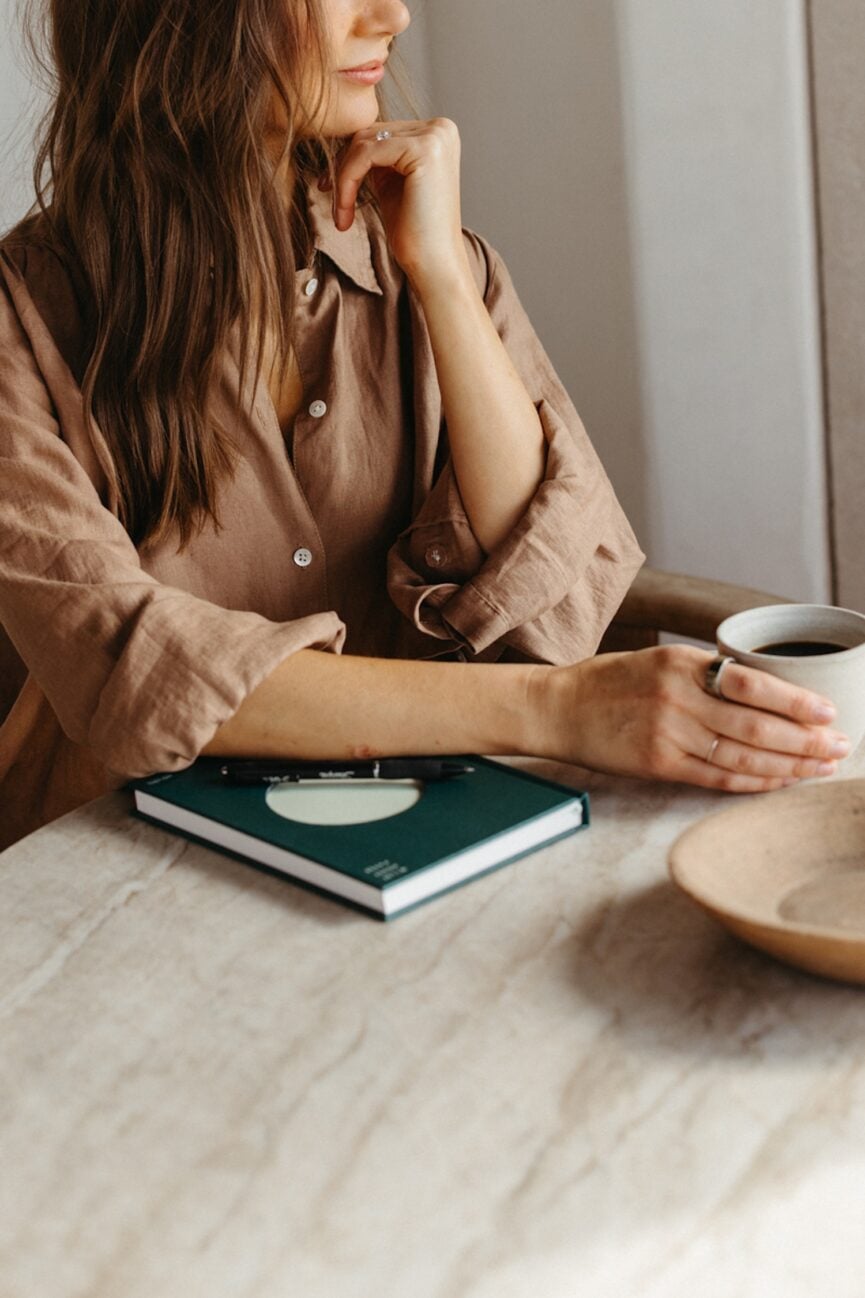
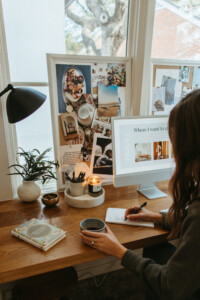
Pin it Camille Styles journaling about spring habits to feel better by summer

A More Realistic Way to Feel Better By Summer

We’re in that in-between window right now—the stretch between May and the start of summer—when routines haven’t fully settled and there’s still room to change how things feel. I’m thinking of it as a kind of runway: a few weeks where these shifts have time to build. That way, by the time summer arrives, you’re not starting from scratch. You’re already in it.

The idea of a reset sounds appealing, but it implies starting over, doing things perfectly, and getting everything in place all at once. Right when your energy is already stretched.

10 Spring Habits at a Glance

What’s felt more useful to me this season is a simpler approach. Paying attention to what already makes me feel better, and doing a little more of that.

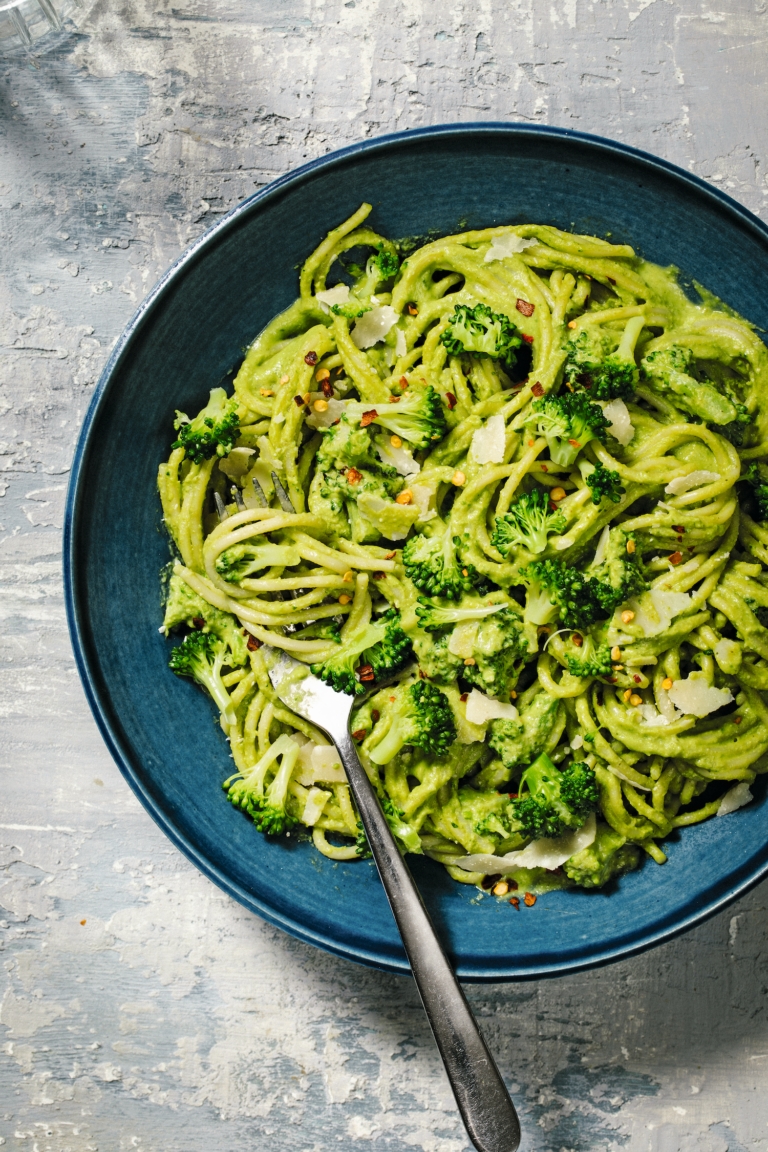
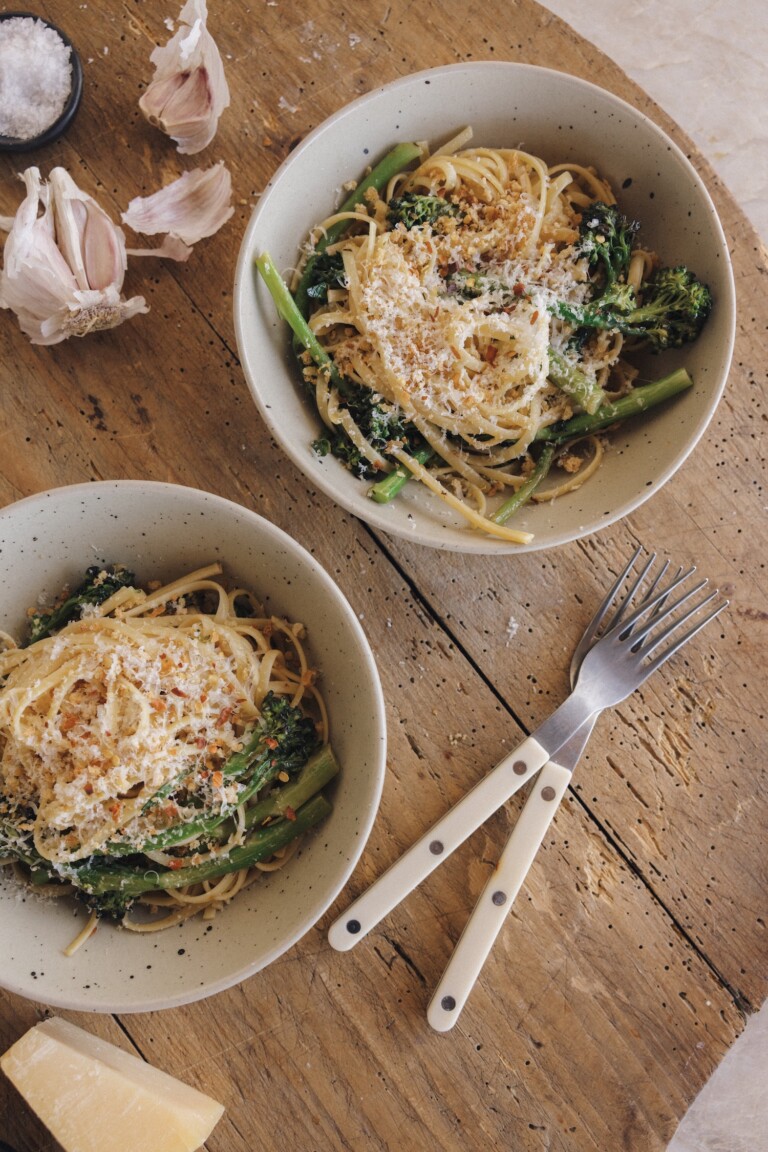
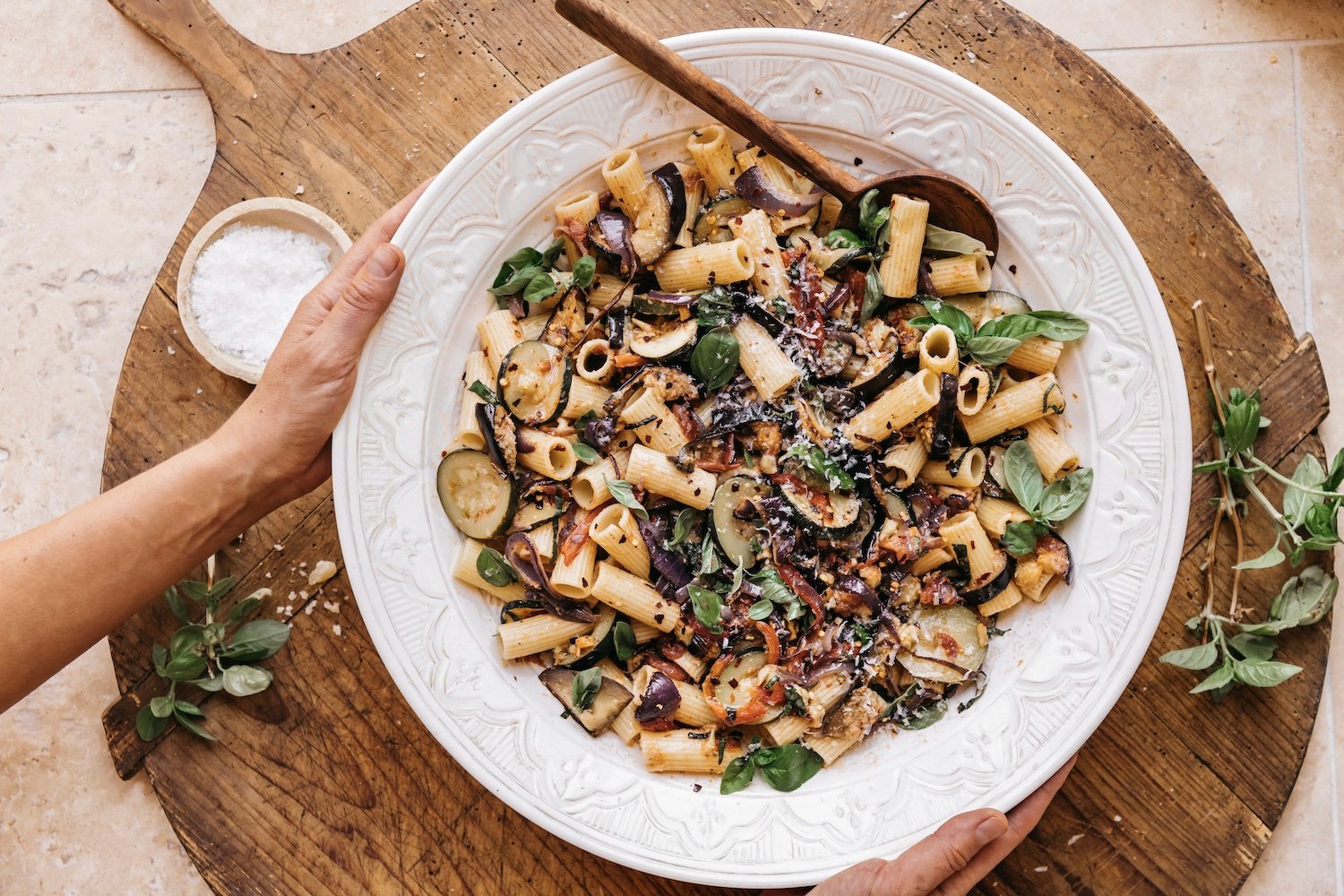
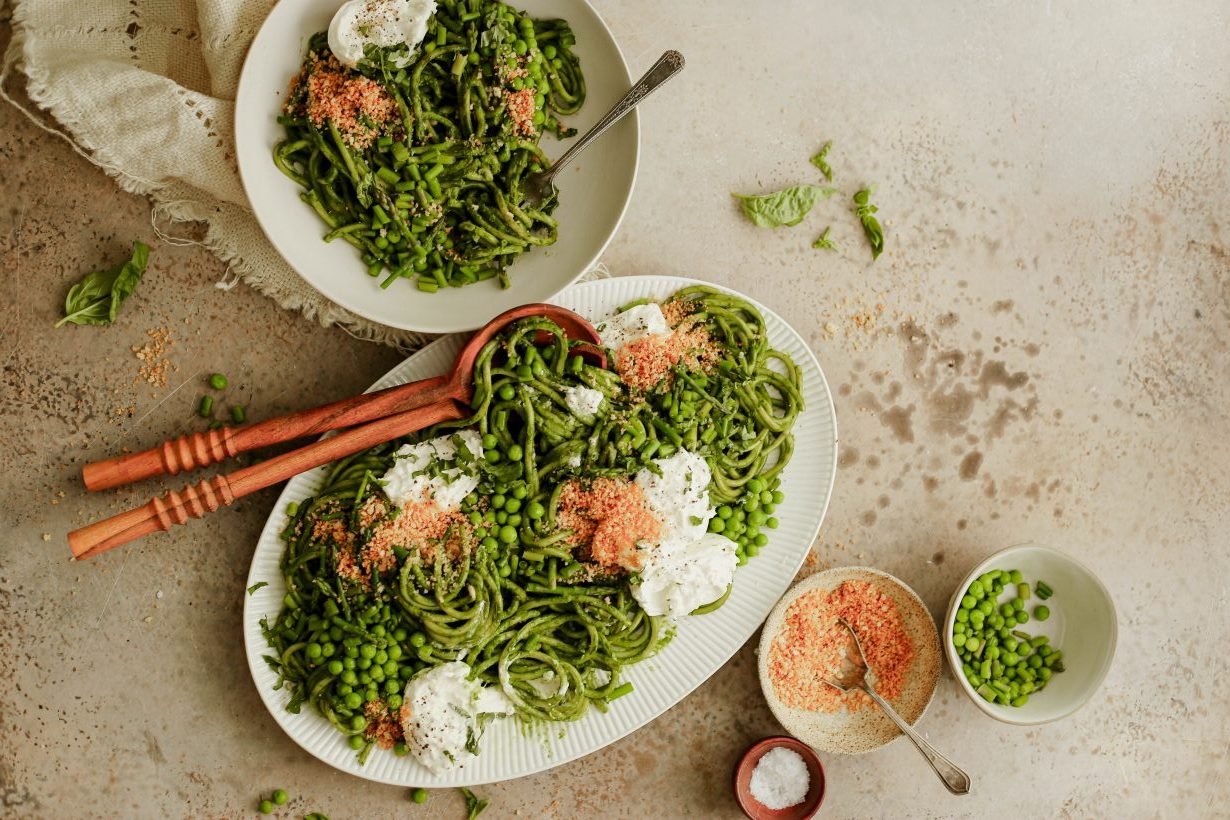
  1. Build one meal a day around color. Let fresh, vibrant ingredients guide what you eat. Everything else tends to follow.
  2. Upgrade what you’re already doing. Spring is all about amplifying the romanticize-your-life vibes.
  3. Work out at 90%. Leave yourself a little energy so you can come back tomorrow.
  4. Create a clear end to your workday. A small transition helps you actually arrive in your evening.
  5. Leave one thing undone on purpose. Decide when the day is complete instead of waiting for everything to be finished.
  6. Make one decision before your energy dips. Remove one choice from your evening—it’s a huge energy booster.
  7. Add a side quest. Follow one small moment of curiosity, just because you can.
  8. Take your evening off auto-pilot. A loose plan keeps your night from feeling like an extension of the work day.
  9. Build your day around natural light. Let sunlight anchor your routine instead of treating it as extra.
  10. Notice what gives you energy. Pay attention to what works and keep that on repeat.

10 Spring Habits to Feel Better by Summer

These are the habits I’ve been returning to. They’re simple, but they’ve changed more than I expected.

1. Build One Meal a Day Around Color

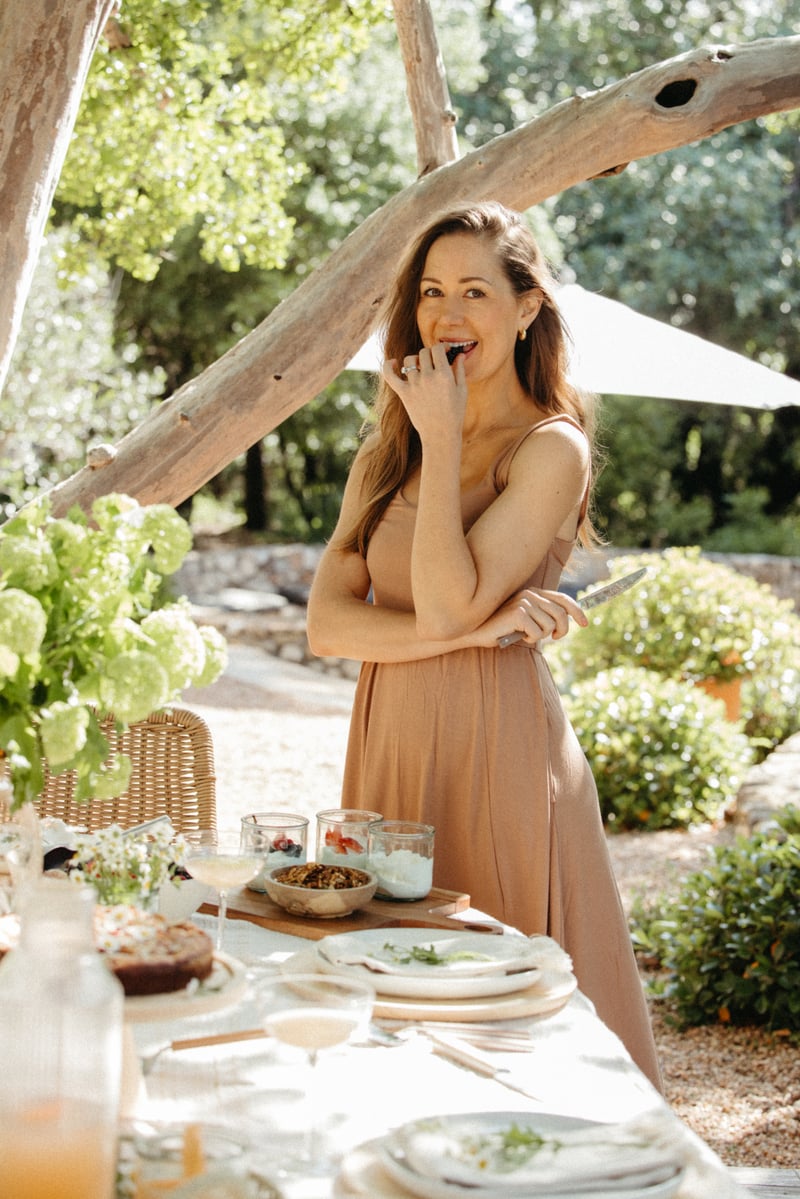
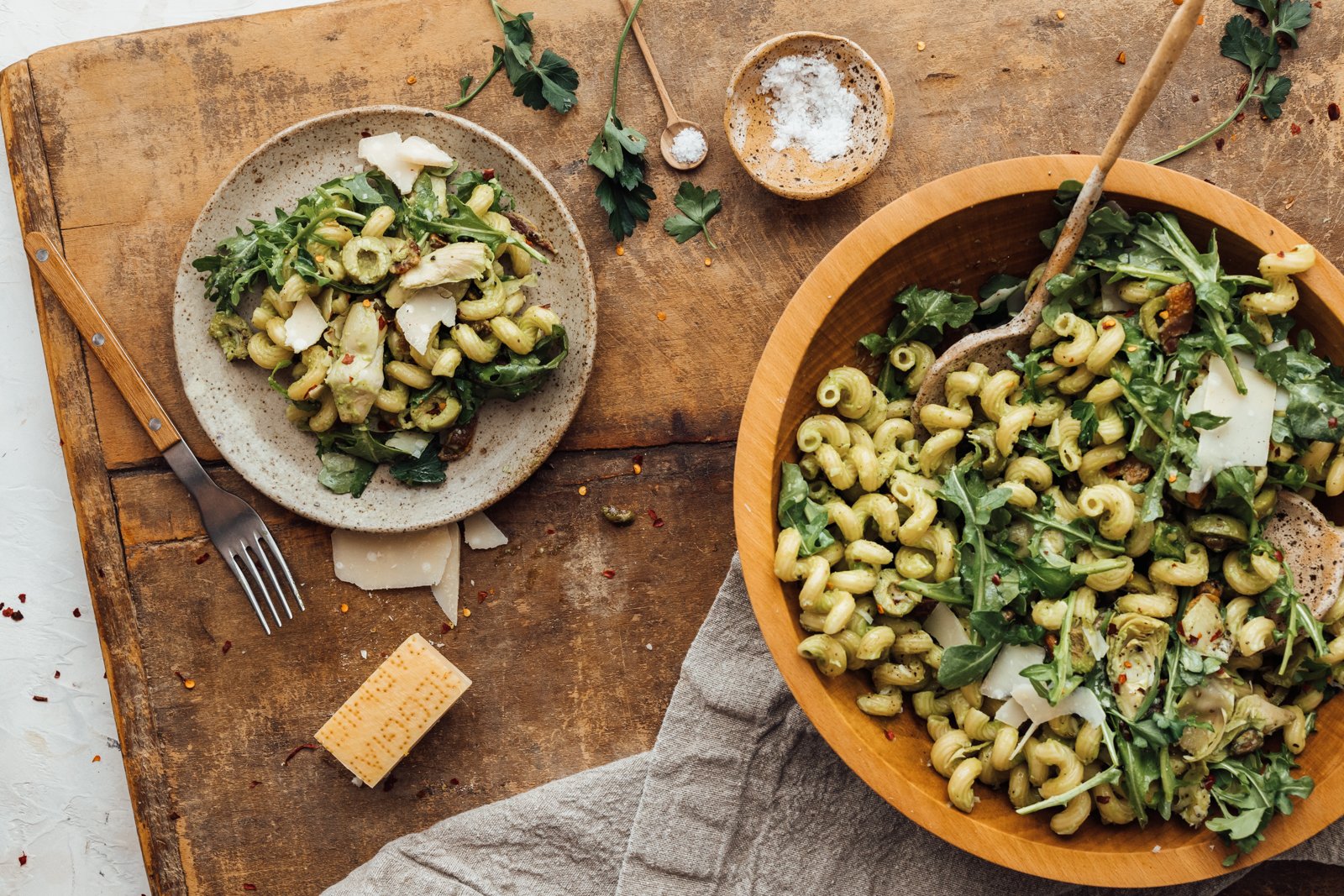
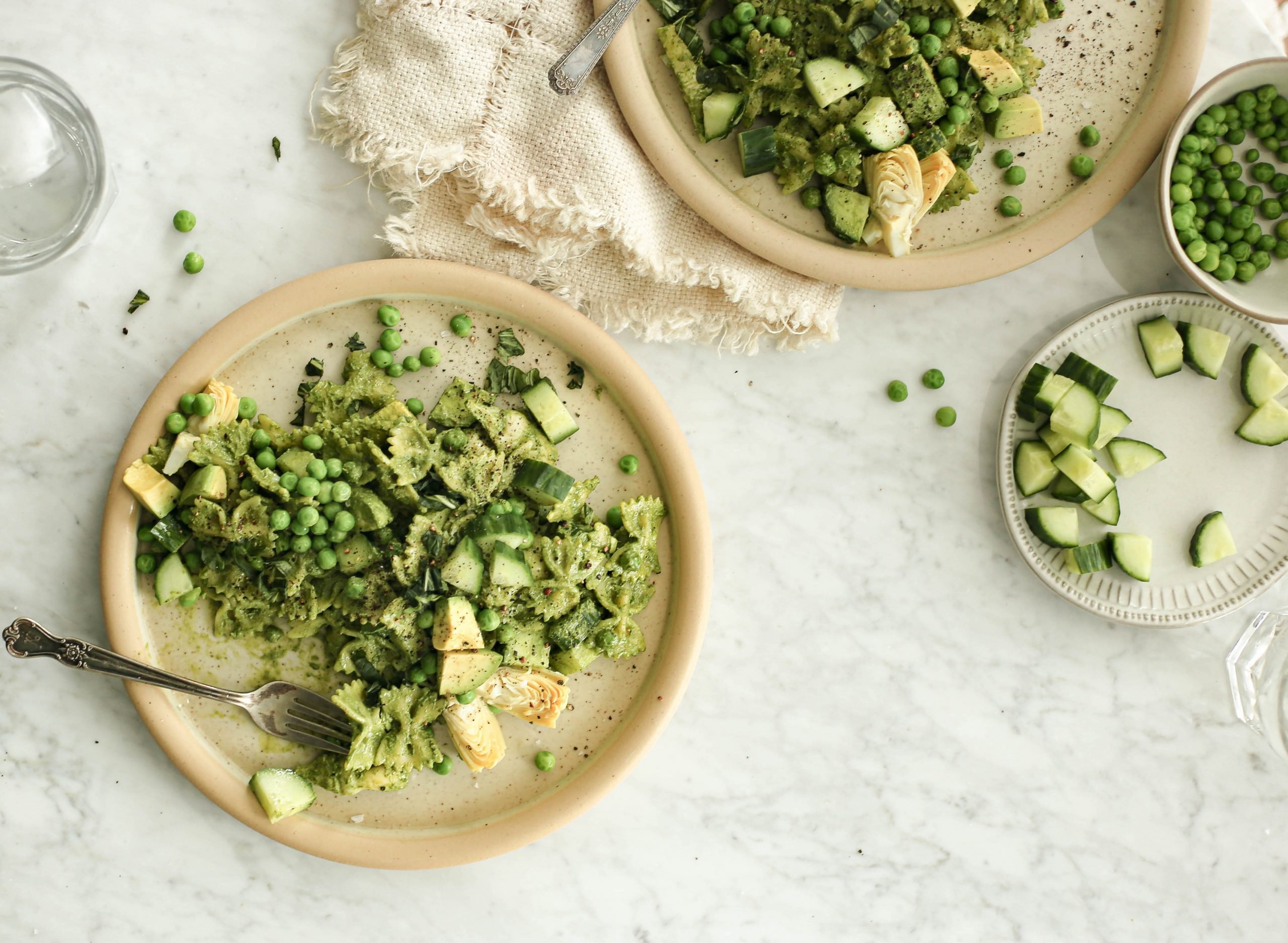
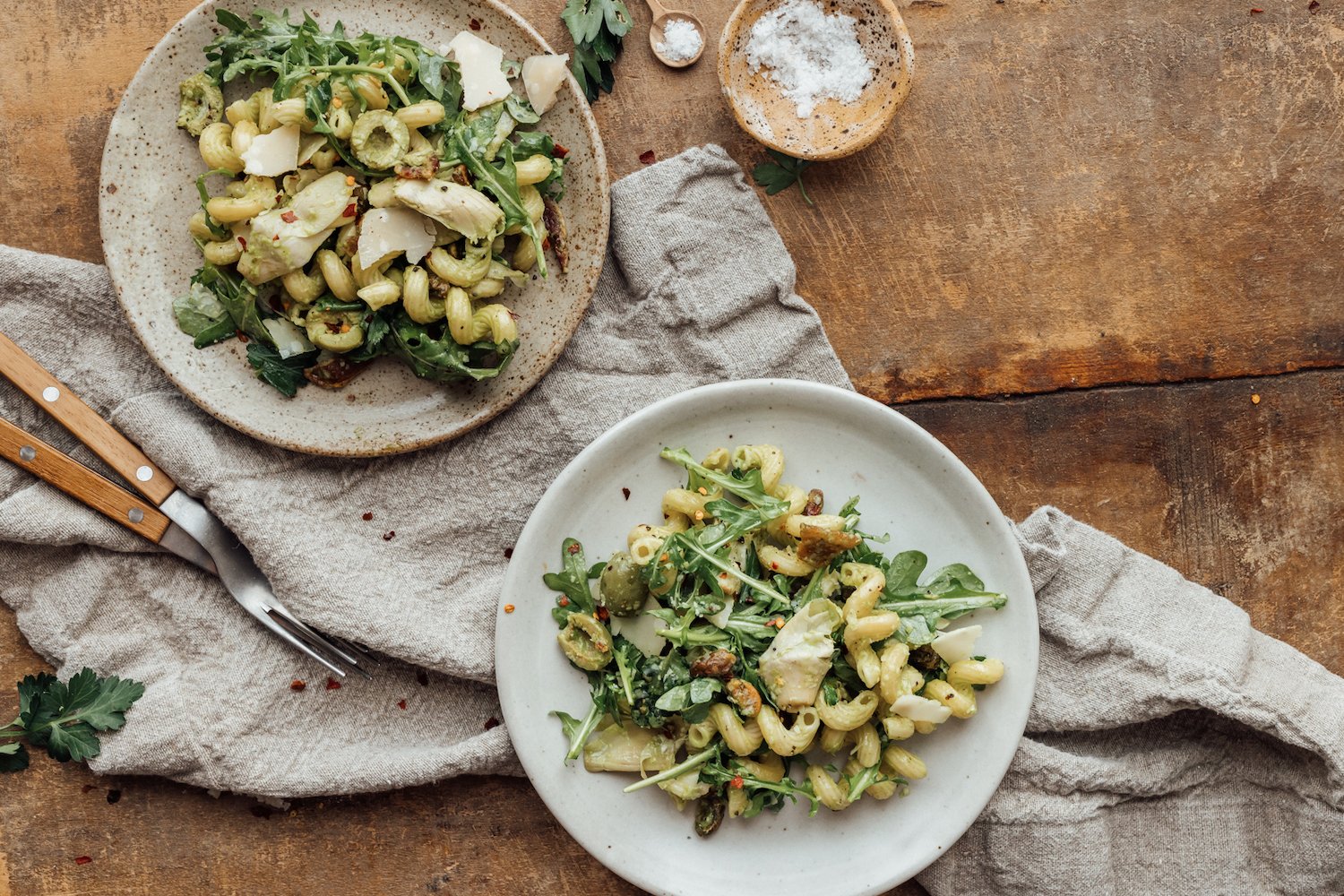
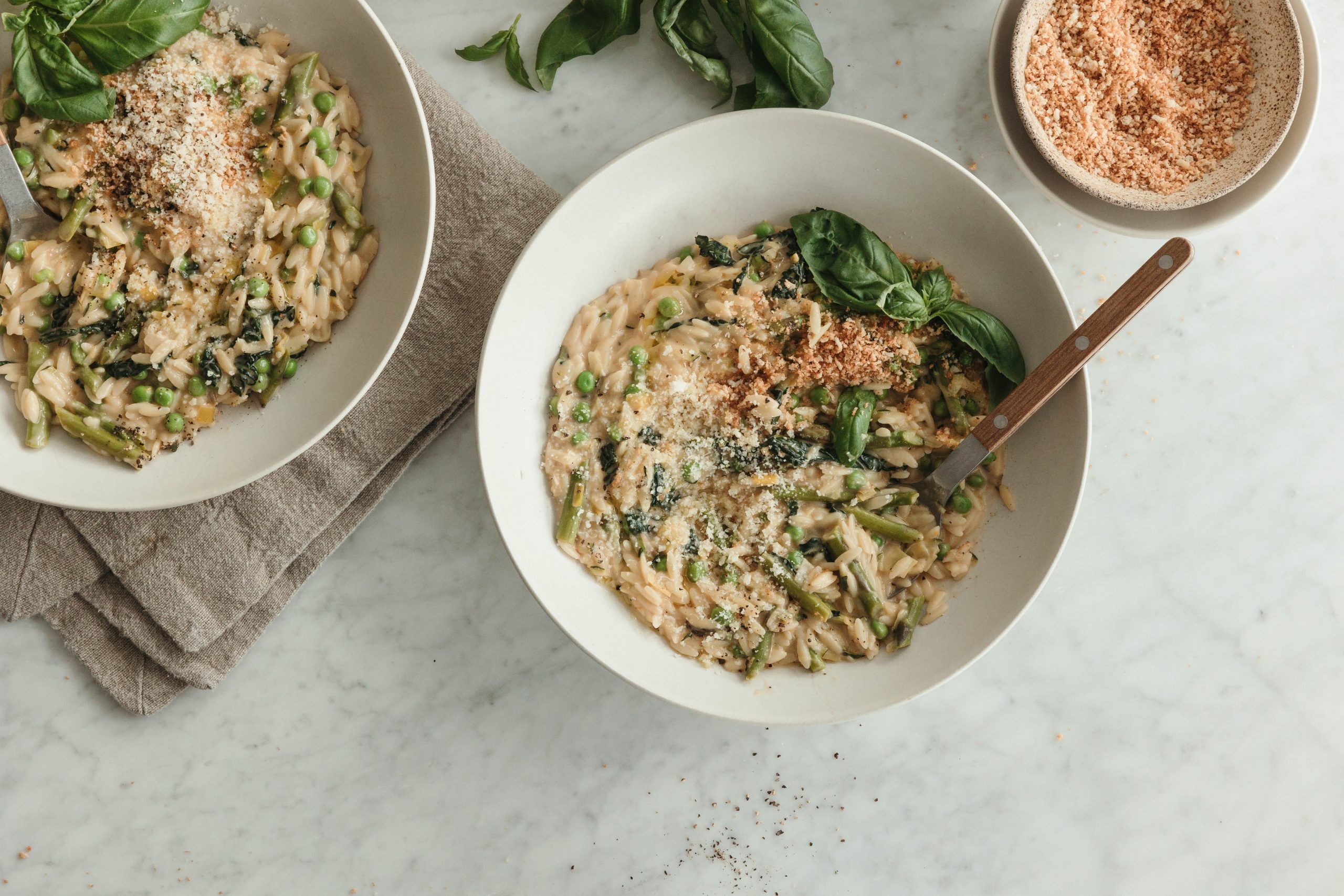
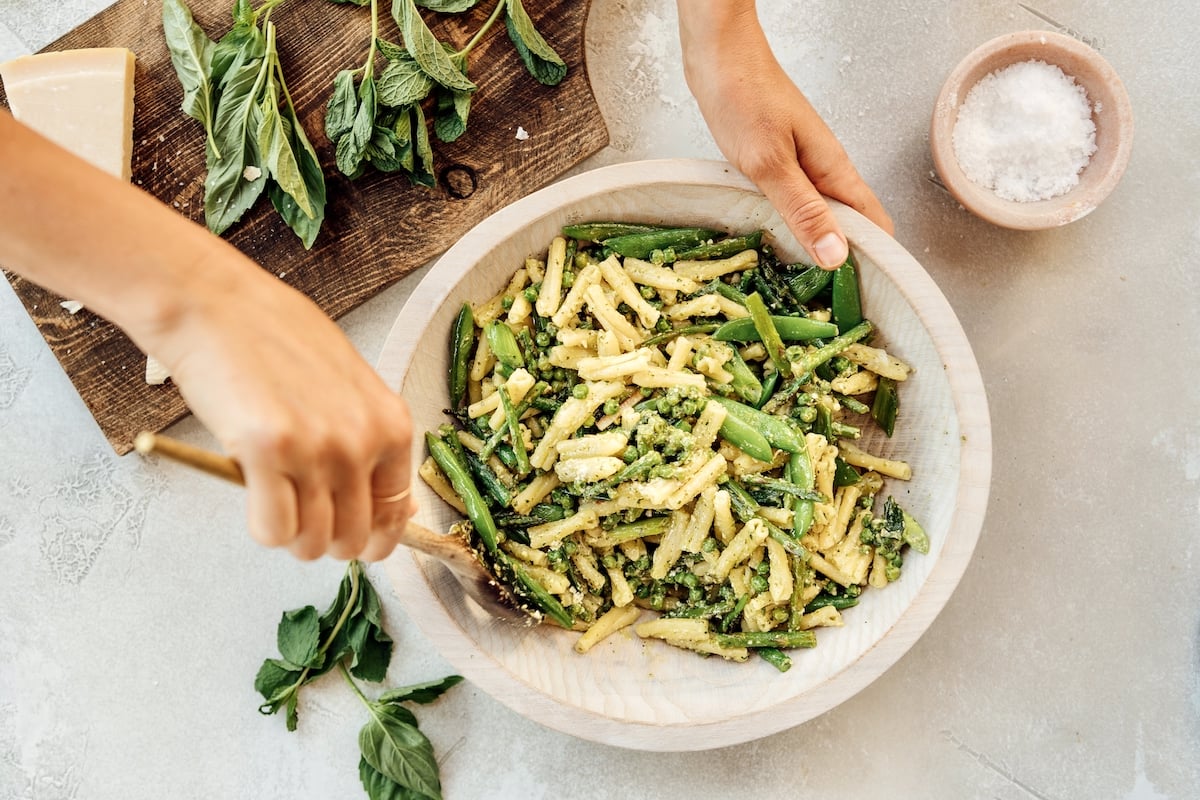
I didn’t set out to change the way I eat this spring. It just… happened? Somewhere between farmer’s market runs and throwing together quick lunches, I started noticing that the meals I actually looked forward to all had one thing in common: they were full of color. Bright greens, spring strawberries, fresh herbs. All the goodness of the season made it’s way to my plate.

That shift alone has made food feel easier. When you start with color, the rest tends to fall into place. You build meals that are more satisfying, more energizing, and a lot less rigid.

Try this: Once a day, start with what looks fresh and vibrant, then add something creamy and something crunchy to round it out.

Some colorful meals to get you inspired:

2. Upgrade What You’re Already Doing

I’ve stopped waiting for something new to make my days feel better. Most of the shift has come from paying a little more attention to what’s already there and treating it like it matters.

The same coffee, but in a beautiful mug (taken outside instead of standing at the counter). Romantizing my lunch break. An evening walk that isn’t just about steps, but about noticing the light, the air, and the fact that I’m there.

This habit is all about you move through what’s already part of your life. That small shift has made everything feel a little more intentional and a lot more enjoyable.

Try this: Pick one everyday habit and make it feel like something you chose: better ingredients, a different setting, or one small detail that makes you want to be in it.

3. Do Your Workouts at 90% (And Notice What Changes)

For a long time, I thought a good workout had to leave me completely spent. 30 minutes minimum, high intensity, no shortcuts—otherwise it didn’t count. That mindset kept me stuck in a cycle where I’d go all in for a few days, burn out, and then fall off entirely.

What shifted for me was realizing that consistency has a lot less to do with intensity than I thought. Research around “exercise snacks”—short, more frequent bursts of movement throughout the day—shows that even small amounts of activity can have a meaningful impact on your energy and overall well-being.

Pulling back just slightly in my workouts and letting shorter sessions count has made it easier to create a routine. I feel better afterward, not depleted, and that alone has changed how consistently I show up.

Try this: Let your next workout be less intense than you think it should be—or break it into smaller moments throughout the day. Then notice how you feel later, not just when it ends.

4. Create a Transition Ritual Out of Your Workday

I didn’t realize how much my evenings were being shaped by my workday until I started paying attention to how I ended it. Without a clear break, everything just blurred together (flashback to how I spent every weekday during the pandemic, yikes). I’d technically be done, but still carrying the loose ends into the rest of my night.

Instead, I’ve been building in a small transition. A moment that signals to my body that I’m shifting out of one mode and into another. This isn’t a productivity hack. It’s all about giving yourself a chance to actually start your evening feeling restored.

Try this: Choose one consistent action that marks the end of your workday—stepping outside, putting on a different playlist, making a fun beverage—and let that be the signal that you’re done.

5. Practice Leaving One Thing Intentionally Undone

It’s taken me forever to accept this: there will always be something left on the list. That part doesn’t change, no matter how early you start or how efficient you are. What I’ve started experimenting with is deciding where the line is—choosing when the day is complete, instead of waiting for everything to be finished.

Trust me, it cchanges the feeling of your mornings, evenings, and really your life. Instead of carrying that low-level sense of “I should still be doing something,” you give yourself permission to stop. Over time, that starts to feel less like a compromise and more like a choice.

Try this: At the end of the day, choose one thing that can be saved for tomorrow or next week. This isn’t procrastination—it’s prioritization.

6. Stop Making Decisions at Your Lowest Energy Point

By the time late afternoon rolls around, even small decisions can feel heavier than they should. What to make for dinner, whether to work out, how to spend the evening—it all starts to blur together in a way that makes everything feel more draining than it actually is.

I’ve started noticing how much easier my days feel when I make one or two of those decisions earlier, before my energy dips. No full plan, just removing that one moment where everything suddenly feels like too much.

Try this: Decide one thing ahead of time—dinner, your workout, or your evening plan—so you’re not figuring it out when you’re already tired.

7. Add One Side Quest to Your Day

Not everything in your day needs to be efficient to be worthwhile. (Read that back.) I’ve been leaving space for one small, unplanned detour—a side quest, in the loosest sense of the word. Something I didn’t need to do, but wanted to.

We’re not going for drama here. A different route on a walk, stopping for something that caught my eye, lingering a little longer somewhere instead of rushing through. You’ll be shocked: it completely changes how your day feels.

Try this: Leave room for one small, unnecessary decision today—something guided by curiosity instead of efficiency. Follow it without overthinking.

8. Give Your Evening a Plan

Evenings can feel the most chaotic because they’re often the most undefined part of your day. By the time you get there, your energy is low, your patience is thinner, and everything—from dinner to what to do afterward—feels like one more thing to figure out.

What’s helped is giving the evening a loose shape ahead of time. Not a rigid plan, just a general direction so you’re not starting from zero when you’re already tired.

Try this: Earlier in the day, decide what kind of night you’re having—something simple like “easy dinner and a walk” or “catch up and early to bed.”

9. Build Your Day Around Natural Light

This has been one of the simplest shifts with the biggest impact. Instead of treating time outside as something extra, I’ve started building parts of my day around it—moving small, everyday moments into the light whenever I can.

A few minutes in the sun in the morning, a walk before dinner, even taking a call outside… It all adds up! You feel more awake, more present, and more connected to your routine in a way that’s hard to replicate indoors. (You’ll sleep better, too.)

Try this: Take one thing you already do—coffee, a call, a break—and move it into natural light. Let that be the anchor your day builds around.

10. Pay Attention to Your Energy-Givers

This has been a complete game-changer in removing the “should’s” from my day. I’ve started paying closer attention to what actually makes me feel better. More clear, more energized, and more like myself. Some of it is obvious, some of it is surprising. But once you notice it, it becomes easier to come back to. You stop guessing what you need, and start recognizing it in real time.

Try this: At the end of the day, take a minute to notice what gave you energy. Look for one way to repeat it tomorrow.

Change Your Habits, Change Your Summer

The funny thing is, I still don’t feel “caught up” in my life. At least, not in the way I thought I would. There are still emails (there will ALWAYS be emails), still decisions, and still things waiting for me at the end of the day. But I do feel a little more present, a little more energized, and a little more like I’m actually in my life instead of trying to keep up with it.

That’s what these habits have given me. Not a full reset, not a perfect routine—just a series of small shifts that build on each other over time. And that’s the real opportunity this season. You don’t need to change everything before summer gets here. You just need to start paying attention to what makes you feel better and let that lead the way.

The post If You Want to Feel Better by Summer, Start With These 10 Things appeared first on Camille Styles.


  •  

Your Nervous System Needs a Spring Reset—Here’s Where to Start

Woman reading magazine on couch.

There’s a shift that seems to happen every spring. It stays light later, your energy starts to come back online, and suddenly you’re a person who has plans again—dinner here, a workout class there, maybe even a casual yes to something on a Tuesday night. It all feels good. Expansive, even. Until, somehow, it doesn’t.

Because alongside that fresh energy is something harder to name: a low-level sense of overstimulation. You’re sleeping a little worse. Your calendar fills up faster than you expected. You feel both energized and slightly on edge, like your body hasn’t quite caught up to the season yet.

I was just saying to my boyfriend the other night that, as we move into spring—and into a season of life that already feels full in its own way—I want to pay closer attention to my energy. Not just how much I have, but how it feels: when it’s aligned with the life I’m building, and when it starts to drift.

Featured image from our interview with Mary Ralph Bradley by Michelle Nash.

The Spring Nervous System Reset Your Body and Mind Have Been Craving

Here’s an example. The other night, after a few days of that first real stretch of Portland sunshine, I fell asleep at 8 p.m. without meaning to. Nearly eleven hours later, it became a little harder to ignore what my body had been asking for all along: less.

And that’s the thing about this time of year. The world begins to open quickly—more light, more plans, more possibility—but your nervous system doesn’t necessarily follow at the same pace. It adjusts more gradually, in response to the signals it’s given.

“After the slower pace of winter, spring can feel like a sudden surge of input for the nervous system,” says Clara Schroeder, an ecotherapist, speaker, and author of Re-Nature: How Nature Helps Us Feel Better and Do Better. “More daylight means you can do more after work, and suddenly we feel pressure to fill up our social calendars, or add on activities to the end of our days.”

What feels like a lack of discipline or energy is often something else entirely: a body that’s still learning how to meet the moment it’s in.

Clara Schroeder

Clara Schroeder is an ecotherapist, speaker, and best-selling author of Re-Nature: How Nature Helps Us Feel Better and Do Better. Clara’s expertise has been trusted by leading organizations, including UCSF, Microsoft, Women in Cloud, Terumo Neuro, and Aura Health. She holds a Master’s in Psychology and Education from Columbia University’s Spirituality Mind and Body Institute, led by renowned clinical psychologist Dr. Lisa Miller. As a Certified Ecotherapist, Institute Certified Mindfulness Teacher, Co-Active Professional Coach, and a Wilderness First Responder through NOLS, she offers a grounded, science-backed pathway to sustainable transformation.

Pin it

What a Spring Nervous System Reset Actually Means

Spring is a season of expansion, but your nervous system doesn’t instantly match that pace. It responds to what it’s given, recalibrating in real time. Which is why trying to force more energy, more output, or more structure too quickly can leave you feeling even more out of sync.

Instead, this season’s reset looks a little softer. It’s paying attention. It’s noticing when something feels like too much, even if it’s something you were looking forward to. It’s allowing your capacity to build, rather than assuming it’s already there.

Or, as Schroeder puts it, the goal is to be “gradual and gentle with this seasonal transition”—so you can actually enjoy it, instead of becoming overwhelmed by it.

Why Spring Can Feel Surprisingly Overwhelming

Part of what makes this time of year feel so disorienting is the mismatch between what’s happening around you and what your body is ready for.

The external world speeds up quickly. There’s more light, more activity, more opportunity to be out in it all. Your calendar fills in faster, and there’s a subtle pull to step back into everything all at once.

But internally, the shift is more gradual. Longer days begin to recalibrate your circadian rhythm, influencing everything from your sleep to your energy levels to your mood. Cortisol patterns adjust in response to increased light exposure, and your body starts receiving more sensory input—often before it’s fully caught up to the change in season.

“Our bodies are more attuned to the cycles of nature than we often are aware of,” says Schroeder. “We tend to feel seasonal changes physiologically as well as emotionally.” Which is why even positive change can feel like too much.

It’s all good—until it isn’t. Because your nervous system doesn’t distinguish between good stress and bad stress in the way you might expect. It simply registers input. And when that input increases quickly, it responds accordingly.

Spring often brings with it a subtle sense of urgency—the feeling that you should be doing more simply because you suddenly can. As Schroeder explains, that increase in light and activity can create pressure to fill your time in ways your body isn’t always ready for.

Which is how you can find yourself in a moment that feels both energizing and overwhelming at the same time.

The Subtle Signs Your Nervous System Is Overstimulated

Overstimulation tends to surface quietly—through small shifts in how you feel, how you move through your day, and how you respond to things that normally wouldn’t faze you.

You feel more tired, but less rested. You might notice it in your sleep first. You’re more tired than usual, but somehow sleeping less deeply. There’s a kind of restlessness that lingers, even when you’ve technically had enough rest.

You feel wired and drained at the same time. There’s energy, but it doesn’t feel grounded. It might be sharper or more reactive. Like your body is running slightly ahead of you.

Your reactions feel slightly amplified. Irritation comes a little faster. Your threshold feels lower. Not enough to name as anything significant, but enough to notice that everything feels a little louder than it should.

Plans start to feel heavier than expected. Things you were genuinely looking forward to begin to feel like something to get through.

As Schroeder explains, even positive changes—more plans, more activity, more stimulation—can create a sense of urgency in the body that it’s not always ready for. None of this means something is wrong. If anything, it’s your nervous system doing exactly what it’s meant to do: responding to an increase in stimulation, and asking for a little more space.

A Spring Nervous System Reset: 5 Ways to Feel More Regulated

If the shift into spring has been feeling a little faster than expected, a reset doesn’t need to be dramatic. Start with these small adjustments. You can think of them as ways of working with the season instead of against it.

1. Start Your Day With Light (Before Input)

Before your phone or your inbox, step outside. It doesn’t have to be long. Even a few minutes of morning light is enough to begin anchoring your circadian rhythm, signaling to your body that it’s time to wake up, focus, and gradually build energy throughout the day.

As Schroeder explains, morning light plays a key role in regulating sleep, mood, and hormone patterns—helping the nervous system move toward a more balanced state.

But more than anything, it’s the feeling of it. Light on your skin. Air that hasn’t been filtered through a screen yet. A moment where nothing is being asked of you. Think of this as a cue to your nervous system: you’re safe to begin.

2. Take Your Movement Outside

Spring makes everything feel a little more alive—and your body responds to that, too. You don’t need a perfectly structured workout. What matters is the combination of movement and environment. The rhythm of your body in motion, paired with the sensory cues of being outside, helps shift the nervous system out of that low-level fight-or-flight state and into something more grounded.

And it doesn’t have to be all or nothing. As Schroeder notes, even small, consistent moments in nature can meaningfully support stress reduction and emotional balance.

3. Pace Your Social Energy (Even When You’re Excited)

Spring invites you back into everything all at once, but your capacity doesn’t expand overnight.

It’s easy to mistake excitement for readiness—to assume that because something sounds good, you have the energy to hold it. And sometimes you do. But sometimes, what your body needs is a little more space between the things you’re looking forward to.

Schroeder suggests a simple check-in: Is this going to drain me or energize me? Not as a rule, but as a way to stay connected to yourself as the pace of life picks up again.

You don’t need to become your most social self overnight. (I’ve had to tell myself this many times already this spring.) Give yourself time, space, and the intention to make plans that align with your energy.

4. Create Small Anchors in Your Day

Have you noticed a pattern yet? When it comes to a spring nervous system reset, the most supportive shifts are often the smallest ones.

A cup of coffee outside instead of at your desk. A walk without headphones. Even just a few minutes to let your mind wander between tasks.

These moments can feel almost insignificant, but to your nervous system, they register as something else entirely: safety. A signal that you’re not in a rush. That there’s space to move at your own pace.

Schroeder emphasizes the importance of cultivating a more mindful relationship with your environment—slowing down enough to notice what’s around you, rather than moving through it on autopilot.

Small things, repeated often, have a way of shifting everything.

5. Let the Season Be Enough

Spring is not immune to social or environmental pressure. You might have the sense that this is the time to reset everything. Your habits, your routines, your energy, your life.

But expansion doesn’t require exhaustion. You don’t need to optimize your way into the season or match the speed of everything around you. And you don’t need to prove that you’re making the most of it.

Sometimes, the most supportive thing you can do is let what’s already here be enough. To meet the season as you are, rather than who you think you should be in it.

Because here’s what regulation is really about: staying connected to yourself as life starts to expand.

What a Regulated Spring Day Can Actually Look Like

Morning starts before the world gets loud. You step outside before checking your phone. Even a few minutes is enough—your body gets a clear signal: it’s time to wake up. You haven’t done anything impressive, but something already feels more grounded.

Movement happens, but it’s not forced. Maybe it’s a walk after your coffee or 10 minutes of stretching with the window open. The point isn’t intensity—it’s that your body is moving in a way that feels responsive, not performative.

Your calendar has shape, not just volume. There are plans, yes—but there’s also space around them. You’re not rushing from one thing to the next without pause. There’s time to reset between moments, even if it’s just a few minutes to walk, breathe, or sit without input.

You check in before you check out. At some point in the day—making coffee, closing your laptop, getting ready to leave—you pause long enough to ask: What do I actually need right now? Take the time to notice if something feels off, and adjust where you can.

Evening feels like a transition, not a crash. The day winds down gradually. Lights soften, and your energy follows. You’re not squeezing in one last thing just because there’s time. You’re letting your body slow down for the day.

As Schroeder suggests, the goal isn’t to match the pace of the season—it’s to stay connected to your own rhythm within it.

A Gentler Way to Move Through Spring

Spring is a season of expansion, but it doesn’t have to be rushed. The energy will build, the days will lengthen, and life will naturally begin to open up around you. You don’t need to match its pace to be part of it.

Regulation, in this season, looks like staying connected to yourself as things shift—paying attention to what feels aligned, and noticing when it doesn’t. It’s allowing your capacity to grow gradually, rather than assuming it should already be there.

Because spring will keep unfolding either way. The shift is learning how to move with it, instead of being carried away by it.

The post Your Nervous System Needs a Spring Reset—Here’s Where to Start appeared first on Camille Styles.

  •  

This Is What I Do When I Feel Off (and Can’t Explain Why)

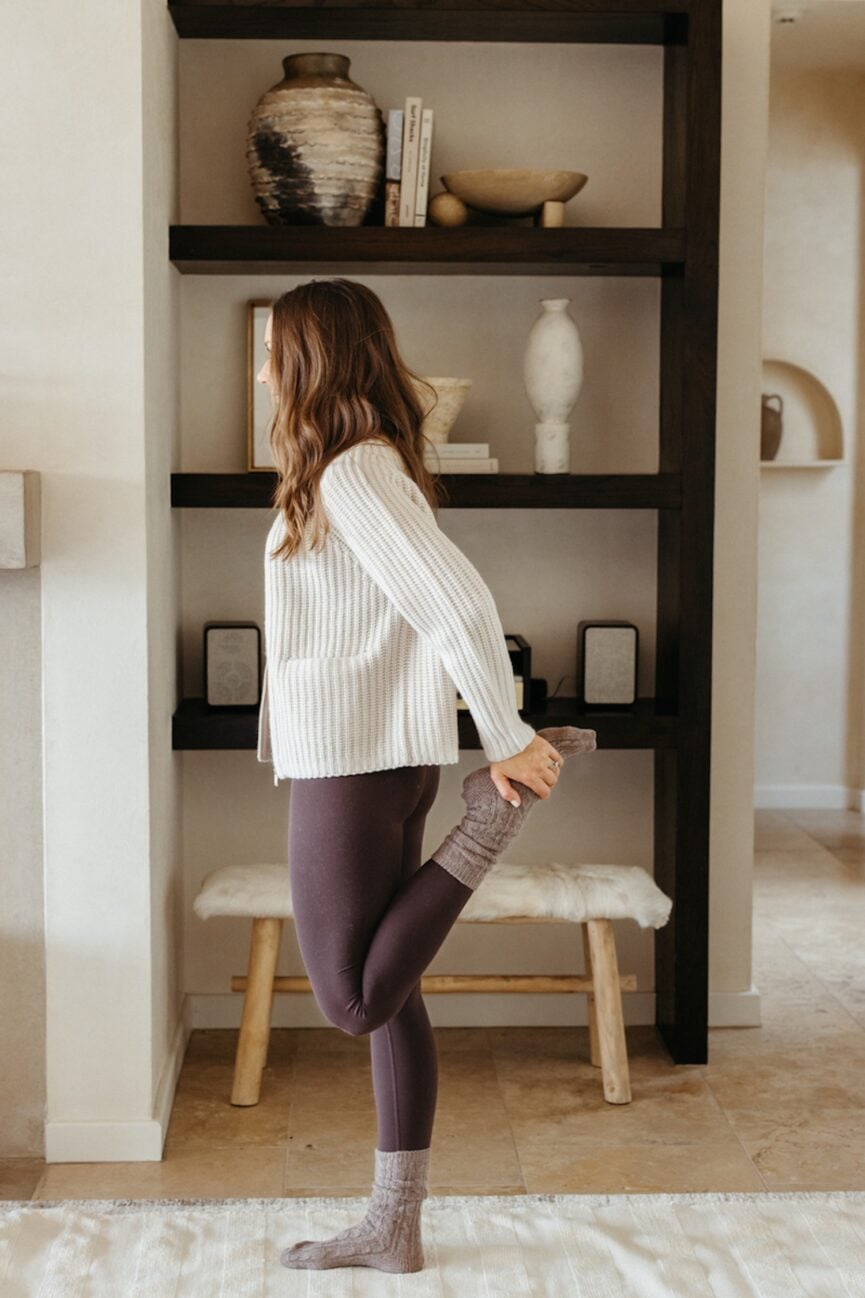
Mary Ralph Bradley stretching

Maybe it’s the change in seasons, but lately I’ve been thinking a lot about how to get out of a funk—that in-between state where nothing is exactly wrong, but everything feels slightly off. I was more tired than usual, a little unfocused, and strangely unmotivated by things I normally enjoy. It wasn’t dramatic enough to name, but I felt it in everything.

Sometimes it’s there the moment you wake up—a heaviness you can’t quite explain. Other times, it builds slowly, almost imperceptibly, until you realize you’ve been moving through your days at half-capacity. You’re getting things done, technically, but without your usual clarity or energy. And the more you try to push through it, the more it seems to linger.

Featured image from our interview with Mary Ralph Bradley by Michelle Nash.

Pin it

My instinct is always to fix it. To reset, optimize, get back on track. But I’ve learned—through much trial and error—that getting out of a funk is about interrupting the pattern with something that shifts your energy just enough.

It’s not a full reset, but more like a pivot. Stepping outside for a few minutes longer than usual. Putting on music while you make dinner. Letting yourself move a little slower instead of trying to catch up. The kind of choice that doesn’t feel like a solution, but changes something anyway.

When I feel this way, I don’t try to overhaul my routine or suddenly become a different version of myself. I look for a small opening—a moment where I can re-enter my day with a little more presence. And usually, that’s enough to start changing the tone of everything that follows.

How to Get Out of a Funk, Stat

When you’re in a funk, even deciding what to do can feel like too much. There’s a tendency to overthink it—to search for the perfect reset, the right routine, the thing that will fully snap you out of it. But often, the fastest way to feel better is simply making a choice and following where it leads.

Again, we’re trying to create a small shift—something that interrupts the loop you’re in and brings you back into your body, your environment, and your life as it actually is. Even a slight change in energy can be enough to build momentum.

If you’re not sure where to start, start here:

  • Step outside for five minutes—no phone, just light and fresh air
  • Drink a full glass of water and eat something with protein
  • Text or call someone you trust, even just to say hi
  • Take a short walk (around the block counts!)
  • Put your phone in another room for 10 minutes and notice how you feel

The goal isn’t to fix everything. It’s to feel a little bit better than you did five minutes ago.

1. Do One Thing That Supports Your Body (Right Now)

When I’m in a funk, my first instinct is to figure out why. I need a mental explanation of what’s off, what needs to change, what I should be doing differently. But more often than not, the issue isn’t something I need to figure out. It’s something I need to support.

A low mood can come from surprisingly simple places: not enough sleep, not enough water, blood sugar dips, too much time inside… And when your body feels depleted, your mind follows. What feels like a lack of motivation or clarity is sometimes just your system asking for something more basic.

I’ve learned to start there first. Not with a full reset or a perfectly structured routine, but with one small, immediate act of care. Something that doesn’t require overthinking—just a way of telling my body I’m paying attention.

Try this:

Before you reach for your phone or try to push through the feeling, pause and do one thing to support your body. (Check out the list above.) Start with what feels easiest, and notice what changes.

2. Move Your Body (Even a Little)

There’s a version of this advice that feels easy to ignore—the one that suggests a full workout or some kind of structured routine when you’re already low on energy. That’s not what this is.

When I’m in a funk, movement works because it shifts something almost immediately. It changes my environment, my breathing, my pace. It interrupts the mental loop just enough to create a little space between me and whatever I’m feeling.

And it doesn’t have to be much. Truly: the smaller it is, the more likely I am to actually do it. A short walk. A few minutes of stretching. Even just standing up and moving around instead of staying in the same spot where the mood settled in.

There’s something about changing your physical state that reminds you you’re not as stuck as you feel.

Try this:

Step outside and walk for five minutes. Or put on one song and move your body for the length of it. Let it be brief, and let it shift your state rather than your schedule.

3. Get Out of Your Head

One of the quickest ways I know I’m in a funk is how inward everything becomes. My thoughts loop, my perspective narrows, and I start overanalyzing things that wouldn’t normally hold that much weight. Even when nothing is technically wrong, it can start to feel heavy just from sitting with it too long.

What helps, almost every time, is shifting my attention outward. There’s something grounding about connecting with another person—stepping into a conversation, even briefly, that isn’t centered on your own internal dialogue.

Try this:

Reach out to someone you trust—a quick text, a voice note, or a short call. Ask them how they’re doing, or share something small from your day.

4. Name What’s Actually Going On

Sometimes what feels like a vague, all-encompassing funk is actually something more specific that hasn’t been fully acknowledged yet. I’ve had days where I thought I was just off, only to realize—once I slowed down enough to notice—that I was anxious about something, avoiding a decision, or carrying around a thought I hadn’t fully processed.

A shift happens when you put words to it. It doesn’t necessarily solve the problem, but it takes away some of the weight of not knowing.

Try this:

Take a few minutes to write down what’s been sitting in the background of your mind. No structure, no filtering—just get it out of your head and onto the page, and see what becomes clearer.

5. Change Your Environment (Even Slightly)

It’s easy to underestimate how much your surroundings shape your mood—especially when you’ve been sitting in the same place for hours. I notice this most on days when everything starts to feel a little stagnant. But even a small environmental change can interrupt that feeling. A different room. A cleared surface. Fresh air. We’re not going for anything dramatic. It just needs to be enough to signal that something is moving again.

Try this:

Open a window, step outside, or move to a different space entirely. If you’re staying put, clear one small area—a desk, a nightstand, a corner—and notice how it changes the way the room feels.

6. Step Away From Your Phone

There’s a specific kind of funk that sets in after too much time on your phone. Your energy dips, your focus scatters, and your mood starts to feel a little flatter than it did before.

It’s not just the time spent, it’s the constant input. You’re taking in more than you can process, often without realizing it. And when you’re already feeling off, that added noise doesn’t help—it just makes it harder to hear yourself think.

Try this:

Put your phone in another room for 10 minutes. I’m talking fully out of reach. Then do something simple and analog: make tea, stretch, sit by a window. Pay attention to how the shift in input changes your energy.

7. Do Something Slightly Different

A funk can sometimes come from sameness—the same routine, the same inputs, the same pace day after day. Even if everything is technically working, there’s a point where it starts to feel a little flat. Instead, explore introducing something small and unfamiliar—just enough to break the pattern and bring a little curiosity back in.

Try this:

Side quests are trending for a reason! Take a different route on your walk, listen to something you wouldn’t normally choose, or swap one part of your routine for something new. Just a small change that reminds you there are other ways to move through your day.

8. Create a Small Anchor in Your Day

When everything feels a little scattered, it helps to have something steady to return to. I think of these as anchors—simple rituals that gently bring you back into yourself.

It’s less about what you do, and more about giving your day a point of connection. Something that feels consistent, even when everything else doesn’t.

Try this:

Choose one small moment in your day to treat differently. Sit outside with your coffee. Step away between tasks and take a few slow breaths. Let it be brief, but intentional and notice how it shifts the pace of your day.

9. Let Yourself Rest Intentionally

Not all rest is the same. I’ve had plenty of moments where I’ve tried to relax by defaulting to scrolling or zoning out, only to feel just as off (if not worse) afterward.

What actually helps is a different kind of rest. The kind that feels chosen, not passive. Something that gives your mind a break without overstimulating it—where you’re not consuming more, just allowing a little space.

Try this:

Set a timer for 10–15 minutes and step away from screens. Lie down, sit somewhere quiet, or do something simple with your hands. Let it be unproductive on purpose, and see how you feel on the other side.

10. Shift Your Focus Forward

When I’m in a funk, it’s easy to get stuck in the immediacy of how I feel. Everything narrows to the present moment, and it can start to feel like it will last longer than it actually does.

Don’t try to force optimism or map out a full plan. Explore creating a small sense of forward movement. Something that reminds me this moment isn’t permanent, even if it feels that way.

It can be as simple as thinking about what might feel good later today, or later this week. Not in a way that adds pressure, but in a way that reintroduces a little momentum.

Try this:

Write down one thing you’re looking forward to. Keep it simple and specific, and let it be something you can return to when you need a reminder that this feeling isn’t the whole story.

This post was last updated on April 18, 2026, to include new insights.

The post This Is What I Do When I Feel Off (and Can’t Explain Why) appeared first on Camille Styles.

  •  

The Effortless Style Rules Carolyn Bessette-Kennedy Always Followed

Love Story Outfits Caroline Besette Kennedy

Like half the internet, I recently fell down the rabbit hole of Love Story: John F. Kennedy Jr. & Carolyn Bessette. The series—equal parts romance, nostalgia, and glossy ’90s mythology—revisits one of the most fascinating relationships of that decade. Not everyone is thrilled with the portrayal. Daryl Hannah recently published a beautifully scathing op-ed in The New York Times about how she was depicted, and Jack Schlossberg (hi, call me!) has already dismissed most of the show as fiction. But even if the storytelling takes liberties, one thing remains indisputable: Carolyn Bessette-Kennedy’s style was—and still is—iconic.

Pin it
Photo: FX / Love Story

Before “quiet luxury” had a name, Bessette-Kennedy was already living it. As a publicist at Calvin Klein, she embodied the label’s entire ethos: pared-down silhouettes, immaculate tailoring, and that elusive kind of effortlessness that somehow looks both casual and impossibly polished. A slip dress and sandals. A perfectly blazer. Black trousers that fall exactly right. Three decades later, the formula still feels modern.

Pin it
Photo: FX / Love Story

5 Carolyn Bessette-Kennedy Outfits From Love Story That Define ’90s Minimalism

So in honor of my recent binge-watching habit—and my long-standing fascination with ’90s minimalism—I went back through some of Bessette-Kennedy’s most memorable looks. Ahead, five of her most iconic outfits, the stories behind them, and how to recreate the look today (starting, of course, with a perfectly tailored men’s button-down).

The Unexpected Evening Look

One of Carolyn Bessette-Kennedy’s most celebrated outfits came from an unlikely formula: a crisp white button-down and a black silk maxi skirt. It’s the kind of outfit that perfectly captures what made Bessette-Kennedy’s style so magnetic. Nothing about it is complicated: a borrowed-from-the-boys shirt, a fluid skirt, minimal jewelry. And yet the proportions, the restraint, and the quiet confidence of the styling make it feel more striking than a traditional evening look. In true ’90s fashion, she proved that tailoring and simplicity could be more powerful than anything overtly glamorous.

Why It Works

The genius of this outfit is the contrast. The crisp structure of a men’s-style button-down offsets the softness of the silk skirt, while the monochrome palette keeps the entire look feeling intentional and polished. Bessette-Kennedy also understood the power of restraint: simple heels, delicate jewelry, and a small clutch let the silhouette do the talking.

It’s also a masterclass in proportion. The slightly oversized shirt adds ease, while the long skirt elongates the body. The result feels understated and unfussy—like something she threw on without overthinking it (even though the balance is clearly very considered).

How to Get the Look

This look is all about fabric, fit, and simplicity.

  • Choose a relaxed button-down. Look for one with a slightly oversized cut so it feels effortless rather than corporate.
  • Pair it with a silk or satin skirt. The material adds movement and elevates the look beyond everyday basics.
  • Keep the palette minimal. White and black are the foundation of this outfit’s impact.
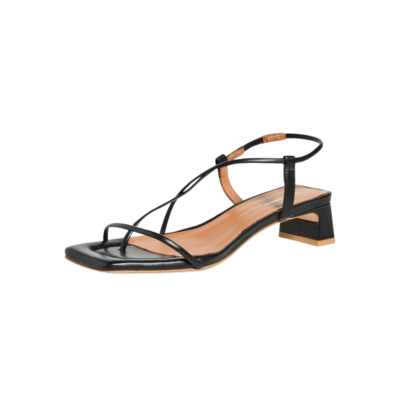
  • Finish with sleek sandals. A minimal black sandal keeps the look grounded and modern.
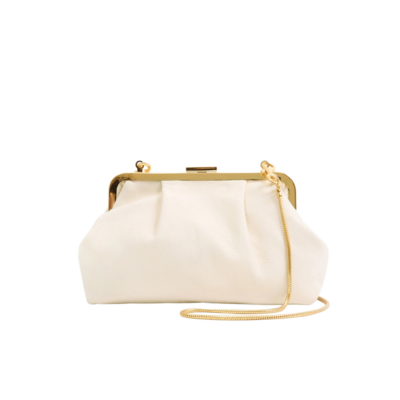
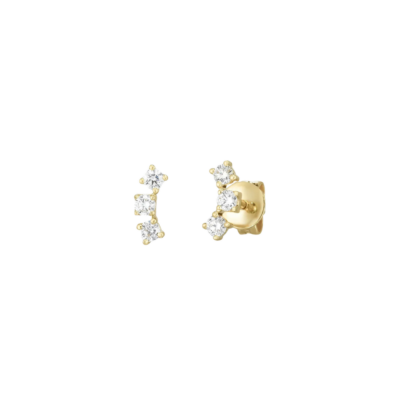
  • Stick to delicate accessories. Small diamond studs and a simple clutch maintain the understated mood.

Accessories That Make the Outfit

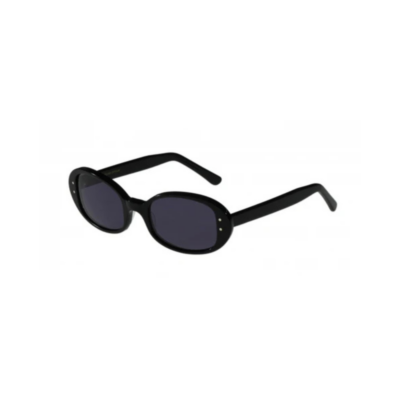
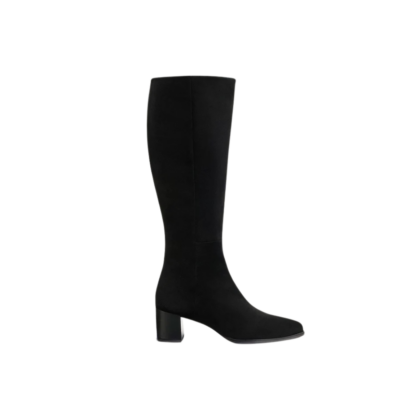
Few images capture the everyday style of Carolyn Bessette-Kennedy quite like this one. Photographed walking through Manhattan with John F. Kennedy Jr., she wears an oversized black blazer layered over a minimalist strappy dress with knee-high boots, slim sunglasses (apparently, Jacob Elordi’s taking notes), and a headband holding back her signature honey-blonde hair.

It’s quintessential New York street style: polished but practical, minimal but still memorable. Bessette-Kennedy had a gift for making tailoring feel relaxed, often leaning into slightly oversized silhouettes that gave her outfits an easy edge.

Why It Works

The power of this outfit lies in its contrast. The oversized blazer brings structure and authority, while the delicate, strappy dress underneath introduces softness and movement. The all-black palette keeps the look cohesive, allowing the silhouette—and the layering—to take center stage.

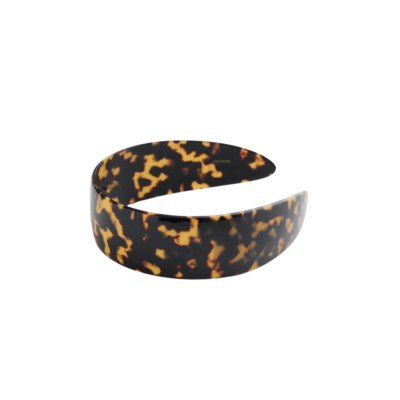
Then there’s the headband, one of Bessette-Kennedy’s styling signatures. Paired with slim sunglasses and knee-high boots, it softens the sharpness of the blazer and adds just enough personality to keep the outfit from feeling overly polished.

How to Get the Look

Keep the focus on proportion, layering, and restraint.

  • Start with an oversized blazer. Look for one with slightly broad shoulders and a relaxed fit for that signature ’90s silhouette.
  • Layer it over a minimalist slip dress. Thin straps and fluid fabric create the contrast that makes the look feel effortless.
  • Stick to a monochrome palette. Head-to-toe black keeps the outfit timeless and sophisticated.
  • Anchor the look with knee-high boots. Sleek boots add structure and make the outfit feel distinctly city-ready.
  • Finish with understated accessories. A simple headband, sunnies, and a structured bag keep the look minimal but intentional.

Understated Elegance

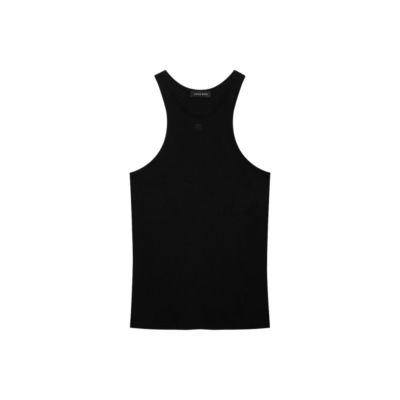
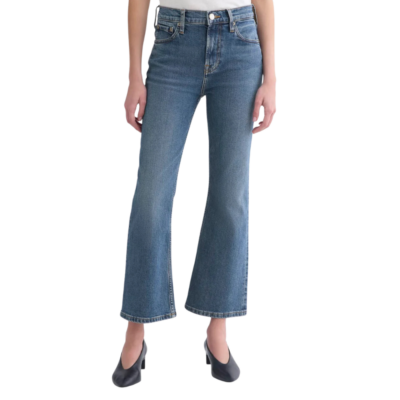
Some of the clearest glimpses into Carolyn Bessette-Kennedy’s personal style came during the most ordinary moments. In this photo, she’s walking her dog Friday through the streets of New York, dressed in a fitted black tank, classic blue jeans, and simple sandals.

It’s an outfit that feels almost startlingly simple, and yet it perfectly captures what made Bessette-Kennedy’s style so compelling. She understood that great basics, worn with confidence and the right proportions, could be just as striking as any statement piece. Even a quick walk around the neighborhood became a lesson in minimalist dressing.

Why It Works

This outfit is built entirely on clean lines and thoughtful proportions. The fitted tank creates a sleek silhouette, while the slightly cropped kick-flare jeans add just enough shape to keep the look interesting.

The simplicity of the palette—black and denim—keeps everything grounded. With minimal accessories and understated sandals, the outfit feels relaxed but still polished. It’s a reminder that some of Bessette-Kennedy’s best looks weren’t elaborate at all—they were simply well-chosen essentials worn beautifully.

How to Get the Look

If you want to recreate the outfit today, the key is sticking to elevated basics and sharp silhouettes.

  • Start with a fitted black tank. A structured neckline keeps the piece from feeling overly casual.
  • Choose kick-flare or straight-leg denim. Slightly cropped jeans create a flattering proportion with sandals.
  • Keep footwear minimal. Simple sandal heels add a subtle element of polish.
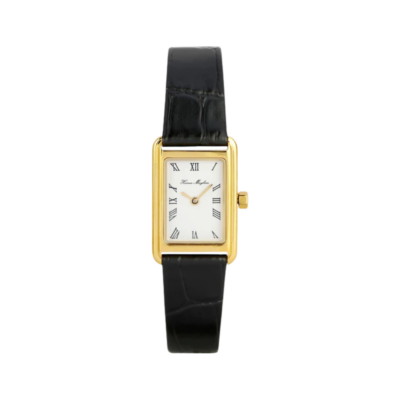
  • Add one understated accessory. A classic watch is all the outfit needs.

The LBD, Reimagined

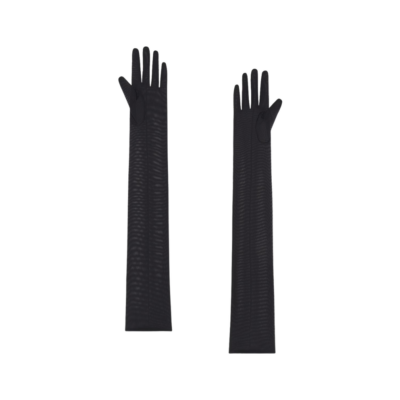
Few looks capture the understated drama of Carolyn Bessette-Kennedy’s evening style quite like this one. In 1998, she attended the Municipal Art Society’s celebration of the revitalization of Grand Central Terminal alongside JFK Jr., wearing a sleek strapless black dress paired with long opera gloves.

It’s an outfit that feels both classic and unexpectedly modern. While many formal looks of the era leaned toward embellishment and excess, Bessette-Kennedy chose restraint instead. The silhouette is simple, the palette entirely black, and the styling almost austere—proof that minimalism can feel just as striking as glamour.

Why It Works

The strapless neckline creates a strong architectural line through the shoulders and collarbone, while the column silhouette keeps the entire look streamlined and elegant. The opera gloves are the only overtly dramatic element—and that’s precisely why they work. Against the simplicity of the dress, they introduce length, texture, and a subtle sense of occasion without overwhelming the outfit.

It’s a perfect example of Bessette-Kennedy’s approach to eveningwear: one statement element, everything else refined.

How to Get the Look

This look works so well because of its sleek tailoring and focus on one striking accessory.

  • Start with a strapless black dress. Look for a clean, structured silhouette.
  • Keep the palette monochrome. Head-to-toe black enhances the sophistication of the look.
  • Add long evening gloves. They bring elegance and drama while still aligning with the minimalist aesthetic.
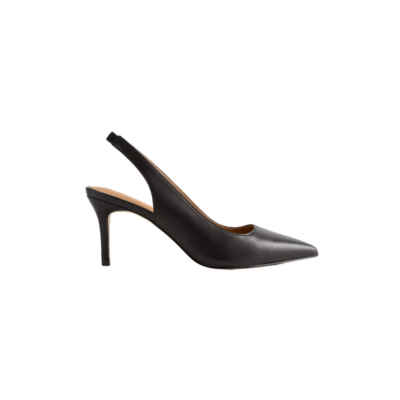
  • Choose classic heels. A pointed slingback or pump keeps the look timeless.
  • Skip heavy jewelry. Let the neckline and gloves carry the visual impact.

Tempered Color

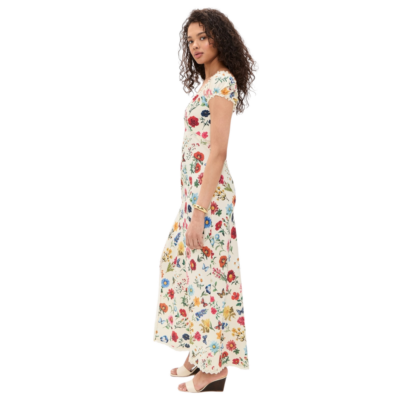
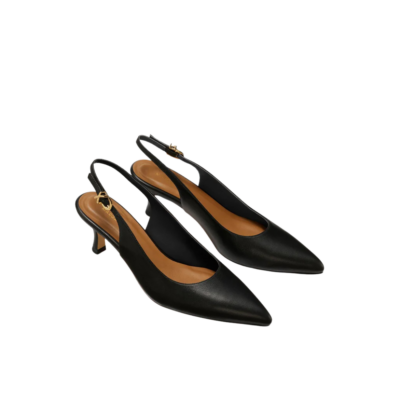
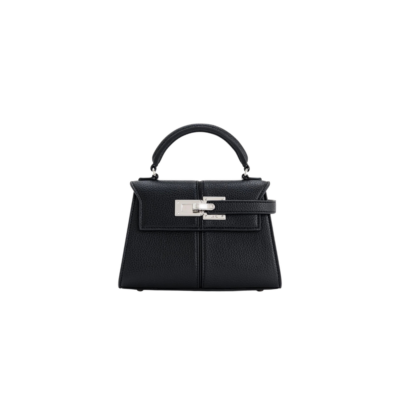
Though CBK is often remembered for her disciplined palette of black, ivory, and camel, there were occasional moments when she leaned into color—usually in the most understated way possible. In this street-style moment, she steps out in a soft floral dress paired with sleek black slingback heels and a structured handbag.

Even here, the formula remains unmistakably Bessette-Kennedy. The dress introduces pattern and color, but the accessories bring everything back to her signature minimalism. The result feels fresh, feminine, and surprisingly striking—a reminder that restraint doesn’t have to mean avoiding color altogether.

Why It Works

What makes this look so compelling is the contrast. The romantic floral dress introduces softness and movement, while the black accessories ground the outfit with structure and polish.

It’s an unexpected pairing that still feels entirely understated. Instead of leaning into overtly “springy” styling, Bessette-Kennedy balances the dress with sharp, minimalist pieces—pointed slingbacks and a sleek handbag—that keep the look aligned with her refined aesthetic.

And then there’s the hair: Bessette-Kennedy’s signature. Often worn loose and slightly undone, her hair acted as an accessory in its own right. Against the dress’s ease, the relaxed hair adds an effortless, almost romantic quality that makes the entire outfit feel natural rather than overly styled.

How to Get the Look

Here, you’ll pair a romantic dress with clean, structured accessories.

  • Start with a soft floral dress. Look for a silhouette that feels feminine but streamlined.
  • Ground the look with black accessories. Slingbacks or minimal heels add polish and contrast.
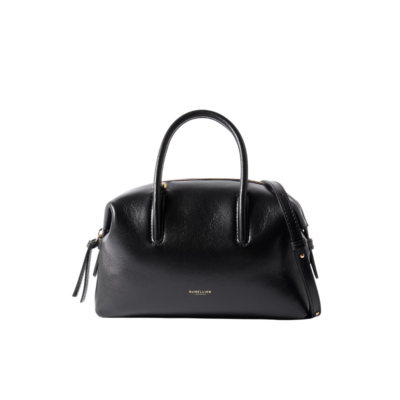
  • Carry a structured handbag. A simple top-handle bag keeps the outfit refined.
  • Keep the styling minimal. Let the dress provide the color while everything else stays understated.
  • Wear your hair loose. Slightly undone hair adds the effortless romance that defines the look.

Pin it
Photo: FX / Love Story

The Takeaway

What made Carolyn Bessette-Kennedy’s style so enduring wasn’t any single outfit—it was the clarity of her approach to getting dressed. She favored pieces that felt timeless rather than trendy, silhouettes that balanced structure with ease, and styling choices that never tried too hard.

Whether she was attending a formal gala, walking through Manhattan with John F. Kennedy Jr., or simply taking her dog around the block, the formula remained the same: beautiful basics, thoughtful proportions, and a confidence that let simplicity shine. Decades later, her wardrobe still feels remarkably modern. It’s proof that true style isn’t about chasing what’s new, but about knowing exactly what works.

The post The Effortless Style Rules Carolyn Bessette-Kennedy Always Followed appeared first on Camille Styles.

  •  

30 Small Ways to Make the Most of April

Camille Styles April bucket list

I’ve always loved the months that sit between seasons—the ones that feel like a quiet turning point. April is one of those rare moments in the year when everything seems to wake up at once. The light lingers a little longer in the evenings, the farmers’ markets start filling with color again, and suddenly the world feels full of small invitations to start fresh.

While January gets all the attention for new beginnings, spring has always felt like the real reset to me. It’s easier to imagine new habits and rituals when the days grow warmer, and the world outside begins to bloom again.

Pin it Friends laughing at happy hour.

30 Small Ways to Make the Most of April

So instead of a traditional bucket list, think of this as a gentle guide for the month ahead: 30 small ways to refresh your space, reconnect with yourself, gather with the people you love, and spend a little more time outside. Take what inspires you, skip what doesn’t, and let April unfold from there.

Refresh Your Space

April has a way of making our homes feel different almost overnight. The light shifts, the air warms, and suddenly you notice all the small ways your space could feel lighter and more alive. These ideas are simple ways to reset your surroundings and welcome the season inside.

1. Clean out your closet. Spring is the perfect excuse to let go of pieces that no longer feel like you. A lighter wardrobe can shift your mindset just as much as your space.

2. Refresh one corner of your home. Rearrange a shelf, swap pillow covers, or add a new candle. Sometimes the smallest change can make a room feel entirely new.

3. Buy yourself flowers. A bouquet on the kitchen counter or bedside table instantly brightens a space—and feels like a small act of care for yourself. Here’s how to DIY a stunning Trader Joe’s arrangement at home.

4. Find the perfect vase for your spring blooms. The right vessel can make even a handful of grocery store flowers feel special.

5. Make your home smell like spring. Swap winter’s warm spices for something lighter—citrus, herbs, or soft florals. These are our favorite spring scents.

6. Detox your cleaning routine. Consider swapping one conventional product for a non-toxic alternative that’s gentler on your home and the environment.

7. Organize your photo library. A rainy afternoon is the perfect excuse to declutter your camera roll and rediscover a few forgotten memories.

Reconnect With Yourself

Spring isn’t just a reset for our homes—it’s a chance to reconnect with ourselves, too. As the days grow longer, there’s a little more room for reflection, creativity, and rituals that help you feel grounded again.

8. Write a “spring reset” list. Instead of journaling pages, jot down what you’re leaving behind from winter and what you want to welcome this season.

9. Revisit your vision board. Check in with the intentions you set earlier this year and notice what still resonates—and what might be evolving.

10. Change up your breakfast routine. Try something new for the week: yogurt bowls with berries, soft-boiled eggs on toast, or a smoothie packed with spring fruit.

11. Celebrate National Poetry Month. Pick up a new poetry collection or revisit a poet you love. Even reading a few lines before bed can feel grounding.

12. Pick up a new spring hobby. Gardening, painting, hiking, or learning to identify wildflowers—spring is the perfect season to try something new.

13. Make a simple “spring tonic.” Sparkling water with lemon and mint, iced green tea with honey, or a refreshing drink that signals the shift into warmer days.

14. Create a cozy rainy-day ritual. When April showers arrive, lean into them: simmer soup, light a candle, and spend an afternoon reading or journaling. Here are 25 things to try when the weather’s keeping you indoors.

Cook & Gather

One of the best parts of April is the return of simple, seasonal food. Farmers’ markets begin to fill with color, dinners stretch a little later into the evening, and gatherings start to move outside again.

15. Host a picnic. Pack a blanket, a few easy snacks, and invite a friend to meet you in your favorite park. These picnic recipes have you covered.

16. Eat dinner outside. Even if it’s just takeout on the patio or your balcony, fresh air has a way of making a meal feel special.

17. Make your own yogurt. It’s easier than you think—and once you start, you may never go back.

18. Bake something lemony. No flavor captures the spirit of spring quite like lemon. Get zesty.

19. Make a spring pasta. Think asparagus, herbs, lemon, and parmesan—simple ingredients that shine this time of year.

20. Learn one signature spring cocktail. A grapefruit Paloma, Lillet spritz, or elderflower tonic you can make all season long.

21. Build dinner around the farmers’ market. Instead of arriving with a plan, let one beautiful ingredient guide the entire meal.

Get Outside

If winter encourages us to slow down indoors, April gently nudges us back into the world. Even small moments outside—a walk, a picnic, a sunny afternoon—can shift the energy of an entire day.

22. Work out outside. Swap one indoor workout for fresh air—whether it’s a walk, tennis match, or a yoga class in the park.

23. Take a sunrise walk somewhere new. April mornings feel like the beginning of something.

24. Visit a farmers’ market. Romanticize your grocery shopping a little while exploring all the fresh produce the season has to offer.

25. Go to a baseball game. Few things feel more like spring than sitting in the stands on a warm afternoon.

26. Choose one “summer anchor.” Instead of planning an entire trip, pick one moment to look forward to—a lake day, concert, or long weekend with friends.

27. Read outside. Even 20 minutes with a book on a bench or balcony counts.

28. Leave notes of kindness in unexpected places. A simple reminder that someone’s presence in the world matters.

29. Call someone you love. Not a text—an actual conversation.

30. Spend one afternoon with no agenda. Let the season guide the day and see where it takes you.

This post was last updated on April 1, 2026, to include new insights.

The post 30 Small Ways to Make the Most of April appeared first on Camille Styles.

  •  

30 Feel-Good Things to Do This Spring That Don’t Involve Drinking

Woman riding bike outside

When I first stopped drinking, I thought life would get smaller. Quieter. Maybe even a little boring. I pictured saying no more often than yes—opting out of plans, missing the stories, becoming someone slightly removed from the version of fun I had always known. But what I didn’t expect was how much space it would create. Without alcohol at the center, I had to re-learn what I actually enjoyed, and what I found was something more honest, more intentional, and ultimately more satisfying.

It didn’t look like the kind of fun I once imagined would carry over from my 20s: late nights I couldn’t quite remember, chaotic group texts the next morning, or reaching for my phone with a vague sense of regret. Instead, it was slower. More grounded. And, maybe surprisingly, more expansive. The kind of connection that stays with you, and the kind of energy you carry into the next day. Over time, what once felt like a loss started to feel like an opening.

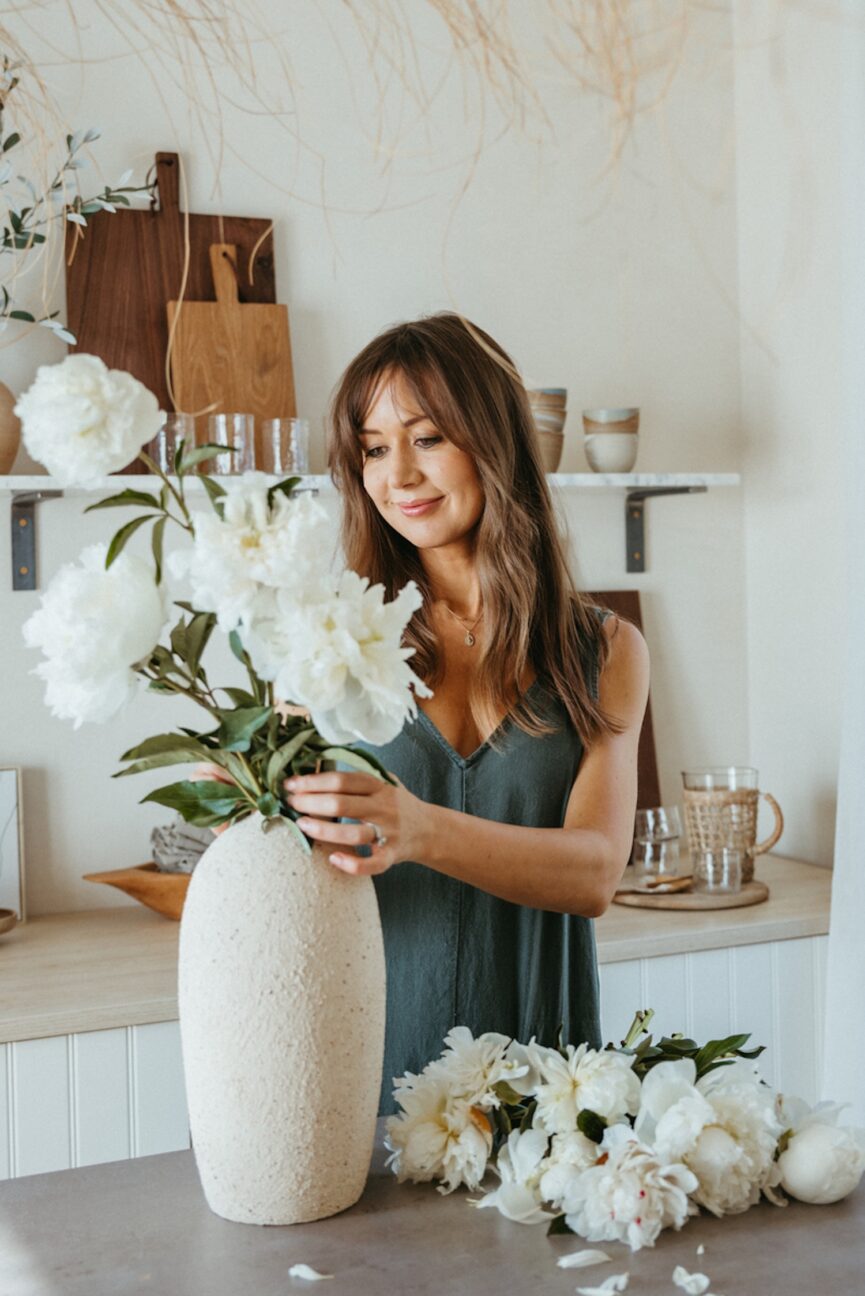
Pin it Camille Styles arranging white peonies in a vase.

Now, I think about not drinking less as a restriction and more as a shift in perspective. Because when you remove alcohol from the center of the plan, something interesting happens: the experience expands. This list of sober things to do isn’t about rules or labels—it’s about options. 30 ways to spend your time this spring that feel social, seasonal, and genuinely fun, whether you’re sober-curious, cutting back, or simply in the mood for something different.

Why More of Us Are Choosing Sober Things to Do

It’s not just you—something larger has shifted. More of us are rethinking our relationship to drinking, not in a dramatic, all-or-nothing way, but in the small, everyday decisions that start to add up. Choosing the morning workout over the second glass. Suggesting a walk instead of a bar. Wanting to feel clear-headed, well-rested, and actually present in our lives.

There’s a kind of ease in that shift. Less pressure, more intention. And maybe most surprising of all—it doesn’t feel like giving anything up. It feels like gaining energy, connection, and a version of socializing that actually leaves you feeling better than when you started.

30 Sober Things to Do This Spring

These ideas build on that shift: less about doing more, and more about doing things differently. Lean into the longer days, the open windows, the small rituals that make this season feel like a reset. Start where it feels easy, and follow what sounds fun (yes, actually fun).

For Slow, Feel-Good Mornings

Spring mornings have a way of asking less of you and offering more in return. These are the kinds of plans that start your day gently, but stay with you long after.

1. Sunrise walk + coffee ritual. Wake up just a little earlier than usual and step outside while the world is still quiet. Bring your coffee in a to-go cup, take your time, and let the light shift around you. It’s a simple way to start the day feeling grounded.

2. Farmer’s market date. Meet a friend (or go solo) and wander without a plan. Pick up what looks good—fresh fruit, bread, a bouquet you didn’t know you needed—and let the morning unfold slowly. It’s part errand, part ritual, and always a little indulgent.

3. Morning yoga + journaling. Start with a short, gentle flow. We’re not going for intensity, just enough to wake up your body. Then settle in with your journal. A few pages will help you feel clearer, more present, and a little more like yourself.

4. Beach or park picnic breakfast. Pack something simple—pastries, fruit, a thermos of coffee—and head outside. Sitting in the grass (or by the water) turns an ordinary breakfast into something that feels like a small escape, even if it’s just for an hour.

5. Try a new coffee shop. Pick somewhere you’ve been meaning to go and make it the plan. Order something you wouldn’t usually, sit a little longer than you need to, and let it feel like a small outing rather than a quick stop.

For Social Nights That Feel Better Than a Bar

These days, I’m all about making plans that don’t revolve around a crowded room or a second round. They’re the kinds of nights that feel more thoughtful from the start—and you leave feeling more connected than depleted.

6. Cookbook dinner party. Choose a cookbook everyone loves (or has been meaning to try) and build the menu together. Assign dishes, open a bottle of something non-alcoholic that feels special, and let the evening unfold slowly.

7. Themed potluck night. Give the night a direction—Mediterranean, spring produce, farmer’s market finds—and have everyone bring a dish to match. It takes the pressure off hosting, and there’s something undeniably fun about a table that feels cohesive without being overthought.

8. Game night, but make it intentional. Pull out a favorite game, but elevate the atmosphere: candles lit, a playlist in the background, and snacks you actually look forward to. These are *hands down* the best game night games.

9. Outdoor movie night. Set up a projector (or keep it simple with a laptop) and pile on blankets and pillows. Add popcorn, something cozy to sip, and a few friends or the fam. It’s low-effort, but feels like an occasion.

10. Sunset picnic with friends. Meet in a park or by the water just before golden hour, bring a few simple snacks, and stay as the light fades. It’s 100% romanticize-your-life-vibes, and one of those plans that always feels like more than it is.

For Creative Energy

Making things with your hands can shift your energy almost instantly. No pressure to be good at it, no end goal—just the act of creating, following what feels interesting, and letting yourself get a little lost in the process.

11. Floral arranging night. Pick up a few bunches of flowers—whatever looks good, nothing too precious (TJ’s flowers work perfectly here)—and arrange them at your own pace. Do it solo or invite a friend, play music, and let it be more about the process than the result.

12. Ceramics or painting class. Sign up for a local class or set something up at home with a few simple supplies. It’s a chance to try something new, use your hands, and step out of your usual routine in a way that feels low-stakes and genuinely fun.

13. Vision boarding (spring reset edition). Gather magazines, print out images, or pull from what you already have. Let it be intuitive. Vision boarding is a way to check in with yourself and what you want more of this season.

14. DIY perfume or essential oil blending. Spend an afternoon experimenting with scents—layering oils, noticing what you gravitate toward, creating something that feels personal.

15. Host a craft night. Set out simple materials—paints, paper, beads, old magazines—and invite friends over to create whatever they feel like. No structure, no expectations. It’s less about what you make and more about giving everyone a reason to slow down and stay awhile.

For Movement + Mood Boosts

Sometimes the shift you’re craving isn’t more plans—it’s a change in energy. A little movement, a change of scenery, something that gets you out of your head and back into your body.

16. Long walk + podcast date. Pick a route, press play on something you’ve been wanting to listen to, and let yourself walk without an endpoint in mind. It’s equal parts movement and mental reset—the kind that makes everything feel a little more manageable.

17. Dance or strength training class. Try something that gets you moving in a way that feels fun, not forced. Whether it’s a dance class, a strength session, or something new entirely, it’s less about the workout and more about how you feel when you leave.

18. Hike with a scenic payoff. Choose a trail that gives you something to look forward to: a view, a body of water, a quiet clearing. Bring snacks, take your time, and treat it less like a workout and more like a way to spend a few uninterrupted hours outside.

19. Bike ride + matcha stop. Plan a route with a destination in mind—somewhere you can pause and sit for a while. It turns the ride into part of the experience, not just a means to an end.

20. Visit a local garden or botanical space. Spend an hour wandering somewhere designed to be beautiful: botanical gardens, a nursery, even a gorgeous neighborhood. It’s simple, grounding, and perfectly aligned with the energy of spring.

For Cozy Evenings In

Not every night needs a plan. Sometimes, staying in can feel like the most intentional choice of all. These are the kinds of evenings that help you unwind, reset, and enjoy your own company in a way that feels restorative, not routine.

21. Late-night bath ritual. When the instinct to go out hits, stay in—but make it feel like something to look forward to. Run a bath, dim the lights, bring in a book or a playlist, and let yourself fully relax. It’s a small ritual that can completely shift your night.

22. Skincare + self-care evening. Turn your routine into something a little more considered. A face mask, a longer shower, and layering in the products you usually rush through.

23. Reading night with a curated stack. Gather a few books you’ve been meaning to start (or return to), make something warm to drink, and settle in.

24. Cook a new recipe just for yourself. Pick something you’re excited about and take your time with it. Set the table, light a candle, and let the process be part of the experience. Cooking for yourself can feel surprisingly grounding (and even a little indulgent).

25. Plan a “get ready and stay in” night. Put on music, get dressed up (or just a little more put together than usual), and spend the evening at home. It captures the fun of getting ready without the pressure of going out.

For Connection (That Actually Feels Like Connection)

When you take alcohol out of the equation, what’s left becomes a little clearer: the conversation, the presence, the way time is spent together. These are the kinds of plans that feel simple on the surface, but often end up meaning the most.

26. Phone-free dinner with friends. Set the tone from the start—phones away, dinner on the table, and nowhere else to be. Without the usual distractions, the conversation tends to stretch a little deeper and linger a little longer.

27. Walk-and-talk catch-ups. Meet a friend for a walk instead of a drink. It keeps things moving, takes the pressure off, and often leads to more honest, unfiltered conversations than sitting across from each other ever could.

28. Host a “no plans” night. Invite a few people over without an agenda. No structured activity, no timeline—just time to sit, talk, snack, and see where the night goes.

29. Start a book or article club. Choose something to read—short or long—and gather to talk about it. It gives everyone a starting point, but often leads somewhere entirely unexpected. Equal parts thoughtful and social.

30. Take yourself on a solo date. Go somewhere you’d normally save for company—a museum, a long lunch, a bookstore—and do it on your own. It’s a quiet way to reconnect with yourself, and often more enjoyable than you expect.

Now that drinking is no longer a part of my life, I’m actively choosing the kinds of moments I actually want to remember. The ones that feel good while they’re happening, and even better the next day. And realizing that nothing about that feels like a trade-off.

The post 30 Feel-Good Things to Do This Spring That Don’t Involve Drinking appeared first on Camille Styles.

  •  

I Have Water Retention From Sitting All Day—This Is What Actually Helped

Woman writing list at desk.

I used to think water retention was just one of those things you were forced to deal with—something that showed up in the heat, around my cycle, or after a long flight. But over time, I started to notice a pattern I couldn’t ignore: the more hours I spent sitting at my desk, the worse it felt.

By the end of the day, my legs felt heavy, tight, and noticeably swollen—like my body was holding onto something it couldn’t release. And despite doing all the “right” things, it wasn’t going away.

Pin it

So I did what most of us do: I went down the internet rabbit hole. But most of what I found about water retention felt generic at best—and at worst, completely disconnected from what I was actually experiencing. Because here’s what I’ve come to understand: water retention from sitting all day is its own thing. It’s not just about hydration or sodium—it’s about circulation, movement, and how your body responds to long stretches of stillness.

Once I started approaching it that way, everything shifted. Over time, I experimented with small changes—some intuitive, some backed by research—and slowly started to notice what actually made a difference. Ahead, I’m sharing the habits that helped relieve water retention, and why they work—so you can build a routine that supports your body, especially if your days look anything like mine.

What Causes Water Retention From Sitting All Day?

To understand why this happens, it helps to look at the lymphatic system. “Think of the lymphatic system as the body’s drainage network,” Sabrina Sweet noted previously. “It transports lymph—a fluid containing immune cells and waste products—through your tissues and eventually back into your bloodstream.”

Unlike the circulatory system, which has the heart to keep blood moving, the lymphatic system depends on movement—muscle contractions, walking, even breath—to keep fluid flowing.

When that movement slows, fluid can begin to collect, especially in the lower body. Over time, that buildup can show up as the heaviness, puffiness, and water retention so many of us feel after a day spent sitting. It’s not that your body is holding onto water at random—it’s responding to stillness.

Why Sitting Makes Water Retention Worse

Sitting for long periods doesn’t just make you feel stiff—it changes how fluid moves through your body.

Research has shown that prolonged sitting can reduce circulation and contribute to fluid buildup in the lower body. In one study, extended periods of sitting led to both decreased blood flow and measurable swelling in the lower limbs—especially when movement was limited. Without regular muscle contractions—like walking, stretching, or even shifting your weight—fluid can begin to pool in the legs, ankles, and feet.

Over time, this creates a pattern that’s easy to recognize: swelling that builds throughout the day, a feeling of heaviness, and skin that looks or feels slightly tighter by evening.

But it’s not just about circulation—it’s also about what’s not happening.

When you’re moving, your muscles act like a pump, helping push fluid back up through the body. When you’re sitting still for hours at a time, that system slows down. The result is subtle, but cumulative: fluid lingers longer than it should, and your body has a harder time clearing it efficiently.

Even small interruptions in that stillness can make a difference. Try breaking up long periods of sitting with short bouts of activity—standing, walking, or stretching. It can help support circulation and reduce fluid buildup over time.

Here’s a mindset that helped me make this a habit: your body isn’t designed for stillness—it’s designed for flow.

The Small Shifts That Actually Helped My Water Retention

Once I stopped looking for a quick fix, I started noticing something else: it wasn’t one big change that made a difference, but a series of smaller ones that worked together. Over time, these low-lift habits created a shift: less heaviness, less swelling, and a sense that my body was actually able to keep things moving.

I Stopped Sitting for Hours Without Moving

This was the biggest one. I used to move in extremes—either fully sedentary at my desk or fully active during a workout. But what my body actually needed was something in between: consistent, low-effort movement throughout the day.

Now, I break up long stretches of sitting with small resets: standing up to stretch, walking around my apartment, and even just shifting positions more often. It’s enough to remind my body to keep things moving, and the difference between fluid building up and fluid flowing through.

I Started Elevating My Legs (Even Briefly)

This felt almost too simple to make a difference, but it did. At the end of the day, I’ll lie down and prop my legs up against the wall or on a pillow for a few minutes. (Pro tip: My favorite manifestation app has a ‘legs up the wall’ series I listen to at the same time.) It’s one of the quickest ways to counteract gravity and give your body a chance to redistribute fluid more evenly.

The effect is immediate: less heaviness, less pressure, and a noticeable shift in how my legs feel.

I Made Hydration More Intentional

I thought I was already good at drinking water, but I started to notice that how I was drinking it mattered just as much as how much.

Instead of reaching for a glass only when I felt dehydrated (or trying to catch up at the end of the day), I began spacing it out more evenly—small, consistent sips rather than large amounts all at once.

As Camille Styles Wellness Editor and Nutritionist, Edie Horstman previously noted, “Don’t chug—it overwhelms your system.” That shift alone changed how my body responded. When hydration felt consistent, I noticed less of that end-of-day heaviness, the kind that can come from your body holding onto fluid instead of moving it through.

I Focused on Gentle, Daily Movement

If you haven’t embraced it yet, now’s the time: not every day calls for an intense workout.

Walking, stretching, and low-impact movement ended up being just as impactful (if not more) when it came to reducing that heavy, swollen feeling. It supports circulation without adding stress, which, over time, helps the body regulate more efficiently.

One study found that just a couple of hours of uninterrupted sitting significantly increased calf swelling, and that it took about 20 minutes of walking to return fluid levels back to baseline.

Don’t get me wrong, I still love my 6 a.m. barre3 classes. But this was an important lesson for my overall wellness: movement doesn’t have to be intense to be effective. It just has to be consistent.

I Tried Dry Brushing and Lymphatic Massage

Dry brushing before a shower, light self-massage, or even just slowing down enough to take deeper breaths—all of it supports the body’s natural ability to move fluid through its systems.

None of it is complicated. But together, it creates momentum that your body responds to.

The Takeaway

It’s true for almost anything you’re trying to improve in life: the biggest shift is rarely in adding more. You find it by paying attention to what your body actually needs.

Water retention stopped feeling like something random or frustrating, and started to feel like feedback. A sign that I’d been still for too long, or that my body needed a little more support to keep things moving. Once I started responding to it that way—through small, consistent shifts instead of quick fixes—everything changed for the better.

This post was last updated on March 30, 2026, to include new insights.

The post I Have Water Retention From Sitting All Day—This Is What Actually Helped appeared first on Camille Styles.

  •  

These Memoirs Made Us Call Our Therapist (We Have No Regrets)

Camille Styles reading best memoirs by women.

There is nothing quite like a memoir to crack you open. Not in the dramatic, obvious way—but in a slow accumulation that happens when you recognize something true about yourself in someone else’s story. A really good one clarifies something you haven’t found the words for. Until now.

The Best Memoirs by Female Authors Will Shift Your Perspective

We’ve always loved sharing the books that move us, and this list has been a long time coming. These aren’t the memoirs you’ll find on every “must-read” roundup (though a few have earned their moment in the spotlight, here’s looking at you, Strangers). They’re the ones we keep pressing into people’s hands, the ones that stay with you long after the last page, and the ones that made us see marriage, ambition, grief, and the shape of a life a little differently. Whatever you’re carrying right now, one of these will meet you there.

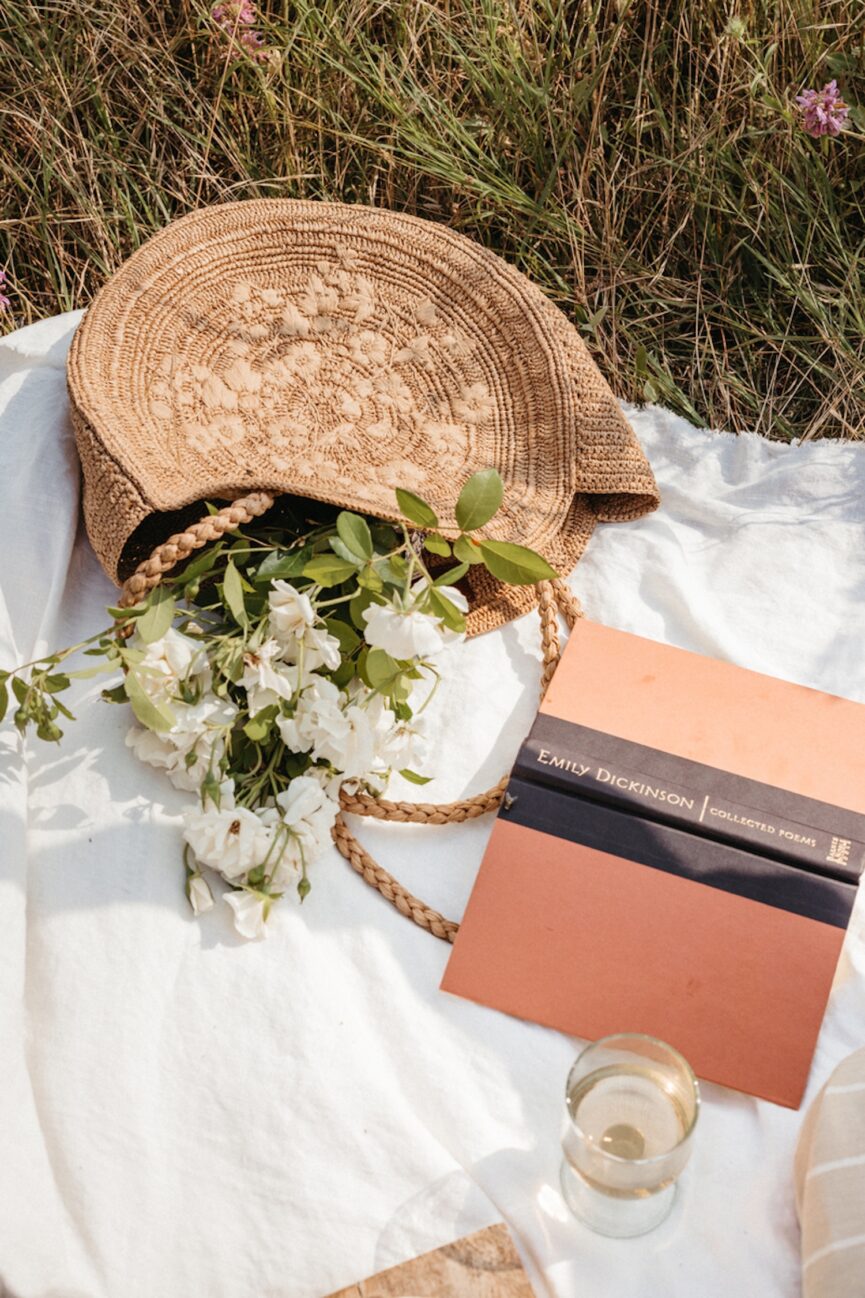
Pin it Best memoirs on picnic blanket beside flowers and a glass of wine.

On Love, Marriage, and What We Don’t See Coming

Some of the most clarifying books ever written about love are the ones about its unraveling. But I wouldn’t think of these as cautionary. These three books ask the questions most of us are carrying—and think we’re carrying alone.

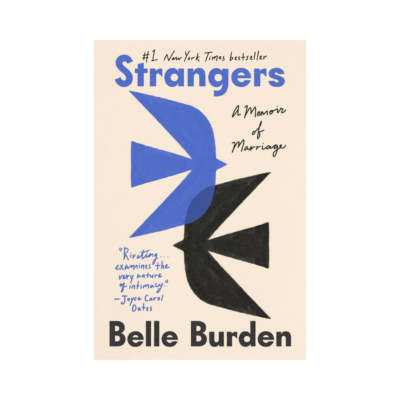
Strangers: A Memoir of Marriage by Belle Burden

Belle Burden’s 20-year marriage ended without warning during the pandemic: her husband announced he was leaving, offered no explanation, and nearly overnight became a man she didn’t recognize. What follows is a reckoning with the ways women make themselves small inside a marriage, and what happens when one woman decides to stop. Consider it essential reading.

Threshold

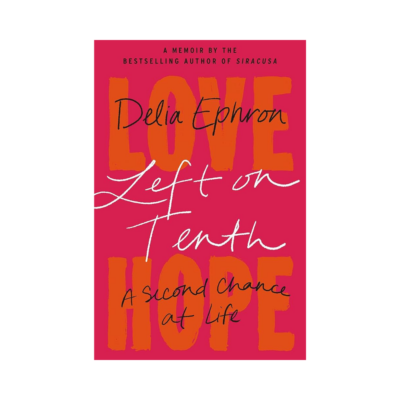
Left on Tenth: A Second Chance at Life by Delia Ephron

Ephron had just received a leukemia diagnosis when a man she had briefly dated decades earlier reached out by email after reading one of her essays. What followed was a love story that unfolded in hospital waiting rooms and remission celebrations. Tender, funny, and deeply moving—the rare memoir about late-in-life love that earns every emotion it asks of you.

Threshold

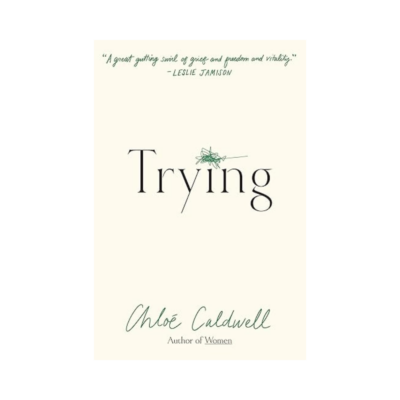
Trying by Chloé Caldwell

What begins as a fertility story takes a turn that reshapes everything—including what Caldwell thought she knew about her marriage and her own identity. Spare and wry, this is one of those books that gets harder to put down the more uncomfortable it gets. It rides the line between heartbreaking and funny in a way that feels true to life itself.


On Reinvention and Reclaiming Your Story

These are the books about women who rewrote the narrative—sometimes quietly, sometimes dramatically, always on their own terms. The consistent truth: identity is something you build, not something that happens to you.

Love, Pamela by Pamela Anderson

A radiant, deeply personal account of a woman reclaiming her own narrative—on her own terms, in her own words. Tender, self-aware, and far more moving than you might anticipate (if, unlike me, you haven’t been hungrily devouring her Substack). Easily one of the most memorable books on this list.

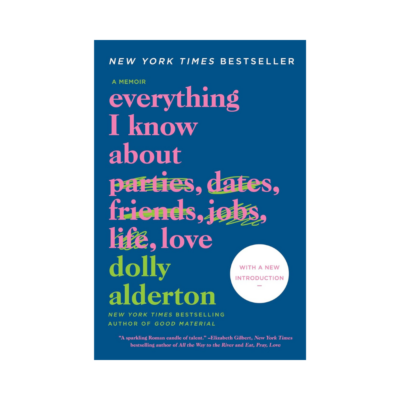
Everything I Know About Love by Dolly Alderton

Alderton’s memoir of her twenties—the bad dates, the great friendships, the slow work of becoming yourself—reads like a message from your most honest friend. If you haven’t read it yet, consider this your sign.

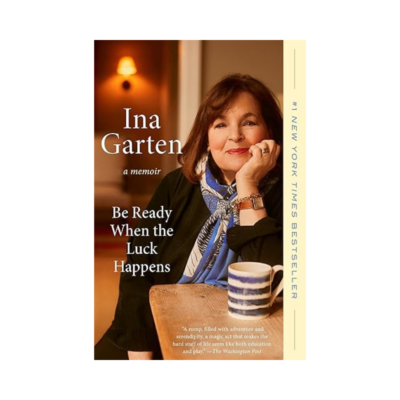
Be Ready When the Luck Happens by Ina Garten

What looks like a career memoir turns out to be something more interesting: an unusually candid account of a complicated marriage and a series of bold bets that led her to become one of the most beloved figures in American food. Garten writes about luck as something you prepare for, not wait for.

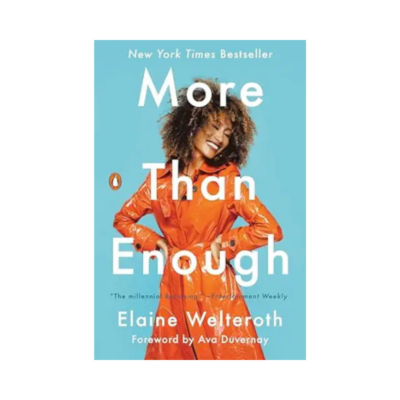
More Than Enough by Elaine Welteroth

The second youngest editor-in-chief in Teen Vogue history writes about ambition, race, and what it actually takes to break barriers. This isn’t the polished version, it’s the honest one.


On Inner Life, Grief, and Learning to Rest

Not every book on this list will leave you feeling inspired in the traditional sense. Some will just make you feel less alone in what you’re carrying. I like to think of that as its own kind of nourishment.

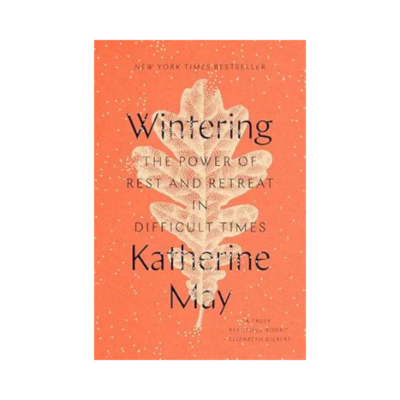
Wintering: The Power of Rest and Retreat in Difficult Times by Katherine May

When May’s life came to a sudden halt, she didn’t push through. She wintered. This hybrid memoir weaves her own story with natural history and mythology to make a quiet, radical argument for rest. Not self-help — something richer. One of the most healing reads we know.

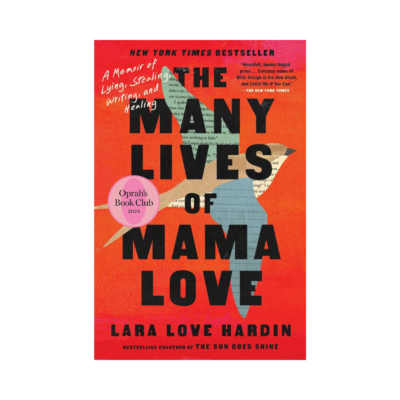
The Many Lives of Mama Love by Lara Love Hardin

Hardin was, by every outward measure, a successful suburban mom — until the opioid addiction she’d hidden for years caught up with her, and she found herself convicted of 32 felonies. Startling in its honesty and unexpectedly redemptive. A book about the gap between the life we show people and the one we’re actually living.

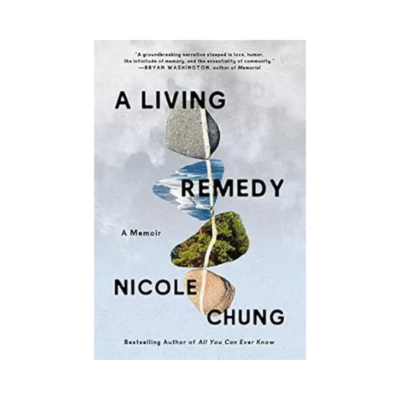
A Living Remedy by Nicole Chung

In two years, Chung lost both parents—her father to decades of precarity and a healthcare system that failed him, and then her mother to cancer, just as COVID made the distance between them feel insurmountable. This is a book about grief, yes, but also about the particular guilt of upward mobility in America: what it means to build a different life for yourself while the people you love remain at the margins.

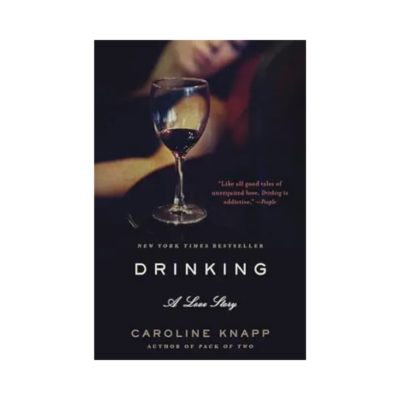
Drinking: A Love Story by Carolyn Knapp

An older title and one of the most enduring on this list—recommended by Camille’s mom, who still thinks about it years later. Knapp writes about her relationship with alcohol with a novelist’s precision and an intimacy that makes it feel less like confession and more like a conversation. I think it’s one of the most beautifully written memoirs about addiction ever published.


On Family, History, and the Stories We Inherit

Feeding Ghosts by Tessa Hulls

The 2025 Pulitzer Prize winner for memoir, and unlike anything else on this list. A graphic memoir tracing three generations of Chinese women: Hulls’s grandmother, who survived the Communist revolution, fled to Hong Kong, and poured it all into a memoir—only to unravel in the aftermath; her mother, who inherited that silence and its weight; and Hulls herself, who spent nearly a decade drawing and writing her way toward understanding. If you’ve never read a graphic memoir, start here.

The Wildcard

Paris: The Memoir by Paris Hilton

This is a serious reckoning with a life spent performing a persona she created as armor—and the boarding school abuse at the center of it is not what you’d expect. More than a celebrity tell-all, it’s a story about survival and self-invention that earns its place on any list of books about the distance between who the world sees and who you know yourself to be.

This post was last updated on May 7, 2026, to include new insights.

The post These Memoirs Made Us Call Our Therapist (We Have No Regrets) appeared first on Camille Styles.

  •  

27 Long-Distance Relationship Ideas to Stay Close—Even When You’re Miles Apart

Couple smiling on front porch

Long-distance relationships ask a lot of you. When you live in different cities, staying connected takes intention—especially during the days between visits. My boyfriend lives in San Francisco, and I live in Portland. While we’re lucky enough to see each other a couple of times each month, there are still long stretches when we’re living our daily lives in separate places.

Over time, we’ve learned that staying close from afar isn’t about doing something elaborate. It’s about finding simple ways to stay present in each other’s days.

A quick voice note on a walk home. A shared playlist that keeps evolving. Planning the next visit before the current one ends. These small habits make the distance feel manageable—and remind you that you’re still building a life together, even when you’re apart.

Pin it Long-distance couple laughing together.

Long-Distance Relationship Ideas That Actually Help You Stay Connected

While every relationship looks different, the goal is the same: finding ways to feel present in each other’s lives even when you’re apart. Some are romantic, some practical, and some simply fun. The best ones become small rituals you return to again and again—the kind of habits that make the time between visits feel a little easier.

The truth is, long-distance relationships don’t have to feel like something you’re simply getting through until circumstances change. With the right rituals, they can deepen communication, create anticipation, and make the time you spend together feel even more meaningful.

Ahead, you’ll find our favorite long-distance relationship ideas—from romantic surprises to cozy virtual rituals to modern tech-friendly habits that help you stay connected from anywhere.

The Everyday Habits That Make the Distance Easier

My boyfriend and I have found a few small habits that make the distance feel easier. None of them are complicated, but they help us feel like we’re still sharing the everyday parts of life.

1. Send photos from your day. A quick photo from a morning walk, a favorite coffee shop, or your neighborhood farmers’ market helps your partner feel included in your everyday life—even when you’re in different cities.

2. Keep a shared playlist. Start a playlist you both add to over time. It becomes a running soundtrack to your relationship and gives you something to listen to when you’re missing each other.

3. Plan the next visit before saying goodbye. Before one visit ends, put the next one on the calendar. Having something to look forward to makes the time apart feel much more manageable.

Romantic Long-Distance Relationship Ideas

4. Plan a surprise visit. If schedules allow, an unexpected reunion can be one of the most memorable ways to reconnect.

5. Send something that brightens their space. Flowers are classic, but a favorite candle or fresh bread from a bakery you love can feel just as thoughtful.

6. Exchange your signature scents. Wearing or spraying your partner’s favorite fragrance can be a surprisingly comforting reminder of their presence.

7. Send a favorite book with notes inside. Mail them a novel, poetry collection, or essay book you love—highlighting passages that remind you of them.

8. Write a handwritten letter. There’s something special about receiving real mail that isn’t a bill (lol). A handwritten note instantly feels more personal than a text.

Relaxing Ways to Stay Connected From Afar

9. Share an end-of-day check-in call. Instead of texting throughout the day, set aside time in the evening to talk through your highs and lows.

10. Go on a walk and talk. Call each other while you’re both out for a walk. It almost feels like you’re exploring together.

11. Send a small “thinking of you” package. A favorite snack, a book you loved, or something that reminded you of them can make an ordinary week feel special.

12. Take a meditation or breathwork class together. Apps like Headspace or Calm make it easy to share a relaxing ritual, even from afar.

Long-Distance Dinner Date Ideas

13. Cook the same meal together. Choose a recipe you’re both excited about and cook while video chatting.

14. Send delivery from their favorite restaurant. Ordering dinner for your partner from afar is a simple way to show care.

15. Order the same coffee subscription. Signing up for the same subscription makes it easy to enjoy something together each month.

16. Take a virtual cooking class together. Many chefs now offer online classes, making this a fun shared activity.

Thoughtful Gestures That Show You Care

17. Gift them a plant. A low-maintenance plant becomes a living reminder of your relationship.

18. Create a shared watch list. Keep a running list of shows and movies you want to watch together so you always have something lined up for your next virtual movie night.

19. Plan your next trip together—even if it’s hypothetical. Pick a destination, research hotels, and build a shared list of places you want to try. Planning something together keeps the future feeling shared.

20. Stock their fridge before you leave. If you’re visiting, leaving behind a few groceries is a sweet and practical gesture.

Fun Long-Distance Activities to Do Together

21. Take a virtual workout class together. From yoga to dance workouts, moving together (apart) can be surprisingly fun.

22. Start a two-person book club. Pick a book each month and talk about it on your next video call.

23. Listen to the same podcast. Choose a podcast series and discuss episodes as you go.

24. Play an online game together. Whether it’s chess, Mario Kart, or a puzzle game, a little friendly competition keeps things light.

Tech-Friendly Long-Distance Relationship Ideas

25. Keep a shared notes app. Use it to jot down ideas, future plans, or things you want to talk about later.

26. Send voice notes instead of texts. Hearing your partner’s voice—even briefly—can instantly make the distance feel smaller.

27. Start a daily photo ritual. Send one photo from your day each evening. It’s a simple way to stay connected to each other’s routines.

Final Thoughts

Long-distance relationships aren’t always easy. There are missed dinners, quiet apartments, and plenty of moments when you wish you could reach across the couch instead of across a screen. But distance also has a way of sharpening what matters.

When you live in different places, connection becomes something you practice intentionally. You learn to communicate more clearly, plan time together thoughtfully, and appreciate the ordinary moments you might otherwise take for granted.

My boyfriend and I still count down the days until our next flight between PDX and SFO. But in the meantime, these small rituals help us stay present in each other’s lives.

Because ultimately, long-distance relationships aren’t about closing the miles between you. They’re about continuing to choose each other, wherever you are.

This post was last updated on March 18, 2026, to include new insights.

The post 27 Long-Distance Relationship Ideas to Stay Close—Even When You’re Miles Apart appeared first on Camille Styles.

  •  

The Mother’s Day Gifts She Won’t Ask For (But Will Love)

mother and son in the garden

Whenever a gift-giving holiday rolls around, my mom goes one of two routes: the classic “don’t get me anything,” or a list of practical staples she’ll end up buying herself anyway (think: notepads, a fresh tube of mascara—you know the type). Which makes finding 2026 Mother’s Day gifts for her feel like a challenge I’m determined to get right. The truth is, she doesn’t need a gift to feel my love—she gets that in the countless FaceTimes, texts, and love notes that keep us connected between coasts. But that’s exactly why I want to find one that feels worthy of it. (Is my overthinking showing?)

I’m not a mom myself, but Mother’s Day still feels personal. It’s about the women in my life who show up, care deeply, and somehow make it all look effortless: my sister, who doesn’t just run marathons but wins them; a dear friend who hosts with the kind of ease I’m still trying to master; and my own mom, who deserves something far more thoughtful than anything she’d ever ask for.

mothers day gift guide

The best gifts are the ones she wouldn’t splurge on herself—but once she has them, they elevate her everyday. Ahead, I’ve rounded up the gifts I’m actually giving this year. My style of Mother’s Day gifting is focused on thoughtful, beautiful finds for every kind of mom in your life.

For the Mom Who Has Everything

This is where things get interesting. The best gifts here are the ones she wouldn’t buy for herself, but once she has them, she can’t imagine living without them.

Knesko Skin

The Luxe Face Mask Kit

This is what you get her instead of telling her to “take some time for herself.” Each mask comes with a meditation. I’m currently on my third set of these (obsessed) and I’ve started to tuck the little meditations into everything from letters to care packages for my loved ones.

Bed Threads

Coast Bedding Set

Bedding, for Mother’s Day? Actually groundbreaking. She’d never buy this for herself, but she definitely has a Pinterest board dedicated to the color. It’s the kind of upgrade she’ll think about every night once she has it.

Bio-Therapeutic

bt-sculpt GEN2

If she’s even a little into skincare, this is the tool she didn’t know she was missing. It’s quick, effective, and makes a visible difference. (This skincare-obsessive writes from experience.)

OSEA

Undaria Body Glow Trio

If she’s the type to reapply lotion three times a day and still not be satisfied, this is the upgrade. Skin feels softer, looks better, and actually stays that way.

Friend of Mine

Friend of Mine Aprons

A nostalgic, beautifully printed apron that turns everyday cooking into something you actually look forward to. (Shout out to everything Friend of Mine does—it’s Mother’s Day gifting gold.)

Juniper Books

Jane Austen Book Set

Same stories, better presence. If she organizes her bookshelves by color, this is an easy win.

Drowsy

Silk Sleep Eye Mask

Most sleep masks are… fine, but this one actually works. It blocks everything out and makes her feel like she’s sleeping in a hotel.


Beautiful, Personal Keepsakes

For when you want something that feels a little more personal—without veering into anything overly precious. These are the pieces she’ll actually always keep.

Casa Zuma x west~bourne

The Sunday Salad Set

For the mom who can throw together a simple meal and still make it feel like a whole thing. A beautiful set that makes even a quick lunch look intentional.

Quince

14K Gold Diamond Bezel Necklace

This is the one she’ll wear every day and forget to take off. (Exactly the point.)

Wilde House Paper

Pieces of You Journal

Thoughtful, but not intimidating. No prompts to overthink—just a place she’ll actually want to come back to. It has a following for a reason.

Casa Zuma x Limor Pinz

Topanga Mug

A good mug is weirdly personal. Maybe that’s why I have 20 and always come back to the same one? This mug has just enough weight and shape to make it feel like hers from the first sip.


For Her Daily Rituals

Nothing she exactly needs, but everything that makes her day run a little smoother.

Maison Louis Marie

Liane de Tomate Candle

Not sweet, not predictable. I’ve told everyone to buy one—it’s the scent of spring and summer. (I’m stocking up.)

Bare Hands

The Dry Gloss Manicure Kit.

She wants to feel polished, and not spend two hours doing it. This gets her there faster.

Dr. Deepika Chopra

The Power of Real Optimism

Not overly positive, not unrealistic—this is about staying grounded when things are hard. It’s the kind of book she’ll read slowly, underline, and come back to when she needs it most.

Anima Mundi

Immortelle Face Cream

I trust Anima Mundi with pretty much every part of my routine, so this was an easy yes. It’s rich in botanical ingredients like helichrysum, aloe, and jojoba, so you actually wake up with hydrated, calmer, noticeably better-looking skin—not just the idea of it.

kai

Eau de Parfum (1.7 oz.)

This is the one people stop her for. It’s light, floral, and somehow always reads as her skin, but better—not overpowering, just unmistakably good. The kind of scent she’ll wear every day and still get asked about.

Anthropologie

Eden Stoneware Tea Cups, Set of 4

The cups she’ll pull out when she’s not drinking her coffee standing up.

Stephen Orr

Gardener’s Mindset

For when she wants to slow down, but needs a reason to do it. This is the kind of book she’ll pick up, read a few pages of, and always keep on the nightstand.

Three Peaks

Manuka Honey

One of those small additions that makes her feel like she has her life together—at least in the morning. Rich, slightly earthy, and packed with real antibacterial benefits, it’s the kind of upgrade she’ll actually stick with.

Loftie

Alarm Clock

If she’s still waking up to her phone, this is the upgrade. It’s softer, calmer, and makes her mornings feel noticeably less chaotic. (Bonus: It doesn’t require a phone to operate—so she has no excuses for keeping it out of the bedroom.)

Effortless Style Upgrades

Some gifts just slip seamlessly into her life—no occasion required. These are the pieces that elevate her everyday style with ease, blending function, comfort, and just the right amount of polish.

Clare V.

Baseball Hat

The easiest way to pull herself together on the go. (While still looking undeniably chic.)

The Jacket Maker

Rumy Black Leather Biker Jacket

I’m fully convinced every woman needs one incredible leather jacket, and this is it. It’s timeless, slightly oversized in the right way, and works with everything—from a clean, minimal look to something softer and more feminine.

July Luggage

Juliette Soft Work Tote

You know them for their luggage—this is just as good. If she’s the kind of mom who leaves the house with no less than seven things in her hands, this bag is the answer. Big enough to carry everything without collapsing into chaos.

Kat the Label

Olivia Pant Set

Feels like pajamas, looks like she has plans. She’ll wear it more than she expects.

Haven Well Within

Faux Fur Criss Cross Molded Slippers

Not just a house slipper. These are the ones she’ll put on in the morning and realize she never took off.

Sézane

Dorotha Dress

The kind of dress that makes every day feel a little more romantic. She’ll throw it on, add nothing else, and still feel put-together.

This post was last updated on April 20, 2026, to include new insights.

The post The Mother’s Day Gifts She Won’t Ask For (But Will Love) appeared first on Camille Styles.

  •  

Forget the 5 a.m. Club—Here’s What Successful Women Actually Do in the Morning

Camille Styles bedroom morning routine

I’ve always had a complicated relationship with articles that promise to reveal what successful women do every morning. Not because I don’t want to know (I absolutely do!). But those pieces tend to blur together fast: wake up early, drink water before coffee, work out, and don’t (ever! ever! ever!) touch your phone. The details change; the formula never does.

I never walk away feeling like I actually know how these women start their days. And more importantly, I never walk away feeling like any of it is for me.

So when I sat down to revisit one of our most-read pieces—a roundup of morning habits from women I admire—I wanted to go somewhere different. Not to a checklist of habits, but something more honest: how do women who are actually busy and actually juggling a lot, *actually* create clarity before the day starts asking things of them?

Morning Rituals for Clarity—According to Women Who Actually Live Them

Our Wake Up Call series has always been where we go for the real answer to that question. So I went back to those conversations, pulled the best moments from our archive, and reached out to a few new faces.

What I found was something better than a perfect routine: a sense of ownership over how the day begins. Here’s what that looks like in practice.

Pin it Woman making bed as a part of her morning rituals for clarity.

They Start With How They Want to Feel

Before any habit, there’s a decision. Mimi Bouchard, creator of Activations and author of Activate Your Future Self, believes that question—how do I actually want to feel today?—is the foundation everything else stems from. “Calm, clear, energized, magnetic… whatever it is, let that be the anchor,” she says. “Then give yourself permission to get there in different ways on different days. Some mornings it’s journaling. Some mornings it’s a workout. And some mornings it’s honestly just snuggling in bed. But seeking a consistent feeling? That’s the throughline. Everything else can shift.”

Mimi has also found that without this step, even a full routine can feel hollow. “You can do all the habits, but if you’re moving through them on autopilot, it doesn’t really land.” It’s a deceptively simple reframe—and it’s a pattern that keeps showing up across every conversation I’ve had about morning rituals.

They Protect One Non-Negotiable Moment

For Nicole Wegman, founder and CEO of Ring Concierge, that moment is school drop-off. “Dropping my daughter off at school is the one moment in my day that’s completely non-negotiable,” she says. “It grounds me before everything else starts moving. I’ve learned that if I go straight into email or work mode, the day can feel reactive from the start. Even if everything else is moving quickly, having that slower, more present start makes a big difference in how I show up for the rest of the day.”

Creator and host of the Note to Self podcast, Payton Sartain-Ross finds her anchor in a few simple steps: a large glass of water, her skincare routine, and time outside with her dog Winnie in the morning sun. “I consider my morning walk and being in the sun an essential ritual,” she says. “Feeling the sun on my skin, gently moving my body, and getting some fresh air always makes me feel more awake and connected.”

Across our Wake Up Calls, this pattern holds. Catt Sadler, Emmy-winning journalist, entrepreneur, and host of the Catt Sadler Now podcast, keeps it straightforward: “I don’t like less than seven hours of sleep anymore. The older I get, the more sleep I require. I make listening to my body a priority.” It’s a good reminder: protecting rest is just as valid as any other morning ritual.

“I’ve learned that if I go straight into email or work mode, the day can feel reactive from the start. Even if everything else is moving quickly, having that slower, more present start makes a big difference in how I show up for the rest of the day.” – Nicole Wegman

They Get Into Their Bodies Early

Across interviews, movement keeps showing up. But before you skip it, hear me out: this isn’t an intense, optimized, get-your-heart-rate-up workout. Think of it more as a way to align your mind and body before the day really gets rolling.

Sartain-Ross’s morning sun and walk. Camille’s own post-school-drop-off strolls with Adam. And Bobbi Brown’s principle of “exercise before order.”

It’s a simple principle that the famed makeup artist and founder of Jones Road Beauty, takes seriously. “Exercising—even 10 minutes of movement—changes everything,” she says. “This morning I just walked around the park, and it energized me for the day.”

The women in our archive echo this. Lauryn Evarts Bosstick of The Skinny Confidential and The Bossticks podcast, builds movement, sunlight exposure, and hydration into the same moment: “I immediately open the shades and drink a mint water or warm water with lemon on my walk to the coffee shop, so I get light, movement, and hydration.” Shani Van Breukelen, creative director and co-founder of AYOND, keeps it intuitive: “Sometimes I may stretch and work out or spend extra time doing my skincare routine. I am not too structured in the morning—I like to listen to how I feel.”

They Create Space Before Input

This was the most consistent thread across every conversation: the women who feel most grounded in the mornings are the ones who delay the outside world (and protect those early hours fiercely).

Wegman is intentional about not going straight into email. “Once that tone is set—reactive, response-mode—it tends to carry through the rest of the day,” she says.

Melanie Masarin, founder of Ghia, has found that the first two hours after waking are her most creative and clear, and she now treats them as sacred. At least twice a week, she doesn’t go into the office until 11 a.m.—protecting that morning window for writing, strategy, or whatever needs a clear head.

“Blocking off that morning window has been key to finding enjoyment in my work this year,” she says. “Without it, follow-ups pile up, projects don’t move forward, and I feel like I’m just in execution mode.” – Melanie Masarin

They Ground Themselves in Ritual

Dianna Cohen, founder of Crown Affair, builds the same principle into her mornings through ritual rather than scheduling. She starts with a three-minute gua sha massage, then eases into journaling, a stretching, and breakfast before she heads toward her inbox. Her advice for anyone wanting more intention: “Start small. Consistency matters far more than duration. Even two or three minutes daily is better than occasional, longer sessions.”

Mimi has a similar awareness: “A successful morning to me is just being able to do what I want. As long as I’ve had one moment that feels like mine before the day starts asking things from me… I’m good.”

In Camille’s morning routine, she’s come to think of this first hour as sacred. No email, no social media. Just coffee, skincare, time outside with her dog, and some combination of reading, journaling, or writing—whatever she’s pulled toward that morning. She closes it out by writing her top three priorities for the day. Even if everything else goes sideways, she knows where to keep her focus.

From the Wake Up Call archive, Nicole Gibbons, founder of Clare Paints, has her own version of this: “One ritual, as strange as it sounds, is that I clean my kitchen every morning. It’s become a daily ritual that helps me start my day with some productivity momentum.” Beauty creator Anna Mae Groves turns on music, reads, journals, and prays with her morning coffee.

Different shapes, same idea: a small ritual that’s entirely yours, before the day’s chaos creeps in.

They Hydrate Before (and Sometimes After) Their Coffee

Yes, we know about the cortisol spike. And yes, many of us are drinking our coffee first thing anyway. Brown heads straight downstairs for two glasses of water with electrolytes or AG1, and only then allows herself her espresso. And Masarin has held the same ritual for 15 years: hot water with lemon, ideally drunk in bed with her boyfriend before either of them reaches for a phone. “It’s the gentlest part of my day,” she says.

Real estate broker Tracy Tutor wakes up when it’s still dark and immediately chugs 16 ounces of celery juice before making her coffee. Liana Levi, founder of Forma Pilates, keeps a bottle of water on her nightstand and reaches for it before she’s even fully awake.

Others have developed their own rituals around hydration. Agatha Relota Luczo, founder of Furtuna Skin, starts with a shot of olive oil and warm lemon water.

As for me? Coffee first, always. It’s what I look forward to, and I’ve made peace with that. I let it brew while I do my red light mask and snuggle my cats. It’s a moment of connection, peace, and yes—caffeine before water. But rather than being strict about my routine, I orient my morning toward joy.

They Turn Small Moments Into Something More

Bouchard’s approach to the morning hours leans hard into habit stacking. Taking a walk becomes an opportunity to connect. Brushing your teeth becomes a moment to stretch. “The minutes are already there,” she says. “You’re just finally using them fully.”

It’s a romanticized form of efficiency, and one I’ve been thinking about a lot. The shower is where I do my best brainstorming and creative thinking. (Science supports me.) I also love closing my eyes and taking a moment to meditate while I brush my teeth. Neither takes extra time—they make the time I already have feel more expansive.

They Let Their Routines Evolve

Wegman put it plainly: “Being a mom and an entrepreneur forced me to let go of the idea that a ‘perfect’ morning needs to look the same every day.” She no longer tries to check every box. Instead, she focuses on presence, even when the structure changes.

Masarin describes the same shift: “I have so much energy in the morning. I used to dive right into everything, but I’ve learned to slow down and channel it where it needs to go most.” Her advice is to understand when your mind is sharpest, and protect that window instead of filling it with the first thing that demands your attention. “The goal is to swim with the current. It makes life a lot easier.”

Bouchard allows her mornings to shift too. A good morning, for her, is “space, freedom, choice—I can listen to my body, follow my intuition, and do what feels right on that specific day.”

Morning Rituals for Clarity, at a Glance

Here’s the short version—a handful of ideas worth trying, in whatever combination feels right for you.

To set the tone:

  • Decide how you want to feel today. Let that be the anchor, not a to-do list.
  • Write your top three priorities before other tasks come up.
  • Take even five minutes for stillness.

To ground your body:

  • Start with a large glass of water before anything else.
  • Get outside, even briefly. Morning light and fresh air shift everything.
  • Move your body, even for just 10 minutes. Exercise before order.

To protect your focus:

  • Treat your early hours as sacred thinking time, and think of them as your most creative window.
  • Delay input (email, social, the news) for as long as possible.
  • Start small. Even two minutes of ritual is better than none.

To make it stick:

  • Pay attention to your energy and work with it, not against it.
  • Let your routine evolve as your life does. Rigidity is the enemy of consistency.

Your Morning, Your Way

There’s no single version of a perfect morning in any of these stories. No universal wake-up time, no checklist that guarantees clarity, and no routine you have to follow to get it right. What shows up again and again is simple: a few minutes that feel like yours, a small ritual you actually look forward to, and the willingness to let it all evolve as your life does.

That’s what I keep coming back to. Not the structure, but the intention behind it. Make your morning something you genuinely look forward to. That’s the whole secret.

This post was last updated on May 3, 2026, to include new insights.

The post Forget the 5 a.m. Club—Here’s What Successful Women Actually Do in the Morning appeared first on Camille Styles.

  •  

The Spring Pasta Recipes That Prove Warmer Weather Makes Everything Taste Better

pring has a way of making you want to cook again. The farmer’s market is suddenly worth the trip, the produce drawer is full of things that are actually exciting, and dinner feels less like a chore and more like an occasion.

Pasta is our answer to all of it. Light, fresh, and endlessly adaptable, it’s the perfect vehicle for spring’s best offerings: asparagus, artichokes, peas, broccolini, arugula, mint. These aren’t the heavy, wintery pasta dishes you’ve been leaning on since October. These are bright, fast, and built for open windows and longer evenings.

9 Spring Pasta Recipes Worth Adding to Your Rotation

Consider this your permission slip to eat pasta all season long.

lemon ricotta pasta recipe

Lemon Ricotta Pasta

Zucchini melts into a silky, creamy sauce that clings to every noodle—brightened with lemon, artichokes, and kale. Think of it as the secret ingredient you’d never guess.

green goddess pasta salad with a lemony zingy dressing and spring vegetables

Green Goddess Pasta Salad

Loaded with in-season vegetables, chickpeas, and a dressing bursting with basil, spinach, and chives, this vegan pasta salad is made for spring gatherings—and even better the next day. Don’t you love when that’s the case?

spring pasta salad with olives, lemon, and artichokes, casa zuma canyon ceramic plate

Lemony Spring Pasta Salad with Olives, Artichokes, and Bacon

Crispy bacon, briny artichoke hearts, and peppery arugula come together in a bright blender dressing The kind of pasta salad that earns a permanent spot in your spring rotation (and takes a total of less than 30 minutes to make).

one pot spring parmesan orzo

One Pot Parmesan Orzo

All the comfort of mac and cheese, packed with spring vegetables and ready in one pot. The orzo absorbs everything as it cooks, making this one as easy to clean up as it is to eat.

Pasta Broccoli Pesto

Broccoli Pesto Pasta

Jenny Rosenstrach’s weeknight philosophy in one dish: unfussy, real, and made entirely in one pot. Proof that pesto doesn’t have to start with basil.

Blistered Broccolini Pasta with Garlic, Lemon & Toasted Breadcrumbs

Blistered Broccolini Pasta with Garlic, Lemon & Toasted Breadcrumbs

Charred broccolini, tons of garlic, and a squeeze of lemon—finished with toasted breadcrumbs that add the crunch this pasta was made for. Simple ingredients, big payoff.

ratatouille roasted vegetable pasta with eggplant, zucchini, and peppers rigatoni recipe

Ratatouille-Style Roasted Vegetable Pasta

The most produce-packed pasta on the list, and worth every minute of prep. This is the one to make when you want your dinner guests to gasp a little.

green sauce pasta - green pasta with spring vegetables and burrata_plant-based foods

Green Sauce Pasta

Five ingredients, one very vibrant sauce—peas, asparagus, spinach, basil, and parmesan make this the greenest pasta on the list. Peak spring in a bowl.

Pesto Pasta Primavera - easy healthy summer one-pot pasta recipe

Pesto Pasta Primavera

Light, satisfying, and weeknight-easy, this is Camille’s go-to answer when dinner inspiration runs dry. Frozen peas are the secret weapon you didn’t see coming.

This post was last updated on May 9, 2026, to include new insights.

The post The Spring Pasta Recipes That Prove Warmer Weather Makes Everything Taste Better appeared first on Camille Styles.

  •  
❌