Reading view

When a falling rupee produces a fiscal windfall

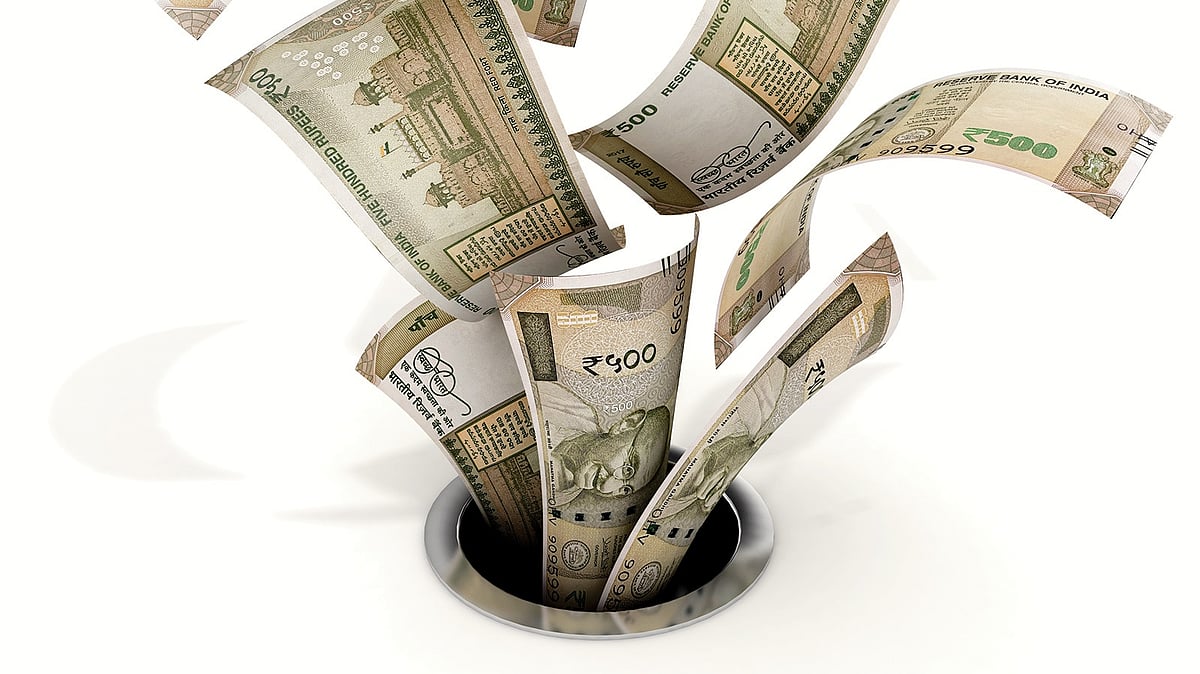
A falling rupee is usually treated as a macroeconomic problem. It raises the cost of imports, worsens inflationary pressures, unsettles investors and dents national pride. But India’s recent experience has produced a curious paradox. The same rupee weakness that creates external stress has also produced a fiscal bonanza for the Union government.

The Reserve Bank of India’s (RBI) defence of the rupee — by selling dollars from its reserves — has yielded large realised profits, which are then transferred to the Centre as surplus. The RBI is thus not merely managing the currency. It is increasingly becoming a fiscal stabiliser, almost a treasurer to the government. This needs more scrutiny.

The RBI central board has now approved a record surplus transfer of Rs 2,86,588 crore to the Union government for FY 25-26. This is higher than the previous record of Rs 2,68,590 crore in FY 24-25, Rs 2,10,874 crore in FY 23-24 and Rs 87,416 crore in FY 22-23. The latest transfer is reportedly backed by robust RBI earnings, including gains from large dollar sales to support the rupee and higher income on foreign assets.

Nearly Rs 2.9 trillion is not a rounding-off item. It is close to 8 per cent of the Centre’s revenue receipts. It gives the government fiscal breathing space without raising taxes, cutting expenditure or borrowing more from the market. At a time of elevated crude prices, geopolitical uncertainty and pressure on the fiscal deficit, this is a very useful cushion. But it’s worrying for the same reason, for a cushion can quietly become a habit.

The arithmetic is simple. The RBI accumulated dollars over many years when the rupee was much stronger. When it sells those dollars today at a weaker exchange rate, it books a rupee gain. Not a paper gain from revaluing forex reserves, but realised gain from actual dollar sales. Under the economic capital framework, unrealised revaluation gains on gold or foreign exchange are not meant to be distributed. But realised income from forex operations can flow into the RBI’s income and then into its surplus transfer to the government.

This means the rupee’s weakness has produced a fiscal windfall. That’s an uncomfortable sentence, but it captures the paradox. The same depreciation that hurts importers, raises the cost of oil, reduces India’s dollar GDP and unsettles foreign investors also boosts RBI profits when dollars are sold.

This matters for another reason. If India’s nominal GDP grows by 10 per cent in rupee terms, but the rupee depreciates by more than 10 per cent against the dollar, then India’s GDP in dollar terms barely grows. This isn’t statistical hair-splitting: global rankings, investor perceptions and geopolitical heft are measured in dollars. A country can grow fast domestically and yet appear stagnant internationally if currency depreciation wipes out the gain. Persistent rupee weakness can, therefore, become a strategic concern.

But that does not mean the rupee must be defended at all costs. India is a current account deficit economy. It imports much more oil, gold, electronics and critical inputs than it exports. It also has a higher inflation rate than the US over the medium term. Some depreciation of the rupee is natural. It can even be desirable. A weaker currency acts as a shock absorber. It protects export competitiveness, discourages non-essential imports and keeps the economy honest about external imbalances.

The danger is not depreciation per se, but disorderly depreciation. That is where the RBI intervenes as it should: to manage volatility, prevent panic and anchor expectations. But defending a level is different from managing volatility. If the market believes that the RBI will always protect a particular exchange rate, then large importers and dollar borrowers may under-hedge their exposures. An artificially strong rupee subsidises imports, penalises exports and delays adjustment. The eventual correction then becomes more painful.

There is also a fiscal morality issue. If defending the rupee produces large RBI profits, and those profits help the Centre reduce its deficit, then depreciation begins to have a hidden fiscal upside. That is not a healthy incentive structure. No government should start treating the central bank’s forex operations as a recurring revenue source.

India’s fiscal system already has an inbuilt support mechanism for government borrowing. Through the statutory liquidity ratio, banks are required to invest a substantial share of their deposits in government securities. This creates a captive market for sovereign debt. It is legal, longstanding and part of India’s financial architecture.

But it is still a form of financial repression: household savings are partly channelled into government borrowing by regulation. If, in addition, the government becomes dependent on large RBI surplus transfers, the line between monetary authority and fiscal support begins to blur.

The RBI is not the finance ministry. Its job is price stability, financial stability, currency management and monetary credibility. It is also banker to the government, but that should not turn it into the government’s cash cow. Elected governments naturally prefer more spending, lower borrowing costs and convenient financing. That is precisely why monetary institutions need insulation.

The rupee story is also linked to India’s external financing challenge. Gross FDI inflows may look healthy, but net FDI has weakened sharply because of repatriation, disinvestment and outward flows. Foreign companies and private equity investors are exiting at attractive valuations. Indian equity markets remain expensive partly because domestic SIP inflows have become sticky and powerful. The SIP habit is good for financialisation and household participation in markets. But it has also created a strong domestic bid that prevents a sharp market correction despite large FII outflows.

This raises a sensitive question. Are Indian domestic investors, through SIPs and IPO subscriptions, indirectly facilitating profitable exits for foreign investors? In many recent marquee IPOs, a large share of the money raised has gone not into fresh capital for the company but into offers for sale by existing investors. New investors buy the promise; old investors take the cash. This is not illegal. It is how markets work. But when it becomes widespread, it deserves scrutiny.

There have also been many high-profile foreign exits or partial exits: Holcim, Ford, Harley Davidson, Citibank’s retail business, Metro AG, GM, Cairn, Lafarge, parts of Vodafone’s story, Disney’s restructuring, Whirlpool’s dilution and others. Each case has its own explanation. But taken together, they point to a larger economic pathology: India is attractive as a market, but not always easy as a place to build, operate and retain capital.

This does not mean foreign confidence has vanished. Google’s data centre plans, Meta and Google’s investment in Jio, and other strategic investments show that global capital still wants exposure to India. But there is a difference between entering India for digital scale and committing patient capital to deep manufacturing. India needs durable FDI, not merely valuation-driven entry and exit.

In this context, the rupee is not just a number on a screen. It reflects oil dependence, gold imports, external financing gaps, portfolio flows, domestic market valuations and confidence in doing business. The RBI can smooth the ride, but it cannot permanently change the road.

Ajit Ranade is a noted economist. More of his writing here

Article courtesy: The Billion Press

  •  

Time for India to go solar

The ongoing crisis in West Asia has exposed India’s vulnerability as the world’s third largest consumer of crude oil, importing nearly 89 per cent of its requirement i.e. around 1.75 billion barrels a year or 4.8 million barrels every day. Over 60 per cent of that flows through the geopolitically sensitive Strait of Hormuz.

In 2024-25, India’s crude oil import bill was $137 billion. If prices stay at the March average of $113.57 then the import bill would balloon to nearly $200 billion. Every $10 rise in the price of a barrel of crude adds $14 to $16 billion to India’s import bill. That is money drained from our precious foreign exchange reserves.

There is, however, a way to reduce this vulnerability.

India is gifted with a geographical location that brings blazing sunshine for more than 300 days a year. Summer heat can also be a curse — especially for the most vulnerable. April saw India at the epicentre of a global heat surge, with AQI.in reporting that 19 of the 20 hottest locations in the world were located in India, as well as 95 of the 100 hot-test cities globally. But this climate burden is simultaneously an energy opportunity of historic proportions.

India leads the International Solar Alliance, a coalition of over 120 sunshine-rich nations. In 2025, India added 38 gigawatts of new solar capacity, surpassing the United States, which added 35 gigawatts. Total installed solar capacity now stands at over 150 gigawatts, and annual solar generation has rocketed from 3.4 terawatt-hours in 2013-14 to 144 terawatt-hours in 2024-25.

On 25 April, as the brutal heatwave pushed temperatures into the mid-forties and air conditioners across north India ran at full blast, the electricity grid faced its highest ever demand: 256 gigawatts. Solar power alone was generating 81 giga-watts on that critical day. This was one-third of total national generation. The grid did not collapse. It passed the stress test.

Solar’s potential is not just about clean energy but also about securing our foreign exchange reserves.

Even a ten per cent reduction in oil import dependence would save between $13 to $20 billion annually depending on oil prices. A displacement of 100 million barrels through solar-powered electricity substituting diesel gensets, electric pumps replacing diesel pumps, and electric vehicles reducing petrol and diesel demand would still save $7.5 to $11 billion a year in foreign exchange.

There is an additional intriguing possibility: India could become an energy exporter.

India’s refining capacity of 258 million metric tonnes already exceeds its domestic consumption of 239 million metric tonnes. (This refined oil goes into trucks that move goods, tractors that farm fields, fishing boats that feed coastal communities. It also powers diesel generators that keep telecom towers humming across rural India.)

In 2025, India exported 64.7 million metric tonnes of refined petroleum products — petrol, diesel, aviation fuel — worth over $52 billion, a record high. Refining capacity is set to expand further, to 309 million metric tonnes by 2028.

If solar and electrification progressively reduce domestic fuel consumption, more and more of what India refines goes abroad, earning precious dollars. India would be importing crude, refining it far more efficiently and exporting value-added fuel — functioning as an energy hub for the region.

The trajectory, if pursued with determination, could see India transition from being an energy importer to becoming a net energy value exporter. It is conceivable.

The hurdles on the solar journey are real, but not insurmountable. Solar panels need large tracts of land. This is a genuine constraint in a country where farmland is scarce and contested. The answer lies in deploying solar panels on fallow wasteland, rooftops, highway corridors and canal banks. India already has programmes for all of these.

Solar panels also need water to wash off the thick dust that settles on them. This is a problem, especially in Rajasthan and Gujarat where solar potential is greatest, but water scarce. Waterless robotic panel cleaners are an emerging solution. India should produce these at scale domestically.

Most critically, the sun sinks every evening, but demand does not. Without storage, solar power has a structural limitation. India urgently needs massive deployment of storage systems. In 2025, India curtailed 2.3 terawatt-hours of clean solar power simply because the grid could not absorb it. That is both an engineering failure and an economic one.

Then there is the China problem. India imports most of its solar panels and components from China, which deepens trade asymmetry. However, domestic solar module manufacturing capacity has grown to 172 gigawatts. The government has set a target of domestically produced solar cells and wafers by 2028. An India that makes its own solar equipment would truly be energy sovereign.

Here are five action points:

1. Treat solar energy as national security infrastructure, equal in priority to defence. Funding should be at least doubled.

2. Invest urgently and massively in battery storage. Or every evening the grid will have to fall back on coal and diesel.

3. Upgrade the national transmission grid. Solar-rich states like Rajasthan and Gujarat need to be able to evacuate to demand centres in Maharashtra and Tamil Nadu.

4. Accelerate electric vehicle adoption across two-wheelers, three-wheeler and buses since transport is the single largest consumer of petroleum.

5. Scale rooftop solar energy through PM Surya Ghar and allied schemes.

India’s peak power demand is projected to rise further to 271 gigawatts, driven partly by rising incomes and the spread of air conditioning. The opportunity and the urgency are both enormous.

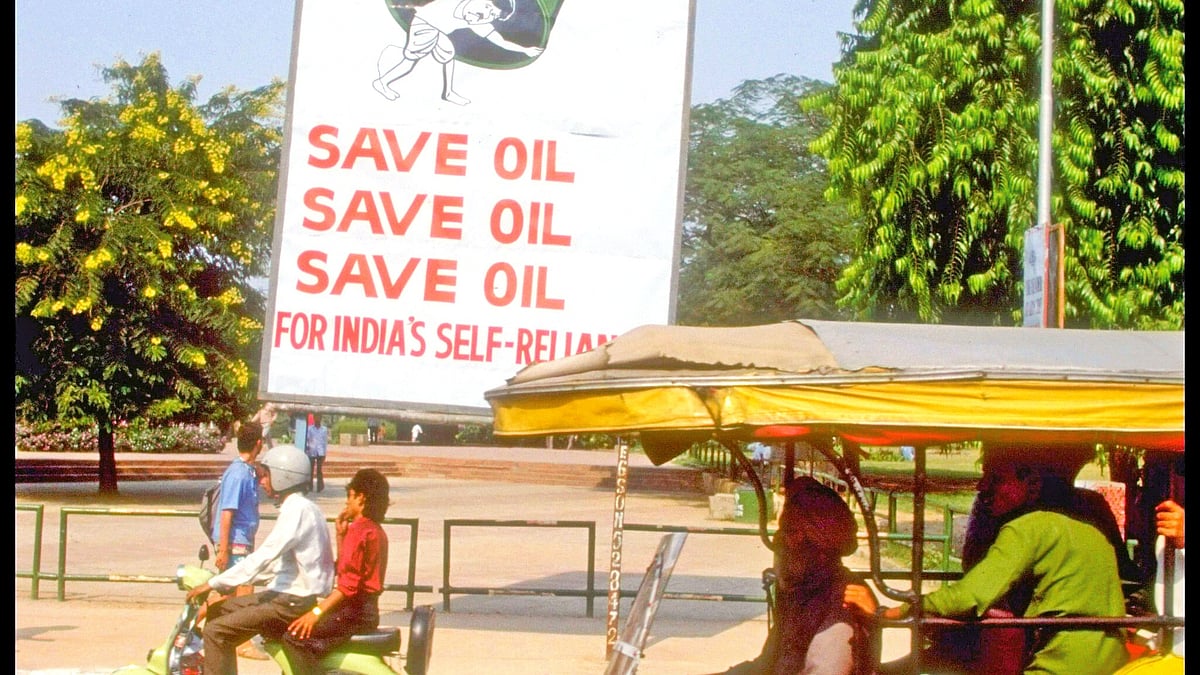
The current crisis in West Asia offers us a window. In a world where oil routes can be disrupted overnight by wars India did not start, energy independence becomes a sovereign necessity. Every gigawatt of solar power installed is one step away from the Strait of Hormuz. Every electric vehicle on the road is a barrel of oil India does not have to import. Every rooftop panel is a small act of genuine self-reliance.

The sun rises over India every morning without negotiation, without geopolitics and without a price tag. The only question is: can India harvest it at the scale and speed the moment demands?

Ajit Ranade is a noted economist. More of his writing may be found here

  •  

Dear prime minister, who will bear the brunt of the sacrifice you ask for?

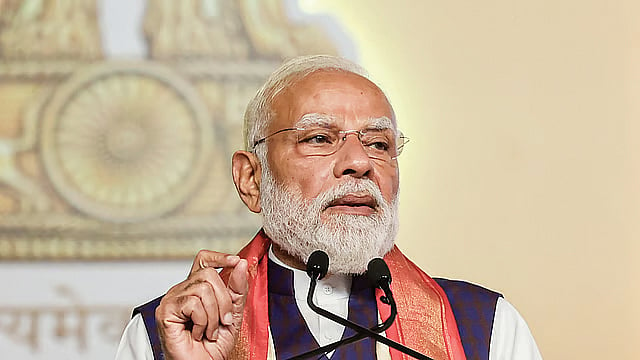
Prime Minister Narendra Modi’s recent appeal, with the eleven specific requests spanning fuel, gold, fertillisers, cooking oil, solar pumps and foreign travel, is being read by many as a prelude to administered price hikes. But there is a larger ambition: it is to make forex conservation a national movement, a civic mobilisation comparable in spirit, if not form, to Mahatma Gandhi’s Salt March of 1930.

Gandhi’s genius was to choose salt, an everyday item, symbolically powerful, to make the case for economic self-reliance and to turn it into a mass movement. Modi’s pitch is to make every Indian feel personally invested in the nation’s economic resilience, when conserving foreign exchange becomes a patriotic duty.

The instinct deserves credit. India’s dependence on imports of crude oil, fertiliser inputs, gold and edible oil is a structural vulnerability that has been diagnosed for decades without adequate remedies. Modi is asking citizens to connect their everyday choices to the national balance of payments.

Lal Bahadur Shastri did something similar with food in 1965, asking Indians to voluntarily fast on Monday evening as the country faced a war and food crisis. Socialist parliamentarian Madhu Limaye pressed the point further in Parliament, arguing that voluntary austerity was a constitutional duty in times of national stress, and that the political class must lead by example rather than just preach. The tradition of appealing to civic solidarity during economic emergencies is honourable, and has worked before.

But apart from the conviction he carried with the masses, the moral force of Gandhi’s salt satyagraha movement came from the fact that the salt tax was visibly, outrageously regressive. It hurt the poor more, and Gandhi chose salt for precisely that reason. On the other hand, the forex conservation movement is not against injustice and is itself regressive. Because it asks those with the least to bear a disproportionate share of the pain.

Look at the eleven requests through this lens. Deferring foreign vacations and destination weddings abroad is something only the affluent need consider. It is irrelevant to the poor. Shifting to an electric vehicle presumes having the capital to buy one. Work-from-home is an option for white-collar professionals, not daily-wage earners. Asking to reduce edible oil consumption falls hardest on those with the least since cooking oil is not a luxury.

Some of the requests are well-targeted at the wealthy; others inadvertently ask those with the smallest margins to absorb a disproportionate share of the sacrifice.

The economic backdrop makes the equity question more urgent. India’s three state-owned oil marketing companies are losing Rs 1,600–1,700 crore a day, with cumulative losses over the past 10 weeks crossing Rs 1 lakh crore. Negative margins stand at Rs 14 per litre on petrol and Rs 18 on diesel. Excise duty cuts to cushion the blow are costing the treasury Rs 14,000 crore a month.

Fertiliser subsidies, budgeted at Rs 1.71 lakh crore, face an overrun of Rs 35,000–50,000 crore. And this crisis lands on top of an already strained fiscal position: in FY26, direct tax receipts fell short of revised estimates by Rs 80,594 crore. The FY27 direct tax target is Rs 26.97 lakh crore, a whopping 15 per cent jump over FY26 actuals. But revenues are already slowing down.

Here lies a structural paradox in Modi’s appeal. Some of what he asks, like reducing gold imports and foreign travel, will genuinely help the current account without hurting domestic output. But fuel price hikes are categorically different: they are inflationary, compress real household incomes across the board, and will force the Reserve Bank of India into the uncomfortable trade-off between defending the rupee and protecting growth.

There is also a cognitive dissonance in the government trying to suppress prices but also asking citizens to behave as if prices are too high.

There is now pressure on tax mobilisation. The Income Tax Department’s Central Action Plan for 2026–27 directs field officers to prioritise recovery of Rs 2.57 lakh crore in demands upheld at appeal, track the top 10,000 PAN-wise defaulters, and classify Rs 7.88 lakh crore in large unclassified arrears by July.

The scale of what has gone uncollected is striking: confirmed, undisputed tax demands of over Rs 9 lakh crore sit in arrears, concentrated overwhelmingly in Mumbai (Rs 1.65 lakh crore) and Delhi (Rs 1.21 lakh crore) — the wealthiest urban centres in the country. In FY26, the actual cash recovery, against a target of Rs 5.04 lakh crore, was only Rs 85,000 crore.

The government cannot credibly ask families to cut their cooking oil consumption while Rs 9 lakh crore in confirmed tax dues from large corporate and individual defaulters remain uncollected year after year. Ensuring that tax demands are recovered, using whatever digital surveillance, would be a powerful signal and lend some credence to the prime minister’s call for a national sacrifice.

This is also a moment to reconsider India’s tax architecture. Is it structurally progressive enough? India abolished wealth tax in 2015 and has had no estate or inheritance duty since 1985. The top one per cent of Indians hold an estimated 40 per cent of the nation’s wealth.

A temporary crisis surcharge on very high incomes, a windfall levy on entities benefiting from the disruption — commodity traders, domestic refiners — or a carefully designed wealth tax would serve multiple purposes: raising revenue to offset the fiscal haemorrhage, making burden-sharing visibly equitable, and giving the mass movement the moral authority it needs.

Madhu Limaye’s argument was precisely this: austerity without equity is not patriotism, it is the displacement of pain downward.

We also need to examine our resilience and risk buffers. IEA (International Energy Agency) member nations hold ninety days of strategic petroleum reserves as a treaty obligation. Europe built LNG import terminals and diversified supply at emergency speed. Japan and South Korea pass through price signals rapidly and hedge exposure through financial markets.

India’s strategic reserves cover roughly nine to ten days. India has had almost no institutional buffer to deploy. Which is why the response is perforce an appeal to voluntary restraint rather than a drawdown of non-existent reserves.

Modi’s forex conservation call will age badly if fuel prices are quietly raised while wealthy defaulters continue to defer confirmed tax dues, and the poor find cooking oil more expensive.

Gandhi’s movements succeeded because they were morally unimpeachable in their equity. If this is to be India’s forex satyagraha, the design must match the ambition. It must be progressive in burden sharing, rigorous in enforcement, structural in remedy and honest about the price signals that no amount of voluntary restraint can ultimately replace.

Ajit Ranade is a noted economist. More of his writing may be found here

Article courtesy: Billion Press

  •  
❌