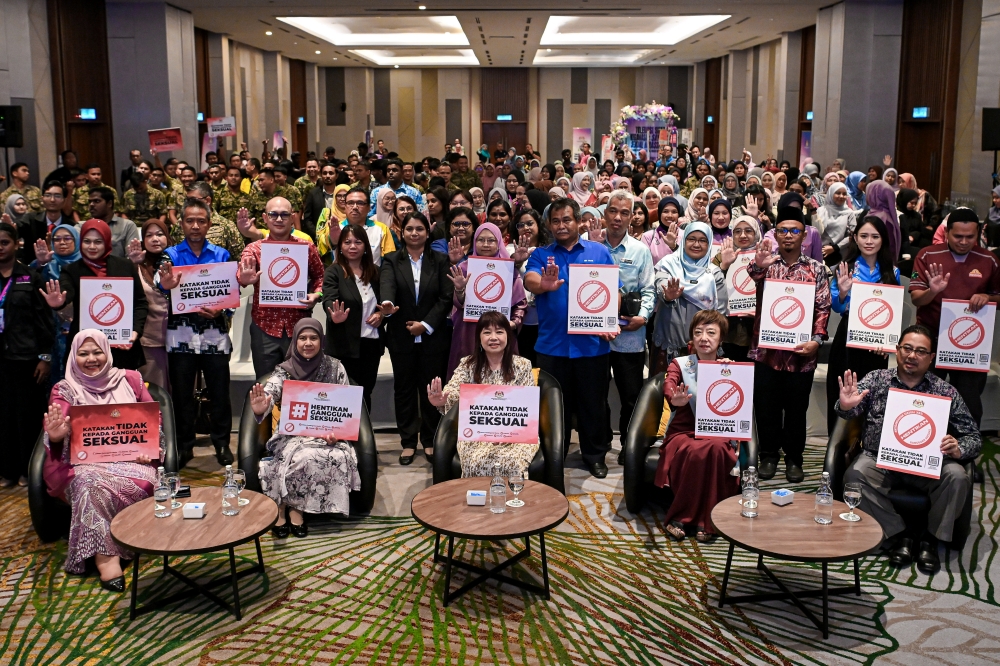
PORT DICKSON, June 18 — A total of 388 sexual harassment cases were recorded during the first five months of this year, according to Deputy Minister of Women, Family and Community Development Lim Hui Ying.
She said statistics from the Royal Malaysia Police (PDRM) also showed a rising trend in reported sexual harassment cases, increasing from 477 cases in 2022 to 1,038 cases last year.
According to Lim, the increase does not necessarily reflect a higher prevalence of incidents alone, but also indicates greater public awareness and courage among victims and communities to come forward and reject the culture of silence.
“Based on our data, most cases occur in the workplace and involve individuals who have family ties to the victim. Feelings of shame or concerns over careers and family relationships may still prevent many victims from lodging reports.
“I urge colleagues, employers and family members to provide support to victims. These cases do not only involve women but also men, although the number of male victims remains relatively low,” she told reporters after officiating the Zero Tolerance of Violence: Say No T programme.
Lim stressed that sexual harassment is a serious form of misconduct that undermines a victim’s dignity, emotional well-being and overall quality of life, and should never be normalised in society.
Meanwhile, she said that as of June 15, the Tribunal for Anti-Sexual Harassment (TAGS) had received 100 complaints, with 82 cases resolved within 60 days of the first hearing, demonstrating the tribunal’s effectiveness in accelerating access to justice.
She added that the ministry, through the Women’s Development Department, is also implementing Women, Peace and Security (WPS) advocacy initiatives in line with the National Action Plan 2025–2030 to strengthen women’s roles in national security and development.
“I hope all parties will work together with the ministry to expand advocacy efforts related to sexual harassment and increase public awareness of rights, personal safety and prevention.
“Issues that are not addressed at an early stage may escalate into more serious situations and lead to various forms of violence that affect individuals and social harmony,” she said.
Lim emphasised that everyone, including parents, educators, employers, colleagues and students, shares the responsibility of building a culture of zero tolerance towards sexual harassment.
“Early education, the courage to speak up and stronger support systems for victims must continue to be strengthened,” she said.
She added that the government provides integrated support services through multiple channels, including counselling and psychosocial support via Talian Kasih 15999, which operates 24 hours a day, alongside local social support centres to ensure those in need can access timely assistance. — Bernama
Medellín, Colombia – An outbreak of gang violence in Haiti on Sunday left at least 70 dead and displaced some 6,000, according to human rights group Défenseurs Plus.
The NGO’s estimate greatly differs from the official police figure of 16 deaths in the rural Artibonite region.
In recent years, Haiti has grappled with powerful gangs, with related violence making it one one of the most dangerous countries in the world.
The Artibonite region, the country’s key agricultural centre, is one of the worst affected areas. Sunday’s violence has been attributed locally to the Gran Grif gang, which was designated a terrorist organisation by the United States last year.
Antonal Mortimé, director of the human rights NGO Défenseurs Plus, told Haiti’s Radiotélévision Caraïbes that some 50 homes were set on fire on Sunday.
The United Nations (UN) has urged “Haitian authorities to conduct a thorough investigation,” and estimated that between 10 and 80 people had been killed.
A recent UN report confirmed over 5,500 deaths between March 2025 and January 2026.
During this period violence has also spread out from the epicentre of the capital, Port-au-Prince, as gangs continued to commit kidnappings, child trafficking, and sexual abuse on a large scale.
“Since the assassination of President Jovenel Moïse in July 2021, Haiti has entered a phase of unprecedented violence, which we describe as structural. Violence is no longer only criminal; it is a tool for political and territorial control,” Mortimé told Latin American Reports.
“Armed gangs, often instrumentalized by sectors of power and the economic elite, now control more than 80% of the metropolitan area of Port-au-Prince,” he added.
Mortimé also criticized the state, which he believes has failed to strengthen the judicial system or national police in response to the ongoing crisis: “Impunity has become the norm: almost none of the major massacres documented by human rights organizations have resulted in a serious trial. This culture of impunity, nourished by widespread corruption in public institutions, prevents any attempt to restore republican order.”
To control this epidemic, Mortimé highlights the need for sweeping reforms of the government and judicial systems, as well as controls on the trafficking of illegal weapons. Despite Haiti’s total arms embargo, the UN has reported that weapons are being trafficked primarily from the U.S. due weak border control and corruption.
“The Haitian crisis is the product of a system where corruption and lack of accountability have supplanted public interest. The containment of this violence will necessarily involve the restoration of the rule of law and the protection of the fundamental rights of every citizen,” concluded Mortimé.
Buenos Aires, Argentina – “We are the voice of those who no longer have one,” read the slogan plastered on signs across downtown Buenos Aires last Thursday, June 3.
Thousands gathered outside the National Congress to mark the 11th anniversary of Ni Una Menos, a movement that emerged after the 2015 murder of 14-year-old Chiara Páez and went on to reshape Argentina’s debate over gender violence while inspiring similar mobilizations across Latin America.
Purple scarves, green handkerchiefs and photographs of victims filled the streets on Wednesday as demonstrators demanded justice for women killed in acts of gender violence. This year’s march was largely shaped by the femicide of Agostina Vega, a 14-year-old girl in Córdoba, whose case dominated national headlines in the days leading up to the demonstration and became a symbol of public outrage.
The case sparked criticism of Argentina’s justice system and prompted calls for the resignation of judicial and government officials over alleged failures to protect the teenager.
Demonstrators also highlighted the recent murders of Dulce Candia, 17, in the northern province of Misiones; and Noelia Romero, 30, in a Buenos Aires suburb, whose names echoed throughout the protest.
“This case encapsulates the institutional violence that the State subjects us to,” organizers from Ni Una Menos said in a statement read during the main rally.
The statement was read by actress and gender rights activist Thelma Fardin, whose case became a landmark moment in Argentina’s #MeToo movement. “Don’t talk about me, stop killing us,” she said to the crowd that included women of all ages, political leaders and relatives of femicide victims. Earlier this year, Brazil’s Supreme Court upheld the conviction of Argentine actor Juan Darthés for sexually abusing Fardin during a tour in Nicaragua in 2009, bringing to a close one of the country’s most closely followed gender violence cases.
As demonstrators advanced through the city center, banners carried messages such as “No woman should have to learn how to survive living in the place she belongs,” “May freedom not be a promise but a reality,” and “Feminist rebellion against fascism.”
Debate over cuts to gender programs
Alongside demands for justice, many protesters also linked gender violence to Argentina’s economic situation. One of the most visible slogans read “We want to be alive, free… and debt-free” (“Vivas, libres y desendeudadas nos queremos”), a variation of the movement’s traditional slogan “Vivas y libres nos queremos” (“We want to be alive and free”). Organizers said the addition reflected concerns about the impact of President Javier Milei’s austerity policies on women and vulnerable communities.
The mobilization comes as feminist organizations and Milei’s government offer sharply different assessments of the situation facing women in Argentina.
According to Ahora Que Sí Nos Ven, an Argentine feminist observatory that monitors femicides and gender-based violence, a woman is killed every 31 hours in the country. The organization recorded 99 victims of gender-related killings between January and May this year and has documented more than 3,200 such cases since the first Ni Una Menos march in 2015.
For organizers, the anniversary has become not only a call against femicides but also a protest against what they describe as the dismantling of gender policies under Milei’s administration.
Activists pointed to reductions in funding for gender-based violence programs. According to an analysis by Argentine fact-checking organization Chequeado, inflation-adjusted spending on eight gender-related programs fell by nearly 95% between 2023 and 2025. Among the most affected were a nationwide hotline for victims of gender violence and a program which provides financial assistance to women at risk. Both saw their budgets fall by nearly 100% in real terms during the period.
According to Chequeado, six of the eight programs analyzed were either eliminated or absorbed into broader initiatives under the Human Capital and Justice ministries.
But the Milei administration has defended the restructuring, arguing that several programs were inefficient or redundant.
Government officials have also challenged the activists’ interpretation of the data. Senator Patricia Bullrich, from Milei’s La Libertad Avanza, highlighted what she described as a decline in femicides since Milei took office.
“I know that behind every statistic there are families, and for those families that number means everything,” Bullrich wrote on social media during the mobilization. “But the data reflects a reality: since Javier Milei took office, we have reduced femicides by 25%, strengthened the prison system and created a DNA registry for convicted rapists.”
Bullrich added that “the feminism I defend is the one that protects women,” reflecting the administration’s argument that public security measures, rather than gender-focused institutions, have driven improvements in the statistics.
According to a report released by Argentina’s Supreme Court, 200 direct victims of femicide were recorded in 2025, down 12.3% from the previous year and the lowest annual figure since 2017. The judiciary’s National Femicide Registry estimated that one woman was killed every 44 hours last year.
As the demonstration came to an end, participants raised photographs of victims toward Congress while organizers read aloud the names of women killed over the past year. Eleven years after the first Ni Una Menos march, demonstrators argued that the central demand remains unchanged: ensuring that no woman becomes the next name added to the list.
Featured image description: Protesters marked the anniversary of Ni Una Menos.
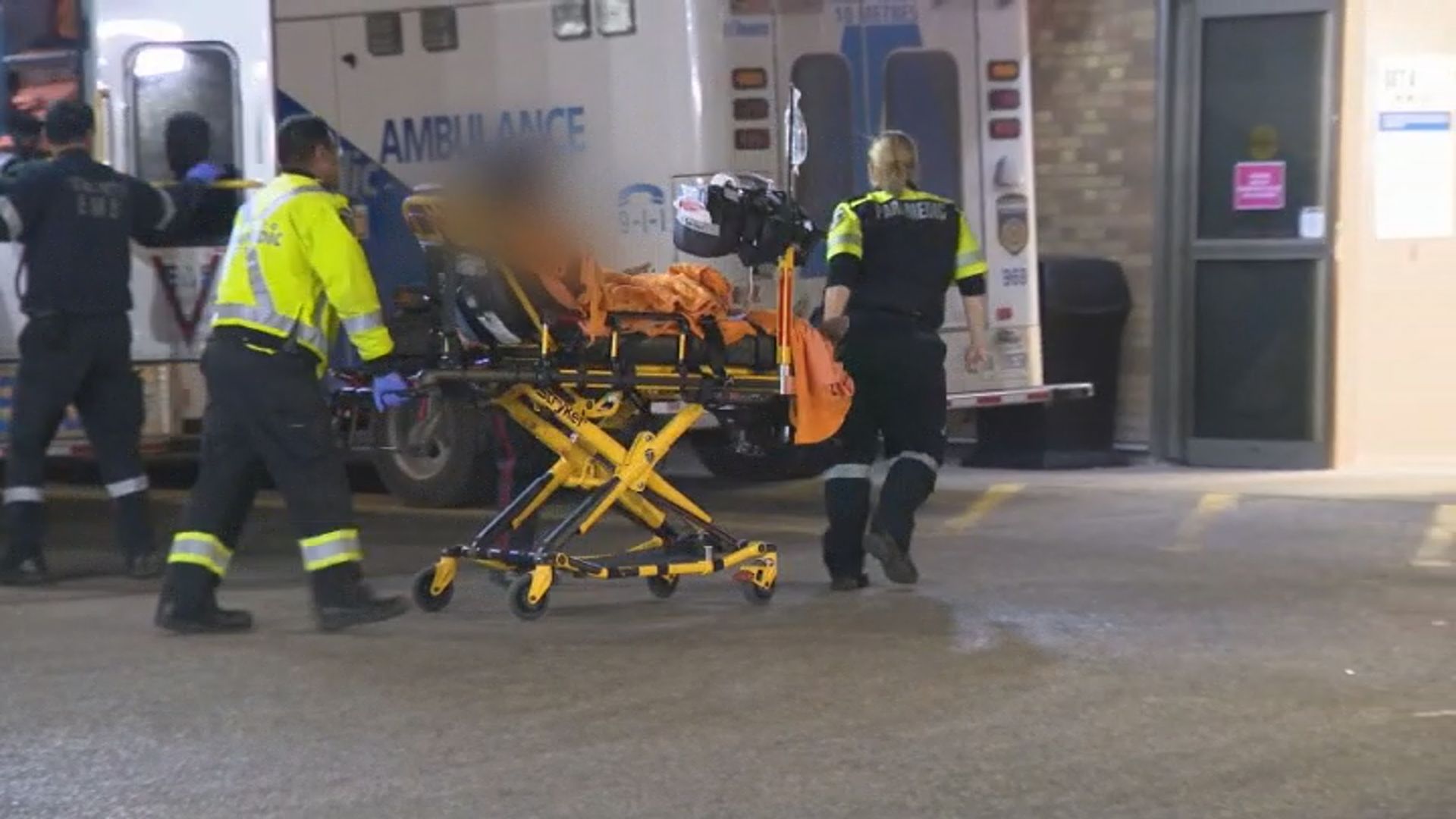
Paramedic services across Canada are reporting a concerning rise in violence against workers that is, in part, leading to staffing shortages and issues retaining staff.
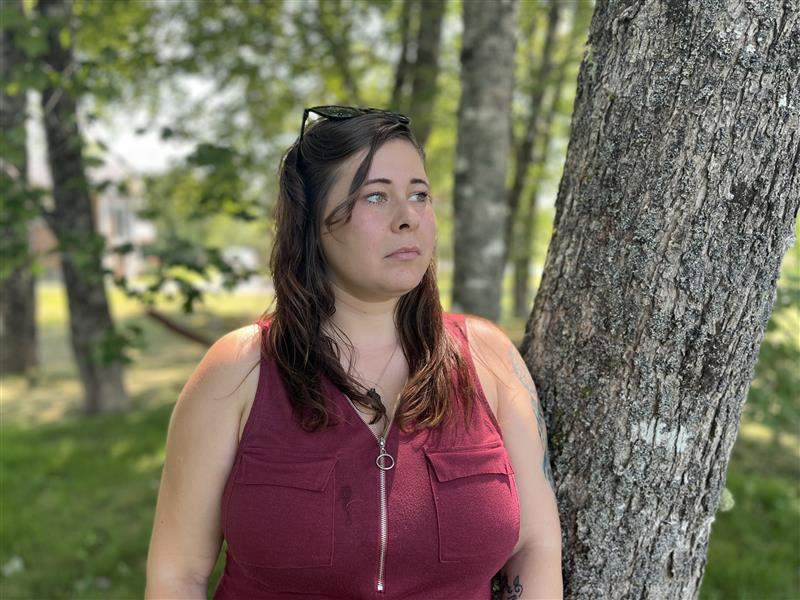
A Nova Scotian woman says the justice system has failed after she was the victim of intimate partner violence. She's speaking out again on her abuser's sentence as well.
Medellín, Colombia – There were 35 massacres in Colombia in the first three months of 2026, making it the most violent quarter in a decade, according to the Institute of Peace and Development Studies (Indepaz).
The Colombian NGO’s figures revealed that 133 people had died in the massacres, which occurred across 34 municipalities in 17 departments.
The grim figures come as Colombia faces a surge in violence related to its long-running armed conflict, almost ten years after a historic peace deal with the Revolutionary Armed Forces of Colombia (FARC) rebel group.
The massacres claimed the lives of 74 men, 16 women, and 17 children. 40 of the victims have not been identified.
The first massacre of the year, in which three women were killed, was committed in Santander de Quilichao, Cauca, on January 3. The single most violent attack took place in El Retorno, Guaviare, where 26 people were killed on January 16.
This makes this year’s first quarter the most violent in the last ten years, during which Indepaz has recorded the deaths of nearly 3,000 people in over 700 different massacres.
On the back of the peace accords signed in November 2016 between Colombian President Juan Manuel Santos and the FARC, 2017 was the least violent year, registering 33 massacres in total.
However, following the election of Iván Duque in 2018, yearly records of massacres increased from 39 in the first year of his presidency to 96 in 2021.
Under the current Gustavo Petro administration, figures have remained at similar levels, oscillating between the highest point of 94 cases in 2023 and 76 cases in 2024. Petro’s policy of Paz Total (Total Peace) that has sought to counter violence by negotiating with armed groups has had mixed results.
The period of 2021 to 2025 observed an average of 303 deaths annually, an increase on the average of 201 deaths each year in the preceding five year period. Even the most violent periods of the last decade did not register as many quarterly cases as 2026 has witnessed so far. The first quarter of 2020 recorded 17 massacres, under half of this year’s equivalent figure.
In the last decade, 1,657 men, 285 women, and at least 133 children have been killed. Valle del Cauca was the worst affected department with 62 massacres resulting in 215 deaths, followed by Cauca which saw 58 massacres and 200 deaths.
The surge in violence has come at a crucial moment in Colombian politics with presidential elections set to take place on May 31. While Petro’s possible Historic Pact successor, Iván Cepeda, looks to continue the Paz total policy, other candidates have promised tougher military measures against armed groups.
Featured image credit:Policía Nacional de los colombianos via Flickr
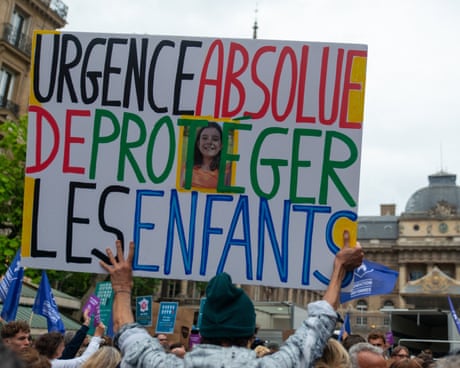
The death of the 11-year-old, named only as Lyhanna, has pushed the issue of male violence against girls to the top of the agenda
A lawyer for the family of an 11-year-old girl whose disappearance and murder sparked protests across France has called for more funding for the struggling justice system, amid a political row over the French state’s failure to tackle sexual violence against children.
“Frankly, if the justice system had more resources, this tragedy and all the others wouldn’t have happened,” said the family’s lawyer, François Roujou de Boubée, on Tuesday. “The victim’s family and I trust in the justice system. So enough is enough.”
On Monday, El Salvador’s Attorney General announced the beginning of a mass trial of 486 alleged members of the Mara Salvatrucha (MS-13) gang, who are accused of more than 47,000 crimes committed between 2012 and 2022.
Among the defendants, 413 are already detained in different penitentiary centers, while 73 have arrest warrants issued against them.
The Attorney General said that 22 historical kingpins of the Ranfla, MS-13’s top leadership structure, will be prosecuted in the trial, along with 212 other Ranfla members and 152 program coordinators. Charges include aggravated homicide, disappearance of persons, extortion, arms trafficking, and femicide.
MS-13 was founded in Los Angeles as a street gang in the 1980s by Salvadoran refugees who fled the civil war. It spread to Central America when many of its members were deported to their home countries during the 1990s and has been designated as a terrorist organization both by El Salvador and the U.S.
The trial takes place amid El Salvador’s state of emergency, which President Nayib Bukele declared in March 2022 under Article 29 of the country’s Constitution. Under the emergency act, security forces have broader powers to arrest and detain suspects, while certain constitutional protections have been suspended.
Once among the most violent countries in the world, El Salvador has managed to reduce its murder rate to 1.3 homicides per 100,000 inhabitants, one of the lowest in the whole continent.
More than 91,000 suspected gang members have been arrested since the implementation of the state of emergency, according to the government.
These measures have drawn criticism from several human rights organizations, which accuse Bukele’s government of rights violations and abuses.
In a statement published on April 21, the Inter-American Commission on Human Rights expressed concerns that the prolonged state of emergency “suspends the rights to a legal defense and to the inviolability of communications, and also extends administrative detention timelines.” In a report published last March, Salvadoran rights group Cristosal said that critics of the government, including journalists, activists, and opposition figures, have faced increasing criminalization since 2021.
Despite the critics, the latest data published by CID Gallup show that Nayib Bukele has reached a 94% approval rating, the highest level since he came into power in 2019.
Featured image description: MS-13 gang members sat through a mass trial on April 20.
Featured image credit: El Salvador Attorney General’s Office.
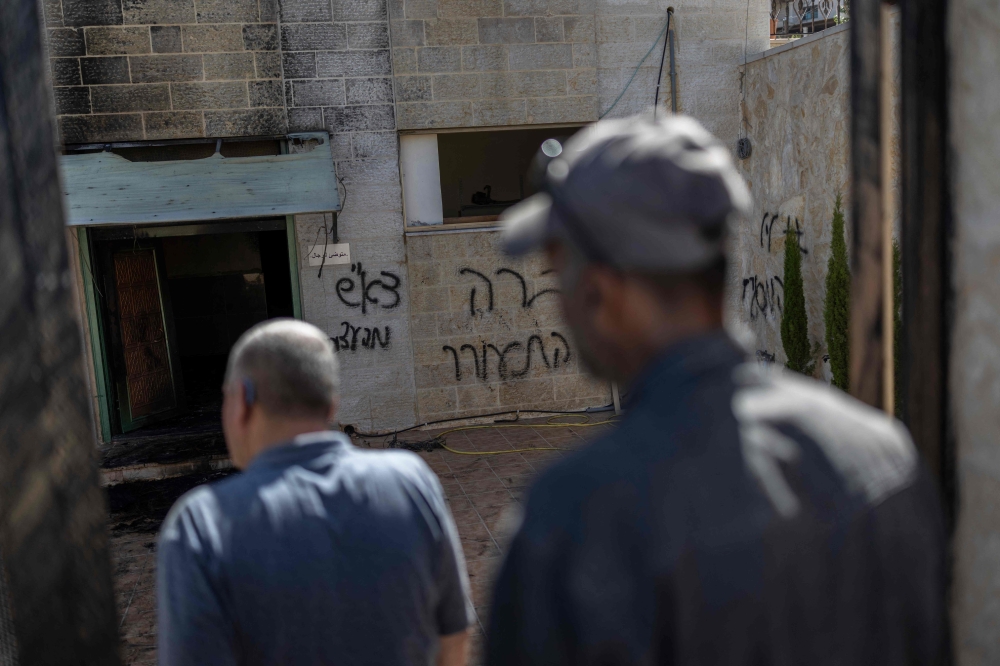
JILJILIYA (Palestinian Territories), June 17 — Israeli settlers set fire to a mosque in a West Bank village on Wednesday, the local mayor said, while AFP journalists at the site saw signs of arson and vandalism.
The incident comes amid an increase in attacks against Palestinian communities by settlers in the Israeli-occupied West Bank since the start of the Gaza war in 2023.
Osama Abdullah, head of the village council in Jiljiliya, north of Ramallah, told AFP that “settlers set fire to the ablution room, caused damage to the village’s main mosque, and scrawled hostile slogans on the outer walls”.
Israel’s military did not immediately respond to an AFP request for comment.
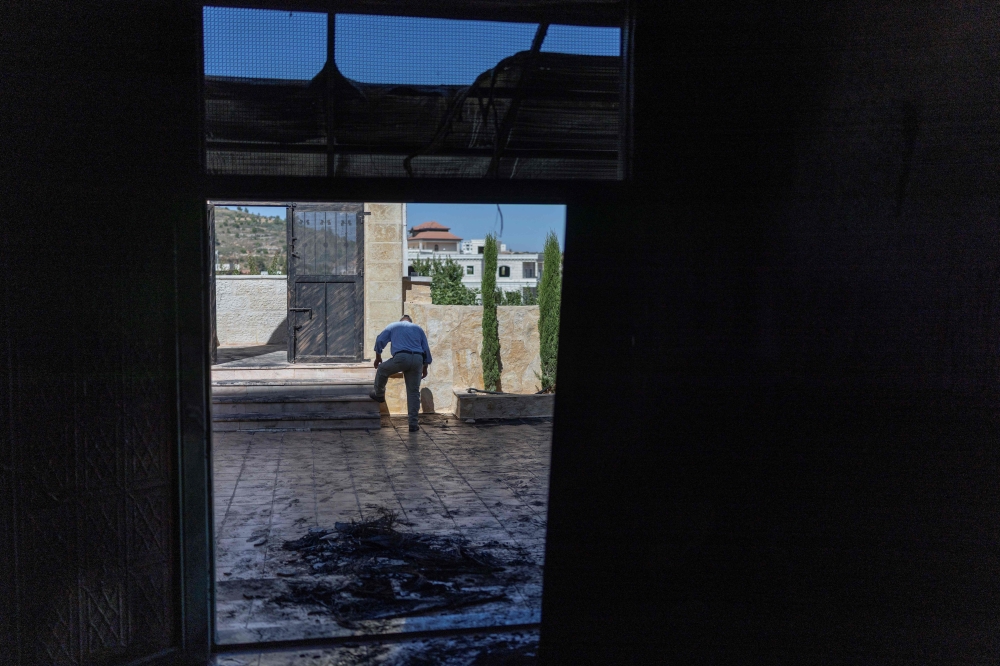
AFP journalists who visited the mosque on Wednesday reported that the ceiling, walls and floors were blackened by smoke and flames.
They said graffiti in Hebrew had been scrawled on the walls, including some reading “vengeance” and “hi from the Hilltop Youth”.
The Hilltop Youth are a group of Israelis in the West Bank who are regularly accused of violence towards Palestinians they seek to evict from areas they wish to take over.
Mayor Abdullah said settlers arrived to burn down the mosque between 2am and 3am but found its door was locked, so instead set fire to a room dedicated to ablutions on a lower floor.
He said Palestinian civil defence crews, along with young men from the village and neighbouring areas, extinguished the blaze.
A Palestinian man rinses the soles of his shoes from soot after inspecting the damage inside a mosque reportedly burnt by Israeli settlers over night, in the Israeli occupied West Bank village of Jiljlia, just north of the West Bank city of Ramallah on June 17, 2026. — AFP pic
Israel has occupied the West Bank since 1967. More than 500,000 Israeli settlers live in the territory, excluding east Jerusalem, among some three million Palestinians.
Settlements, which are illegal under international law, have sprouted all over the West Bank since the right-wing government of Prime Minister Benjamin Netanyahu took office, which contains many pro-settlement ministers in its ranks.
The United Nations recently warned that settler violence in the West Bank has reached record levels, with an average of six attacks daily causing casualties or damage.
Locals allege that Israelis act outside the law with impunity. — AFP
You can smoke one of these now and still own a gun, thanks to the Supreme Court. | Justin Sullivan/Getty Images
Do you like to smoke marijuana? Do you also enjoy firearms? If so, the Supreme Court has great news for you.
On Thursday, the Supreme Court held in United States v. Hemani that the federal government may not categorically forbid an “unlawful user” of marijuana from possessing a gun. Hemani also has fairly broad implications for many drug users.
As Justice Neil Gorsuch notes in the majority opinion, the federal statute at issue in the case bars unlawful users of any “controlled substance” from possessing firearms. This law, he suggests, is far too broad, because it would rope in relatively innocuous drug users such as “a husband who regularly takes his wife’s prescription Ambien to sleep and a college student who routinely uses a friend’s Adderall to cram for exams.”
So, under Hemani, it appears that a wide range of people who use prescription medications or other drugs in ways that violate the law may now own guns.
Gorsuch’s majority opinion does suggest that the government may ban some users of some drugs from possessing firearms if it can show that those drug users are likely to behave erratically or to otherwise endanger others. But all nine justices agreed that a categorical ban on gun possession by marijuana users goes too far. The justices split into a few different camps, however, on why the law at issue in Hemani is unconstitutional.
Most notably, Justice Ketanji Brown Jackson, in an opinion joined by Justice Sonia Sotomayor, calls for her Court to overrule New York Rifle & Pistol Association v. Bruen (2022), a chaotic decision that, as she writes, “is unworkable,” because it “imposes on judges the unfamiliar and difficult tasks of sifting through centuries-old evidence in order to answer ‘contested historical questions.’”
Bruen held that courts should determine whether a modern day gun law violates the Second Amendment by asking whether it is “relevantly similar” to a law that existed at the time when the Constitution was written. Lower courts have struggled to apply this framework, which exists only in Second Amendment cases, in large part because the Supreme Court has never articulated just how similar an old law must be to a new one for the new one to survive.
Gorsuch’s majority opinion in Hemani is unlikely to allay these concerns. Instead of clarifying Bruen, Gorsuch writes that “we have not yet had cause to ‘exhaustive[ly] survey’ the features that may render a modern law ‘relevantly similar’ to historical ones.” The historical analysis in his opinion narrowly focuses on laws governing intoxicants, and is unlikely to offer much guidance to judges hearing unrelated Second Amendment cases.
The Court’s entire approach to the Second Amendment remains a train wreck, in other words. But anyone troubled by that reality can now comfort themselves, legally, by squeezing off a few rounds at their local firing range, and then enjoying a nice fat doobie.
The people who wrote the Constitution drank a whole lot
Under Bruen, government lawyers who seek to defend a modern-day gun law must point to an older law that they think is similar to the new one. Judges — who are, again, operating under minimal guidance from the Supreme Court regarding how similar the two laws must be — must then determine if the new law is similar enough to the old law to allow the new law to be upheld.
In the Hemani case, the Justice Department compared the modern law — a categorical ban on gun possession by any “unlawful user” of marijuana — to founding era laws that imposed certain restrictions on “habitual drunkards.” These laws did not actually target gun ownership directly — few early American laws did, as US states did not even have police forces at the founding and thus lacked the ability to disarm people except in limited circumstances. But DOJ argued that, if the framers recognized that people who use intoxicants can be dangerous and need to have their liberties restricted, then modern-day lawmakers can do the same.
But, as Gorsuch persuasively argues, these habitual drunkard laws were much narrower than the modern-day law at issue in Hemani, which applies broadly to a wide range of drug users who are neither dangerous, nor even particularly impaired, because of their drug use.
Gorsuch writes that 18th- and 19th-century habitual drunkard laws applied only to people who drink so often that they become a burden on society and are often unable to manage their own affairs. Among other arguments, Gorsuch quotes Benjamin Rush, a physician and signer of the Declaration of Independence, who said that if he were an habitual drunkard, it would mean that “‘were a keg of rum in one corner of a room, and were a cannon constantly discharging balls between me and it, I could not refrain from passing before that cannon, in order to get at the rum.’”
Gorsuch also quotes 19th-century laws such as an Arkansas law defining an habitual drunkard as someone who is “incapable of conducting [his] own affairs,” and a Connecticut law that describes these individuals as someone who has “lost the power of self-control.” And he notes that the framers were unlikely to have supported more expansive restrictions on drinkers because many of them consumed copious amounts of alcohol. “Some say James Madison ‘consumed a pint of whiskey daily,’” Gorsuch writes.
An habitual drunkard, in other words, was someone with a very serious addiction that makes them potentially dangerous to themselves and others. That’s quite different from an occasional marijuana user who quietly smokes a joint in the comfort of their own home. As Gorsuch writes, the federal law in Hemani is so broad it may even apply to someone who uses “a mild gummy as a sleep aid a few times a week.”
So the gun law at issue in Hemani is pretty dissimilar to the “habitual drunkard” laws that the government pointed to in order to defend that law. Fair enough.
What Hemani does not do, however, is provide any framework explaining how similar modern-day gun laws generally must be to their 18th- or 19th-century counterparts in order to survive Second Amendment review. Bruen is likely to continue to baffle lower court judges, in large part because every single one of the Court’s Second Amendment cases rely on ad hoc reasoning about whether one law is sufficiently similar to another. There are few broader legal principles to be extracted from the Court’s historical analysis in any of these cases.
That said, Gorsuch’s opinion does contain one sentence that may give lower courts some guidance in future gun cases. Near the end of the opinion, he suggests that historical laws “usually provided some form of process before an individual lost any of his liberties, even temporarily.” So that does suggest that the government must provide individuals with a hearing before they can be stripped of their gun rights. The law at issue in Hemani fails this test, because it purports to remove someone’s right to own a gun the minute they become an illegal user of certain drugs.
This one line aside, however, Hemani contributes little to the broader project of clarifying which gun laws are permissible and which ones are forbidden. It is good news for people who enjoy both guns and marijuana. But it is terrible news for judges struggling to apply Bruen.

 Login
Login








:max_bytes(150000):strip_icc():format(jpeg)/Theresa-Randle-060626-1-631300d2ee4e4be592be9208c9dba266.jpg "<p>Steve Granitz/WireImage</p>")
