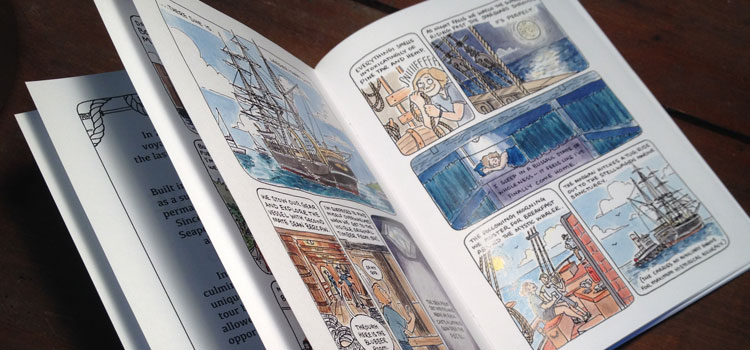
A number of fantastic ducks lined up in the month of June and I want to talk about all of them, but there isn’t time to do it in one giant post. One duck, however, took the form of appearing at the 14th International Melville Society Conference to speak about my time aboard the Charles W. Morgan eleven years ago. (You can read the comic about that trip here.)
I read Moby-Dick for the first time a handful of years ago and loved it, but I wouldn’t call myself a Melville scholar. However, attending this conference felt like a great chance to scratch the academic itch without, say, going to grad school.
I ended up spending the whole week taking visual notes, which allowed me to drop into a type of weightless, fixated attention that I’ve really missed in my caregiving life. It also helped give me something to do during panels where I felt a little, uh, out of my depth.
When I’m drawing, words just wash over me. I can pluck the ones that resonate in the moment, then step back at the end of the hour and get a picture of what I took away from the talk. I particularly loved the freedom to just wander into panels where I had no idea what the speakers were talking about, only to come away newly-enthused about some niche avenue into Melville’s work.
Time and time again the attendees emphasized how unique this conference is in its warmth and intellectual diversity. I met scientists and art historians and medievalists and printmakers and disability scholars and tall ship sailors and filmmakers and many, many professors. It was a dreamy, albeit intense, four days.
Here are the notes from every talk I attended, all drawn straight to ink during the speakers’ presentations (usually about 20 minutes per person).
The biggest takeaway was that we need embedded cartoonists at all sorts of academic conferences—and the demand is there! People were so thrilled to see this kind of work coming out of the event, and there are lots of journals hungry to publish unusual creative content alongside academic papers.
Something to pursue…eventually. Got a couple things* to wrap up first.
Last year I got an email from Tania Sammons, a curator at Ships of the Sea Maritime Museum in Savannah, Georgia who had previously licensed my guide to sailors’ tattoos for a show. Her pitch was irresistible: an exhibition of comics based on model ships from their collection. Four cartoonists would be hired, assigned a vessel, then given six months to produce a short comic for publication in an anthology alongside an accompanying museum display.
BELLWOOD CATNIP.
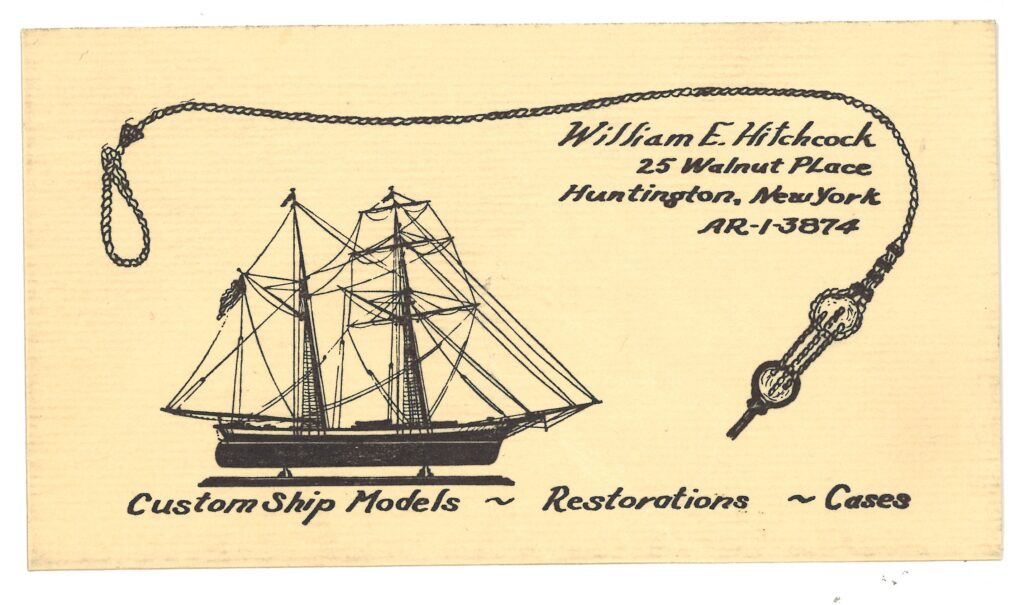
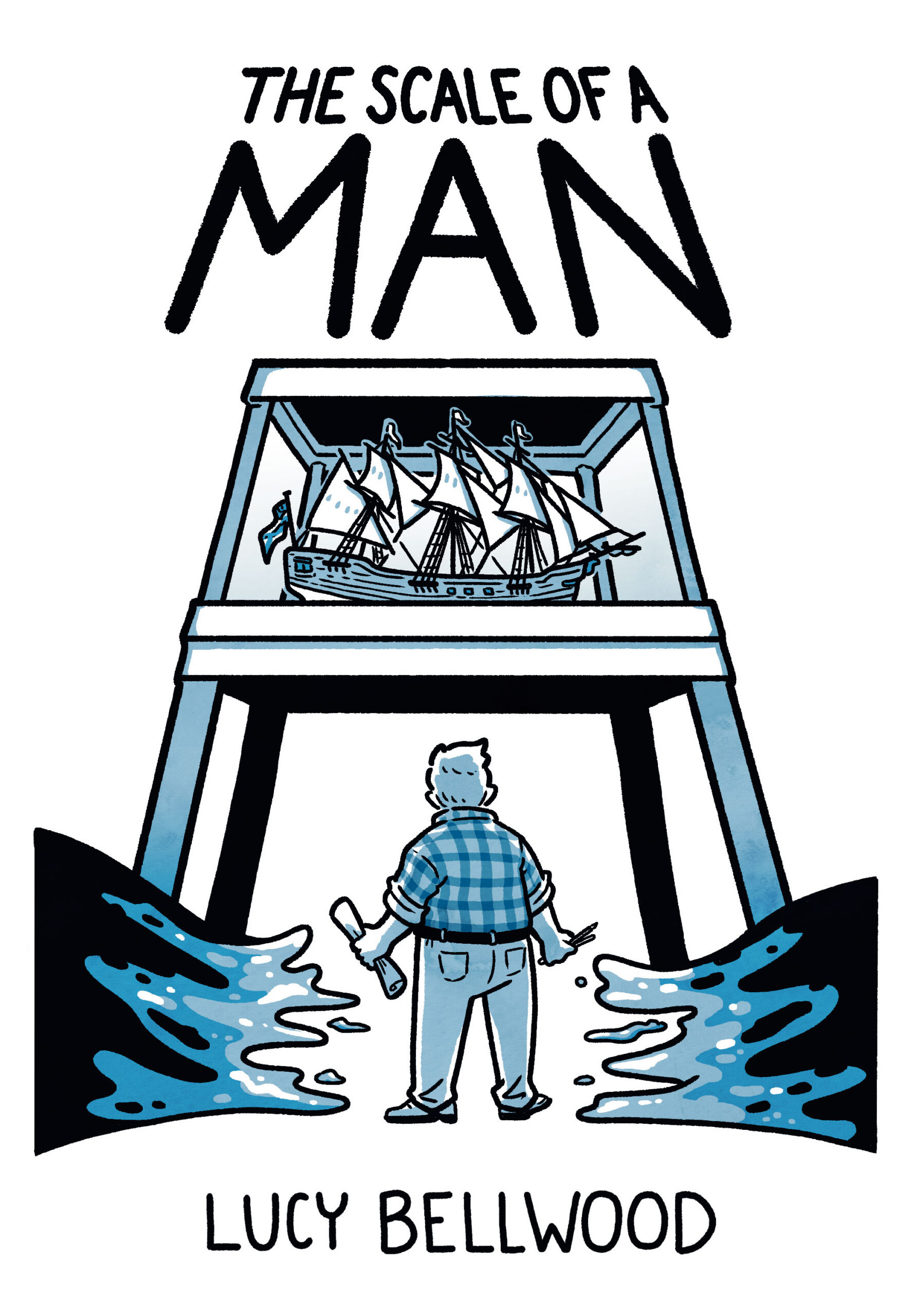
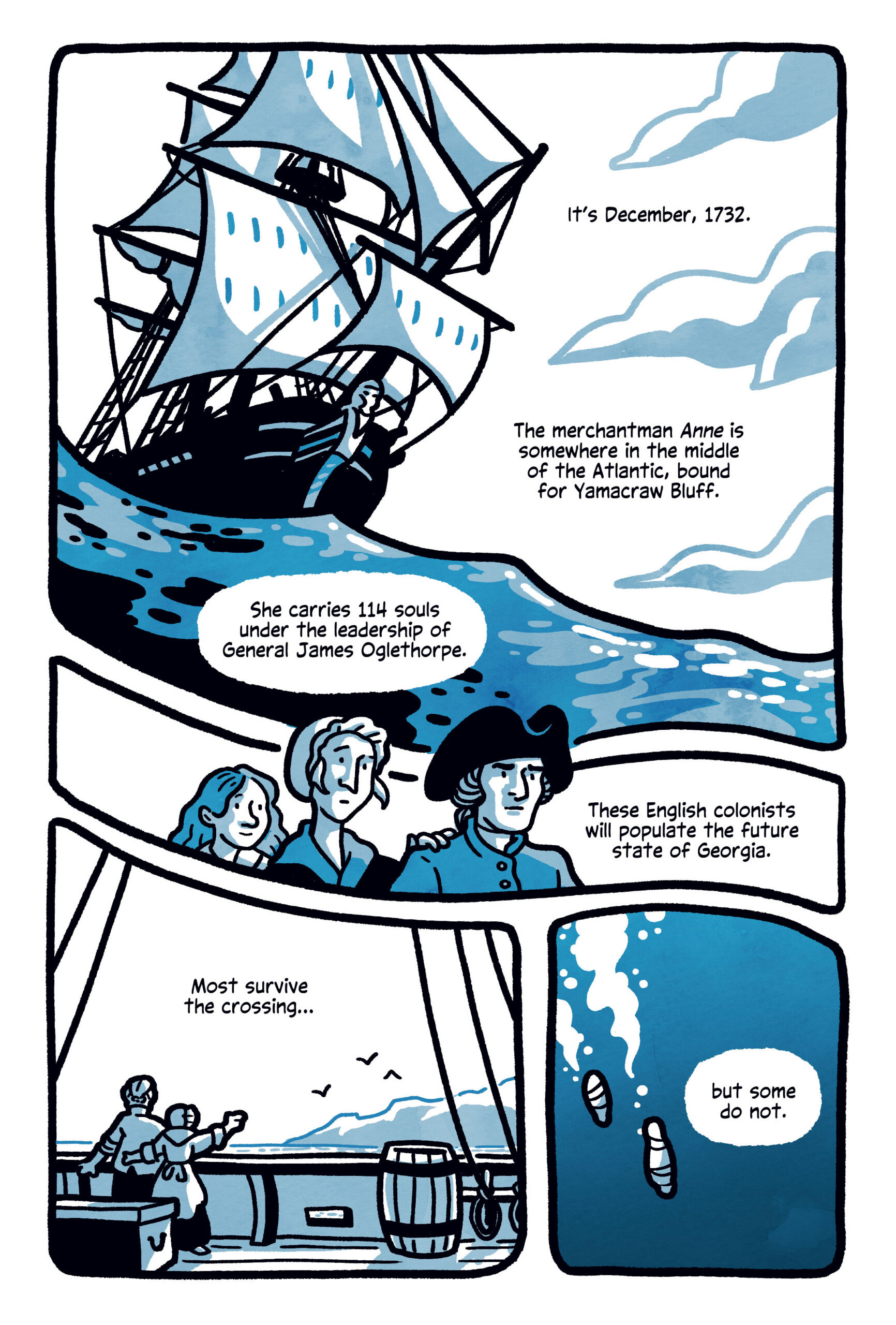
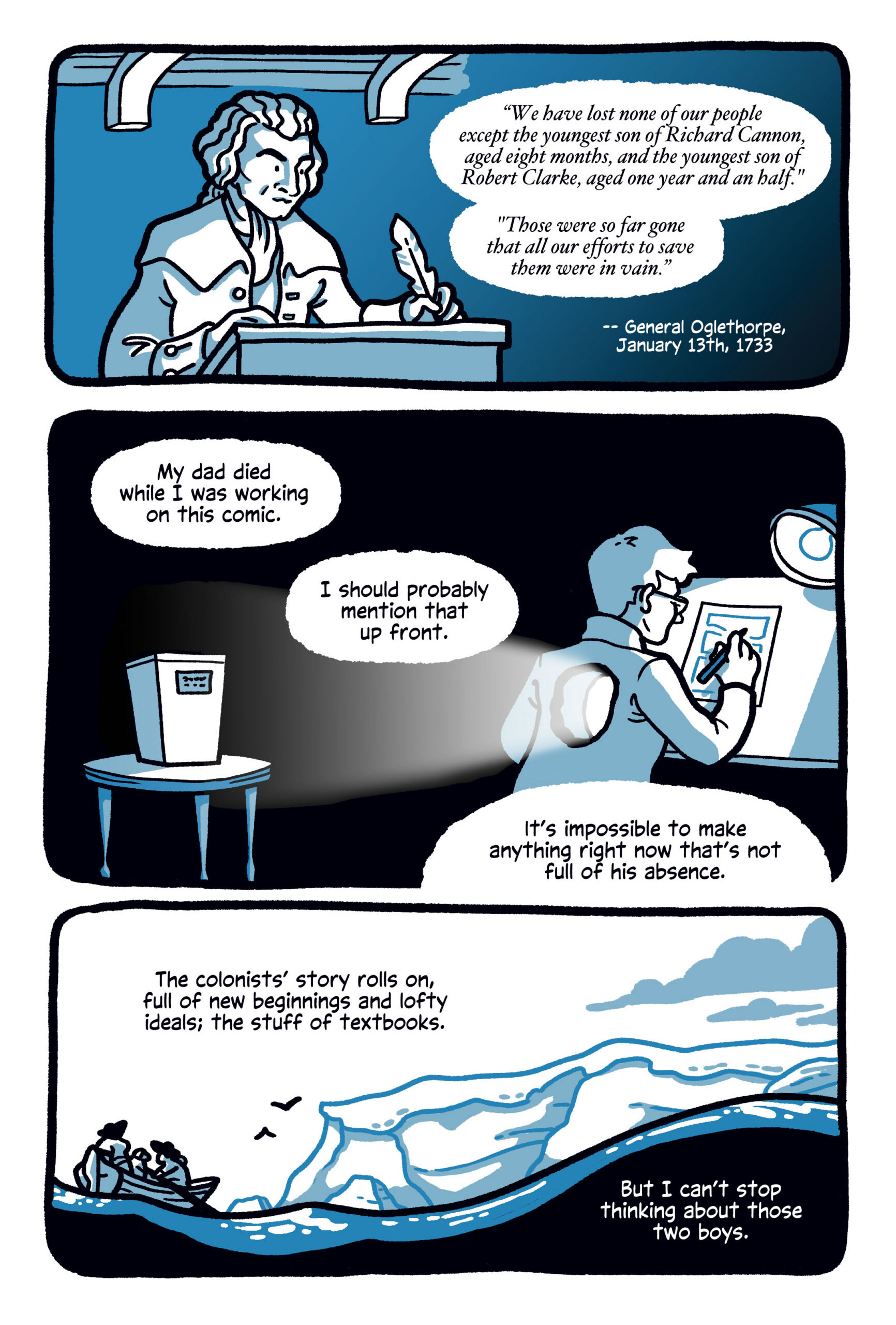
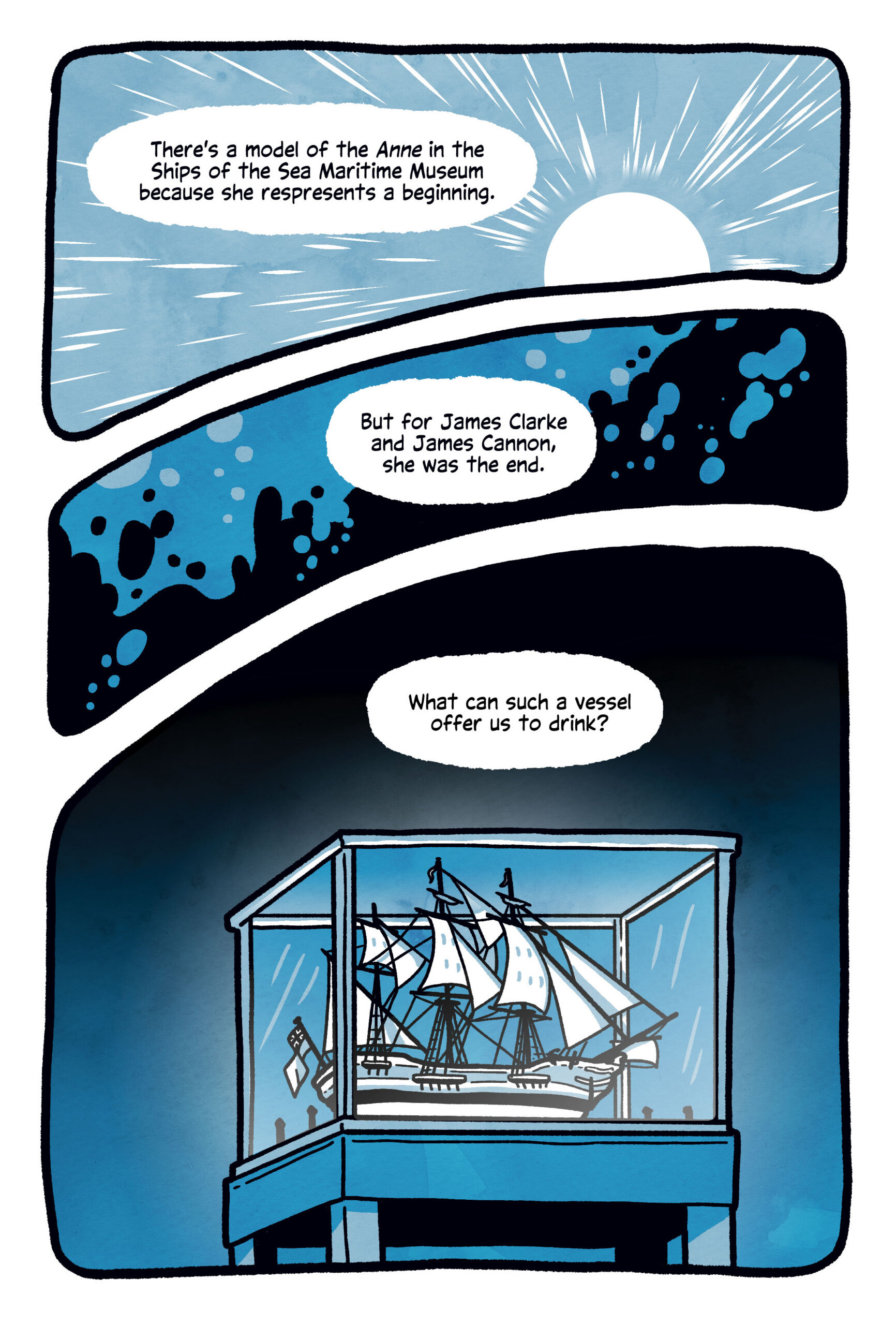
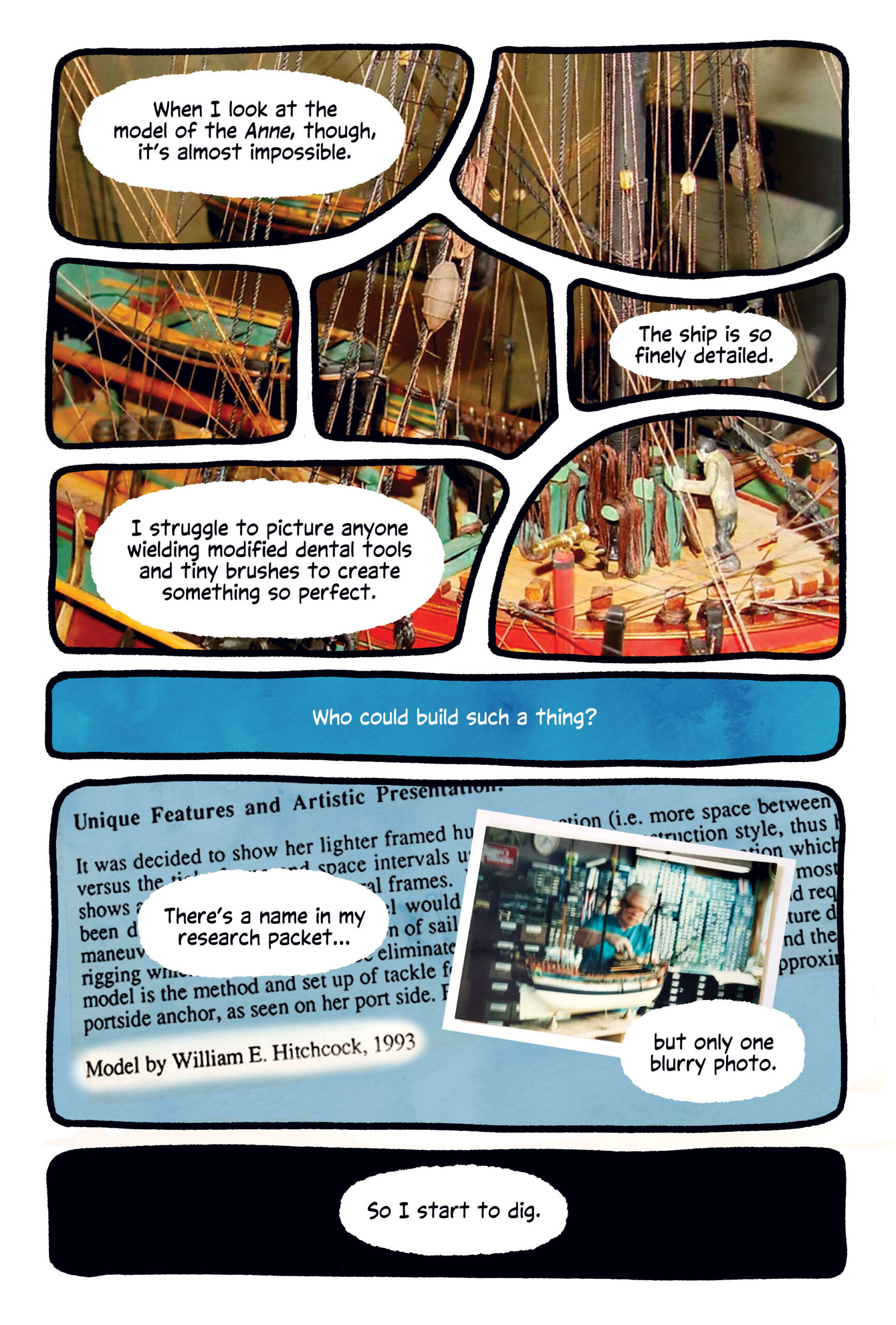
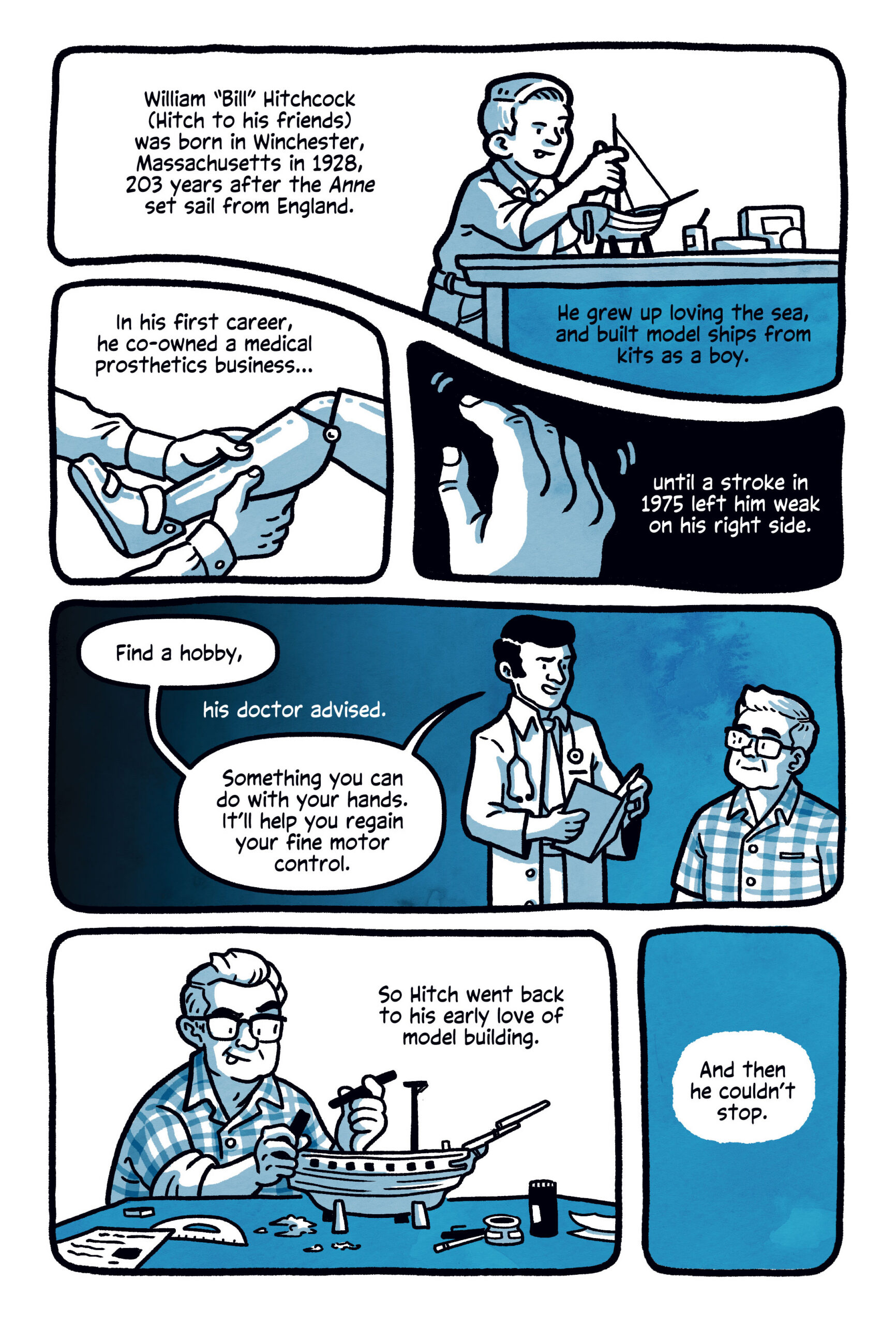
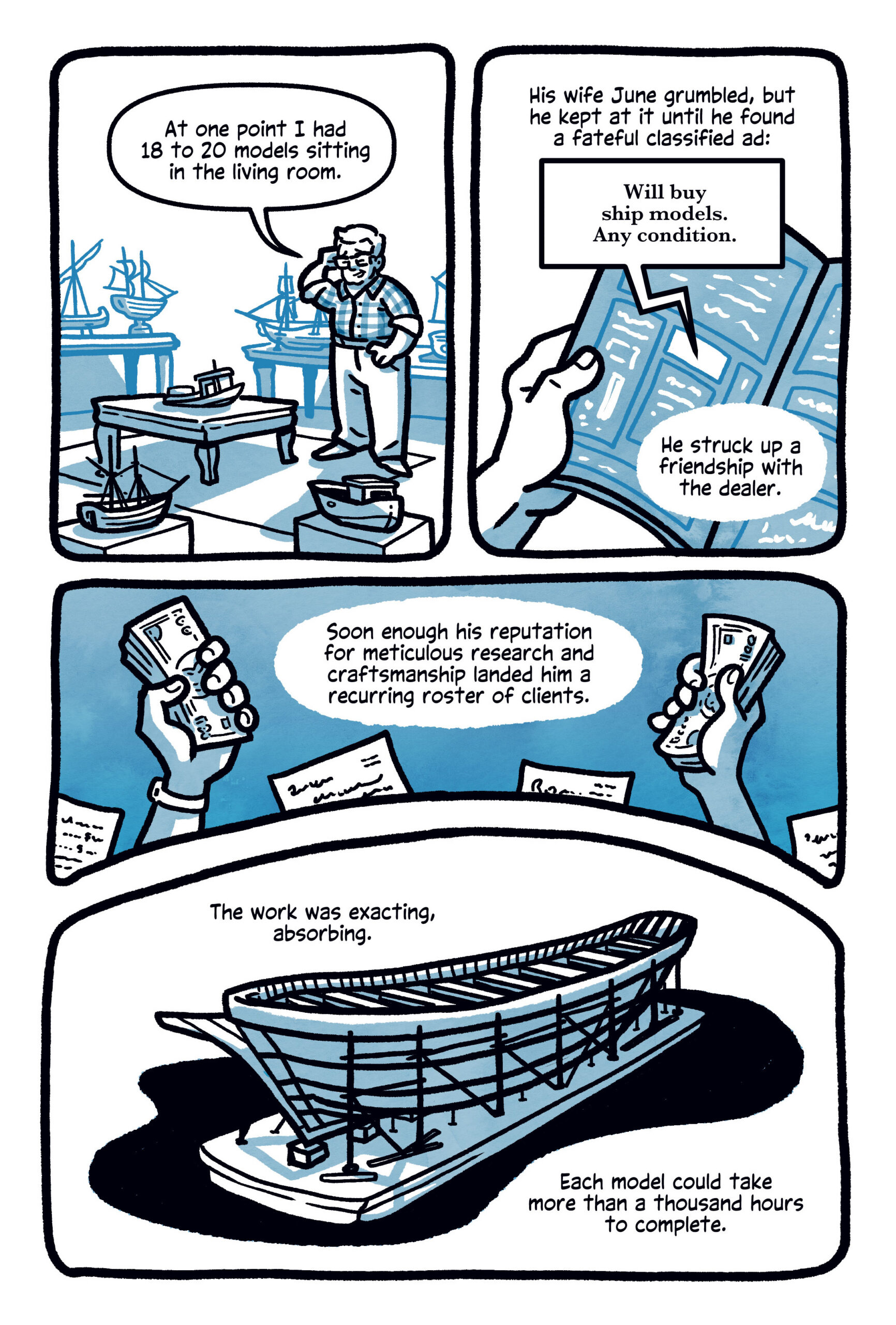
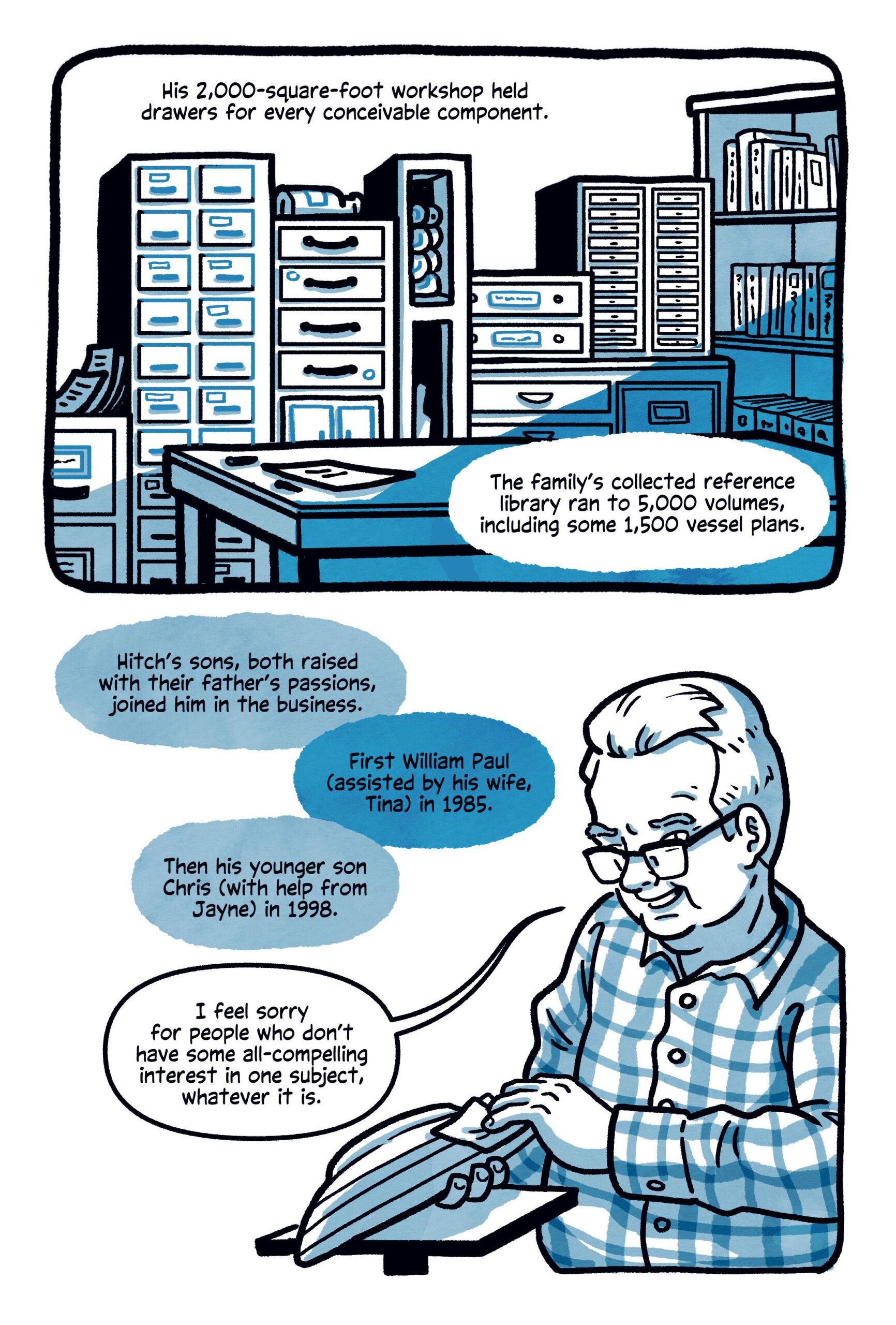
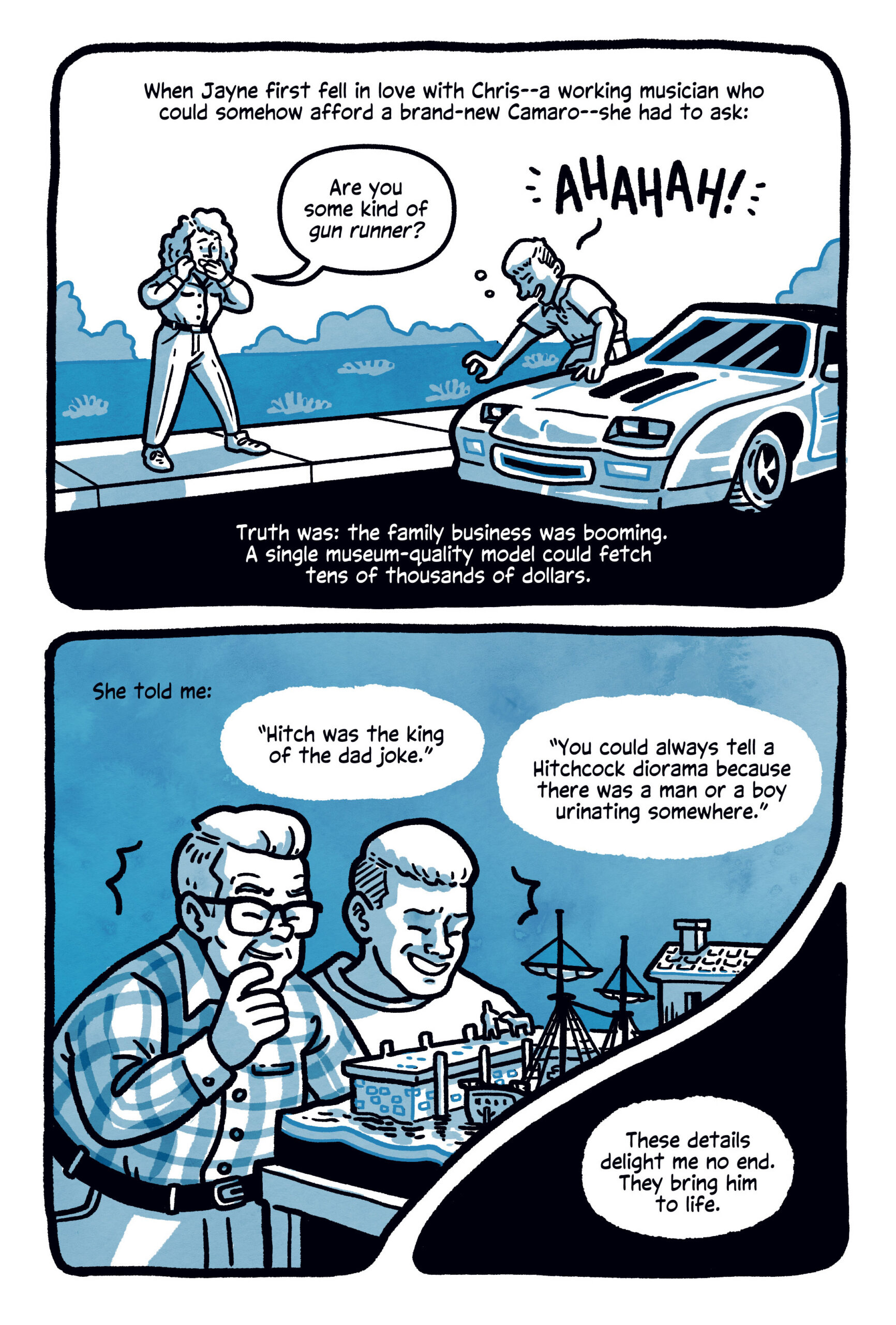
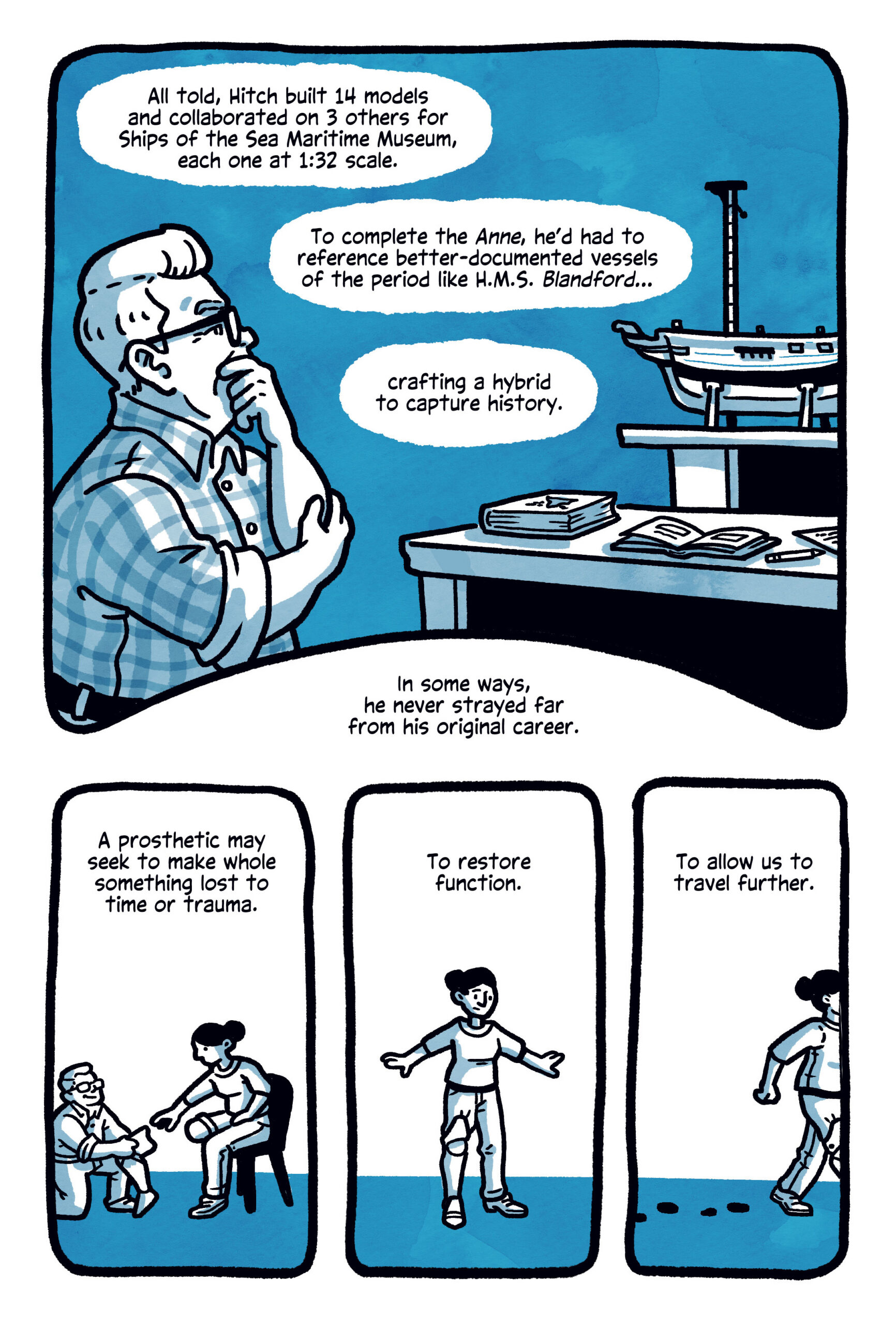
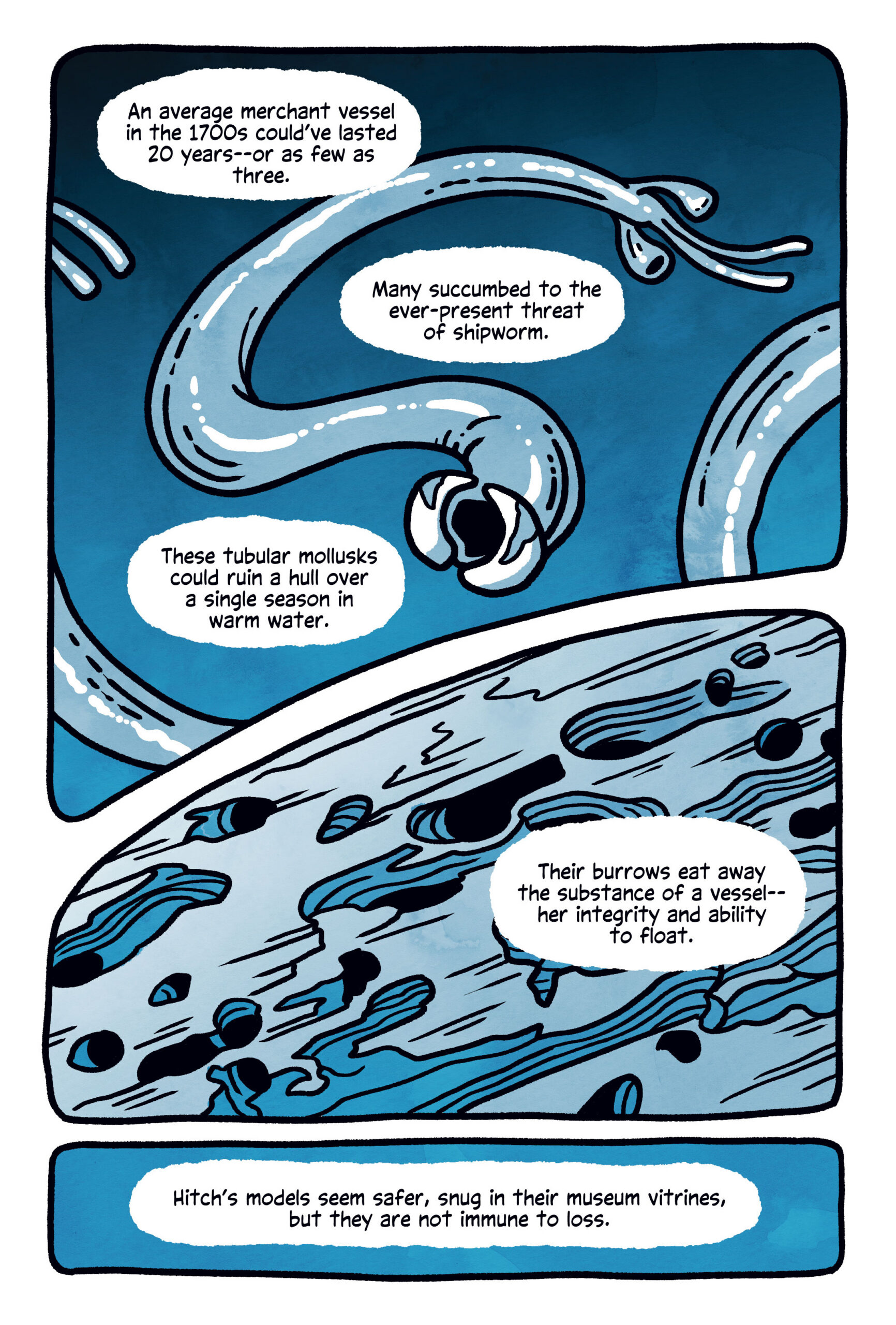
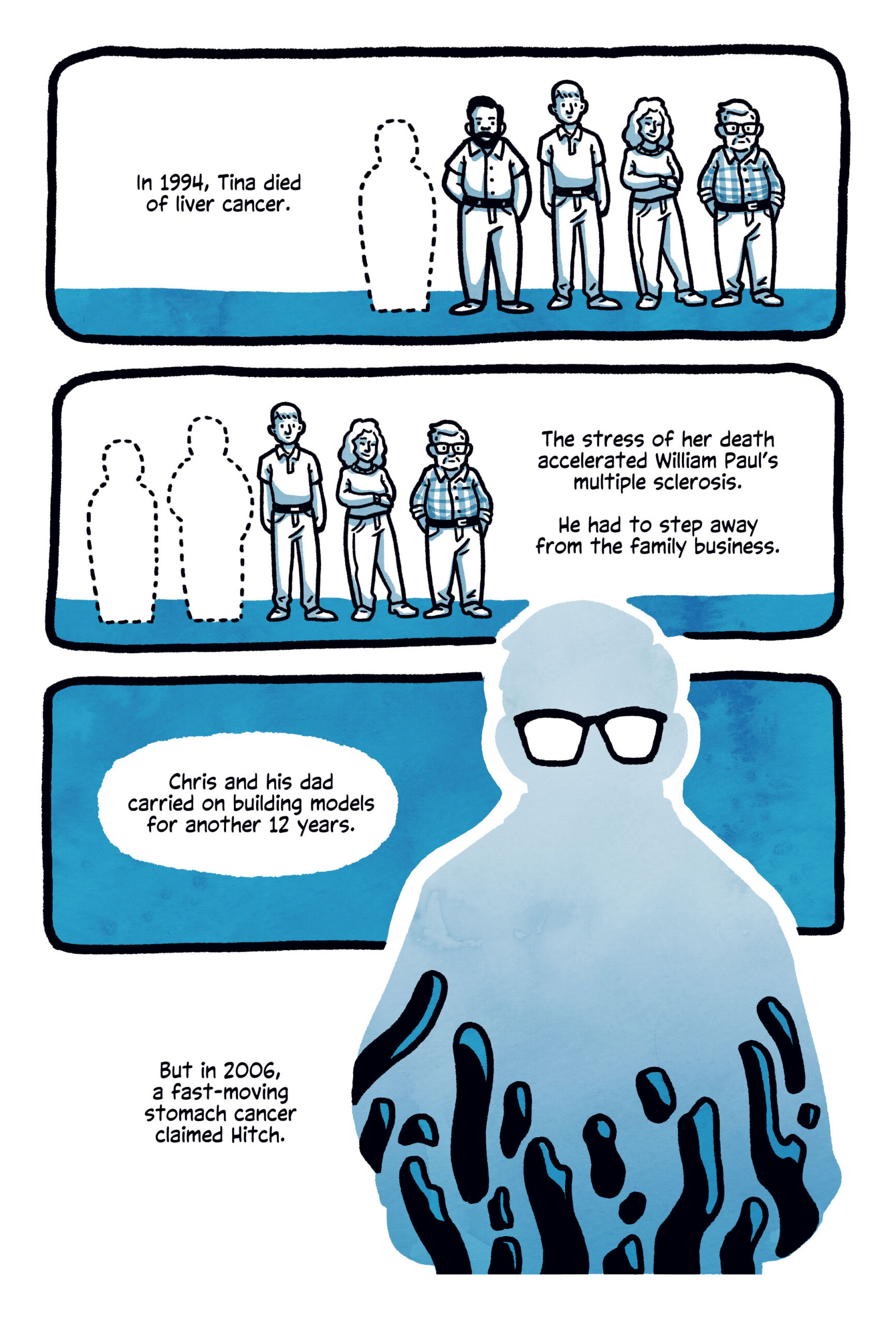
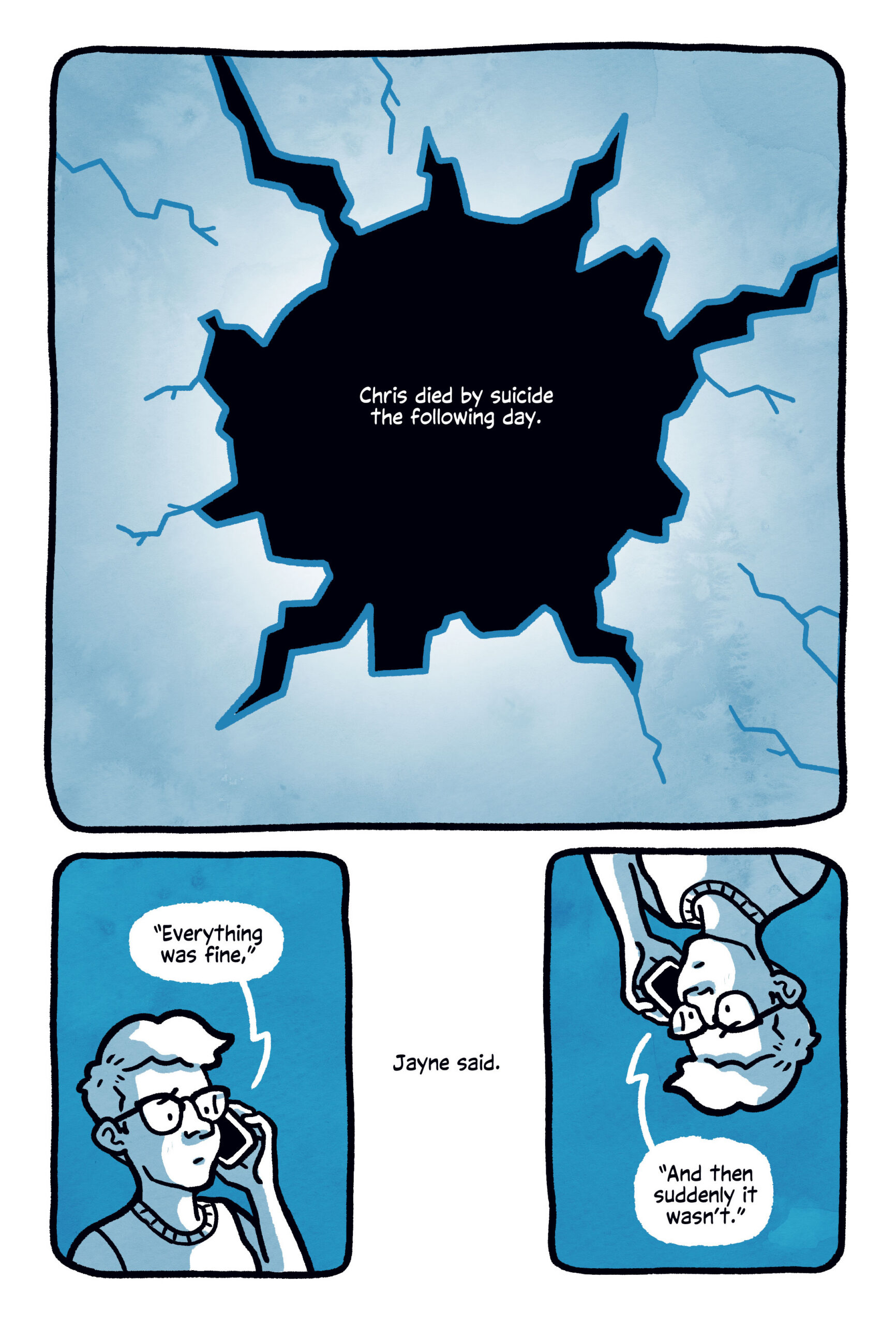
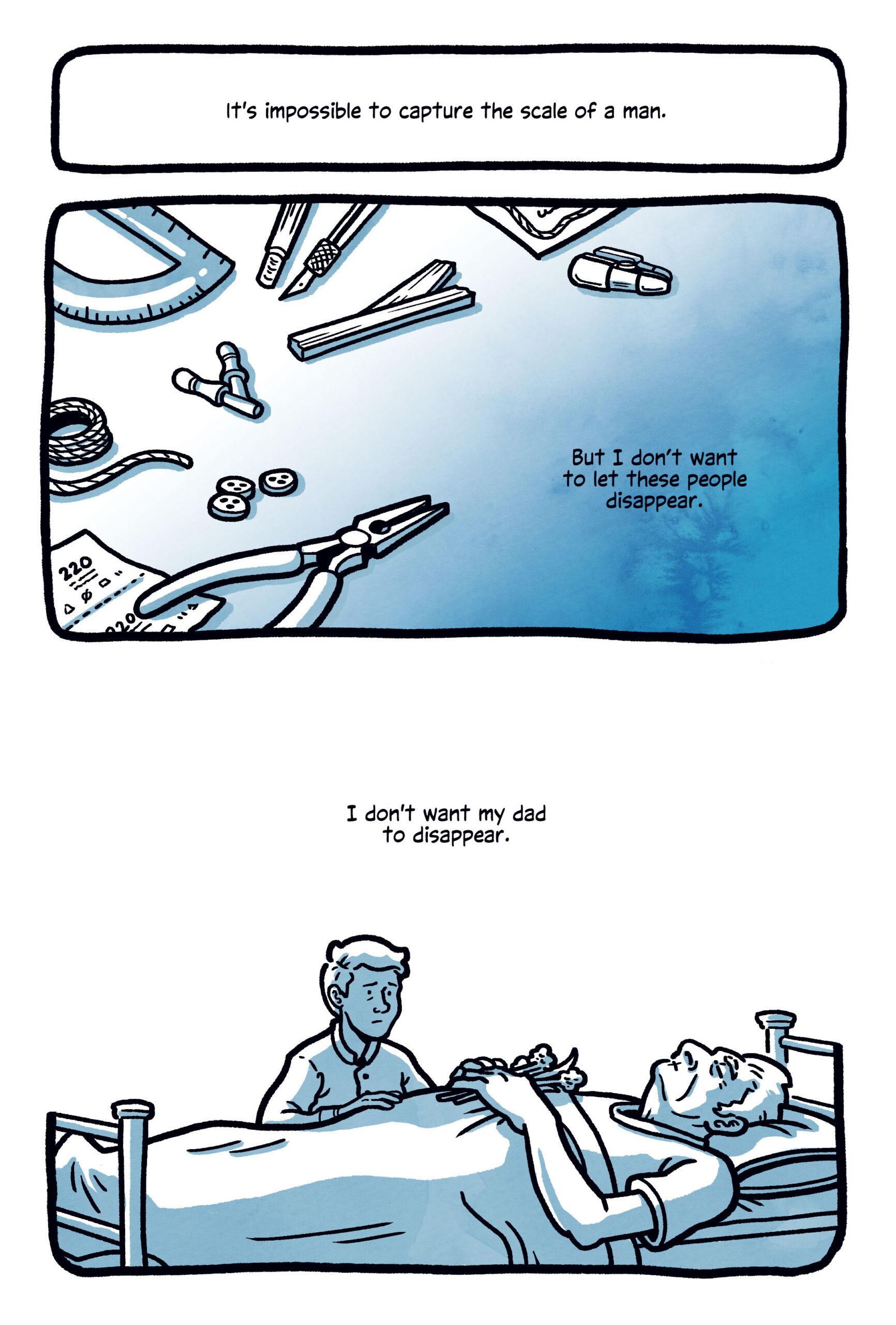
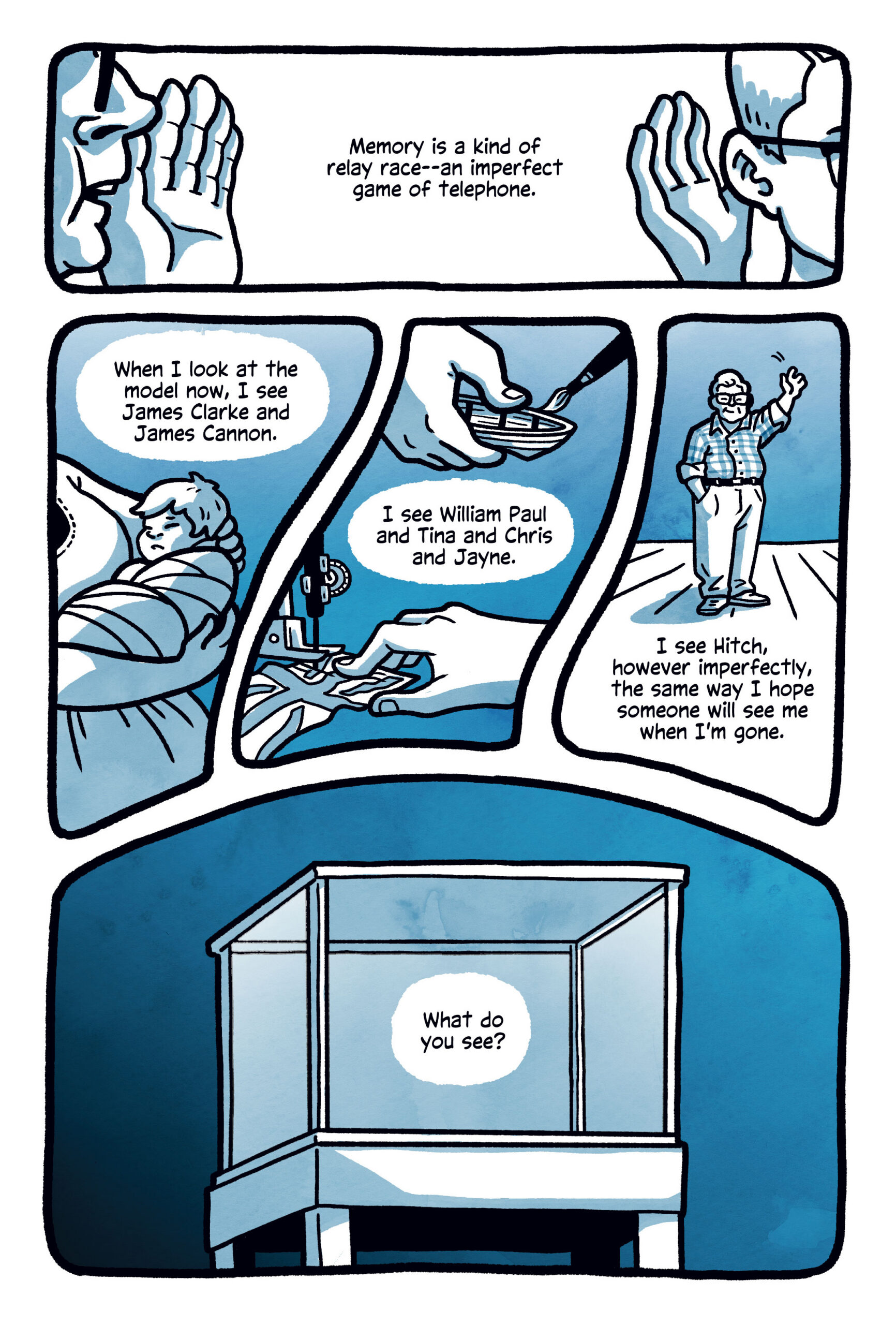
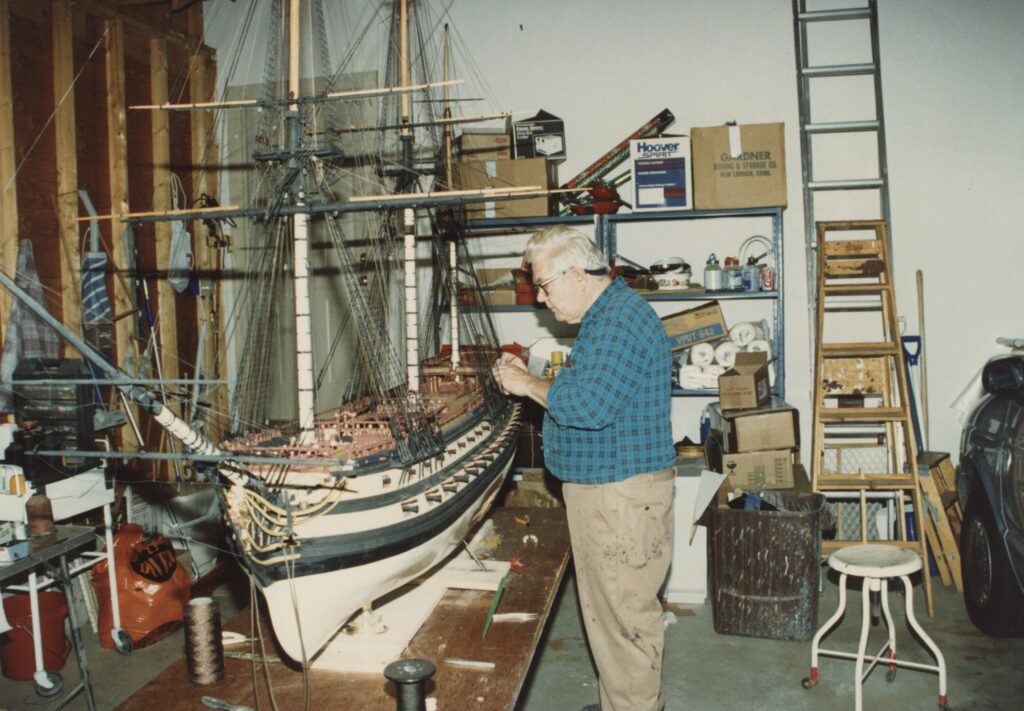
It’s still amazing to me when tailor-made opportunities like this land at my feet, even though I know there are only so many outspoken boat nuts in the comics world. I leapt at the chance and spent the second half of 2025 weaving together a variety of favorite themes (Le Guin’s Carrier Bag Theory of Fiction! Manguso’s cathedral architect! The Ship of Theseus!) to explore the legacy of the Anne, the vessel that carried the first colonists to Georgia in 1732. The story started in the realm of primary sources and historical nonfiction, but completely transformed in the aftermath of my dad’s death in July. By the time I was synthesizing all my notes in the fall of 2025, it had become a quest to give the extraordinary model maker behind most of the museum’s collection his due.
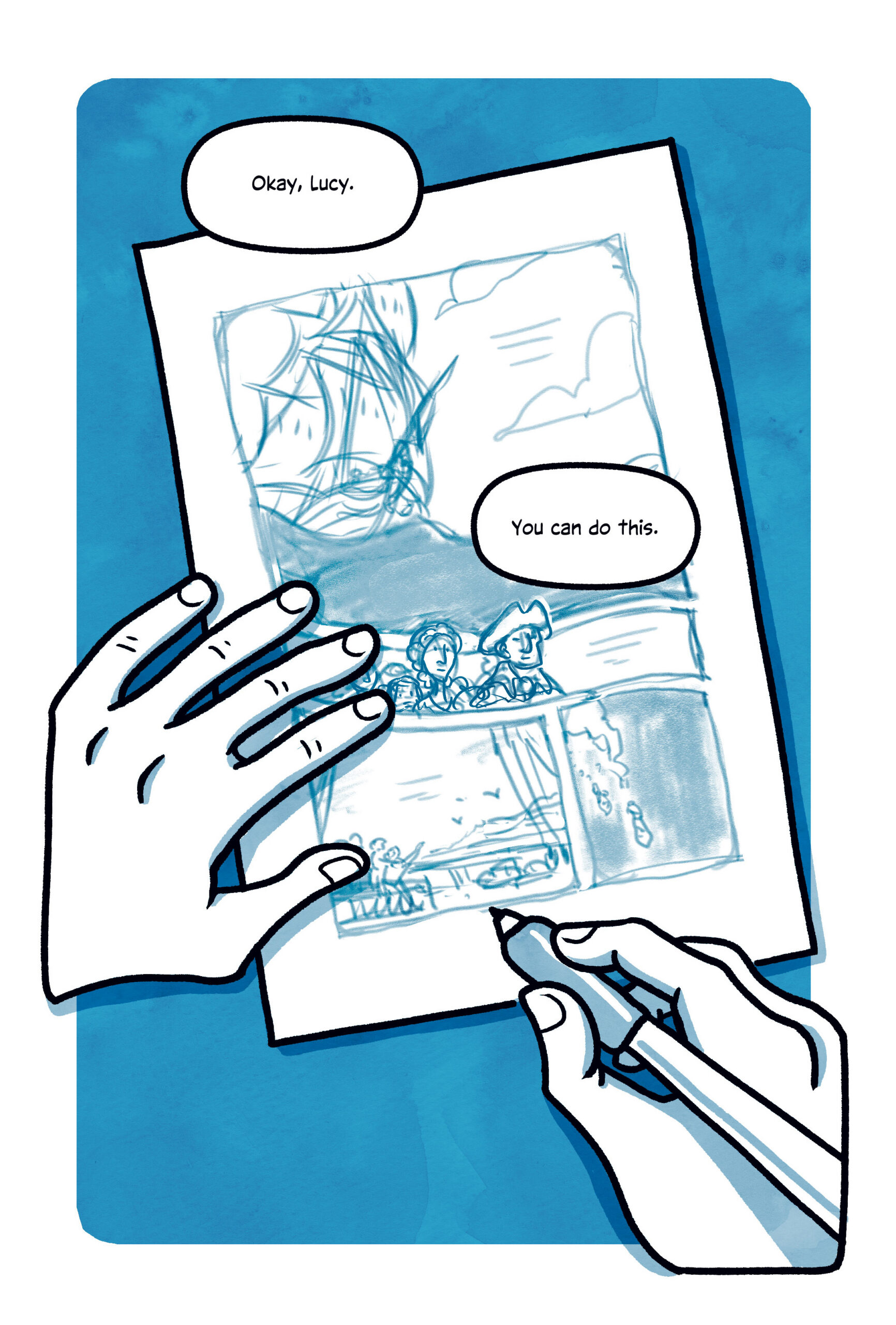
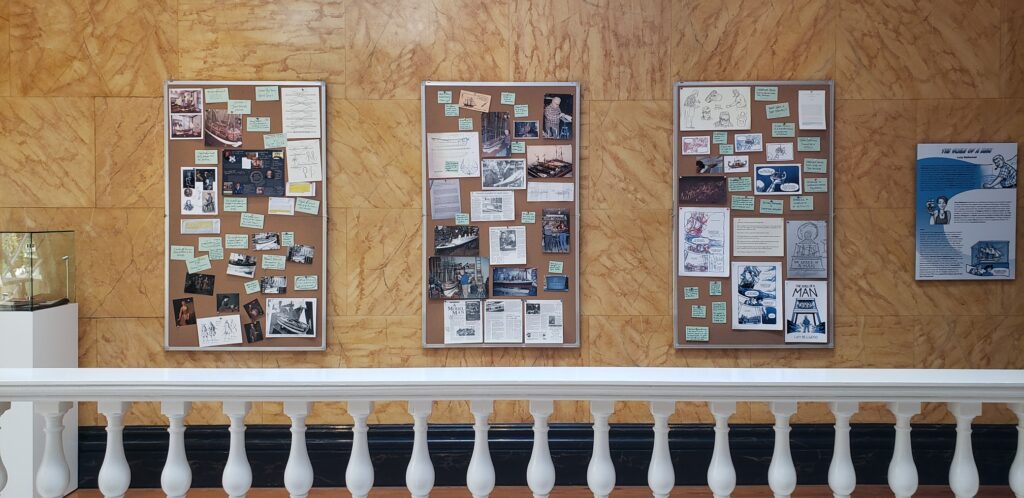
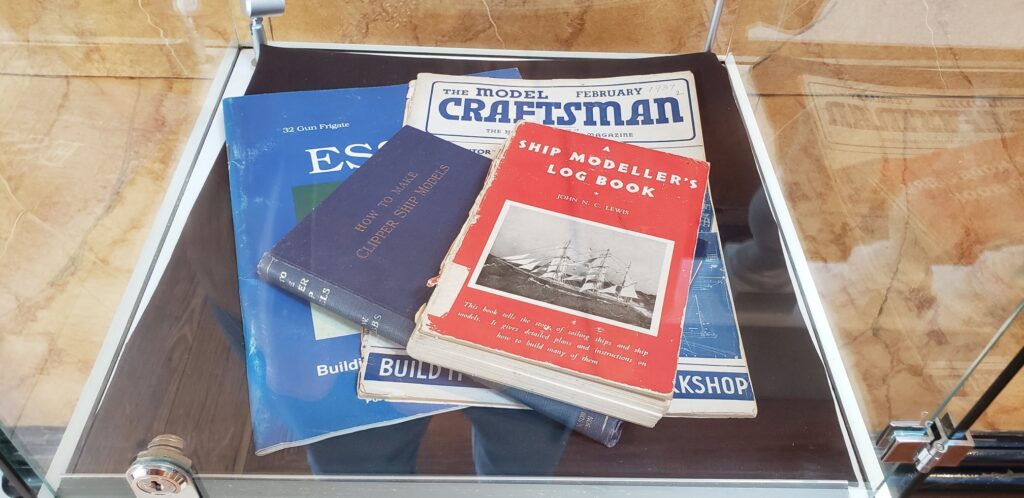
Drawn to the Sea, the exhibit collecting comics and process work by myself, Avery Hick, Rich King, and Sharon Norwood, finally opens this week! While I can’t attend the party in person, I’m very glad to be able to share my contribution online. The Scale of a Man took far more out of me than I expected, but in hindsight it makes perfect sense. I really hope you like it. (I’ve included some photos from the exhibit as well as my artist statement below. There’s also a brief essay about some the research here.)
Content Warning: this comic deals with suicide and parental mortality. Readers with trypophobia may want to skip pages 14 and 15.
Exhibition Preview:
Artist Statement:
I joined the crew of my first tall ship at seventeen. I know more than most the temptation to cast a vessel as the hero of the story, but it’s a lie. We name them, adorn them, and rely on them, but ultimately ships are tools enlivened by the people who use them. They encompass exploration and cultural exchange, escape and immigration, enslavement and genocide. Rather than flattening the ship into a hero, I want to examine the ship as a vessel in every sense of the word, one brimming with discoveries and losses alike.
In her essay The Carrier Bag Theory of Fiction, Ursula K. Le Guin invites us to explore the implication of the container as the oldest human invention. What would it mean to acknowledge that we have carried sustenance and stories in baskets, nets, and bottles for far longer than we have centered narratives around a Hero’s Journey built on aggression and conquest? “It’s hard,” she admits, “to tell a really gripping tale of how I wrested a wild-oat seed from its husk, and then another, and then another, and then another, and then another—” but the essay encourages us to try.
Whether framing the hull of a ship or the panels of a story, we delineate the things we love. It is an affection that cannot be rushed. I was lucky enough to learn from many model ship builders in the course of creating this piece. Their generosity, enthusiasm, and expertise helped me appreciate what’s poured into each miniature vessel, and to recall something I need to keep close in my own practice: there is value in doing things that defy efficiency. These are fields where monotony walks hand in hand with craft. Some people throw their hands up and bemoan the death of such practices in the age of AI, but I believe we’re headed toward a resurgence in valuing the things machines cannot do.
There is nothing more human than dying. Steeped in my own grief at the loss of my father, I found my way into a story that took me places I couldn’t have foreseen. Early in the research process, I read that the colonists aboard the Anne slept below decks in suspended wooden cots—their similarity to coffins a reminder of how often such voyages become a passage to the underworld. Every journey requires a type of death. We leave behind our former selves, hoping to meet some new incarnation on the farther shore, but the past always comes with us in one guise or another.
We don’t know what became of the Anne in the end; her own death, whatever that means for a vessel, went undocumented. Sometimes such losses are inevitable. But the containers we build, whether they be ships, comics, or museums, offer us a chance to see ourselves woven into the minutiae of the past. It is a form of immortality, one that relies on engagement, imagination, and tenderness, and it is always worth reaching for.
Drawn to the Sea opens at Ships of the Sea Maritime Museum in Savannah, Georgia on Friday, May 1st and runs through January 31st, 2027. Learn more about the exhibit and related programming here.

 Login
Login