Reading view

Nvidia’s New Chip Aims to Upend the Creative Laptop Market

A person with long hair is silhouetted against a dark background, holding and using a laptop with a visible Windows logo. Light highlights part of their face and hands.

Microsoft and Nvidia made joint announcements today. Microsoft is launching a brand-new Surface Laptop Ultra, the most powerful Surface Laptop ever built, and it is powered by Nvidia's new RTX Spark system-on-a-chip, a "new superchip that reinvents Windows PCs for the era of personal AI agents."

[Read More]

  •  

Where things stand between Trump and Big Tech executives

For more than a year, leaders from the country’s largest technology firms have worked to win President Trump’s favor as he returned to the White House. From meetings at Mar-a-Lago to hefty inauguration donations, their efforts were on full display from the first day of Trump's, with CEOs like Elon Musk and Mark Zuckerberg sitting...

  •  

What’s next for physical AI in the US

{beacon} Technology Technology   The Big Story What’s next for physical AI in the US First there was image classification, then generative AI models like ChatGPT, followed by agentic AI systems that can operate with limited human involvement. Rev Lebaredian, Nvidia’s vice president of physical AI simulation, predicts the era of physical AI systems is...

  •  

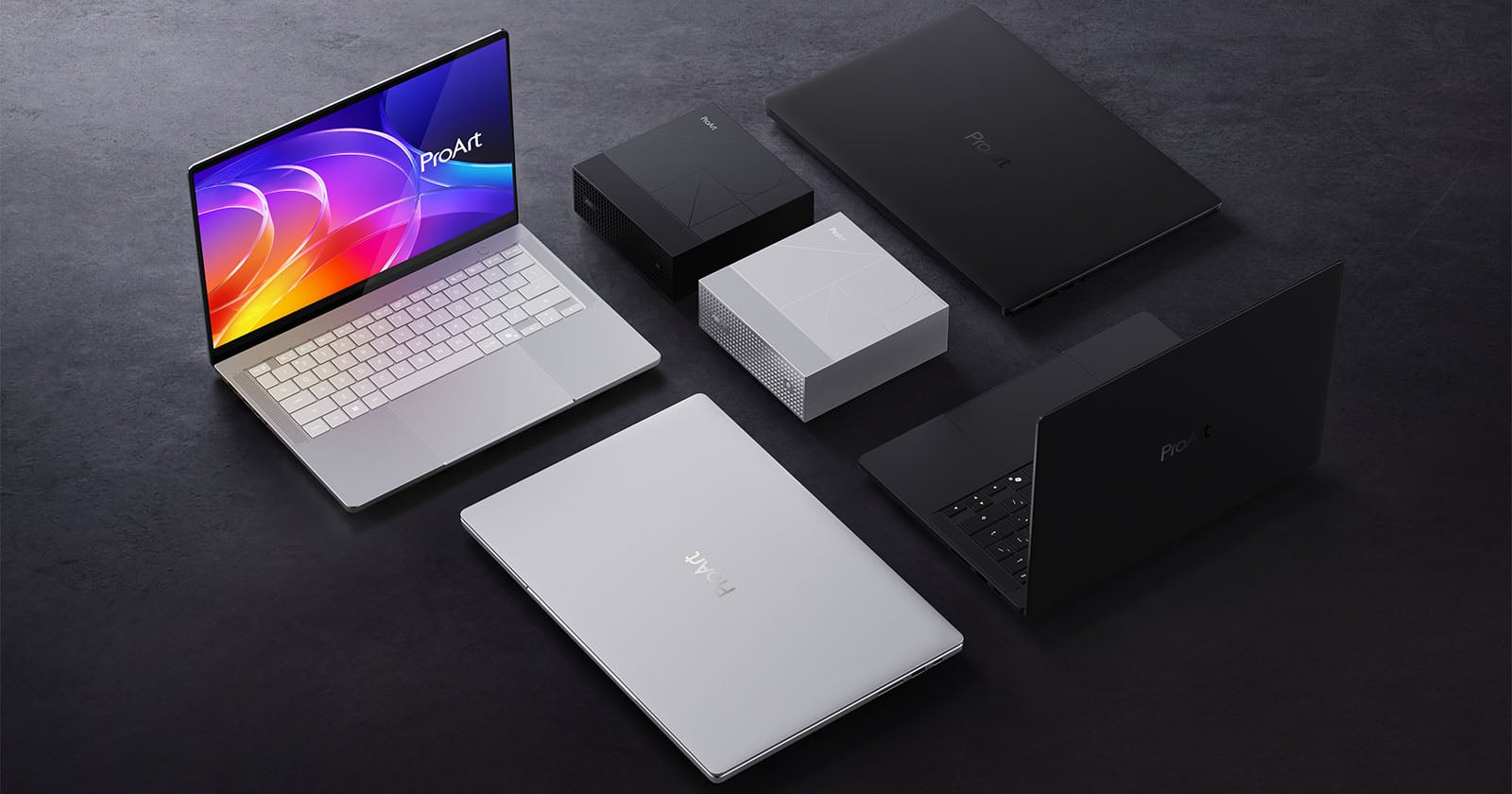
Asus’ RTX Spark-Powered ProArt PCs Promise Pro Performance for Creators

A group of laptops and desktop mini PCs in black and silver colors are arranged on a dark surface; one laptop screen displays a colorful abstract wallpaper.

Asus has had a busy Computex 2026, debuting a new generation of AI creator ProArt PCs, a new ProArt Mini PC designed for creative professionals, and a new Qualcomm Snapdragon-powered mini PC, the Asus QN10.

[Read More]

  •  

‘Complete nonsense’ — Jensen Huang rejects the need for global workers to fear AI-driven job losses, says more software engineers will be needed

TAIWAN: Artificial intelligence (AI) may be portrayed as a threat to jobs for many workers around the globe at present times, but NVIDIA Chief Executive Officer (CEO) Jensen Huang believes that fear is simply overblown.

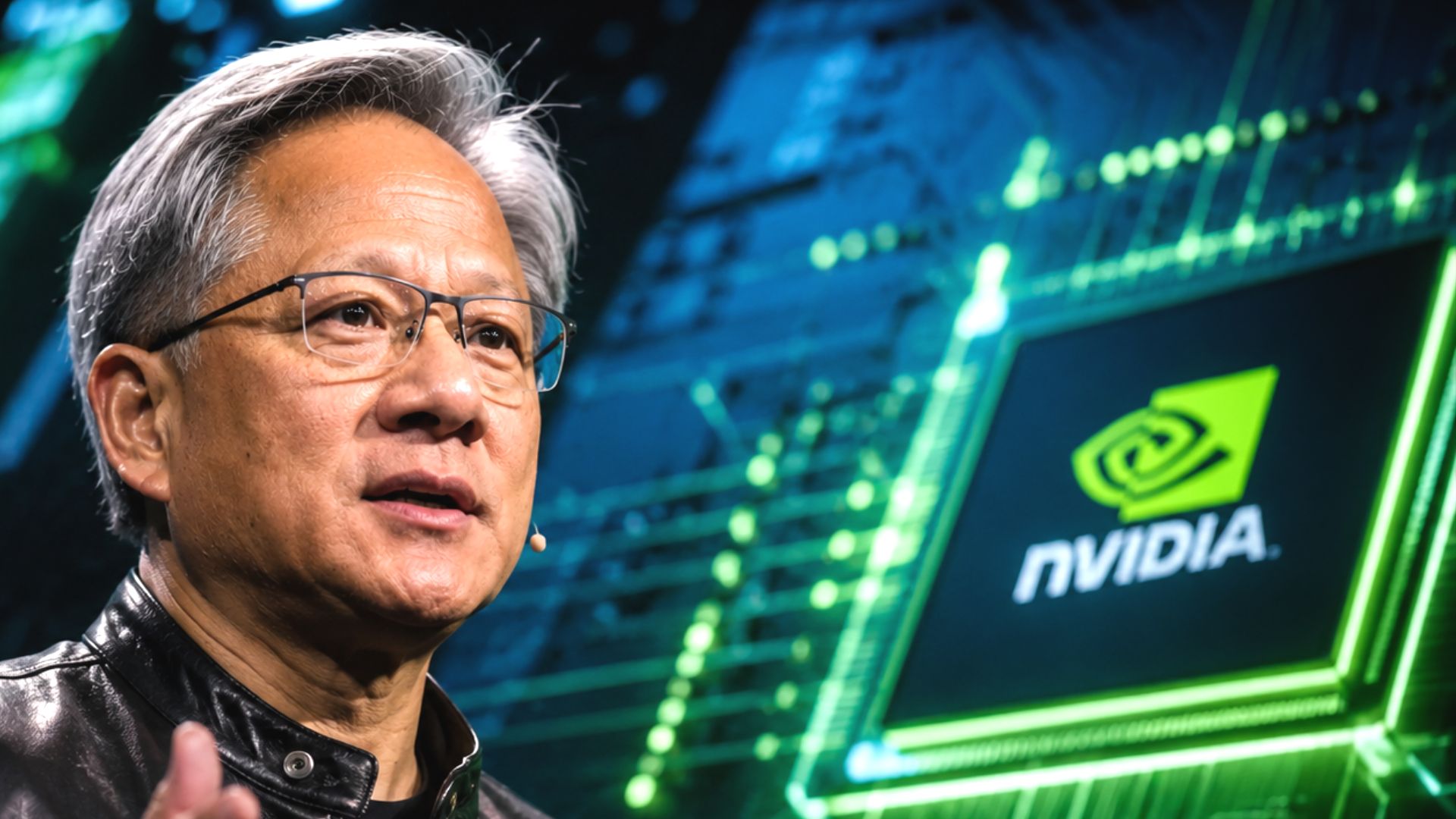
Speaking at Computex 2026 in Taipei, Huang pushed back against claims that AI will lead to widespread unemployment among software engineers. He described the idea that AI is reducing jobs as “complete nonsense” and argued that the technology is having the opposite effect. Instead of shrinking workforces, companies are hiring more engineers to take advantage of AI’s growing capabilities.


Huang’s remarks coincide with a growing effort by businesses across the globe to integrate AI into products, services and daily operations, raising ongoing questions about how the technology will restructure the workforce.

AI’s profitability is making engineers more productive

Huang’s argument centres on productivity. He said software engineers who use AI effectively can now produce far more work than before. Rather than making engineers obsolete, that increase in output makes them more valuable to employers.

Huang estimated that the world’s 30 to 40 million software developers, who collectively earn around US$3 trillion (S$3.85 trillion) in annual salaries, are now generating roughly three times as much productive output with the help of AI tools.

From his perspective, higher productivity creates more business opportunities. As companies discover new products and services they can build, they need more engineers to develop and maintain them.

He suggested that employers would only reduce hiring if overall output remained unchanged. Instead, businesses are expanding because AI is allowing them to do much more.

AI has become a business tool, not just an experiment

Huang also argued that AI has reached a turning point. He pointed to the rise of “agentic AI,” systems that can perform tasks using tools such as web browsers, spreadsheets and coding platforms with limited human input. Unlike traditional chatbots that mainly answer questions, these systems can plan and carry out actions.

Such upgrades are helping companies generate revenue from AI products and services. To support his view, Huang cited data from GitHub showing that software development activity continues to rise despite rapid advances in AI.

Developers made nearly one billion software updates in 2025, while more than 36 million new developers joined the platform during the year. The figures suggest that interest in software development remains strong even as AI tools become more capable.

NVIDIA’s vision for the next generation of computing

Beyond the jobs debate, Huang used the event to unveil Nvidia’s RTX Spark AI superchip, developed with Microsoft and MediaTek.

The chip is designed to run powerful AI models directly on personal computers without requiring an internet connection. Huang described it as one of the biggest changes to personal computing in decades.

He also outlined a future where dedicated AI systems operate in homes, offices, factories and robots, helping people manage everyday tasks and work more efficiently.

The long-term impact of AI on jobs remains a subject of debate. However, Huang’s message was that workers who learn to work alongside AI may find themselves in greater demand, not less.

As companies continue to invest heavily in technology, the challenge may be adapting skills fast enough to keep pace with the changes ahead.


Read related: NVIDIA to launch its new research hub in Singapore, marking latest boost to city-state’s artificial intelligence drive

This article (‘Complete nonsense’ — Jensen Huang rejects the need for global workers to fear AI-driven job losses, says more software engineers will be needed) first appeared on The Independent Singapore News.

  •  

Nvidia clinches deals with South Korean giants including SK Group to advance AI boom

Malay Mail

  • Deals announced with SK Hynix, SK Telcom, Naver, Doosan, LG Group, Hyundai Motor
  • SK Hynix multi-year tie-up will secure advanced memory supply
  • Nvidia says SK Hynix partnerships have opportunities to keep extending
  • SK Telecom, Naver, Doosan to use ‌Nvidia technology to build data centres 

SEOUL, June 8 — Nvidia on Monday announced a series of deals in South Korea with tech giants including SK Hynix and Naver, as it looks to secure crucial memory chips to power its AI ambitions and entice new customers.

The agreements come during a high-profile trip by Nvidia CEO Jensen Huang to South Korea that began on Friday and has seen him dine on grilled pork belly and local spirit soju with the country’s top corporate bosses, throw a baseball pitch and meet with a well-known gamer.

Nvidia and its partners, which also included SK Telecom and conglomerate Doosan Group, did not disclose the value of the deals.

SK Group, South Korea’s second-largest family-owned conglomerate, said its SK Hynix and SK Telecom arms had agreed deals with Nvidia.

Memory chip maker SK Hynix signed a multi-year technology partnership that will see it commit to developing advanced types of memory for global AI data centres, SK Group said.

SK Hynix and Nvidia said the agreement, which comes as memory chip makers have been straining to keep up with demand, would enable supply to keep pace with Nvidia’s plans, which have expanded to robotics, personal computers and AI supercomputers.

“SK Hynix has been Nvidia’s largest memory partner. SK Hynix will continue to be Nvidia’s largest memory partner,” Huang said after a meeting with SK Group Chairman Chey Tae-won at the headquarters of the chipmaker’s parent.

Huang said the deal with SK Hynix, a rival to Samsung Electronics and US-based Micron Technology, was for more than two years with the option to keep extending.

“We already procure and we buy from SK Hynix already billions and billions of dollars each year, and it’s going to grow substantially,” he said.

Ryu Young-ho, a senior analyst at NH Investment & Securities, said the SK Hynix-Nvidia partnership reinforced the view that memory chips were evolving from a commodity product into a more customer-specific business.

Other deals

SK Telecom said it would build a gigawatt-scale AI cloud in South Korea using Nvidia technology, with the first AI data centre to come online in 2027. Nvidia said internet giant Naver and conglomerate Doosan would also use its technology to help build AI data centres.

Doosan, which is developing robots and makes materials used in Nvidia’s most powerful Blackwell chips, said it expected its energy solution to be used in Nvidia’s data centre platforms and for it to use the US firm’s physical AI technology as well.

Nvidia is also partnering with LG Group on electronics, mechanical systems and AI for humanoid robots, Huang said after a meeting with the tech conglomerate’s Chairman Koo Kwang-mo.

Huang said the pair were also working on the architecture of future data centres including cooling, power delivery and the entire design and building of the data centres.

After a meeting with Hyundai Motor Group’s Executive Chair Euisun Chung in the afternoon, Huang said Nvidia would deepen its partnership with Hyundai across a range of AI initiatives, including autonomous mobility, robotics and AI-powered manufacturing.

He also highlighted opportunities to accelerate the development of industrial robotics, saying Nvidia and Hyundai would work together to bring AI to “all forms of mobility” and deepen collaboration on robotics for practical industrial applications.

Huang referred to Hyundai Motor Group’s planned AI data centre in Saemangeum as an “AI Valley” akin to California’s Silicon Valley and said he was “very happy to build Nvidia in Saemangeum.”

South Korea stock rally falters

South Korea is an Asian manufacturing powerhouse, home to major producers of chips, electronics, cars and ships. SK Hynix and Samsung are the world’s two largest makers of memory chips, which are key components in data centres.

The country’s benchmark Kospi index has doubled in six months as heavyweights SK Hynix and Samsung benefited from the AI wave, but closed 8.3 per cent lower on Monday after robust US jobs data fanned bets on a Federal Reserve rate hike this year and sparked a rout in global tech stocks.

Shares in Samsung and SK Hynix closed down 10.2 per cent and 7.7 per cent respectively.

When asked about the global chip stock rout, Huang waved off concerns. “Everybody should be very excited; they can now buy stock at a cheaper price, and it’s absolutely true that the future of AI is very bright.”

Huang also planned to meet Samsung’s semiconductor business head Jun Young-hyun later on Monday.


  •  
❌