World food commodity prices rose in March for the second month in a row, due largely to higher energy prices linked to the conflict escalation in the Near East, according to the latest benchmark measure released by the Food and Agriculture Organization of the United Nations (FAO).
Sharad Pawar has written an open letter to Prime Minister Narendra Modi expressing concern over the Centre’s recent austerity appeal and demanding that an all-party meeting be convened to discuss the emerging economic situation and its implications.
Pawar, a former defence minister and former agriculture minister, wrote the letter on X two days after Modi appealed to citizens to conserve fuel, avoid foreign travel and postpone gold purchases in view of rising global energy prices and pressure on foreign exchange reserves caused by the continuing West Asia conflict.
The letter was issued ahead of Modi’s proposed five-day foreign tour from 15 to 20 May, during which he is expected to visit the United Arab Emirates, Netherlands, Sweden, Norway and Italy.
Pawar urged Modi to personally chair an all-party meeting on the issue, saying decisions involving national economic concerns should be taken after consultations with opposition parties, economists and experts.
He said the Prime Minister’s appeal asking citizens to reduce fuel consumption, avoid gold purchases and limit foreign travel had created “unease and anxiety” among ordinary people, industry and investors.
Pawar also expressed concern over the possibility of shortages of fuel and other essential resources because of the worsening situation in West Asia and criticised what he described as sudden announcements with potentially long-term economic consequences.
The Nationalist Congress Party (Sharad Pawar faction) leader said the government should take expert advice before implementing major economic measures and stressed that consensus-building on issues affecting the national economy was in the country’s larger interest.
Raj Thackeray attacks Centre’s policies
Raj Thackeray, chief of the Maharashtra Navnirman Sena, also criticised Modi’s appeal in a separate letter posted on X.
Questioning the Centre’s policies, Thackeray asked why citizens should bear the burden of policy failures and suggested that the government should convene a special session of Parliament to discuss the economic situation.
BJP leaders draw criticism over ‘mixed signals’
The austerity appeal has also triggered criticism over alleged contradictions within the ruling Bharatiya Janata Party.
Mumbai BJP president Amit Satam came under attack after undertaking a nala inspection tour with a convoy of around 25 vehicles, prompting opposition parties to accuse the BJP of double standards on fuel conservation.
Varsha Gaikwad of the Indian National Congress shared videos of the convoy on social media and criticised what she described as continuing “VIP culture” despite calls for austerity.
Meanwhile, the Maharashtra Government has begun implementing a series of cost-cutting measures following Modi’s remarks.
The office of Maharashtra Assembly Speaker has cancelled a proposed Japan visit by 12 MLAs, while the state government has decided not to send any official delegation to the Cannes Film Festival in France.
Under the new guidelines, ministers will now require prior approval from Chief Minister Devendra Fadnavis before using government aircraft, chartered planes or helicopters, and officials have been encouraged to conduct meetings online.
BJP MLA Pravin Darekar has also reportedly booked an electric vehicle following Modi’s appeal, amid indications that governments may increasingly promote EV adoption as part of fuel conservation measures.
All-party meet on West Asia crisis: BJP, Opposition spar over PM Modi's absence
The Indian rupee weakened further on Wednesday, slipping to a fresh all-time low of 96.90 against the US dollar in early trade as rising crude oil prices and continued strength in the American currency rattled market sentiment.
The domestic currency opened at 96.89 in the interbank foreign exchange market before falling to 96.90, down 20 paise from Tuesday’s close.
Forex traders attributed the weakness to mounting geopolitical tensions between Iran and the United States, which have pushed up global oil prices and increased demand for the dollar as a safe-haven asset.
The dollar index, which measures the strength of the greenback against a basket of six major currencies, edged up 0.01 per cent to 99.262.
Meanwhile, Brent crude futures remained elevated at USD 110.59 per barrel despite easing 0.35 per cent in trade. Higher oil prices are particularly concerning for India, which imports the majority of its crude requirements, placing added pressure on the current account and the rupee.
Domestic equity markets also came under pressure, further dampening investor confidence. The Sensex fell 517.11 points to 74,667.51 in early trading, while the Nifty declined 152.45 points to 23,475.80.
Foreign institutional investors also turned net sellers after three straight sessions of buying. According to exchange data, FIIs sold equities worth Rs 2,457.49 crore on Tuesday, adding to pressure on both the currency and stock markets.
Market participants are expected to closely monitor geopolitical developments, crude oil movements and global currency trends for further direction in the rupee.
Wong says she isn’t concerned about One Nation’s fundraising efforts, but more about their policies. Pauline Hanson’s party says it has raised more than $1.5m in the last day, although those claims are unverified.
I’m less interested in what Pauline Hanson fundraises and am more concerned about One Nation’s policies. Just as I am concerned about the fact that the Liberal party and One Nation seem to be working together and that it appears to be very clearly that a vote for One Nation is actually a vote for the Liberal party, and a vote for the Liberal party is actually a vote for One Nation.
We’ve said for some time it’s obviously a fragile ceasefire, but we’ve also said that what Australia wants is a negotiated end to the war. That’s what we’re calling for, and that’s what we will continue to press for …
We’re not a central player in the Middle East, as we have said. What we can do is add our voice to others who are calling for a negotiated end to the conflict. It’s obviously one of the things we discuss today with the United Kingdom.
Uruguayan President Yamandú Orsi made a day trip to São Paulo on Tuesday to meet Brazilian business leaders interested in investing in Uruguay, in an agenda Foreign Minister Mario Lubetkin described as an opportunity to "move to a new phase in the levels of commercial development and Brazilian investments" in the South American country. The official delegation included Lubetkin himself, Economy and Finance Minister Gabriel Oddone, Uruguay's ambassador to Brazil Rodolfo Nin Novoa, and the executive director of investment promotion agency Uruguay XXI, Mariana Ferreira.
The Permanent Mission of Cuba to the United Nations denounced the impact of the United States' economic, commercial, and financial blockade on the development of telecommunications during the 48th session of the UN Information Committee.
On Thursday, federal appeals court ruled that President Trump’s 10 percent global tariff is likely legal, deciding it can remain in place until the court delivers its final word. Trump imposed the new levy after the Supreme Court invalidated his previous emergency tariffs as exceeding his authority. Last month, a federal trade court found the new tariff unlawful and blocked officials from forcing a group...
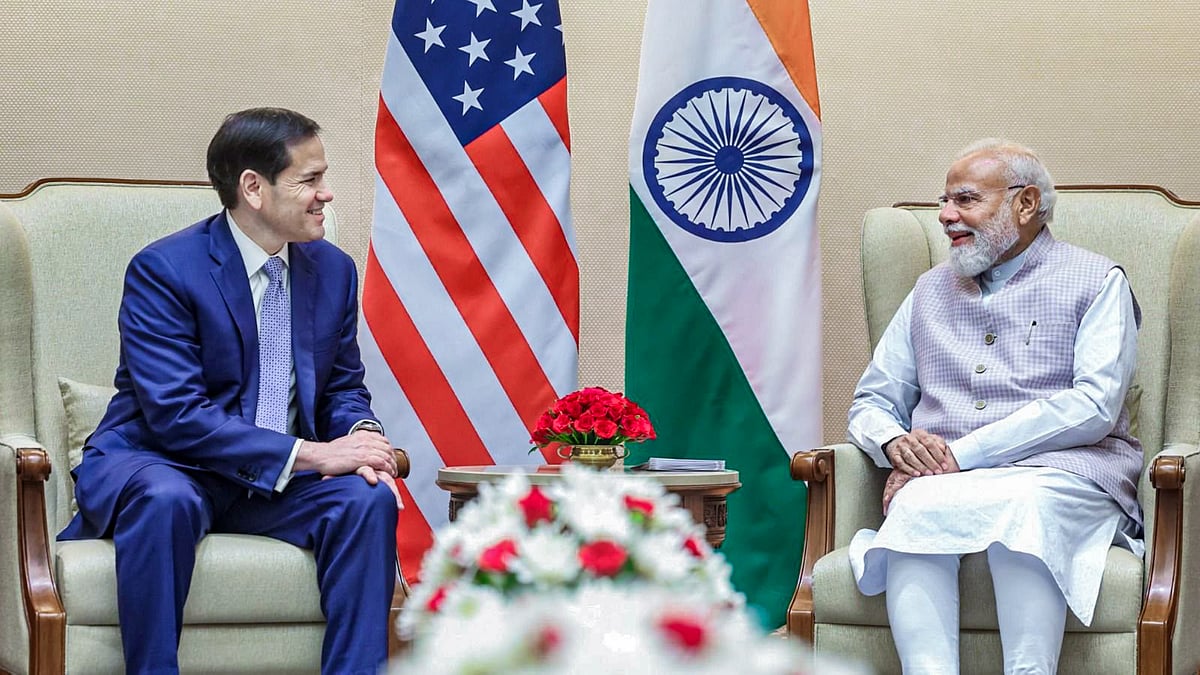
The Congress on Sunday launched a sharp attack on Prime Minister Narendra Modi after US Secretary of State Marco Rubio claimed that India had committed to purchasing USD 500 billion worth of American goods over the next five years, asking why major developments relating to India’s foreign policy and trade commitments were increasingly being announced from Washington rather than New Delhi.
Congress Rajya Sabha MP and general-secretary (communications) Jairam Ramesh alleged that the “compromised Prime Minister” was “going the extra mile to appease and please his good friend” and questioned why the Modi government had not withdrawn what he described as an “anti-people” and “dangerous” India-US trade agreement.
In a series of questions directed at the prime minister, Ramesh also asked why the government had allegedly agreed to record imports from the US when Modi himself had urged Indians to cut fuel consumption and overseas travel to conserve foreign exchange.
He further questioned whether a sharp rise in imports from the US could worsen pressure on the rupee, which he noted had depreciated by 12 per cent against the dollar over the past year.
“At 5:37 PM IST on May 10, 2025, it was US Secretary of State Marco Rubio who first announced the ceasefire that brought Operation Sindoor to an unexpected halt,” Ramesh said in a post on X, referring to earlier criticism by the Congress over foreign policy communication.
He also claimed that Rubio had been the first to announce the Venezuelan president’s proposed visit to India earlier this month, before either New Delhi or Caracas had officially confirmed it.
“Today, Mr Rubio has once again shocked the country” by claiming that the Modi government had committed to purchasing USD 500 billion in US goods over the next five years, focused on energy, technology and agriculture, Ramesh said.
At 5:37 PM IST on May 10 2025, it was US Secretary of State Marco Rubio who first made the announcement of the cease fire that brought Operation Sindoor to an unexpected halt. He had claimed that it was intervention by President Trump that made the ceasefire possible.
Noting that India’s current annual imports from the US stood at USD 52.9 billion in FY26, Ramesh argued that Rubio’s statement implied India would have to substantially increase yearly imports from America.
The Congress leader said the logic underpinning the India-US trade agreement had weakened after what he described as a US Supreme Court ruling striking down the Trump tariffs that formed the backdrop to such arrangements.
“Why has the Modi Government not had the courage to renounce this anti-people, dangerous trade deal like Malaysia and other countries have?” he asked.
Ramesh also sought to link the reported import commitment to recent developments involving industrialist Gautam Adani, pointing to the Trump administration’s reported move last week to drop criminal fraud charges linked to a solar energy case. “Is Mr Modi’s capitulation to the US on imports linked to the relief provided to the Modani empire by Mr Trump?” he asked.
Questioning the government’s communication strategy, Ramesh said key announcements — from the Operation Sindoor ceasefire and the reported halting of Russian oil and gas imports to trade negotiations and diplomatic visits — appeared to be reaching the public first through Washington.
“Why is all the communication on Indian foreign policy now coming first from Washington DC instead of New Delhi?” he asked.
The Congress leader also targeted PM Modi and external affairs minister S. Jaishankar, asking why they had “renounced their responsibility” to explain the foreign policy of “our sovereign state” to the country and the world.
Ramesh’s remarks came hours after Rubio said in a post on X that India had committed to purchasing USD 500 billion in US goods over five years.
“Huge thanks to @USAmbIndia Sergio Gor and our American diplomats for their efforts. Because of their great work, India has committed to purchasing USD 500 billion in U.S. goods over the next five years, focusing on energy, technology, and agriculture,” Rubio wrote.
PM Modi on Saturday said India and the US would continue to work closely for the global good. Rubio, who met Modi shortly after arriving in New Delhi, invited the prime minister on behalf of President Donald Trump to visit the White House in the “near future”, describing India as the “cornerstone” of Washington’s Indo-Pacific strategy.
On Sunday, Rubio also held talks with Jaishankar and said India-US relations continued to retain momentum.
Teens who use social media two hours daily at higher risk of depressive symptoms, study finds
Teenagers who spend hours glued to social media are likely to experience poorer mental health and a decline in wellbeing, a decade-long study shows, with young girls most at risk.
The government will gradually phase out the Wholesale Price Index (WPI) over the next five years and replace it with a more comprehensive Producer Price Index (PPI), marking a major shift in how inflation is measured in the economy.
The Department for Promotion of Industry and Internal Trade (DPIIT) will release a revised WPI series with a new base year of 2022-23 on 15 June, replacing the current 2011-12 series. On the same day, it will also launch a new Producer Price Index framework comprising Output PPI, Trial Input PPI and Services PPI.
Speaking to reporters, Principal Economic Adviser Praveen Mahto said the WPI would continue to be published alongside the PPI for five years before being discontinued. The transition period is intended to allow businesses, government agencies and other users to shift to the new index.
"Considering the wide usage of WPI in price escalation clauses, this index will be released for five years from the date of release of the revised series along with PPI and will be discontinued thereafter," the Commerce and Industry Ministry said.
Three new producer price indices
The new PPI framework will initially include three components — Output PPI, Trial Input PPI and Services PPI. The Services PPI will initially cover seven sectors: banking, securities transactions, insurance, pension fund management, railways, air passenger transport and telecommunications. More services are expected to be added in subsequent phases depending on data availability.
Officials said the transition aligns India with global practices followed by major economies and recommendations made by the International Monetary Fund (IMF). Unlike WPI, the new system will allow policymakers and businesses to track price movements across both inputs and outputs, providing a clearer picture of how inflationary pressures move through supply chains.
The revised WPI and Output PPI will be published monthly, while Services PPI will be released quarterly. Trial Input PPI for the manufacturing sector will initially be published on an experimental basis from March 2026 to assess data quality and gather stakeholder feedback.
Expanded WPI basket
The revised WPI series significantly expands the basket of commodities tracked. According to Dilip Kumar Sinha, Deputy Director General in the Office of the Economic Adviser, the number of items covered has increased from 697 to 957.
New energy sources such as solar, wind and nuclear power have been included under the electricity category. Crude petroleum and natural gas have also been moved from the primary articles category to fuel and power, bringing them in line with other major energy products.
Officials said WPI, Output PPI and Services PPI will be compiled using basic prices, excluding taxes and trade margins, while Input PPI will use purchaser prices because industries acquire inputs from the market.
Impact on contracts
Mahto said the Department of Expenditure is expected to issue a circular advising users to adopt PPI in future long-term contracts instead of WPI, particularly where price-escalation clauses are involved.
India's current WPI series, based on 2011-12 prices, was launched in May 2017. Since its introduction in 1942, the index has undergone seven revisions. The move to PPI is expected to bring India in line with countries such as the United States, China, Japan, Germany and France, all of which use producer price indices to track changes in prices received by producers.
The announcement comes at a time when wholesale inflation remains elevated. Wholesale price inflation rose to a 42-month high of 8.3 per cent in April, driven largely by higher energy prices linked to disruptions caused by the conflict in West Asia.
Govt to phase out WPI, introduce Producer Price Index from 15 June
Walk into any major Indian airport and observe carefully. The CISF personnel who once staffed security and screening posts have been quietly replaced in many functions by private contractual workers. Ask them what they take home every month. You will rarely hear a number above Rs 25,000, and often it is closer to Rs 15,000. On paper, their salaries may be higher, but the outsourcing agencies that deploy them have their own disbursement arithmetic, and the worker bears the brunt of every deduction.
If this is the reality in one of the most visible public spaces in the country, where the state itself is the ultimate client, imagine the condition of a blue-collar worker in a nondescript factory in a mofussil town or a peripheral industrial estate. It is these workers who needed protection most urgently, and it is precisely these workers whom the Modi government’s four new labour codes have left the most exposed. Central rules for the new codes, implemented in November 2025, were notified earlier this month (on 8–9 May).
That’s not simplification; it’s legalising exploitation in the language of reform.
The consolidation of 29 labour laws into four codes is being marketed as a landmark achievement. Overlapping, contradictory statutes did impose real compliance burdens, especially on small businesses. Some of these changes have merit — for instance, universal minimum wages, formal recognition of gig workers and mandatory appointment letters. But reforms must be judged not by stated intentions but their architecture and these codes tilt structurally towards capital and corporate interests.
An honest reading of labour reforms must also reckon with three decades of post-liberalisation experience. The labour law changes of the 1990s were based on an understanding that stringent pro-worker regulations led to lower investment, employment and productivity in registered manufacturing. It was a well-documented pattern, captured by the Besley-Burgess analysis of Industrial Disputes Act amendments between 1958 and 1992. This research became the intellectual scaffolding of the reforms.
But over the next 30 years, the informal sector in fact expanded. Wages stagnated while corporate profits soared. The lesson was that worker protections are not bad per se for industry. It is badly designed, inconsistently enforced regulations that create perverse incentives.
The most consequential changes
The provision that reveals the true character of the new labour codes is the trebling of the retrenchment approval threshold from 100 to 300 workers. Under the old Industrial Disputes Act, any establishment employing 100 or more workers required government approval before retrenchment, layoff or closure. The new threshold of 300 means that more than 80 per cent of India’s manufacturing establishments can now hire and fire without any government oversight. No accountability, no protection for the worker.
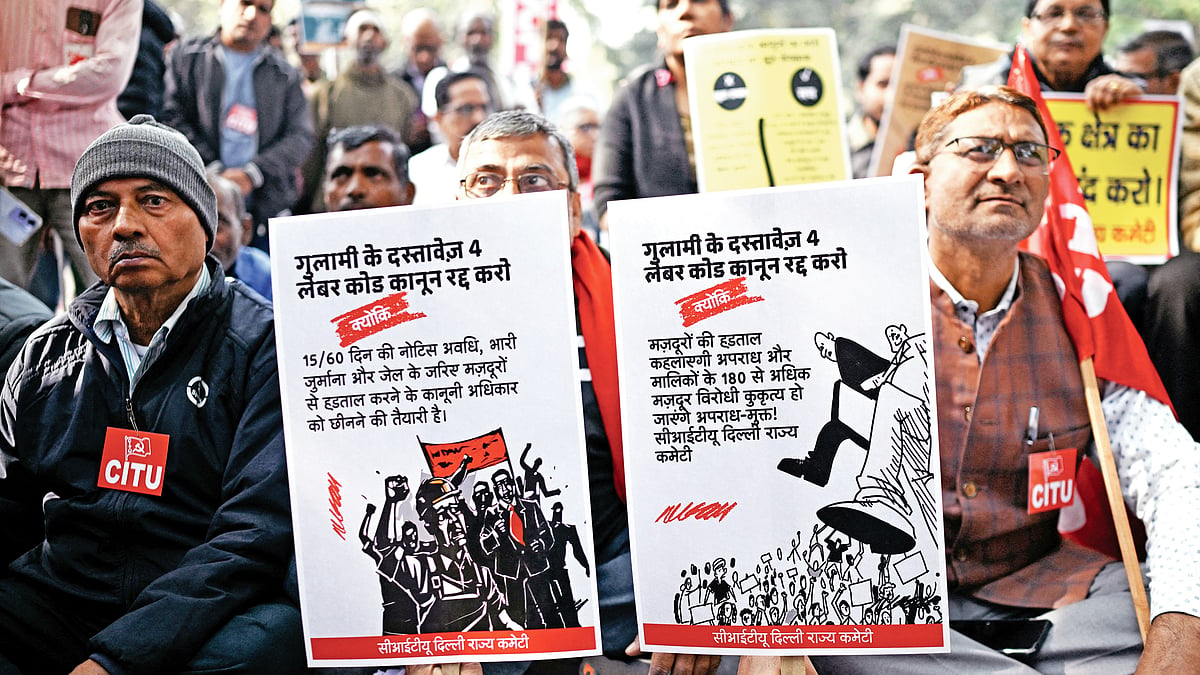
The codes also require workers to give 60 days’ notice before a strike plus a cooling-off period of 14 days. It effectively takes away their right to spontaneous collective action. In addition, a workers’ union must now command 51 per cent membership to be formally recognised, a threshold that sidelines smaller unions and reduces representation for diverse worker groups. Rules governing working hours, leave and termination will not apply to establishments with fewer than 300 workers, leaving out most of India’s industrial units.
Workers in small factories will be most vulnerable, with the threshold for defining an industrial unit as a ‘factory’ now raised to 20 or more workers (for units with power) and 40 or more workers (for units without). Wage offences can now be settled by paying a fee, effectively monetising illegality and turning violations into a manageable business cost.
What the codes ignore
The new codes have been notified at a time when the labour market is already in deep crisis. Real wages in rural India have grown at close to zero per cent since 2014. Regular wages, according to the government’s own Periodic Labour Force Survey, contracted between FY22 and FY24, even as GDP grew at 6.7 per cent.
While salaries and wages stagnated (about 57 per cent of India’s blue-collar workers get less than Rs 20,000 a month), the profits of the Nifty 500 companies grew at 34.5 per cent a year compounded between 2020 and 2024.
The government’s argument that worker protections suppress productivity is false to the point of dishonesty. Productivity is not a single-variable outcome. The ILO-recognised KLEMS framework for measuring productivity captures capital, labour, energy, materials and services as determinants of output. It requires that labour be measured not just quantitatively but in quality terms: education, skills, occupational profile.
In this framework, an economy that cheapens labour may generate short-term cost advantages for individual firms, but it reduces aggregate productivity through skill erosion and demand suppression.
The new codes pay no attention to these factors. The Modi government has put out no white paper or approach document that analyses the relationship between labour regulation, wages and multi-factor productivity. There has been no transparent, evidence-based policy dialogue. When its own Economic Survey 2024-25 acknowledges underemployment, this constitutes a big governance failure.
IT, gig workers and the invisible precariat
The crisis extends well beyond factory gates. India’s IT sector, with 5.4 million employees and over $250 billion in annual exports, operates in a near-vacuum of labour laws. Mass layoffs in 2023 and again in 2025-26, attributed to AI-driven restructuring, occurred without any meaningful state intervention. There is no effective trade union in the sector. Non-compete clauses, variable pay and immediate termination provisions are standard. The new labour codes change none of this.
India’s 12 million-strong gig workforce is projected to reach 23.5 million by 2030. Its formal recognition in the codes is a step forward, but aggregators contributing 1-2 per cent of turnover to welfare funds, while setting rates that require 14- to 16-hour work days to earn a living wage is not social security, it’s eyewash.
The proposed 90-day qualifying period for benefits will exclude millions of multi-platform and seasonal workers. Algorithmic de-boarding, which means that a worker can be blocked from an app without notice or human review, has no legal remedy anywhere in the four codes.
The codes also neglect the large numbers in precarious white-collar jobs in retail, financial services, hospitality and media, where employees have long work hours without overtime and ‘performance-linked’ pay that frequently short-changes them. Nor have they any unions to represent their case or an institutional voice to safeguard their interests.
The democratic subtext
There is a dimension to this debate that goes beyond economics. Labour unions and student movements were historically the nurseries of India’s democratic leadership. Over the past three decades, both have been systematically marginalised.
To restore the health of India’s democracy, these institutions must be revived. The BJP will never champion that cause. Precisely why the Congress and the Opposition must fight for the restoration of labour rights — as a constitutional entitlement, as the centrepiece of an alternative political vision.
What must change
The codes need an overhaul. The retrenchment threshold must be restored to 100 workers or replaced with tiered, enforceable protections. The 51 per cent union recognition threshold must give way to proportional representation. The 60-day strike notice must go; it is unconstitutional.
A meaningful National Minimum Wage, consistent with the Anoop Satpathy Committee’s recommendation of Rs 375 per day at 2019 prices and indexed to inflation, must be enacted and enforced. An Algorithmic Accountability Act must require platforms to disclose the logic of automated work allocation, pricing and disciplinary decisions.
A Universal Social Security Fund must cover all forms of employment, including gig, platform, contract and informal work. And an independent National Commission on Labour Productivity must be constituted to produce a public white paper on what drives India’s productivity gap, before any further legislative changes are made.
The recent labour agitations in Noida, Surat, Haldwani, Manesar, Gurugram, Faridabad, Bhiwandi were not local grievances; they were the portents of a nationwide uprising. The workers were telling us what to expect when wages are suppressed for a decade, when protections are stripped away, and the right to organise is systematically weakened. The government turned a deaf ear then. If it doesn’t pay heed even now, as the new labour codes seem to indicate, it is preparing the ground for a mass upheaval.
Views are personal
Gurdeep Singh Sappalis a Permanent Invitee to the Congress Working Committee. More by the author here

 Login
Login
 World food commodity prices rose in March for the second month in a row, due largely to higher energy prices linked to the conflict escalation in the Near East, according to the latest benchmark measure released by the Food and Agriculture Organization of the United Nations (FAO).




 Uruguayan President Yamandú Orsi made a day trip to São Paulo on Tuesday to meet Brazilian business leaders interested in investing in Uruguay, in an agenda Foreign Minister Mario Lubetkin described as an opportunity to "move to a new phase in the levels of commercial development and Brazilian investments" in the South American country. The official delegation included Lubetkin himself, Economy and Finance Minister Gabriel Oddone, Uruguay's ambassador to Brazil Rodolfo Nin Novoa, and the executive director of investment promotion agency Uruguay XXI, Mariana Ferreira.