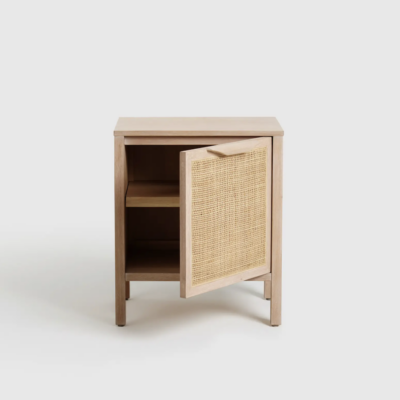
Satin lace shorts are no longer meant for sleeping! We don't know about you, but our TikTok For You Page has been obsessed with this new styling trend.
Whether it's paired with an oversized...
Headed to their first championship final in more than 25 years, the New York Knicks have a deep celebrity following and lots of brand love to cash in on.
If your bedroom feels cramped, cluttered, or smaller than it should, the solution usually isn’t more space—it’s a few smarter design decisions. The way your furniture is arranged, how your eye moves through the room, and even the scale of your lighting can make a noticeable difference in how spacious it feels.
We’re all drawn to those impossibly charming spaces: the Paris apartment, the cozy but perfectly arranged bedroom, and the ones that feel light-filled and effortless even when they’re not especially big. The fact that they work has nothing to do with square footage. Instead, it’s because everything inside them feels considered.
That’s the shift: creating a bedroom that feels bigger is about how the space functions—and how it makes you feel when you’re in it. The easiest solve? Remove what’s getting in the way.
Small Shifts That Make Your Bedroom Feel Bigger—Fast
Sure, it’s subtle, but in practice, it’s what changes everything. If your bedroom feels smaller than it should, a few thoughtful shifts can change how the entire space reads—fast. Start here:
1. Leave at least one area intentionally open. A room feels bigger when not every corner is trying to do something.
2. Remove one piece of furniture you don’t actually need. If it’s not essential, it’s taking up visual space.
3. Choose fewer, better-proportioned pieces. Oversized furniture closes a room in faster than you think.
4. Keep surfaces intentionally clear. Not empty—just free of anything that doesn’t need to be there.
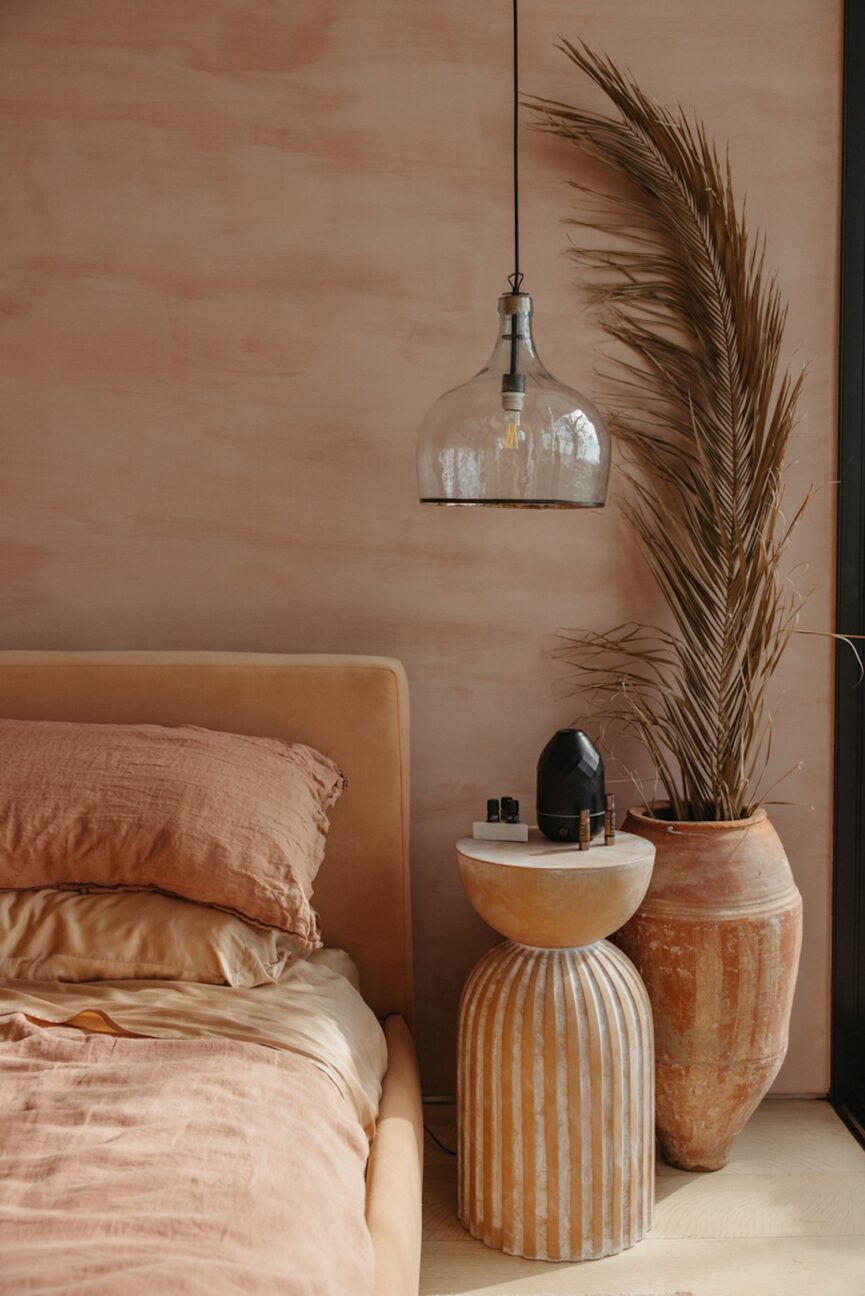
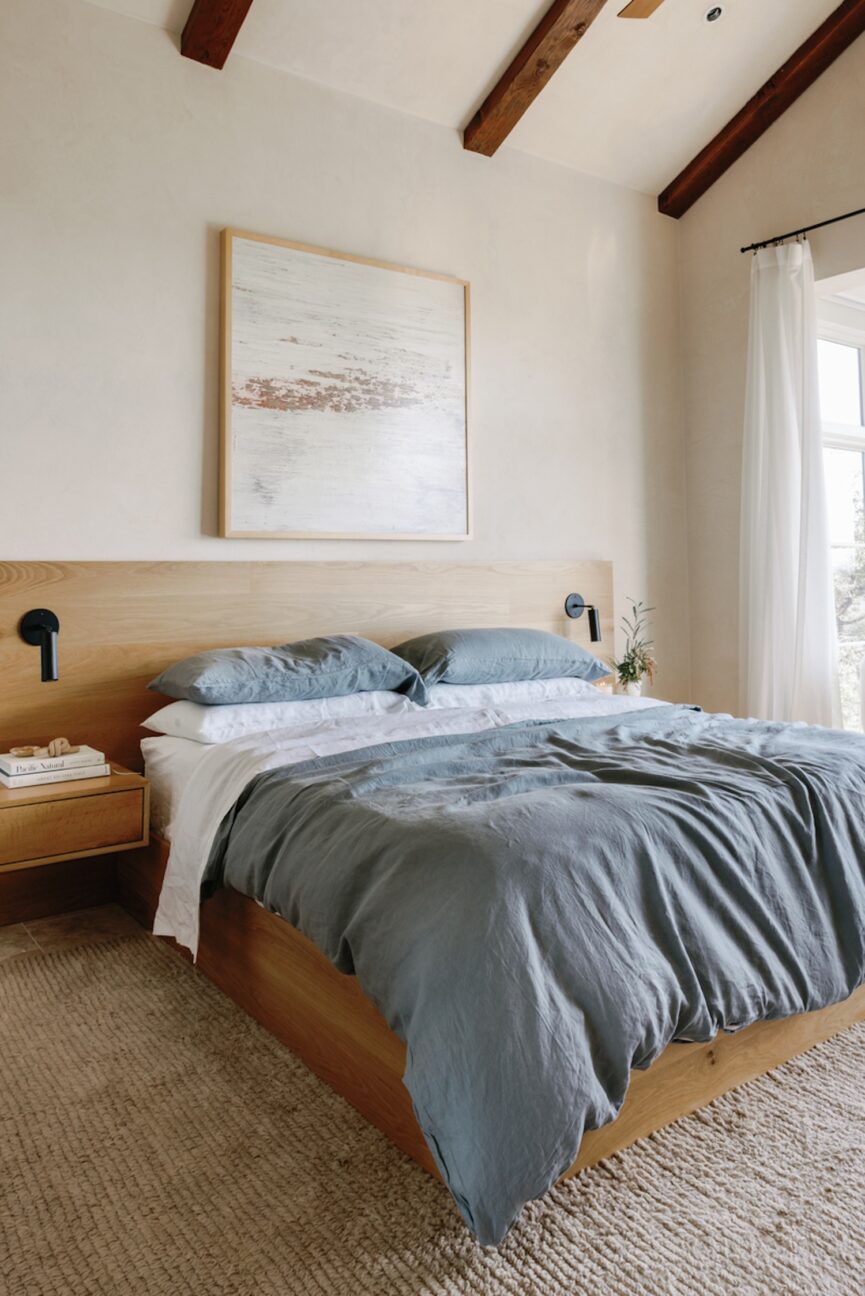
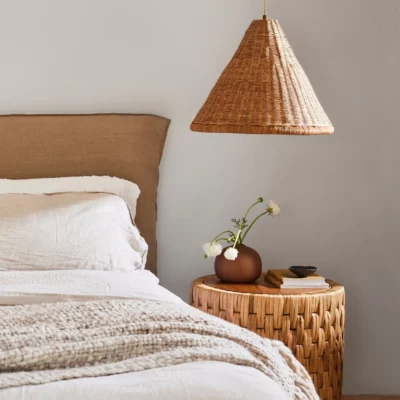
5. Use lighting that gives the room breathing room. Think slimmer lamps, sconces, or anything that doesn’t crowd the surface it sits on.
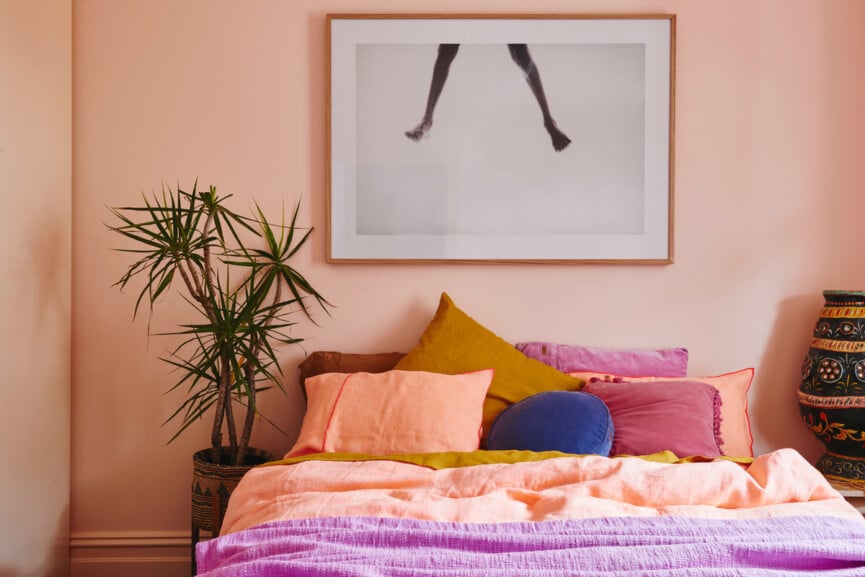
6. Draw the eye upward. Artwork, vertical lines, or even higher curtain placement can subtly expand the space.
7. Let your bed have space on at least one side. Even a small gap can make the layout feel more open.
8. Stick to a more tonal color palette. When colors flow, the eye moves more easily—and the room feels larger.
9. Use mirrors to reflect light, not just fill a wall. Placement matters more than size.
10. Keep sightlines clear from the doorway inward. What you see first shapes how spacious the room feels.
These shifts might feel small, but they’re the same principles designers use to make a space feel considered, balanced, and more expansive. To take it a step further, I asked designers how they approach small bedrooms. Take out your notepad (and prepare your Pinterest board). These small bedroom design tips are gold.
9 Designer-Approved Ways to Make a Bedroom Feel Bigger
1. Start With Less Than You Think You Need
The fastest way to make a small bedroom feel bigger is to remove what isn’t essential.
It sounds obvious, but it’s where most spaces go wrong—trying to fit in one more chair, one more surface, one more piece that doesn’t quite have a role. As designer Katie Raffetto puts it, “less is more,” especially in a bedroom.
If it’s not helping you sleep, store, or soften the space, it’s likely adding visual noise.
Strip the room back to what you actually use—a bed, a place to set things down, lighting that works—and let everything else be intentional.
A bedroom feels bigger the moment it stops trying to be anything other than a bedroom.
2. Rethink the Scale of Your Furniture
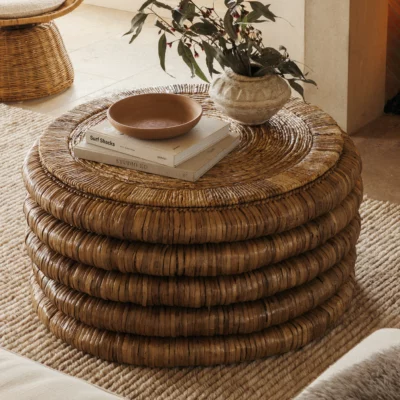
In a small bedroom, the issue isn’t always how much you have—it’s how much space your furniture takes up.
A queen bed might feel like the default, but if it leaves you with barely any room to move, it’s working against the space. The same goes for bulky nightstands, oversized dressers, or anything that sits heavy in the room. Even creating space on just one side of the bed can make the entire layout feel more open.
Designer Cameron Johnson refers to this as “space engineering”—making decisions that create room around your furniture, not just filling the room with it. Sometimes that means choosing a smaller bed, a narrower nightstand, or a piece that can serve more than one function.
3. Use Color to Your Advantage (Not Just for Aesthetics)
Color doesn’t just change how a room looks—it changes how it feels. In smaller bedrooms, there’s often a tendency to default to all white in hopes of making the space feel bigger. But according to Raffetto, leaning into deeper, more saturated tones can actually create the opposite effect—in a good way. “Dark colors allow you to lean into the coziness,” she says, turning the room into something that feels intentional rather than constrained.
The key is consistency. When your palette feels cohesive—whether it’s light and tonal or rich and layered—the eye moves more fluidly through the space. And that sense of visual continuity can make a room feel larger, not smaller. A room feels bigger when your eye isn’t constantly stopping to process contrast.
4. Keep Your Sightlines Clear
What you see first when you walk into your bedroom sets the tone for how the entire space feels. If your line of sight is blocked—by bulky furniture, clutter, or awkward layout—the room immediately reads as smaller. But when that path is open, even a compact space can feel noticeably more expansive.
Designers often think about this as creating a clear visual entry point. The less your eye has to work to understand the space, the bigger it feels.
5. Draw the Eye Upward
One of the simplest ways to make a bedroom feel bigger is to change where the eye goes. When everything sits at the same level—low furniture, low art placement, nothing pulling your gaze upward—the room can start to feel compressed. Designers counter this by using vertical space to create a sense of expansion.
That might look like hanging artwork slightly higher than expected, extending the visual height of your headboard, or mounting curtains closer to the ceiling to elongate the walls. As Johnson notes, even something as simple as placing art above the bed can help “extend the headboard” and shift how the room is perceived.
It’s a subtle trick, but it works: when your eye travels up, the room opens with it.
6. Use Mirrors With Intention
Mirrors are often recommended for small spaces—but how you use them matters more than simply having one.
Placed thoughtfully, a mirror can reflect natural light, extend a sightline, or create the illusion of depth. Placed randomly, it just becomes another object on the wall. Again, you’re not filling the space for the sake of it. The goal is to amplify what’s already working.
7. Choose Pieces That Do More Than One Thing
In a smaller bedroom, every piece should earn its place. When square footage is limited, adding more furniture isn’t the answer—choosing smarter furniture is. Pieces that can serve multiple functions allow you to get what you need from the space without visually crowding it.
Raffetto suggests something as simple as placing a dresser next to the bed so it doubles as a nightstand. Johnson echoes this approach, pointing to bed frames with built-in storage as a way to eliminate the need for additional pieces.
Lighting has a bigger impact on how spacious a room feels than most people realize. Oversized lamps and bulky fixtures can take over a surface, making everything around them feel tighter. Raffetto recommends choosing streamlined lighting—slimmer lamps or wall-mounted sconces—that give your furniture room to breathe.
It’s also about placement. When light is distributed thoughtfully, it softens the edges of the room and reduces visual clutter. When it’s not, even a well-designed space can start to feel crowded.
Editing a room down is only half the equation. The other half is knowing when it feels complete.
A space can be minimal and still feel unfinished. The difference comes down to how the elements work together. When a room feels resolved, your eye isn’t jumping from object to object or looking for what’s missing—it can settle.
Designers create this sense of closure through a few intentional choices: curtains that frame the room, a rug that grounds the bed, and a mirror that reflects light into the space. Not more pieces—just the right ones, placed with purpose.
The One Thing That Makes a Bedroom Feel Smaller
Most bedrooms don’t feel small because of their size. They feel small because too many things are competing for attention. When every surface is filled, every corner is doing something, and every piece of furniture is slightly too big or slightly out of place, the room starts to feel visually crowded—even if there’s technically enough space.
Designers think about this differently. It’s about centering in on what the room doesn’t need. Because the moment your eye has space to move—to land, to rest—the entire room opens up.
This post was last updated on April 8, 2026, to include new insights.
SINGAPORE: Singapore workers are showing up to work, putting in extra hours, and even adopting artificial intelligence (AI), yet many still don’t feel secure about their future.
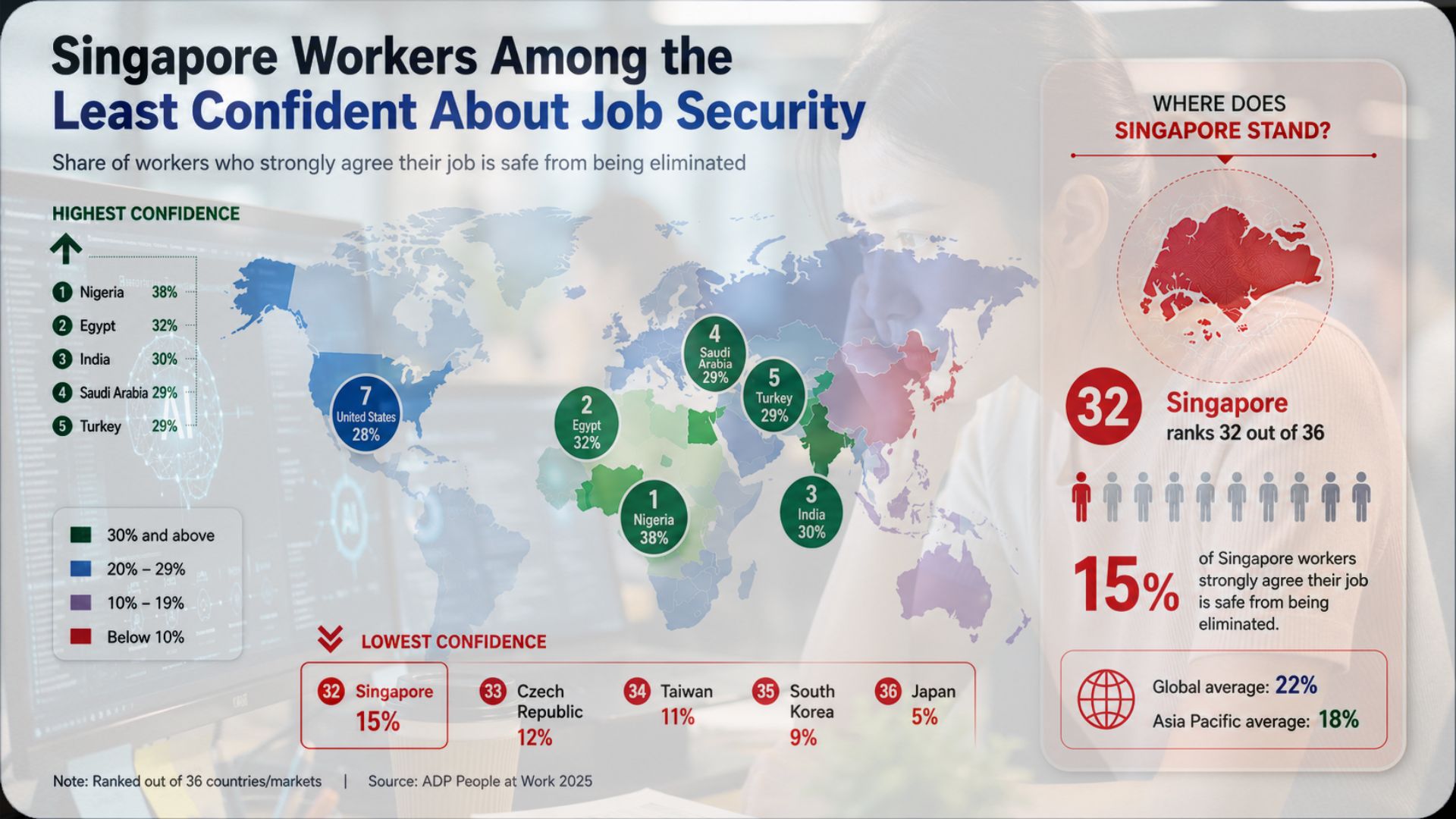
A new People at Work report by ADP Research, cited by Vulcan Post (May 21), shows that only 15% of workers in Singapore strongly believe their jobs are safe from elimination. This placed Singapore among the lowest-ranked markets globally for job security confidence.
Out of 36 markets surveyed, only four scored lower than Singapore. Across the Asia-Pacific (APAC) region, the average was slightly higher, at 18%, while the global average was 22%. Unemployment remains relatively low worldwide, yet confidence doesn’t appear to be following.
People at Work Report/ADP Research
Infographic: Singapore ranks among the lowest globally for worker confidence in job security in 2026
Workers are now worried about relevance, not just employment
According to Jessica Zhang, Senior Vice President for Asia-Pacific at ADP, workers are thinking beyond whether they have a pay cheque today. Her point was that many employees are now asking a different question: Will my job still matter a few years from now?
Concerns now go beyond being centred on layoffs or economic downturns as workers watch automation, AI adoption, changing business needs and how fast and easily skills can become outdated.
Zhang said employers need to do more than reassure staff. Companies should explain how jobs are changing, what that means in practical terms and continue investing in training so employees can stay useful and adaptable while supporting business performance.
Working more doesn’t always mean feeling safer
The report also found that many workers in Singapore are putting in unpaid hours. About 45% said they worked over five unpaid hours each week. Among them, 35% reported clocking between six and 15 unpaid hours weekly, while another 10% said they exceeded 16 hours.
The figure for six to 15 unpaid hours was above the Asia-Pacific (APAC) average. There is an uncomfortable contrast in these numbers. Longer hours are usually seen as a sign of commitment or ambition, yet they don’t appear to translate into greater job security.
Though it doesn’t mean hard work has no value, it still suggests workers increasingly see staying employed and staying relevant as two separate challenges.
AI is arriving, but engagement isn’t rising with it just yet
Singapore also recorded fairly high levels of generative AI use. Around 23% of workers said they used AI almost every day, while only 8% said they had never tried it. Yet employee engagement remained muted.
Fully engaged workers made up just 12% of Singapore’s workforce in both 2024 and 2025, below the regional average of 15%, a combination is worth paying attention to, as more tools don’t automatically create more confidence. Technology may improve speed and output, but workers still want clarity about where they fit in.
The deeper concern may be certainty in employment
ADP Research surveyed more than 39,000 adult workers across 36 markets between July and August 2025, including over 13,000 respondents from APAC.
For Singapore, the findings point to something further than job cuts. Many workers still have jobs, but what appears to be fading is confidence that today’s job will still look familiar tomorrow.
The practical answer is neither panic nor endless overtime. Workers can keep building skills. Employers can communicate earlier. Because when people understand where work is heading, uncertainty tends to shrink.
Air fryers have earned a permanent spot on many kitchen counters in recent years—and for good reason. They can help turn simple ingredients into fast, satisfying meals with the crisp texture, shorter cook times and less fat than other cooking methods. That does not mean it is a magic appliance. The healthiest outcome still depends on what you cook, how you cook it, and how much oil you use. But as a cooking tool, it can be genuinely helpful.
“An air fryer can make balanced meals easier to prepare on busy nights, thanks to its quick cooking time and simple cleanup,” says Joanna Gregg, MS, RD, MyFitnessPal dietitian.
Why the Air Fryer Keeps Earning Counter Space
One reason our registered dietitians keep coming back to air fryer meals is simple: the appliance solves a real-life problem. It helps food feel crisp, warm, and satisfying without the full setup of deep frying or traditional baking. That matters on nights when cooking motivation is low but takeout is not the goal.
It also invites a more flexible style of cooking. You can crisp vegetables, cook a protein, reheat leftovers, or build easy air fryer dinners from ingredients you already have.
Once you start noticing the everyday uses of an air fryer, it stops feeling like a one-trick gadget and starts feeling more like a shortcut to getting dinner on the table.
People tracking meals in the MyFitnessPal app will find entries for air-fried foods—like potatoes or chicken—making it easier to log calories and nutrients accurately.
How Air Fryer Works
If you have ever wondered how an air fryer works, the short version is this: it cooks food by rapidly circulating heated air around it. This convection-style process creates crisp edges without submerging food in oil. (1)
That lower-oil approach is not just marketing language. In a 2026 study on French fries, air frying produced about 1.2% oil content compared with 44.8% in deep-fried fries, while still delivering similar color and texture under certain cooking conditions. (2)
In other words, the air fryer creates the crisp texture many people enjoy while using far less oil than traditional frying, making the nutrition profile of air fried foods more desirable.
“Because of the fast air circulation, air fryers work especially well for foods that benefit from dry heat and crisping, like vegetables, potatoes, seafood, or tofu,” says Joanna Gregg, MS, RD.
Foods That Get Crispy or Browned
“Because of the fast air circulation, air fryers work especially well for foods that benefit from dry heat and crisping, like vegetables, potatoes, seafood, or tofu,” says Joanna Gregg, MS, RD.
Quick Small-Batch Meals
Air fryers also work well for smaller portions. If you are making lunch for one, a quick side for two, or an afternoon snack, they can feel faster and less fussy than using a full oven.
Simple Reheating
An air fryer can also be useful for reheating foods that you want to stay crisp, like roasted vegetables, fries, or breaded items. In some cases, it can bring back texture better than a microwave. Pro-tip: try it with flatbread or pizza!
Baking Small Items
And yes, you can bake in air fryer mode too (5). Small muffins, hand pies, baked oats, mini frittatas, and personal-size potatoes can all work well. Because the cooking chamber is smaller, foods may bake faster than they would in a traditional oven, so it helps to check them a little earlier.
5 Benefits of Using the Air Fryer
1. Uses Less Oil Than Deep Frying
This is the headline benefit, and it is backed by both reviews and direct comparison studies. Hot air frying consistently reduces oil use and oil uptake compared with deep frying, especially in foods like fries. (1,2)
2. Makes Home Cooking Easier to Stick With
When cleanup is lighter and preheating is faster, cooking at home starts to feel less like a project. That can make it easier to build meals around vegetables, proteins, and simple starches more often.
3. Creates Crisp Texture Without Heavy Frying
A lot of people are not chasing fried food so much as the texture of fried food. That is an important difference. If crispness helps you enjoy salmon, green beans, or tofu more, the air fryer becomes a practical tool.
4. Works Well for Simple, Everyday Meals
Many easy air fryer recipes are simply vegetables, seafood, or proteins cooked quickly with seasoning. The appliance makes it easy to turn basic ingredients into a quick meal without much preparation.
5. Helps Reduce the Takeout Habit
The more familiar you get with your air fryer, the easier it becomes to throw together something quick and delicious at home before hunger pushes you toward a more expensive, less healthy takeout option.
“One of the biggest advantages of an air fryer is that it eliminates the need for preheating and cooks food faster than a traditional oven. When meals are quick and easy to prepare, people are more inclined to cook at home rather than turn to takeout,” says Gregg.
An air fryer can be a helpful kitchen tool, but the results depend on what you cook and how you use it.
“Like any kitchen tool, an air fryer can support a healthy routine when it’s used thoughtfully and intentionally,” notes Gregg.
Here are a few tips to get the most out of your air fryer meals:
1. Leave Room for Airflow
One of the most practical uses for an air fryer is crisping food quickly, but that only works when hot air can move around the food. USDA specifically warns that overcrowding can prevent enough air circulation to cook food properly, so cooking smaller batches is often the better move. (5)
2. Use Oil Strategically
Using little to no oil is essential– using too much can leave foods soggy instead of crisp. Some foods—especially cut vegetables or potatoes—benefit from a light coating for crispiness and that golden color. Think brush or mist, not soak.
3. Check Food Early and Adjust as Needed
If you’re wondering how long to air fry, the answer depends on the model, the food, the cut size, the basket load, and how crispy you want the finish.
Use recipe times as a starting point, but check food early and shake or flip it during cooking to help it cook evenly. For packaged foods, following the manufacturer’s instructions can also help ensure they cook safely. (5)
4. Use a Thermometer for Proteins
When cooking chicken, fish, or other proteins in an air fryer, don’t rely on appearance alone to judge doneness. Because cooking times can vary by model and basket load, the most reliable way to ensure food is fully cooked is to use a food thermometer and cook foods to recommended cook times. (5)
For raw, stuffed breaded chicken breast products, follow the manufacturer’s cooking instructions and avoid cooking them in an air fryer unless the packaging specifically says it’s safe. (5)
5. Season Thoughtfully
Because air fryers cook quickly, seasoning makes a big difference in the final result. A light coating of oil can help spices and herbs stick better, especially for vegetables or proteins. Simple additions like garlic powder, paprika, herbs, or citrus can boost flavor without needing extra sauces.
6. Don’t Rely on a Single Cooking Time
Cooking times can vary depending on the air fryer model, the type of food, and how much you’re cooking at once. Use recipes as a guide, but check food early and adjust as needed to avoid overcooking or drying it out. (5)
Frequently Asked Questions (FAQs)
Are air fryers healthy?
They can support a lighter cooking style than deep frying because they use little or no oil and can sharply reduce oil uptake in foods like fries. But the full answer still depends on what you cook and how you cook it. (2)
How do air fryers work?
They cook by circulating hot air rapidly around food. The moving hot air helps dry and brown the surface, which is why air-fried food can taste crisp without being submerged in oil. (1)
Can you bake in an air fryer?
Yes. The USDA Food Safety and Inspection Service notes that air fryers can be used for baking, roasting, reheating, and cooking a variety of foods. (5) Smaller baked items like muffins, baked oats, mini frittatas, or personal-size potatoes tend to work especially well.
Air fryers can make everyday cooking faster and less messy than other traditional methods, while still delivering the crisp texture many people enjoy. Like any cooking method, the biggest benefits come from how you use it—especially when it helps you prepare simple meals at home more often. (1,2) And if you log meals in the MyFitnessPal app, you’ll often find entries that reflect air-fried foods, helping you estimate calories and nutrients based on how they’re actually prepared.
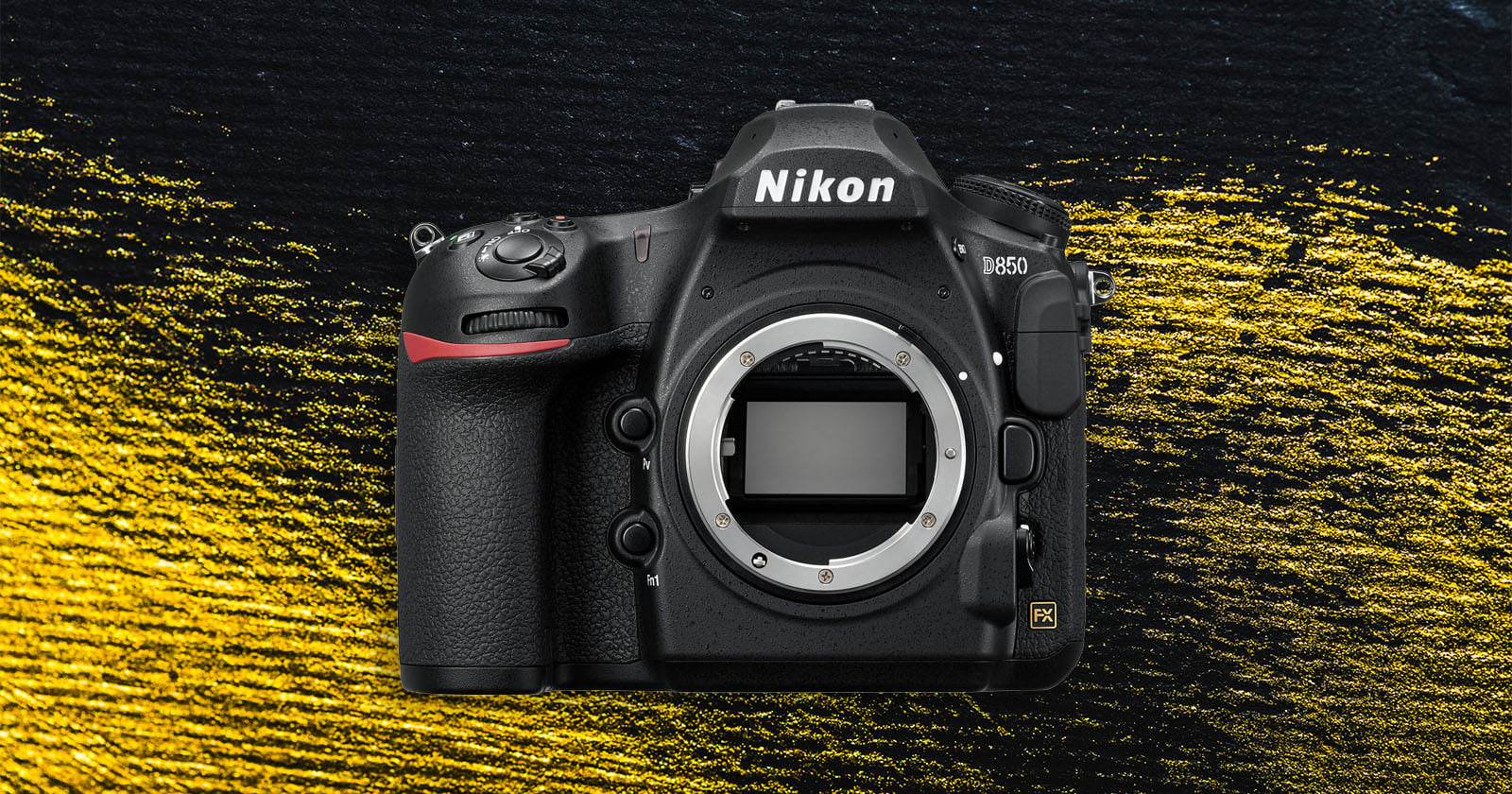
Although new DSLR shipments were way down in 2025, dropping from just under a million units in 2024 to under 700,000 in 2025, that hasn't stopped used DSLR cameras from selling in big numbers.
Looking for a closet staple that can effortlessly take you from the office to happy hour, but that isn't too stuffy or too casual? Capri pants are the answer to your styling dilemma—and...
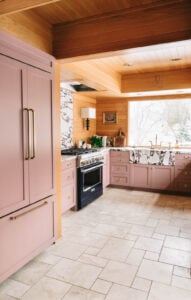
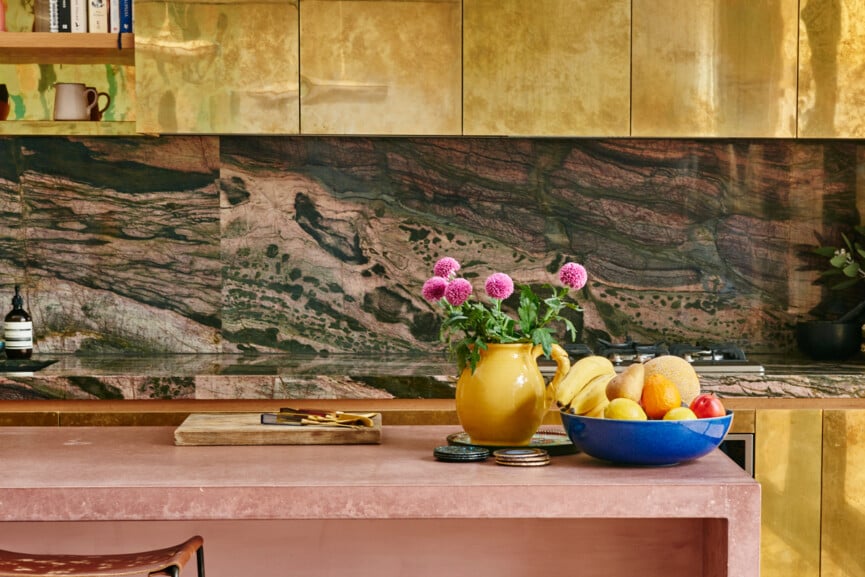
Ever since the pandemic, interior trends have been leaning towards bold, maximalist styles and colors. Lockdown taught us collectively that life is short, and more time spent at home has invited many to throw caution to the wind. If this is where we’re spending a large amount of our time, we should really love the space we’re inhabiting. Right? Say goodbye to sad beige and millennial gray—whimsy, playfulness, and color are in. The brighter, the better!
Ahead, I chatted with designers to get their take on bright paint colors—how to choose them, where to paint, trending colors, and perhaps most importantly, how to get over any hesitancy when working with vibrant hues.
Choosing the right color for your home is a very personal decision. Lesley Myrick of Lesley Myrick Interior Design always starts her design process with the client, and never a trend. “A vibrant paint color has to be a commitment color, something you’ll still love when the design world moves on to the next thing,” she says. Myrick suggests paying attention to the colors you like to wear, what colors are already present in the room, and what the light is doing between 8 am and 8 pm.
“Vibrant color is high impact, which means it can’t be an afterthought. It has to be rooted in something specific and personal. Otherwise, you end up with a room that just looks loud instead of layered,” she continues.
In short, pick a color you love. Be sure it plays well with the other items in your space. Take the time to see how the light affects the paint color throughout the day. Have fun!
What Rooms Are Best for Vibrant Paint Colors?
Bright paint colors will energize a space, so opting for rooms that are lively, or are perhaps in need of some zest will work well. “A small space is the best place to go bold, because the color wraps around you and creates a complete mood,” Myrick says. “A powder room in a deep, glossy green or a saturated blue is going to be the most memorable room in the house.”
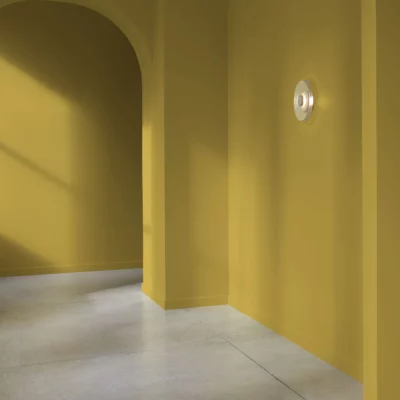
“I always recommend an entry way or hallway as great spaces to introduce vibrancy,” Daniele Doerge, a color expert from California Paints, shares. “From there, I love dining rooms and living rooms for vibrant tones as well. These areas are natural spaces to gather, and having a strong color can feel inviting and expressive.”
Myrick agrees. “Dining rooms are another natural fit, especially because you typically use them at night, when rich color looks its absolute best in low light,” she adds.
Hesitant to Use Vibrant Bright Colors in Your Home?
Neutrals can feel safe, and especially if you have maximalist tendencies, even a bit boring. But covering a room in a bright blue, cheery yellow, or bold chartreuse requires a healthy dose of courage. It’s totally normal to feel hesitant. Both Myrick and Doerge have a few tips to help calm your nerves.
Test Out Paint Samples
“First, paint is the least permanent design decision you will ever make,” Myrick reassures. “If you hate it in three years, you paint over it—that’s it. A bold color is not the irreversible commitment people think it is.” She also suggests getting large samples, painting them on two different walls, and living with them for a few days to make an informed decision. “Look at them in morning light, afternoon light, and at night. The same color will shift dramatically depending on the room and the time of day,” she shares.
Start Small
“Try painting cabinets or an interior door, or even add in an accent wall to see how you feel with the color,” Doerge recommends. “I also advise people to pair bold colors with some sort of grounded neutral or texture—whether that’s furniture, decor, or rugs.”
Go Bold or Go Home
Finally, Myrick recommends digging your heels in and committing with your full chest. “The half-hearted vibrant color, the one that felt ‘safer’ than the bold choice you loved, always disappoints. If you’re going to go bold, go all the way,” she urges.
What Bright Paint Colors Are Big Right Now?
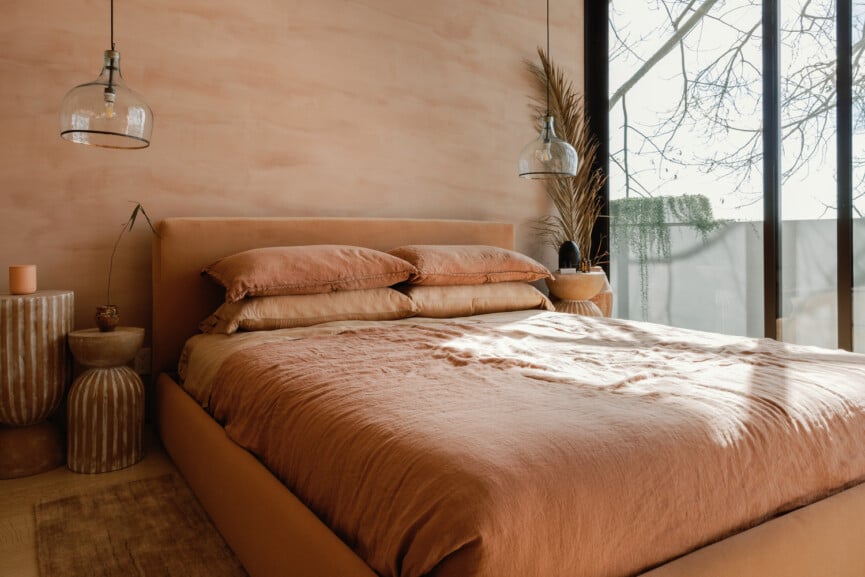
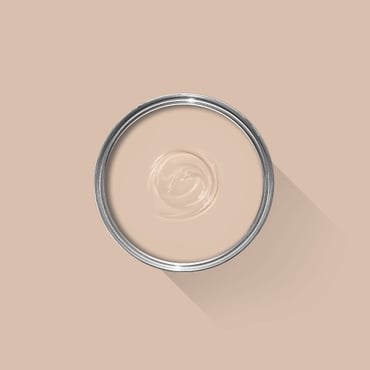
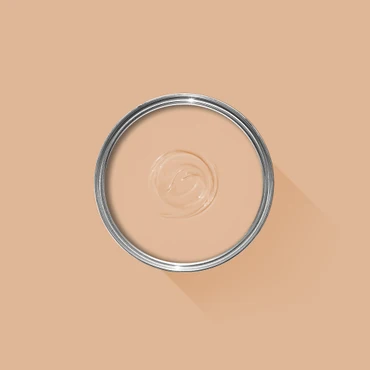
Even though vibrant colors are inherently energizing, the right bold color can still feel calming and intentional. Colors inspired by nature are always a wise choice. “We’re seeing some trends towards vibrant colors rooted in nature—think golden yellows, clay-inspired corals, and lush greens that feel bright but still grounded,” Doerge shares.
If there’s one thing designers agree on, it’s this: the color you love is always the right choice. Bright paint colors aren’t a trend to chase or a risk to manage — they’re an invitation to make your home feel more like you. Start with the room that needs the most life. Paint a large sample. Live with it for a few days. And when you find the one that makes you feel something every time you walk in? Commit all the way. The half-hearted choice always disappoints. The bold one never does.
This post was last updated on May 22, 2026, to include new insights.
Throughout this year's NBA season, we've noticed a courtside style trend emerging. Now, the last few games between the New York Knicks and the San Antonio Spurs have made it official.
Celebrities...
 Login
Login


 Satin lace shorts are no longer meant for sleeping! We don't know about you, but our TikTok For You Page has been obsessed with this new styling trend.
Whether it's paired with an oversized...
Satin lace shorts are no longer meant for sleeping! We don't know about you, but our TikTok For You Page has been obsessed with this new styling trend.
Whether it's paired with an oversized...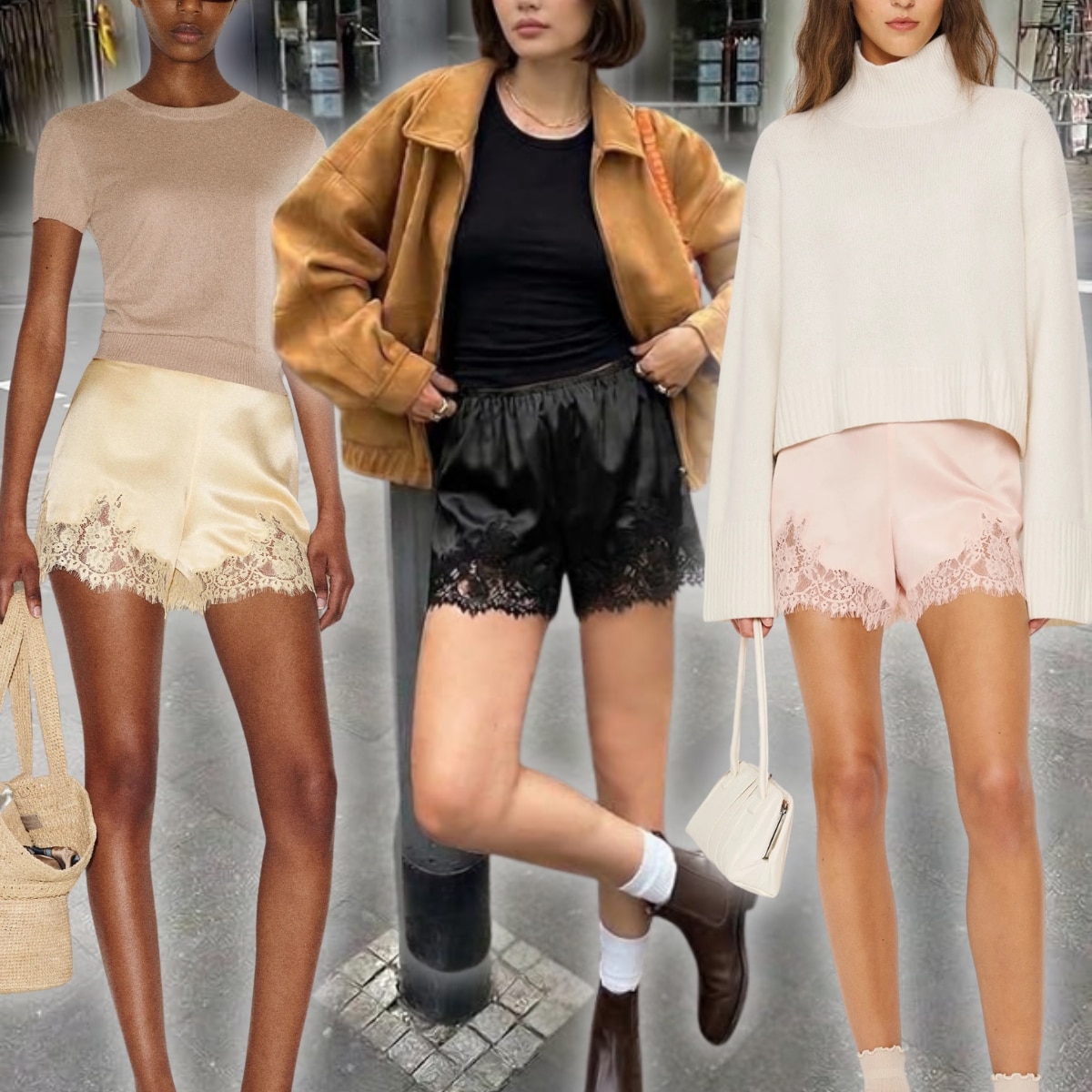













 Looking for a closet staple that can effortlessly take you from the office to happy hour, but that isn't too stuffy or too casual? Capri pants are the answer to your styling dilemma—and...









 Throughout this year's NBA season, we've noticed a courtside style trend emerging. Now, the last few games between the New York Knicks and the San Antonio Spurs have made it official.
Celebrities...
Throughout this year's NBA season, we've noticed a courtside style trend emerging. Now, the last few games between the New York Knicks and the San Antonio Spurs have made it official.
Celebrities...