Seven people and two firms that oversaw renovation works at Wang Fuk Court, the site of the city’s deadliest fire in decades, have been charged with manslaughter and a slew of other offences.
Wang Fuk Court on May 4, 2026. Photo: Kyle Lam/HKFP.
Three directors and employees at the two companies were among those formally charged by police and the Independent Commission Against Corruption (ICAC) at the West Kowloon Law Courts Building on Wednesday.
The defendants face a total of 25 charges, including manslaughter, conspiracy to defraud, money laundering, attempting to pervert the course of public justice, and tax evasion.
The blaze at Wang Fuk Court, a government-subsidised housing estate in Tai Po, in November killed 168 people and displaced thousands of residents.
‘Gross negligence’
According to the charge sheets, the two firms are Prestige Construction & Engineering, the main contractor for the HK$330 million renovation project at Wang Fuk Court, and Will Power Architects, the consultancy firm overseeing the government-mandated work.
Among the seven individuals charged are Will Power director Wong Hap-yin, its registered inspector Wilson Ng, and Prestige Construction director Ho Kin-yip.
Wong, Ng and Ho, along with their two companies, were charged with five counts of manslaughter.
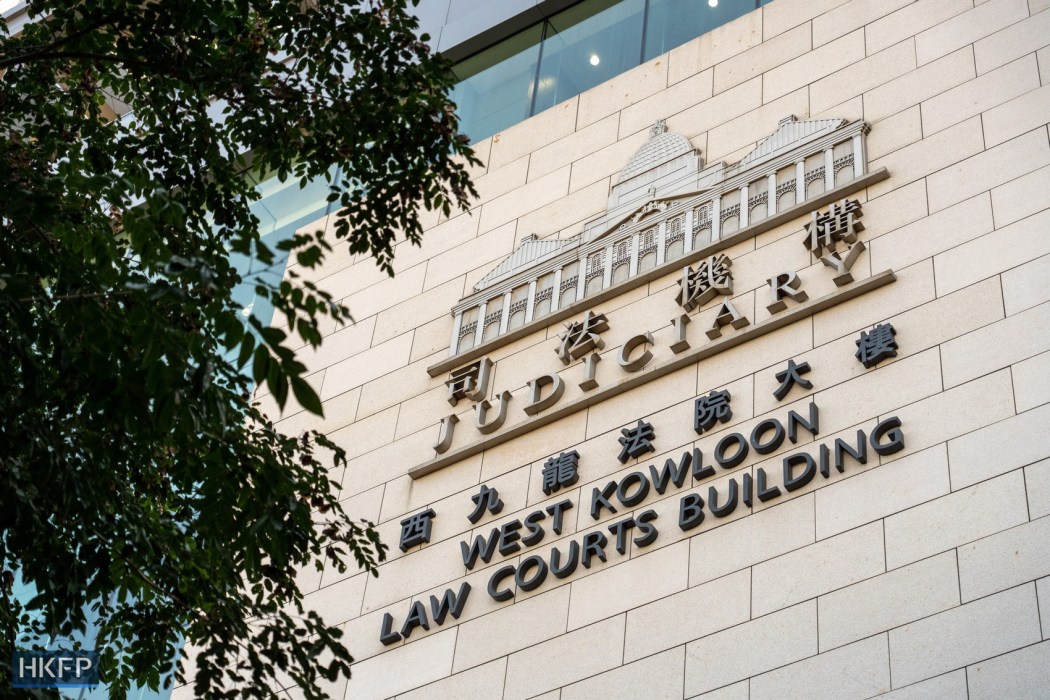
West Kowloon Law Courts Building. File photo: Candice Chau/HKFP.
The other four defendants are: Hau Wa-kin, another director at Prestige; Chung So-fan, Wong’s wife; Hung Kwok-wai, Wong’s friend; and Lin Min, assistant manager at Will Power.
The charge sheets also included the names of the 168 people killed in the fire.
Senior Superintendent Basil Tang of the New Territories North Regional Crime Unit said at a press conference on Wednesday, “The firms and individuals responsible for the Wang Fuk Court renovation project failed in their duty of care and displayed gross negligence in their supervision of construction materials and engineering protocols.”
Police investigation found key safety violations, including the use of non-flame-retardant scaffold netting and flammable foam boards, and the removal of windows along the emergency escape stairwell, Tang also said.
Tang told reporters that the three men charged with manslaughter were denied bail and the case had been adjourned to September 2 for the next court mention.
Bid rigging
At the same press conference, ICAC Principal Investigator Hazel Law said that Wong, Ho and Hau colluded to rig the tendering process and favour Prestige by omitting the contractor’s conviction records from tender documents.
Ng, who was tasked with overseeing the inspection and supervision of the repair work, “completely failed to carry out the inspections and responsibilities required of his professional role,” Law said.
“We suspect that this tragedy was fuelled entirely by individual greed,” she said. The defendants “not only failed to carry out their professional responsibilities but resorted to deep-seated corruption and fraud to achieve their objectives, displaying a disregard for the lives and properties of the residents.”
According to a police statement on Wednesday, the force and the ICAC laid the charges following investigations, and after seeking legal advice from the Department of Justice.
Four men have pleaded guilty to rioting during the siege of the Hong Kong Polytechnic University (PolyU) campus amid the anti-extradition protest and unrest seven years ago.
District Court in Wan Chai. File photo: Hans Tse/HKFP.
Cheung Chung-yiu, 24; Cheung Chin-ming, 29; Chan Chun-hei, 22; and Chan Yuen-ming, 33, appeared at the District Court on Monday morning to enter their pleas.
The four defendants were not prosecuted when they were first arrested in 2019 and 2020. However, they were re-arrested in June 2024 and charged with rioting at PolyU between November 14, 2019 and November 20, 2019.
The events at the Hung Hom campus were one of the most violent episodes during the protests and unrest in 2019, with protesters setting fires with petrol bombs as they faced off against police.
A fifth defendant, Lai Chun-kit, was not present. He has not attended hearings since October 2024, and an arrest warrant has been issued for him, The Witness reported.
Protesters outside the Hong Kong Polytechnic University in Hong Kong on November 17, 2019. Photo: Studio Incendo.
According to the prosecution, CCTV footage captured the defendants’ behaviour during the riot. Cheung Chung-yiu was seen moving barriers to block a footbridge, while Cheung Chin-ming and Chan Chun-hei were filmed taking containers from a laboratory.
Chan Yuen-ming was seen walking around the university campus and taking a large flask and two bottles with him.
Mitigation
The four defendants had initially planned to plead not guilty and go forward with a trial, the court heard, but later changed their minds.
During mitigation, Cheung Chung-yiu’s lawyer said that the defendant had gone abroad to study before he was re-arrested in 2024, while Cheung Chin-ming’s lawyer told the court that his client had supported victims of the Wang Fuk Court fire in its aftermath.
A bridge leading to the Hong Kong Polytechnic University set on fire on Nov. 17, 2019. Photo: Viola Kam/United Social Press.
A legal representative for Chan Chun-hei said the defendant was only 16 at the time of the incident. He worked in the construction sector and became a father at 21, his lawyer said, adding that he regretted what he had done when he was younger.
Chan Yuen-ming’s lawyer said his client was tricked into working at a scam farm in Thailand, returning to Hong Kong in 2022 after his family paid a ransom. He suffers from post-traumatic stress disorder, the lawyer said.
The lawyer added that Chan Yuen-ming was sentenced to 18 years and five months in prison for a drug trafficking offence, and that he stands to face a long time in prison.
The four defendants will be sentenced on June 8. Rioting is punishable by up to 10 years’ imprisonment, although jail terms handed down at the District Court are capped at seven years.
A local couple arrested on suspicion of child neglect has been confirmed as the biological parents of an infant born with no medical records, according to local media.
A Hong Kong couple arrested on June 2, 2026, on suspicion of child neglect. Photo: Save Lily, via Threads.
According to DNA test results, Tsang Wai-bong and Kwan Pui-sin are the parents of two-month-old Danny, local media reported on Thursday, citing unnamed government sources.
The parents, who at first opposed the DNA tests, finally agreed to take them on Wednesday, a day after they were arrested on suspicion of child neglect. The government had demanded that they undergo the tests to register the baby’s birth.
According to media reports, Tsang and Kwan were taken to the Immigration Department headquarters to assist with the investigation on Wednesday after they were released from police detention on a HK$1,000 bail.
The baby boy had not had any medical check-ups since birth, which constituted child neglect, security chief Chris Tang said on Tuesday, when he announced the arrests.
The couple said they practised “free births” and that their baby boy was born in Hong Kong around two months ago. His birth has not been registered, although Hong Kong law stipulates parents must register the birth of a newborn within 42 days of delivery.
Free birth, also called unassisted birth, involves a conscious decision to undergo pregnancy and give birth without professional maternity care or medical intervention. The trend has put the lives of mothers and babies at grave risk.
Infant in gov’t care
Stephanie Lee, a senior social work officer at the Social Welfare Department (SWD), said at a press conference on Wednesday that a court had granted the department a child protection order to care for the baby boy.
She said that Danny remained at the Caritas Medical Centre and would be sent to a care home under the child protection order to ensure his well-being. “We can all rest assured that he is now in the care of professionals,” Lee said.
The SWD will submit a report to the court to determine further welfare arrangements, she added.
Speaking to the press at midnight on Thursday outside the Immigration Department headquarters, the parents said they could apply to visit the child, and that they believed he would be safe with the authorities.
“The arrest was well-intended, as [the authorities] helped us clarify the parental relationship and whether we had committed child abuse,” Tsang said. “They were rather concerned about our son, whether medical care had been inadequate and that his parents’ identities had not been confirmed.”
Prior to their arrests, the couple launched a social media campaign in an attempt to regain custody of their daughter, Lily, from the Swedish government. Their admission of practising “free births” gained widespread attention and sparked concern over Danny’s well-being.
According to local media, the couple’s eldest daughter was born at home in Finland but died in infancy, and the Swedish government removed the second child, Lily, from their care due to health conditions.
The barrister-turned-activist sought to challenge the legitimacy of the national security allegations against herself, former colleague Lee Cheuk-yan, and the organisation they led, which held Hong Kong’s candlelight vigils commemorating China’s 1989 crackdown on pro-democracy demonstrators in Beijing’s Tiananmen Square.
From 1990 to 2019, the Hong Kong Alliance in Support of Patriotic Democratic Movements of China organised the commemorative event every year on June 4 at Victoria Park, demanding accountability for the bloody crackdown and the democratisation of China, both taboos in the country.
Beijing imposed a national security law in Hong Kong in 2020, following the 2019 protests and unrest. In 2021, police arrested the Alliance’s leadership, including Chow, Lee, and Albert Ho. The Alliance voted to disband that year, ending its decades-long vigils and advocacy.
Chow, Lee, and the Alliance are standing trial for “inciting subversion” under the national security law, an offence that carries a maximum penalty of 10 years behind bars. Ho pleaded guilty when the trial opened in January.
HKFP looked at the events surrounding the establishment of the Alliance, the Tiananmen vigils it organised, and the ongoing trial of its leaders.
Chow Hang-tung, barrister and a leader of the Hong Kong Alliance in Support of Patriotic Democratic Movements of China, on March 21, 2021. Photo: Peter Parks/AFP.
Hong Kong prosecutors have argued that the case against the Alliance is not political and does not concern its activism, the vigils, or the 1989 crackdown. They allege that, however, the group had been calling for the overthrow of China’s ruling Communist Party (CCP) through its “end one-party rule” slogan – a key tenet of the Alliance since its founding.
For Chow, who represents herself in the trial, the prosecution has upended Hong Kong’s value of being a free-wheeling city that tolerates the kind of political dissent not permitted in mainland China.
The trial has in effect “cornered” the court, forcing it to choose its side between the rule of law and an authoritarian regime, she argued.
Alliance and 1989 Tiananmen crackdown
Massive pro-democracy demonstrations broke out in China in the spring of 1989, triggered by the death of Hu Yaobang, a former CCP leader seen as a reformist. Students and protesters gathered in Beijing’s Tiananmen Square for weeks, demanding political reforms and democracy, as the rest of the country rallied to support those in the capital city.
In May that year, the Alliance was founded in Hong Kong, and huge demonstrations were staged in support of protesters in mainland China.
Around 1.5 million people joined a mass rally on May 28, a day after celebrities like Anita Mui, Teresa Teng, Eric Tsang, and Jackie Chan took part in the Alliance’s benefit concert in support of the students’ movement.
Around 1.5 million people take part in a mass rally in Hong Kong in support of students protesting at Tiananmen Square in Beijing. Photo: 1989年的傳真 , via Facebook.
Lee personally went to Beijing to deliver donations raised during the concert. However, he was detained and made to sign a letter of remorse, around the time the tanks rolled in to crush the burgeoning movement.
The protests in Beijing ended in a bloody crackdown as Chinese troops dispersed protesters on June 3 and 4. Estimates of death tolls during the crackdown range from hundreds to thousands.
In the years that followed, the Alliance organised candlelight vigils at Victoria Park every June 4 to commemorate the dead and to keep the spirit of the 1989 pro-democracy movement alive.
The Alliance’s five tenets – release pro-democracy activists, vindicate the 1989 democracy movement, hold those responsible for the crackdown accountable, end one-party rule, and build a democratic China – were an integral part of the candlelight vigils.
Tens of thousands of people attended the commemorations every year. They lit candles, sang songs, observed a moment of silence, and chanted the Alliance’s five slogans, led by the group’s leaders.
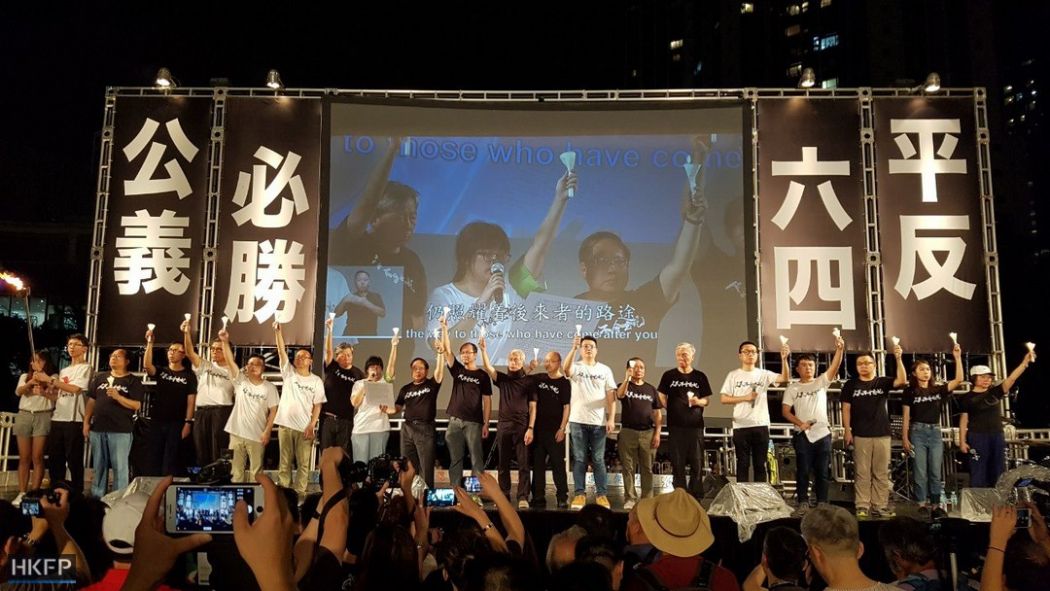
Alliance leaders (from left) Lee Cheuk-yan, Chow Hang-tung, and Albert Ho appear on the giant screen at Hong Kong’s annual Tiananmen crackdown vigil on June 4, 2019. File photo: Todd R. Darling/HKFP.
In 2020, authorities banned the vigil for the first time, citing Covid-19 restrictions. They prohibited the gathering again the following year, also citing the pandemic. The Alliance was disbanded in September 2021, following the arrests of its leaders.
No official vigils have been held since 2019, but there is a heavy police presence at Victoria Park and nearby streets on June 4.
For four consecutive years, Victoria Park has been occupied by a pro-China food festival in early June, including the anniversary day of the bloody crackdown.
‘Weird’ prosecution
In her closing argument last month, Chow said the prosecution was “weird,” as the defendants had not disputed the alleged acts and instead, they embraced what they did.
“Ending one-party rule means putting an end to the status quo, in which those in power are not bound by the law,” she told the court in Cantonese. “What is really in dispute is what the law suppresses and what it protects.”
According to the prosecution, the Alliance’s calls to “end one-party rule” had exceeded the legitimate boundary of freedom of expression as the defendants intended to stoke hatred against Beijing. “Freedom is not absolute,” lead prosecutor Ned Lai told the court in Cantonese.
The last official Tiananmen crackdown candlelight vigil on June 4, 2019. File photo: Todd R. Darling/HKFP.
Chow said the prosecution’s argument had undermined the values long championed in Hong Kong, such as freedom of expression and the rule of law.
“Speaking out the truth has become stoking hatred. Seeking justice has become taking advantage of suffering,” she said. “Asking for accountability has become breaching the constitution. Demanding democracy has become inciting subversion.”
She maintained that the court must protect human rights when reaching a verdict in the case.
“What the court has been asked to ban, to punish in this case are, in fact, what society and the law should encourage… They are the core values of Hong Kong, the norms and ideals accumulated through generations,” she said.
“I hope the court will make a correct decision to safeguard the dignity and bottom line of the law, at a time when values are being reshaped,” she added.
Prosecutors have argued that there are no “lawful means” to end CCP rule after a 2018 constitutional amendment stipulated that the party’s leadership is the “defining feature” of China’s socialist system.
A pro-Beijing food carnival at Victoria Park on June 4, 2025, the anniversary of the Tiananmen crackdown. File photo: Kyle Lam/HKFP.
During his closing submission last month, Lee’s lawyer, Erik Shum, argued that prosecutors had presented a “tautological theory.”
“We ask: How exactly did the Alliance incite others to overthrow the CCP? And my submission is that the prosecution has always reverted to the claim that ending CCP rule is illegal,” Shum said in Cantonese.
Shum urged the court to draw a boundary for what is considered an acceptable political expression and what is not.
“The court must not pay lip service to human rights protections,” he said.
The three-judge panel – Alex Lee, Johnny Chang, and Anna Lai – has adjourned the proceedings, saying they hope to deliver a verdict in “mid or late July.”
In a letter from prison this week, Chow, who has been behind bars since September 2021, said she would go on a 37-hour hunger strike in commemoration of the 37th anniversary of the 1989 crackdown.
China’s top official on Hong Kong affairs will visit the city this week to check its alignment with the National 15th Five-Year Plan and the progress of a tech hub development in the New Territories.
Beijing top official Xia Baolong (third from left) visited a tech park in the area of the Northern Metropolis in February 2025. Photo: GovHK.
Xia Baolong, director of the Hong Kong and Macao Work Office, will be in the city on Tuesday and Wednesday to inspect the five-year blueprint and the Northern Metropolis, the Hong Kong government said on Monday.
Xia is set to arrive one day after Hong Kong launched a two-month public consultation for the city’s first five-year plan.
During the public consultation period, residents can submit their views via a dedicated website, email or post, Chief Executive John Lee said on Tuesday. The government will also host activities to hear different views from lawmakers, industry leaders, and members of the public.
Lee said that the Hong Kong plan, led by the chief executive himself, would focus on the economy, technological development, and livelihood issues, as well as Hong Kong’s integration into China’s development.
Chief Executive John Lee at a press conference on January 27, 2026. Photo: Kyle Lam/HKFP.
The Northern Metropolis is a large-scale project set to transform 30,000 hectares of land in Hong Kong’s rural areas near the border with mainland China into a tech hub, providing more homes and deepening the city’s integration with Shenzhen.
Swathes of land, including rural villages in the New Territories, will make way for the development.
Xia visited Hong Kong in June last year to attend a forum marking the fifth anniversary of the national security law.
Later in April, he delivered a recorded video speech at a National Security Education Day ceremony, warning of people who “politicised” the deadly Wang Fuk Court fire and tried to use the disaster to “stir up chaos” in Hong Kong.
A new UN study has named Hong Kong’s data centres as some of the most carbon-intensive in the world, blaming the city’s heavy dependence on a fossil-fuel-powered energy grid.
A government data centre in Cheung Sha Wan. Photo: Googlemaps.
The report, titled “Environmental Cost of AI’s Energy Use,” examined the global carbon, land and water impacts of the infrastructure powering AI, saying that by 2030, data centres could consume 945 terawatt-hours.
That is “nearly triple the combined annual electricity use of Pakistan, Bangladesh, and Nigeria, countries collectively home to more than 650 million people,” according to a UN press release.
Lamma power station. File photo: Tom Grundy/HKFP.
“Indonesia, India, and Hong Kong (SAR) are among the most carbon-intensive grids with carbon footprints 62%, 51%, and 43% higher than the global average, respectively. Poland and Mainland China rank lower with carbon intensities at 30% and 21% higher than the global average,” the UN University’s Institute for Water, Environment and Health said in a report on Wednesday.
In comparison, the carbon footprint of electricity in the US, Germany, and Italy is 18 per cent, 24 per cent, and 32 per cent below the global average, respectively.
Energy in Hong Kong is 67 per cent derived from fossil fuels, 32 per cent from nuclear and just 1 per cent from renewables, the report said.
Energy sources for countries and territories across the world. Photo: UN.
There is also a water footprint for cooling heat-intensive data centres, as well as a land footprint. “AI-related water consumption could equal the basic annual domestic needs of 1.3 billion people by the end of the decade, while its land footprint may exceed 14,500 square kilometres – roughly twice the size of the Jakarta metropolitan area,” the UN said.
However, Hong Kong was ranked among the lightest for water and land consumption, mostly because its energy mix does not rely on renewable energy sources, which require large amounts land.
The environmental cost of data centres. Photo: UN.
As a trade and logistics hub, with around 300 internet service providers, Hong Kong remains a prime location for data centres. Its telecommunication networks connect to 12 external submarine optical fibre cable systems, with more under construction, according to the city’s Digital Policy Office.
The government is building a new 110,00 square metre data facility in Sandy Ridge, 90 per cent of which will be dedicated to data centres, according to a government press release in March.
Daily AI use, not training
The UN report said that day-to-day use of AI models accounted for around 80 to 90 per cent of total energy demand, as opposed to just model training. It cited the case of ChatGPT, which was processing around 2.5 billion prompts per day, with image generation requiring a thousand times more energy than a simple text query.
“China’s DeepSeek, launched in January 2025, attracted more than 20 million daily active users within three weeks, and had about 125 million monthly active users by mid-2025,” the report said.
An aerial view of Alibaba’s Zhangbei data centre cluster in Hebei, China. Data sources: Epoch AI; Sentinel-2 false-colour imagery, February 2026. Photo UN.
According to the Digital Policy Office website, “data centre operators are all striving to enhance energy efficiency , so as to reduce their power consumption, their operating expense and also their environmental impacts.”
It cites existing policies by the Electrical and Mechanical Services Department (EMSD), which set rules for ensuring the energy efficiency of buildings and regulate the use of fresh water in cooling towers for air conditioning systems.
The EMSD’s Green Data Centres Practice Guide lays out initiatives for efficient data centre design, procurement, operations and disposal, whilst also promoting the use of assessment tools to measure environmental impacts.
A transgender alum has sued her former secondary school over “discriminatory” policies that barred her from having long hair.
Lung Kung World Federation School Limited (LKWFSL) Lau Wong Fat Secondary School in Tai Kok Tsui. Photo: LKWFSL Lau Wong Fat Secondary School.
Oscar Fung, who studied at Lung Kung World Federation School Limited (LKWFSL) Lau Wong Fat Secondary School in Tai Kok Tsui from 2019 to 2025, filed a writ in the District Court on Thursday, local media reported.
According to the writ, Fung experienced gender dysphoria at the age of 14 when her parents separated.
During the Lunar New Year holiday in 2024, Fung decided to grow out her hair. However, she was reprimanded at school after the break because her hair exceeded the length permitted for male students and was accused of violating school rules.
The writ stated that Fung was scolded by two teachers for almost 30 minutes one day, with the teacher threatening to withdraw her from science competitions she was representing the school in.
Equal Opportunities Commission. Photo: Kelly Ho/HKFP.
Fung felt embarrassed and angry as other students witnessed the scene. She was then sent to the disciplinary teacher, who accused her of “cosplaying as a girl” and told her to cut her hair.
The writ also mentioned that Fung had filed a complaint with the Equal Opportunities Commission, but it was dismissed.
‘Injury to feelings’
Fung alleged in the writ that the school had breached the Sex Discrimination Ordinance, as female students were allowed to grow long hair while male students were not.
She asked the court to declare the school’s rules discriminatory and to order it to pay damages for “injury to feelings,” a term under the ordinance.
District Court in Wan Chai. File photo: Hans Tse/HKFP.
The writ also stated that one of the school’s vice principals, Pang King-fai, had twice dismissed the Sex Discrimination Ordinance.
During a meeting with Fung before the 2023-24 school year ended, Pang said the school was not subject to the Sex Discrimination Ordinance.
The second instance was during a ceremony on the first day of school for the 2024-25 academic year in September 2024. Pang told pupils publicly that male students’ hairstyles did not fall under the ordinance, and any challenges would be handled through disciplinary measures.
According to the writ, another vice principal, Li Wing-yee, told Fung that if she did not abide by the school’s rules, she should change schools.
A hearing for the case has been scheduled for July 15, according to the Judiciary’s website.
HSBC’s Hong Kong mobile apps were down on Monday, with the banking giant saying they are experiencing technical issues.
Customers were unable to access HSBC banking apps on Monday, June 15, 2026. Photo: Tom Grundy/HKFP.
Customers were initially shown an error message when opening banking apps stating that “access is restricted until we have your valid email address and mobile number.” By lunchtime, it was replaced with a message saying that the fault was temporary and that work was underway to restore services.
The city’s largest lender has seven million customers in the city.
It is the second outage this year. In January, HSBC online services and banking apps were down for several hours.
Earlier this year, HSBC made a full HK$14 billion acquisition of its subsidiary Hang Seng Bank. Local media reported that Hang Seng apps were also down on Monday morning.
An HSBC spokesperson told HKFP via email: “All our services returned to normal before 2:00 pm today. We again apologise for any inconvenience caused.”
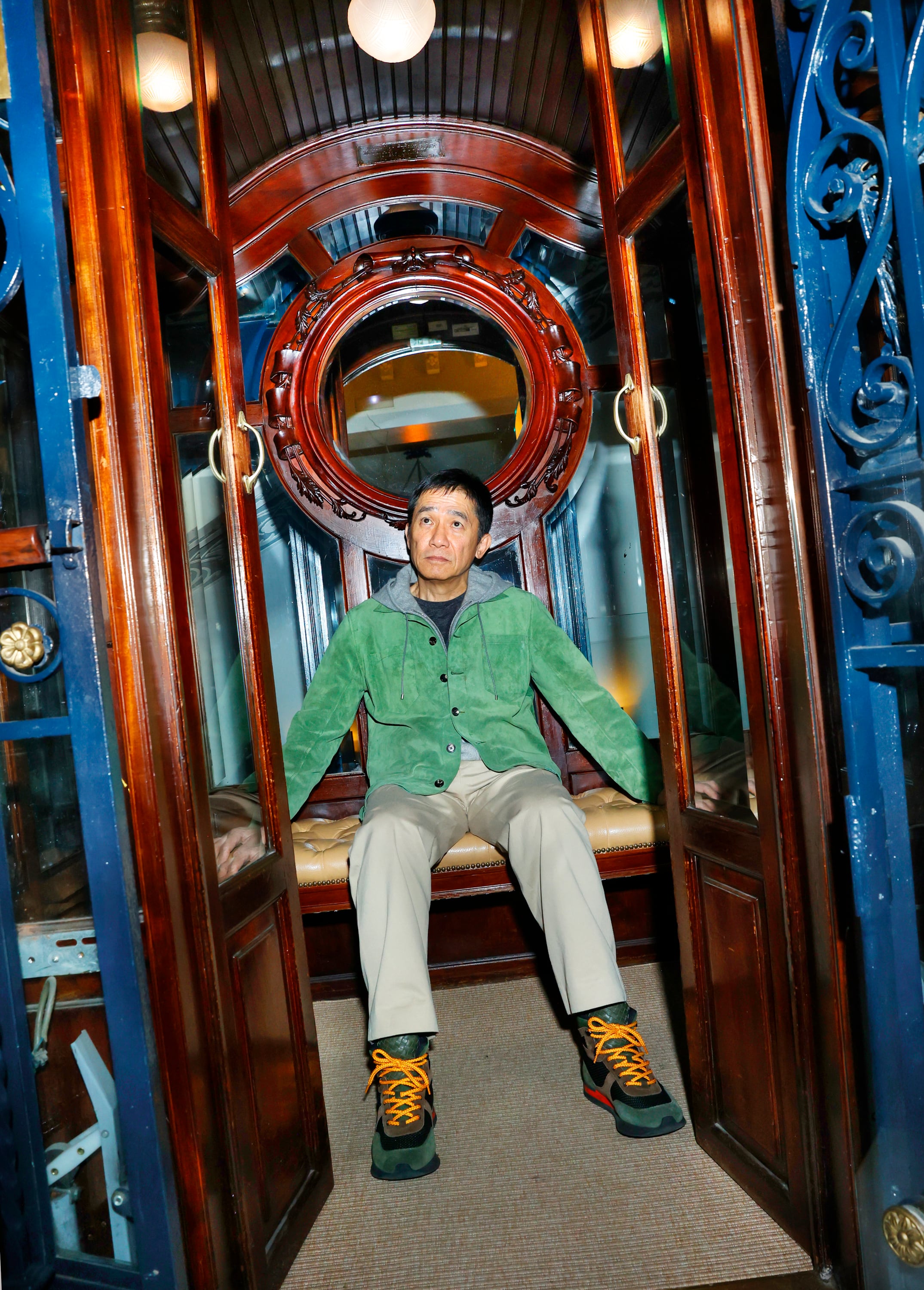
Tony Leung (Hong Kong, 63) enters the lobby of a Madrid hotel and brings with him an absolute sense of calm. The pace slows; you even get the impression the temperature has dropped slightly. Leung’s image in the film collective was sealed by his role in In the Mood for Love, Wong Kar-wai’s masterpiece that earned Leung the best actor award at the 2000 Cannes Film Festival. A man anchored in melancholy, unable to confront his unfaithful wife or to declare his love to his neighbor. That introspection turned Leung into one of the coolest men on the planet.
Hong Kong’s Hospital Authority has suspended a trainee doctor and a resident physician after their alleged professional misconduct went viral on social media.
Caritas Medical Centre. File photo: GovHK.
In a statement issued on Wednesday evening, the HA said that it had noticed some social media posts discussing an intern doctor’s alleged professional misconduct at different hospitals.
“The HA considers the matter extremely serious, affecting the professional image of healthcare staff,” the statement said.
The authority said it had reported to the police the suspected case of “someone who logged into the Clinical Management System at Caritas Medical Centre (CMC) with another person’s account and accessed patient records at Tuen Mun Hospital without authorisation.”
A photo shared by an intern doctor shows her performing an X-ray on her own knee. Photo: Simon_yuen via Thread.
“The HA has immediately suspended the clinical duties of the intern doctor concerned and a resident doctor at Tuen Mun Hospital, and has also suspended their access right[s] to the system in order to protect patient and system security,” it said.
“The HA has notified the medical school of the relevant university to follow up on the intern doctor’s assessment of being fit for practice.”
According to the statement, before the suspensions, the HA had previously issued a serious warning to the trainee doctor for committing an inappropriate act during an internship at Ruttonjee Hospital and taken disciplinary action against the intern doctor and another resident doctor at CMC.
It had also taken disciplinary action against the intern doctor and another resident doctor for misconduct at CMC.
The HA’s move comes after a trainee doctor, who published videos documenting her medical internship, allegedly used medical equipment without authorisation to X-ray her own knee and posted a photo of the procedure on social media.
She was also suspected of asking her boyfriend, a resident doctor at Tuen Mun Hospital, to come to Ruttonjee Hospital, where she was interning, to assist her with a medical procedure.
Ruttonjee Hospital in Hong Kong. File photo: GovHK.
According to netizens, the intern doctor is a social media influencer known as Angel the Medic on YouTube and Instagram.
As of Thursday, all videos on the YouTube channel had disappeared, and the Instagram account had gone offline.
Several times a day, a drone carrying high-capacity cameras and flashing red-and-blue lights whirs and rises from the rooftops of police stations across Hong Kong.
They emerge from a box-shaped docking system that slowly unfolds its doors to both sides. Some hover over the city’s billion-dollar villas with private pools and tennis courts; others whizz along streets bustling with people and traffic.
“Police Drone in Operation” banner in Sung Wong Toi, Kowloon, on May 12, 2026. Photo: Kyle Lam/HKFP.
Hong Kong police have been rapidly expanding their use of surveillance technology and automated drones. They have used drones to hunt down people who overstayed visas or gambled illegally.
According to the police force, these technologies will help deliver high-quality police services and optimise deployment and efficiency. Drones and cameras alike will also likely be combined with the use of artificial intelligence (AI) and facial recognition capabilities.
Drones will substitute some of the police’s foot patrols, and tens of thousands of surveillance cameras will be installed to assist in investigations and arrests.
Since a drone patrol pilot scheme was rolled out in May last year, the technology has helped arrest 54 people, including at least six wanted individuals, according to police. The force did not provide complete data, but at least half of the suspects allegedly committed non-violent crimes.
Hong Kong police officers demonstrate the use of unmanned aerial vehicles to journalists on May 19, 2025, days before the launch of the drone patrol pilot scheme. Photo: Hong Kong Police Force, via Facebook.
In one operation last month that spanned from West Kowloon to Lantau Island, police – with the help of drones – arrested 19 people suspected of immigration infractions and prostitution.
In another instance, police used drones to apprehend a group of eight middle-aged and elderly people who were gambling illegally in a public housing estate in Ma On Shan. Police also fined two drivers spotted crossing over into an oncoming traffic lane on a road to Shek O, using a drone.
Police have not responded to HKFP’s request for more details on how the drones helped during those arrests and investigations.
The increased use of drones is a response to China’s push for a “low-altitude economy,” which can be integrated into daily services ranging from deliveries to law enforcement, said Sky Yeung, chairperson of the DNT FPV Drone Association Hong Kong, China.
Businesses such as delivery companies and government agencies can test drone-use scenarios through a regulatory exemption scheme, and the government is taking steps to prepare for more drones in the air, whether operated commercially or by authorities, Yeung said.
Sky Yeung, chair of the DNT FPV Drone Association Hong Kong, China. Photo: DNT FPV Drone Association Hong Kong, China, via Facebook.
So far, police have not explicitly said anything about using drones for national security purposes, which has been a priority for Hong Kong’s law enforcement in recent years.
However, as an expert told HKFP, the capability is there.
Despite the stated purpose of police technology, once the law allows for an agitator, a national security risk, or a terrorist to be prosecuted, it becomes “malleable,” said Bryce Neary, former executive editor of the Seattle Journal of Technology, Environmental & Innovation Law. The US-based lawyer studied the use of drone and surveillance technology in Hong Kong, China, and the US.
If a government “make[s] a legal argument to do so, then the technology is in place and can be utilised regardless, and as needed essentially, when the government wants to change those terms for their use,” Neary told HKFP on the phone.
Moreover, there are potential privacy issues.
To people on the ground, police drones flying between 60 and 90 metres above ground will be barely noticeable to the naked eye, Yeung said, and their buzzing noise is unlikely to cause a nuisance, given other urban noise.
But nothing escapes the drones flying above us. Police drones, similar to those used in China, can typically “film everything” with “powerful lenses that can zoom in from a great distance, such as seeing what is inside a vehicle,” he said.
Police drones are marked with flashing lights and reflective decals for people to identify them, but these won’t be visible at their usual operating altitude, Yeung said. “Maybe you can see a flashing dot at night, but you wouldn’t notice it.”
Screenshot of a video showing police drone surveillance on Lamma Island. Photo: Hong Kong Police Force, via YouTube.
When asked about privacy concerns by HKFP, the police force said its drone patrols fly over “carefully” planned routes that cover only public areas and do not involve private spaces such as building interiors.
The drones “avoid unnecessarily flying close to individuals or private premises” – unless the situation warrants an investigation, in which case the drones would descend to lower altitudes to collect evidence, police said in a statement.
Video footage with no evidential value will not be kept for more than 31 days, and those obtained as evidence will be classified as such and handled by the investigating unit, according to the police statement.
Over the past two years, Hong Kong authorities have been introducing more surveillance technologies without hiccups at the “patriots only” legislature – and without protest.
A smart lamppost. File photo: GovHK.
This is in stark contrast to the time when angry demonstrators tore down experimental “smart” lampposts during the city’s 2019 protests and unrest. Discontent with shrinking political freedoms, protesters suspected that the lampposts would eventually allow authorities to conduct surveillance by adding facial recognition capabilities to their panoramic cameras.
The government strongly denied such plans at the time, and promised the cameras would be disabled or their resolution reduced to assuage concerns.
However, in a reversal, law enforcement is now considering adding facial recognition technology to its toolkit. Such systems may be connected to police surveillance cameras as soon as this year, police chief Joe Chow said in February. By 2028, police will install a total of 60,000 cameras across Hong Kong.
The goal is to have “as many cameras as possible” and replicate what’s in mainland China, where there is camera coverage “every two steps,” he said during a TV interview.
“Times have changed” compared with when society widely opposed increased surveillance and privacy issues, Chow added.
According to police, drone patrols will be used to combat crimes, identify traffic violations, and monitor traffic flows and crowds.
Hong Kong police officers demonstrate the use of drones to the media during the launch of the second phase of the programme on January 19, 2026. Photo: Hong Kong Police Force.
They can be used to track down suspicious individuals, such as someone who appears evasive when police are nearby, police said at press briefings.
They may also soon be equipped with artificial intelligence, but police have not specified whether the same facial recognition technology used on cameras would be applied to drones.
Present technology from mainland Chinese drone surveillance vendors can identify people, objects, behaviours, and events, according to their product catalogues. They can count and identify various types of vehicles moving on a road, or people in a crowd. They can detect illegally parked cars, smoke, or objects fallen onto power lines. They can spot when protest banners are unfurled.
Yeung pointed out drones’ ability to lock on to a target person and track them automatically as they move – a feature commonly used by police in the US. In short, drones film from above, while police operate on the ground.
During the first phase, which began in May last year, drones were deployed to Heung Yuen Wai, a border area with mainland China, and West Kowloon.
“Police Drone in Operation” banner on Lamma Island on March 24, 2026. Photo: Kyle Lam/HKFP.
They also covered busy downtown districts like Central and suburban residential areas such as Yuen Long and Tsuen Wan.
The police force purchased around 700 drones for HK$25 million during the past financial year, and will purchase another 56 in 2026-27 for HK$4.8 million, the Security Bureau told the legislature.
Other agencies also deployed drones for various purposes, from detecting sites at risk of landslides to patrolling several tourist hotspots during Golden Week holidays.
Last year, investigators from the Food and Environmental Hygiene Department apprehended individuals who illegally slaughtered a goat in a rural area, with the help of drones.
Several residents on Lamma Island said they were not aware of police drone patrols, despite prominent banners announcing their presence near the Yung Shue Wan ferry pier and in villages. They said they welcomed the idea that these patrols could prevent bike theft or burglaries, and expressed no worry about privacy issues.
The island’s resident, who asked to be identified only as Mark, said he believes ultimately it is the presence of police officers that will make a difference in deterring crime, something that drones above his head cannot replace. “What you need is your bobby to be walking and to be visible,” he said.
Neary believes a chilling effect is the intended purpose of police drones, more than the number or severity of crimes they manage to actually solve.
“Regardless if it’s actually effective in terms of what it’s doing, the fear of the fact that you’re being monitored at all times for any of these petty crimes in public or in private, I think, is going to be a big deterrent for you to do so,” he said. “And maybe that’s the point in the first place, right?”
A Hong Kong astronaut will join a Chinese space mission for the first time as part of a three-person crew launching on Sunday, as Beijing edges closer to its goal of landing people on the Moon.
Lai Ka-ying is a police superintendent with a doctorate in computer science – she will be Hong Kong’s first astronaut. Photo: CCTV.
The Tiangong space station — crewed by teams of three astronauts that are typically rotated every six months — is the crown jewel of China’s space programme, boosted by billions in state investment in a bid to catch up with the United States and Russia.
The Shenzhou-23 mission will blast off at 11:08 pm (1508 GMT) on Sunday from the Jiuquan Satellite Launch Center in northwestern China, carrying three astronauts to the space station, China Manned Space Agency (CMSA) spokesman Zhang Jingbo told reporters on Saturday.
The team comprises Lai Ka-ying, hailed by state media as Hong Kong’s first astronaut, Zhu Yangzhu and Zhang Zhiyuan, the spokesman said.
Flight engineer Zhu, who participated in the Shenzhou-16 mission in 2023, will be the commander.
The mission’s primary objectives are to “continue carrying out space science and application work, conduct astronauts’ extravehicular activities and cargo transfer in and out of the cabin”, the CMSA’s Zhang told reporters.
One of the astronauts will undertake a one-year in-orbit residency experiment, he added, without specifying who.
China is “steadily” building operational experience for “sustained occupation” of its Tiangong space station, and year-long missions are an important step towards future lunar and potentially deep-space ambitions, said Macquarie University’s Richard de Grijs.
“A year in orbit pushes both hardware and humans into a different operational regime compared with the shorter Shenzhou missions of the programme’s earlier phases,” the professor of physics and astronomy told AFP.
Beijing’s space programme, the third to put humans in orbit, has also landed robotic rovers on Mars and the Moon.
China has ramped up plans to achieve its “space dream” under President Xi Jinping.
Beijing says it aims to send a crewed mission to the Moon by 2030, with the goal of constructing a base on the lunar surface.
The CMSA said on Saturday it would “make every possible effort and strive tirelessly” to achieve that goal.

 Login
Login