Reading view

Pet snakes have a hidden body count

A close-up of a rat’s face with a black background.

You might have particular feelings about snakes, but for millions of Americans they’re a member of the household. And their popularity as pets has only been growing: From 2018 to 2024, the number of households that own a pet snake rose from about 810,000 to 1.3 million. And the share of snake-owning households with more than three snakes doubled over that time period.

Key takeaways

  • About 1.3 million households in the US have at least one pet snake — a number that’s rapidly grown since the 2010s.  
  • To feed all of these pet snakes, companies are breeding tens of millions of mice and rats in factory farms. Undercover investigations have revealed overcrowded and inhumane conditions.
  • But there are some solutions, including changing pet snake diets so they rely on fewer animals and getting zoos — which also buy a lot of factory-farmed mice and rats — to set higher standards.

Social media could have something to do with this, as snake influencers with millions of followers have proliferated across platforms. Some have even turned their passion for reptiles into a business, breeding “designer” versions with ever rarer patterns that fetch anywhere from $25 to $60,000.

I’ve written about the moral questions raised by keeping wild animals like snakes as pets: They’re confined in small tanks and unable to express their most basic, natural behaviors, like hunting, climbing, and roaming. But if you dig a bit deeper into what keeping a snake as a pet involves, there’s a particularly dark side you’ve likely never heard about: factory farming hundreds of millions of mice and rats each year to feed them. 

It’s a largely invisible form of factory farming that causes far more animal suffering than most industries that exploit animals — yet it has received essentially zero attention. And given the recent boom in pet snakes, it’s one that’s only likely to get worse in the coming years.

Inside mouse factory farms

In the wild, snakes have a diverse diet that consists of small mammals, like mice and rats, along with birds, fish, frogs, and insects. But pet snakes are fed a near-exclusive diet of “feeder” rodents — mice and rats — consuming anywhere from two infant mice per week to one or two larger mice or rats every 10 to 14 days. 

Like the animals raised for human food, mice and rats aren’t protected by the federal Animal Welfare Act, and there’s no animal welfare oversight in these operations, even though welfare issues abound. It starts with lack of space; mice and rats have long ranges in the wild, yet in rodent farms, they’re confined in small tubs, never to breathe fresh air or step on grass.

Zoos buy some of these rodents, too, and the Association of Zoos and Aquariums says it’s acceptable to give a female mouse and her litter just 51 square inches of space on which to live, which is smaller than a standard iPad.

A document on best management practices for rodent farming, published by the pet industry lobbying group Pet Advocacy Network, doesn’t mention several basic necessities that are generally recommended for pet rodents, like shelter (important for them because they’re prey animals) or enrichment toys, like running wheels, to let them exercise. And they’re likely never given veterinary care, since each animal is worth mere pennies or dollars. 

Pet Advocacy Network goes so far as to say that the standards for caging and veterinary care recommended for pet rodents and those used in medical research are “unnecessary for feeder rodents” because of their short lifespans. 

Then there’s slaughter. Day-old mice and rats — known as “pinkies” — are popular with snake owners and account for a large share of production; it’s standard practice to freeze them to death. 

Other mice and rats are killed within a couple weeks or months after they’re born, often by carbon dioxide gassing, which for decades has remained a controversial euthanasia method among those who use mice and rats in medical research. Studies have found that mice and rats will go out of their way to avoid CO2, and as chambers fill with the gas, it causes anxiety, fear, and pain in the two to three minutes it takes to render the animals unconscious. Other chemical-based options have drawbacks, too.  

Some mice and rats are even fed to snakes while they’re still alive.

It’s unknown how common it is for rodent farms to kill healthy animals or euthanize sick ones by more gruesome methods, like decapitation, cervical dislocation (quickly severing the spinal cord at the neck) or blunt force trauma (picking them up by the tail and slamming them against a hard surface). But they’re performed enough that even the Association of Zoos and Aquariums allows for zoos to purchase from rodent farms that euthanize their animals using these methods.

AZA declined an interview request for this story. Pet Advocacy Network, along with two of the largest feeder rodent companies in the US (RodentPro and Big Cheese Rodent Factory), didn’t respond to interview requests.

PETA has conducted numerous investigations into large-scale US pet breeders that raise mice and rats for snakes and has documented:

  • Workers grabbing ill and injured rats by the tail and slamming them against walls and tables to euthanize them 
  • Hundreds of dying, dead, and decomposing mice and rats
  • Workers bludgeoning rodents with tongs and BB guns (some were thrown into the trash still alive after botched attempts)
  • Mice and rats starved and frozen to death, with some drowning in floods

Because this part of the pet industry is largely unregulated and almost entirely hidden, there’s no data on how many feeder rodents are farmed each year, though in 1999 a journalist at The Independent estimated 167 million each year for the US market alone. But that was over 25 years ago. In 2017, Pet Advocacy Network wrote that with the growth of the reptile pet trade, “demand for rodents increased concomitantly and led to large-scale production facilities [of feeder rodents] throughout the United States and Europe.” Then even more people got pet snakes during the pandemic. 

A 2024 back-of-the-envelope calculation by an animal advocate estimated that 200 to 650 million mice and rodents are farmed for captive snakes globally, with most of them destined for the US and European markets where pet snake ownership is concentrated.

If the true number is close to the upper end of that estimate, it would mean that globally more than twice as many mice and rats are farmed just for snake food each year than cows are killed each year to feed people

And increasingly, farmed mice and rats are being imported from China, another place where snake ownership is expanding. While animal welfare regulations and oversight in the meat and pet breeding industries are terribly weak in both the US and China, US snake owners, zookeepers, and animal advocates have even less insight into the conditions of feeder rodent farms in China than they do in the US.

Exports of feeder rodents from China to the US grew from around 12,000 pounds in 2015 to 1 million pounds in 2025, which amounts to tens of millions of rodents.

The rapid growth of the feeder rodent industry has worried some number-crunching animal advocates because it’s yet another illustration of what’s called the “small body” problem. Small animals — like chickens, fish, crustaceans, and rodents — tend to have very poor welfare and because they’re so small, they’re farmed in huge numbers. Meanwhile, larger species, like cattle and sheep, have relatively higher welfare and are farmed in much lower numbers because they’re so big. 

Some people might be quick to dismiss all of this because rats and mice have long been demonized as pests. But anyone who’s kept mice or rats as pets or spent much time with them will tell you they have distinct personalities. Researchers have found that mice emit ultrasonic giggles when they’re tickled while rats free trapped cage-mates even if they get nothing out of it. And they’re plenty smart: Rats have demonstrated strong memories, and mice can rapidly learn complex tasks

How to save the mice (and the snakes, too)

There’s something particularly disturbing about the mass-scale farming of mice and rats to feed snakes who suffer in their own right when kept as pets. But there are also a number of things that can be done about it. 

One route would just be working to reduce the number of pet snakes. Several US states and hundreds of cities have prohibited the sale of some types of animals in pet stores, though only a few of those city laws include a prohibition on selling reptiles. If more cities follow, it could actually make a large dent in pet snake sales, because currently almost 40 percent of snakes are purchased at pet stores.

Another route to helping feeder rodents would involve getting the Association of Zoos and Aquariums to raise its standards for feeder rodent suppliers and require routine audits.

One of the more promising solutions entails changing what pet snakes eat. A few companies — including Arcadia, Good Reptiles, and ReptiLinks — sell sausage-type products made from a variety of meats, like chicken, beef, rabbit, and quail, that they say are nutritionally comparable to feeder rodents (and some claim to use often unwanted animal parts, like bones, organs, and feathers). They also pitch their products as safer and less messy alternatives because feeder rodents are shipped frozen and must be thawed before feeding them to snakes. And occasionally, frozen feeder rodents cause salmonella outbreaks.

A close-up of a pet rat.

But there’s another advantage: These products help pet snake owners significantly reduce the number of animals raised to feed their snakes. A single chicken, rabbit, or cow can produce enough meat to replace dozens to hundreds to thousands of feeder rodents.

The plight of feeder rodents is a perhaps unexpected example of how our fascination with animals, and the desire to bring them into our homes, can cause ripple effects around the world that condemn many more animals to suffer. If we can manage to set aside any biases against these small mammals, it becomes clear that factory farming them has become an outsized, underappreciated animal welfare problem.

  •  

A flesh-eating parasite has arrived in the US. Can we stop it?

A worker walks through empty corrals at the Union Ganadera Chihuahua cattle import facility in New Mexico
A worker walks through empty corrals at the Union Ganadera Chihuahua cattle import facility in Santa Teresa, New Mexico, on June 20, 2025. | Paul Ratje/Bloomberg via Getty Images

A flesh-eating parasite that the United States spent decades eradicating, and even longer trying to keep at bay, has now shown up in Texas.

Federal officials confirmed this week that New World screwworm, a fly whose larvae burrow into living tissue, had been found in a 3-week-old calf in Zavala County in Southwest Texas. It is the state’s first confirmed detection since the early 1980s, and the first in US livestock in several decades. This infestation marks a new stage in the parasite’s northward resurgence through Central America and Mexico that began in 2023.

Human infestations from these flies are rare in the United States, and the Centers for Disease Control and Prevention says there have been no locally acquired human cases reported in the country. But the unwelcome infestation in Texas could be a serious test for ranchers and animal agriculture in the US. Beef prices are already near record high, and if screwworm spreads beyond this single detection, it could push prices and ripple through the economy.

Texas officials are now trying to answer the most urgent question: Was this a single stray case, or a sign that adult screwworm flies are already in the area?

A spokesperson for the Texas Animal Health Commission (TAHC) told Vox that officials had not confirmed any additional cases and were conducting ranch-to-ranch animal surveillance and fly surveillance around the infested zone. That zone covers about 12 miles around the detection site. Warm-blooded animals, such as cattle, horses, and pets, cannot be moved out of this zone unless they are inspected.

Texas has been watching for this moment. The TAHC told Vox it has had fly traps along the Texas-Mexico border since July 2025, which has since collected over 54,000 suspicious flies. None of them were confirmed to be New World screwworm.

But the detection of this case in Zavala County has moved the state from precautionary work to containment. The TAHC told Vox that sterile flies are being deployed through ground release chambers where the infestation was detected, and aerial dispersal was expected to follow. The idea is to flood the area with sterilized flies, so wild screwworms mate without producing offspring — it’s the same strategy that the United States used to eradicate the parasite decades ago. Texas had already been doing these precautionary aerial sterile-fly drops over South Texas since late January, but after this case, officials said those releases were now being redirected toward the 20-kilometer response zone around the detection site.

What went wrong

While the containment efforts are on, it’s still unclear how the calf got infected. The TAHC told Vox that it was not aware of any recent animal movement off the ranch where the calf was found, or any known link to Mexico or another affected area.

If the calf had no movement history, Phillip Kaufman, an entomologist at Texas A&M University who has worked with state officials on screwworm response planning, said, “there certainly have to be adult flies in the area,” that laid eggs on it. Maxwell Scott, an entomologist at North Carolina State University who studies screwworm control, also said that if the livestock itself was not moved up from Mexico, “then the fly had to be here.”

That doesn’t mean that screwworms are established in Texas. Scott said it is possible the case came from a single female fly, and US Department of Agriculture says there have been no further detections so far. But it does mean that the US is no longer preparing for a hypothetical threat.

In Mexico, screwworms-related export restrictions have cost cattle exporters more than $1.3 billion, according to the country’s National Agricultural Council. And in Texas alone, a widespread outbreak could drain as much as $1.8 billion a year from ranchers and the wider economy, according to a USDA estimate.

The US has a history of eradicating screwworms before, and for years it kept the parasite at a distance through an invisible sterile-fly barrier near the Panama-Colombia border. But that barrier has cracked, and screwworm is now spread across a much wider front in Mexico and Central America. Livestock production is also vastly larger than it was when the US first eradicated the parasite. And the sterile-fly supply is limited. Scott, the NC State entomologist, said that the only current production plant in Panama is running at full capacity — 24/7, 365 days a year — and producing about 100 million flies a week, only half of which are males, the sex that actually suppresses the population.

The USDA is moving to raise that ceiling, including by renovating a facility in Metapa, Mexico, and building new production capacity in Texas. Newer genetic engineered strains, including a male-only fly known as Novofly, could also make existing plants more efficient by producing only the sex that actually suppress the wild population. But those tools still need regulatory approval and field testing before they could be deployed.

The response is unfolding after a bruising year for the agencies and programs that manage animal disease. More than 15,000 USDA employees accepted the Trump administration’s incentives to leave the department, while  the Animal and Plant Health Inspection Service, the USDA agency responsible for animal and plant health, lost more than 1,300 staff that included veterinarians and animal health personnel. The “Department of Government Efficiency,” which is officially scheduled to sunset next month, also listed an $84 million cut last year to a USAID grant that supported animal-disease surveillance and outbreak response. Agri-Pulse, an agriculture trade publication, reported that the terminated work included screwworm monitoring in Central America.

It is unclear whether those cuts have affected the current response in Texas or the US’s broader ability to track northward movement of screwworm, but it sharpens the question: whether the US has enough surveillance, staffing, and sterile-fly capacity to meet a fast-moving animal health threat.

How screwworm resurged toward Texas

What exactly is a New World screwworm?

The New World screwworm is a parasitic fly found today across parts of South America and the Caribbean, Central America, and Mexico. They have shiny blue-gray bodies and look similar to house flies that swarm your local dumpster. But unlike those ordinary flies, screwworm flies love fresh wounds.  

Female screwworm flies are attracted to warm-blooded animals, and lay their eggs in open cuts or natural openings like ears or nostrils. Each female can lay up to 200 eggs at a time, which hatch some 12 to 24 hours later. Upon hatching, the larvae twist into flesh like corkscrews tearing deeper as they feed, causing extreme pain and tissue damage. Their scientific name, Cochliomyia hominivorax, translates roughly to man-eater, and their common name, screwworm, capture their horror: a spiral larva that feeds on living flesh. 

Missed cases can allow the flies to reproduce and spread, making an outbreak much harder to contain.

After feeding for up to a week, the larvae wriggle back out of the wound and drop to the ground, where they pupate in the soil before emerging as adult screwworm flies — ready to repeat the cycle.

Most infestations – including livestock cases like the one in Zavala County — are treatable when caught early. But missed cases can allow the flies to reproduce and spread, making an outbreak much harder to contain.

What makes screwworms particularly brutal is they only consume living flesh. A single infested wound can attract more flies, leading to repeated infestations in the same animal. Infestations in humans are excruciating and disfiguring, but rarely fatal with treatment. In animals, untreated cases can be devastating, causing severe wounds, blood loss, secondary infections and sometimes death.

But there’s an Achilles’ heel: Female screwworms mate only once in their life — a unique biological quirk that has underpinned the US’s control strategy for decades.

How the US beat screwworms

Screwworms once terrorized the American South and the Western US, and killed millions of dollars’ worth of cattle each year. By the mid-20th century, the fly was costing America’s ranchers up to $100 million annually.

But starting in the 1950s, USDA scientists found a way to use the fly’s biology against itself. If they could find a way to get the female flies to mate with sterile mates, they could stop the flies’ population in its tracks. And that’s how the sterile insect technique (SIT) was developed.

The SIT is fairly straightforward: Rear huge numbers of screwworms in a lab and sterilize the pupae through radiation (a discovery from the post-war atomic age when scientists realized they could make flies infertile without killing them). Then these freshly sterilized pupae are packed onto twin-engine planes, timed so the flies hatch in the air. These flies are then sprayed out over the forest and ranchlands by the millions. They wake in warm air and do what flies do: They mate. Those pairings then produce nothing. If you do that at a sufficient scale and for a long enough time, the population will eventually collapse. 

The first eradication program in the American Southeast ran through the 1950s followed by a larger push across Southwest, costing roughly $42 million in total. Ranching groups pushed the USDA for eradication, Texas cattlemen even wrote letters to USDA urging the agency to expand SIT. And unlike today’s debates around genetically modified mosquitoes, screwworms never stirred much controversy. The technique was targeted, pesticide-free, and spared other insects, which is why it was an unusually “green” pest control, said Max Scott, a professor of entomology at NC State University. By 1966, the fly was gone. 

The technique then was adopted in Mexico and parts of Central America, pushing the flies all the way to a narrow band of dense rainforests between Panama and Colombia called the Darién Gap. The Pan-American Highway famously stops there, the region is sparsely populated, treacherous to cross, and light on livestock. It’s exactly the kind of chokepoint where a biological “firewall” can hold. 

Since 1998, a US-Panama program called Commission for the Eradication and Prevention of Screwworm (COPEG) has held the line at the Darién Gap. Planes drop off millions of sterile flies each week, and inspectors patrol the frontier town (not the deep Darién itself) to spot infestations, pluck out maggots manually, and treat wounds with insecticides — because SIT only works if you also knock down active infestations. 

The program costs about $15 million annually and is funded mostly by USDA, with Panama contributing a small share. “It was one of the greatest achievements of the USDA in the 20th century,” Scott said.

But, in 2023, the firewall cracked.

Smuggling of cattle through Central America seeded fresh outbreaks in new regions, and climate shifts — higher temperatures and humidity — aided their spread. By spring 2025, Mexico was reporting detections as far north as Oaxaca and Veracruz, a stretch of land far wider and difficult to contain than the narrow Darién. COPEG has been running flat out, turning out around 100 million larvae each week. But even at maximum capacity, the plant can only do so much. The screwworm front continued to advance, and has now reached continental US. 

What happens next

The response underway in Texas — animal movement restrictions, fly and animal surveillance, sterile-fly releases — is the standard screwworm playbook, and it may be enough if the Zavala County case remains to just one calf. 

The harder question is what happens if more cases appear.

For now, the United States is relying on the basic strategies that worked decades ago, while racing to rebuild the capacity that made it work.

SIT only works when sterile males vastly outnumber fertile wild males. Scott said earlier eradication programs often aimed for a 9-to-1 or 10-to-1 ratio of sterile to fertile males, because lab-reared flies that have been sterilized are not perfect competitors in the wild. Right now, the main production plant in Panama is producing about 100 million sterile flies a week. But only about half are males, and males are the ones that suppress reproduction.

That could become the bottleneck if the response has to expand. During the eradication campaign in Mexico, Scott said, officials had access to a plant producing roughly 500 million flies a week. That kind of capacity may not be necessary if Texas stamps out this case quickly. But Texas is vast, and the larger resurgence in Mexico and Central America has not gone away.

There’s also a trade-off. The sterile flies that are now being released in Texas are redirected from the Panama plant, and those flies would have otherwise been used in northern Mexico. That may be necessary to constrain the Zavala Country case. But the more flies officials have to pull north, the fewer flies they have to push back the broader front of screwworm moving through Mexico.

That capacity is coming but not immediately. USDA is renovating a facility in Metapa, Mexico, that is expected to add tens of millions of sterile flies per week, and it is building new production capacity in Texas. The Food and Drug Administration has also issued emergency authorizations for some animal treatments, bringing more tools to prevent and treat infestations while containment is underway.

And new genetic tools could eventually help too. Scott’s lab helped develop a male-only screwworm strain, called NovoFly, that could make sterile-fly production much more efficient. Instead of producing male and female flies, a plant using this strain could produce only the males needed for population control, effectively doubling the useful output of existing facilities.

But Novofly isn’t here yet. Scott said his lab developed the strain around 2018, and that it has spent years in storage because there was no urgent plan to use it. Now it is moving through EPA review, but it would need US approval, as well as approval from Panamanian regulators and field testing, before they could be deployed in the real world.

For now, the United States is relying on the basic strategies that worked decades ago, while racing to rebuild the capacity that made it work. The new few weeks will determine whether Texas is dealing with a contained incursion or something more serious.

Update, June 5, 1:25 pm ET: This story was originally published on September 7, 2025, and has been updated with the latest information about screwworm in Texas.

  •  

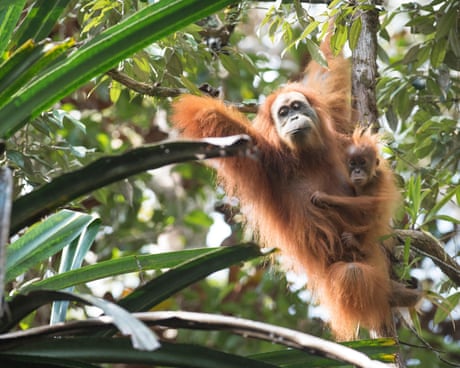
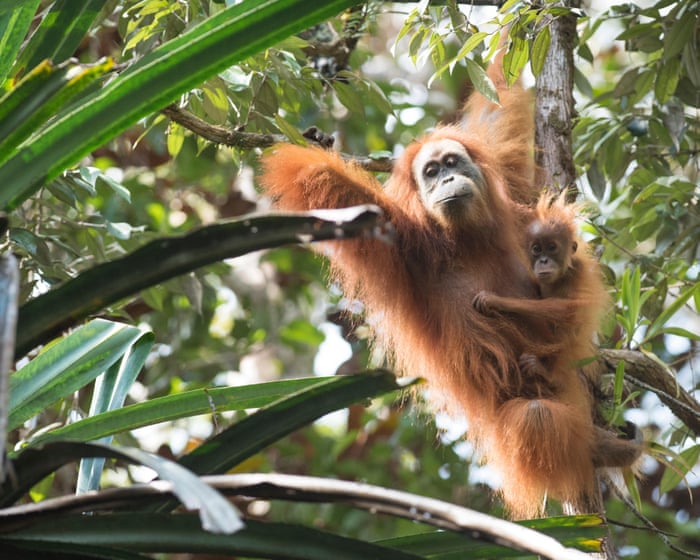
Four days of extreme rain in Indonesia killed 7% of world’s rarest great apes, study finds

Critically endangered Tapanuli orangutan population falls after heavy rain and landslides, fuelled by climate crisis, in North Sumatra

Extreme rainfall and landslides fuelled by the climate crisis killed 7% of the remaining population of the world’s rarest great ape, a study has found, prompting fears for the species’ survival.

The research suggests 58 out of the remaining 800 critically endangered Tapanuli orangutans (Pongo tapanuliensis) were killed after more than 1,000mm (39in) of rain fell over four days in Indonesia’s North Sumatra province in November 2025. This equates to 11% of the local population and 7% of the entire species.

Continue reading...

© Photograph: Nature Picture Library/Alamy

© Photograph: Nature Picture Library/Alamy

© Photograph: Nature Picture Library/Alamy

  •  

What haunts America’s animal shelter workers

an illustration of an animal shelter worker slumped over with her head in her arms. She’s facing a cat in a carrier and leaning against a wall of crates filled to capacity with cats and dogs

This story was originally published in The Highlight, Vox’s member-exclusive magazine. To get access to member-exclusive stories every month, become a Vox Member today.

For nearly a decade, Lauren served as the animal control manager for a county in North Georgia. It was a round-the-clock, always-on kind of job, in which she and her employees responded to animal cruelty and neglect cases, dog attacks, and animal escapes.

Saving animals was, and still is, Lauren’s passion in life. But some weeks, the cruelty and the stress of the job got to be too much. It came to a head in early 2024 when she showed up to a man’s house and found 27 hound dogs outside exposed to the freezing cold. 

Inside this story

  • I’ve written a lot about the problems with pet ownership in America: animal cruelty and neglect, puppy mills, inadequate veterinary care, animal boredom, prolonged captivity, and more. But one thing I hadn’t explored was the toll that America’s pet overpopulation crisis has on its frontline human workers: animal shelter staff.
  • They experience frequent trauma through their work responding to animal cruelty and neglect cases, performing euthanasia, and other countless stressors. To understand the issue, I pored through research dating back to the 1980s and spoke with many people who’ve worked in the field.
  • I was floored when I heard their stories. And given how large of a role pets play in the US, I was surprised at how little attention the issue has received so far. 

“It was one of the coldest nights, unseasonably, for the state of Georgia,” Lauren told me, and “these dogs are out there with no shelter.” The man was breeding the hounds to be used as hunting dogs, and her department had already told him to get them shelter, but he hadn’t complied. That left Lauren and her colleagues with two choices: let the dogs freeze to death or bring them into the county animal shelter, where they’d remain indefinitely during a cruelty investigation and court proceedings. They took the dogs.

But the shelter was already full, so she and her colleagues had to make a tough call; they euthanized dozens of animals there that day in order to make space for the 27 hounds.

“The shelter worker’s the one that’s got to stand over that body and decide, ‘Is today that animal’s day?’” Lauren said.

“And, I’m sorry, but some of that never leaves you; you carry it the rest of your life,” she said. (Lauren is a pseudonym. She requested anonymity to speak openly on sensitive issues because she’s still involved in Georgia’s animal welfare community.)

Just days later, she responded to a situation in which two dogs had attacked people and were then shot by the police — one dog died, while the other was rushed to a veterinarian’s office. Around this time, the county shelter was also dealing with a severe disease outbreak, and one of her employees got injured while trying to catch a loose animal. 

“How am I supposed to mentally and emotionally deal with all of that at one time?” she told me. Lauren quit a few months later, she said, because the compassion fatigue — the deep emotional and physical exhaustion that can result from intense caregiving — had become too much to handle.

This wasn’t Lauren’s first bout of compassion fatigue. She had worked at an animal shelter in the 1990s where, two to three times a week, she’d have to go into a room and euthanize dogs for hours at a time. 

Animal control and shelter workers, who often work hand-in-hand and share many of the same burdens, “get the trauma heaped on them daily that lasts most people a lifetime, and nobody inside or outside talks about it — it’s the dirty secret of [animal] sheltering,” Lauren told me.

Across the US, animal control officers and shelter staff are overworked and underpaid. Turnover is incredibly high, as many of them become burnt out from bearing the immense emotional and physical burden of the job. Collectively, these workers euthanize an average of over 1,600 dogs and cats each day, while responding to countless cruelty and neglect cases; rounding up millions of strays; routinely putting themselves in harm’s way; and dealing with indifferent, difficult, and even hostile pet owners. 

They are the frontline workers of America’s long-running and ever-evolving pet overpopulation crisis, currently fueled by a decline in spay and neuter rates, the rising costs of veterinary care, and a chronic lack of government funding. 

A pie graph titled “How nearly 6 million animals ended up in US shelters in 2025”

Then, there are the American consumers, many of whom prefer to buy dogs and cats from breeders, even as millions of animals in need of a good home languish in shelters, where they will be euthanized if they’re not quickly adopted. Last year in the US, almost 6 million pets went to animal shelters. Ten percent were euthanized.

“We live in a throwaway society, be it the animals or their TV,” Lauren told me. “People throw stuff away all the time, and somebody’s got to be there to clean it up.”

“You will not forget the dog’s name”

Animal sheltering, for all its challenges, has come a long way. To see how, just read this New York Times story from 1877, which describes how the city pound euthanized stray dogs by loading dozens at a time into an iron crate and lowering it into the East River for 10 minutes to drown them. 

At the time, large numbers of stray and semi-domestic animals roamed city streets and were generally considered a nuisance for barking, fighting, defecating, rooting through garbage, and biting people. But, in time, the pet overpopulation problem morphed from one of too many stray animals to too many pets

By the 1940s, the role of cats and dogs had largely shifted from “working” animals to companions, and advances in veterinary medicine, the growth of the suburbs, and the emergence of large-scale dog breeding operations led to the nation’s pet population doubling in the decade after World War II. But with a boom in the nation’s pet population inevitably came a boom in unwanted pets.

According to one estimate, animal shelters euthanized 13.5 million of these unwanted cats and dogs in 1973. That number had plummeted to 596,000 by 2025, even as the US pet population swelled. Researchers attribute much of this sea change in euthanasia rates to the rise of spay/neuter programs. In the 1970s, shelters and animal welfare groups worked with veterinarians to offer high-volume, low-cost spay/neuter clinics, and since the late 1990s, more than 30 US states have passed laws that require shelter pets to be spayed or neutered before adoption. The growth of animal rescue organizations that facilitate pet adoption has undoubtedly played a big role in reducing euthanasia numbers, too. 

This represents enormous progress. But as the situation has improved for animals, so, too, has our understanding of how gut-wrenching this field’s work can be for the humans who do it.

The pandemic pet adoption spree that wasn’t 

In 2020, stuck at home amid a global pandemic, people adopted pets in record numbers, leading to much emptier animal shelters. That narrative took hold in the news media, but as it turns out, it wasn’t true. Pet adoptions actually decreased in 2020, according to data from the nonprofit Shelter Animals Count. Many animal shelters were emptied, but that was because they took in fewer animals during the initial months of the pandemic, and many people volunteered to foster animals at home in order to temporarily get them out of shelters. 

In the late 1980s, researchers began to interview animal shelter employees about the toll that euthanasia and other parts of the job takes on their well-being. In the decades since, we’ve come to learn that performing euthanasia predicts poorer mental and physical health, including higher levels of work stress; lower levels of job satisfaction; and higher rates of anxiety, depression, and substance abuse than the general public.  

Some of the stress these employees feel is the result of what sociologist Arnold Arluke calls the “killing-caring” paradox, in which they routinely have to kill animals they’ve spent days, weeks, or months caring for and getting to know. 

“You will not forget the dog’s name, you will not forget the animal’s face,” Caitlan Frazier, director of Aransas County Animal Care Services in Texas, told me. She recounted to me the guilt she felt for having to euthanize a litter of newborn kittens, because there was nobody to provide the round-the-clock care they needed (she certainly couldn’t with two kids and nine animals of her own at home).

She told me a story about a dog named Bougie whose bites put her in the hospital for four days. Despite what he put her through, Frazier said, “I still feel guilty with that dog, because I feel like, if I would have given him more time [for training], maybe he wouldn’t have been put down.” 

But many shelter workers also expressed anger toward the people whose actions drive the pet and shelter overpopulation crisis: owners who acquire a pet when they’re not ready for the responsibility or who fail to spay/neuter or vaccinate their animals when it’s available, as well as those who casually breed dogs and cats and then dump the ones they can’t sell onto shelters.

“It’s draining, heartbreaking, and maddening, especially when the animal is young and healthy and you’re euthanizing for space,” Bailey Smith, who works at the Humane Society of Young County in North Texas, told me over email. “I still cry sometimes.” (I should note that every shelter worker I spoke with also considers euthanasia the greatest gift they can give to animals who are severely injured or diseased or are too aggressive to be adopted.)

Other problems also increase animal control and shelter workers’ stress: bearing frequent witness to animal cruelty and neglect, physical injuries inflicted by the very animals they’re caring for, and the always-on-call nature of the job. 

Keane Menefee understands the strains of the job well. He joined the animal control department in Fort Worth, Texas, in 1997 and worked there until 2010, when he quit due to compassion fatigue. The euthanasia work took its toll, but so did the long hours and the horrors he saw in the field, including a girl who had been mauled to death by a dog. He told me stories of night terrors and attempted suicide.  

A man stands in front of a classroom talking. You can see the backs of two students’ heads.

The job puts “wear and tear on you on every level of your being,” Menefee told me. He now teaches courses for animal control officers, including one on compassion fatigue. 

Another challenge of the job is dealing with members of the public who get angry at animal shelters and their employees about essential parts of their work, including euthanasia.

In 2008, The Oprah Winfrey Show aired an episode about puppy mills, and Menefee went on to talk about the high euthanasia rate at his shelter — a rate that was so substantial, in part, because of puppy mills churning out a large volume of dogs. 

“I wasn’t ready for what was to happen,” Menefee told me. Within hours, he received over 3,000 emails, and virtually all of them were hateful. Some included death threats, with people going so far as to tell them they knew his home address and the school his children attended. 

“I understand the sensitivity” to euthanasia, Menefee told me. “But this is not the animal control’s fault, this is not the shelter worker’s fault.” Many people, he said, just don’t understand how these industries and laws work to create the conditions that make euthanizing perfectly adoptable animals a necessary part of the job. 

What animal shelter workers want you to know 

When I asked people in the animal control and shelter community what’s most needed to bring down pet overpopulation and make their work sustainable, the answer, invariably, came down to money.

Animal control departments are run by city or county governments, and the vast majority of animal shelters are either government-run or -funded. And they work together to manage their region’s pet overpopulation challenges. One thing they all have in common is that they’re all operating on shoestring budgets (as are the privately run shelters, operated by nonprofits), so there’s never enough staff or space to meet the needs of the animals in their communities. But, ultimately, many of the people I spoke with say a lot of the money should go directly to providing pet owners with low-cost spay and neuter, which has been in shorter supply in recent years

“Spay/neuter — it’s not sexy, it’s expensive, it’s constant, but it truly is the number one way to curb our [pet] overpopulation crisis,” Shelby Bobosky, who formerly served as executive director of the Texas Humane Legislation Network and now teaches animal law at Southern Methodist University, told me. “Overpopulation is a simple math problem.” 

A veterinarian is operating a spay/neuter surgery on a dog on a table. Behind her there are six small kennels with other dogs awaiting surgery.

Bobosky also wants to see policymakers crack down on puppy mills, strengthen animal cruelty laws, mandate spay/neuter procedures, and restrict the sale of animals at pet stores

Smith, of the Humane Society of Young County in North Texas, told me more pet-friendly housing and low-cost veterinary care are also critical. About one out of five animals surrendered to shelters are given up because their owner could no longer afford them or couldn’t find accommodating housing.

But Smith also wants to see more responsible, thoughtful pet ownership. “People need to think before bringing a pet home,” Smith told me. “Are they ready for the commitment?” 

The costs can add up quickly: food, spay/neuter, vaccination, training, insurance, and veterinary care — not to mention time giving their animals plenty of daily exercise and attention. While a lot of pets are given up due to affordability issues, a lot are given up for less black-and-white reasons, like their owner simply had too many animals, or they didn’t want to deal with a (non-aggressive) behavioral issue. 

Beyond more responsible acquisition and caretaking, the public can help by fostering animals at home and volunteering to walk shelter dogs. 

“An animal starts mentally deteriorating in a shelter within three weeks of being there,” Frazier said. “If you don’t have that extra enrichment or those volunteers or people coming and doing things with these animals…those animals mentally deteriorate so fast that they can’t even be adopted anymore.”

As for the well-being of the animal control and shelter staff, many told me that just talking about the challenges of the job helps. “I’ve had compassion fatigue three times in the last eight years,” Frazier told me. And if it weren’t for talking with her peers and co-workers, she said, “I don’t know if I’d still be in this job.”

How you can help end pet overpopulation

  • Foster: Fostering an animal at your home for a few days or weeks helps everyone. It gives the cat or dog time out of the shelter, ensures they’re not euthanized before someone’s ready to adopt them, and makes space for another animal. To get started, reach out to a rescue organization or shelter in your area. 
  • Volunteer: If you take a dog for a walk or play with a cat at your local shelter, it’ll probably be the highlight of their day. If that’s not your thing, animal shelters need help in other ways, too, like cleaning and helping at adoption events. 
  • Donate: Animal shelters and rescue organizations need your financial support. You can also give to a low-cost spay and neuter program in your area (which you can search online) or to Good Fix or Fix the Future.
  • Adopt: If you’re looking to commit to a long-term furry friend, be sure to adopt instead of shop. Get started with PetFinder.

Of the numerous training courses Menefee offers, his one on euthanasia and compassion fatigue gets the most repeat attendees. In the course, he’s direct and open about the mental health struggles he’s endured while working in animal welfare because “it’s not said enough in this industry.” He wants people to know they’re not alone, that they’re not weak, that they can handle the job, but also that there are warning signs to watch out for and things people can do to protect themselves.

But as hard as the job is, many people I spoke with also told me how much meaning it gives their life and about the powerful bonds they have formed with others in the trenches. 

“One of the things I love about this industry is just how close-knit the people who work in it are,” Menefee said. “When these individuals get together, they see that we’re all facing the same challenges and they start telling their stories and they…get some comfort in knowing ‘I’m not alone and I’m not the only one.’”

Our relationship with dogs, cats, and other animals kept as pets is often portrayed as joyful and uncomplicated: They love us unconditionally, and, in return, we promise to provide the best care we can for them. There’s some truth to that, but spend just a moment looking under the surface of this story, and you’ll find a darker side to it: millions of people making millions of choices, many of which put unlucky animals through hell and put the people tasked with caring for them into impossible situations. 

We need a more honest and nuanced story to explain our relationship with pets, and we can start by listening to the ones America’s animal shelter workers have to tell. 

  •  

Meat companies keep promising to do better. They almost never do.

a dense spread of various dead fish at a seafood market sit below the grid of a camera’s composition guide
This is a familiar pattern to animal protection groups: They investigate a farm or meat producer, the company apologizes and promises to change, yet follow-up investigations reveal continued abuse and terrible living conditions. | Paige Vickers/Vox; Getty Images

Key takeaways

  • In 2019, Animal Outlook — an animal protection nonprofit — exposed cruelty at a salmon hatchery in Maine. The company apologized and committed to reforms.
  • But in 2025, Animal Outlook re-investigated and documented similar behavior and welfare problems.
  • This is a familiar pattern: Nonprofits investigate, the company apologizes and promises to change, yet follow-up investigations reveal continued abuse.

In 2019, Erin Wing worked for nearly three months at a salmon hatchery in Maine that’s owned and operated by Cooke Aquaculture, the world’s largest privately held seafood company. As a hatchery technician, she helped to raise millions of delicate salmon eggs into salmon juveniles. From there, they were transported to Cooke’s fish farms off the coast of Maine, where they were fattened up to be slaughtered and sold under the brand name True North Seafood at grocery stores across the Northeastern US.

But Wing had a secret: She was there undercover, wearing a hidden camera on behalf of the animal protection nonprofit Animal Outlook. During her time at Cooke’s hatchery, she documented:

  • Workers culling diseased fish by repeatedly striking them against the sides of tanks and stomping on their heads
  • Live fish left in buckets to suffocate or be crushed to death by other fish
  • Fish overcrowded into tanks, some of them born with spinal deformities or dying from painful fungal diseases that ate at their faces

Shortly after Animal Outlook released a video of the investigation, Cooke Aquaculture CEO Glenn Cooke apologized. 

“As a family company, we place animal welfare high in our operating standards and endeavor to raise our animals with optimal care and consideration of best practice,” he wrote in a statement. “I am very sorry that this has happened.”

Maine’s department of agriculture investigated the hatchery but didn’t file any charges because Cooke had committed to retraining its employees and updating its facility management plan, among other measures. 

But it appears that its promised reforms didn’t stick. In 2025, Animal Outlook sent a second investigator into the same hatchery and recently released a second exposé, this time finding similar behavior and welfare issues. 

To Animal Outlook, it didn’t come as a surprise. 

“I would’ve been more surprised had we seen the conditions improved demonstrably for these animals,” Ben Williamson, executive director of Animal Outlook, told me. “We know that fundamentally crowding this many animals in these kinds of tanks is going to lead to welfare problems. Treating these animals as commodities is going to lead to cruelty.”

That cynicism is the product of hard-won experience. Animal protection groups have conducted nearly 200 investigations into US farms raising chickens, pigs, cows, turkeys, and fish, gathering a staggering amount of evidence on standard, yet inhumane, practices and living conditions and often documenting malicious cruelty along the way. 

In some instances, investigations have led to companies making substantive changes, such as phasing out small cages for pigs and chickens. But like with Cooke Aquaculture, most farms and companies promise to make reforms after they’ve been exposed, only for follow-up investigations to reveal continued abuse and miserable living conditions. This pattern highlights the limitations of such investigations, which have proven essential to building our understanding of conditions on factory farms but insufficient to significantly improve them. 

Though, they reveal that, for much of the livestock industry, cruelty is the norm. What that means is that, in the absence of government oversight and federal animal welfare laws for farms, there’s little reason for consumers to take meat companies at their word when they promise to do better. 

What happened when an investigator returned to Cooke’s fish hatchery 7 years later

Animal Outlook’s second investigator worked at Cooke’s Maine hatchery in late 2025 (the investigator isn’t named due to the covert nature of their work). Like Wing, the second investigator documented numerous severe welfare issues, including workers:

  • Culling fish by repeatedly beating them with metal rods on more than a dozen occasions, despite the availability of stunning equipment on-site (hitting fish like this is a common method to stun them, but it should be done in such a way that rapidly renders them unconscious)
  • Leaving some bludgeoned fish to thrash on the ground out of water for as long as 90 seconds to suffocate, and two instances of employees dropping live fish into buckets to suffocate 
  • Shooting and bleeding out fish that were not fully anesthetized, causing “some of the worst suffering documented at the facility,” according to the organization

In one scene, a worker is shown cutting into a fish while the fish’s heart is still beating.

All told, Animal Outlook documented 133 instances of what appeared to be improper killing, throwing, and rough handling, along with fungal and bacterial infections (which indicate poor water quality), deformities, overcrowding, and other animal welfare problems. 

“It looks to me like they have a systemic welfare issue at this farm,” Culum Brown, a professor and prominent researcher on fish welfare at Macquarie University in Australia, told Vox over email. 

There were also multiple unexplained mass fish mortalities of hundreds or even tens of thousands of fish dying.

Cooke Aquaculture did not respond to an interview request for this story and declined to respond to detailed questions about the investigation. “Cooke USA takes animal welfare very seriously,” a spokesperson wrote in a statement to Vox in which the company acknowledged the hidden camera investigation and said it’s reviewing the footage. “Appropriate disciplinary measures will be taken with respect to employees who have not followed company policy.”

The company is certified by Best Aquaculture Practices, a program that promises “safe, responsible and ethical farm-raised seafood.” Best Aquaculture Practices declined an interview request for this story and said an investigation into Cooke Aquaculture is currently underway.

The advocacy group Aquatic Life Institute rates Best Aquaculture Practices as having the lowest animal welfare standards among nine aquaculture certification programs it reviews because of how it compares to other certifiers on key issues, such as overcrowding, environmental enrichment, transport, and stunning and slaughtering. Best Aquaculture Practices, which is among the largest of the nine, said in an emailed statement to Vox that it is “actively engaged with ALI [Aquatic Life Institute] and has integrated several of their recommendations.” 

The Maine Department of Agriculture, Conservation and Forestry confirmed to Vox that it is conducting an animal welfare investigation in response to Animal Outlook’s investigation.

Animal Outlook also documented problems that went beyond animal welfare at the hatchery. 

When farmed salmon escape into rivers and streams, they compete with wild salmon for resources. They also mate with them, contributing to what researchers call “genetic pollution,” which has created a hybrid breed of salmon that can have lower survivability rates. 

In the investigation video, a worker said that the company had failed to follow one of its escape prevention protocols of putting a screen on the waste discharge pipes, from which fish can escape, that release into the Kennebec River. “They have screens that are supposed to be down,” a worker said, “but there’s so much shit in there that… we pretty much just keep them up all the time.”

This alarmed Neville Crabbe of the conservation nonprofit Atlantic Salmon Federation, because the Kennebec River is home to endangered Atlantic salmon and the site of a $300 million project to restore their populations.

“The escape of farmed fish…is a significant contributor to population collapse and loss,” for wild Atlantic salmon, Crabbe told me, and “Cooke is basically intentionally allowing” their release. 

Some employees also suggested that a general culture of callousness pervades the company. “Unfortunately, I don’t think the company is in it for the fish health side, they just want fish production,” a manager told the Animal Outlook investigator. “Kinda why our vet[erinarian] left too.” Speaking about the veterinarian, one employee said “they just disregard her shit all the time.”

In one part of the investigation, a manager who Animal Outlook alleges worked at the hatchery in 2019 when Wing investigated it and was still employed there in 2025 said of Wing: “I hunted her down and I found her on Instagram… I was gonna send like a horse tongue or something to her mail… I was gonna send like a deer tongue or something, or like some brains. Cause she’s like an animal activist… Bitch.”

I asked Wing what she felt when she heard this recording. She expressed concern for her family’s safety and also that she believes this shows how those at the company are “not sorry that they did what they did — they’re sorry that they got caught.” But she also expressed empathy for the employees who have little control over how the company operates. 

Why we can’t take animal agriculture companies at their word

The juxtaposition between the CEO of Cooke Aquaculture’s heartfelt apology in 2019 and the grisly findings of Animal Outlook’s follow-up investigation is unsettling, but it isn’t unique. It’s a pattern that animal protection groups have witnessed for decades: They investigate farms that supply meat, milk, and egg companies and find that some employees maliciously abuse animals. The farm or company apologizes and promises to change, sometimes firing a handful of workers. Then, the advocacy organization investigates another of the company’s supplier farms, only to find the same problems. 

This includes many of the largest animal protein companies, such as Foster Farms (six investigations), Butterball (four investigations), Cal-Maine (two investigations), Smithfield Foods (around nine investigations), Tyson Foods (10 investigations), and Fairlife (around five investigations, though Fairlife has denied sourcing from some of the investigated farms).

The companies’ initial responses often give the illusion that justice has been served — that the bad employees will be punished and the bad farm will be improved. The responses lead many consumers and regulators to believe that these are cases of rogue actors rather than a fundamentally cruel system.

But that system is cruel, as its many relapses and false pieties reveal. And while instances of malicious abuse are hard to stomach, standard practices and conditions on farms — including intensive breeding, overcrowding, and pervasive disease — cause even more suffering than the occasional beatings caught on camera.

The companies that make up this system have an unbelievably immense responsibility: the welfare of billions upon billions of animals. And yet, they are accountable to no one. Undercover investigations make this reality plain to see. Maine officials didn’t hold Cooke accountable after the first investigation. Lawmakers didn’t pass new animal welfare standards. Regulators didn’t commit to meaningful oversight. 

Meat, dairy, and egg companies reveal who they are when they think no one’s watching, and we should listen. Everything else — the statements, the apologies, the promises to reform — is just noise. 

  •  

Should you feel guilty for killing the bugs in your house?

A person with an upset expression is about to kill a bug with a shoe.

Your Mileage May Vary is an advice column offering you a unique framework for thinking through your moral dilemmas. It’s based on value pluralism — the idea that each of us has multiple values that are equally valid but that often conflict with each other. To submit a question, fill out this anonymous form. Here’s this week’s question from a reader, condensed and edited for clarity:

Spring is here, which means the pests are back. My parents’ house has an ant problem. I found weevils in my pantry, and I know people with wasp infestations in their places. Tick season has begun, and last year’s bedbug scare was legitimately traumatic. I don’t like killing insects, but if they’re in my space uninvited and I can’t just take them outside and easily prevent them from coming back, I’ll do it.

But I do feel bad about doing it, even sparingly. I think it’s plausible that insects feel pain, so I try to make it quick, yet I’m still making the choice to kill them and it’s not one I’m proud of. I think that pests, like all living things, have some moral weight — but there’s not room enough for the two of us. Is it bad to kill them? Is there a more ethical way to approach this?

Dear Bugging Out,

I love that you’re sensitive to the potential suffering of Earth’s teeny-tiny, creepy-crawly creatures. I hope you never lose that. But I do hope you lose the guilt you’re feeling.

You’re right to think it’s plausible that insects feel pain. We don’t know for sure yet, but in recent years, scientists have been accumulating evidence that suggests at least some insects possess sentience — the capacity to have conscious experiences that are valenced, meaning they feel bad (pain) or good (pleasure). 

Bees, for example, appear to play — just for fun. They also actively seek out mind-altering drugs like nicotine and caffeine, which suggests there may be a mind there to alter. Plus, bees seem to experience pain consciously, not merely flinch from it by reflex. In a 2022 study, bees approached a sugary snack even though it meant facing uncomfortable heat, weighing costs against benefits in what scientists call a “motivational trade-off.” A pure automaton couldn’t do that; it would flee heat in every situation. The capacity to weigh competing drives is one of the markers of sentience.

Meanwhile, fruit flies have shown signs of anhedonia — the loss of interest in previously pleasurable things (like food) that we know as a symptom of depression in humans. Treat the flies with a human antidepressant and it’ll suppress the depression-like state in the insects, too. 

Have a question you want me to answer in the next Your Mileage May Vary column?

Just fill out this anonymous form! Newsletter subscribers will get my column before anyone else does, and their questions will be prioritized for future editions. Sign up here.

One of my colleagues confessed to me recently that evidence like this makes her feel super guilty: When she goes around killing these insects in her kitchen, she asks herself whether she’s “a fruit-fly Nazi.”

But the key thing to realize is this: Bugs may have some kind of sentience, and sentience may confer some moral status, but that doesn’t mean that provides the last word on how we should act toward them. 

Just because another creature might have moral weight, that doesn’t necessarily tell you how to treat that creature when its welfare conflicts with the welfare of a creature you know has moral weight: you.  

So, how can you know if or when it’s okay to kill a bug? 

I think the most compelling response comes from Elizabeth Anderson, a contemporary philosopher who subscribes to the school of thought known as pragmatism, which sees moral truths as socially embedded and historically contingent, not fixed and objective.

Anderson points out that for most of human history, we couldn’t have survived and thrived without killing or exploiting animals for food, transportation, and their energy. The social conditions for granting animals moral rights didn’t really exist on a mass scale until recently (although some non-Western societies have long ascribed moral worth to animals).

“The possibility of moralizing our relations to animals,” she writes, “has come to us only lately, and even then not to us all, and not with respect to all animal species.”

Anderson has noted that we feel different levels of moral obligation to different species, and that has to do not only with their intrinsic capacities like intelligence or sentience, but also with their relationships to us. It matters whether we’ve made them dependent on us by domesticating them, or whether they live in the wild. It also matters whether they’re fundamentally hostile to us.

Thinking about pests is a great (if gross) way to bring this point home. If you find bedbugs in your house, nobody expects you to say, “Well, they’re maybe sentient and definitely alive, so they have moral value. I’ll just live and let live!” It is absolutely expected that you will exterminate the shit out of them.

Why? Because with pests, Anderson writes, “there is no possibility of communication, much less compromise. We are in a permanent state of war with them, without possibility of negotiating for peace…Indeed, we have an obligation to our fellow members of society (whether human or animal) to drive them out, whenever this is necessary to protect ourselves.”

Anderson’s point is not that sentience doesn’t matter. It’s that lots of other things matter, too, including our own ability to thrive.

Embracing this value pluralism makes things tricky. It suggests that the best we can do is look at creatures’ intelligence and sentience and relationships to us as clues about how we should negotiate life with (or without) them. But it doesn’t tell us how to weigh those clues — and what to do when they conflict with the interests of other animals, including us.

“There’s no simple formula,” Anderson once told me. “I think that’s a hopeless quest.”

That is, for my money, the most intellectually honest position. The absence of a fixed formula doesn’t mean you should exist in a state of guilty indecision or paralysis. Instead, the best thing you can do is have the integrity to recognize that sometimes life presents you with trade-offs where you have to make a choice. And when it comes to insects, you’re making that choice from a position of considerable power. 

This is the conclusion Robin Wall Kimmerer reaches in her book Braiding Sweetgrass: Indigenous Wisdom, Scientific Knowledge, and the Teachings of Plants. The scientist describes how she had an algae-filled pond in her yard that she wanted to clear out so her daughters could swim in it. As a member of the Citizen Potawatomi Nation, though, she believes that all life has moral worth. So as she raked out the muck and found that it was full of tadpoles, she plucked them all out so they could go on living. Then she inspected the pond water under her microscope and saw a ton of teensy organisms, each one a moral dilemma. She writes:

As I raked and plucked, it challenged my conviction that all lives are valuable, protozoan or not. As a theoretical matter, I hold this to be true, but on a practical level it gets murky, the spiritual and the pragmatic bumping heads. With every rake I knew that I was prioritizing. Short, single-cell lives were ended because I wanted a clear pond. I’m bigger, I have a rake, so I win. That’s not a worldview I readily endorse.

But it didn’t keep me awake at night, or halt my efforts; I simply acknowledged the choices I was making. The best I could do was to be respectful and not let the small lives go to waste. I plucked out whatever wee beasties I could and the rest went into the compost pile, to start the cycle again as soil.

In a way, it’s an unsatisfying solution — a lot of us would probably sleep easier if nature came inscribed with clear bright lines and moral instructions. But there you have it. Like Kimmerer, I think you should practice a kind of harm reduction. To the extent that you can “live and let live” with insects, that’s ideal. Try to minimize how many you kill. But when you do make the choice to kill them, try to do it in a way that reduces the risk of suffering (think: quick and painless crushing rather than long and drawn-out poisoning).

That’s not only for the bug’s benefit, but for yours, too. Harming any animal can harm our character if we do it mindlessly or callously, because it desensitizes us to life. But when we let ourselves be touched by life, we can maintain our reverence for it. The reverence — not the guilt — is the thing you want to hold onto. 

Bonus: What I’m reading

  • This piece on “What It’s Like To Be a Worm” taught me that Darwin was obsessed with…worm sentience! He even argued that earthworms are capable of motivational trade-offs: “Their sexual passion is strong enough to overcome for a time their dread of light…and we have seen that when their attention is engaged, they neglect impressions to which they would otherwise have attended; and attention indicates the presence of a mind of some kind.”
  • This Aeon essay about the history of eugenics is absolutely fascinating. It reveals that some disabled people actually supported eugenics in the 1930s, seeking out sterilization for themselves. I think internalized ableist logic had a whole lot to do with this.
  • I loved psychologist David DeSteno’s recent piece, “Anthropic Wants Claude to Be Moral. Is Religion Really the Answer?” If you ask me, we keep making the Enlightenment-era mistake of thinking morality is primarily undergirded by rationality. But if it’s undergirded by emotion, it’s a fundamentally embodied human pursuit and the desire to mathematize it is itself irrational.

This story was originally published in The Highlight, Vox’s member-exclusive magazine. To get access to member-exclusive stories every month, become a Vox Member today.

  •  

The paradox at the heart of American meat consumption

an illustration of a pig next to assorted raw, prepared meats

Key takeaways

  • Many people live with an uncomfortable contradiction: They like animals and don’t want to see them harmed, yet they also enjoy eating meat, milk, and eggs. 
  • Psychology researchers call this the “meat paradox, ” and have found that people deploy a range of creative strategies to try to resolve the uncomfortable cognitive dissonance it causes. 
  • The meat paradox has made it incredibly difficult to make progress on the factory farming problem, which harms hundreds of billions of animals around the globe each year.
  • But some research-backed interventions to disarm the meat paradox seem promising. 

Of all the hot-button social issues in America, there’s one that often flies under the radar but can unleash a torrent of strong feelings — swirling with apparent contradictions — when it surfaces: meat. 

Case in point: Last month, the popstar Billie Eilish argued that you can’t say you love animals and eat them. Her comments made sense, though they set off a heated, weeks-long debate among X and Instagram users, who responded with a flood of strange justifications for eating meat, despite the terrible treatment of farmed animals

The spat vividly illustrated a psychological phenomenon called the “meat paradox”: the cognitive dissonance and deep discomfort people feel when their behavior of eating meat and other animal products clashes with their fondness for animals.

This paradox has proved an exceedingly difficult hurdle to overcome in encouraging people to change how they eat — and even for having productive conversations about meat without things quickly getting heated (as they did for Eilish). But some research also suggests there are ways out of the meat paradox, which could help relieve the psychological strain for people, as well as the suffering of animals in factory farms. 

How we really feel about eating animals: It’s complicated

Two recent polls reveal just how confusing American attitudes about animal products are.    

The first of those polls asked close to 1,000 US adults for their views on several near-universal practices in animal farming, including stunning pigs unconscious in Co2 gas chambers before slaughter, grinding up newborn male chicks, separating calves on dairy farms from their mothers, and searing off the ends of hens’ beaks without pain relief. 

The vast majority of respondents to this survey, which was conducted by the animal welfare research group Faunalytics, consider these practices “somewhat unacceptable” or “very unacceptable.” 

A bar chart showing that “Americans are overwhelmingly opposed to standard animal farming practices”

A separate poll of more than 12,000 US adults, conducted by the Pew Research Center, asked respondents about whether they find a range of behaviors immoral. Those issues covered adultery, gambling, having an abortion, and eating meat. More than almost any other issue in the survey, respondents considered eating meat “not a moral issue.” It ranked as close to the most “morally acceptable” behavior offered, on par with using IVF.

A bar chart showing that “Most Americans disapprove of standard meat industry practices, yet find eating meat morally acceptable or not a moral issue”

These numbers seem to show just how deep in the meat paradox we are. And that doesn’t surprise Hank Rothgerber one bit. He’s a professor at Bellarmine University who studies the psychology of meat consumption. Rothgerber and other psychologists have conducted dozens of studies that have uncovered the cognitive dissonance people feel when confronted with the fact that their behavior — like eating meat — clashes with their beliefs, such as that animals shouldn’t be harmed.

One possible explanation for this disconnect, he told me, is simple ignorance.  

Most people, it seems, truly don’t know that the cruel practices asked about in these surveys are quite standard on US factory farms — and that nearly all animal products come from factory farms. And so, when people are asked if eating meat is morally wrong, “what’s being done to the animals is not coming to their mind,” Rothgerber said. 

A bar chart showing that “Nearly all animals raised for food in the US are raised on factory farms”

But chalking it up to mere ignorance suggests that “if you just inform people, enlighten them, then everything will be okay, right?” he said. Not quite. “I think the deeper issue with it is that the ignorance is motivated — basically, willful ignorance. People don’t want to know.” 

Rothgerber and other psychology researchers consider willful ignorance, or avoidance, a strategy some people deploy to resolve their feelings of cognitive dissonance.

In a 2017 study, one-third of respondents chose to look at a blank screen instead of a picture showing pregnant pigs housed in tiny crates (a pervasive practice in factory farming), with some participants explaining their choice as wanting to avoid feelings of guilt. In another study, some people said that learning about pig farming could contradict their views on animal welfare or force them to change their meat consumption.

There are several other strategies people use to alleviate the discomfort of living with the meat paradox. One is lowering the moral status of animals. In a clever 2010 study, participants were randomly given either cashews or beef jerky to snack on while filling out a short questionnaire about what they thought of the snacks. Then, the researchers asked a number of follow-up questions, including how much moral consideration cows deserve.

Participants who had been randomly assigned to eat the beef jerky, “viewed the cow as significantly less deserving of moral concern” and with a lower capacity to suffer than did participants who ate the cashews, the researchers reported. This experiment suggested that rather than people’s thoughts and values driving their actions, it might often be reversed.

Researchers have also found that some people work to dissociate meat from its animal origins, or actively try not to think of animals when eating meat. Others try to neutralize their discomfort via ideas that either avoid the problem of animal suffering or absolve them of their complicity, for example, asserting that eating meat is their right, that they only eat free-range meat, or that they hardly eat any meat at all.

The meat paradox puts animal advocates in an extremely difficult position. No one seems to like the cruelty involved in meat, milk, and egg production, yet they like what it produces: cheap animal products. A lot of people feel guilty about what it takes to produce those items, but respond with defensiveness, evasion, or arguments that don’t stand up to scrutiny when asked to consider not consuming them.

This has led some academics to consider the problem of factory farming and animal welfare a “wicked problem,” what’s been defined as “a complex, multifaceted issue that lacks a single, definitive solution due to the interconnectedness of its components.” Other such wicked problems include climate change, economic inequality, and global health. And many, many tactics to reduce global meat consumption have failed to move the needle. But a few, backed by new research and results, could work.

How to escape the meat paradox

One way to address the meat paradox is to accept its durability and try to work around it by changing conditions on farms, rather than trying to persuade people to eat less meat. 

A number of chickens in a metal wire cage

For example, a lot of anti-factory farming activists work to make meat and eggs less cruel by lobbying for corporations and governments to ban the very worst farming practices. This has proven quite effective. For example, almost half of the US egg supply now comes from cage-free farms as a result of a number of state laws and corporate animal welfare policies.

Such bans don’t result in humane conditions, but they’re certainly an improvement. And the fact that most people support these measures when they can vote on them shows how we’re much more open to changes in animal welfare when we’re acting as voters instead of consumers.

This approach has its limits, though, because there are dozens of cruel practices to potentially ban in meat, milk, and egg production, and the companies that make up these industries lobby aggressively against such measures, making them difficult to change.  

But outside of avoiding the meat paradox altogether, there are two promising approaches to helping people change their behaviors and are far less likely to cause them to put up defenses. The first involves changing people’s food environments, such as making plant-based meals the default main dish at university and hospital cafeterias (as opposed to merely an option off to the side), making plant-based milk the default milk at coffee shops (so you have to request cow’s milk if you want it), or working to make plant-based meat and milk products taste better and cost less

A grocery store shelf filled with plant-based meat products.

Some research suggests that gently confronting people about animal welfare as they decide what to eat can also be effective. For example, a 2022 study conducted at a Dutch zoo’s cafeteria found that posting the question “Do you consider animal welfare to be important?” above a veggie burger menu item doubled its sales.

In a new study conducted at a university cafeteria in the UK, researchers put a photo of an animal next to a menu item that used their meat — pigs, chickens, fish, and cows — and the odds of diners instead choosing a vegetarian meal increased. 

“Linking meat to its animal source can produce measurable behavioral changes,” the researchers wrote. In other words, this short circuits the meat paradox by making it all but impossible to dissociate meat from animals. Small nudges like this may seem to produce small results. The group that was exposed to menus with pictures of animals ate 3.2 percent less meat. A modest effect, but scaled up by cafeteria directors and restaurant owners across the globe, that one change alone could prevent billions of animals from being factory-farmed for meat. 

The second approach involves deeply engaging with people on the issue. Three interventions that have proven effective in getting people to reduce their meat consumption, at least in the short term, include watching a segment from the animal rights documentary Dominion, wearing a VR headset that puts people inside a pig factory farm, and taking a course on the ethics of eating meat. But such involved interventions would be difficult to roll out on a mass scale. 

Many animal advocates have also written about how to better approach these charged issues so as to have more productive and healthy conversations. One of them is Björn Ólafsson, who recently wrote about the Billie Eilish dustup and included a counterintuitive recommendation: When all else fails, change what you’re asking of people. For example, instead of trying to persuade someone to eat less meat who really doesn’t want to, that person could help instead by making a donation to the very underfunded anti-factory farming movement. 

It’ll take a lot more clever interventions and tactics like these — and people willing to implement them — as well as more robust government and corporate policies to make factory farming a thing of the past. But, along the way, more of us might find our way out of the uncomfortable meat paradox — for good. 

  •  

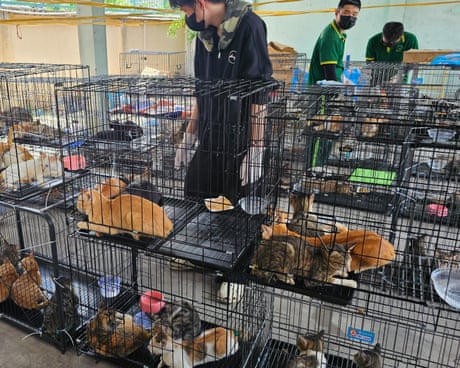
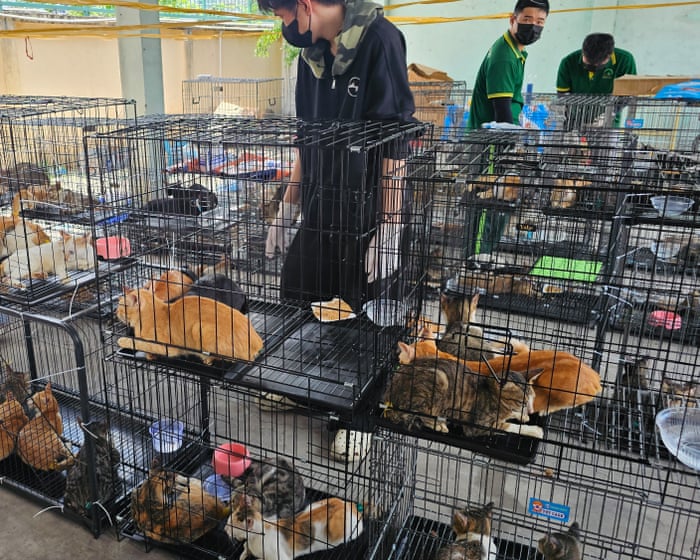
Vietnam police rescue hundreds of cats stolen for meat by crime ring

Major operation launched after spate of pet thefts in Ho Chi Minh City, according to local media

Police in Vietnam have rescued more than 400 cats in a bust of a cat meat crime ring in Ho Chi Minh City, according to animal welfare groups and local media reports.

More than 40 cats were reunited with their owners after the multiday operation last week, but several dozen of those rescued have died due to the harsh conditions in which they were found, the groups said.

Continue reading...

© Photograph: Phuong Pham/Humane World for Animals Viet Nam/AP

© Photograph: Phuong Pham/Humane World for Animals Viet Nam/AP

© Photograph: Phuong Pham/Humane World for Animals Viet Nam/AP

  •  
❌