Reading view

AI helps speed up newsrooms but cannot match journalists’ field experience, expert says

Malay Mail

KOTA BHARU, June 5 — Mastering artificial intelligence (AI) in newsrooms is no longer seen as an option but a critical necessity in navigating an increasingly challenging and competitive media landscape.

As digital transformation accelerates, failure by media organisations to integrate AI technology into their operations may undermine efficiency and productivity, while increasing the risk of falling behind in an increasingly competitive environment to remain relevant to audience needs.

However, despite the benefits of the technology in speeding up news production, concerns have emerged over excessive reliance on AI and digital sources, which are feared to erode core journalistic values, including on-the-ground reporting, long regarded as central to quality journalism.

These concerns stem from ongoing debates about a growing tendency in some reporting to rely heavily on social media or online sources, with information then processed using AI without direct verification at the scene.

According to Senior Lecturer at the Faculty of Modern Languages and Communication, Universiti Putra Malaysia (UPM), Dr Syed Agil Shekh Alsagoff, AI can be an effective tool in boosting newsroom productivity; however, it cannot replace the experience and editorial judgement of journalists in the field.

He said the strength of journalism in producing high-impact reporting continues to lie in journalists seeing situations first-hand, engaging with communities, and verifying information through multiple sources before publication.

“If journalists become too reliant on AI and digital sources, the culture of field reporting could gradually diminish. Yet being on the ground remains essential to understanding the real context of an issue and obtaining a more accurate picture,” he told Bernama.

He said field reporting not only gives journalists valuable experience but also helps produce more comprehensive stories with stronger narratives based on first-hand observation at the scene.

He explained that this is different from reporting that relies too heavily on AI and social media, which risks making news feel ‘flat’, as technology can only process data without truly understanding the emotions and sensitivities of communities.

“Being at the scene allows journalists to better understand the emotions, atmosphere and reality of what is happening, in a way that technology cannot fully capture. For example, during a disaster, reporters on the ground can convey the news narrative more effectively.

“While AI and social media can help produce reports quickly, they cannot replace journalists witnessing first-hand the suffering of victims, the fear during conflicts, and the grief of families who have lost loved ones,” he said.

He stressed that journalism is not just about reporting facts but also about understanding the pulse of human experience and societal realities, while requiring ethical reporting grounded in a strong presence in the field.

At the same time, he did not dismiss the benefits of AI, which can be used wisely, particularly in research, data analysis and multimedia content production, stressing that it must be balanced with core journalistic values.

“AI is a useful tool, but journalists still need to be on the ground to see, hear and understand issues for themselves. Without that, reports may be produced quickly, but they risk losing their human touch and humanity,” he said.

As such, he said the National Journalists’ Day (Hawana) 2026 celebration on June 20 should be used as a platform to strengthen the balance between technological advancement and human values in journalism to ensure the media industry remains relevant and trusted by the public.

Carrying the theme ‘Media Integrity Strengthens Credibility’, the culmination of this year’s Hawana celebration will be held at the PICCA @ Arena Butterworth Convention Centre in Penang and will be officiated by Prime Minister Datuk Seri Anwar Ibrahim.

Organised by the Ministry of Communications, with the Malaysian National News Agency (Bernama) as the implementing agency, Hawana serves as a platform to recognise the contributions, dedication and professionalism of media practitioners in Malaysia. — Bernama
 

  •  

Johor MB calls on Putrajaya to fast-track JB’s rapid transit project ahead of RTS Link

Malay Mail

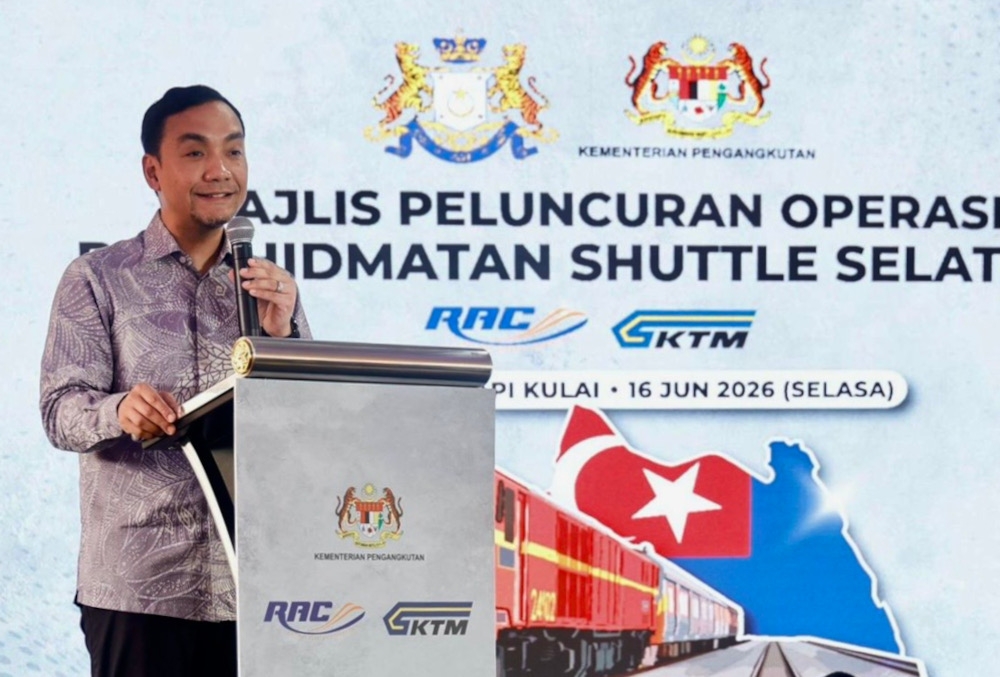
KULAI, June 16 — Johor Menteri Besar Datuk Onn Hafiz Ghazi has urged the federal government to expedite the city centre’s rapid transit project to relieve traffic in the city centre once the Johor Bahru-Singapore Rapid Transit System (RTS) Link begins operations on January 1 next year.

He said that the short and medium-term measures currently being implemented, including expanding Park & Ride facilities, implementing smart traffic management and reorganising bus, taxi and e-hailing movements at JB Sentral.

“We have to implement these short and medium-term measures as temporary solutions because the main project that can disperse traffic has not yet started.

“There is one project that we still need to focus on and expedite, which is the city centre’s rapid transit project,” he said in his opening address at the Southern Shuttle Service operations launch at the Kulai railway station here today.

Present was Transport Minister Anthony Loke who also officiated the event.

Onn Hafiz said that the city centre’s rapid transit project project had already been tabled in the Cabinet meeting back in 2024.

However, he said the physical work for the project has not yet commenced.

“The people of Johor are still waiting for a clearer implementation timeline, especially on the date the project will start.

“The question is when will this project start? Johoreans are keen to know when can we do a site visit together for this project?” he said.

Onn Hafiz said from his understanding, the Letter of Award (LOA) has not yet been issued.

“Even after work starts, the project is expected to take between four and five years to complete,” he said, adding that the need to expedite the project was increasingly urgent as the RTS Link connecting Bukit Chagar station to the Woodlands North station is scheduled to commence operations in early 2027.

He said that without an efficient and high-capacity urban public transport system, the increased passenger movement from the RTS Link may put additional strain on the road network in the Johor Bahru city centre.

Onn Hafiz also drew comparisons with the Mutiara Line LRT project in Penang which has a budget ceiling of RM16.8 billion, with physical work having commenced and the project targeted for completion by the end of 2031.

“We are happy because every state deserves to enjoy good public transport facilities. However, we also hope that the needs of Johor are given the same attention and priority.

“The Johor Bahru district alone has about 1.8 million residents, almost equal to the entire population of Penang.

“Johor Bahru is also the country’s main international gateway with a very high rate of cross-border movement,” he said.

Onn Hafiz said the Johor Bahru rapid transit project was not just a development plan, but rather an important intervention by the federal government that would directly impact the daily lives of the people.

He pointed out that the implementation of the project will help reduce congestion, improve connectivity between RTS Link and key areas in Johor Bahru and encourage more residents to use public transportation.

“I believe that the significance and speed of the federal government in implementing this project will have a huge impact on the people of Johor, especially in reducing congestion and improving daily mobility.

“This is a form of federal intervention that can truly be felt, appreciated and remembered by the people.

“If this project can be expedited, the credit is huge to the federal government,” he said.

  •  

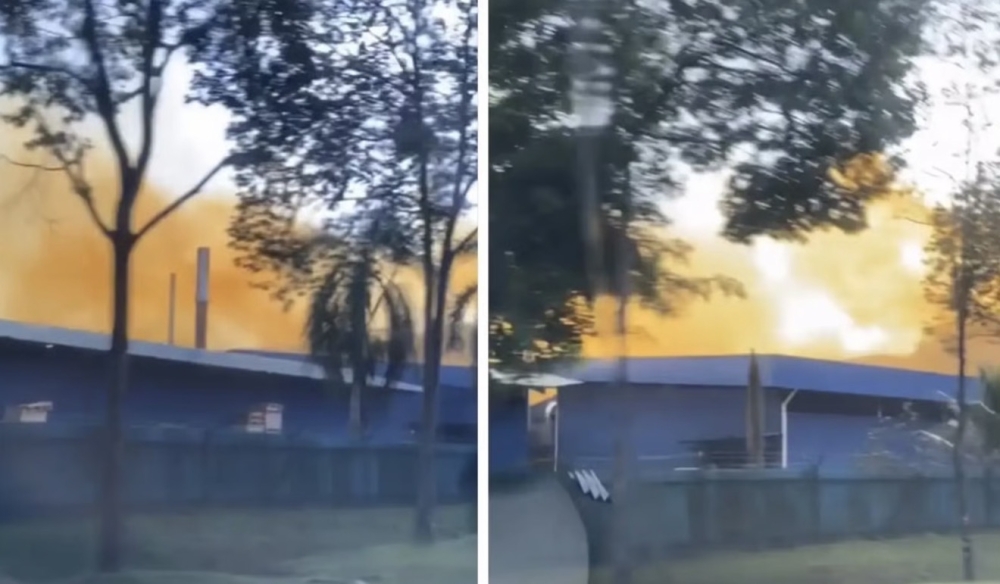
DOE probes viral orange smoke incident in Pasir Gudang industrial area

Malay Mail


KUALA LUMPUR, June 12 — The Department of Environment (DOE) acted swiftly to investigate following a viral report on social media regarding the release of orange smoke, believed to have occurred in the Jalan Keluli area of Pasir Gudang yesterday morning.

Immediately upon receiving the information at around 9:45 am, an enforcement and investigative team from the DOE Pasir Gudang Branch was deployed to the location to conduct monitoring, an investigation, and an initial assessment of the incident.

According to a statement issued by the DOE today, patrols carried out around Jalan Keluli revealed that there was no longer any orange smoke being emitted from any premises in the area.

“However, based on information obtained on-site, the emission is believed to have originated from an industrial premises in the Pasir Gudang Industrial Area.

“The DOE investigative team arrived at the identified premises at around 11:10 am and found that the orange smoke emission had stopped. Nevertheless, there was a noticeable odor in the area of the premises while the inspection was being conducted,” the statement read.

Following the incident, the DOE took several immediate actions, including conducting on-site monitoring and investigations in the complained area, as well as coordinating with the Fire and Rescue Department of Malaysia (JBPM) and the Pasir Gudang City Council (MBPG) for further action within their respective jurisdictions.

The statement also explained that the DOE had requested a safety assessment from JBPM before conducting a detailed inspection inside the premises, in addition to carrying out air quality monitoring in potentially affected sensitive areas.

As a precautionary measure, the Johor State DOE also conducted air quality monitoring at two identified sensitive locations, namely Sekolah Menengah Kebangsaan (SMK) Taman Pasir Putih and Sekolah Menengah Kebangsaan (SMK) Pasir Gudang 3.

“Through the monitoring conducted, the air quality readings at both locations were at normal levels and did not show any readings exceeding the established limits.

“The DOE wishes to emphasize that further investigation is underway to identify the actual cause of the incident and to determine if there was any emission of pollutants that violates the provisions of the Environmental Quality Act 1974 [Act 127],” the department said. 

The DOE stressed that if the investigation reveals an offence has been committed under the enforced legal provisions, appropriate enforcement action will be taken against the responsible parties.

The department will continue to monitor the situation in the affected area and work closely with relevant agencies to ensure that public safety and environmental quality are always preserved.

In the meantime, the public is advised not to speculate regarding this incident and to always refer to official information issued by the authorities. — Bernama


  •  

Wet weather ahead: MetMalaysia warns of thunderstorms, heavy rain in five states until 3pm

Malay Mail

KUALA LUMPUR, June 3 — Thunderstorms, heavy rain and strong winds are expected to hit five states until 3pm today, according to the Malaysian Meteorological Department (MetMalaysia).

It said that the areas involved are Perlis, Penang, and Kedah (Kubang Pasu, Kota Setar, Pokok Sena, Yan, Pendang and Kuala Muda).

“Similar weather conditions are also expected in Sarawak, involving Sibu (Sibu and Selangau) and Mukah (Tanjung Manis and Daro),” MetMalaysia said in a statement.

It added that in Sabah, the affected areas include the interior (Sipitang, Tenom, Beaufort, Keningau and Tambunan) and the west coast (Papar and Penampang). — Bernama 

  •  

RK, Sharma, Pearson Win 2026 Pulitzer Prize for Illustrated Reporting and Commentary

The Pulitzer Prize Board announced the winners of the 2026 Illustrated Reporting and Commentary award. And the Pulitzer goes to Anand RK (Radhakrishnan) and Suparna Sharma and Natalie Obiku Pearson of Bloomberg… …For “trAPPed,” [link added] a riveting account of a neurologist in India held under “digital arrest” by her phone, reporting that uses visuals […]

  •  

Hong Kong proposes tighter claw machine regulations over addiction fears

Claw machine featured image

Hong Kong authorities have proposed tightening the regulation of claw machine shops by implementing a licensing regime to curb addiction risks.

A claw machine in Hong Kong. Photo: Kyle Lam/HKFP.

The Home and Youth Affairs Bureau’s proposal, included in a document submitted to the Legislative Council (LegCo) on Monday, comes as claw machine shops proliferate in the city as a low-maintenance business opportunity.

“Since these activities may involve gaming elements or addiction risks, appropriate restrictions on format or content may be necessary to protect participants, especially youth, from physical or mental harm or significant financial loss,” the bureau said.

The government seeks to introduce new requirements, such as posting a notice indicating that devices are licensed. The bureau is also considering mandatory addiction warning labels on machines.

A list of licensed premises has also been uploaded to the Home Affairs Department’s Office of the Licensing Authority, the document read.

The tightened regulations will function under the city’s Gambling Ordinance, which currently stipulates that claw machine shops must hold an Amusement With Prizes Licence (AWPL). Before that licence can be granted, a venue must hold a public entertainment licence.

However, a 2022 High Court ruling determined that claw machines do not meet the definition of “entertainment” and thus do not require a public entertainment licence, creating a regulatory gap.

The bureau is proposing to remove the requirement for a public entertainment licence and allow the Home Affairs Department to issue AWPLs directly.

Prize caps, addiction risks

Speaking on an RTHK programme, lawmaker Vincent Cheng said he agreed with the government’s proposal in principle but asked the authorities to consider whether the new curbs would stamp out the business.

A claw machine loaded with panda toys in Tsim Sha Tsui area, December 11, 2024. Photo: Kyle Lam/HKFP.
A claw machine loaded with panda toys in Tsim Sha Tsui, Hong Kong, December 11, 2024. Photo: Kyle Lam/HKFP.

“We have to consider whether [the regulation] will affect the industry’s development,” he said, urging the government to “strike a balance.”

Lawmaker Bill Tang, who chairs the LegCo Panel on Home Affairs, Culture and Sports, welcomed the tightened regulations, saying that some claw machine operations had “evolved” beyond their original leisurely purpose.

Prizes in certain machines now include high-value items such as mobile phones, encouraging gambling behaviour, Tang said. He proposed a HK$5 limit on the fee for each game and that the value of each prize be capped at HK$300.

The bureau has also proposed to regulate internet cafes, moving away from a Code of Practice model and introducing a mandatory licensing system.

One option is to bring internet cafes in line with the regulatory regime for traditional gaming arcades, imposing strict age restrictions for adult- or children-only venues and a ban on students in school uniform.

Another model would be to allow cafes to operate if they meet strict safety conditions.

The proposals are scheduled to be discussed at the legislature on Monday.

  •  

LK Samyang and Schneider-Kreuznach Tease the AF 60-180mm’s Full Reveal

A camera lens in shadow is centered against a gradient blue background, with only the top and textured grip clearly visible.

Samyang has teased a new Schneider-Kreuznach x LK Samyang lens on its Instagram, and it looks like the new AF 60-180mm f/2.8 zoom lens the companies debuted at CP+ in Japan in late February is getting its full reveal.

[Read More]

  •  

Feeling left behind in school, Zaini Ujang turned to books — and wrote 55 of his own

Malay Mail

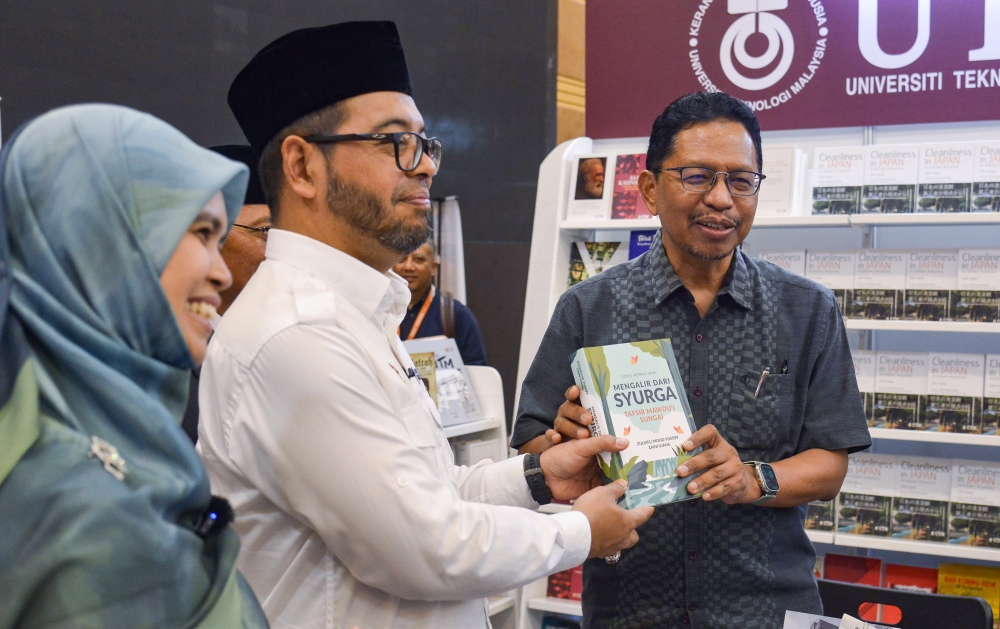
KUALA LUMPUR, June 5 — While many students are able to grasp their lessons with ease, the experience was quite different for renowned Malaysian scholar Prof Emeritus Datuk Seri Dr Zaini Ujang.

He admitted that he was never among the top three students in his class during his school and university years and often felt that he lagged behind his peers.

As a result, he had to push himself to spend more time reading a wide range of materials to understand concepts he could not fully grasp, including those taught during lectures.

“I was not the best student in class. I was always behind. Some of my classmates could fully understand what the professor was teaching during lectures. I couldn’t. Usually, I had to revise the material before I could understand it. So, I had to read more than they did,” he told Bernama during a meet-and-greet session at the Kuala Lumpur International Book Fair 2026 here recently.

From that need to pursue knowledge emerged a deep passion for reading, which ultimately shaped his life journey as an academic, administrator, author and respected public intellectual known both locally and internationally.

Zaini, 61, who is also Chairman of the Malaysian Qualifications Agency (MQA) Council, said that a love for reading does not  necessarily have to begin with academic or heavy reading materials. Instead, individuals should start with subjects that genuinely interest them.

“Start by reading about things you enjoy. For example, adventure novels. From there, you can move on to related subjects such as maritime technology or geography. It is impossible to master knowledge and skills in a field that you do not enjoy,” he said.

The Professor Emeritus and former Vice-Chancellor of Universiti Teknologi Malaysia said consistent reading enabled him to deepen his knowledge in environmental studies, a field that had fascinated him since his student days and throughout his postgraduate education.

He has continued reading extensively on environmental issues from his student years until today, making it a major theme in much of his writing over the past three decades.

Apart from promoting a reading culture, the Management and Science University Pro-Chancellor also stressed the importance of developing specialised expertise or a niche in a particular field rather than trying to master too many things at once.

The idea is also explored in his latest book, Eco-Shift Model: Climate Action for Water Sustainability, which outlines a framework on how organisations and ministries can drive comprehensive cultural change within society.

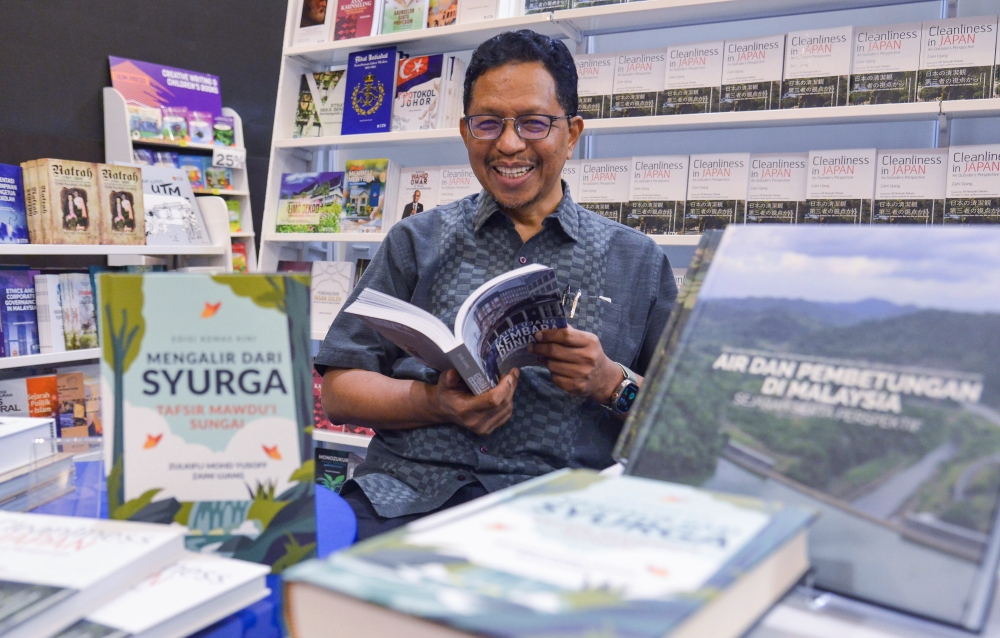
National Scientist Emeritus Prof. Datuk Seri Zaini Ujang is seen at a friendly meeting session at the Kuala Lumpur International Book Fair 2026 in Kuala Lumpur June 5, 2026. — Bernama pic

What began as a reading habit to better understand his studies eventually transformed Zaini into a prolific author. To date, he has written 55 books covering a wide range of topics, including the environment, higher education and travel, as well as six collections of poetry.

Among his early and well-received works is Membaca: Motivasi & Kaedah, first published in 1993 and now in its third edition by the Malaysian Institute of Translation and Books (ITBM), with sales reaching approximately 15,000 copies.

“Compared with 30 or 40 years ago, not many people were interested in reading serious materials. Today, more people are reading them, including young people. Even the works of Syed Muhammad Naquib al-Attas are among the best-selling books,” he said, viewing this as a sign of growing public interest in reading.

Besides academic books, he has also authored travel literature, including Kembara Dunia: 100 Hari, 15 Negara, 1 Misi, which chronicles his experiences delivering lectures in 15 countries and meeting leading global academics. An English edition is scheduled for publication in August 2026.

“I am currently preparing to deliver the Keris Mas Lecture 2026, organised by Dewan Bahasa dan Pustaka, titled Sastera Alam Dalam Alam Sastera on June 23. It will also be published under the same title,” he said.

Interestingly, Zaini, who served as Secretary-General in six ministries between 2013 and 2025, said he rarely experiences writer’s block because he constantly draws ideas from his reading, experiences and professional fields of involvement.

Although he produces three to four books a year, he does not subscribe to a culture of working non-stop. Instead, he prefers to write for one to two hours before taking a break to spend time with his family or engage in recreational activities.

“I like having a little interruption while reading or writing. We are human. If we work continuously from morning until evening without stopping, it will be detrimental to both our health and creativity,” he said.

For Zaini, who is also a Professor Fellow at the International Islamic University Malaysia, the greatest satisfaction of being a writer lies not in the number of books published, but in the opportunity to leave behind knowledge that can benefit future generations.

“Writing is a form of amal jariah (continuous charity), whose benefits endure as long as the knowledge we leave behind continues to be read and practised. We pray that we will be granted lasting rewards from it,” said Zaini, who aims to write 100 books during his lifetime.

The Petronas Foundation trustee also expressed his hope of continuing to read, write and share knowledge for as long as he is blessed with good health and the opportunity to do so. — Bernama

  •  

Zulkifli: Malaysia to strengthen pondok education framework, increases allocation to RM200 million for upgrades

Malay Mail


KUALA NERANG, June 9 —The government is strengthening pondok institutions nationwide through strategic collaboration between religious agencies and pondok managements to develop a more dynamic and progressive educational framework.

Minister in the Prime Minister’s Department (Religious Affairs) Datuk Zulkifli Hasan said the current focus is on strengthening the pondok education ecosystem in the country.

He said the effort is being carried out through close cooperation between the Department of Islamic Development Malaysia (JAKIM), the Malaysian Islamic Dakwah Foundation (YADIM) and pondok institutions nationwide, including those in Kedah.

“We are listening to the views of pondok institutions and identifying their needs. At the same time, we are working together to develop the pondok framework that we envision for the future,” he said when met at the launch of Kedah Madani Daie Coordination Centre and Darull Hikmah 2026 Daurah Kitab Turath programme here yesterday. 

According to him, Jakim, Yadim and pondok institutions were in the midst of working towards developing the framework so that such institution could move in tandem with the national education mainstream without neglecting the identity and traditions of turath studies.

Zulkifli said the government acknowledged the significant potential of pondok institutions to continue growing and playing an important role in producing knowledgeable and morally upright generations.

He said the government had also increased the allocation for maintenance and upgrading works for pondok schools, religious schools and tahfiz institutions from RM150 million last year to RM200 million this year.

“Last year, we successfully carried out maintenance and upgrading works involving about 1,600 pondok institutions, tahfiz centres and religious schools throughout the country. This year’s allocation is underway and several states have already received assistance for repair works and facility improvements,” he said.

He said the initiative was among the government’s commitments, as announced by the Prime Minister Datuk Seri Anwar Ibrahim, to ensure that the welfare and development of Islamic educational institutions continue to receive attention. 

Commenting on the Darull Hikmah, he said the institution had successfully offered quality educational programmes, particularly in Arabic language proficiency and advancement of Islamic knowledge since its establishment in 2019. — Bernama


  •  
❌