Login
Login
Mark Carney finds a brand new way to clash with Alberta
Ottawa and Alberta: Same old, same old. Read More

If you took one long-haul flight each year for the past decade, the world would eventually pay about $25,000 for it. You won’t see this charge on your credit card, but the cost shows up somewhere—maybe as a hotter field with less rice, a stronger hurricane, or a factory forced to close on days that are too hot to work. This estimate comes from a Nature study published in March 2026 by researchers at Stanford and the University of California, Berkeley. They created a new way to link damage from specific emissions to certain places and years.
That $25,000 figure is based on the social cost of carbon, a dollar estimate of the harm caused by releasing one ton of carbon dioxide into the air. While it might seem abstract, it is one of the most important numbers in American policy. It helps decide if a fuel-economy rule is worth it and influences permits for pipelines and power plants. Over the last four presidential administrations, this number has been raised, lowered, removed, and brought back. What we think a ton of carbon costs today affects how much the country is willing to do about climate change in the future.
Think of the cost of carbon like a garbage bill, the metaphor the authors of the Nature study use. When you put trash on the curb, someone has to pick it up, haul it away, and store it somewhere. You pay for that service. Carbon dioxide works the same way, except no one sends an invoice—it’s more like using a credit card, the bill for which your children or great-grandchildren will eventually pay.
Carbon dioxide stays in the atmosphere for centuries, quietly heating the planet, damaging crops, intensifying storms, and wearing down economies. Somebody, somewhere, eventually pays. The social cost of carbon is an attempt to figure out how much.
The number comes from combining climate science with economics. Researchers model how one extra ton of CO₂ affects global temperatures over the next century or two, then estimate how those temperature changes damage human health, farm yields, labor productivity, property, and economic growth. They add up the losses and express them in today’s dollars.
Two technical choices drive almost every disagreement about the final number:
That second choice, how much weight to give your grandchildren’s losses compared to your own savings, is where climate economics becomes a moral question.
Federal agencies ignored carbon pricing for most of the modern regulatory era. That changed after the Center for Biological Diversity sued the Bush administration over weak fuel-economy standards for light trucks and SUVs. In 2008, the Ninth Circuit Court of Appeals ruled that assigning zero value to carbon emissions in cost-benefit analyses was “arbitrary and capricious.” The court stated: “the value of carbon emissions reduction is certainly not zero.”
That decision created a legal obligation. If federal agencies wanted to write rules that survived court review, they had to put a price on carbon. They just did not yet have one they could agree on.
In 2009, President Obama convened an Interagency Working Group of federal economists and scientists. In 2010, the group published its first official estimate of the social cost of carbon: $21 per ton of CO₂.
In the following years, as climate models were updated, the estimate rose, reaching about $50 per ton (2020 dollars) by the end of the Obama years. This value was based on a 3% discount rate and global damages.
That framework, which involved interagency process and peer-reviewed models with global scope, was used in more than 65 federal rules and 81 subrules between 2008 and 2016. It shaped appliance efficiency standards, power plant emission limits, fuel-economy requirements, and rules governing methane leaks from oil and gas infrastructure. A higher social cost of carbon justified stricter rules. A lower one did not.
Within months of taking office, President Trump signed Executive Order 13783, disbanding the Interagency Working Group and withdrawing its estimates. The Trump EPA recalculated the social cost of carbon by counting only US damages and raising the discount rate to 3%-7%. As a result, Obama’s $52 per ton estimate fell to between $1 and $7 per ton.
That lower number was, as Resources for the Future explained, “too low to make climate policies economically justifiable.” Rules that had provided a cost-benefit analysis supporting strict emissions rules under Obama suddenly no longer did so. The Clean Power Plan, the centerpiece of Obama’s climate policy, was repealed partly on the grounds that the climate benefits recalculated with the lower number no longer exceeded the costs. According to Scientific American, the change in the social cost of carbon was “determinative” in at least half a dozen petroleum-sector rollbacks during the first Trump term. Simply, it gave emitters an easy out.
Biden reinstated the working group and set an interim value of about $51 per ton, adjusted for inflation. Legal challenges from some states were dismissed.
In November 2023, EPA set a new central estimate for the social cost of carbon: $190 per ton for 2020 emissions, rising to $230 by 2030 and $308 by 2050. This increase drew on updated climate science, new economic models, a lower discount rate of 2%, and two decades of scientific progress clarifying warming’s impact on economic growth, climate-driven mortality, and previously understated risks.
Other governments took note. Canada adopted the updated EPA number in 2023. Germany adapted the underlying model for its own analyses in 2024.
On his first day back in office, January 20, 2025, President Trump signed Executive Order 14154, “Unleashing American Energy,” which disbanded the Interagency Working Group, withdrew its estimates, and directed EPA to consider eliminating the social cost of carbon from federal permitting and regulatory decisions entirely. The order called the metric “marked by logical deficiencies, a poor basis in empirical science, politicization, and the absence of a foundation in legislation.”
In March 2025, EPA Administrator Lee Zeldin announced the agency would “overhaul” the social cost of carbon. In May 2025, a follow-up executive memorandum directed federal agencies to stop factoring climate-related economic damage into their regulations and permitting decisions, except where statute requires it.
Where agencies are still legally obligated to put a number on it, the administration has settled on an interim estimate of as little as $1 per ton of CO₂, a return to the first Trump administration’s methodology, with domestic-only damages and higher discount rates. The companion social cost of methane dropped from $1,470 per ton to $58. In July 2025, the White House guidance went further, instructing agencies that any required analysis should be limited to “the minimum consideration required to meet a statutory requirement” and, where possible, should not be monetized at all. The practical effect: $1 per ton on paper, $0 in most decisions.
The cycle is now in its third full reversal since 2008. Each time the number changes, so does the federal government’s willingness to regulate emissions.
The new study in Nature does something the federal estimates have never done well: it separates past damage from future damage, and it assigns both to specific emitters. Their framework treats every ton of CO₂ as an asset that pays out negative returns; it’s a garbage bill that keeps accruing interest. Using that framework, they found three things that reshape the conversation.
A ton of CO₂ emitted in 1990 has already caused about $180 in global damages by 2020. That same ton will cause an additional $1,840 in damages between now and 2100 — 10 times more. Using the authors’ conservative assumptions, which use a 2% discount rate with damages capped at 2100, the social cost of carbon for a ton emitted today is approximately $1,013. That is more than five times the Biden EPA’s $190 estimate, and higher estimates are possible under longer time horizons or lower discount rates.
Settling the bill for climate damage that has already happened would only cover a small fraction of the damage still to come from the same emissions. Past payments do not clear past debts.
The study also puts numbers on the kinds of choices that fill everyday life.
At the corporate scale, the numbers are staggering. Emissions from Saudi Aramco’s fossil fuel production between 1988 and 2015 are estimated to cause $64 trillion in cumulative discounted damages through 2100. ExxonMobil’s comparable share: $29 trillion. These are bigger than the annual GDP of most countries.
The social cost of carbon can feel like a number on a page in a regulatory document. It is not. It is a bridge between the world you are living in now and the world you will inherit.
When the federal government uses a low social cost of carbon, or no number at all, it writes rules that allow more emissions. More emissions mean a hotter atmosphere, which means stronger storms, longer fire seasons, lower crop yields, higher air conditioning bills, and more days when outdoor work becomes dangerous. Those consequences do not arrive as a lump sum in 2100.
They arrive gradually, starting now, and compounding in the form of flood and wildfire damage, biodiversity loss, and even defense spending to prevent immigration. The Nature researchers emphasize that their estimates are almost certainly too low because GDP damage functions do not capture losses of biodiversity, loss of cultural homelands, harm to mental health, or many slow-moving impacts such as sea level rise.
When the federal government uses a high social cost of carbon, it writes rules that prevent emissions. Those rules have costs today, sometimes real ones, paid by workers in fossil fuel industries, by consumers adjusting to new standards, by companies retooling their operations. The social cost of carbon does not eliminate those costs. It weighs them against costs that will otherwise fall on other people, in other places, at other times. That weighing is a choice about who counts.
The history traced here is, in that sense, a history of that choice, and none of those decisions are final. Courts have repeatedly ruled that federal agencies cannot treat the value of carbon-emissions reductions as zero. The 2008 ruling that gave rise to this framework is still on the books. Whatever the current administration does, the legal obligation to account for climate damages in cost-benefit analysis remains, and the science underpinning the newer, higher estimates continues to strengthen.
The post The Price Tag on a Ton of Carbon: What It Is, Why It Keeps Changing, and What It Means for Your Future appeared first on Earth911.


More Americans than ever think the environment is in bad shape, and they want the government to do something about it. According to a new Gallup poll released last week, only 35% of U.S. adults rate the overall quality of the environment as good or excellent. That’s the lowest number Gallup has recorded since it started asking the question in 2001.
It’s not just one or two things people are worried about. Drinking water, rivers and lakes, climate change, air pollution, endangered species. Concerns are on the rise across the board.
Water is the top concern, and it has been for over two decades. More than half of Americans — 56% — say they worry “a great deal” about drinking water pollution. Another 53% say the same about the country’s fresh water supply. Half are deeply worried about pollution in rivers, lakes, and reservoirs.
Climate change isn’t far behind. A companion Gallup climate report finds that 44% of Americans worry “a great deal” about global warming, close to the all-time high of 46% recorded in 2020. Two out of three Americans say they worry at least “a fair amount.”
The poll also found that 57% of Americans now think the government is doing too little to protect the environment. That’s up from 50% just a year ago, a significant jump in a short time and in the face of an administration dedicated to dismantling U.S. environmental regulations.
While Democrats worry more than Republicans on nearly every issue, independent voters — often the key swing group in elections — have shifted sharply toward deep concern about the nation’s direction: 61% now say the government isn’t doing enough, up from 52% last year.
While public concern has been rising, the 119th Congress, which took office in January 2025 with Republicans in control of both chambers, has been rolling back environmental protections at a record pace.
The main tool has been the Congressional Review Act (CRA), a law that lets Congress cancel recently issued regulations with a simple majority vote. In 2025 alone, Congress passed 22 CRA resolutions into law, more than the total number of successful CRA rollbacks in the entire prior history of the law. Most targeted the EPA.
Among the protections eliminated: a rule charging oil and gas companies for methane pollution, standards regulating hazardous air emissions from rubber tire manufacturing, and California’s authority to set stricter vehicle emissions standards, overturned despite a determination by the nonpartisan Government Accountability Office that those waivers weren’t even legally subject to repeal.
Meanwhile, pro-environment bills have gone nowhere. The Polluters Pay Climate Fund Act, which would require fossil fuel companies to pay into a $1 trillion climate fund, has gone undebated in committee since January 2025. The Clean Competition Act, a bipartisan carbon border adjustment that would reward cleaner American manufacturers, has also stalled.
The public says it wants more action on the environment. Congress has delivered less.
The good news: this is exactly the kind of issue where public pressure can matter. Here’s how to make your voice heard:
The post Most Americans Are Worried About the Environment. Is Congress? appeared first on Earth911.


Ontario’s 2026 Budget, A Plan to Protect Ontario, arrives with familiar promises of economic resilience and infrastructure growth. But beneath the surface, a persistent gap remains: meaningful investments in nature. Similar to last year’s budget, the province continues to ignore the importance of biodiversity and nature to economic resilience, community well-being and Ontario’s long-term prosperity.
In 2025, Ontario Nature raised concerns that the provincial budget put nature at risk by prioritizing development while weakening environmental protections. These concerns were echoed and expanded in January 2026, when Ontario Nature and 64 partner organizations called on the province to increase investments in conservation.
The unified message was clear: protecting and restoring nature is not a barrier to economic growth but is a foundation for it. Yet the 2026 budget does not meaningfully respond to these recommendations. Our recommendations presented a clear path forward – strategic investments in nature can strengthen our economy, protect communities and reduce long-term costs.

Ontario remains well behind the pace required to meet the national goal of protecting 30 percent of lands and water by 2030. With just over 11 percent currently protected, the province risks falling further behind without a significant redirection in its course. A clear solution remains unprioritized: investing in protected areas is not only an environmental imperative, but an economic strategy. A coordinated annual investment of $60 million to expand Ontario’s protected areas network, particularly on Crown land, would help close this gap and support regional land use planning to protect high biodiversity and cultural value areas from industrial development.
Expanding protected area networks invests in nature-based recreation job opportunities, boosting our economy alongside protecting valuable areas. Across Canada, nature-based recreation creates over one million jobs and generates $101.6 billion in economic activity annually, not including the many additional ecosystem services that nature provides such as absorbing carbon, offsetting flood risks and improving air quality.
Conserving and restoring wetlands is a direct investment in public safety and affordability. Natural wetlands reduce flood damage, lower infrastructure costs and reduce costs to taxpayers. A University of Waterloo study found that maintaining wetlands can reduce flood damages by 38 percent, while other research shows that benefits of wetland protection can far exceed costs, with benefit-cost ratios reaching as high as 35:1.
Despite these benefits, the 2026 budget does not significantly expand investments in wetland conservation, leaving communities exposed to rising costs.

Public support is not the barrier either. Ontarians overwhelmingly back increased conservation efforts and recognize their benefits for climate resilience, health and the economy.
Ontario’s 2026 budget speaks the language of resilience and protecting Ontario, but it fails to invest in the natural systems that make resilience possible. It seems that most Ontarians are not convinced the government is “protecting Ontario” based on recent polling. Until this changes, the province will continue to take on higher costs, greater risks and missed opportunities.

While provinces across Canada begin implementing meaningful conservation plans, Ontario is falling behind. Rather than weakening environmental protections and shifting the costs of conservation onto communities, the provincial government must commit to sustained, long-term investments in nature.
Protecting nature protects all of us. Stay informed, contact your MPP, and demand better protections for Ontario’s lands and waters. You can also take action today by signing one of Ontario Nature’s Action Alerts.
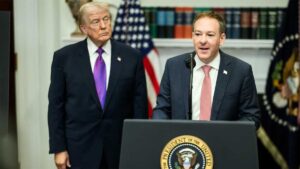
On February 12, 2026, EPA Administrator Lee Zeldin stood next to President Trump and called the repeal of the 2009 Endangerment Finding “the single largest deregulatory action in the history of the United States.” He was likely correct. With this move, the legal basis for all federal greenhouse gas regulation for cars, power plants, and oil fields was removed at once.
This headline-making move was just the most visible part of 14 months of steady rollbacks of U.S. environmental and public health protections, often couched in language about saving tax dollars and reducing regulation, but ignoring the rising cost of healthcare, insurance, and environmental damage caused by the policies. Since Inauguration Day 2025, the Trump administration has issued many executive orders and regulatory actions affecting air quality, water protections, toxic chemicals, wildlife habitat, and climate and health science.
Scientists, former EPA officials, and public health researchers have documented the consequences, which include more cases of childhood neurological damage and tens of millions of acres of wetlands left unprotected from pollution. Earth911 assembled this timeline of major actions and what research says about their likely effects.
On his first day in office, Trump signed 26 executive orders, several of which quickly changed U.S. environmental policy. Experts in environmental law called this a “flood the zone” strategy, meant to overwhelm environmental groups and courts so they could not respond to every action at once.
Key Day-One actions included:
Dan Esty, a professor of environmental law and policy at Yale University, told ABC News that the administration had a clear strategy: “There are a number of more subtle actions that the Trump administration has taken that also have considerable corrosive effect on our efforts to promote action on climate change and a sustainable future more broadly.” He warned that less visible rollbacks, such as regulatory delays, staff cuts, and limiting science, would add to the impact of the major executive orders in ways the public might not notice.
January 21: EO 14173, “Ending Illegal Discrimination and Restoring Merit-Based Opportunity” revoked EO 12898, the 1994 Clinton-era executive order requiring federal agencies to identify and address disproportionate environmental burdens on communities of color and low-income communities, which was the cornerstone of federal environmental justice policy for three decades.
January 28: EPA delayed the effective dates of four rules to March 21, 2025, including a Toxic Substances Control Act rule on trichloroethylene (TCE), a carcinogen linked to cancer, liver damage, and Parkinson’s disease, and revisions to air quality model guidance that states depend on for pollution planning.
January 31: EO 14219, “Ensuring Lawful Governance and Implementing the President’s ‘DOGE’ Deregulatory Initiative” required federal agencies to identify 10 existing rules to eliminate for every single new rule promulgated. This “10-to-1” deregulation mandate structurally incentivized agencies to gut established protections regardless of their public health record.
On March 12, 2025, EPA Administrator Lee Zeldin announced that EPA would formally reconsider the 2009 Endangerment Finding and simultaneously unveiled plans to review 31 major environmental regulations for rollback.
“Today is the greatest day of deregulation our nation has seen,” Zeldin said in a press statement. “We are driving a dagger straight into the heart of the climate change religion.” It would be another year before, again, Zeldin touted an even bigger deregulatory move.
The 31 targeted regulations included:
Responding to Zeldin’s announcement, Harvard T.H. Chan School of Public Health researchers Mary Rice and Amruta Nori-Sarma warned in public commentary that repealing the Endangerment Finding alone would eliminate legal obligations to cut emissions from the transportation sector—the largest single source of U.S. greenhouse gas pollution—with cascading effects on climate-related public health harms including heat illness, worsening wildfires, and more severe flooding.
Also in March, EPA began dismantling its Office of Research and Development (ORD), removing all career scientific leadership and halting the publication of internal research. The Environmental Protection Network (EPN), a nonpartisan group of hundreds of former EPA staff, later warned in a February 2026 report that “political leadership is steering the agency away from its responsibility to protect human health and the environment.”
The ORD’s closure eliminated the internal scientific capacity to assess pollution risks for mercury, PFAS, air toxics, and wildfire smoke.
April 8: Trump signed executive orders aimed at reviving the coal industry, expediting coal mining permits on federal land and directing federal agencies to maximize coal extraction. This directly contradicts global energy market trends: the International Energy Agency reports that renewable electricity is now cheaper than new coal in every major market.
April 2025: EPA solicited exemption applications from coal- and oil-fired power plants seeking waivers from the Mercury and Air Toxics Standards (MATS) via email—an unprecedented process that environmental groups called an open invitation for polluters to self-select out of public health rules. By May, EPA had granted exemptions to 68 power plants covering facilities in 45 states.
The health risks of weakening MATS are well known. Coal-fired power plants are the largest source of mercury in the U.S., a dangerous neurotoxin that harms brain development in fetuses and young children. The Sierra Club found that going back to pre-2024 MATS standards would let the dirtiest coal plants release 50% more mercury. Arsenic and chromium, which are also covered by MATS, are linked to cancer, heart disease, and birth defects. Moms Clean Air Force director Dominique Browning put it simply, saying that “No amount of mercury is safe for babies’ developing brains.”
On April 17, Trump signed a proclamation that opened parts of the Pacific Islands Heritage National Marine Monument to commercial fishing. This 500,000-square-mile area west of Hawaii is home to protected turtles, whales, and endangered Hawaiian monk seals. Research shows that marine protected areas usually help fishermen by letting overfished stocks recover, which is the opposite of how the administration described the change.
May 14: EPA announced plans to eliminate drinking water standards for four short-chain PFAS chemicals (PFHxS, PFNA, PFBS, and GenX), reversing Biden-era standards designed to protect millions of Americans. The agency also proposed extending compliance deadlines for the two standards it retained (PFOA and PFOS). According to the Environmental Working Group, an estimated 41 million people will drink PFAS-contaminated water for at least two additional years due to these delays. PFAS chemicals are linked to cancer, immune suppression, thyroid disruption, and developmental harm in children.
May 2025: EPA terminated more than $15 million in PFAS research grants—including grants to universities studying PFAS contamination of agricultural land and drinking water—even as the agency publicly claimed commitment to addressing the PFAS crisis. ProPublica’s investigation found the EPA had also requested three court delays in litigation over PFAS Superfund designation, signaling unwillingness to enforce the designation that would make major polluters financially liable for cleanup.
May 28: The Council on Environmental Quality formally withdrew all NEPA guidance dating back to 1977, revoking the regulatory framework agencies had used for 50 years to assess environmental impacts of federal projects. Under the rollback, federal agencies are no longer required to assess climate impacts, cumulative pollution burdens, or environmental justice considerations when approving oil, gas, and mining projects. Earthworks described the change as eliminating the public’s right to know about pollution in their communities before projects are approved.
June 11: EPA Administrator Zeldin proposed to repeal the Carbon Pollution Standards for fossil fuel-fired power plants, which were finalized in 2024. Power plants are a top source of both greenhouse gas emissions and co-pollutants—including soot and smog-forming nitrogen oxides—that directly harm respiratory health.
July 29: EPA formally proposed to reconsider the 2009 Endangerment Finding, releasing a draft rule that cited a five-scientist Department of Energy “Climate Working Group” report as scientific support. The report was subsequently rebutted point-by-point by 86 scientists from academia, government, and industry, who concluded the DOE report “exhibits pervasive problems with misrepresentation” and does not meet standards appropriate for policy support. A federal judge later ruled the DOE violated the Federal Advisory Committee Act in convening the group.
July 18: EPA exempted three additional coal plants—in Ohio, Illinois, and Colorado—from MATS compliance deadlines, expanding the exemption program that now covers a substantial share of the nation’s remaining coal fleet. Texas data cited by NRDC found that six power plants that received presidential exemptions collectively increased their sulfur dioxide emissions by 48 percent in a single year.
By September 2025, EPA employment had fallen from more than 17,000 to 15,166 staff, a reduction of nearly 2,000 employees in less than a year. The Fish and Wildlife Service lost 1,817 staff; the National Park Service lost more than 2,700; and the Bureau of Land Management and Forest Service together shed over 7,000 workers. The Sierra Club documented that a spending bill passed the House cutting the Fish and Wildlife Service’s budget by 44 percent, which advocates warned would hamstring the agency’s ability to list endangered species.
EPA directed its in-house career scientists to stop publishing their research, removed the agency’s scientific integrity policy from its website, and proposed to zero out the budget for ORD’s research functions on PFAS, air pollutants, and wildfire smoke. According to Earthjustice, EPA also created a new office nominally focused on science but placed it directly under the Office of the Administrator, removing independent scientific oversight.
In September, 2025, EPA proposed to eliminate the Greenhouse Gas Reporting Program, which requires approximately 50 categories of large industrial facilities to disclose their emissions annually. The reporting program is the primary source of facility-level emissions data used by researchers, regulators, and investors to track industrial pollution. Without it, independent monitoring of whether industry is reducing emissions becomes functionally impossible.
On November 17, 2025, EPA and the Army Corps of Engineers proposed a new “Waters of the United States” (WOTUS) rule that would dramatically narrow which wetlands and waterways receive federal Clean Water Act protection—going further than even the 2023 Supreme Court Sackett decision required. The proposal would exclude groundwater, interstate waters that lack continuous surface flow, and tens of millions of acres of seasonal wetlands and headwater streams from federal jurisdiction.
A 2025 analysis by NRDC found that between 38 million and 70 million acres of wetlands could be at risk of unregulated pollution or destruction under the proposed rule. “This is one of the most significant setbacks to clean water protections in half a century,” said Betsy Southerland, former director of EPA’s Office of Science and Technology. Wetlands help filter drinking water, absorb floodwaters, and support fisheries and biodiversity. These roles are even more important as climate change leads to stronger storms.
December 3: The Department of Transportation proposed rolling back Corporate Average Fuel Economy (CAFE) standards for model years 2022–2031, reversing efficiency targets set under both Obama and the first Trump administration. The proposal would significantly slow the transition to electric vehicles, increasing long-term fossil fuel demand and tailpipe pollution. Transportation represents 30 percent of total U.S. greenhouse gas emissions—the largest single economic sector.
Also, last December, the EPA published a final rule weakening nitrogen oxide standards for new power plants, reducing projected reductions from 2,700 tons per year (as originally proposed) to just 300 tons by 2032. Nitrogen oxides are a primary precursor of ground-level ozone (smog), which aggravates asthma, reduces lung function, and is linked to premature death.
On February 12, 2026, the Trump administration finalized the repeal of the 2009 EPA Endangerment Finding for Greenhouse Gases—the legal determination, developed by 31 climate scientists and reviewed by NASA, NOAA, the USDA Forest Service, and other federal agencies, that greenhouse gases endanger public health and welfare. The repeal simultaneously eliminated vehicle house gas emission standards.
Scientists responded loudly. Benjamin DeAngelo, who led the original 2009 document, told Earth.Org: “Looking back on the original 2009 Endangerment Finding, and all of the supporting science and responses to comments, the entire record still holds up incredibly well.” Professor Andrew Dessler, a climate scientist at Texas A&M, said there is “no legitimate scientific rationale” for the EPA’s decision. The National Academies of Sciences, Engineering, and Medicine independently reviewed the finding in 2025 and concluded it was accurate and stood the test of time.
The Brookings Institution noted that the repeal’s internal logic—that U.S. vehicle emissions alone are too small to justify regulation—could be extended to justify eliminating any individual sector’s emissions rules, effectively making all sectoral climate regulation legally indefensible. The Rhodium Group estimated U.S. emissions would now decline to only 26–35% below 2005 levels by 2035, compared to 32–44% with regulations in place—a gap of hundreds of millions of tons of additional CO2 annually.
Chris Field, director of the Stanford Woods Institute for the Environment, described the repeal’s systemic significance as a loss of “the foundation on which all of the other regulations rest.” A 2025 study cited by TIME magazine found that air pollution from oil and gas operations is responsible for more than 91,000 premature deaths and hundreds of thousands of additional health incidents across the U.S. each year, with Black, Asian, Native American, and Hispanic communities consistently most affected.
In the same period, EPA announced the repeal of the 2024 Mercury and Air Toxics Standards, reverting to weaker 2012-era limits. The Environmental Protection Network warned the repeal “will allow hundreds of facilities across 45 states to avoid meeting critical safety standards—jeopardizing public health, degrading ecosystems, and disproportionately harming children, pregnant people, and communities already overburdened by pollution.”
The rollback of mercury standards especially affects subsistence fishing communities, including many tribal nations, and low-income households that rely on fish for protein.
Mercury builds up in fish tissue, so even small increases in mercury in the environment lead to more human exposure. A substantial body of peer-reviewed research, including a 2016 PNAS study and a 2021 Harvard T.H. Chan School of Public Health white paper, has shown that the mercury-related health benefits of MATS are orders of magnitude larger than the EPA estimated in its 2011 analysis, yet the EPA continued to rely on that outdated science to justify weakening the rule.
The Environmental Protection Network’s February 2026 report identified 12 high-risk pollutants that are gaining “new life” due to weakened, delayed, or rescinded regulations. The list includes brain-damaging mercury and pesticides in food, hormone-disrupting phthalates in consumer products, cancer-causing PFAS in drinking water, lead, arsenic, and trichloroethylene in water, and carcinogens benzene, formaldehyde, and vinyl chloride in air, along with heart- and lung-damaging soot and smog.
“Political leadership is steering the agency away from its responsibility to protect human health and the environment,” said EPN senior director Marc Boom. “Making Americans safer is a choice, and EPA’s current leadership has chosen to make Americans sicker.”
“When people of expertise and competence leave the government, you cannot find them and rehire them and reassemble them into teams very quickly,” said former EPA Deputy Administrator Stan Meiburg, cautioning that the scientific case for re-regulating after the current administration ends will be even more difficult than it was in 2009. John Holdren, former White House science advisor, echoed this concern: “It has long been understood that good policy depends on careful analysis and good science, and we’re seeing the capacity to deliver that foundation systematically undermined.”
Federal protections are now weaker, but actions by individuals, communities, and states can still help reduce exposure and push for stronger protections. Here are steps you can take at each level:
For your household:
For your community:
At the policy level:
Since the 1970s, when democracy functions, the nation has unequivocally emphasized human and environmental protection, which was a product of a bipartisan approach led by a Democratic Congress and Republican presidents, from Nixon to Bush II. Make your voice heard in the 2026 midterm elections.
The post Counting The Growing Cost of President Trump’s Environmental Policy appeared first on Earth911.