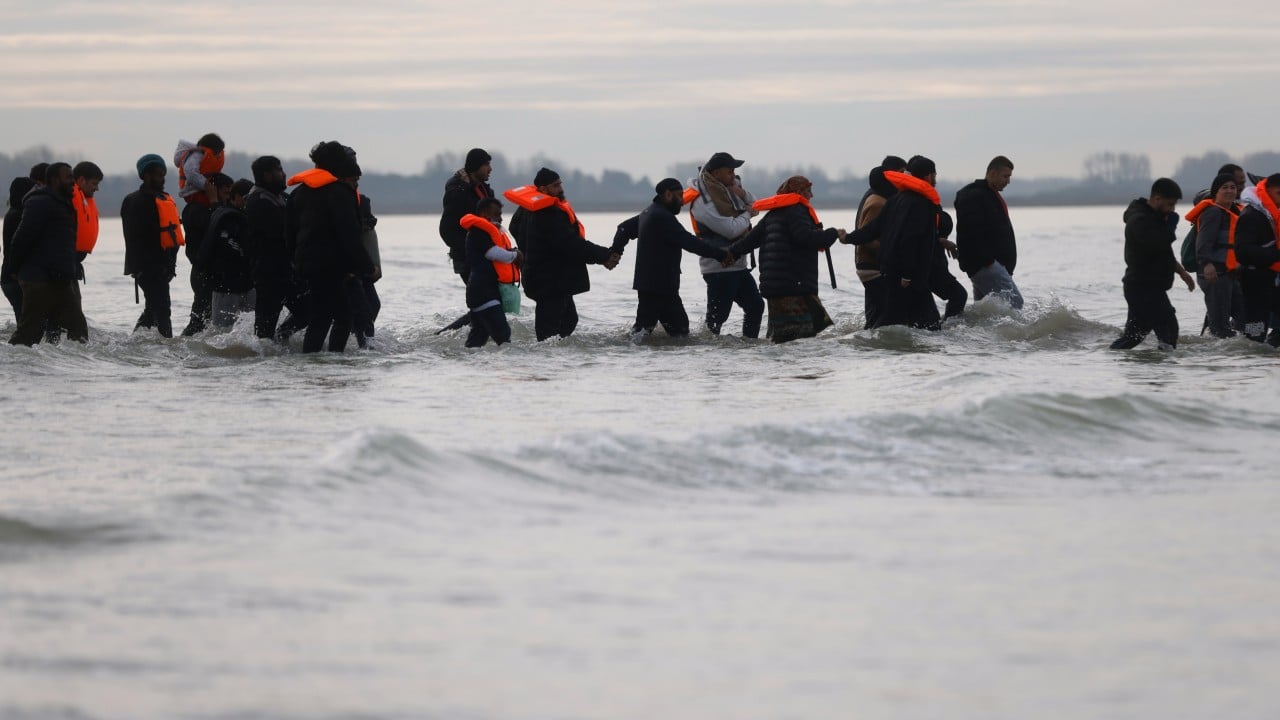
2 dead after boat runs aground in France in failed crossing to UK


Modern medicine prides itself on being a universal science, built on evidence from clinical trials.
But there’s a bias in medical research. While Africa accounts for roughly 25% of the global disease burden and 19% of the global population, the continent’s people are largely invisible in some clinical trials.
The scale of the erasure is revealed in a landmark study of 2,472 randomised controlled trials globally published between 2019 and 2024.
I led this team of researchers, who scrutinised the world’s most influential medical publications to quantify African representation. They included the New England Journal of Medicine, The Lancet, the Journal of the American Medical Association, Nature Medicine, and the British Medical Journal. There were also three leading cardiovascular journals in the study: Circulation, the European Heart Journal and the Journal of the American College of Cardiology.
I am a physician-scientist working at the intersection of cardiometabolic epidemiology and biomedical data science. I also focus on large-scale population studies in Africa and data-driven cardiovascular prevention.
Randomised controlled trials are a cornerstone of evidence-based medicine. Introduced in the mid-20th century, they rigorously evaluate the safety and effectiveness of treatments by randomly assigning participants to different groups. This is done to minimise bias. Trials like these have been central to major medical breakthroughs, from cardiovascular therapies to vaccines. They continue to guide clinical decisions and the development of new treatments worldwide.
Our findings show a profound imbalance in the global clinical research landscape. Across the five most prestigious general medical journals, only 3.9% of trials were conducted exclusively in Africa. In cardiovascular health, the numbers drop to a statistical whisper. Of the major trials published in leading cardiology journals, just two studies (0.6%) were conducted solely on African soil.
This is a crisis of scientific accuracy. When clinical trials exclude African populations, they produce evidence that lacks “external validity”. This refers to how well the results of a study can be generalised beyond the participants. It asks whether findings from a clinical trial will still hold true when applied to different populations, settings, or real-world conditions.
Without that validity, doctors are essentially conducting unmonitored experiments on millions of patients every day.
Modern medicine cannot claim to be universal if entire populations remain invisible in the evidence base. Biology, health systems and disease patterns are not identical across the world.
Read more: Africa is losing health workers when it can least afford to – a pattern rooted in colonial history
Many treatments used across the continent are based on evidence generated in non-African populations, raising concerns about their applicability.
Moreover, most Africa-based trials still focus on infectious diseases, despite the rising burden of non-communicable diseases such as cardiovascular disease.
Emerging evidence shows that genetics, environment and diet can radically alter how a body responds to a drug. It therefore makes no medical sense that an entire continent is left out of the trial net.
There’s also evidence showing that certain treatments have different safety profiles in Black patients. Diabetes and gout are just two examples. So are certain common blood pressure medications, such as angiotensin-converting enzyme (ACE) inhibitors. Research shows that they carry a three- to four-fold higher risk of severe, life-threatening side effects in people of African descent compared to other populations.
When clinical trials exclude populations, doctors are forced to extrapolate findings from one population and apply them to another.
The study also highlights a dangerous lag between global research funding and the evolving reality of African health. The new data show that nearly 76% of trials conducted exclusively in Africa focused on infectious diseases. But the continent is undergoing a massive epidemiological shift. Non-communicable diseases – heart disease, stroke, and diabetes – now account for about 38% of all deaths in many African nations.
The middle class in Africa has tripled to 300 million people from roughly 100 million people in the early 2000s. More people are now living long enough with lifestyles that increase the risk of chronic conditions such as heart disease, diabetes, and hypertension. Consequently, there is a growing need and market for long-term treatments that manage these diseases, rather than short-term therapies for infections. Yet cardiovascular trials continue to be discouraged.
Even within the continent, the data show deep “black holes” of information. South Africa accounted for over 62% of all trials conducted on the continent. Central Africa, a region that’s home to more than 180 million people, was virtually non-existent in the global research record. It contributed less than 3% of the continent’s limited trial output. Possible reasons include South Africa’s decades of cumulative investment, seen in stronger academic hubs, research governance, experienced trial units, and more established sponsor relationships. Other regions face barriers like fewer resourced research institutions, less access to trial platforms, and sometimes language and publication issues that can reduce visibility in top-tier journals.
The inequity extends into the hierarchy of science itself. Even when African sites are included in large, multicontinental trials, they are often relegated to the role of “recruitment hubs” rather than scientific partners. Our study found that African scientists led only 3.6% of multicontinental trials that included an African site.
Read more: Africa needs to speed up research excellence: here’s how
Africa should not simply be a location where studies are conducted.
It must be a place where research is conceived, led and interpreted. The current model creates a cycle of external dependence where international institutions manage the funding and the data. This leaves local research systems fragile and unable to translate evidence into national policy.
There is need for “ring-fenced” funding for African-led research, the development of regional trial networks, and a mandate for medical journals to report on the diversity of trial populations.
There are signs of a rising momentum. Organisations like Alliance for Medical Research in Africa are working to equip a new generation of African investigators. Africa must create a research ecosystem that is too important for the global community to ignore.
Bamba Gaye does not work for, consult, own shares in or receive funding from any company or organisation that would benefit from this article, and has disclosed no relevant affiliations beyond their academic appointment.
India’s engagement in the Horn of Africa and Red Sea basin was, until recently, largely limited to UN peacekeeping operations and anti-piracy patrols.
Since the second half of the 1990s, India has participated in nearly all peacekeeping operations in Africa.
Anti-piracy efforts emerged between 2008 and 2014 as piracy off Somalia and the Gulf of Aden spread across a vast maritime space. This spanned east Africa and the wider Indian Ocean, bringing threats close to India’s shores.
Indian trade routes were exposed to new security risks, so a more sustained maritime posture was needed.
From the mid-2010s, therefore, India expanded its engagement in the Horn of Africa and the Red Sea basin to secure shipping lanes linking it to global markets. At the same time, it sought to counter China’s growing naval presence along the western Indian Ocean coast, protect its diaspora and investments, and position itself as a regional security provider.
When Prime Minister Narendra Modi took office in 2014, this shift accelerated. India placed greater emphasis on proactive diplomacy, expanding high-level engagement, and trade and infrastructure links. It also pursued strategic coordination through bilateral agreements and naval exercises across west Asia and the adjoining African coastline.
India, the Horn of Africa and the Red Sea basin
This evolution reflects India’s transition from a post-colonial, non-aligned actor to a more assertive power with ambitions outside the region. It is now Africa’s third-largest trading partner. Economic interdependence is growing alongside geostrategic interests.
Drawing on our work on international security in the western Indian Ocean and sub-Saharan Africa, we argue that over the past decade New Delhi has redefined the Indian Ocean as a protective buffer and a primary theatre of influence linking the Indo-Pacific to the Red Sea. The Horn of Africa lies at the heart of this connective space.
In 2023, India declared itself the Indian Ocean’s “net security provider”. It introduced a framework to strengthen regional security, deepen economic cooperation and address shared maritime challenges.
Today, with shipping routes being recalculated and governments reconsidering their strategic partnerships, India’s position is being put to an operational test.
The Horn is a space where legitimacy, delivery and endurance determine who remains relevant after the headlines fade. For the first time, India’s quiet advance is visible. Next, it will have to solidify its presence.
An initiative called the 2025 Africa-India Key Maritime Engagement, co-hosted with Tanzania, positions India as a security partner for African nations, particularly those along the Indian Ocean rim.
India is also involved in development and investment projects in the region. These include agricultural efforts to improve food security, infrastructure projects, and technical assistance in education and health. It also provides humanitarian assistance in Somalia, Kenya and Djibouti.
What distinguishes the past decade is the effort to align these activities within a broader strategic narrative – one that presents India as a partner offering technology and development without debt concerns or political conditions.
This narrative is attractive to local governments in the Horn. But it also creates a test: India must show that it can deliver consistently.
Ethiopia has an important role for India. It hosts the African Union, functions as a diplomatic centre and offers an entry point into African multilateral politics.
Somalia also matters. It sits close to critical sea lanes and is central to the security of the Gulf of Aden. External actors there can convert security assistance into political access.
Read more: China’s military support for Somalia is on the rise – what Taiwan and Somaliland have to do with it
India’s interest in Somalia and Somaliland has taken on a geo-economic dimension. Indian firms are focusing on gold and mineral resources, particularly in eastern Somaliland.
Although still limited in scale, this shift signals that India’s footprint in the Horn is no longer confined to security and development assistance. It is intersecting with resource access and supply chain strategies.
The corridor of the Red Sea, Gulf of Aden and western Indian Ocean has become a crowded arena for external powers over the past two decades.
Great powers have seen countries in the region as a platform for counterterrorism and naval reach. Small and middle powers (like Turkey, Iran and Gulf states) have sought to secure influence through ports, training missions, arms transfers, commercial access and selective mediation.
The result is a dense environment. Almost every external actor offers a package of security, finance, technology and diplomacy. Fragile local governments hedge among them.
India’s challenge is to deliver consistently through:
creating defence and security training pipelines
project delivery
stable financing instruments
sustained bureaucratic attention.
If India’s Africa policy is maritime-led, then things like naval exercises, information-sharing, coast guard cooperation and institutional training must become regular and visible.
If the strategy is also developmental and technological, then India must deliver flagship projects in digital infrastructure, health and agriculture.
India faces three constraints in growing its influence in the Horn of Africa.
1. Limited military capacity
India’s naval capabilities do not match the scale of China’s fleet or America’s technological edge and operational depth. This gap is not fatal if India’s aim is durable influence through partnership. It does mean that India’s leverage will depend on institutional cooperation and coalition-building.
2. Competitive density
The Horn’s architecture is made of foreign bases, port diplomacy and overlapping rivalries. India’s advantage is that it’s not overwhelmingly intrusive. But it could become just one more actor among many.
3. Institutionalisation
If India’s engagement depends too heavily on leader-level attention, it will remain vulnerable to distraction. Durable influence requires bureaucratic routines and financing mechanisms. It must survive political cycles and shifting crises. Ethiopia is a test case. High-level roadmaps will have to turn into visible digital infrastructure, health systems and agricultural support.
The broader point is that the Horn is not an empty theatre waiting for India to arrive.
Federico Donelli is affiliated with the Italian Institute for International Political Studies (ISPI), the Nordic Africa Institute (NAI), and the Orion Policy Institute (OPI).
Riccardo Gasco is affiliated with IstanPol Institute.
Chiara Boldrini does not work for, consult, own shares in or receive funding from any company or organisation that would benefit from this article, and has disclosed no relevant affiliations beyond their academic appointment.

Extreme heat is not just uncomfortable weather – it is becoming a serious threat to health, jobs and food security across southern Africa, especially for those least able to cope.
Unlike floods, cyclones, wildfires or storms, extreme heat rarely leaves dramatic images of destruction. But it builds without relief, putting strain on people’s bodies, homes and health systems.
In many cases, the danger is intensified when temperatures stay high overnight, leaving little chance to recover.
Read more: Heat with no end: climate model sets out an unbearable future for parts of Africa
Even temperatures that seem manageable can be dangerous, depending on where people live and how well they can adapt.
We are members of a group of researchers and practitioners from across southern Africa working on climate, health and policy.
We recently conducted a regional consensus study for the Academy of Science of South Africa (ASSAf) to assess how extreme heat affects health and daily life across the region. Our aim was to determine what practical steps are needed to reduce the harm caused by extreme heat.
We worked with a team of independent experts from across disciplines to review scientific evidence, regional data and policies, and to develop a shared, evidence-based view of how extreme heat is affecting the region.
Our study was unique because it brought together evidence from across health, labour, food systems and infrastructure to show how heat affects everyday life, analysing heat not just as a weather event, but as a system-wide risk.
Read more: Heat extremes in southern Africa might continue even if net-zero emissions are achieved
We found that extreme heat is already a defining climate and health threat in southern Africa.
One of the biggest mistakes in public discussion is to treat heat as simply a weather event. It is much more than that. Heat immediately increases the risk of dehydration, heat exhaustion and heat stroke. Heat can also worsen existing conditions such as cardiovascular, respiratory and renal (kidney) disease.
Heat needs to be treated as a major public health and development priority across the Southern African Development Community.
The Southern African Development Community has 16 member states, home to more than 400 million people. Yet collectively, these countries contribute less than 1.3% of global greenhouse gas emissions.
Despite this, southern Africa is already heating up fast. Average surface temperatures across the region have risen by 1.0-1.5°C since 1961. A further 4.5-5°C increase is projected by 2050 under high-emission scenarios (where fossil fuel companies continue to pollute at the same rate as they are now).
Read more: Climate change has doubled the world’s heatwaves: how Africa is affected
In our report, we describe extreme heat as an “integrator hazard” (a multiplier). This means it is not only one risk but makes existing problems worse all at once.
For example, extreme heat can reduce crop yields and nutrient quality, increase water stress, worsen air quality through dust and wildfire smoke, and disrupt livelihoods that depend on safe outdoor work – all at the same time. That is what makes heat so dangerous.
It can also make already hot environments – especially informal settlements with limited shade, ventilation or cooling – far more dangerous. Extreme heat can place added strain on electricity systems. This increases the risk of power outages just when cooling, water supply and health services are most needed.
In many communities, heat also shortens the safe life of perishable food – including food sold informally that isn’t stored in fridges. This too increases the risk of food-borne illness. That matters in a region like southern Africa where street food and informal food economies are part of everyday life.
Extreme heat does not affect everyone equally. One of our study’s central findings is that the people and communities most exposed to heat are often those with the fewest resources to adapt. This includes people living in informal settlements, those without reliable electricity or cooling, communities facing water scarcity, and workers who must work outside all day.
Across much of southern Africa, many people work outdoors or in poorly ventilated environments – from subsistence farms and construction sites to factories, markets and transport hubs. Being forced by heat to slow down, stop work, or continue working under dangerous conditions affects both health and livelihoods.
Read more: Zambia’s farmers are working in dangerous heat – how they can protect themselves
Heat exposure affects daily life: children may walk long distances to school or spend hours outdoors. It affects pregnancy and newborn health, causing risks such as premature birth, low birth weight and pregnancy complications.
For this reason, extreme heat is also an ethical and justice issue. The people who contribute least to climate change are often the ones most exposed to its effects – simply because of where they live, the work they do, and the resources available to them.
Extreme heat is not a problem that can be solved simply by telling people to “drink more water” or “stay indoors” – especially where safe housing, water, electricity and cooling are not guaranteed. But there are practical measures that governments and institutions can take.
These include:
improving locally appropriate early warning systems
tracking heat-related illness and deaths to guide response and planning
making clinics and hospitals more climate-resilient, through reliable electricity, cooling, water supply and backup systems
protecting workers through rest breaks, shaded areas, access to water and adjusted working hours
improving urban design and housing so that buildings and neighbourhoods stay cooler
integrating heat into national climate and health planning.
Governments can also establish public cooling spaces – such as community centres, schools or clinics – where people can safely rest during extreme heat.
Read more: Climate change: the effects of extreme heat on health in Africa – 4 essential reads
There are already promising examples in the region. South Africa has begun strengthening heat-health early warning and surveillance systems. Malawi is helping farmers adapt to rising temperatures in climate-smart agricultural planning.
Namibia has supported community-level water and resource management in heat-prone areas. These examples show that progress is possible, but they need to be expanded and sustained.
Heat does not respect borders, and coordinated action within countries and across borders can better prepare countries for heat disasters. National meteorological services, health departments, local governments, labour authorities and emergency services should work together so that heat warnings lead to clear, coordinated action on the ground.
For too long, extreme heat has been treated as a secondary climate risk. That is no longer tenable. Heat now needs to move to the centre of climate policy. The question is no longer whether southern Africa can afford to act. It is whether it can afford not to.
Jerome Amir Singh has received funding from the Academy of Science of South Africa (ASSAf). ASSAf is a statutory body that is funded primarily through a parliamentary grant allocated by the South African government's Department of Science, Innovation, and Technology.
Caradee Yael Wright receives funding from the South African Medical Research Council.


Court extends detention of two men who were among 175 people intercepted in Mediterranean on Thursday
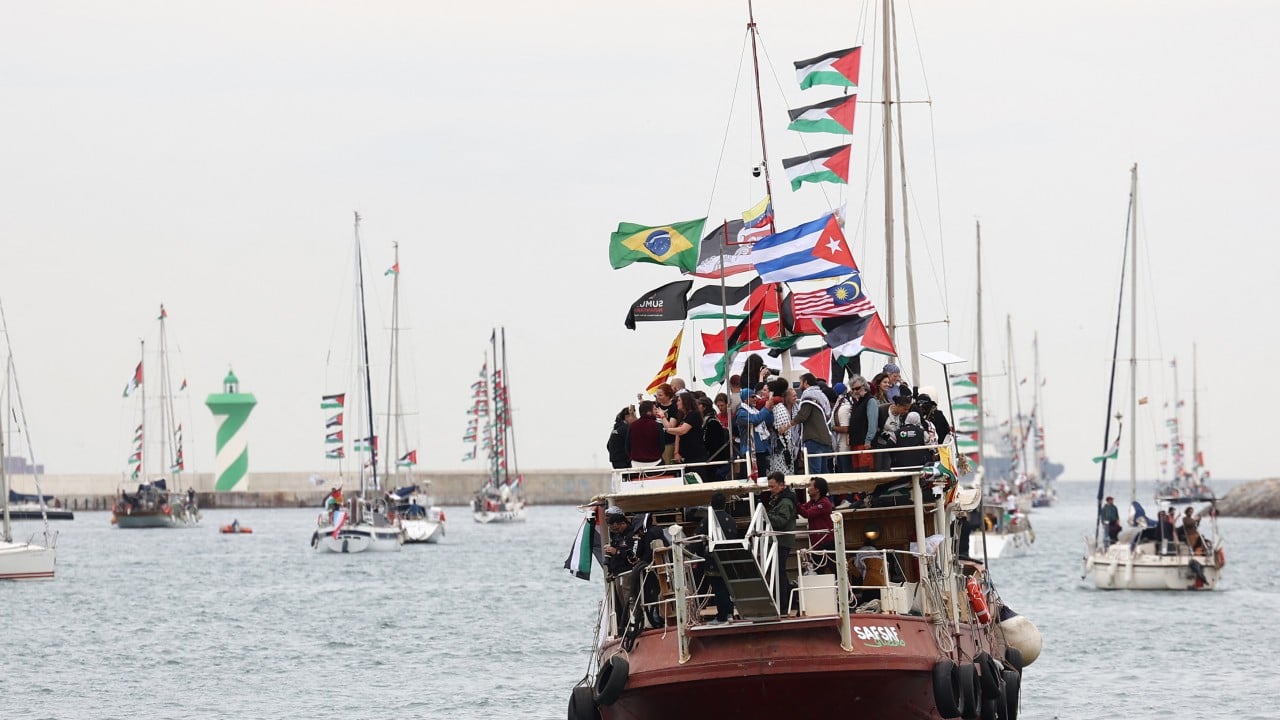
Two foreign activists from a Gaza-bound flotilla who were brought to Israel for interrogation have appeared before an Israeli court, a rights group defending them has said.
The flotilla of more than 50 vessels had set sail from France, Spain and Italy with the aim of breaking an Israeli blockade of Gaza and bringing supplies to the devastated Palestinian territory.
Continue reading...
© Photograph: Amir Cohen/Reuters

© Photograph: Amir Cohen/Reuters

© Photograph: Amir Cohen/Reuters

Metal credit cards have become a visible symbol of premium banking, often associated with exclusivity, higher spending limits, and luxury benefits. Their weight and finish set them apart instantly, but the real question for most users is a practical one. Do metal credit cards actually offer enough value to justify the upgrade, or are they more about appearance than usefulness? Banks such as IDFC FIRST Bank offer premium credit cards that focus on feature-driven value rather than novelty alone.
Understanding what metal credit cards truly offer helps consumers decide whether the upgrade makes financial sense.
What Is a Metal Credit Card?
A metal credit card is exactly what it sounds like. The card is made partially or fully from metal rather than plastic. This design choice is usually paired with premium positioning, higher eligibility criteria, and enhanced benefits.
However, the material itself does not change how the card functions. Payments, acceptance, and security remain the same as any other credit card. The difference lies in the benefits it offers and the user segment it targets.
Why Are Metal Credit Cards Appealing?
Metal credit cards appeal to users who value premium experiences and visible differentiation. The physical feel of the card creates a sense of exclusivity that plastic cards cannot replicate.
Beyond appearance, metal cards are often positioned as top-tier products with added privileges such as higher reward rates, travel benefits, and lifestyle perks. For some users, this alignment of status and features is appealing.
The real test is whether the benefits justify the annual fee.
Benefits That Usually Come with Metal Credit Cards
Metal credit cards typically include a range of premium features, though the exact mix varies by issuer. Before considering an upgrade, it helps to understand what these cards generally offer.
Enhanced Rewards: Higher reward rates on travel, dining, or premium spends.
Travel Privileges: Airport lounge access, trip cancellation cover, and travel insurance.
Higher Credit Limits: Greater flexibility for large purchases and improved credit utilisation.
Priority Service: Dedicated customer support and faster issue resolution.
These benefits, not the metal itself, determine whether the card is worth holding.
Are Metal Credit Cards Worth the Annual Fee?
Most metal credit cards come with higher annual fees than standard cards. Some also have strict spend-based conditions to justify fee waivers.
Users must evaluate whether the benefits they actually use outweigh these costs. A card that looks impressive but remains underutilised offers poor value.
For many users, a premium plastic card with similar benefits may deliver better cost efficiency.
Who Truly Benefits from Metal Credit Cards?
Metal credit cards are best suited for individuals with consistent high spending, frequent travel, and regular need of premium services.
For such users, benefits like lounge access, reward acceleration, and travel insurance can offset the annual fee over time. The card becomes a tool rather than a statement.
For moderate spenders, the same benefits may remain unused, making the upgrade unnecessary.
Digital Experience Still Matters More
Regardless of material, the day-to-day experience of using a credit card is digital. Mobile apps, real-time alerts, spend tracking, and easy service requests matter far more than the card’s weight.
A metal credit card with poor digital support will always underperform compared to a well-designed card with strong digital features. Usability should never be sacrificed for aesthetics.
Applying With Clear Expectations
Before user apply online for credit card upgrade, users should carefully review eligibility criteria, fee structures, and benefit limits.
Applying purely for prestige often leads to disappointment when the benefits do not align with lifestyle or spending patterns. A thoughtful credit card decision should always be based on usage, not appearance. Comparing features across premium cards helps avoid overpaying for design alone.
Conclusion
Metal credit cards can be worth the upgrade for users who fully utilise their premium features and maintain high spending levels. However, the metal itself adds no functional value. What matters is whether the rewards, travel privileges, and service benefits justify the higher fees.
For many consumers, practical benefits outweigh visual appeal. Institutions like IDFC FIRST Bank continue to offer premium credit card options that focus on real usage value, allowing customers to choose substance over surface and make upgrades that genuinely fit their financial lifestyle.


Warlpiri girl went missing on Saturday 25 April from a town camp and was found dead five days later
Warning: This article contains references to Indigenous Australians who have died
Northern Territory police have charged Jefferson Lewis with murder over the death of five-year-old Kumanjayi Little Baby.
The Warlpiri girl went missing on Saturday 25 April from her bed in a town camp near Alice Springs.
Indigenous Australians can call 13YARN on 13 92 76 for information and crisis support; or call Lifeline on 13 11 14 or Mensline on 1300 789 978
Continue reading...
© Photograph: Em Jensen/The Guardian

© Photograph: Em Jensen/The Guardian

© Photograph: Em Jensen/The Guardian