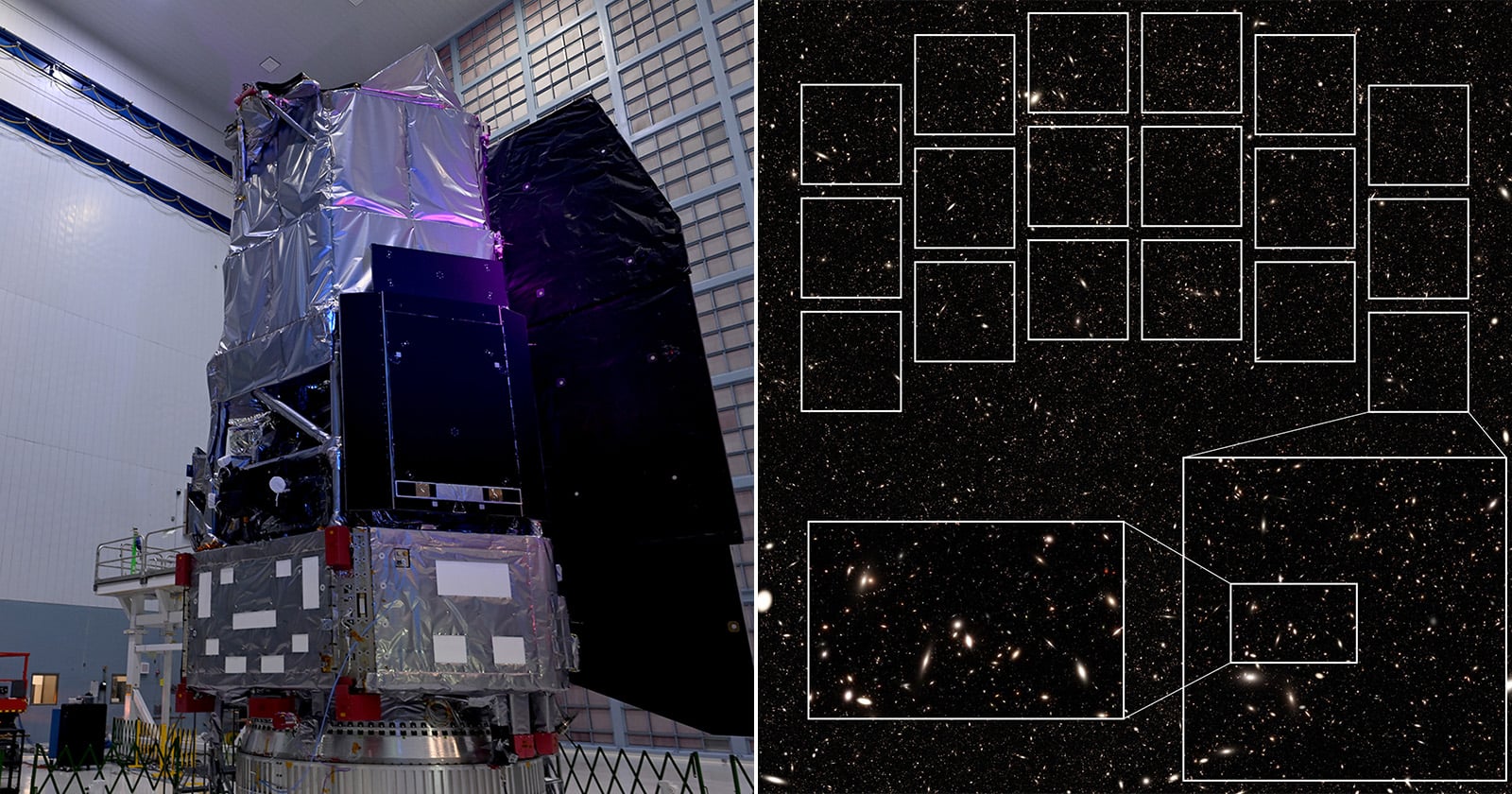
NASA celebrated its revolutionary Nancy Grace Roman Space Telescope (NGRST) yesterday, showing the completed observatory off to the world and announcing that the mission was not only ahead of schedule but, in a rarity for cutting-edge scientific projects, under budget.
First recorded in 687BC, the meteoroids were once part of the tail of a comet discovered in 1861
This week, the annual Lyrid meteor shower returns to the spring skies. Although active since 16 April, the shower peaks during the late evening of Wednesday 22 April and early the next morning.
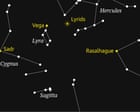
The chart shows the view looking east from London at 00.01 (BST) on Thursday 23 April. The origin point of the meteors, known as the radiant, is labelled Lyrids. It sits in the constellation of Lyra, the Lyre, close to the bright star of Vega.
For the first time in more than 50 years, NASA launched a mission to the Moon. A lot has changed since 1972, when we last checked in on the enormous, rocky satellite, but there is much to learn—and revisit—when it comes to traveling through deep space and considering what, as NASA describes it, a “long-term return” to our lunar companion could look like. The Artemis II mission, which is currently underway and scheduled to last a total of 10 days, has also released some remarkable images of our home planet.
A striking image of the Earth “setting” behind the cratered Moon takes a truly unique view of our planet and prompts us to consider our perspective. It’s reminiscent of one of the most iconic photographs of all time, known as “Earthrise,” which was snapped by astronaut William Anders during the 1968 Apollo 8 mission—the first crewed trip to the Moon.
The Earth setting beyond the Moon
Artemis II is scheduled to return to Earth on the evening of April 10, when the crew will splash down into the Pacific Ocean off the California coast.
The Moon’s cratered surfaceThe far side of the Moon

 Login
Login