Reading view

Bengal: Ballot box row erupts in Kolkata as TMC alleges tampering ahead of count

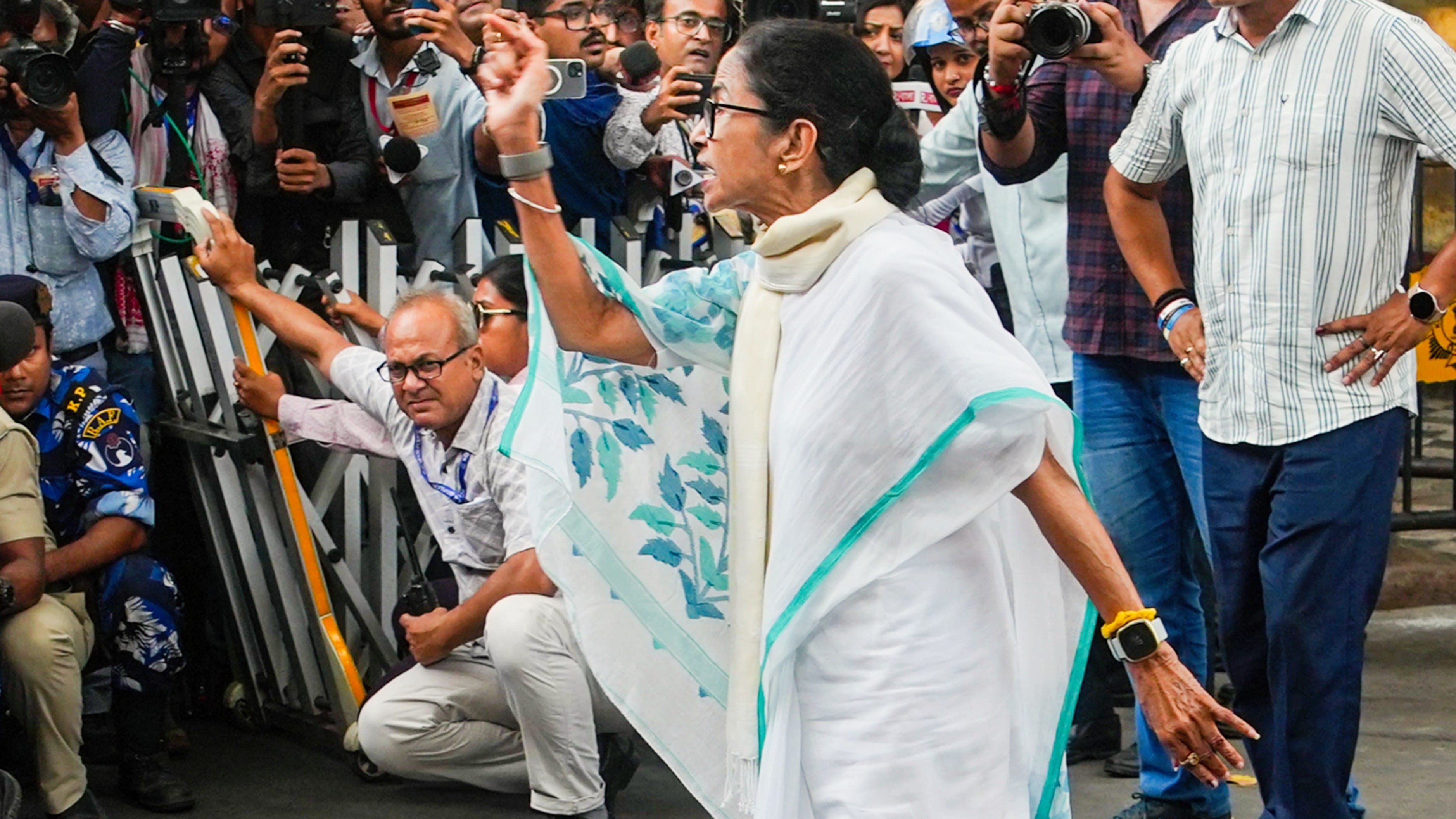
Senior Trinamool Congress (TMC) leaders including Shashi Panja and Kunal Ghosh staged a dharna outside Kolkata's Netaji Indoor Stadium on Thursday amid rising tensions over the alleged handling of ballot boxes linked to the recently concluded West Bengal Assembly elections, which were held in two phases on 23 April and 29 April, with counting scheduled for 4 May.

The protest was triggered by a video posted by the party on social media that allegedly shows CCTV footage of attempts to open ballot boxes without the presence of authorised representatives from all political parties. The footage has not been independently verified by National Herald. However, its circulation appears to have heightened concern on the ground, with party workers gathering in large numbers outside the counting centre.

According to sources at the site, TMC leaders have accused officials linked to the BJP and the Election Commission of India (ECI) of attempting to open ballot boxes without following due procedure. There has been no official confirmation of these allegations so far, and election authorities are yet to issue a detailed response.

Dr Panja, a senior TMC leader and minister in the West Bengal government, has been at the forefront of the protest. Alongside her, Ghosh, a prominent party spokesperson and Assembly candidate from Beleghata, joined the sit-in, calling for transparency and strict adherence to electoral norms.

❗️ALARMING❗️

This is the murder of democracy in broad daylight.

CCTV footage has exposed how @BJP4India, in active collusion with the @ECISVEEP, is opening ballot boxes without the presence of any relevant party stakeholders. This is gross electoral fraud being committed openly… pic.twitter.com/aSe36kGKPI

— All India Trinamool Congress (@AITCofficial) April 30, 2026

The developments come after chief minister Mamata Banerjee urged party workers to keep a close watch on electronic voting machines (EVMs) and counting centres, asking them to remain vigilant to safeguard the integrity of the electoral process.

Earlier in the day, Banerjee released a video message thanking voters for what she described as a high level of participation in the polls. She also expressed confidence in her party’s prospects, stating that the TMC would secure no fewer than 226 seats in the 2026 West Bengal Assembly elections.

Amid the ongoing protest, Banerjee is reportedly on her way to Netaji Indoor Stadium and is expected to join the dharna alongside party colleagues, a move likely to intensify political attention around the counting process.

Security has been tightened in and around the stadium, with authorities closely monitoring the situation. While the claims emerging from the unverified video remain unconfirmed, their impact on the political atmosphere is evident, particularly against the backdrop of continuing concerns around procedural transparency in the conduct of elections.

  •  

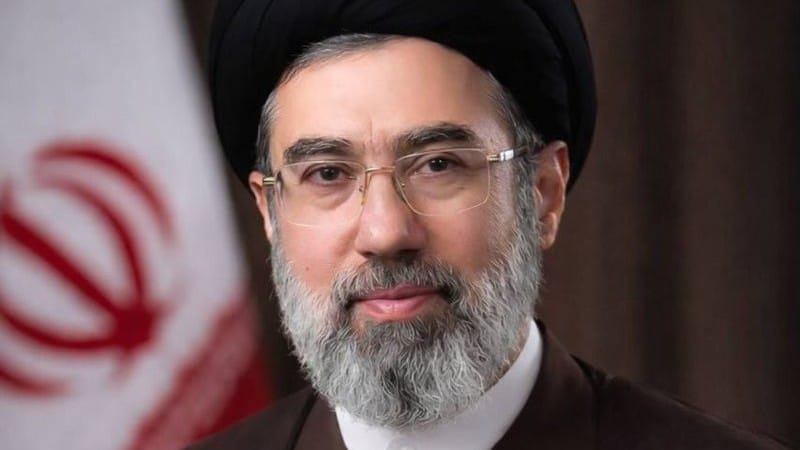
Supreme Leader Mojtaba Khamenei vows to protect Iran’s nuclear, missile capabilities

Mojtaba Khamenei on Thursday declared that Iran would never surrender its nuclear and missile capabilities, striking a defiant tone amid escalating tensions with the United States and fragile ceasefire negotiations following the Iran war.

In a written statement broadcast on Iranian state television, Khamenei said Iran’s military and technological capabilities were “national assets” that would be protected under all circumstances.

“Ninety million proud and honorable Iranians inside and outside the country regard all of Iran's identity-based, spiritual, human, scientific, industrial and technological capacities — from nanotechnology and biotechnology to nuclear and missile capabilities — as national assets, and will protect them just as they protect the country's waters, land and airspace,” Khamenei said.

Defiant message to US

Khamenei maintained the confrontational rhetoric that has characterised his leadership since assuming power after the killing of his father, former supreme leader Ali Khamenei, during the opening phase of the conflict on 28 February.

Referring to the United States as the “Great Satan”, a phrase long used by Iranian revolutionary leaders, Khamenei said American forces had no legitimate role in the Persian Gulf.

“Foreigners who come from thousands of kilometres away to act with greed and malice there have no place in it — except at the bottom of its waters,” he declared.

He also said a “new chapter” was being written in the region’s history.

Strait of Hormuz remains central flashpoint

The remarks came as the confrontation over the Strait of Hormuz continued to shake global energy markets.

Iran has maintained effective control over shipping movement through the strait, through which nearly one-fifth of global crude oil supplies normally pass.

Brent crude prices surged as high as USD 126 per barrel on Thursday amid fears of prolonged disruption.

Khamenei signalled that Tehran intended to maintain tight control over the waterway, portions of which lie within Iranian and Omani territorial waters.

He claimed Iran’s “legal rules and new management” of the Strait of Hormuz would ultimately benefit regional countries and improve Gulf security.

However, Gulf Arab nations, especially the United Arab Emirates, have criticised Iran’s actions and described its effective control over commercial shipping as comparable to piracy.

Reports have also suggested Iran had been charging certain vessels millions of dollars to transit through the strait.

Trump weighs fresh strategy

The remarks came as Donald Trump reportedly reviewed new options aimed at reopening the Strait of Hormuz while maintaining pressure on Iran.

According to a senior US administration official quoted in media reports, Washington is considering a plan under which the US Navy would continue blockading Iranian ports while working with allies to raise costs for Tehran if it attempts to obstruct energy flows.

The official said it was one among several diplomatic and military options being examined by the White House.

The US blockade is aimed at preventing Iran from exporting oil, a move designed to deprive Tehran of crucial revenue and potentially force production cuts due to storage shortages.

Nuclear issue remains unresolved

A recent Iranian proposal reportedly suggested postponing negotiations over Tehran’s nuclear programme to a later phase.

Trump has repeatedly said one of the central objectives of the war was preventing Iran from acquiring nuclear weapons capability.

Iran, however, continues to insist that its nuclear programme is peaceful, despite enriching uranium up to 60 per cent purity — levels close to weapons-grade material.

Pakistan facilitating indirect talks

Pakistan said on Thursday it continued to facilitate indirect communication between Washington and Tehran.

“If the two parties can engage in real-time conversations, that could ease the sticking points,” Pakistani foreign ministry spokesperson Tahir Andrabi said during a media briefing.

He declined to disclose details of any proposals exchanged between Iran and the United States.

Oil markets and global economy under pressure

The standoff has intensified pressure on the global economy, with rising oil prices fuelling concerns about inflation, supply disruptions and wider geopolitical instability.

The conflict has already severely disrupted Gulf shipping and energy flows, creating uncertainty across international financial and commodity markets.

The Iran-US ceasefire has now held for roughly three weeks, but both sides remain deeply divided over nuclear issues, sanctions and control of strategic maritime routes.

  •  

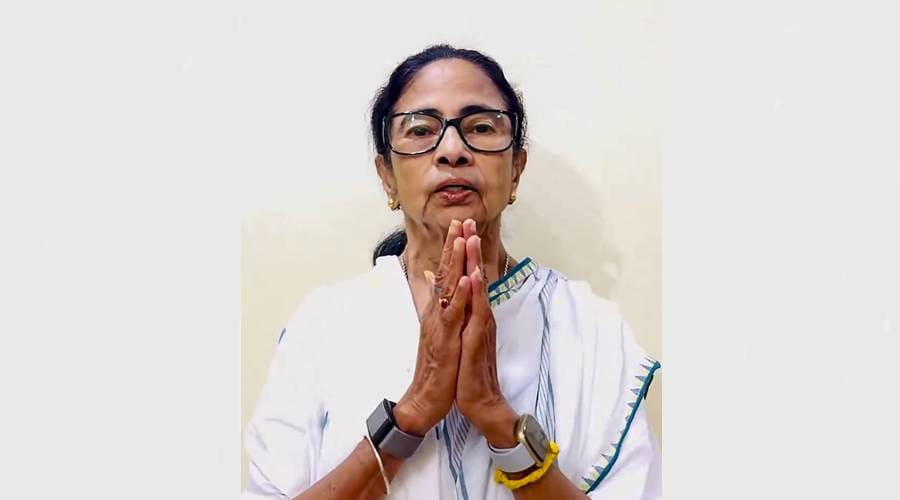
Mamata Banerjee dismisses exit polls, asserts TMC will win over 226 seats

Mamata Banerjee on Friday rejected exit poll projections predicting a victory for the Bharatiya Janata Party in the West Bengal Assembly elections, alleging that the surveys were circulated “at the instruction of the BJP” to demoralise Trinamool Congress workers ahead of counting on 4 May.

In a video message shared on social media, the Trinamool Congress chief claimed television channels had aired projections sent directly from the BJP office.

“What was shown on television was circulated from the BJP office at 1.08 pm. Money was paid to ensure it was aired. I have specific information. They are saying forcefully that this has to be done,” Banerjee alleged.

Most exit polls released after the completion of voting predicted a majority for the BJP in the 294-member Assembly, where the halfway mark is 148 seats.

‘We will cross 226 seats’

Projecting confidence, Banerjee asserted that the TMC would comfortably return to power with a decisive mandate.

“We will cross 226 seats in 2026. We might cross even 230 seats. I have complete faith in the massive mandate given by the people,” she said.

She thanked voters for participating in large numbers despite what she described as “heat and alleged intimidation”.

In a strongly worded political message, Banerjee said, “Those who tried to subdue Bengal have been subdued by the ballot,” while also praising TMC workers who, according to her, “fought relentlessly and endured attacks”.

Targets Amit Shah, central forces

The chief minister accused Amit Shah and central forces of acting in favour of the BJP during polling.

She alleged that women, children, journalists and TMC workers were assaulted in several areas and claimed many of her party workers had been deliberately detained to prevent them from functioning as polling agents.

Banerjee specifically referred to areas such as Bhatpara, Naihati, Jagaddal and even her own constituency Bhabanipur, alleging intimidation and late-night searches.

Referring to the reported death of an elderly voter in Udaynarayanpur during polling, Banerjee expressed sympathy for the family.

She said the TMC would stand beside them and alleged that her party workers “faced one-sided violence but did not leave the field”.

আমরা মা-মাটি-মানুষের সরকার গঠন করছি।

জয় বাংলা! pic.twitter.com/igVP0FlM9G

— Mamata Banerjee (@MamataOfficial) April 30, 2026

Exit polls part of ‘larger conspiracy’

Banerjee claimed the exit poll narrative was designed to weaken the morale of TMC workers and stabilise financial markets before counting.

“They are playing their last game through sections of the media to psychologically weaken our workers and reassure the share market,” she alleged.

She also referred to past elections in 2016 and 2021, suggesting that exit polls had previously failed to accurately predict the final outcome in Bengal.

Directs cadres to guard EVM strong rooms

In one of the sharpest parts of her address, Banerjee instructed party leaders, candidates and workers to remain vigilant around strong rooms storing Electronic Voting Machines.

“They have planned that when EVMs are moved from strong rooms to counting halls, attempts could be made to change the machines. Do not be negligent,” she warned.

She urged party workers to monitor counting centres in shifts through the night.

“Stay awake through the night. In the morning, hand over charge to another team and only then go to sleep. If I can stand guard, you can also stand guard,” Banerjee said.

She also advised candidates not to leave counting tables unattended, even briefly, unless replaced by “trusted people who cannot be bought”.

Calls for restraint

Despite the aggressive tone of her allegations, Banerjee appealed to supporters to remain peaceful.

“Remain calm and disciplined. Have faith in the people of Bengal and have faith in Didi (Banerjee). Wait till the evening of May 4, you will get your answer,” she said.

The West Bengal election has witnessed one of the most intense contests in recent years, with both the BJP and TMC running aggressive statewide campaigns.

The counting of votes on 4 May is expected to decide whether Banerjee secures a fourth consecutive term or whether the BJP succeeds in ending the TMC’s long rule in the state.

Mamata Banerjee dismisses exit polls, asserts TMC will win over 226 seats
  •  

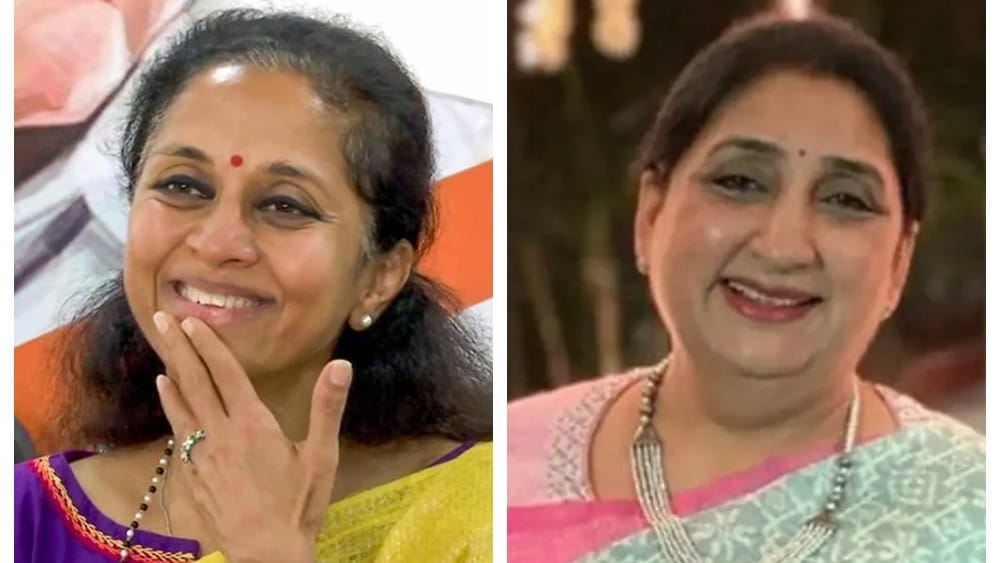
Won’t allow Pawar vs Pawar contests in future, says Supriya Sule

NCP (Sharad Pawar) MP Supriya Sule has said she will not allow 'Pawar vs Pawar' electoral contests in the future, asserting that members of the Pawar family will not be pitted against one another in elections.

In an interview with a Marathi news channel, Sule made it clear that she herself would not contest against any member of the Pawar family and would also discourage others from doing so. She said while family members may be engaged in different political roles, unity within the family would be maintained when it comes to elections.

The question of a Pawar-versus-Pawar contest arose after recent remarks by Jay Pawar, son of late Ajit Pawar, who said people in his father's constituency Baramati want him to contest elections. However, Jay added that he is currently working as a party worker.

Following his statement, speculation grew that Baramati could witness a Pawar vs Pawar contest in 2029. Responding to this, MLA Rohit Pawar indirectly accused the BJP of attempting to erase the Pawar legacy in Baramati. He also said that the people of Baramati do not want such a contest. Yugendra Pawar, too, has stated that he will not contest against Jay in Baramati.

The constituency has already seen intra-family contests. In the last Lok Sabha elections, Baramati witnessed a contest between Sule and Sunetra Pawar, wife of Ajit Pawar, in what was widely described as a 'nanad-bhabhi' (sisters-in-law) contest. Sule emerged victorious.

This was followed by another family contest in the Assembly elections, where Ajit Pawar faced his nephew Yugendra Pawar. Ajit Pawar won that election by a margin of over one lakh votes.

Majha Vision Supriya Sule : लिहून ठेवा पवार विरुद्ध पवार लढणार नाही, सुप्रिया सुळे EXCLUSIVE
MajhaVision #MajhaMaharashtraMajhaVision #ABPMajha #MajhaVision2026 #SupriyaSule pic.twitter.com/iTDkubrRUh

— ABP माझा (@abpmajhatv) April 30, 2026

After these contests, Sule did not field a candidate from the Sharad Pawar faction against Sunetra Pawar in the bypoll held after Ajit Pawar’s death, and the family campaigned together. The result of this by-election is expected on 4 May.

The Pawar family has traditionally maintained a separation between family and politics. Even after the split in the NCP, Ajit Pawar and Sharad Pawar remained connected at a family level. Following Ajit Pawar’s death in a plane crash in January, the sense of unity within the family has reportedly strengthened further and is now being reflected politically, beginning with the Baramati bypoll.

After voting for the by-election concluded, Sharad Pawar hosted a family gathering at Modi Bagh, ostensibly to mark the engagement of Sule’s daughter Revati. It remains unclear whether any political discussions took place during the meeting.

However, Sule’s firm statement against any future Pawar vs Pawar contest has fuelled speculation that the family is keen to preserve its political legacy through unity. She said emphatically that she would never allow such a situation to arise. Becoming emotional, she added that if such circumstances were to emerge, she would take a “major decision” rather than allow members of the family’s younger generation to contest against one another.

Referring to the family’s roots, Sule said she does not support the idea of contesting elections against one’s own relatives. At the same time, she clarified that in her role as working president of NCP (Sharad Pawar), her ideological battle against the BJP’s style of functioning would continue.

  •  

Jerrie Cobb Had the “Right Stuff,” But at the Wrong Time

There is one aspect of the space race that America lost decisively, and it had to do with gender. The first woman ever go into space was Russia’s Valentina Tereshkova, in 1963. America didn’t send its first woman to space until twenty years later when Sally Ride flew on the Space Shuttle Challenger in 1983.

But while America lagged, it was not because of a lack of qualified candidates.

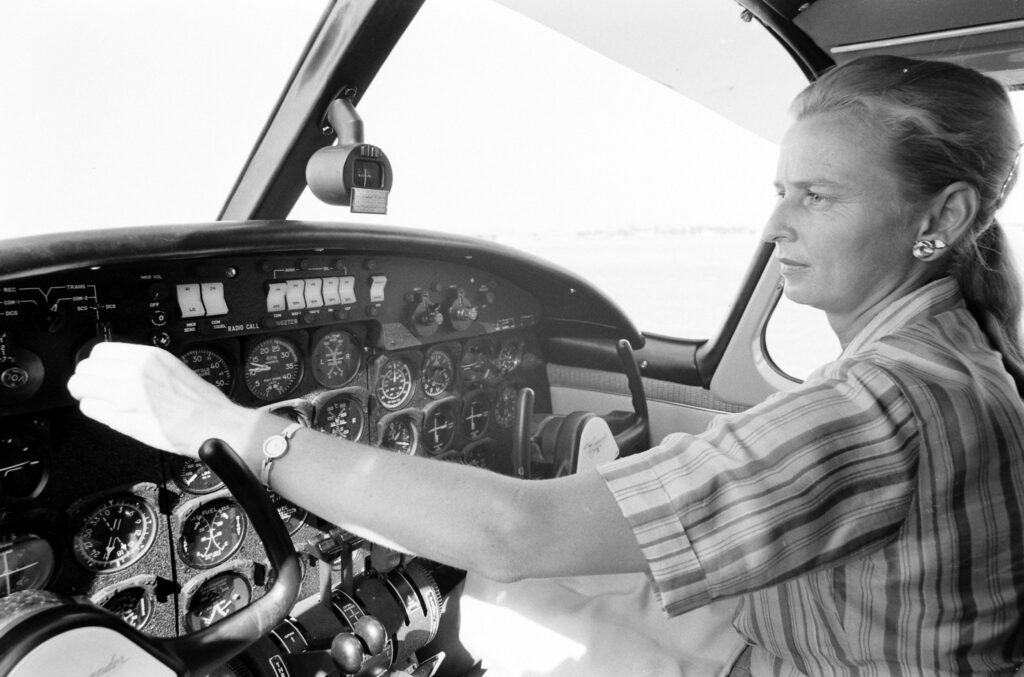
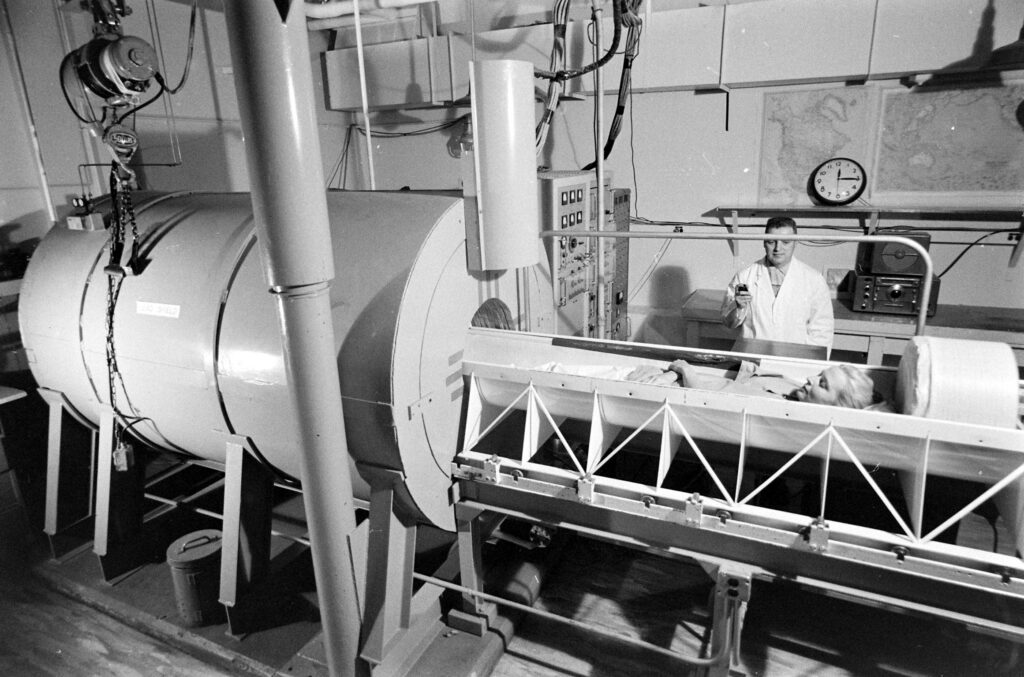
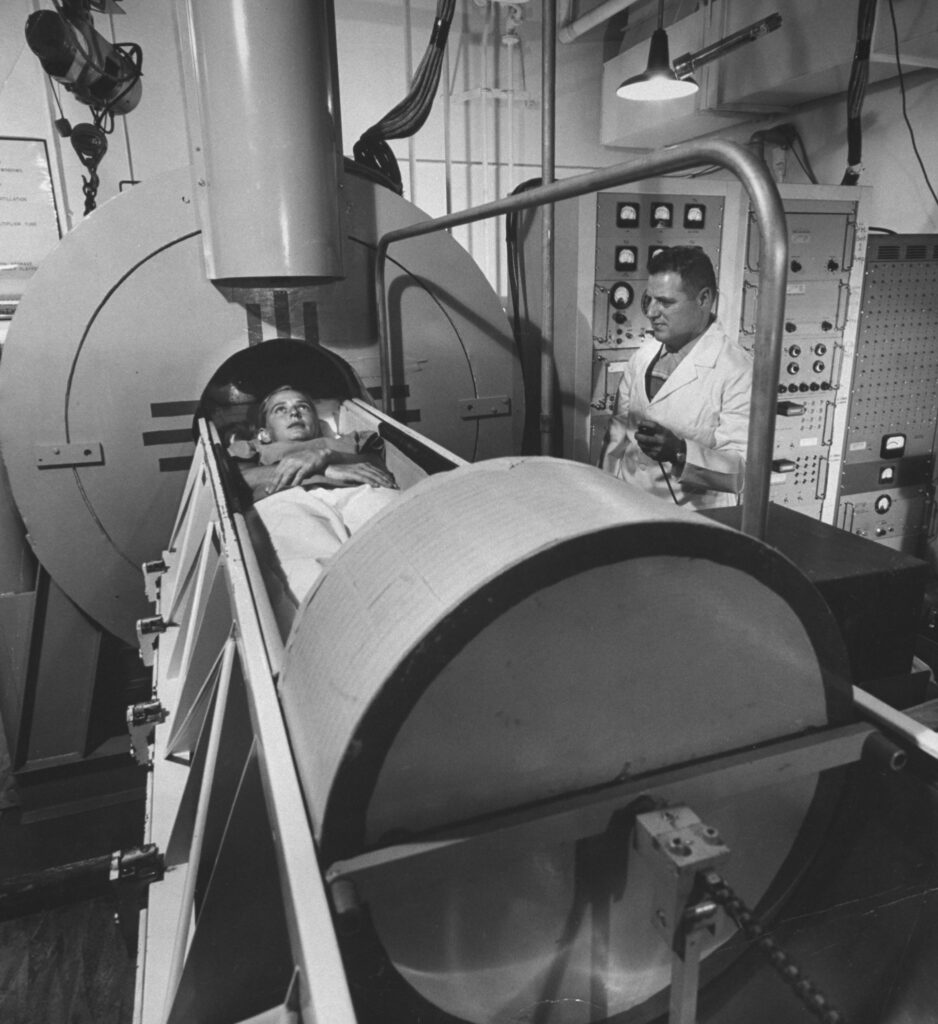
In 1960 LIFE ran a story on pilot Jerrie Cobb headlined “A Lady Proves She’s Fit for Space Flight.” Cobb, 29, had just become the first woman to pass all the tests that America’s male astronauts had gone through as part of Project Mercury.

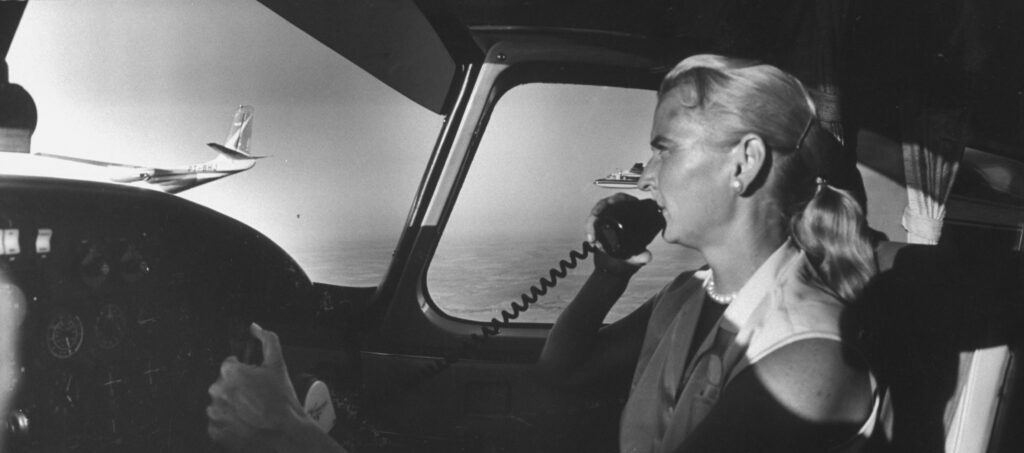
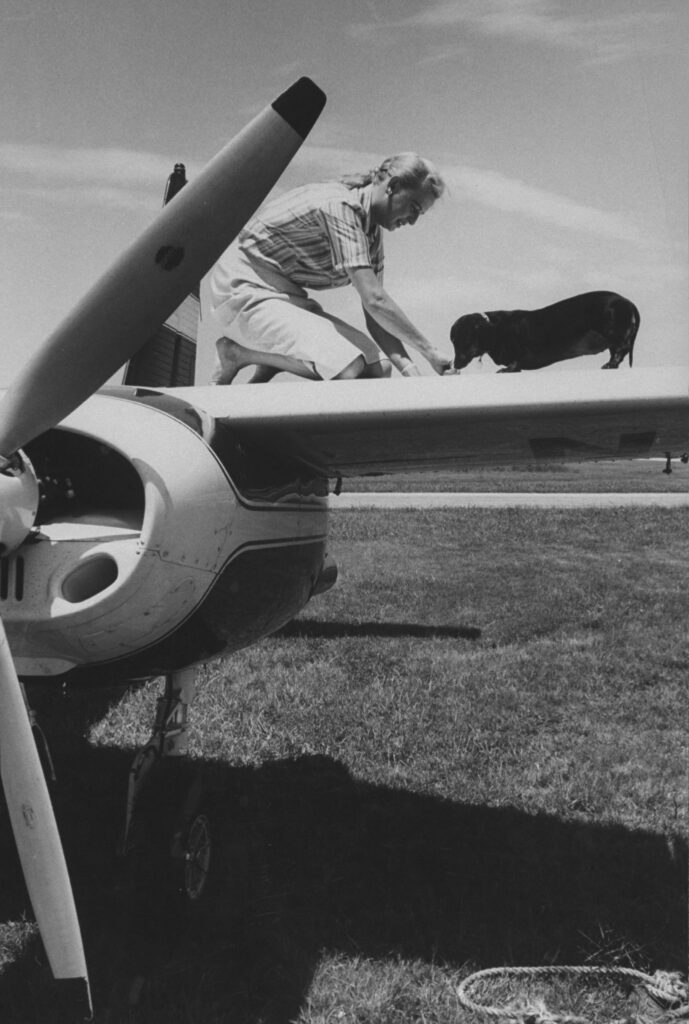
Cobb, from Oklahoma, had been taught to fly by her father and earned her first pilot’s license at age 16. She then set world records for speed, altitude and distance in the twin-engine class. Her accomplishments drew the attention of Dr. W. Randolph Lovelace II, who ran America’s astronaut training program. In 1959 Lovelace invited Cobb to try out.

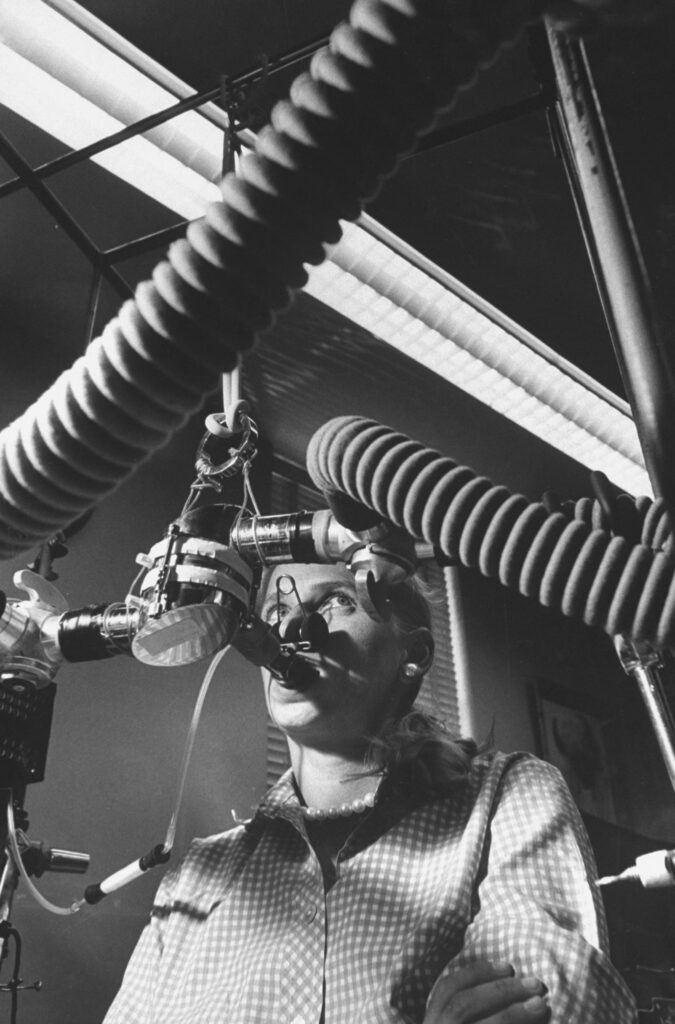
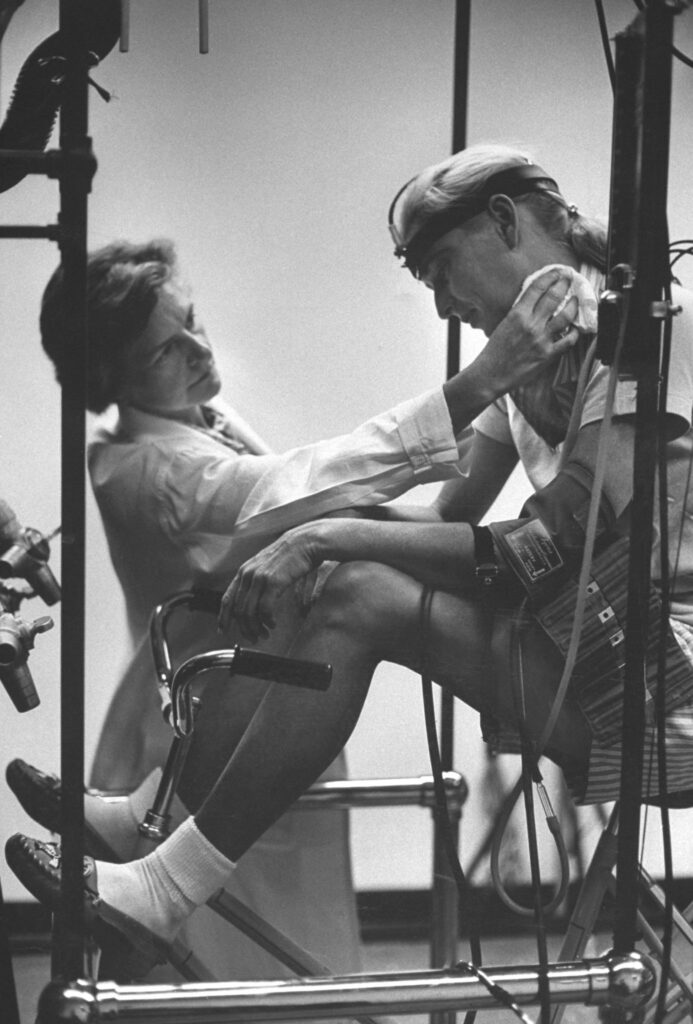
Cobb withstood the gauntlet, demonstrating that she had what author Tom Wolfe would famously refer to as “the right stuff.” LIFE reported, “After a series of exhaustive and exhausting medical tests, 75 in all, during which she complained less than the Mercury men had, Jerrie Cobb easily passed the rigid requirements laid down for astronauts-in-training.”

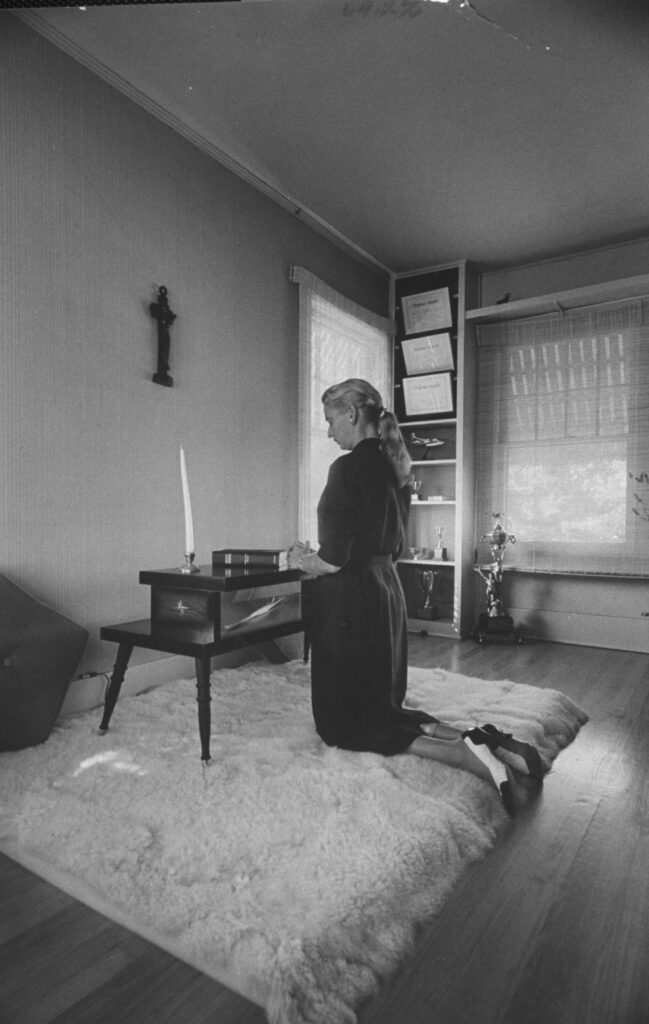
LIFE staff photographer Ralph Crane documented Cobb going through her challenges. The magazine concluded, “It now appears inevitable that manned space flight will at some future date become co-educational.”

But that future date turned out to be more far off than expected.

In 1963 the frustration oozed from pages of LIFE when the magazine reported on Tereshkova’s history-making flight for Russia. By that time a dozen other American women had followed Cobb in passing the astronaut qualifying tests. LIFE’s story, headlined “The U.S. Team is Still Warming up the Bench,” fumed about the opportunity denied to these women, including Cobb, who was now what the magazine described as a “never-consulted consultant” to NASA administrator James Webb.

LIFE said, “Two years ago, when Russian space scientists visiting the U.S. first let on that they had a training program for female cosmonauts, Jerrie Cobb went to Washington, collaring anyone who would listen, pleading for a formal American woman-in-space program. The best she got was polite indifference.”

Today a NASA tribute page to Cobb explains why she never had the opportunity to go to space by saying “any hopes of becoming an official NASA astronaut were dashed when she, as a private citizen, was denied access to training facilities at a Navy base in Florida. At the time, all astronaut candidates were required to have military jet fighter experience, and the military did not allow female jet pilots.” The Air Force would not began to train female jet pilots until the mid-1970s.

So that was that. In 1999, after John Glenn flew a celebrated space mission at age 77, some pushed for Cobb to get the same chance, but she was again denied.

While Cobb never went to space, she demonstrated heroism in other—arguably more impactful—ways as she used her pilot’s skills to serve humanity. She moved to South America and spent 30 years delivering medical supplies to indigenous populations in hard-to-reach areas. The governments of Brazil, Ecuador, Paraguay, Colombia and France honored Cobb for her humanitarian work, and in 1981 she was nominated for the Nobel Prize.

Cobb died in 2019 at the age of 88.

In 1960 Jerrie Cobb became the first U.S. woman to qualify to become an astronaut, though she was never given an opportunity to go up into space.

Ralph Crane/Life Picture Collection/Shutterstock

In 1960 Jerrie Cobb became the first U.S. woman to qualify to become an astronaut, though she was never given an opportunity to go up into space.

Ralph Crane/Life Picture Collection/Shutterstock

Jerrie Cobb, who became a licensed pilot as a teenager and would later qualify to become an astronaut, flew a plane in her native Oklahoma, 1960.

Ralph Crane/Life Picture Collection/Shutterstock

Project Mercury’s Dr. W. Randolph Lovelace II questioned Jerrie Cobb as part of his process of determining if Cobb was capable of becoming an astronaut, 1960.

Ralph Crane/Life Picture Collection/Shutterstock

This pulminary test was one of the many hurdles that Jerrie Cobb passed in order to prove her fitness as an astronaut, 1960.

Ralph Crane/Life Picture Collection/Shutterstock

Jerrie Cobb in 1960 passed all the qualifying tests to become America’s first female astronaut but was never given the opportunity to go up into space.

Ralph Crane/Life Picture Collection/Shutterstock

Jerrie Cobb in 1960 passed all the qualifying tests to become America’s first female astronaut but was never given the opportunity to go up into space.

Ralph Crane/Life Picture Collection/Shutterstock

Jerrie Cobb in 1960 passed all the qualifying tests to become America’s first female astronaut but was never given the opportunity to go up into space.

Ralph Crane/Life Picture Collection/Shutterstock

Jerrie Cobb, a veteran pilot who qualified to become an astronaut in 1960, said she thought of the sky as “God’s unspoiled world which humans should not trespass upon without a feeling of reverance.”

Ralph Crane/Life Picture Collection/Shutterstock

Jerrie Cobb in 1960, after she became the first woman to pass the tests required to become an astronaut.

Ralph Crane/Life Picture Collection/Shutterstock

Jerrie Cobb in 1960 passed all the qualifying tests to become America’s first female astronaut but was never given the opportunity to go up into space.

Ralph Crane/Life Picture Collection/Shutterstock

The post Jerrie Cobb Had the “Right Stuff,” But at the Wrong Time appeared first on LIFE.

  •  

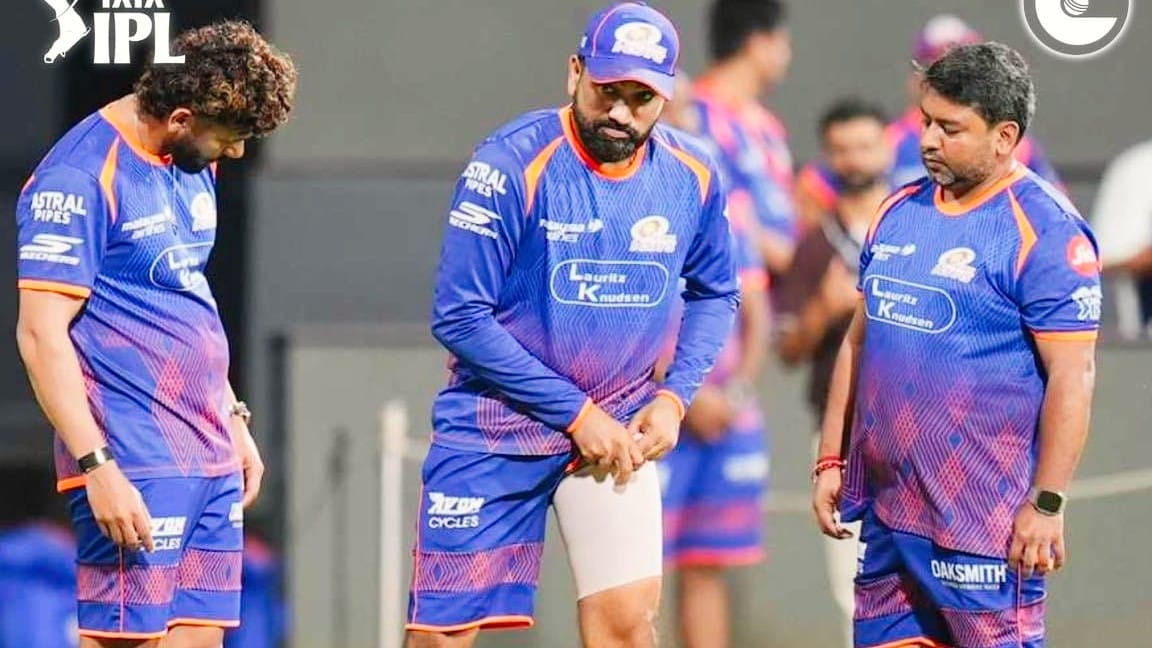
Questions over rest of season pop up as Rohit Sharma turns 39

Social media may be buzzing with birthday wishes for Rohit Sharma, a people’s hero and former captain of Mumbai Indians, but he would have preferred a more active 39th birthday on Thursday, 30 April. A hamstring injury has now sidelined him for four games in a row and on Wednesday evening, he was again a spectator in the dugout, watching the five-time champions crash to their sixth defeat in eight games.

“Rohit’s gonna take a couple of more games. He’s been trying. It’s not up to exactly where he would want, so not available for the team,’’ skipper Hardik Pandya said after winning the toss and opting to bat. The irony is, despite the 'Mumbai Paltan' riding on Ryan Rickleton’s breezy century to rustle up 243/5, it was not enough as Sunrisers Hyderabad pulled off another monster chase, of which we have seen a dime a dozen this season.

The million-dollar question for Sharma's fans is: will this be his IPL curtain call? It’s turning out to be yet another poor season for one of the most successful teams in IPL history as they languish in ninth position, and Sharma missing out two more would bring matters down to the last four league games, now that their chances of making the play-offs are all but gone. What’s more, MI’s gamble of pitching an all-foreign pair of Rickleton and Will Jacks at the top of the order paid off handsomely last night as they put up 93 runs in 7.1 overs. 

Such a forced time-out at this stage of his career, when batters rely on muscle memory to time the ball, is simply bad news. More so as Sharma had a fair start to the season in the first four games. While he looked in good touch with a 38-ball 78 in their season-opener against Kolkata Knight Riders, the former captain had totalled 137 runs in four games at an average of 45.66 and a strike rate of 165.06. But that strike rate is no longer par in this format, when matches are being won or lost in the powerplays, even if one is Rohit Sharma.

It was an interesting piece of trivia that the IPL 'El Clasico' between MI and CSK last week featured neither Sharma nor Mahendra Singh Dhoni, for the first time. While it’s a testimony to their longevity as players, it’s also a stark reminder that all good things come to an end. While MSD’s presence is largely attributable to the brand value he brings to the table for the yellow shirts, Sharma has limited game time in international cricket in only ODIs — making it an imperative for him to shine in the IPL.

The next round of ODIs is against a weaker opposition — Afghanistan at home in June — and any questions over fitness or form will once again scupper the veteran’s place in the team. The ambition of a final flourish in the 50-over World Cup in South Africa, no prizes for guessing, has once again begun to look like a long shot for the ‘Hitman.’

  •  

Great Indian Bustard chick born in Gujarat after decade goes missing, predation feared

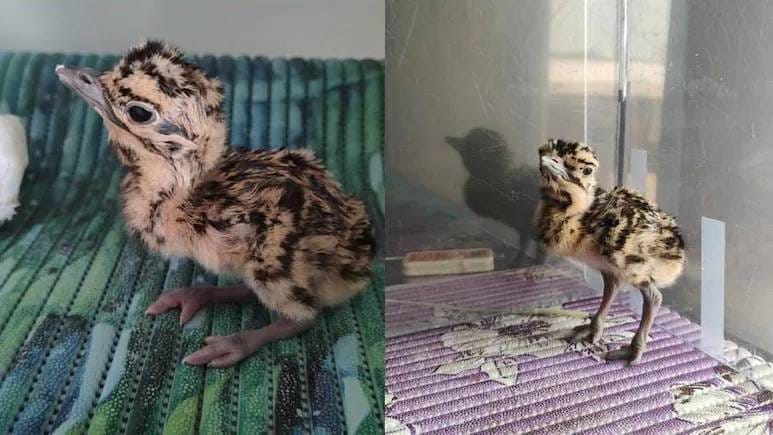
A month-old chick of the critically endangered Great Indian Bustard (GIB), born in the wild in Gujarat for the first time in nearly a decade through an experimental conservation programme, has gone missing in Kutch, raising fears that it may have been killed by predators.

The chick, hatched on 26 March in the Naliya grasslands of Kutch through the “jumpstart technique”, has not been located for the past three to four days despite extensive searches by teams from the Gujarat forest department and the Wildlife Institute of India (WII).

Conservation breakthrough ends in uncertainty

The hatching had earlier been hailed as a major conservation milestone because Gujarat had not recorded the birth of a wild GIB chick in the region for almost ten years.

The chick was born using the “jumpstart approach”, a captive-to-wild conservation method aimed at increasing the species’ population.

Under the technique, a fertile egg from a captive breeding centre is transported and placed into the nest of a wild female GIB sitting on an infertile egg, allowing the chick to hatch and be raised in natural conditions.

Forest officials fear predation

In-charge Principal Chief Conservator of Forests Jaipal Singh said there were concerns that the chick may have been hunted by predators after moving beyond the monitoring zone.

“The chick survived until it reached the stage of taking its first flight. However, it moved beyond the scope of our monitoring subsequently,” Singh said.

The Kutch forest department said that despite close surveillance by staff, wildlife watchers and WII experts, the bird could not be traced over the last few days.

“Since the area is a natural habitat for various wildlife, it is possible that it may have been hunted by them,” the department said.

Species faces extremely high mortality

Officials noted that the Great Indian Bustard faces severe survival challenges during its earliest stages of life.

According to the forest department, only around 40 per cent of laid eggs successfully hatch, and nearly 60 per cent of chicks do not survive beyond their first two months.

Because the bird nests on the ground, chicks remain highly vulnerable to predators such as jackals, foxes, feral cats, mongooses, birds of prey and monitor lizards.

Authorities said the jumpstart technique helps reduce egg predation but cannot fully eliminate the risks faced by newly hatched chicks in the wild.

Conservation efforts to continue

Despite the setback, officials said the breeding and restoration programme would continue.

Singh said the department would keep procuring fertile eggs from Rajasthan while also continuing efforts to release additional chicks into the Kutch landscape.

Two female Great Indian Bustards have also been tagged to help researchers monitor nests and collect breeding data for future conservation efforts.

The forest department said habitat restoration work was also underway, including fencing reinforcement, invasive vegetation removal, predator management and water conservation measures.

One of India’s rarest birds

The Great Indian Bustard is among the world’s rarest birds and is listed as critically endangered by the International Union for Conservation of Nature (IUCN).

Once found across large parts of India, its population has collapsed due to habitat loss, hunting, power line collisions and shrinking grasslands.

Today, the remaining population survives mainly in parts of Rajasthan and Gujarat.

Great Indian Bustard chick born in Gujarat after decade goes missing, predation feared
  •  

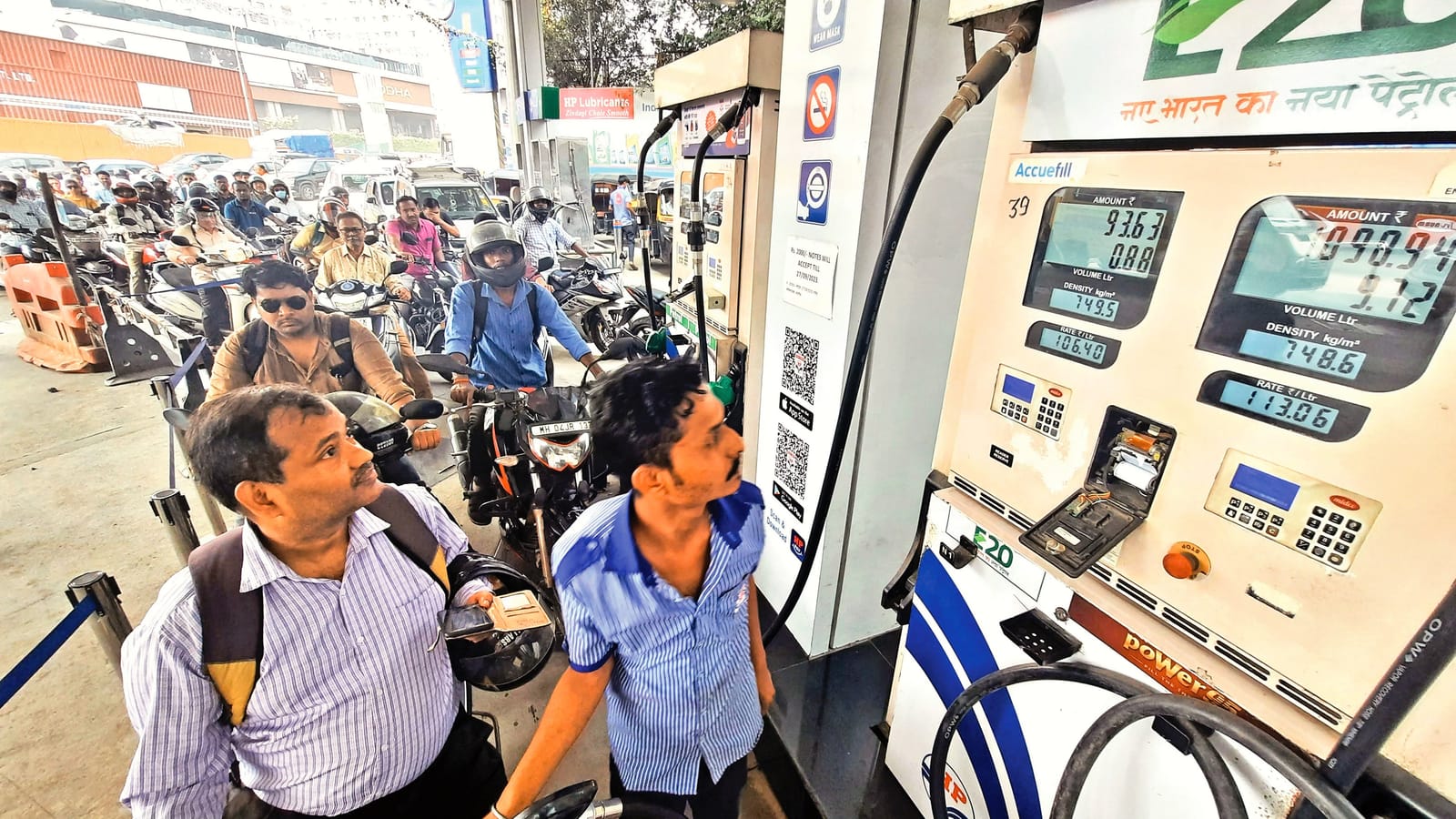
10,000 litres for a litre of fuel: Govt's ethanol push under scrutiny

India’s aggressive push to blend ethanol with petrol — positioned as a cleaner alternative to fossil fuels — could be worsening the country’s already severe water crisis, according to a report by India Today, drawing on findings first reported by Kisan Tak.

The core concern lies in the raw materials driving ethanol production. Crops such as sugarcane, maize and rice — all highly water-intensive — form the backbone of India’s ethanol programme. Climate expert and IPCC author Anjal Prakash noted that the policy risks compounding water stress because both sugarcane and maize demand significant water during cultivation and processing.

Ethanol blending involves mixing plant-derived alcohol with petrol to cut dependence on imported crude oil. India has been rapidly scaling up this programme, with rice emerging as a key feedstock. The government allocated 52 lakh tonnes of rice for ethanol production in 2024–25 and is targeting 90 lakh tonnes in 2025–26.

To enable this shift, the Centre plans to reduce the share of broken rice distributed through the public distribution system from 25 per cent to 10 per cent, diverting the surplus to distilleries.

Data cited in the report underscores the scale of the problem. Producing one litre of ethanol from rice requires roughly 10,790 litres of water, according to food secretary Sanjeev Chopra. Most of this water is consumed during cultivation rather than processing.

Growing one kilogram of rice typically needs between 3,000 and 5,000 litres of water. Since about 2.5 to 3 kg of rice is required to produce one litre of ethanol, the total water footprint exceeds 10,000 litres per litre of fuel.

There is no future for petrol and diesel vehicles; hydrogen and ethanol are highlighted as key fuels, says Nitin Gadkari. pic.twitter.com/DL24v2fF46

— Indian Tech & Infra (@IndianTechGuide) April 29, 2026

By comparison, maize requires about 4,670 litres and sugarcane around 3,630 litres of water per litre of ethanol. However, rice remains among the most water-intensive due to its low conversion efficiency — one tonne of rice yields only about 470 litres of ethanol.

The environmental cost extends beyond water use. The report mentions that ethanol production generates large volumes of wastewater, known as vinasse, which can contaminate surface and groundwater if not properly treated, Prakash warned.

The original Kisan Tak report, by editor Om Prakash, highlighted a striking contradiction: farmers are often blamed for groundwater depletion when growing rice, yet industries use far more water to convert the same crop into fuel. “The industry is never blamed for the water crisis,” he observed.

These concerns come against an already alarming backdrop. NITI Aayog’s Composite Water Management Index has warned that groundwater levels in 21 major cities — including Delhi, Bengaluru and Chennai — could be depleted by 2030.

India’s ethanol production capacity currently stands at 1,822 crore litres, with a large share concentrated in water-stressed regions. Maharashtra alone accounts for 396 crore litres of capacity, even as areas like Vidarbha and Marathwada face acute drinking water shortages.

Similarly, ethanol plants in Uttar Pradesh and Karnataka draw from groundwater reserves already classified as critically depleted.

Although sugarcane remains the dominant feedstock for ethanol in India, it too places heavy pressure on water resources. Experts note that ethanol plants are typically located in sugarcane-growing regions for logistical ease, further intensifying groundwater extraction in already stressed areas.

Swathi Seshadri of the Institute for Energy Economics and Financial Analysis pointed out that decades of sugarcane cultivation have already weakened water tables, with ethanol expansion likely to aggravate the situation.

The report also flags a broader policy contradiction. Crops like rice in Punjab and Haryana have long been criticised for draining groundwater. Yet the same crops are now being diverted for industrial-scale fuel production under the banner of green energy.

As India races to meet its ethanol blending targets, the findings cited by India Today from Kisan Tak suggest that the environmental trade-offs — particularly on water — may be far more severe than acknowledged.

  •  
❌