
Reading view

‘It’s super quiet now’: Singaporeans share how they cope with months of unemployment

SINGAPORE: Unemployed Singaporeans have been sharing how they cope with being out of work for months as many struggle with what they described as a “bad” job market, with some saying the silence from employers has become unusually loud.

Discussion of the matter surfaced online when a 30-year-old worker, who has been working for nearly 10 years, sought advice on r/SingaporeRaw on how to cope with unemployment after being jobless for six months. While she said it’s not the first time she has been between jobs, she admitted it’s the first time she is “truly struggling to bounce back”.

“I am able to get back quickly and even offered more, but this time feels different and dead silence,” she said.

She also shared that while she has enough financial buffer to tide her through unemployment, one thing she was not prepared for was “the psychological erosion of unemployment — the growing sense of worthlessness — is something no amount of savings can prepare you for.”

Explaining why she feels stuck, she said she has been deemed overqualified for junior or mid-level roles, “likely perceived as too expensive or not as ‘malleable’ as a fresh grad”, while also being under-matched for senior positions demanding hyper-specialised experience with salary offers that barely match her previous pay.

“It’s no longer the ‘dinosaur era’ where a degree and a good attitude were enough,” she said, adding that even entering the public service, which used to be the “safe” path, has become increasingly demanding and difficult to enter.

She also shared how becoming a private hire vehicle (PHV) driver or doing food delivery did not make financial sense to her due to high rental and petrol costs. Worker support like career fairs, coaching, and training has also proven useless, she added.

Seeking advice from others facing the same struggles, she wrote: “I’m reaching out because I just want to hear from others who are in (or have been in) this same boat. How are you coping and if there is something I can do to solve this?”

Others going through long-term unemployment said they understood the feeling all too well.

One commenter wrote: “Same… My applications are now nothing but silence. I used to get callbacks from HR at least. It’s super quiet now as time passes by. As much as I want to worry less, I really want to work. My skills gap would widen even further at this rate.”

Some chose not to go into detail about their own experiences, but reassured her that she was not alone.

“I’m in a similar situation. I’m so sian I don’t wanna type my long story. But you’re definitely not alone,” one wrote.

Others instead shared practical ways they have been coping while unemployed, from tweaking resumes and applying for contract roles to exercising more and leaning on friends and family for support.

One commenter, who has also been job-seeking for six months, said he edits his resume based on the versions that receive more callbacks and has started applying for contract roles instead of focusing only on permanent positions.

“Honestly speaking, this market is slower than before. Fewer jobs are being advertised in the market even for my industry,” he said, while encouraging her not to shy away from more senior or difficult roles, as pushing for those roles “will have a better chance”.

Another advised unemployed workers to make use of any remaining medical or dental benefits from their previous jobs, calculate how long their savings could last, and stay connected with friends, former customers and vendors who may be able to help them spot opportunities or pivot into different industries.

He also encouraged keeping active while job hunting, saying exercise helps maintain motivation and mental well-being even when the search becomes discouraging, helping one to stay in top condition for interviews later.

In other news, a mid-career tech professional, who was laid off from a multinational company in February last year, finally saw the light at the end of the tunnel after a short break and 14 months of job search. /TISG

Read also: ‘I’m scared about what comes next’: Fortune 100 worker shares financial worries after being laid off as company shifts hiring to ‘lower-cost countries’

This article (‘It’s super quiet now’: Singaporeans share how they cope with months of unemployment) first appeared on The Independent Singapore News.

  •  

Two Singapore residents exposed to hantavirus, potentially fatal, with no specific cure, linked to cruise ship and flight cluster

SINGAPORE: Two Singapore residents who travelled on the cruise ship MV Hondius are being isolated at the National Centre for Infectious Diseases (NCID) after possible exposure to the Andes hantavirus, according to the Communicable Diseases Agency (CDA).

The two men, aged 67 and 65, were also on the same April 25 flight from St Helena to Johannesburg as a confirmed hantavirus case of another passenger who later died in South Africa. The infected passenger, however, didn’t travel to Singapore.


CDA said one of the men has a runny nose but is otherwise well, while the second has no symptoms. Both are being tested. Authorities said the current risk to the Singapore public remains low.

The cases have drawn attention because the Andes strain is one of the few hantaviruses associated with possible human-to-human transmission. Health agencies are still investigating how the infections connected to the cruise ship happened.

Eight cases and three deaths have so far been linked to the cruise cluster aboard the Dutch-operated MV Hondius, which departed Ushuaia, Argentina, on April 1, Channel NewsAsia (CNA) reports.

Hantavirus infection symptoms and monitoring

Hantavirus infections are uncommon, and many Singaporeans may never have heard of the disease before this week, but the Andes strain has alarmed health authorities because symptoms can worsen very quickly.

Patients may first develop fever, body aches and fatigue before progressing to breathing difficulties and severe lung complications.

The World Health Organization (WHO) has said the overall public risk remains low. Still, the incident shows how rapidly rare diseases can travel across borders through tourism and international flights.

Cruise ships also remain sensitive environments for outbreaks because passengers spend long periods in shared spaces and often travel across multiple countries within days.

Singapore’s response has so far followed a cautious but measured approach. CDA said both men will be quarantined for 30 days if they test negative, followed by further monitoring until the 45-day incubation period ends.

No vaccine, no specific cure

Hantavirus cases receive serious attention due to the lack of a vaccine or targeted antiviral treatment. Doctors mainly provide supportive hospital care while monitoring breathing, heart function and fluid buildup in the lungs.

WHO estimates that tens of thousands of hantavirus infections occur globally each year, mainly in Asia and Europe. Some strains affecting the lungs can carry fatality rates between 20 and 40 per cent.

The disease is usually linked to rodents. People can become infected by inhaling particles contaminated with rodent urine, saliva, or droppings, especially in poorly cleaned or enclosed spaces.

CDA advised travellers heading to rural or outdoor areas in affected regions to avoid rodent-contaminated spaces, maintain hygiene and seek medical attention if symptoms appear after travel.

Rodents are not the main problem: Human hygiene habits and living conditions shape how outbreaks begin and spread

In many cases, public fear of outbreaks leads to harsh reactions toward animals linked to disease. Experts have long stressed that rodents themselves aren’t the root issue.

Poor waste handling, dirty storage areas, illegal dumping, and neglected buildings create conditions that allow infestations to grow, so simple daily hygiene habits matter more than frantic panic.

Keeping rubbish sealed, properly cleaning food areas, covering entry holes, and reducing clutter can all reduce rodent activity without resorting to cruel pest extermination methods.

A more humane approach to controlling rodent activity would include practising proper sanitation, sealing access points, and, where possible, safely relocating them, which are generally more effective in the long term than aggressive extermination campaigns.

Blaming animals alone, rodents in this case, misses the bigger picture, as human hygiene habits and living conditions frequently shape how these outbreaks begin and spread.

Singapore’s fast action to isolate and monitor this case shows how public health systems now respond after lessons learned from earlier global outbreaks. The case also reminds us again that international travel, crowded environments and poor hygiene conditions can still turn rare diseases into global concerns within days.

This article (Two Singapore residents exposed to hantavirus, potentially fatal, with no specific cure, linked to cruise ship and flight cluster) first appeared on The Independent Singapore News.

  •  

Malaysian deputy PM’s graft discharge returns to court in major twist

MALAYSIA: Deputy Prime Minister Ahmad Zahid Hamidi is facing new legal challenges after the Malaysian Bar won an appeal to challenge the Attorney General’s 2023 decision to drop 47 corruption charges against him in the Yayasan Akalbudi trial without acquitting him.

The Court of Appeal’s decision is an important one as it could have a potential impact when the High Court decides on Zahid’s separate application for formal acquittal in the Yayasan Akalbudi case.

In the May 7 decision, Datuk Faizah Jamaludin, who chaired a three-judge panel at the Court of Appeal, said it was unanimously decided that the Malaysian Bar’s court challenge could proceed to be heard by the High Court.

The other two judges on the panel were Datuk Lim Hock Leng and Datuk Nadzarin Wok Nordin.

“Leave is granted to the Appellant to commence judicial review against the Attorney General’s (AG) impugned decision. The matter is remitted to the High Court for substantive hearing of the judicial review,” she said, referring to the Malaysian Bar as the appellant.

On December 2, 2023, the Malaysian Bar filed its court challenge via a judicial review application. On June 27, 2024, the High Court decided not to grant leave for the case to be heard.

Reporters were told by Lawyer Ambiga Sreenevasan, who represented the Malaysian Bar, that the Bar also has a separate court challenge against the AG’s decision on January 8, 2026, to classify Zahid’s Yayasan Akalbudi case as “NFA” (No Further Action).

At the time of writing, there was no official record that the AG had filed an appeal against the Court of Appeal’s recent decision.

Why is this case important

The case against Zahid, the leader of the United Malays National Organisation (UMNO), has huge political significance.

The government headed by Prime Minister Anwar Ibrahim is in power thanks to a historic deal brokered in 2022 that allowed the Pakatan Harapan of Anwar to ally with Zahid’s Barisan Nasional (BN) and UMNO to form a new government after a hung parliament.

UMNO went through intense turmoil for joining the coalition, which included the Democratic Action Party (DAP), a long-time adversary of the Malay party.

Many UMNO members, including former Ministers and other high-profile figures, were fired from the party or had their membership suspended.

The ripples of the BN-Pakatan coalition are constantly felt, with jolts coming from the Malaysian Chinese Association (MCA) and the Malaysian Indian Congress (MIC).

Both parties had signified their intentions at one point or another to quit the BN coalition, stating they are uncomfortable working with DAP, for example.

After Zahid won the DNAA case in 2023, the local social media platforms were filled with rage from Pakatan Harapan supporters and users. Many apparent voters blamed Anwar for ‘freeing’ the UMNO leader to stay in power.

This time around, with the Malaysian Bar successfully obtaining the right to challenge the controversial DNAA, for the netizens, it is not different.

Commenters are flooding in, many with sighs of relief, declaring it is finally time for Zahid to face reality.

On Facebook, one user had this to say: “The Court of Appeal’s unanimous decision allowing the Malaysian Bar to challenge Zahid Hamidi’s DNAA is a significant development.

“If the challenge succeeds, it could open a massive can of worms over how the AGC exercised its prosecutorial discretion and expose questions many hoped would remain buried.

“For once, accountability may finally be catching up.”

Another user thought the truth, real truth, will now be known, saying: “Now the Malaysian Bar will go all out to prove these 47 cases [have] basis. Not 1 or 2, and hopefully there will be enough evidence to know the real truth!”

“VIPs and elites are not entitled to be treated differently under the law when they are proven to have done wrong. He can be good company for his mentor, Najib,” said another

For Anwar, if Zahid were to lose his case, he would not be deputy PM anymore, and this may altogether mean the collapse of the Madani-Pakatan-Barisan regime.

This article (Malaysian deputy PM’s graft discharge returns to court in major twist) first appeared on The Independent Singapore News.
  •  

Recruiter locks FB page amid mounting backlash over controversial remarks

SINGAPORE: A recruiter who landed in the eye of controversy after she warned Singapore workers to be “hungry” and “paranoid” to beat out foreign competition for jobs has locked her Facebook account amid mounting outrage.

Shulin Lee, founder of legal recruitment firm Aslant Legal, cautioned in a recent CNA podcast that companies are increasingly replacing Singaporean workers with foreign hires whom she described as “hungrier”.

Drawing from her experience as a recruiter, Ms Lee said some employers were choosing workers from countries such as Malaysia, Vietnam, and the Philippines over Singaporeans. She argued that the issue was not necessarily skill, but drive and willingness to go the extra mile.

“That hunger is now irreplaceable,” she said, while urging workers to remain “paranoid” about the changing job market and to continuously improve their relationship-building and communication skills.

Her comments quickly sparked heated discussion online, with some Singaporeans agreeing that she was simply describing the realities of the labour market, while others criticised her use of the word “hungry” and argued that it ignored deeper structural pressures facing local workers.

Ms Lee initially chose to respond to the criticism and published a series of posts on Facebook defending her choice of words. She said the backlash may have “hit a nerve” and maintained that the trend extended beyond developing nations, citing competition from workers in places such as Hong Kong, China, and New Zealand.

“The entire world is going through disruption,” she said, reiterating that workers should not become complacent.

She, however, only added fuel to the fire by calling those who were offended by her choice of words “triggered”.

As the criticism reached a fever pitch, the recruiter decided to lock her social media page completely. Her posts are now unviewable by the public.

Despite her move, the backlash continues unabated. Netizens say they feel Ms Lee was deliberately fanning the flames with her initial posts and used offensive words to stir controversy. Others felt she did so because she wanted the engagement online.

Prominent Singapore author Gwee Li Sui also weighed in on the issue. Dr Gwee wrote on Facebook, “I think her main issue is her language. She uses way too many inflaming words, thinking they are professional and precise.”

This article (Recruiter locks FB page amid mounting backlash over controversial remarks) first appeared on The Independent Singapore News.

  •  

SM Lee: Singapore and Malaysia are ‘forever neighbours & working friends’

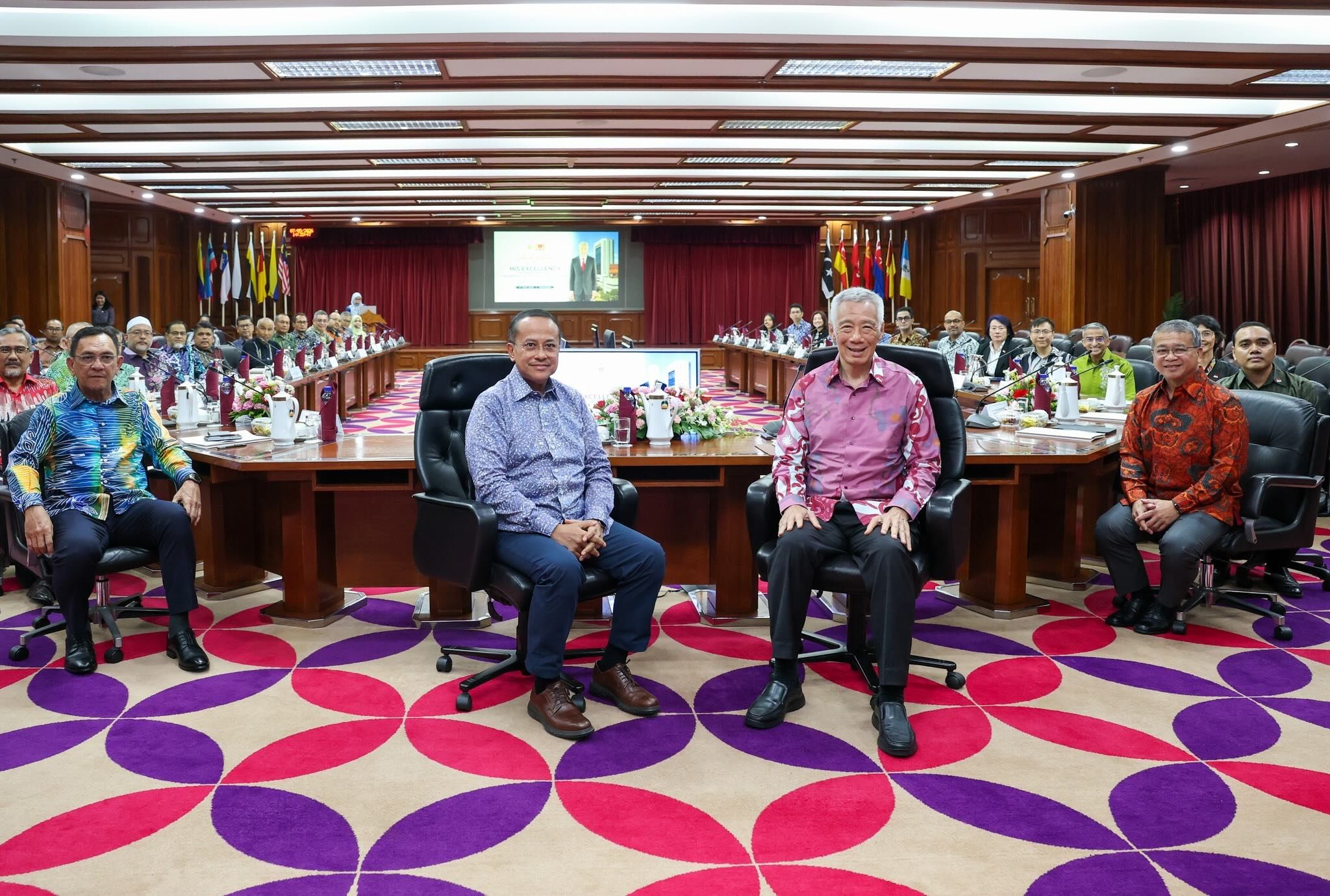
SINGAPORE: As his five-day working visit to Pahang and Terengganu came to a close on Thursday (May 7), Senior Minister (SM) Lee Hsien Loong underlined the importance of the relationship between Singapore and Malaysia, whom he called “forever neighbours” and “forever working friends.”

SM Lee acknowledged that the two are “very different countries,” which is why the relationship needs to be worked on.

“We have to understand our differences and make sure that (these) do not cause us to unintentionally cause problems to one another,” he told members of the media.

SM Lee also noted that there is a “very good working relationship” at the national level between Singapore’s Prime Minister (PM) Lawrence Wong and his Malaysian counterpart Anwar Ibrahim.

PM Wong visited Mr Ibrahim during Ramadan, where he joined the Malayan leader as he broke his fast, and the two Premiers are currently in the Philippines for the 48th ASEAN Summit in Cebu.

“I’m sure they will meet there too,” said SM Lee, adding that they have good discussions as both leaders are “very clear that they want to develop and strengthen the ties and the cooperation between the two countries.”

On the ministry-level, there is also cooperation on a wide range of issues, from the Johor Bahru–Singapore Rapid Transit System (RTS) Link to the Johor Singapore Special Economic Zone, which SM Lee described as “clearly a win-win project.”He also acknowledged, however, that Singapore and Malaysia also have more complicated and long-standing issues involving maritime boundaries, airspace, and water rights, which are still being discussed as resolutions are sought.

“These are things which we have to manage and make sure they stay on track that they do not unintentionally cloud and affect the overall relationship in a bad way. And that is something we always have to work on,” he added.

On his Facebook page, SM Lee has been posting photos from his various meetings all week long. He and his wife, Ho Ching, had an audience with the Sultan of Pahang and Tunku Azizah Aminah Maimunah Iskandariah, who hosted a lunch for them.

SM Lee also met with the chief ministers of Pahang and Terengganu, as well as other state leaders, discussing various areas of cooperation and business linkages between Singapore and the Malaysian states. /TISG

Read also: SM Lee: Much harder for Govern­ment to deliver prosperity & progress in this environment

This article (SM Lee: Singapore and Malaysia are ‘forever neighbours & working friends’) first appeared on The Independent Singapore News.

  •  

‘It feels unfair!’: Fresh grad says all the menial tasks are pushed onto them ‘because they’re younger’

SINGAPORE: A fresh graduate took to Reddit to vent their frustration after feeling that they had become the go-to person for all the “saikang” (menial) work in the office simply because they are the youngest member of the team.

On Wednesday (May 6), they posted on the r/singaporejobs forum, explaining that the workload in their department feels “pretty uneven.”

“Me and another colleague will be OT-ing to finish our tasks while the other 2 [senior] colleagues will be using their phones or chit-chatting during work, and they leave work on time.”

“I am the youngest and newest on the team, so all the tedious and time-consuming saikang gets pushed to me because nobody wants to do them. Their excuse for pushing the work to me is that I can do it faster because I am younger.”

The fresh grad also admitted that the constant pressure has been emotionally draining. Juggling multiple tedious assignments and tight deadlines while watching others appear far less burdened has left them feeling stressed, overwhelmed, and trapped in a cycle they cannot seem to escape from.

“The more I think about it, the more unfair it feels,” they shared, adding that these assignments offer “zero visibility.”

“They are tasks that are essential to complete, but you won’t get credits for completing them because they are saikang, after all. It just feels unfair to me, because I am constantly feeling overwhelmed and stressed at work, having to work on multiple tasks with tight deadlines while they are slacking off.”

Wanting to know whether this kind of workplace dynamic is common, the fresh grad turned to other users for advice and perspective.

“I don’t know. Is this normal? What should I even do? I feel so stuck in this endless loop of saikang.”

“Learn to not submit your work immediately”

In the discussion thread, some users encouraged the fresh grad to try looking at the situation from a more positive angle instead of seeing it as entirely unfair.

One commenter wrote, “This is good that you learn this so early in your career: good work is rewarded with more work. You just have to make sure it’s also rewarded financially and that you are okay with the workload.”

Another advised the fresh grad to treat the extra responsibilities as a chance to build experience and learn how to manage expectations at work. They also suggested not rushing to complete and submit tasks too quickly, as doing so may lead colleagues and managers to assume they can constantly take on more work.

“Learn not to submit your work immediately after you complete it. Rather than sit on it for a few days, check before submitting. Let your boss know your limits; say you have quite a few ongoing tasks and ask if he/she is okay with you [prioritising] one over another.”

A few users also suggested bringing up the issue during a performance review or check-in with management so supervisors become more aware of the uneven workload and the amount of unseen “saikang” work being handled behind the scenes.

“Talk to your boss as part of the performance review. If there’s no value adding and [you’re] being bullied, find another job,” one user wrote.

In other news, a Singaporean jobseeker has shared online that he feels rather “hopeless” after being unable to secure a job despite lowering his salary expectations to around S$3,000 to S$3,500.

Posting on the forum singaporejobs on Monday (May 4), the 26-year-old described the job market in the city-state as “brutal.”

Read more: ‘SG current job market feels brutal’: Singaporean applicant with S$3.5k salary expectations says he’s losing hope after 8 months of job hunting

This article (‘It feels unfair!’: Fresh grad says all the menial tasks are pushed onto them ‘because they’re younger’) first appeared on The Independent Singapore News.

  •  

‘Burnt-out and lost’ employee wants to quit amid growing responsibilities ‘for growth’ with no hope of promotion, advised to ‘quiet quit’

SINGAPORE: Netizens have advised a “burnt-out and lost” employee to “quiet quit” after she shared online that she had been “crying every day” and felt “super miserable” amid growing responsibilities at work, asking others, “How do you all bite through such days, and is this really the economy to be prioritising mental health?” as she considers quitting.

The post author, who had been in her current role for two years, shared on r/askSingapore that her work had been filled with “compressed timelines and bloated responsibilities,” with no hope of promotion.

According to her, her responsibilities continued to balloon even after she said she had clearly expressed that she was “happy” in her current role and “not looking to get promoted,” yet was still given new responsibilities for “growth.” Her co-workers, she said, are “suffering” just the same.

Netizens online appeared to feel the same way, with one sharing that she too has been crying “before work, during work, while on meal breaks, then back to the grind”.

She added, “Every day, there are so many posts of people struggling with their jobs, and I don’t know what it would take to have a reform of the workplace globally because it sure isn’t only just in SG that we are feeling it. I’m seeking therapy to deal with the burnout.”

Another commenter advised to “quiet quit”, adding that she should start looking for a new job or a side hustle—something that can tide her through.

“Just go home every day on the dot and delay deadlines, saying that it can’t be done on time without proper help. Getting it done is only going to show them it’s possible to keep pushing you and provide less support. Or maybe save more to be able to semi- or fully retire by a certain age? Gotta start thinking about your future. Everything’s changing fast with AI, and it’s crazy,” she added.

Others who are also in similar situations, however, advised quitting altogether.

One wrote: “I’m struggling and overloaded, and sometimes my tears just flowed while working. I’ve been sending resumes and praying I can leave this job asap. I plan for holidays, short weekend trips and things to do after work so that I can have something to look forward to. If not, I’ll go crazy thinking about the never-ending workload. I know it can be difficult, but cheer up, and I hope that we can escape this soon!”

In March, a survey found that Singapore workers reported being stressed at work due to heavy workloads, poor management or leadership, and tight deadlines, but were receiving little meaningful support.

In fact, a recent poll by global recruitment consultancy and talent solutions firm Robert Walters also found that three in 10 workers in the little red dot have been “frequently” quiet cracking, while about seven in 10 occasionally feel the same, as they continue to show up at work despite burning out.

Still, according to global executive search and leadership consulting firm Pearson Partners International, quiet quitting, the rejection of the idea that employees should go above and beyond their job scope, is not the answer.

It may provide temporary relief, but just that: temporary. /TISG

Read also: Resilient but disengaged? Report says ‘functional disengagement’ rises among Singapore workers

This article (‘Burnt-out and lost’ employee wants to quit amid growing responsibilities ‘for growth’ with no hope of promotion, advised to ‘quiet quit’) first appeared on The Independent Singapore News.

  •  

Chee Hong Tat: MOP for new ECs now at 10 years

SINGAPORE: In a bid to help first-time homebuyers deal with higher prices,  the Ministry of National Development (MND) announced several changes to the executive condominium (EC) scheme on May 8.

The changes include doubling the minimum occupation period (MOP) for new ECs, currently at five years, to 10 years. This means that those who purchase new ECs are required to live in these units for at least 10 years before they are allowed to sell them to other Singaporeans or to permanent residents. The 10-year MOP must pass before new EC buyers are allowed to purchase another residential property or rent out the EC as a whole unit.

Additionally, ECs will only be fully privatised after 15 years, instead of 10 years, which means that EC owners may only sell their units to buyers, including foreigners and companies, after 15 years. 

Minister for National Development Chee Hong Tat said this during his keynote speech at the National University of Singapore IREUS Urban Housing Symposium. Importantly, he also announced an increase in the quota and priority period for first-time home buyers.

At present, developers are required to reserve 70% of ECs for first-time homebuyers in the first month after a project is launched. Mr Chee said that this quota is being raised to 90%, with the priority period also extended to two years, which provides more support for young married couples and families intending to purchase their first home.

This means that developers may only sell the remainder of the units to interested parties, including second-time buyers, after two years.

Thirdly,  Mr Chee announced the removal of the Deferred Payment Scheme (DPS) for ECs. This allowed buyers to pay 20% upfront for the unit, with the balance of 80% to be paid after the project’s Temporary Occupation Permit was issued, which meant that buyers paid a premium of 2 to 3% above the price of the EC.

EC home buyers must now follow the Normal Payment Scheme, which encourages “financial prudence and aligns with the arrangements for other uncompleted private residential properties,” the Minister added.

The government hopes these measures, which have been made to “further support first-time home buyers,” will cause EC prices to be lowered, he added.

“We also hope this will result in developers reducing their land bids and the prices for their ECs,” the minister said, adding in a social media post that “These changes will apply to all EC Government Land Sale sites with tender closing dates on or after today (8 May 2026).” /TISG

Read related: Executive condominium (EC) prices in Singapore continue to rise amid limited supply of newly launched ECs

This article (Chee Hong Tat: MOP for new ECs now at 10 years) first appeared on The Independent Singapore News.

  •  

Poly student alleges family maid eats better food, ignores requests, and takes her items

SINGAPORE: A female polytechnic student took to Reddit to vent about her family’s domestic helper, who allegedly “takes and uses her belongings” without permission and prepares separate “better” meals for herself.

In an anonymous post on the r/askSingapore forum, the student claimed that the helper “keeps stealing things such as hand cream, money, and chocolate, and whenever confronted, she denies taking anything.”

Sharing one incident, she wrote, “For example, I opened a new pack of sweets and took one and left it on my table before leaving the house. When I returned at night, I found that the sweets were nearly empty, and it couldn’t be any of my family members, as they hadn’t come home for the day yet.”

She also recalled, “There were a few occasions where I would keep the sweets in my bag, and they would still go missing. She also uses my hair products without permission. Only she and I share the common toilet, so it couldn’t be my mom who used it.”

The student said she has already confronted the helper several times, but the helper continued denying the accusations while the incidents allegedly kept happening.

“I am getting increasingly frustrated every single day,” she shared.

Aside from the alleged thefts, the student also complained about the helper’s behaviour at home.

She recounted, “I asked her to bring the food to the dining table multiple times and she didn’t. When I called again, she claimed she was ‘washing plates’ even though she clearly wasn’t. Sometimes I call for her multiple times and she just ignores me completely.”

“Once I was changing in the spare room and she opened the door without knocking when it was closed and while I was changing.”

On top of this, the student claimed that the helper would sometimes prepare only “plain white rice and plain curry udon” for her and her brother while allegedly cooking “a full meal with meat and vegetables” for herself.

At the end of her post, the student asked other Singaporeans how they would deal with the helper if they were in her shoes.

“You should send her back to her home country”

In the comments, several Redditors urged the student to inform her parents about these alarming incidents.

One said, “Please let your parents know about this. Your parents are the employer; they need to seek accountability from her.”

Another wrote, “Tell your parents and get a spy camera to record any stealing.”

Others felt the family should simply let the helper go before things get worse.

One advised, “You should send her back to her home country. If you send her back to the agency, the agency will send her to other families, and she will do harm to them.”

Another added, “If you have evidence of her stealing money, report and send her back.”

Employers who believe their domestic helper may have stolen from them are advised by the Ministry of Manpower (MOM) to make a police report so the authorities can look into the matter. Trying to resolve the issue through personal confrontation may cause panic and make things worse.

Read also: ‘I messed up in my 20s’: 29 y/o Singaporean with S$2.8k take-home pay and no savings fears he’s falling behind in life

This article (Poly student alleges family maid eats better food, ignores requests, and takes her items) first appeared on The Independent Singapore News.

  •  

Illegal wildlife feeding in Singapore could now lead to imprisonment for repeat offenders

SINGAPORE: The Singaporean government recently strengthened amendments to the Wildlife Act. According to authorities, people who will be caught feeding wild animals illegally will face stricter and harsher punishments, including higher fines and imprisonment. 

As reported by 8world News, the government revealed in a reading that the maximum fine for first-time offenders will now be raised to S$10,000 at maximum from S$5,000, and there will also be an increase for repeat offenders to S$20,000 from S$10,000 at maximum. Furthermore, repeat offenders could now also be sentenced to up to 12 months’ imprisonment. This change is expected to take effect in the second half of this year. 

“This will have a stronger deterrent effect on the illegal feeding of wild animals and better protect public health and safety,” the authorities declared. 

The National Parks Board admitted that illegal feeding of wildlife, specifically pigeons and crows, has been a problem ever since. In the past years, cases have doubled, rising from an estimated number of 150 in 2021 to over 380 in 2025—repeat offenders are 42% of these cases. The Board has been working with groups to properly control wildlife in the country. 

In a separate wildlife feeding incident, a man said he confronted a woman for feeding wild animals, but she allegedly reacted by showing him the middle finger and trying to whack him with her shopping bag.

“Her response was to attack me. Then I started recording,” he said, adding that he later followed her briefly so he could report her location to the police.

Read more about the news story here.

This article (Illegal wildlife feeding in Singapore could now lead to imprisonment for repeat offenders) first appeared on The Independent Singapore News.

  •  

Be ‘hungry’ or have kids: Singaporeans say they feel pulled in two directions

SINGAPORE: Singaporeans are voicing growing frustration over what they see as contradictory expectations placed on young adults: to remain relentlessly “hungry” and competitive in the workplace while also starting families to help reverse the nation’s record-low birth rate.

The debate intensified after recruiter Shulin Lee, founder of legal recruitment firm Aslant Legal, warned in a recent CNA podcast that companies are increasingly replacing Singaporean workers with foreign hires whom she described as “hungrier”.

Drawing from her experience as a recruiter, Ms Lee said some employers were choosing workers from countries such as Malaysia, Vietnam and the Philippines over Singaporeans. She argued that the issue was not necessarily skill, but drive and willingness to go the extra mile.

“That hunger is now irreplaceable,” she said, while urging workers to remain “paranoid” about the changing job market and to continuously improve their relationship-building and communication skills.

Her comments quickly sparked heated discussion online, with some Singaporeans agreeing that she was simply describing the realities of the labour market, while others criticised her use of the word “hungrier” and argued that it ignored deeper structural pressures facing local workers.

Responding to criticism, Ms Lee said the backlash may have “hit a nerve” and maintained that the trend extended beyond developing nations, citing competition from workers in places such as Hong Kong, China and New Zealand.

“The entire world is going through disruption,” she said, reiterating that workers should not become complacent.

However, her comments landed at a time when Singaporeans are also being urged by the Government to have more children to counter the country’s rapidly declining birth rate.

Singapore’s total fertility rate fell to a historic low of 0.87 in 2025, down from 0.97 the year before, prompting renewed concern over the nation’s demographic future.

Minister in the Prime Minister’s Office Indranee Rajah, who chairs a new government workgroup studying the issue, recently called for a “long-term roadmap” towards a broader “social reset”.

In a Facebook post last week, she said that “family formation and having more Singaporean babies has become even more important than ever”.

“We can all play a part in ways that make a real difference — at work, in our families and in our communities. Let’s make this change together!” she wrote.

But many Singaporeans online questioned how younger adults are expected to juggle both intense career demands and family-building at the same time.

One commenter summed up the tension bluntly: “On one side we have the LinkedIn crowd saying that young people need to be ‘hungry’ and work longer hours for less pay. Then on the other side we have the government urging us to have more babies sooner. But we only have 24 hours in a day, 365 days in a year. So are we supposed to make more tax dollars or more kids?”

Others described feeling exhausted and overwhelmed by mounting expectations.

“So sick of the world today, man, just exhausted,” one Singaporean wrote.

Another commented: “We are expected to work magic and find 25 hours a day, raise a family on $2000 a month and hold multiple jobs while at it.”

Several commenters also pointed to what they saw as a widening disconnect between older leaders and younger generations navigating a vastly different economic landscape.

“Talk is easier than doing. There has been this disconnect between the ‘leadership’ generation and the younger generations. The world of today is very different. What the older generations’ beliefs and values no longer apply in the current world,” one person wrote.

Another offered an even bleaker assessment of modern life in Singapore: “You’re supposed to slave away, have kids and survive. Nobody said anything about enjoying life.”

This article (Be ‘hungry’ or have kids: Singaporeans say they feel pulled in two directions) first appeared on The Independent Singapore News.

  •  

‘Is this normal?’: Man says he meets girlfriend for 10–12 hours twice weekly and pays every bill

SINGAPORE: A 33-year-old man has sparked discussion online after sharing that he spends 10 to 12 hours with his 32-year-old girlfriend during each meetup twice a week, while also footing almost every bill.

In a Reddit post, the man said he started wondering whether their relationship dynamics were actually normal after feeling increasingly drained “emotionally, physically, and financially.”

“Is my relationship with my GF normal? I’m not super sure if this is the norm and/or if I’m being petty and insensitive,” he wrote.

The couple has reportedly been dating for four months. The man, who runs a small business, said he earns around S$4,000 to S$6,000 monthly, while his girlfriend works in the government sector and likely earns around S$3,000 to S$4,000 or more.

According to him, their dates usually start around noon and stretch all the way until midnight.

“We would, on average, have dates that last for ~10-12 hours, starting from noon to around midnight, with a minimum of once a week but typically twice a week. Which is somewhat exhausting after a bit and also leaves me with little time and energy to do my own stuff/hobbies,” he shared.

He also revealed that his girlfriend frequently seeks reassurance and becomes emotional whenever he suggests cutting back on meetups because of work commitments.

“She said this is due to the traumas she has felt, which led to her needing more security and assurance,” he explained.

The man added that his girlfriend does not appear to have close friendships and also has a strained relationship with her family, which he believes may have contributed to emotional dependency in the relationship.

On top of that, he said he has been paying for nearly all of their meals and outings, which can total around S$100 per meetup.

While he acknowledged that his girlfriend has occasionally paid for some activities, he felt the overall arrangement was becoming increasingly unbalanced.

“The difference in the terms of value is pretty significant, considering the frequency of our meet-ups,” he wrote.

“I don’t super mind financially, the fact that she wants to go to restaurants + cafes all the time, has me feeling a little “used” and feeling a tad like she’s not thinking of my well-being at all.”

After speaking to his family and friends who are married or in long-term relationships about his concerns, the man said they all told him the setup sounded “very abnormal” and “very one-sided.”

Eventually, he decided to open up to his girlfriend about feeling burnt out.

According to him, she responded by saying she would “try to change and split the bills more evenly and reduce the number of dates as well as duration.”

However, she also defended her expectations by claiming that frequent meetups and men paying for dates were considered “normal” based on what she saw “from friends, the internet, and social media.”

The girlfriend reportedly added that in her past “serious” relationships, the man paying for everything was seen as a sign that he was “serious and committed.”

“She does acknowledge that the relationship does feel one-sided, but said that she doesn’t know what she can give me,” he wrote.

The man ended his post by asking fellow Singaporeans: “I’ve tried my best to try to be fair to both of us in this post, but I really need to know if what we have is normal. And realistically, is any meaningful change actually possible?”

“Your values don’t match.”

In the comments, many users agreed with the man’s friends and family, saying that meeting up for 10 to 12 hours at a time is too intense for a dating arrangement. They also felt that him paying for almost everything in the relationship is not normal or sustainable.

One person shared, “I’m around you guys’ age, and I don’t think I can be on a date or meet up with my date/partner for 10-12 hours straight twice a week. It feels rather intense. I did date someone once who wanted to meet daily, and after a while it just felt draining and exhausting.”

Another remarked, “S$100 per date for most dates is way too much money spent.”

A third added, “I’m a girl and don’t really understand the desire to have the man pay for every meal. So that’s not normal. In my circle, we tend to split the bills. If the guy wants to pay for certain special occasions, I let them, and also I appreciate the effort, but it’s not something I feel entitled to.”

Others, however, pointed out that there is no single definition of what is “normal” in a relationship. 

They said only the man himself can determine that because every relationship is shaped by different personalities, expectations, and values. 

What works for one couple may not work for another, and comparisons can sometimes be misleading.

Some users advised him that if their expectations are fundamentally different, it may be healthier for both parties to end the relationship rather than trying to force compatibility.

One wrote, “Your values don’t match. She wants a provider, so don’t expect that to change. It will only get worse after marriage. Having no close friends or family is also a red flag, as she’ll be too dependent on you. My advice as [an] internet stranger: leave asap”

Another echoed this view, writing, “It’s not abnormal, there are many couples who spend every day together, and the guy pays for all the meals without feeling emotionally, physically, or financially drained.”

“Rather than it being abnormal, it seems that you and your girlfriend are simply incompatible in terms of relationship expectations. It’s not healthy for you to feel constantly drained, and that will eventually turn into resentment. You may want to seriously consider whether to continue this relationship.”

In other news, a 32-year-old healthcare worker earning up to S$8.5k a month says the brutal hours and constant stress of her job eventually destroyed her health, leaving her with “stage 3 cancer, chest pains, gastritis, burnout, depression, and anxiety.”

In a Reddit post on Monday (May 4), the woman shared that she spent seven years in the healthcare sector, often surviving on just three hours of sleep while juggling full-day shifts and 24/7 on-call duties for an entire week.

Read more: Healthcare worker earning S$8.5k says years of stress and long hours left her with cancer, chest pains, gastritis, and mental health struggles

This article (‘Is this normal?’: Man says he meets girlfriend for 10–12 hours twice weekly and pays every bill) first appeared on The Independent Singapore News.

  •  
❌