Reading view

Weed really does change your dreams

It’s four in the morning and you wake from a dream. It wasn’t a nightmare exactly, but it was vivid and unsettling—a circus of imagery in which the other commuters stuck in gridlock beside you were all octopi  or your feet were transformed into a pair of horse hooves while going through airport security. 

Maybe you don’t often remember your dreams but this one, this episode that fused the mundane with the outlandish, it sticks. Even days later, you can still see those tentacles gripping the steering wheels or feel the awkwardness of your gait running to catch your flight. 

It couldn’t have been that joint you smoked before bed, could it? Science says maybe.

How weed effects sleep cycles

Reports of vivid dreams are “very well known” in cannabis and neuroscience research, says Andrew Kesner, assistant professor of psychology at Indiana University in Indianapolis. But “we still don’t really know the neurobiology of dreaming and what sort of features make you remember your dreams better or worse.”

What researchers do know is how consuming weed alters sleep patterns

Cannabinoids are found naturally in the brain in a non-psychoactive form called endocannabinoids. Endocannabinoids control our sleep/wake cycle, aka our circadian rhythms, by modulating and maintaining the brain’s biological balance through an abundant receptors neuroscientists call CB1. 

“When people fall asleep, the brain makes its own cannabinoids that increase and decrease throughout the sleep-wake cycle, and throughout the day,” explains Kesner.

Marijuana contains a different form of cannabinoid than the one naturally produced by the brain, THC or tetrahydrocannabinol. THC also works on the brain’s CB1 receptors but, unlike endocannabinoids, it is psychoactive, meaning it makes users feel high by producing feelings like euphoria and paranoia. 
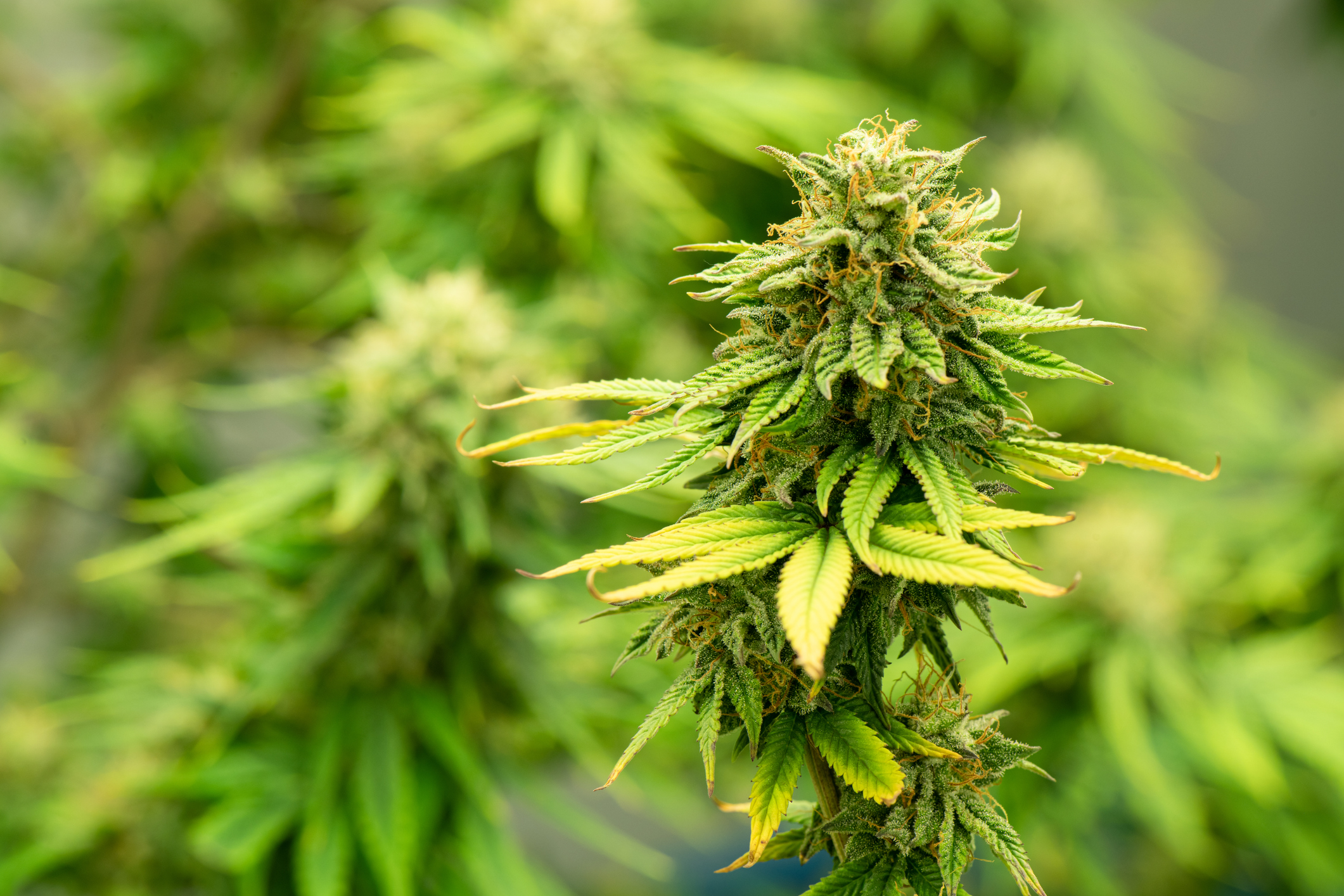
Blooming bight green cannabis.
Blooming cannabis plant ready to be harvested into various THC-based products. Image: Sunan Wongsa-nga / Getty Images Sunan Wongsa-nga

When you smoke weed before bed, the THC added to the brain’s natural endocannabinoids sends the brain’s CB1 receptors into overdrive. And when those CB1 receptors are in overdrive, they change the way you sleep.

Natural sleep in healthy adults begins with a short period of nodding off followed by a stage of “slow-wave” sleep, that deep sleep from which it’s hard to wake someone up. Cycles of lighter sleep punctuated by bouts of REM (rapid eye movement) sleep follow, growing longer and longer throughout the night. 

“REM sleep is classically the time when you’re dreaming,” says Kesner, when “your brain acts like it’s awake but the brain stem paralyzes your body so you can’t act out your dreams.” 

Consuming THC appears to suppress REM sleep: It causes it to arrive later in the sleep cycle and to make up less of the overall percentage of sleep. THC also causes more frequent interruptions to REM sleep. That, says Kesner, may be the origins of its reputation for causing weird dreams. 

“We know if you wake someone up in REM sleep, that’s when they have the highest chance to remember their dreams,” he explains. So, while there’s no evidence that dreams under the influence of THC are any different than THC-free dreams, the ability to remember them more easily may make the sleeper believe they are more bizarre or intense. 

According to one recent study, a dreamer is also likely to feel more rested following a night of vivid dreams, which may be one reason why many people feel smoking a joint or eating a gummy helps them to sleep.

Dreams are slippery suckers

Anything more is hard to say for sure.

“It’s possible that the THC could be making dreams more intense by changing cortical activity [the way the brain functions], making them wonkier and maybe adding some variability to what you’re dreaming about,” Kesner continues. But the huge variability among individuals in both sleep and the effects of THC use makes objectively studying weed-induced dreams “kind of a nightmare”—pun not intended. 

Researchers still don’t even know exactly what dreams are or why they happen—though there’s a good chance that it may be the brain coming up with different learning scenarios, according to Kesner. Someone who plays with puppies all day may, for example, dream that night about being chased by wolves. That way, if it ever happens in real life, the dreamer is better prepared to react to them. 

Related 'Ask Us Anything' Stories

Whether the weed was smoked or taken in edible form is probably also important; THC immediately affects the brain when smoking while edibles take time for the body to metabolize. One study in which participants reported weird dreams after smoking weed before bedtime, therefore, may have had to do more with the way REM sleep “rebounds,” or immediately returns to longer and more robust natural cycles, when the brain experiences THC withdrawal than with THC’s psychoactive effects. 

It’s well documented, says Kesner, that chronic THC users experience more intense REM sleep after they stop using it. The same might happen in occasional users, whose REM sleep could theoretically become more intense as the acute effects of weed wears off during the night. In other words, you don’t sleep as well while weed’s psychoactive THC is bouncing around your brain but it becomes much more restorative as soon as its effects wear off. 

Ultimately, there probably is no “one-size-fits-all for what cannabis does to sleep or how it affects dreams,” Kesner concludes. As of now, there’s simply not enough data to come to any meaningful verdict. THC or not, dreams are, by their very nature, weird.

In Ask Us Anything, Popular Science answers your most outlandish, mind-burning questions, from the everyday things you’ve always wondered to the bizarre things you never thought to ask. Have something you’ve always wanted to know? Ask us.

The post Weed really does change your dreams appeared first on Popular Science.

  •  

Could raccoons become the new dogs?

Last fall, a study of raccoons found that these city-dwelling trash pandas are beginning to look different than their rural cousins in the U.S.—they appear to be domesticating themselves.

It wouldn’t be the first time a wild animal species manipulated humanity for its own benefit. Dogs did it at least 14,000 years ago, discovering that befriending garbage-producing humans resulted in tastier, more abundant scraps and less arduous lives on their own. New genetic data indicates that cats feeding off the abundant rodents plundering human food stores domesticated themselves for similar reasons around 10,000 years ago. 

Dogs and cats hanging around worked out pretty well for humans, too. The first dogs served as early-warning systems, protectors, and hunting buddies. Cats, on the other hand, helped keep food fresher and reduced the spread of disease. Over time, through a combination of natural selection and human intervention, they evolved into the cute and cuddly companion animals of today.

Could urban raccoons be headed down the same evolutionary path straight into the American home? 

Raccoons as pets

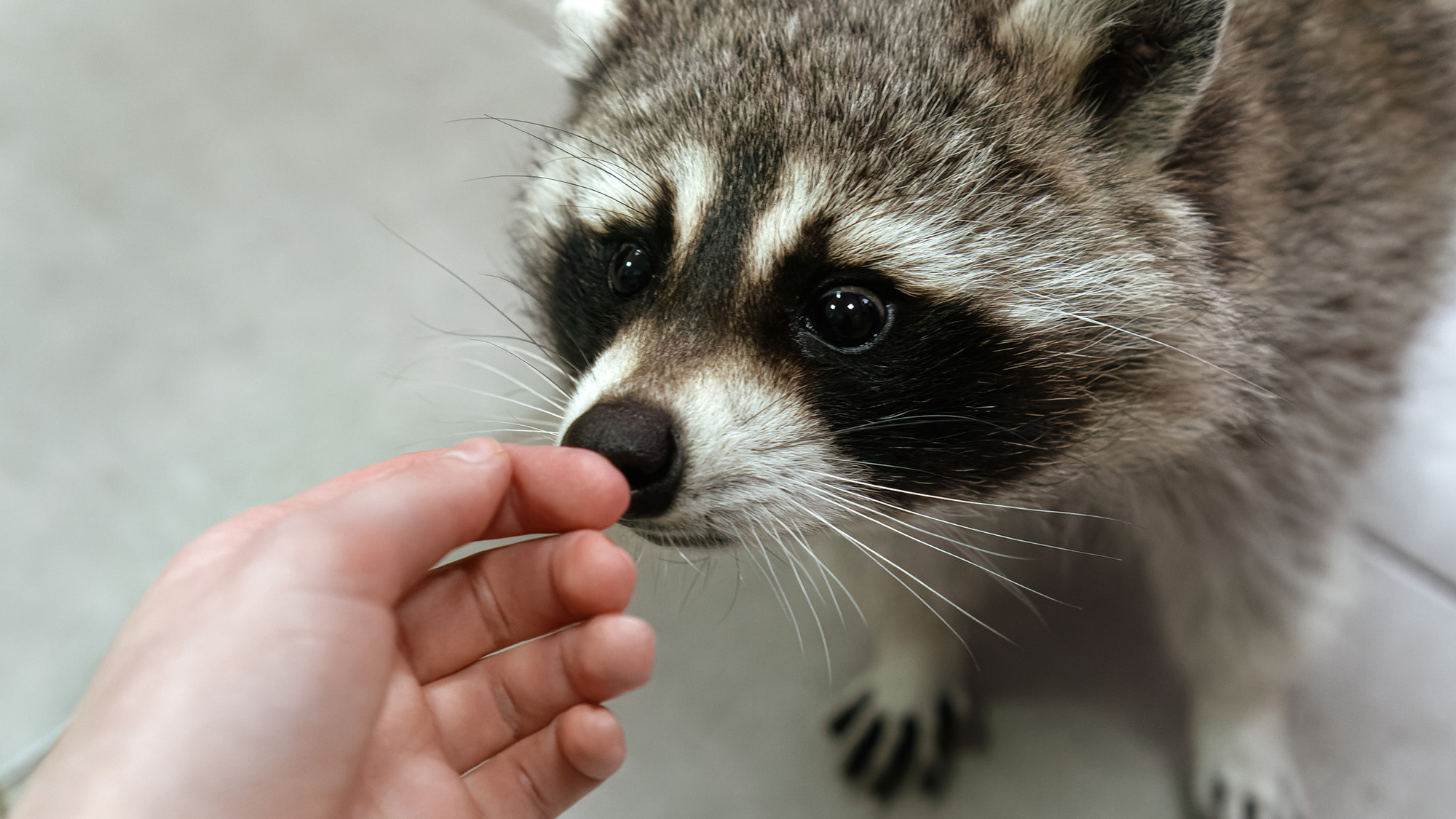
With their expressive masked faces and dexterous little fingers, pet raccoons are already found en masse on social media: sleeping in open dresser drawers and picking Fruit Loops out of cereal bowls. But the algorithm only shows one side of what Lauren Stanton, postdoctoral fellow at the Schell Lab at the University of California, Berkeley, describes as “very active and intelligent animals with complex needs.” 

Problem number one? Raccoons are nocturnal. They sleep in tight spaces during the day and venture out at dusk to forage, hunt, explore, and socialize across vast territories that can stretch as many as three square miles. And they don’t do it quietly. Raccoons have all sorts of vocalizations: purrs, chirps, hisses, and straight-up screams. A hollering, busybody raccoon does not a good night’s sleep make. 

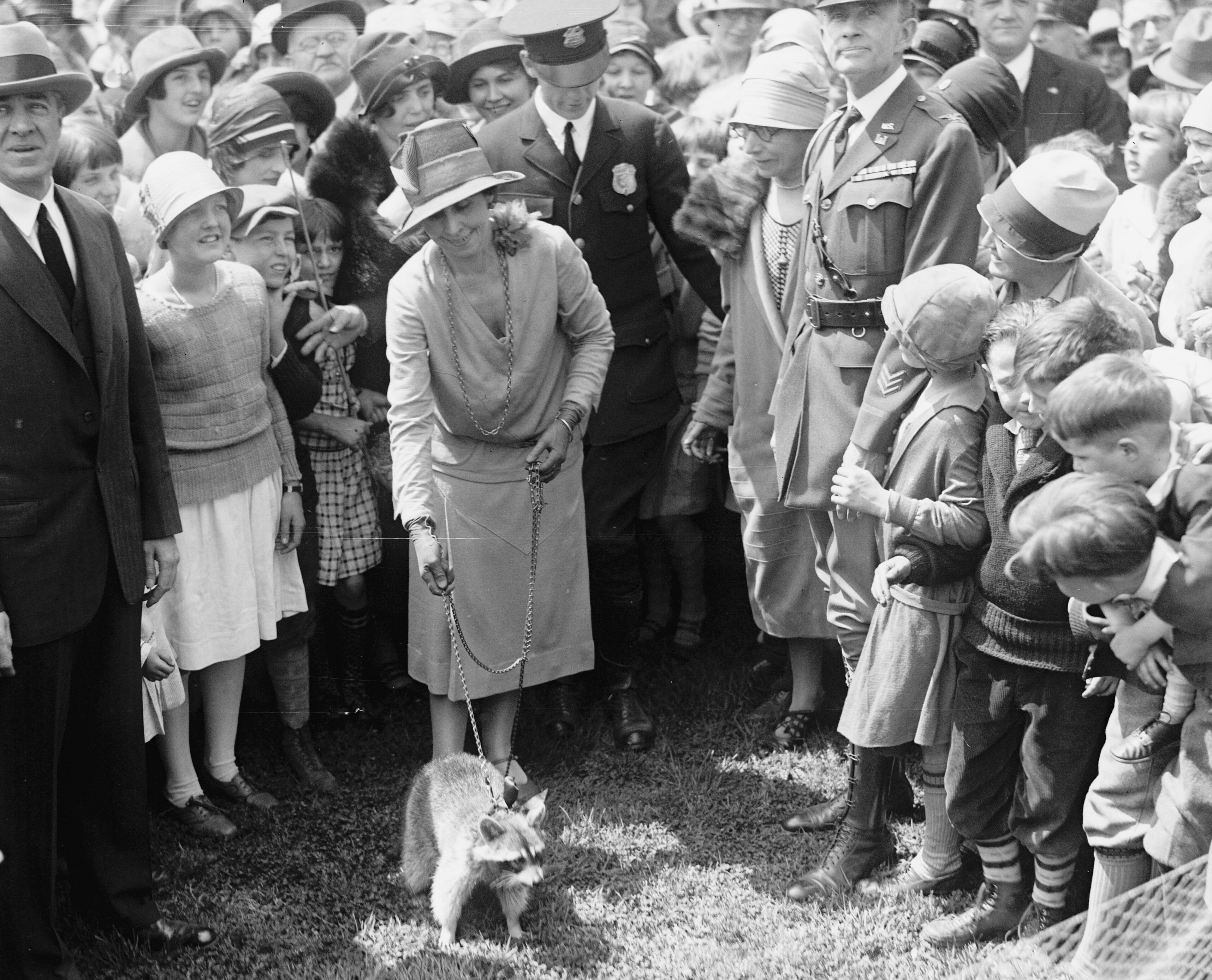
Black and white photograph of First Lady Grace Coolidge with a raccoon on a leash surrounded by a crowd on a lawn.
President Calvin Coolidge and First Lady Grace Coolidge had a pet raccoon named Rebecca. Here Grace holds Rebecca on a leash at the 1927 White House Easter egg roll. Image: Library of Congress, LC-F8- 41374 [P&P]

And then there are those paws which, despite a lack of opposable thumbs, are remarkably agile. A pet raccoon would be able to untie knots, unlatch locks, unscrew jars of food, and open doors in the middle of the night to let their wild compatriots in for raucous, sexy parties during mating season.

As highly-opportunistic omnivores, raccoons hunt insects, aquatic animals, small mammals, and birds. They also scavenge just about anything they can find. Not only would the food in fridges and cabinets fall victim to their nightly raids, they could never be trusted around a gerbil or bird cage—and god forbid there’s a fish tank around. 

Nor would they discriminate about the water chosen for dipping their food, a common behavior which increases paw sensitivity while eating. Toilet bowl, sink full of dirty dishes, or that poor, beleaguered fish tank—it’s all the same to them.

Altogether, this web of destructive, innate behaviors is one that not even ongoing domestication would be likely to ever make compatible with the human home—not that people are likely to stop trying.

“I have talked to many people over the years who have attempted to own raccoons, and their story often ends the same: The raccoon got too difficult to manage and so they ‘released it back to the wild,’” says Stanton, a deadly problem for human-raised raccoons that never learned essential survival skills.

Domestication vs. Domesticated

The evolutionary path of virtually every domesticated animal has undergone “domestication syndrome”—a pattern of physical changes seen across diverse species that includes the development of floppier ears, flatter and rounder faces, and curlier tails over time. 

A 2025 study of the snout-to-skull-length ratio of close to 20,000 images of American raccoons posted on the citizen science platform iNaturalist found the snouts of urban raccoons were 3.56 percent shorter than those of rural raccoons—possibly an early symptom of domestication syndrome.

Global News host Liem Vu chats with the 2025 study author Raffaela Lesch and wildlife expert Brad Gates about how raccoons might be showing early signs of domestication. Video: City raccoons showing early signs of domestication with cuter snouts: Study, Global News

But Stanton isn’t completely convinced that’s actually what’s happening in these urban populations. 

“Although morphological changes might have a genetic basis, there are multiple reasons why such changes could occur,” she explains. “Changes in skull shape, for example, could be due to changes in an animal’s diet, since many urban species shift towards eating softer, carbohydrate-rich foods found in our garbage.” 

Changes in urban raccoon behavior can’t automatically be chalked up to domestication either. 

“If raccoons become habituated to people or learn to associate them with food, they might behave in a more docile or tame manner around people, but this does not mean that they are domesticated,” Stanton continues. Additional empirical evidence, including examination of the raccoon genome, is needed to know for sure.

Regardless, Stanton is adamant that there is no hypothetical future in which raccoons could realistically become good house pets. 

“In my opinion, what makes raccoons so charismatic is their curiosity and unruly nature,” she says. 

“If we attempt to strip away their wildness through ownership or attempts at domestication, then we may lose some of the qualities that make them so special in the first place.” 

In Ask Us Anything, Popular Science answers your most outlandish, mind-burning questions, from the everyday things you’ve always wondered to the bizarre things you never thought to ask. Have something you’ve always wanted to know? Ask us.

Related 'Ask Us Anything' Stories

The post Could raccoons become the new dogs? appeared first on Popular Science.

  •  
❌