Reading view

Horsens reality check: What went wrong for Malaysia in the Thomas Cup

Malay Mail

HORSENS (Denmark), May 4 — For how long?

That is the question echoing among Malaysian badminton fans following the national team’s elusive bid to end their long wait for the Thomas Cup title during the 2026 edition at Forum Horsens, here, which concluded yesterday.

Malaysia’s campaign came to a halt in the quarter-finals after a 0-3 defeat to 12th times champions China last Friday, a result that once again exposed the gap between them and the powerhouse.
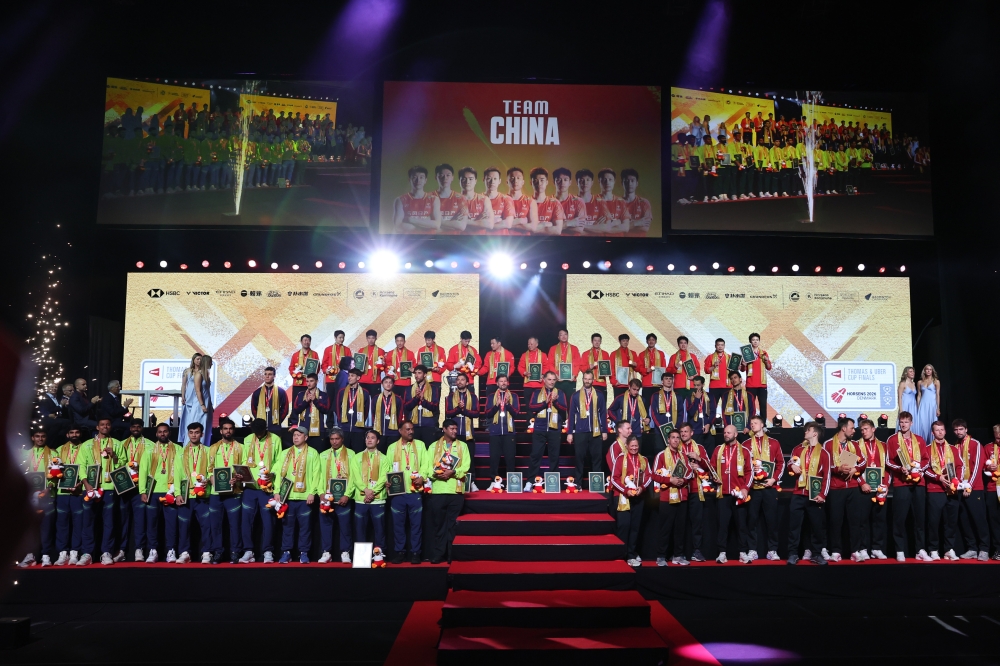
China’s men’s team celebrate after defeating France in the final of the BWF Thomas and Uber Cup Finals 2026 at Forum Horsens in Horsens, Denmark, May 4, 2026. — Bernama pic

The national side previously endured a shaky group stage, edging England 3-2 before dispatching Finland 4-1, only to fall 2-3 to 2014 champions Japan, which ultimately cost them the chance to top Group B.

The lofty target set by the Badminton Association of Malaysia (BAM) to reclaim the Thomas Cup, last won in 1992, under the ‘Tangkis 2030’ blueprint introduced by president, Tengku Datuk Seri Zafrul Abdul Aziz, had raised eyebrows from the outset.

In truth, the outcome surprised few, with men’s singles concerns lingering long before the tournament.

Ambition, after all, must be matched by depth and consistency.

The pressing question remains: did the players crumble under pressure, or are they simply not good enough to compete in this year’s edition?

Nowhere was that gap more evident than in the men’s singles.
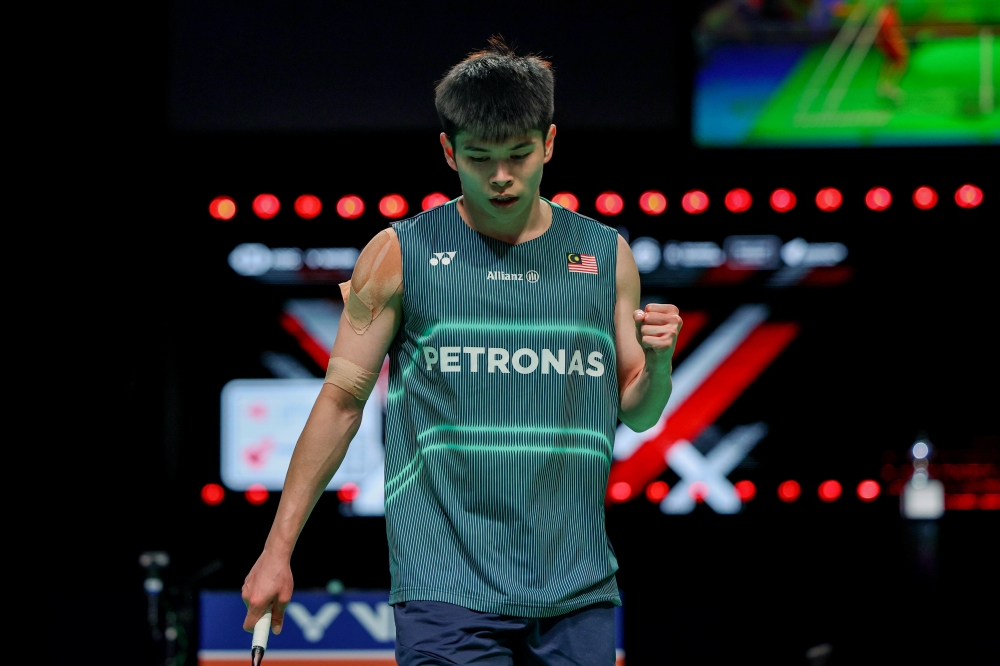
Malaysia’s Leong Jun Hao plays China’s world number one Shi Yu Qi in the Thomas Cup quarter-final at Forum Horsens in Horsens, Denmark, May 1, 2026.

National No. 1 men’s singles player Leong Jun Hao endured a difficult campaign, failing to deliver a single point in all three matches he featured in, marred by a straight-sets defeat to world No. 60 Joakim Oldorff of Finland, 17-21, 15-21, during the group stage.

Second singles player Justin Hoh, ranked world No. 44, flashed promise but fell short overall. He secured one group win over Finland’s Kalle Koljonen (21-14, 21-12) while struggling against higher seeds like Japan’s world No. 19 Yushi Tanaka (15-21, 12-21) and China’s world No. 7 Li Shi Feng (14-21, 13-21).

The inconsistency has become a growing concern, particularly under the guidance of national coaching director Kenneth Jonassen, who has previously worked with world No. 1 Viktor Axelsen from Denmark.

Despite Jonassen’s arrival last year, progress in the singles camp has yet to translate into results as Jun Hao is still searching for a breakthrough title, while Justin’s best showing remains a runner-up finish at the 2025 Macau Open.

Malaysia’s Justin Hoh plays China’s Li Shi Feng in the Thomas Cup quarter-final at Forum Horsens in Horsens, Denmark, May 1, 2026. — Bernama pic

The 51-year-old Dane himself had stressed that players must take ownership of their development rather than relying solely on coaching, underlining the need for greater accountability within the squad.

Professional men’s singles player Aidil Sholeh Ali Sadikin made little impact in his sole outing, losing 16-21, 15-21 to England’s world No. 153 Cholan Kayan in the Group B opener.

Amid Malaysia’s singles struggles, professional men’s singles shuttler, world No. 82 Lee Zii Jia, provided the silver lining as their most consistent performer, notching three wins from three, including an upset over Japan’s world No. 20 Koki Watanabe (21-13, 21-19) in the final Group B tie.

After a challenging spell exacerbated by injuries since 2024, Zii Jia’s resurgence offers a glimmer of hope.

The question now is whether the 2021 All England champion can build on this momentum and climb back into the world’s top tier, as he aims to return to at least the top 30 by the end of this year.

In the meantime, Malaysia’s biggest weapon and their top men’s doubles pair, Aaron Chia-Soh Wooi Yik, found themselves unable to turn the tide when it mattered most, particularly against China’s formidable duo Liang Wei Keng-Wang Chang in the last eight.

The 2022 world champions pushed hard in the opening game before going down 22-24, but struggled to maintain their intensity in the second, eventually losing 14-21, a defeat that handed China a crucial 2-0 lead in the quarter-final tie.

Aaron-Wooi Yik’s struggles against the world No. 5 pair remain a concern as they have now lost 10 of 13 meetings, highlighting a tactical and mental hurdle.
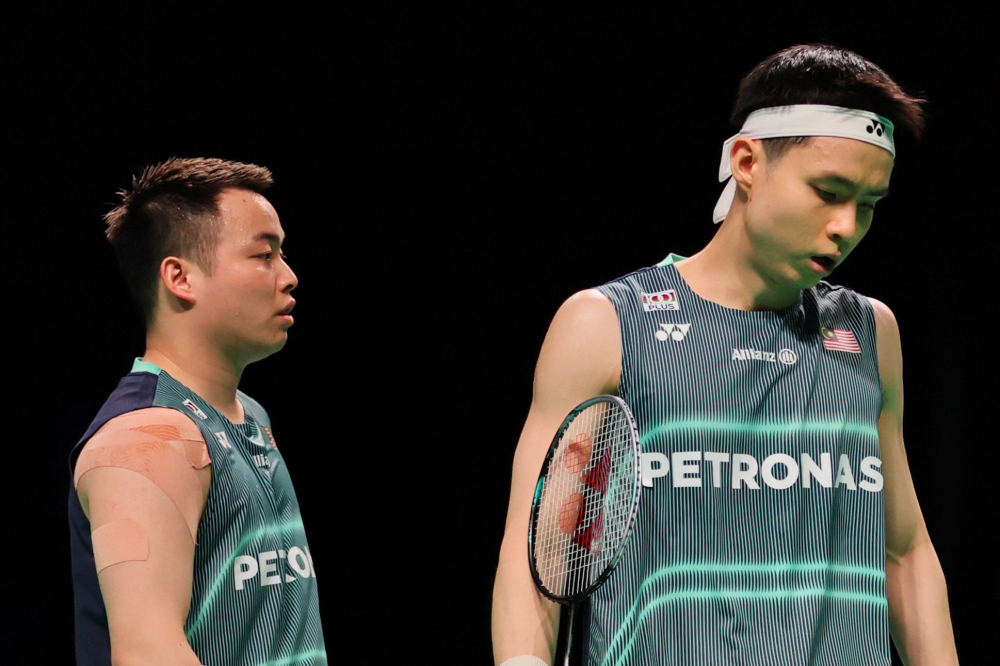
Malaysia’s Aaron Chia and Soh Wooi Yik play China’s Liang Wei Keng and Wang Chang in the Thomas Cup quarter-final at Forum Horsens in Horsens, Denmark, May 1, 2026.

If they are to return to their peak and mount a serious challenge for gold at the 2028 Olympic Games in Los Angeles, greater urgency and taming unforced errors will unlock wins.

Malaysia’s decision to reshuffle their doubles combinations by splitting Aaron and Wooi Yik to partner Tee Kai Wun and Nur Izzuddin Rumsani, respectively, in the final group stage clash against Japan also raised questions of its impact on rhythm and momentum heading into the last eight.

Whether that tactical gamble disrupted their sharpness is debatable, but as an experienced pair, Aaron and Wooi Yik are expected to deliver regardless of circumstances.

If Malaysia continues to rely heavily on its doubles without strengthening the singles department with the current pool of players available, a difficult path may lie ahead in future editions.

Despite the disappointment in the Thomas Cup Finals 2026, there were encouraging signs from the national women’s squad in the Uber Cup Finals 2026 after they reached the quarter-finals for the first time in 16 years.


With top women’s doubles player Pearly Tan sidelined due to a back injury before the tournament, the national squad, with half of whom were debutants, still managed to produce a creditable showing.

Malaysia opened their Group B campaign by edging Turkiye 3-2 and outplaying South Africa 5-0, before suffering a 1-4 defeat to six-time champions Japan. Their journey ended in the last eight following a 0-3 loss to defending champions China.

Young women’s doubles pair Low Zi Yu-Noraqilah Maisarah Ramdan emerged as the standout performers, highlighted by a stunning upset over world No. 7 duo Rin Iwanaga-Kie Nakanishi, 21-17, 12-21, 21-19, to secure Malaysia’s only point against Japan.

Another pair, Ong Xin Yee-Carmen Ting, also impressed despite falling to world No. 1 pair Liu Sheng Shu-Tan Ning, 14-21, 21-16, 13-21, in their first-ever meeting, during the last eight tie against China.
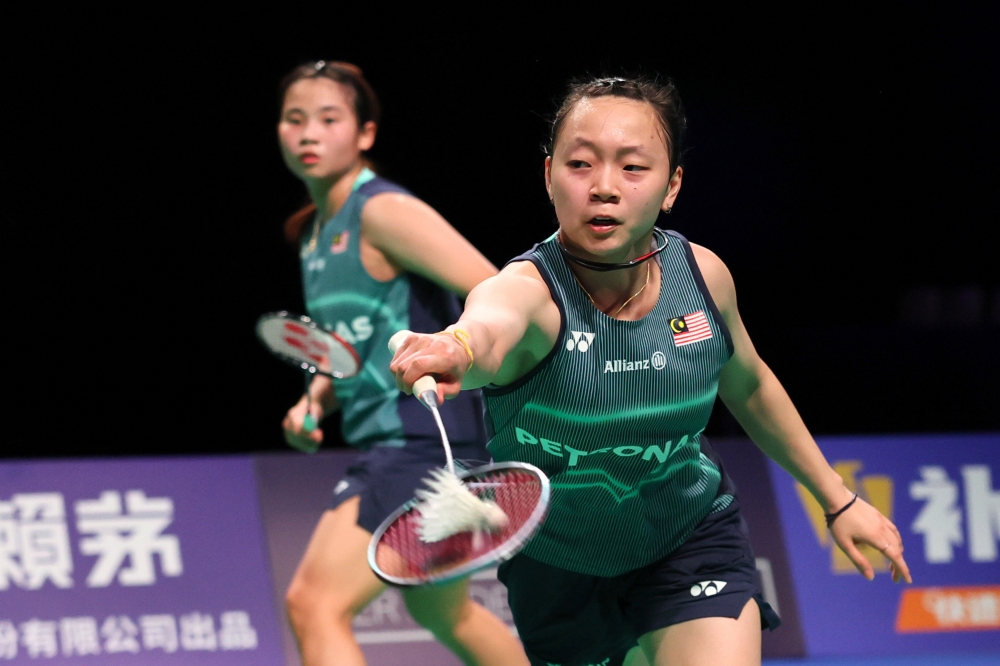
Malaysia’s Ong Xin Yee and Carmen Ting play China’s Liu Sheng Shu and Tan Ning in the Uber Cup quarter-final at Forum Horsens in Horsens, Denmark, April 30, 2026.

However, team captain M. Thinaah endured a difficult campaign as she was unable to secure a win in two matches alongside Xin Yee, including a narrow loss to Bengisu Ercetin-Nazlican Inci 22-20, 19-21, 19-21 and 9-21, 9-21 defeat to Japan’s Yuki Fukushima-Mayu Matsumoto.

National No. 1 women’s singles K. Letshanaa, on the other hand, showed significant improvement by showing great fighting spirit against top-tier opponents despite going down to world No. 3 Akane Yamaguchi of Japan 19-21, 17-21 and world No. 2 Wang Zhi Yi from China 17-21, 18-21.

Promise shows, but BAM cannot rest on its laurels and must keep building its women’s shuttlers for a stronger next outing.

While China underlined its dominance by retaining the Thomas Cup title with a 3-1 win over France, other nations may need to take note of a rising ‘French revolution’ led by singles players Christo Popov, Alex Lanier and Toma Junior Popov, who could emerge as serious threats in individual tournaments.

In the Uber Cup Finals 2026, South Korea, led by world No. 1 women’s singles star An Se Young, capped a superb campaign by securing a third title after dethroning defending champion China, 3-1.

Till then, ‘Tak’ (thank you in Danish), Horsens, see you in the 2028 edition! — Bernama
  •  

Russian oil pipelines remain susceptible to drone attacks from Ukraine — Phar Kim Beng

Malay Mail

MAY 4 — The world is learning, perhaps too late, that energy security cannot be improvised in the midst of war. 

As tensions in West Asia linger under an open-ended and fragile ceasefire between the United States, Israel, and Iran, hopes that alternative oil supplies — especially from Russia — can stabilise global markets are proving increasingly tenuous. A recent report by CNA underscores this vulnerability. 

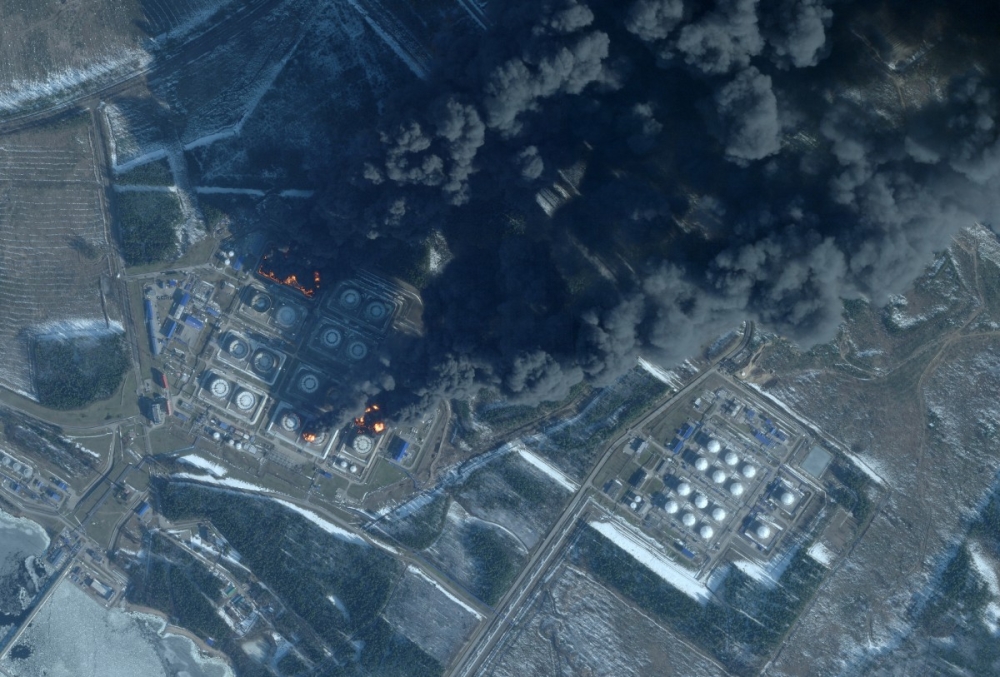
Ukrainian drones have reportedly struck Russia’s Primorsk port, a critical oil export terminal on the Baltic Sea, targeting oil tankers and even military vessels. This development is not merely tactical — it is systemic. 

It signals that no energy corridor, however distant from the Strait of Hormuz, is immune from the expanding geography of war.

Primorsk is not an obscure port. It is one of Russia’s most important oil export hubs, handling significant volumes of crude shipped to Europe and beyond. Disruptions here reverberate across global markets. 

The attack demonstrates Ukraine’s growing capacity to strike deep into Russian infrastructure, extending the war far beyond traditional battlefields.

Even if the precise scale of the damage remains contested, the strategic message is unmistakable: energy infrastructure is now a primary target in modern warfare. 

This handout satellite image taken on March 23, 2026 by Planet Labs PBC shows smoke rising from the Russian oil terminal at Primorsk, the most important Russian loading port in the Baltic Sea, following a drone attack claimed by Ukraine. — AFP pic

The implications are profound for countries that believed Russian oil could act as a stabilising substitute amid disruptions in the Gulf. For South-east Asia, this is a sobering lesson. 

The region, including Malaysia, depends heavily on global energy flows that are increasingly exposed to geopolitical risk. 

When the Strait of Hormuz is threatened, markets instinctively look toward alternative supplies — from Russia, the United States, or even Latin America. But what the Primorsk incident reveals is that such diversification is no guarantee of stability.

Instead, the world is entering a phase where multiple energy corridors are simultaneously at risk.

The open-ended nature of the ceasefire with Iran compounds this uncertainty. A ceasefire without a clear political settlement is not peace — it is merely a pause. 

Iran retains both the capability and the incentive to disrupt maritime traffic through the Strait of Hormuz, through which roughly one-fifth of global oil flows. 

Indeed up to 40 percent of Urea with another one third of Helium transits through the Strait of Hormuz.

Any renewed escalation could once again choke this vital artery.

Yet even if Hormuz remains temporarily open, the war in Ukraine ensures that Russian exports are equally vulnerable.

Ukrainian drone warfare has evolved into a strategic equaliser, allowing Kyiv to strike high-value targets such as ports, refineries, and logistics nodes. 

These attacks are not random; they are calibrated to impose economic costs on Moscow while signalling to global markets that Russian supply chains are unreliable.

Thus, the world faces a dual vulnerability: instability in the Gulf and insecurity in Russia. This is the essence of what may be termed a “polycrisis” in global energy. 

It is no longer sufficient to diversify supply geographically when multiple regions are simultaneously engulfed in conflict. The assumption that disruptions in one theatre can be offset by stability in another is breaking down.

Markets, however, have yet to fully internalise this reality. 

Brent crude oil prices have fluctuated to US$120 per barrel given the scale of geopolitical risk; granted that the US and Iran have not agreed on a peace agreement yet. 

This suggests a degree of complacency — or perhaps an overreliance on short-term ceasefires and tactical adjustments. Such complacency is dangerous.

The attack on Primorsk also highlights the militarisation of energy infrastructure in unprecedented ways.

Ports, pipelines, and tankers are no longer passive conduits of commerce; they are strategic assets subject to direct attack. 

This transforms the nature of energy security from an economic issue into a military one.

For Asean, this development should trigger urgent reflection.

Malaysia, as a trading nation with approximately RM3 trillion in total trade, is deeply exposed to global supply disruptions. Energy price shocks translate directly into fiscal pressures, particularly through subsidies. 

With fuel subsidies already running into billions of ringgit monthly, any sustained increase in oil prices could strain public finances and limit policy flexibility.

Moreover, the cascading effects extend beyond fuel. 

Fertiliser, food, animal feed and industrial inputs are all linked to energy flows. Disruptions in Russian or Gulf supply chains could therefore trigger broader economic instability across South-east Asia.

Yet beyond economics lies diplomacy — and here Malaysia has a pivotal role.

As the most recent Chair of Asean in 2025, and now the country entrusted with coordinating China-Asean relations from 2025 to 2028, Malaysia cannot remain a passive observer. 

It must actively encourage all sides — whether in West Asia or Eastern Europe — to recommit to a rules-based order grounded in multilateralism and anchored in a United Nations-centric international system. This is not idealism. It is necessity.

Without a functioning multilateral framework, conflicts will continue to spill across regions, turning energy infrastructure into battlefields and global markets into arenas of uncertainty. 

The erosion of international norms — whether through unilateral strikes, maritime disruptions, or the targeting of civilian infrastructure — must be arrested.

Malaysia, under the leadership of Prime Minister Datuk Seri Anwar Ibrahim, has consistently advocated for moderation, dialogue, and adherence to international law. This stance must now be amplified within Asean and beyond.

First, Asean must speak with greater clarity and unity in calling for the protection of critical infrastructure, including energy assets, under international law. 

The targeting of such infrastructure risks cascading humanitarian and economic consequences that extend far beyond the immediate parties to conflict.

Second, Malaysia should leverage its role in China-Asean coordination to encourage constructive engagement between major powers. 

China’s influence, particularly in both West Asia and its strategic alignment with Russia, makes it an indispensable actor in any effort to stabilise global energy flows.

Third, Asean must deepen its own resilience. Regional energy cooperation, diversification, and investment in renewables are essential. Especially Asean Power Grid.

But equally important is the development of a coherent diplomatic voice that can advocate for de-escalation on the global stage.

The Primorsk attack is a warning shot — not just to Russia, but to the entire international system. 

It reveals the fragility of global energy networks in an age of persistent conflict. 

More importantly, it challenges the assumption that alternative supplies can easily compensate for disruptions elsewhere.

In reality, the world is running out of “safe” energy corridors.

An open-ended ceasefire with Iran may buy time, but it does not resolve the underlying tensions.

Similarly, continued reliance on Russian oil is fraught with risk as long as the war in Ukraine persists.

Together, these dynamics create a precarious environment in which energy security is constantly under threat.

For Malaysia and Asean, the message is clear: strategic sobriety is essential. 

The region must prepare for a future in which energy disruptions are not the exception, but the norm.

Only through a combination of regional cooperation, diplomatic engagement, and a renewed commitment to a rules-based, UN-centred order can Asean hope to navigate this increasingly volatile landscape.

The alternative is stark — to remain at the mercy of distant wars whose consequences are felt most acutely at home.

* Phar Kim Beng is professor of Asean Studies and director, Institute of Internationalisation and Asean Studies, International Islamic University of Malaysia. 

** This is the personal opinion of the writer or publication and does not necessarily represent the views of Malay Mail.

  •  

China deny France fairytale with 3-1 win to defend Thomas Cup crown

Malay Mail

HORSENS, DENMARK, May 4 — China dashed France’s dream of a historic Thomas Cup triumph, seeing off the European side 3-1 to retain the title in the final of the 2026 edition at Forum Horsens here yesterday.

China drew first blood when world No. 1 men’s singles player Shi Yu Qi survived an 85-minute battle to hold off strong resistance from world No. 4 Christo Popov 21-16, 16-21, 21-17 in a pulsating opener.

China’s world number one shuttler Shi Yu Qi plays against Christo Popov of France during the BWF Thomas Cup final at Forum Horsens in Horsens, Denmark, May 4, 2026. — Bernama pic

France responded in style through their second singles and world No. 10 Alex Lanier, who produced a composed and clinical display by mixing delicate net play to stun world No. 7 Li Shi Feng 21-13, 21-10 in 43 minutes to draw level.

However, the Asian team wrestled back control in the third match, with third singles and world No. 15 Weng Hong Yang digging deep to edge world No. 17 Toma Junior Popov 22-20, 20-22, 21-19 in a tense 96-minute battle.

With the title on the line, world No. 99 men’s doubles pair He Ji Ting-Ren Xiang Yu stepped up to deliver a knockout blow by prevailing against world No. 52 Eloi Adam-Leo Rossi.

France’s Christo Popov plays against China’s Shi Yu Qi during the BWF Thomas Cup final at Forum Horsens in Horsens, Denmark, May 4, 2026. — Bernama pic

After taking the first set 21-13, the Chinese pair wrapped it up 21-16, with Ji Ting’s delicate net shot dropping in to seal China’s 12th Thomas Cup title.

The rest of China’s shuttlers then rushed onto the court, mobbing each other before circling in celebration. — Bernama 

  •  

Sarawak deputy premier: 48 projects under 12MP driving Mukah’s rise as economic hub

Malay Mail

KUCHING, May 4 — The implementation of 48 projects under the 12th Malaysia Plan (12MP) is accelerating Mukah’s emergence as a new economic growth hub in Sarawak, said Deputy Premier Datuk Awang Tengah Ali Hasan.

He said several of these projects have already been completed, while the remainder would be carried out in stages.

“Infrastructure development will continue to be prioritised, with more than RM4 billion allocated for road and bridge projects in Mukah division.

“This major investment is important to enhance connectivity and stimulate economic activities in the area,” he said, according to a report from the Sarawak Public Communication Unit (Ukas).

He said this when officiating at the Kaul and Keman Kaul 2026 at the Kaul festival site in Mukah on Saturday, representing Premier Tan Sri Abang Johari Openg.

Awang Tengah noted that Mukah is well-positioned to emerge as a digital and innovation hub, supported by ongoing infrastructure development and a strengthening education ecosystem.

“Institutions such as the Sarawak Centre of Technical Excellence (Centexs) and Universiti Teknologi MARA (UiTM) Sarawak Branch Mukah Campus play a key role in producing a highly skilled workforce.

“The integration of education and technical training supports efforts to position Mukah as a centre driven by knowledge, technology and innovation,” he said.

On another note, Awang Tengah said Mukah has strong potential in modern agriculture and the blue economy, given its coastal location.

He said in addition to fisheries and aquaculture, there are also potentials in developing maritime and marine industries, as well as renewable energy such as wave power.

“This creates new opportunities for sustainable and competitive economic growth in the future,” he said.

Among those present at the event were Awang Tengah’s wife Dato Dayang Morliah Awang Daud, Women, Childhood and Community Wellbeing Development Minister Dato Sri Fatimah Abdullah, Deputy Health Minister and Mukah MP Datuk Hanifah Hajar Taib, Deputy Urban Planning, Land Administration and Environment Minister Datuk Len Talif Salleh, Deputy Infrastructure and Port Development Minister Datuk Aidel Lariwoo, Federation of Melanau Associations Sarawak chairman Tan Sri Dato Sri Dr Muhammad Leo Michael Toyad Abdullah, Balingian assemblyman Abdul Yakub Arbi, Tellian assemblyman Royston Valentine, and Jepak assemblyman Iskandar Turkee. — The Borneo Post 

  •  

Couple freed on bail as police zero in on two teens over 61-stab murder in Ketereh

Malay Mail

KUALA LUMPUR, May 4 — A couple remanded in connection with the death of a 19-year-old college student found with 61 stab wounds in Ketereh, Kelantan, has been released on police bail, as investigations continue to focus on two teenage suspects.

Kota Bharu police chief Assistant Commissioner Mohd Azmir Damiri said the couple, aged 60 and 66, were released today.

“The couple was released on police bail today and investigations are now focused on the two 19-year-old suspects,” he said when contacted by Berita Harian yesterday.

The couple, believed to be the parents of one of the male suspects, had been remanded for three days. 

The two teenage suspects remain under a week-long remand to assist investigations under Section 302 of the Penal Code for murder.

The victim, identified as 19-year-old Nurfisya Zulkifly, was found dead at about 12.30am on Friday along Jalan Kampung Kubang Kiat in Ketereh.

Kelantan police chief Datuk Mohd Yusoff Mamat previously said the victim had no identification documents on her when she was found. 

Police later confirmed her identity through fingerprint records with the National Registration Department (JPN).

Police believe the victim was killed elsewhere before her body was dumped at the location.

A post-mortem found the cause of death to be multiple stab wounds to the chest.

  •  

Sarawak building knowledge economy driven by ‘brain power’, says premier

Malay Mail

KUCHING, May 4 — Sarawak is placing emphasis on strengthening a knowledge-based economy driven by ‘brain power’ and expanding its global connectivity as key pillars shaping the state’s future, said the Premier.

Tan Sri Abang Johari Openg said the state must move away from its reliance on finite natural resources such as oil and gas, and instead focus on building an economy anchored on knowledge, innovation, and human capital.

He stressed the importance of sound financial management, noting that the Sarawak Sovereign Wealth Fund has reached RM8.6 billion as of last year and will be preserved for 20 years to ensure long-term economic stability.

“If we are strong in ‘brain power’ and manage our finances wisely, Sarawak’s future will remain secure despite global economic uncertainties,” he said at the Anak Sarawak Dinner in Manchester, United Kingdom on Sunday.

Abang Johari said enhancing global connectivity is equally crucial, including through the establishment of the state’s own airline, AirBorneo, and strengthening strategic infrastructure such as Bintulu Port.

“These initiatives are important in positioning Sarawak as a strategic hub linking trade routes between the West and the East, particularly amid Asean’s economic growth and the evolving green technology landscape,” he said.

He further underscored Sarawak’s potential in green energy production, particularly green methanol, which is expected to emerge as a key fuel for the global shipping industry.

“With our strategic location and shift towards green technology, Sarawak has the potential to become a key player in the region’s new economy,” he added. — The Borneo Post 

  •  

When grading becomes gatekeeping: Structural barriers in Malaysia’s education system — Vivek Sukumaran

Malay Mail

MAY 4 — The recent controversy surrounding the SPM Moral Studies grading has triggered widespread concern, but the official response — ordering a review — falls short of addressing a deeper structural issue. At stake is not merely the fairness of a single subject’s marking scheme, but whether elements within Malaysia’s secondary education system are functioning, intentionally or otherwise, as gatekeeping mechanisms that restrict access to affordable tertiary education.

Reports indicate that high-performing students received unexpectedly low grades in Moral Studies, with opaque grading thresholds and unusually high cut-offs for top distinctions.¹ This raises fundamental questions about transparency and accountability in a subject that plays a decisive role in determining access to scholarships, matriculation programmes, and entry into public universities.

This issue must be viewed in the broader context of Malaysia’s education framework. The matriculation system, for example, continues to operate under a 90:10 quota favouring Bumiputera students, even after significant expansion in the number of available places.² While policy adjustments have occasionally been introduced — such as automatic matriculation offers for students achieving excellent results regardless of race³ — the structural imbalance remains intact.

In such an environment, any opacity or unpredictability in grading cannot be treated as neutral. Instead, it risks becoming a filtering mechanism that disproportionately affects non-Bumiputera students, particularly Indian Malaysians, many of whom already navigate systemic disadvantages in education access.

The author argues that the SPM Moral Studies grading controversy reflects deeper structural inequalities within Malaysia’s education system, where opaque assessment methods and longstanding quota-based policies risk functioning as barriers to equitable access to tertiary education and socio-economic mobility. — Bernama pic

Other institutional features reinforce this pattern. Universiti Teknologi MARA (UiTM), for instance, continues to maintain a Bumiputera-only admission policy, with the government signalling that this position will remain unchanged.⁴ Meanwhile, Tamil schools, which serve a large portion of the Indian Malaysian community, have long faced challenges relating to infrastructure, funding, and long-term sustainability.⁵

These are not isolated issues. They form part of a broader ecosystem in which access to opportunity is shaped by a combination of policy design, administrative opacity, and structural constraints.

Comparative experiences from other jurisdictions demonstrate how education systems can be used, deliberately or otherwise, to entrench inequality. Under apartheid in South Africa, the Bantu Education system was explicitly designed to limit the socio-economic mobility of Black South Africans.⁶ In the United States, racial segregation in schools was deemed inherently unequal in the landmark case of Brown v Board of Education.⁷ In Europe, the disproportionate placement of Roma children in special education institutions was found by the European Court of Human Rights to constitute unlawful discrimination.⁸

These examples underscore a critical point: systemic inequality in education rarely begins with overt exclusion. More often, it emerges through subtler mechanisms — opaque assessment criteria, unequal resource allocation, and policy frameworks that produce disparate outcomes across communities.

The use of the term “apartheid” in this context is therefore not rhetorical excess, but a warning. While Malaysia does not operate a formal system of racial segregation in education, the cumulative effect of current policies and practices risks creating parallel realities of access and opportunity.

For Indian Malaysians in particular, the stakes are significant. Education has historically been one of the primary avenues for socio-economic mobility. When barriers — whether through grading opacity, quota systems, or institutional limitations — systematically constrain that pathway, the long-term implications extend beyond individual students to entire communities.

If the government is committed to equitable access, the response must go beyond administrative review. It requires structural reform: transparency in grading standards, meaningful avenues for appeal, data-driven audits of educational outcomes, and a reassessment of policies that produce disproportionate effects across racial and socio-economic lines.

When high-performing students are repeatedly told that they are not good enough despite evidence to the contrary, the issue is no longer one of individual performance.

It is a question of whether the system itself is functioning as intended — or whether it is, in fact, failing a generation of young Malaysians.

* Vivek Sukumaran is a litigation lawyer who runs a firm in Kuala Lumpur. He currently chairs the Bar Council Criminal Law Committee. 

** This is the personal opinion of the writer or publication and does not necessarily represent the views of Malay Mail.

Footnotes

1. Malay Mail, “Fadhlina orders review of SPM Moral Studies after furore over unfair grading” (May 3, 2026).

2. Ministry of Education Malaysia, statements on matriculation quota expansion maintaining 90:10 ratio.

3. Malay Mail, “Automatic matriculation placement for top SPM scorers regardless of race” (2024).

4. Free Malaysia Today, “UiTM says committed to Bumiputera admission policy” (2024).

5. The Star, “Help Tamil schools survive” (2025).

6. South African History Online, “Bantu Education and the Soweto Uprising.”

7. Brown v Board of Education, 347 U.S. 483 (1954).

8. D.H. and Others v Czech Republic, European Court of Human Rights (2007).

  •  

Cities must embrace arts to nurture well-rounded youth, says Sarawak minister 

Malay Mail

KUCHING, May 4 — Cities should go beyond infrastructure development by providing avenues for artistic expression and recreational activities, said Sarawak Tourism, Creative Industry and Performing Arts Minister Datuk Seri Abdul Karim Rahman Hamzah.

He said a vibrant city must embrace performing arts, sports and entertainment to nurture well-rounded youth and create a dynamic urban environment.

“That’s what we want for our youngsters. At least they will not be diverted into many other undesirable influences,” he said at the closing ceremony of the “Born to Perform” dance competition at the Borneo Cultures Museum here yesterday.

Abdul Karim, who also serves as Youth, Sports and Entrepreneur Development Minister, said active participation in arts and sports plays a key role in character-building and helps develop future leaders.

“When youths are so much involved with performing arts and sports, they build discipline, confidence and strong values,” he said.

On a related matter, he said the upcoming Sarawak Performing Arts Centre would significantly boost the state’s capacity to host large-scale performances and attract wider audiences.

Originally slated for completion in the first quarter of 2027, the project timeline has been extended to the second quarter due to global challenges.

“Nevertheless, we are satisfied with the progress. Once completed, events like this can be held there,” he said. — The Borneo Post 

  •  

PMO: Lee Hsien Loong to visit Pahang, Terengganu to deepen Malaysia-Singapore ties

Malay Mail

SINGAPORE, May 4 — Singapore’s Senior Minister Lee Hsien Loong will make a five-day visit to Pahang and Terengganu from May 4 to 8, according to the Prime Minister’s Office (PMO).

In a statement on Sunday, it said the visit will be undertaken at the invitation of the Sultan of Pahang, Al-Sultan Abdullah Ri’ayatuddin Al-Mustafa Billah Shah, and the Tengku Ampuan of Pahang, Tunku Azizah Aminah Maimunah Iskandariah.

It said Lee will have an audience with the Sultan of Pahang and be hosted to lunch by His Royal Highness, as well as meet the Pahang Menteri Besar Datuk Seri Wan Rosdy Wan Ismail and other state leaders.

“Senior Minister Lee’s visit builds on the strong momentum of bilateral exchanges, deepening Singapore’s longstanding and multifaceted ties with Malaysia’s states and their leaders,” the statement said.

The PMO noted that in Terengganu, Lee will meet  Menteri Besar Datuk Seri Dr Ahmad Samsuri Mokhtar and other state leaders.

During the visit, Lee will be accompanied by his wife, Ho Ching; Minister for Law and Second Minister for Home Affairs Edwin Tong; Minister of State in the Ministry of Foreign Affairs and the Ministry of Social and Family Development Zhulkarnain Abdul Rahim; and officials from the Ministry of Foreign Affairs. — Bernama 

  •  

Plantation worker killed after motorcycle hits cow near Batu Gajah

Malay Mail

IPOH, May 4 — A plantation worker was killed after the motorcycle he was riding collided with a cow in the middle of the road at Batu 7, Jalan Tanjung Tualang near Batu Gajah, early today.

Batu Gajah district police chief ACP Md Noor Aehawan Mohammad said in the 2.40 am incident, the victim, Shah Rin Busu, 30, an Orang Asli man, was pronounced dead at the scene due to multiple injuries.

“Initial investigations found that the victim, who was riding an SYM SM Sport motorcycle, was travelling from Gopeng towards Kampung Air Denak.

“Upon reaching the location, there was a cow in the middle of the road, and the victim was unable to avoid it, resulting in a collision,” he said.

The case is being investigated under Section 41(1) of the Road Transport Act 1987. — Bernama 

  •  

Former Man United boss Alex Ferguson hospitalised after feeling unwell ahead of Liverpool match

Malay Mail

MANCHESTER, May 4 — Former Manchester United manager Alex Ferguson has been taken to hospital after feeling unwell ahead of yesterday’s Premier League match between United and Liverpool, media reported.

The 84-year-old had been at Old Trafford for the match between the two rivals.

Sky Sports reported that Ferguson was conscious and had precautionary checks before being whisked away.

Ferguson, who managed United from 1986 until his retirement in 2013, won 13 Premier League titles and two Champions League trophies during a glittering 26-year spell at the club.

He hoisted a total of 38 trophies with United.

A United spokesperson said the club was unable to comment on Ferguson’s status.

Ferguson is a regular at United’s home games and has a row of seats in the Old Trafford directors’ box. — Reuters


  •  

Police say viral Kajang dispute involved married couple, no assault reported

Malay Mail

KUALA LUMPUR, May 4 — Police have confirmed that a viral video showing a confrontation near a TNB electrical substation at Jalan Prima Saujana 2/1A in Kajang involved a married couple, but said no physical assault took place.

Kajang district police chief Assistant Commissioner Naazron Abdul Yusof said police received a report on the incident at 3.28pm yesterday, and investigations found that the altercation was limited to a verbal argument with no injuries reported.

“The couple have since lodged a police report. The woman confirmed that she was not assaulted and denied allegations that her husband had injured her.

“The incident was purely a verbal dispute and did not involve any physical violence or injuries,” he said in a statement last night.

Naazron also urged the public not to speculate or circulate unverified information that could cause unnecessary public alarm.

“Firm action may be taken against those found spreading false information,” he said.

  •  
❌