Normal view

  • ✇Dawn Newspaper Pak
  • Meloni hits back as Trump escalates G7 photo spat none@none.com (AFP)
    Italian Prime Minister Giorgia Meloni fired back at US President Donald Trump on Saturday, saying his “constant, unprovoked attacks are senseless” after he escalated a diplomatic row by accusing her of repeatedly seeking a photograph with him. The clash has opened an unusually personal rift between Trump and one of Europe’s most prominent right-wing leaders, who had sought to cast herself as a bridge between Washington and the continent during Trump’s return to power. Trump had initially told It
     

Meloni hits back as Trump escalates G7 photo spat

20 June 2026 at 16:54

Italian Prime Minister Giorgia Meloni fired back at US President Donald Trump on Saturday, saying his “constant, unprovoked attacks are senseless” after he escalated a diplomatic row by accusing her of repeatedly seeking a photograph with him.

The clash has opened an unusually personal rift between Trump and one of Europe’s most prominent right-wing leaders, who had sought to cast herself as a bridge between Washington and the continent during Trump’s return to power.

Trump had initially told Italian broadcaster La7 that Meloni “begged” him for a picture at this week’s G7 summit in France, saying he agreed only because he “felt sorry for her.”

Meloni angrily denied the claim, calling it “made up,” but Trump doubled down in a post on Truth Social, saying Meloni had asked “over and over” for a photograph during the summit.

He also accused her of trying to repair relations with Washington for domestic political reasons after Italy failed to support US action against Iran.

“Now, after the United States defeated Iran militarily, she wants to be friends again in order to get her ‘numbers up.’ No thanks!!!” Trump wrote.

He said Meloni was doing “poorly in Italy” and suggested this was linked to her refusal to let the United States use Italian “landing strips or runways” during the conflict with Iran.

Trump also revived his long-running complaint that the United States spends heavily to protect “so-called” Nato allies, saying Washington contributes hundreds of billions of dollars to defend Italy and others.

Meloni, in a blistering response on Instagram, accused Trump of “constant, unprovoked … senseless” attacks and said her popularity did not depend on her relationship with the US president.

“Being your friend certainly has not helped it, nor does it depend on my relationship with you,” she wrote.

She rejected Trump’s criticism over the use of US military facilities in Italy, saying they were governed by agreements that Rome had respected.

“In any case, my popularity is none of your concern. I suggest you focus on yours,” she added.

‘Painful injury’

The remarks were a sharp escalation of a dispute that had already triggered anger in Rome and came at a moment when Trump had already unsettled European partners with his handling of the war in Ukraine.

Italian Foreign Minister Antonio Tajani cancelled a planned visit to the United States, saying on Friday that Trump’s “grave and offensive” words toward Meloni “offend the whole of Italy.”

Meloni, who leads Italy’s far-right Brothers of Italy party, had said earlier she was “frankly stunned” by Trump’s original comments and accused him of showing more deference to the West’s adversaries than to its partners.

The backlash was notable because Meloni, unlike many European leaders, had invested heavily in personal diplomacy with Trump and had been viewed in Rome and Washington as one of his most natural partners on the continent.

She had spent months cultivating close ties with the US president while trying to reassure European allies wary of his second term.

Meloni had said at the end of the G7 summit in Evian that the atmosphere had been “very positive” and that there was “no friction” between Trump and other leaders.

She acknowledged, however, that she and Trump both had “quite strong characters,” and the pair were seen together several times at the summit, including during a meeting on a sofa after which Trump appeared to pat her shoulder.

In her latest comments, Meloni sought to draw a line under the spat, saying Saturday’s response would be her last remarks on the subject. Relations between the two had already deteriorated during the Middle East war.

Trump turned on Meloni in April after she defended Pope Leo XIV from his criticism of the pontiff’s anti-war views, accusing the Italian leader of failing to help the United States through Nato.

Justice Minister Carlo Nordio said Trump’s latest comments were a “painful injury” to Italy-US ties, while Defence Minister Guido Crosetto said such “jokes do not benefit anyone”.


Folding clothes, making coffee and sandwich — Indian workers training AI robots to take their jobs

11 June 2026 at 08:13

With a smartphone strapped to her head, Indian housewife Nagireddy Sriramyachandra films herself slicing mangoes to train AI-powered robots to take on household jobs in the future.

Earning just over two dollars for an hour of video, her mundane recordings are invaluable for global tech companies teaching machines how to move like humans in the real world.

The 25-year-old is one of a growing army of thousands of AI system trainers in the world’s most populous country.

“Who else will give you 250 rupees an hour just for doing housework?” said Sriramyachandra from her kitchen in Chennai in southern India’s Tamil Nadu state.

“I may get a robot myself in the future,” she added.

This photograph taken on May 15, 2026 shows an Indian housewife Nagireddy Sriramyachandra wearing a smartphone on her head as she records her actions through motion capture while slicing mangoes at her home in Chennai. — AFP

Artificial intelligence chatbots and image generators crunch reams of digital data, but building systems to navigate real-life environments is more challenging.

Developers think feeding first-person footage, called “egocentric data”, into specialised AI models will help robots copy humans.

Some AI trainers work at home, others in factories or specialised studios — using video glasses, head-mounted cameras and motion sensors.

“It blares ‘hands not detected’ when I’m not recording properly,” said Sriramyachandra, who sends recordings via a special app to the AI data company Objectways.

This photograph taken on May 13, 2026 shows a worker (R) wearing a RGB camera on her head recording actions through motion capture while arranging colored blocks at AI data company Objectways’ office in Tamil Nadu’s Karur district. — AFP

The firm, which has offices in India and the United States, lists Fortune 500 multinationals as clients. It works with Amazon SageMaker, a platform for machine learning models.

‘Better things’

The humanoid robot market is booming, with investment bank Morgan Stanley predicting there could be over a billion in use by 2050, mostly for industrial and commercial purposes.

“Folding clothes, coffee making… cooking a very specific thing, sandwich making,” Objectways head Ravi Shankar said, listing videos requested by clients.

“Some jobs are supposed to be taken over, so humans can go and do better things.” In India, the emerging field of spatial AI is providing new employment — for now.

This photograph taken on May 13, 2026 shows a worker wearing a GoPro camera on his head recording actions through motion capture while folding towels inside a model bathroom at AI data company Objectways’ office in Tamil Nadu’s Karur district. — AFP

The 50-year-old CEO is US-based, but hires workers from Tamil Nadu, where he grew up, one of India’s international technology hubs.

At a Karur textile factory, busy with workers attaching labels to caps and ironing cloth bags, AFP saw eight people wearing head cameras and smart glasses supplied by Objectways.

India has positioned itself as a global middleman for the creation, processing and annotation of AI data.

“It’s likely that these data collection services will increase”, said digital labour expert Aditi Surie, from the Indian Institute for Human Settlements in Bengaluru.

Informal workers

India is aggressively developing its AI industry, but its leaders are aware that, alongside the technology’s much-hyped benefits, automation poses risks.

Government think-tank NITI Aayog said that most discussions around artificial intelligence and labour “focus on white-collar professionals and predict an almost certain loss of jobs in the segment” without urgent action.

“Little attention, if any, is paid to how AI can serve India’s 490 million informal workers, the very people who form the backbone of our economy,” it said in a report released ahead of a global AI summit in India this year.

The think-tank has examined how the technology could help or harm dozens of professions — from cobblers to sewer cleaners, farmers to tea sellers.

For the last decade, 55-year-old Ponni has sat on a roadside in Bengaluru, the city known as India’s Silicon Valley, making flower garlands.

She, too, has been paid to have a phone strapped to her forehead.

“The next generation… who might have to do work similar to mine — they will face a problem,” Ponni said.

Always wearing a camera

At an Objectways studio, AI system trainers film themselves performing household tasks in fake, fully furnished apartment rooms.

After several thousand hours of filming, the wallpaper is changed to provide clients with variety.

“Today I sit here, tomorrow I stand there,” said engineering graduate Rani N., 21, on a break from filming herself, once again, folding a towel.

Each video lasts about four minutes, and she records around 90 a day — on nearly every conceivable spot on the bed.

She says the job is “tolerable”, but feels like she’s always wearing a camera.

This photograph taken on May 15, 2026 shows an Indian housewife Nagireddy Sriramyachandra wearing a smartphone on her head as she records her actions through motion capture while washing dishes at her home in Chennai. — AFP

In other rooms, colleagues arranged pencil sharpeners, water bottles and crayons in patterns, recording with depth-sensor cameras.

Qanat Consulting Services in Andhra Pradesh, an Objectways subcontractor, supplies about a dozen larger data firms with recordings.

Some of its 2,000 contributors perform tasks with motion-sensor bands on their “wrists, hands and legs”, CEO Thaslim Pattan said.

Manish Agarwal of Bengaluru-based Humyn Labs, not related to Objectways, records conversations as well as videos.

Contributors discuss assigned topics — ranging from politics to entertainment — for clients wanting to process speech patterns.

Agarwal denies that robots will steal jobs, believing that networks of humans and robots “will work together” one day, he said.

“A welder in India could be managing a welder-robot in Prague,” he said.

  • ✇Dawn Newspaper Pak
  • What happens when the Strait of Hormuz reopens? none@none.com (AFP)
    The vital Strait of Hormuz shipping lane is expected to reopen on Friday after nearly four months, following the signing of a US-Iran agreement to end the Middle East war. AFP examines how the reopening could work and why a return to normal is likely to take time. Are ships ready? Once formal approval is given to reopen, stranded ships could theoretically begin to move through the strait almost immediately. Crews that have been idle for months will most likely have “performed regular onboard dri
     

What happens when the Strait of Hormuz reopens?

17 June 2026 at 18:49

The vital Strait of Hormuz shipping lane is expected to reopen on Friday after nearly four months, following the signing of a US-Iran agreement to end the Middle East war.

AFP examines how the reopening could work and why a return to normal is likely to take time.

Are ships ready?

Once formal approval is given to reopen, stranded ships could theoretically begin to move through the strait almost immediately.

Crews that have been idle for months will most likely have “performed regular onboard drills and maintained the ships’ machinery, technical installations and equipment”, Jakob Larsen, head of security at shipowners’ association Bimco, told AFP.

However, some ships may require underwater hull cleaning to remove barnacles and other marine growth accumulated during the shutdown.

The strait, through which roughly 20 per cent of the world’s crude oil supply normally transits, was effectively closed by Iran after it came under fire from the United States and Israel.

About 500 ships and 20,000 seafarers have been stranded in Gulf waters, according to the International Chamber of Shipping, a maritime industry group.

Who can pass?

Operators are expected to proceed cautiously and insurers may even require naval escorts, according to Hugo Rousse of maritime tracking group AXSMarine.

The first to cross the strait could be “shipowners who operate their own fleet” and those “not listed on a stock exchange”, he told AFP.

“Given the elevated earnings still prevalent in the tanker sector, higher war risk insurance is unlikely to be an obstacle,” said Tim Smith, a director at maritime industry analysis firm MSI.

Tankers linked to Kuwait, Iraq, the United Arab Emirates and Saudi Arabia are likely to be among the first to resume transits, said Arne Lohmann Rasmussen, an analyst at Global Risk Management.

Must mines be cleared first?

Iran has designated the central area of the strait as a mine danger zone.

Until mines are cleared, “ships can use the coastal traffic zones which are mine-free but which are not well-suited to accommodate normal volumes of maritime traffic,” Larsen said.

France and Britain have been working since March to assemble a coalition to remove mines and help restore shipping flows.

The US has also requested “the deployment of mine-clearing capabilities”, a European source said on Tuesday, adding that French and German vessels had been mobilised for that purpose.

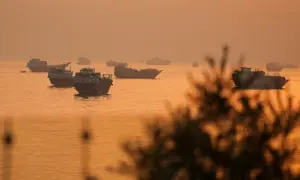
Vessels at the Strait of Hormuz, as seen from Musandam, Oman, on June 16, 2026. — Reuters

How long before a return to normal?

Reopening the waterway will only be a first step.

Crew changes are needed, disrupted supply chains restarted and strategic energy reserves replenished.

Some tankers could take more than one month to reach Europe after the route reopens, according to Argus Media analysts.

They estimated that it could take four to six months before crude export volumes return to their prewar levels.

“Not everything will go back to normal with the snap of a finger,” Rousse said.

He said some buyers have found alternative suppliers, including the US and Nigeria, and have established new shipping routes and commercial contracts.

Will ships have to pay?

US Vice President JD Vance told CNBC on Monday that there was an understanding with Iran that the strait would reopen “in a toll-free way for the long term”.

Iran’s foreign ministry, however, said the deal would allow it to charge maritime service fees rather than imposing “tolls”. Such fees would put shipping companies in a bind, however, as it could mean transferring funds indirectly to Iran’s Revolutionary Guard.

  • ✇Dawn Newspaper Pak
  • Iran begin fraught FIFA World Cup with 2-2 New Zealand draw none@none.com (AFP)
    Iran twice battled back for a 2-2 draw with New Zealand on Monday in their frenetic opening match of a World Cup campaign that has been overshadowed by war, politics and protests. The Iranian team’s very presence at the Los Angeles Stadium had long felt uncertain, after months of military conflict between their nation and the United States. At last able to focus on the football, the Iran players twice found themselves trailing to the tournament’s lowest-ranked team, thanks to goals from New Zeal
     

Iran begin fraught FIFA World Cup with 2-2 New Zealand draw

16 June 2026 at 04:31

Iran twice battled back for a 2-2 draw with New Zealand on Monday in their frenetic opening match of a World Cup campaign that has been overshadowed by war, politics and protests.

The Iranian team’s very presence at the Los Angeles Stadium had long felt uncertain, after months of military conflict between their nation and the United States.

At last able to focus on the football, the Iran players twice found themselves trailing to the tournament’s lowest-ranked team, thanks to goals from New Zealand striker Elijah Just.

But with a vocally pro-Iran crowd drowning out planned protests by anti-government demonstrators, equalisers from Ramin Rezaeian and Mohammad Mohebi spared Team Melli any further blushes.

The Iran team have dealt with a gamut of obstacles before even arriving at this World Cup, from delayed and refused US visas, to moving their training camp to Mexico at the last minute.

Hundreds of protesters against Iran’s ruling regime demonstrated outside the venue on Monday, saying the team does not represent their people.

Many inside the stadium sported anti-government emblems, nonchalantly flouting FIFA rules against political messaging, and the Iran anthem received boos and cheers.

Iran coach Amir Ghalenoei had insisted on the eve of the game his players would not “pay attention to any of the hype”.

But his side was stunned by an early New Zealand goal on the counter created by veteran striker Chris Wood.

Collecting a long pass in the seventh minute, the Nottingham Forest target man expertly held up the ball, turned and played in the onrushing Elijah Just.

After a sharp exchange of passes with Sarpreet Singh and Wood, Just leapt and smashed a volley into the net.

Iran’s star forward Mehdi Taremi nearly levelled in the 23rd minute, the former Inter Milan man’s long-range effort ricocheting off the right post.

They came close again as Kiwi keeper Max Crocombe was tackled outside his box, only able to watch as a lobbed effort at his open goal faded wide.

Iran’s equaliser did come in the 32rd minute with a poacher’s finish from wingback Rezaeian.

Rezaeian latched onto a rebound following Saman Ghoddos’ smart pass into Shahriyar Moghanlou, whose shot on the turn was blocked by the outstretched leg of Finn Surman.

Iran defender Ali Nemati thought he had scored in first-half stoppage time, but his header from a free kick was comfortably offside.

New Zealand retook the lead in the 55th minute. Motherwell striker Just bagged a brace via a crisp one-two with Wood, after Liberato Cacace had stolen the ball on the halfway line.

But they were again pegged back nine minutes later, as Mohebi’s leaping header from Rezaeian’s superb cross glanced off the inside post.

The game’s final half hour saw Iran on the front foot, but unable to grab a winner due to a combination of sloppy finishing and dogged New Zealand defending.

The draw dents Iran’s hopes of progressing to the knockouts for the first time, though fellow Group G contenders Egypt and Belgium also drew on Monday.

Meanwhile, New Zealand’s wait for a first World Cup win goes on.

  • ✇Dawn Newspaper Pak
  • India blocks Telegram before retest exam to curb cheating none@none.com (AFP)
    India blocked access to the Telegram messenger app on Tuesday ahead of a retest of a nationwide medical college entrance examination, following a scandal last month over a question paper leak. The failure of the hugely competitive exam, along with a separate marking fiasco in high school tests, sparked outrage and fuelled youth protests demanding the education minister’s resignation. The electronics ministry issued the order restricting access to Telegram until Monday, the day of the retest. Mes
     

India blocks Telegram before retest exam to curb cheating

16 June 2026 at 15:30

India blocked access to the Telegram messenger app on Tuesday ahead of a retest of a nationwide medical college entrance examination, following a scandal last month over a question paper leak.

The failure of the hugely competitive exam, along with a separate marking fiasco in high school tests, sparked outrage and fuelled youth protests demanding the education minister’s resignation.

The electronics ministry issued the order restricting access to Telegram until Monday, the day of the retest. Message-editing features, which allow users to alter existing posts, will remain restricted until June 30.

“Both measures have been taken in the interest of public order, in response to the organised use of the platform by cheating rackets to defraud candidates,” India’s National Testing Agency (NTA) said in a statement.

The National Eligibility Entrance Test (NEET) is one of the country’s most competitive exams, attracting more than two million aspiring doctors.

The NEET exam was scrapped in May following allegations that the question paper was leaked in advance, including reports that it had been circulated through Telegram channels.

Responding to the electronics ministry’s decision, Telegram founder and CEO Pavel Durov said the week-long ban “hasn’t stopped anything” but “punishes” 150 million ordinary users of the messaging app in India and “not the insiders who leaked the exam materials”.

“The leaks just moved to other apps,” Durov said in a post on X.

The Internet Freedom Foundation, a digital rights group, said the ban “is a disproportionate answer to exam fraud”.

The intense pressure to succeed in the national exams has fuelled a lucrative industry, with tens of thousands of coaching centres across the country.

Fierce competition means that success often comes at a high personal and financial cost — creating opportunities for criminal networks seeking to sell leaked examination papers to the highest bidder.

Test pilots

India’s Central Bureau of Investigation has arrested the “kingpin” alleged to be behind the leak, naming him as a chemistry lecturer involved in the examination process for the NTA.

On Monday, the education ministry launched a website where the public can report “suspicious claims, unauthorised content, or fraudulent activities” related to the NEET exam.

Indian air force helicopters were seen on Tuesday readying for the delivery of the test papers, to “prevent any possibility of leak”, The Press Trust of India news agency reported, broadcasting images of preparations in the southern state of Tamil Nadu.

Despite rapid economic growth, millions of people in the world’s most populous nation still struggle to find stable and well-paying jobs, fuelling discontent.

Students spend years preparing for exams in the hope of securing a professional career, with the pressure intensified by limited opportunities and intense competition.

Indian media reported suicides of teenagers following the fiasco over the NEET exam.

The NEET scandal came on top of another controversy, related to the online marking system used for tests taken by nearly two million high school students.

Many students said the system had assigned incorrect grades or issued results to the wrong candidates.

Anger at the exam mishandling has been channelled by the satirical “Cockroach People’s Party”, which has won millions of followers on social media since its launch in May.

The movement emerged after India’s Chief Justice Surya Kant reportedly likened young people who criticised the government to “cockroaches” and “parasites” during a court hearing, sparking outrage among the youth. Kant later said his comments were taken out of context.

  • ✇Dawn Newspaper Pak
  • Trump's name removed from Washington arts center none@none.com (AFP)
    Workers in the US capital removed President Donald Trump’s name from the facade of the John F. Kennedy Center for the Performing Arts on Saturday, the venue said, after a federal judge ruled that its renaming was unlawful. In a legal filing, the center’s Executive Director Matt Floca said it had “removed all physical signage on the Kennedy Center building and grounds” containing Trump’s name. Around noon Washington time, the sign on the building’s exterior was still covered by a white tarp put u
     

Trump's name removed from Washington arts center

13 June 2026 at 17:06

Workers in the US capital removed President Donald Trump’s name from the facade of the John F. Kennedy Center for the Performing Arts on Saturday, the venue said, after a federal judge ruled that its renaming was unlawful.

In a legal filing, the center’s Executive Director Matt Floca said it had “removed all physical signage on the Kennedy Center building and grounds” containing Trump’s name.

Around noon Washington time, the sign on the building’s exterior was still covered by a white tarp put up as work was being conducted to remove Trump’s name.

Earlier, loud noise echoed from beneath the cover, as morning joggers stopped briefly in front of the venue to watch the work.

The effort came after a judge rejected a last-minute bid by the center’s board to halt the removal of Trump’s name, marking a setback for the president’s broader push since returning to the White House to place his name and image in official spaces – an abrupt break with American political tradition.

An eager crowd had gathered outside the arts center Friday night, cheering occasionally as workers erected scaffolding to take down the signage.

Thousands monitored from afar via livestream, too, awaiting the moment when Trump’s name would be torn from the wall.

The work was delayed by “thunderstorms which presented safety concerns to workers” and was expected to be completed “in the early hours of the morning,” Kennedy Center Executive Director Matt Floca said in a statement.

US District Judge Christopher Cooper, in a ruling last month, had ordered Trump’s name taken off the iconic building in Washington by Friday.

Cooper said in his May 29 ruling that the John F. Kennedy Center for the Performing Arts had been illegally renamed after Trump and only Congress has the right to change its name.

A tarp covers the facade of the John F. Kennedy Memorial Center for the Performing Arts in Washington, DC, on June 13, 2026. — AFP

He gave the administration 14 days to remove Trump’s name from the marble facade and any materials linked to the venue.

The Kennedy Center dropped Trump’s name from the website of the institution earlier this week.

‘Unlawful government action’

On Friday, Cooper rejected a last-minute appeal by the center’s board to stay his ruling, prompting the center to request a 12-hour extension of the deadline to remove the signage.

The judge turned down the request, saying the public interest “is rarely served by the ‘perpetuation’ of ‘unlawful’ governmental action.”

Cooper has also issued a temporary block on Trump’s demand to close the Kennedy Center for two years of renovations, which was due to start in July.

A furious Trump reacted by saying he was giving up control of the venue, which he seized at the start of his second term last year by naming himself chairman.

The center’s governing board, which Trump stacked with loyalists, voted to rename the venue the “Trump Kennedy Center” in December and the Republican president’s full name was added to the facade in large, all-capital letters above that of Kennedy.

A number of artists canceled scheduled performances following the move.

The now-defunct US Institute of Peace was renamed after Trump, and his face stares down from huge banners outside the Department of Justice and Department of Agriculture.

The Trump administration is also seeking to have his image on a $250 bill to celebrate the country’s 250th anniversary of the declaration of independence from Britain.

  • ✇Dawn Newspaper Pak
  • Heavy security on Herat streets amid deadly crackdown against women none@none.com (AFP)
    • Planned protests abandoned amid fears of clash as armed patrols, checkpoints blanket city • UN experts say Taliban fired on men, women and children HERAT: Heavily armed security forces deployed across Herat on Friday, prompting residents to scrap planned protests following a crackdown where morality police arrested at least 30 women for alleged dress code violations and violently dispersed a subsequent rally, killing at least two people. Independent experts noted that Taliban forc
     

Heavy security on Herat streets amid deadly crackdown against women

13 June 2026 at 00:22

• Planned protests abandoned amid fears of clash as armed patrols, checkpoints blanket city
• UN experts say Taliban fired on men, women and children

HERAT: Heavily armed security forces deployed across Herat on Friday, prompting residents to scrap planned protests following a crackdown where morality police arrested at least 30 women for alleged dress code violations and violently dispersed a subsequent rally, killing at least two people.

Independent experts noted that Taliban forces allegedly fired on men, women, and children on Tuesday, administering beatings to some. Among the two reported dead was a boy, and more than 20 others were injured.

Local police denied that any wea­pons were used during the demonstration and accused the protesters of seeking “to disturb public order.”

Taliban authorities rule according to their extreme interpretation of Islamic law. While the hijab or flowing abaya robe is common in many Muslim-majority countries, the Taliban mandate that women must be almost entirely covered when they leave home.

This includes a requirement to wear a body-cloaking burqa or chador with a face mask, an interpretation of face-covering that is widely considered extreme.

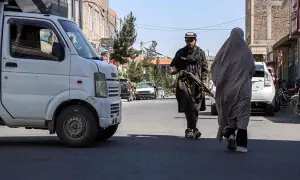
Following calls on social media for further demonstrations against the crackdown after Friday prayers, military vehicles and heavily armed security forces were stationed around the city.

Armed police officers patrol­­led on motorcycles, and extra checkpoints were manned by police and intelligence agents.

“People gave up on the demons­tration today to prevent more bloodshed,” said a 34-year-old teacher, whom the AFP did not name for safety reasons. “Even the movement of a small number of people from one area became difficult due to these security measures. The atmosphere is very bad.”

A 27-year-old resident described the heavy security presence as horrible.

“On every street there is a sus­­picious private car with (peo­­ple wearing) casual clothing, sitting in their cars and observing people,” the resident said.

The UN mission in Afghan­istan (Unama) documented the initial arrests of the women over the weekend. The women allegedly violated decrees that include a ban on perfume and the strict face-covering requirement.

Among those detained was a hospital worker employed by Doctors Without Borders (MSF) who the organisation said was held for two days.

Before her release, the medic, her husband, and relatives had to sign a written commitment to wear clothing mandated by the Propagation of Virtue and the Prevention of Vice authorities. MSF said it was outraged by the detention.

The arrests have heightened fear and apprehension among women and girls across the country. UN Women, the world body’s gender equality agency, voiced grave concern over the profound and long-term impa­cts of arbitrary detentions.

“A woman’s detention in Afgha­nistan carries enormous stigma, which can put women at risk of further violence and isolation in their families and communities even after they are released,” said Geo­rgette Gagnon, the UN deputy special representative leading Unama.

UN Human Rights Council-appo­inted experts expressed deep concern over reports of excessive force.

On Wednesday, Herat’s Propaga­tion of Virtue and the Prevention of Vice wing published a new list of rules for women. The notice included a ban on wearing makeup or having any hair visible, alongside an order to wear socks and face masks. Failure to comply may result in “detention and imprisonment,” the notice warned.

Across the country, women are already banned from a host of public places, including parks and gyms, while girls’ education is halted at age 12.

Published in Dawn, June 13th, 2026

  • ✇Dawn Newspaper Pak
  • 'Flying White House': Trump unveils Qatar-gifted Air Force One replacement none@none.com (AFP)
    US President Donald Trump unveiled on Friday a replacement Air Force One aircraft gifted by Qatar, which he dubbed a “flying White House”. “This is considered the world’s most luxurious plane,” Trump said at a speech inside the plane’s hangar, praising the gulf emirate for being “so nice and providing” it. Qatar’s gift of the aircraft — valued in the hundreds of millions of dollars — has raised ethical, constitutional and security concerns. Trump has previously said it would be “stupid” to rejec
     

'Flying White House': Trump unveils Qatar-gifted Air Force One replacement

20 June 2026 at 05:26

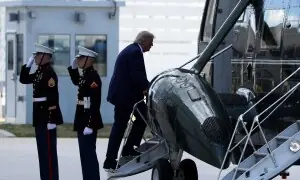
US President Donald Trump unveiled on Friday a replacement Air Force One aircraft gifted by Qatar, which he dubbed a “flying White House”.

“This is considered the world’s most luxurious plane,” Trump said at a speech inside the plane’s hangar, praising the gulf emirate for being “so nice and providing” it.

Qatar’s gift of the aircraft — valued in the hundreds of millions of dollars — has raised ethical, constitutional and security concerns.

Trump has previously said it would be “stupid” to reject the gift, while also stoking further concern by saying the plane would eventually be donated to his presidential library.

At the unveiling on Friday at Joint Base Andrews, just outside Washington, Trump praised the workmanship that went into modifying the jet, saying “with the extraordinary devotion of many of you here today, this plane was transformed into a flying White House at a level of luxury that nobody’s ever seen before”.

“When you see it, you won’t believe it, actually, the quality of woods, the quality of the materials, the quality of the engines,” he added. “And I want to thank the emir of Qatar.”

A pool journalist allowed to tour the inside of the plane reported that it features leather seats, plush carpets, wooden panelling and walls colored tan and light brown with shades of gold.

A framed print of a duck swimming in the Reflecting Pool — a Washington landmark that Trump has sought to beautify with mixed results — is among patriotic-themed pictures to adorn the walls.

Repeatedly praising the size of the aircraft and its engines, Trump said, “it flies further and faster than any Air Force One”.

Trump said the new aircraft would likely participate in a flyover as part of 250th US Independence Day celebrations on July 4.

The US president has fixated on replacing the aircraft, which have been in service since the 1990s, since his first term.

On Thursday, White House officials bade farewell to one of the two heavily modified Boeing 747s that have transported US presidents for decades, which fueled speculation that the new jet would be unveiled imminently.

While the now-replaced aircraft sported a blue and white exterior, the new aircraft has a navy blue underbelly, red stripe and white upper body.

Whenever a US president is on the jet, it officially takes the call sign Air Force One.

The US government has contracted Boeing to deliver two new 747-8 aircraft to serve as part of the presidential fleet, but the program has been plagued by delays and cost-overruns.

  • ✇Dawn Newspaper Pak
  • Hegseth hails defence progress by Nato allies, says some must 'do more' none@none.com (AFP)
    United States Secretary of Defence Pete Hegseth on Thursday hailed progress by North Atlantic Treaty Organisation (Nato) allies to meet defence spending vows, but said some must “do more”, as he struck a conciliatory tone at an alliance meeting. “Many countries following through, some that still need to do more, and we will be candid about that, both in private and in public,” Hegseth said ahead of talks with Nato defence ministers in Brussels. “I think that’s important — friends being honest wi
     

Hegseth hails defence progress by Nato allies, says some must 'do more'

18 June 2026 at 08:47

United States Secretary of Defence Pete Hegseth on Thursday hailed progress by North Atlantic Treaty Organisation (Nato) allies to meet defence spending vows, but said some must “do more”, as he struck a conciliatory tone at an alliance meeting.

“Many countries following through, some that still need to do more, and we will be candid about that, both in private and in public,” Hegseth said ahead of talks with Nato defence ministers in Brussels.

“I think that’s important — friends being honest with friends.”

The warm tone will likely reassure Washington’s allies ahead of a summit with US President Donald Trump next month — after the mercurial leader lashed out at Europe over its response to his war on Iran.

Nato will look to showcase increased expenditure by Europe to prove to Trump it is progressing on a pledge last year to reach five per cent of GDP on defence-related spending.

“When it comes to spending, what we are seeing is staggering amounts of money coming in,” Nato chief Mark Rutte said.

“Europe and Canada spending in 2025 more than $90 billion extra compared to 2024, which is almost a 20 pc increase in defence spending.”

Despite the positive spin from the alliance, a Nato official said that three European countries, including Slovenia and the Czech Republic, are currently on course to fall short of a crucial two per cent threshold this year.

Washington has been clear with Europe that it wants Nato allies on the continent to take over primary responsibility for their own conventional defence as the US focus shifts towards China.

As part of that process, the Pentagon has told allies it is reducing the number of assets worldwide that it makes available to Nato.

The US move has sparked fear it could leave Europe vulnerable in the face of an aggressive Russia as allies still rely on Washington for some key weaponry.

Rutte said that while the US reductions were “immediate”, it didn’t mean that Washington wouldn’t be there if Nato faced an attack.

“Then all allies, including the US, will max out what they can do to make sure we can fight the war,” he said.

‘Need more time’

US and German media reported that the cuts include a third of the 150 US F-16 and F-15 jets designated for Nato, plus refuelling and reconnaissance aircraft, bombers and drones.

The reports said a submarine that can launch cruise missiles is also being taken out, along with one of two aircraft carrier groups.

“By and large, we’ll be able to compensate for many things. But we need a bit more time, and that is the clear message,” German defence minister Boris Pistorius said.

“It is difficult and dangerous for the security of Nato territory in Europe if capabilities are withdrawn very quickly without it being clear when they can be offset.”

While Nato focuses on its own security, allies will also hold talks on bolstering support for Ukraine.

President Volodymyr Zelensky will join a meeting of Kyiv’s military backers at Nato later in the day before heading to a summit of EU leaders.

Ukraine is hoping to build on momentum from a positive meeting between Zelensky and Trump at the G7 in Evian to secure more backing in its fight with Russia.

  • ✇Dawn Newspaper Pak
  • French court confirms Morocco and PSG player Hakimi to stand trial on rape charge none@none.com (AFP)
    A French appeals court on Friday confirmed that Moroccan football star Achraf Hakimi will face trial for the alleged rape of a woman in 2023, which the Paris Saint-Germain (PSG) defender denies. In February 2023, a woman then aged 24 told police in the Val-de-Marne region southeast of Paris that Hakimi had raped her. The PSG right-back and captain of the Moroccan national team, whose second match of the 2026 World Cup kicks off on Friday against Scotland, has consistently denied any wrongdoing.
     

French court confirms Morocco and PSG player Hakimi to stand trial on rape charge

19 June 2026 at 09:49

A French appeals court on Friday confirmed that Moroccan football star Achraf Hakimi will face trial for the alleged rape of a woman in 2023, which the Paris Saint-Germain (PSG) defender denies.

In February 2023, a woman then aged 24 told police in the Val-de-Marne region southeast of Paris that Hakimi had raped her.

The PSG right-back and captain of the Moroccan national team, whose second match of the 2026 World Cup kicks off on Friday against Scotland, has consistently denied any wrongdoing.

Shortly after the Versailles Court of Appeal delivered its ruling, Hakimi wrote on X that he had been “waiting for this trial since day one”. “At last, I’ll be able to speak,” he said.

A date has not been announced for the start of the trial at the criminal court in the Hauts-de-Seine department.

“This confirmation was expected. Nothing here says that he is guilty of anything, he remains steadfast in his defence,” Hakimi’s lawyer Fanny Colin said.

The plaintiff’s lawyer Rachel-Flore Pardo said the decision brought her client “relief and hope”.

The plaintiff said she met Hakimi in January 2023 on Instagram and went to his home in a taxi ordered by the player, a police source said at the time.

She claimed that the player kissed her, touched her without her consent and then raped her.

She said she managed to push him away and text a friend, who came to pick her up.

Speaking to the press for the first time in a Mediapart article published Thursday, the woman, using the pseudonym Jeanne, said she wanted a trial “to defend myself, to be heard”.

“I want to explain myself. I want people to believe me,” she added.

  • ✇Dawn Newspaper Pak
  • What did we learn from the hantavirus cruise ship scare? none@none.com (AFP)
    As the hantavirus scare comes to an end with the last cruise ship passengers set to leave quarantine, what did the world learn from this sudden outbreak of a previously little-known virus? The deaths of three people who had been onboard the MV Hondius sparked a global health alert in early May, prompting fears the ship’s many international passengers could spread the rodent-borne disease across the world. Many nations responded by putting the passengers and contact cases in quarantine or isolati
     

What did we learn from the hantavirus cruise ship scare?

19 June 2026 at 12:24

As the hantavirus scare comes to an end with the last cruise ship passengers set to leave quarantine, what did the world learn from this sudden outbreak of a previously little-known virus?

The deaths of three people who had been onboard the MV Hondius sparked a global health alert in early May, prompting fears the ship’s many international passengers could spread the rodent-borne disease across the world.

Many nations responded by putting the passengers and contact cases in quarantine or isolation for the disease’s six-week incubation period.

There were no further deaths during the outbreak — and all 12 confirmed hantavirus cases were passengers on the ship.

With the last remaining passengers soon to leave quarantine, AFP answers key questions about an episode that again highlighted the risk viruses in animals pose to humans.

Is it over?

Almost all the passengers of the Dutch-flagged ship quarantined in the Netherlands have been allowed to return home, the World Health Organisation (WHO) said on Thursday.

In France, four people quarantined in a hospital are set to be released on Sunday. A fifth passenger who became seriously ill will stay in intensive care; however, her condition has improved, according to French health authorities.

In other countries, people are also set to leave quarantine — in Australia, six passengers are scheduled to be set free on Tuesday.

There have been no new cases reported in the outbreak for more than three weeks.

Given the incubation period for the virus has passed, “the episode can likely be considered over,” Nicole Tischler, president of the International Society of Hantaviruses, told AFP.

What did we learn?

The 12 confirmed cases — and another considered likely — pale in comparison to the tens of thousands of hantavirus infections recorded worldwide every year.

However, most of those cases involve humans getting infected while in close contact with a rodent.

The concerning factor about the cruise ship outbreak was that the virus was transmitted between humans.

The Andes strain that spread on the ship is the only form of hantavirus known to do this; however, documented outbreaks have been very rare.

This raised the spectre that the nearly 150 people on the ship could spread the disease in their home countries.

This did not happen. The only instances of human-to-human transmission were in the tight confines of the ship — and even then appear to have been limited.

“The conditions were really an accelerator for virus particles,” French infectious disease specialist Xavier Lescure told a press briefing on Thursday.

This was evidence that the risk of transmitting hantavirus between humans remains “low,” he added.

The cases also did not show any “particular novelty” compared to the infections regularly recorded in parts of the Americas, Lescure said.

What remains unknown?

The sudden global spotlight on hantavirus has, however, spurred some progress in understanding the virus, for which there is no treatment.

“The event highlighted how little is known about the precise timing of infectiousness; specifically, whether transmission occurs only after symptom onset or may begin in the days beforehand,” Tischler said.

She hoped more would be revealed about how the infected people came in contact on the ship.

Perhaps the most important piece of the puzzle still missing is how the first person became infected.

It had been thought that a passenger on the ship caught the virus while travelling in regions of Argentina where it is endemic.

However, the country’s health ministry announced last week that an investigation in a second Argentine province had failed to find any virus-carrying rodents.

The right response?

With memories lingering of the Covid-19 pandemic, some countries swiftly enforced a strict six-week quarantine for the ship’s passengers and contact cases.

Other nations, such as the UK, allowed passengers to isolate at home.

Some of those placed in mandatory quarantine have spoken out.

In the United States, passenger Angela Perryman told CNN this week she felt like a “hostage” after Health Secretary Robert F. Kennedy overruled an expert’s recommendation to release her.

Experts have observed that this episode has again illustrated the risks of zoonotic diseases, which are transmitted from animals to humans.

Some other examples include Covid and mpox, as well as mosquito-borne scourges such as malaria, chikungunya and dengue.

  • ✇Dawn Newspaper Pak
  • UK probes Ryanair over fees for parents to sit with children none@none.com (AFP)
    Britain’s competition watchdog said on Thursday that it had opened an investigation into Irish carrier Ryanair over fees that parents must pay to sit with their children. The no-frills airline requires at least one parent to sit with children aged two to 11 during a flight, but that means they must pay for what is called a “mandatory family seat”. The Competition and Markets Authority (CMA) is investigating whether the fee, typically around ₤8 ($11) per flight, is “unfair” under consumer law. Fo
     

UK probes Ryanair over fees for parents to sit with children

11 June 2026 at 08:47

Britain’s competition watchdog said on Thursday that it had opened an investigation into Irish carrier Ryanair over fees that parents must pay to sit with their children.

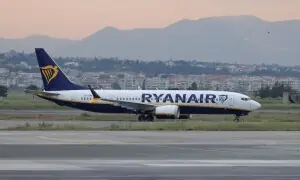
The no-frills airline requires at least one parent to sit with children aged two to 11 during a flight, but that means they must pay for what is called a “mandatory family seat”.

The Competition and Markets Authority (CMA) is investigating whether the fee, typically around ₤8 ($11) per flight, is “unfair” under consumer law.

For other passengers, reserving a seat is optional.

The CMA said it would determine whether Ryanair’s seat reservation fees mean parents are being charged to meet “child safety and disability-related obligations as set out under aviation rules”.

“The CMA understands that Ryanair is the only major airline flying out of the UK to impose this charge,” the agency added.

It also noted that Ryanair does not apply the fee on flights to and from Italy following action by the Italian civil aviation authority.

In response, Ryanair said its family seating policy “fully complies with all relevant laws and regulations”.

“Adults travelling with children pay one reserved seat fee, but can select reserved seats beside them for up to 4 children on the same booking free of charge,” the company said in a statement.

“Ryanair looks forward to disproving these false CMA claims during this bogus investigation,” it added.

The CMA said it expected to provide an update on the investigation within six months.

Infringing on consumer protection laws can lead to fines of up to 10 per cent of a company’s global revenue.

❌
Subscriptions