
 Login
Login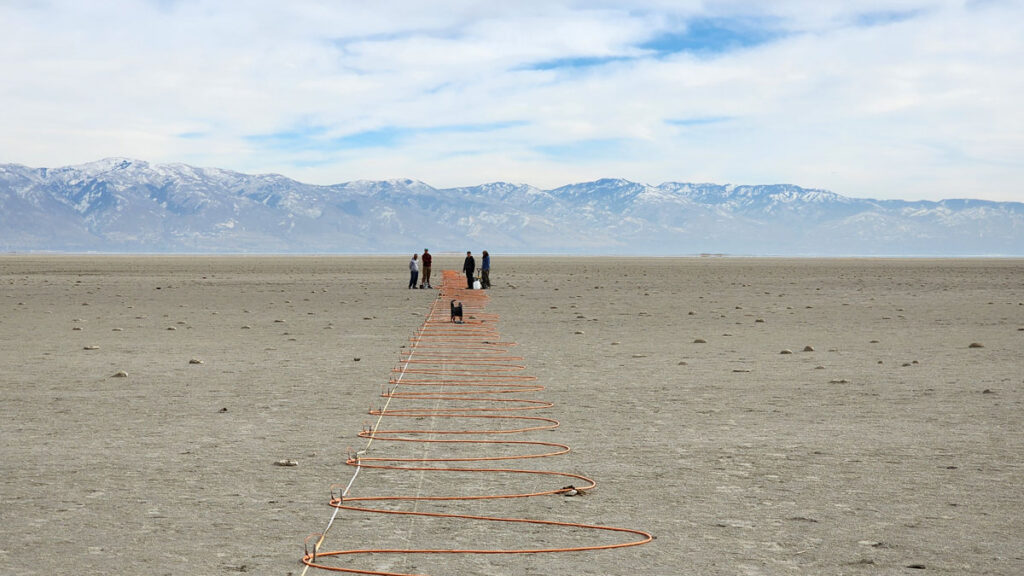


An Off-Road Itinerary

Iceland, Chile, Kenya, Antarctica, Papua New Guinea, and the Great Salt Lake. That ambitious lineup covers (most of) the destinations where scientists featured in our annual fieldwork collection have ventured to test innovative instruments and answer pressing questions about natural processes on—and off—Earth.
Read along to learn about some fascinating field science and to hit all these hot spots and cool destinations for yourself.
In “Discovering Venus on Iceland,” scientists describe a multiweek effort traversing three rugged and rocky sites to collect samples and validate airborne radar measurements. Iceland’s basaltic lava fields are about the closest analogue to the surface of Venus that Earth has to offer, and the team’s data collection is helping to test the performance of instruments that will be a part of NASA’s VERITAS (Venus Emissivity, Radio Science, InSAR, Topography, and Spectroscopy) mission in several years’ time.
From Iceland, travel west and south to Chile, Guatemala, and Idaho to learn how researchers have been building and using their own inexpensive, lightweight sensors to detect infrasound emanating from volcanoes, earthquakes, and wildfires in “Sensing the Sounds from Earth’s Hazardous Environments.” At Villarica volcano in the Chilean Andes, for example, they have deployed sensor clusters on, around, and even hanging from a cable above the volcano’s summit crater to better understand how infrasound may be useful for eruption monitoring.
Meanwhile, at Lake Turkana in Kenya, scientists have been partnering with local industries to map the subsurface and better understand how the continent is unzipping along the East African Rift System, as Kimberly Cartier describes in “Eastern Africa Is Splitting Apart, but Not Where We Expected.”
Stick with Cartier for another leg of our fieldwork trip as she relates how researchers have instrumented an underwater volcanic vent off Papua New Guinea to track effects of ocean acidification on corals in “Coral Diversity Drops as Ocean Acidifies.”
From there, head to the decidedly less tropical climes of the South Pole, where a team recently installed a pair of seismometers deep in the Antarctic ice, completing a challenging and years-long feat of engineering, reports Grace Van Deelen in “These South Pole Seismometers Will Detect Vibrations 1.5 Miles Under the Ice.”
Finally, journey to the North American interior to learn what scientists found when they installed electrodes on the now-desiccated surface of Utah’s Great Salt Lake in Carolyn Wilke’s—spoiler alert—“What’s Below the Great Salt Lake? More Water.”
We’ll understand if you need a break after all that globe-trotting. But you’re always welcome to join us for more adventures in the field.
—Timothy Oleson, Eos Senior Science Editor
