Buying groceries at a big supermarket is a relatively new phenomenon. Prior to the early 1900s you would have done your shop in the small, family-owned, butchers, bakeries or greengrocers that lined our high streets.
Now, online shopping, “dark stores” and AI chatbots are helping with your groceries, and supermarkets are adapting. It might sound exciting, or terrifying, but what we’re most interested in is what happens next. Will we trade choice, autonomy and our health for convenience? And wil
Buying groceries at a big supermarket is a relatively new phenomenon. Prior to the early 1900s you would have done your shop in the small, family-owned, butchers, bakeries or greengrocers that lined our high streets.
Now, online shopping, “dark stores” and AI chatbots are helping with your groceries, and supermarkets are adapting. It might sound exciting, or terrifying, but what we’re most interested in is what happens next. Will we trade choice, autonomy and our health for convenience? And will we even have a say when huge corporate profits are at stake?
Gary Mortimer has received past funding from the Building Employer Confidence and Inclusion in Disability Grant, the AusIndustry Entrepreneurs' Program, the National Clothing Textiles Stewardship Scheme, the National Retail Association and the Australian Retailers Association. He is an independent director and board chair of Services and Creative Skills Australia, a federally-funded jobs and skills council.
Paul J. Maginn does not work for, consult, own shares in or receive funding from any company or organisation that would benefit from this article, and has disclosed no relevant affiliations beyond their academic appointment.
Colorado ranks 12th in the nation for the highest average credit card debt with more than $7,000. Oscar Wong/Getty ImagesColorado’s breathtaking landscapes are increasingly overshadowed by breathtaking bills. Despite a high-growth economy, many households face a concerning paradox. Expenses are rising, but wages have not kept pace. To fill the gap, many families now rely on high-interest credit cards.
Credit cards were once for extra purchases. Now, for some people, they are a vital safety ne
Credit cards were once for extra purchases. Now, for some people, they are a vital safety net. Many people rely on revolving debt, which moves balances from one card to another, with lower rates month to month. In Colorado, 33% of debtors now cite everyday expenses – groceries, utilities and childcare – as the primary reason for their debt. Another 41% point to unexpected emergencies, such as medical bills or car repairs.
I am a professor and the chair of the Department of Marketing at the University of Denver’s Daniels College of Business. My research investigates debt payment strategies and consumer welfare.
Colorado cost of living increases
Colorado’s overall cost of living is 12% higher than the national average. While groceries and healthcare are generally on par with the rest of the country, the state’s overall affordability is impacted by housing and childcare.
Denver’s housing costs are 22% above the U.S. average, while mortgage debt accounts for a 77.4% of all household debt in the state. This takes up a large portion of a family’s monthly income.
A small percentage of individuals with large debt balances drive the average up. The median represents the exact middle point of the population. The median amount of credit card debt per person is $3,305 in Colorado, ranked fourth in the country. The average person in Colorado pays $266 toward their credit card bill each month. Thus, it would take the average Colorado borrower nearly 14 months and $421 in interest to pay off the debt balance.
In most realistic cases, however, borrowers are trapped in prolonged repayment cycles, where borrowers continually carry a revolving credit balance from month to month while making only partial or minimum payments.
The demographics of debt
The burden of credit card debt is not distributed equally. Generation X, ages 45–60, carries the heaviest burden in the state. Their average balances have reached $9,600. This group faces the “sandwich effect.” They must often support both adult children and aging parents. This is difficult due to Colorado’s high healthcare and living costs.
Millennials, ages 29–44, hold the second-highest average balances at $6,961. For them, credit cards often serve as a stopgap measure for massive housing costs and childcare as they navigate starting and supporting a family. Their average debt levels have surged 134% since 2012.
Younger people in Colorado are looking for help to get out of debt. A 9News Wealth Wednesday segment explores resources for better money management.
Generation Z, ages 18–28, carries lower average balances – around $3,493. However, they face the fastest rate of debt growth, with their balances surging nearly 7% year over year. These young adults entered the workforce during peak inflation. They rely on revolving credit much earlier in their careers than previous generations.
Furthermore, communities of color face a persistent credit gap. More than 10% of Black households and 9% of Hispanic households in Colorado lack access to standard bank accounts and mainstream credit products. This pushes them toward even higher-interest alternative debt products, such as payday and pawn shop loans.
For debt repayment, academic research and behavioral economics point to two popular strategies: the “debt avalanche” and the “debt snowball” methods.
The avalanche method focuses on mathematical efficiency – those with debt allocate every extra dollar to the balance with the highest interest rate while paying the minimums on the rest. This saves the most money over time.
Conversely, the snowball method leverages human psychology. By paying the smallest balance first, you achieve “quick wins” that build momentum.
For those who feel entirely overwhelmed by their financial situation, formal interventions are effective. Nonprofit credit counseling can help consumers evaluate their budgets and enroll in debt management plans. Under a plan, counseling agencies negotiate directly with creditors to lower interest rates and waive fees. This consolidates debt into one manageable monthly payment.
Studies evaluating the National Foundation for Credit Counseling’s Sharpen Your Financial Focus program show its effectiveness. Clients who receive financial counseling substantially reduce their revolving debt over time.
Finally, Coloradans do not have to navigate this crisis alone. Residents can contact their local Office of Financial Empowerment. These offices provide free financial coaching and consumer protections. They also offer access to safe banking products.
If you’re in debt, seeking outside assistance can help you break the cycle of revolving debt and build long-term financial stability.
Ali Besharat does not work for, consult, own shares in or receive funding from any company or organization that would benefit from this article, and has disclosed no relevant affiliations beyond their academic appointment.
Many online shoppers who order from independent small retailers have no idea who ships their goods. Odds are growing that it's Amazon. AP Photo/Damian DovarganesYou did the right thing this morning.
Instead of the one-click default to your laptop’s last opened tab, you opened Etsy and bought a ceramic mug from a maker you’d been following on Instagram. Yesterday, your sister’s birthday gift came from a Shopify store run by a kitchenware designer in Sacramento, California. You felt something whe
Many online shoppers who order from independent small retailers have no idea who ships their goods. Odds are growing that it's Amazon.AP Photo/Damian Dovarganes
You did the right thing this morning.
Instead of the one-click default to your laptop’s last opened tab, you opened Etsy and bought a ceramic mug from a maker you’d been following on Instagram. Yesterday, your sister’s birthday gift came from a Shopify store run by a kitchenware designer in Sacramento, California. You felt something when you clicked “buy,” a small, warm, fuzzy feeling. Not Amazon. Not a giant. Someone real.
The package will arrive on time, in unmarked brown cardboard, in two days.
It will arrive that way because Amazon delivered it.
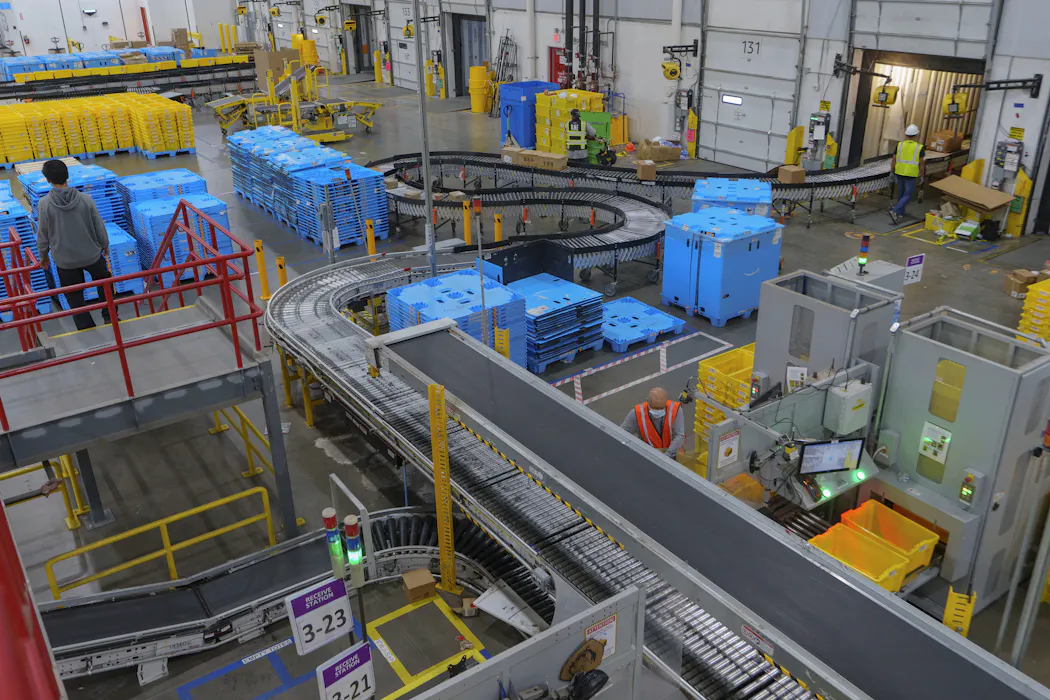
On May 4, 2026, Amazon announced the launch of Amazon Supply Chain Services. It opens Amazon’s warehouses, trucks and delivery network – built over decades to ship products from its own website – to outside companies of any size. Procter & Gamble, 3M, Lands’ End and American Eagle are among the first customers. The headlines framed it as a logistics story – Amazon is coming for UPS and FedEx – and most coverage stopped there.
Amazon’s announcement that it would open its logistics network to other companies has major implications for consumers trying to ‘shop small.’
But the bigger shift is one that consumers can’t see, and it has to do with how they support small businesses. A 2024 Pew Research survey found that 86% of Americans say small businesses have a positive effect on the country. For the millions of shoppers who have been redirecting their dollars away from corporate giants and toward small and local businesses, the May 4 announcement isn’t a logistics story at all. It’s about whether that effort still means what they think it means.
We’re scholars of consumer behavior and marketing who study how people square their purchasing decisions with ethical considerations, and we see a growing dilemma for consumers: If you pick the small brand instead of the giant, part of your payment actually goes somewhere you don’t expect. You may think you’ve made a conscious choice, but you’ve just walked through a different door into the same store.
And it’s getting harder and harder to escape.
Invisible but growing
Dragon Glassware is a small kitchenware company that began in a garage in Sacramento in 2017. You may have bought one of their wine glasses on their Shopify website, drawn in by the founder’s story and the small-business feel. Yet the order was picked, packed and shipped from an Amazon warehouse.
Another example is Poppi, which started at a Texas farmers market and went viral on TikTok as a cooler, healthier alternative to the giant soda companies. For years, the cans you ordered from Poppi’s own website – the ones that felt like a vote against Big Soda – were shipped to you by Amazon. Poppi was sold to PepsiCo for nearly US$2 billion in 2025, which is its own David-becomes-Goliath story.
These aren’t rare cases. Amazon’s Multi-Channel Fulfillment program, the service that ships these orders, now serves more than 200,000 U.S. merchants, and the network grew by roughly 70% in 2024 alone, according to Amazon. The same Amazon service also handles fulfillment for sellers on Shopify, Etsy, eBay and TikTok Shop. But you wouldn’t know this — the packaging is left unmarked by design.
What changed on May 4 is that Amazon opened this service up for all businesses – not just the small brands that have been there all along, but every kind of company at every size, from American Eagle retail orders to Procter & Gamble raw-material shipments between factories.
Peter Larsen, the executive quoted in the May 4 press release, said Amazon is doing for shipping what Amazon Web Services did for the internet. But there’s more to that comparison. Most people don’t know which websites run on AWS, and they don’t care. That’s the kind of invisibility Amazon is now building underneath physical things, too.
Amazon Supply Chain Services announced on May 4, 2026, that it’s opening up its shipping and logistics services to all companies, a sign of its growing reach.Business Wire photo illustration
It’s also extremely lucrative. Amazon collects a fulfillment fee on every order it ships for an outside brand – roughly $15 for a three-pound package shipped in two days, according to Amazon’s own published rates. It also collects monthly storage fees on that brand’s inventory. And it gathers real-time visibility into what every competitor sells, to whom, in what quantities, at what moments of the year.
Amazon CEO Andy Jassy publicly described Supply Chain Services as a “major growth opportunity.” When Amazon says growth opportunity, it means the same thing it said about AWS – a business that could one day rival its retail arm.
Why the small brands are using Amazon
It’s tempting to think the small brands are selling out. They’re not. They’re doing the math.
A small kitchenware founder shipping out of her own garage can only get a wine glass to a customer in three to five days. Amazon’s network can get there in two. After 15 years of Amazon Prime, two-day delivery isn’t a luxury – it’s what shoppers expect. Small brands that can’t match it lose sales. Independent fulfillment companies exist, but Amazon’s service is typically cheaper and integrates directly with the platforms small brands already sell on, such as Shopify, Etsy, TikTok Shop and eBay.
The bigger implication is upstream, however. Amazon now controls roughly four out of every 10 dollars Americans spend online – more than four times the share of its nearest competitor. A small brand that wants to be discovered by new customers has little choice but to be on Amazon. Once there, the path of least resistance is to use Amazon’s warehouses for everything – including the orders that come in from Shopify and Etsy.
So for consumers, the choice technically exists. But the economics make it a decoy. And the more small brands are routed through Amazon’s network, the more Amazon can raise fees, change terms and shape the conditions for small commerce. In fact, Multi-Channel Fulfillment prices have already risen for three years running.
If even Procter & Gamble has decided to route part of its logistics through Amazon, what can a kitchenware founder in Sacramento realistically do?
For years, you’ve been telling yourself something every time you supported a small business – that your dollars meant something, that you weren’t pouring every dollar into the same handful of giants. But what does shopping your values even mean when the system underneath is invisible?
The impulse to shop your values isn’t naive. But it’s becoming harder to act on. For small businesses caught in the middle, deeper dependence on Amazon’s logistics means rising fees, with no leverage to push back. For those consumers who want choices, it means something uncomfortable: They can keep trying harder to avoid the giants, but the giants keep getting bigger anyway.
The mug will arrive Tuesday. It will be beautiful, made by hand, wrapped in brown paper tied with twine. The truck pulling up outside won’t have a logo on it. None of that is an accident. All of it is by design.
The authors do not work for, consult, own shares in or receive funding from any company or organization that would benefit from this article, and have disclosed no relevant affiliations beyond their academic appointment.
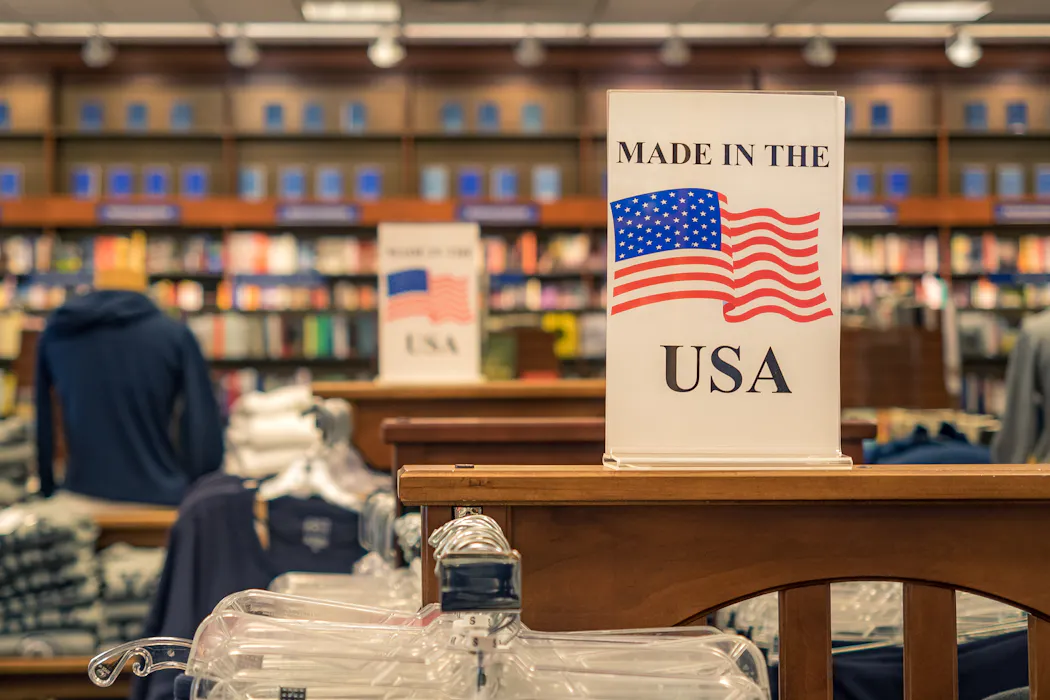
Micha Weber/ShutterstockIn March, US President Donald Trump issued an executive order to combat false or inaccurate advertising of “Made in USA” claims, especially in digital marketplaces. It was part of sweeping trade policies that, according to the White House, “deliver on his promise to put America first”.
“American businesses building, growing, and manufacturing all, or virtually all, aspects of their products onshore are entitled to the undiluted branding benefits that come with supportin
In March, US President Donald Trump issued an executive order to combat false or inaccurate advertising of “Made in USA” claims, especially in digital marketplaces. It was part of sweeping trade policies that, according to the White House, “deliver on his promise to put America first”.
“American businesses building, growing, and manufacturing all, or virtually all, aspects of their products onshore are entitled to the undiluted branding benefits that come with supporting the American economy,” Trump’s executive order read, “and American citizens attempting to buy American products should have certainty as to what American-origin claims mean.”
In a world of growing national populism, country-of-origin labelling has become a political issue, as foreign brands can often seem – or easily be portrayed as – less aligned with national interests. This can be particularly problematic for certain products like Scotch whisky or French champagne, whose identity, prestige and branding are tied to their national origins, but our research shows that populism affects consumer and marketing behaviour across the board.
Election results affect marketing
To understand how a national-populist election victory shapes marketing, we conducted a study centered on the automobile industry in the US. Along with Daniel Brannon at the University of Northern Colorado, we analysed the impact that national-populist gains have on advertising and price promotion effectiveness for foreign and domestic brands.
First, we compared all new vehicle registrations in Texas before and after the 2016 US presidential election. We then re-created this test in France during the 2024 EU elections, when Marine Le Pen’s National Rally party saw unprecedented gains, this time focusing on the household textile industry.
What we observed in both cases was that advertising became more effective for domestic brands, whose market share grew by a larger amount than foreign brands as their advertising spending increased. In fact, we observed that foreign brands’ advertising actually became less effective – by 0.16% – after the national-populist party wins than it was prior to the election.
Similarly, domestic brands also benefited from more effective price promotions than foreign brands. Their market share grew by 0.30%, a larger amount than foreign brands for a similar level of increase price promotion spending.
Put simply, domestic brands’ advertising and price promotions were at a noticeable advantage when national-populist parties were in the ascendant.
Advertisers are already adapting
These results are of particular interest to marketers, who may consider concealing their brand’s country of origin as a result. But lack of transparency does not generally play well with consumers, and can backfire badly.
With some brands, just pinning down their country of origin can be tricky for consumers. Take upmarket ice cream company Häagen-Dazs. Despite its Danish-sounding name the company was founded by Polish-Jewish immigrants in New York City, and is now manufactured around the world, including in Canada, France and Japan.
Instead of hiding or highlighting this complexity, some global brands are instead spotlighting their contributions to national and local economies. These include emphasis on local manufacturing, job creation and supply-chain investments. But even this needs to be done carefully, as national populism does not receive the same support in all regions of a country, so strategies must be adapted to target certain regions.
Coca-Cola has made this move in Germany. A recent marketing campaign highlights the brand’s contributions to the German market, with ads featuring employees with German names – such as Heike or Jana – who produce and bottle Coca-Cola. The campaign’s slogan, “Made in Germany”, makes it very clear that they want consumers to know the whole process takes place in the European country.
This particular campaign is not just a product of Germany’s own populist turn. In a climate marked by strained US-German relations and boycotts of American goods across the world, it may currently be a wise marketing decision for certain brands to distance themselves from the US.
Marketing a brand as “domestic” or “foreign” is not always easy. The label is rooted in consumers’ perceptions – which was the criteria used in our study, as opposed to manufacturing location – but these are often at odds with the complex reality of global supply chains. For instance, around the time of the 2016 USA election, some “foreign” car brands actually manufactured more of their US vehicles domestically than “domestic” US brands.
The impact of populism is also not uniform across all brands. If a brand is associated with positive attributes like quality or reliability, it matters less to consumers whether it is labelled as a foreign, domestic or neutral. Among US consumers, for instance, Japanese manufacturers tend to have higher reliability perceptions, while Italian brands are associated with stronger styling.
Companies need to factor all this in as they devise their marketing strategies. Until recently, country-of-origin labelling was mostly informational, akin to a food product’s list of ingredients or an electronic product’s technical specifications. However, in a politically polarised world, it could be the thing that makes or breaks a brand’s sales and reputation.
A weekly e-mail in English featuring expertise from scholars and researchers. It provides an introduction to the diversity of research coming out of the continent and considers some of the key issues facing European countries. Get the newsletter!
Las personas firmantes no son asalariadas, ni consultoras, ni poseen acciones, ni reciben financiación de ninguna compañía u organización que pueda obtener beneficio de este artículo, y han declarado carecer de vínculos relevantes más allá del cargo académico citado anteriormente.

 Login
Login