Iran fired barrages of missiles at Israel for the first time in two months on June 7. The initial trigger was an Israeli strike against a Hezbollah target in the Lebanese capital of Beirut earlier that day, an attack that Donald Trump had only recently asked the Israeli prime minister, Benjamin Netanyahu, to avoid carrying out.
Israel’s military soon launched retaliatory strikes on targets in western and central Iran, again defying calls by Trump for restraint. Iran subsequently launched fresh
Iran fired barrages of missiles at Israel for the first time in two months on June 7. The initial trigger was an Israeli strike against a Hezbollah target in the Lebanese capital of Beirut earlier that day, an attack that Donald Trump had only recently asked the Israeli prime minister, Benjamin Netanyahu, to avoid carrying out.
Israel’s military soon launched retaliatory strikes on targets in western and central Iran, again defying calls by Trump for restraint. Iran subsequently launched fresh strikes of its own, before the Iranian military announced it was bringing its attacks to an end. In a statement, Iran warned it would carry out a “more severe” response if Israel’s attacks on Lebanon continue.
What caught my attention about this round of fighting is the geopolitical context in which it has occurred. Iran is trying to establish a new regional order, based on new rules. And it might just pull it off.
The first notable feature of this order is that Iran dictates to Israel and the US what they may and may not do. Iran started this latest round of fighting not because of an attack on Iranian territory, but as an attempt to dictate Israeli military actions in Lebanon.
Six months ago, Israel could do as it pleased in Lebanon without Iranian intervention. Now, thanks to Trump and Netanyahu’s war, Tehran feels empowered enough to try and place limits on Israeli action on Israel’s own borders.
We have seen, somewhat more obliquely, the same principle apply in the Strait of Hormuz over the past month or so. Iran established a chokehold over the vital waterway shortly after the start of the war in late February. And it has no intention of letting its control go.
This, too, is part of Iran’s new regional order. It is telling its opponents: do as we say or we tighten our stranglehold on the global economy. For now at least, US actions show that Washington would rather accept the continued existence of this reality than fight to change it.
A second aspect of the new regional order is Iran’s expanding ways of inflicting pain on its enemies in order to force acceptance of this new world. Iran has established that it can rain missiles on Israel, strike infrastructure across the Gulf states, kill American soldiers and choke the global economy of oil, all without facing a realistic attempt at regime change.
Iran also still has many cards in its pocket. These range from expanding the scope of energy and desalination targets it hits across the Gulf to activating the Houthis to block energy traffic in the Red Sea. The Houthis have announced a ban on Israeli shipping in the Red Sea following the latest escalation.
The US has threatened many times now to attack Iranian civilian infrastructure, invade its Kharg island export terminal or to escort ships through Hormuz. However, it has backed down from all of them out of fear of the consequences.
Strained US-Israeli ties
The third feature of the new regional order is that Israel and the US no longer march in lockstep. Trump responded to Iran’s attack on Israel by emphasising that his priority was to stop Israel from retaliating. “I am going to call Bibi right now and tell him not to retaliate,” he said following the initial Iranian strikes.
Netanyahu has managed to manoeuvre Israel into a position in which a Republican president is telling him not to respond to incoming Iranian missile barrages targeting Israeli civilians. This situation would scarcely have been believable six months ago.
Separating Israel from the US is a longstanding dream of Tehran. So far at least, there is no hint that Trump is threatening to withhold missile interceptor defences from Israel over the resumption in hostilities. But even while keeping American defensive aid, it would be very difficult for Israel to sustain further conflict with Iran.
Hunting missiles launchers would alone prove a challenge, because Israeli air power would be stretched much more thinly without American assistance in hitting targets. If the northern front against Hezbollah remains active as well, the Israeli military’s resources will be even more strained.
And for how long is the US going to accept running down its missile interceptor stocks in order to defend Israel from a bout of warfare that its famously mercurial president told the country not to start? In the short term, perhaps for a while. But over the longer term, it is not sustainable for the US to dedicate a substantial portion of its missile defences to protecting Israel.
The fourth and final feature of the new regional order is that peace seems impossible to imagine. Netanyahu cannot accept an Iranian veto over Israel’s actions in Lebanon, nor absorb the implications for Israeli deterrence if he lets attacks from Iran go unanswered.
Trump cannot get his peace deal with Iran while Israel is bombing Lebanon. And Iran has the incentive to keep pushing for more, inflicting more costs on its opponents, because in the new regional order it can do so without many consequences.
This is the result of a disastrous war of choice which will go down as one of the most ill-conceived in American history.
Andrew Gawthorpe is affiliated with the Foreign Policy Centre in London. He is the author of America Explained (https://amerex.substack.com/), a newsletter covering US politics, foreign policy and history, which features regular analysis of the Iran war.
Two days before registered Republicans voted in the party’s primary election in Kentucky’s 4th Congressional District on May 20, Donald Trump called the incumbent representative, Thomas Massie, “the worst Republican congressman in history”.
Massie subsequently lost the primary to a political newcomer with no prior office-holding experience. Ed Gallrein’s not-so-secret weapon was that he had the backing of the US president.
Just over a week later, Texas voters were asked to decide whether 22-
Two days before registered Republicans voted in the party’s primary election in Kentucky’s 4th Congressional District on May 20, Donald Trump called the incumbent representative, Thomas Massie, “the worst Republican congressman in history”.
Massie subsequently lost the primary to a political newcomer with no prior office-holding experience. Ed Gallrein’s not-so-secret weapon was that he had the backing of the US president.
Just over a week later, Texas voters were asked to decide whether 22-year Senate veteran John Cornyn should be ousted in favour of the state’s attorney-general, Ken Paxton – who was also endorsed by Trump. Despite all the baggage Paxton carried into the race: an indictment for fraud (charges were later dropped) and an impeachment for bribery, which he denied before being acquitted in the state senate. He has also gone through an acrimonious divorce accompanied by accusations of adultery (which he has also denied), Paxton won the May 26 primary handsomely with more than 60% of the vote.
Trump has long threatened to “primary” – back a rival candidate in the upcoming primary election – Republicans who displease him in some way. But with the midterm elections looming in November, we’re seeing this put into practice. And it’s making the conservative “old Republican” wing of his party very nervous.
America’s high-profile November elections involve straightforward contests between the nominees of the main parties. But before a candidate can represent their party, they must first win an internal election. These primaries are open to registered party voters (and, in some states, independents)
American political parties have no centralised power to simply appoint or protect their candidates. The process is genuinely competitive and, as the current cycle is demonstrating, potentially dangerous for incumbents.
For the president to mount a primary challenge is to use a particularly powerful weapon in American political life – it can end a career without the opposing party winning a single vote. On one level, the 2026 GOP primaries are rolling out in the usual manner. However, who is orchestrating them, and why, is worthy of note.
According to the Brookings Institute, Thomas Massie drew Trump’s ire not for any ideological deviation from the GOP line, but for opposing a short-term funding bill and for joining a Democrat in calling for the Department of Justice to release the Epstein files.
The Texas case has a similar logic. Prior to his decades in the Senate, John Cornyn served as Texas attorney general and sat on the Texas Supreme Court. He is a stalwart conservative by any conventional measure. However, he was associated with a bipartisan gun safety bill in 2022, and he has at times been willing to work across the aisle. His challenger, Ken Paxton, is a Maga true believer who survived a bipartisan impeachment attempt in the Texas senate, largely on the strength of Trump’s support.
The pattern extends well beyond these two cases. In one state alone, Trump endorsed challengers to eight GOP state senators who had voted against a redistricting bill, with his allies spending millions in an effort to remove them. The message is clear: vote against the president’s wishes, and he will come for your seat.
Electoral gamble
This strategy is inevitably unnerving for the more traditional wing of the Republican Party. Democrats are confident, and Republicans concerned, that a Paxton nomination in Texas will make it harder for Republicans to hold the seat in November. The Democratic nominee, state representative James Talarico, raised a staggering US$27 million (£21 million) in the first three months of the year alone.
There is some Trumpian precedent for all of this. In 2017, the 45th president endorsed Luther Strange in an Alabama senate primary. Strange lost to Roy Moore, who then lost the general election to Democrat candidate Doug Jones. The lesson that a rock-solid Republican seat can be lost was clear, although apparently unlearned.
Republicans are defending slim majorities in both the House and Senate in 2026. They can afford few losses. Replacing electable incumbents with ideologically pure but extreme and therefore electorally risky challengers, is a strategy that appears to prioritise control over the party above control of Congress.
The effect on Capitol Hill
Even where Trump’s candidates win, the consequences may be destabilising. Some Republicans have acknowledged that Trump’s aggressive involvement in primaries could create complications, not least for members who are no longer worried about reelection. Senators in their final term, for example, might be emboldened to act independently knowing there is no electoral sword hanging over them.
But the more immediate effect is silence. Had Massie or Cornyn survived their primary challenge, more members of Congress might have been willing to vote against Trump’s interests. Their defeat sends the reverse signal. When a solid incumbent with a strong conservative record can be unseated for insufficient loyalty, other Republicans in Congress will be watching and calculating.
This is how party discipline can slide into something more troubling. It is one thing for a party leader to want to manage unwieldy factions but enforcing one’s authority via electoral intimidation is another matter.
What is being challenged in these primaries are the remnants of what the Republican Party once was. This included a coalition of business conservatives, foreign policy hawks, libertarian-leaning figures and traditional social conservatives. Massie represented one strand of that tradition. Cornyn represented another. They have now been treated as enemies of the Maga agenda.
Historically, US election scholarship has suggested there may be a tendency in primaries to swing towards the party’s base, and then back in the direction of the median voter for the general election. In this new incarnation of the GOP, the pendulum appears stuck to the right.
During primary season, this may be an attractive Maga trait. But come November, not every GOP voter may cast their ballot for a cult of loyalty.
Clodagh Harrington does not work for, consult, own shares in or receive funding from any company or organisation that would benefit from this article, and has disclosed no relevant affiliations beyond their academic appointment.
In April 2026, Spain launched a new regularisation programme for undocumented migrants, which is estimated to benefit more than 500,000 people. At the end of 2025, Germany concluded a regularisation campaign launched in 2023, for which more than 80,000 people applied. These recent examples to which we could add the Italian and Portuguese regularisation campaigns during the Covid-19 pandemic – show us that this type of campaign is by no means exceptional. As the research argues, these campaigns a
In April 2026, Spain launched a new regularisation programme for undocumented migrants, which is estimated to benefit more than 500,000 people. At the end of 2025, Germany concluded a regularisation campaign launched in 2023, for which more than 80,000 people applied. These recent examples to which we could add the Italian and Portuguese regularisation campaigns during the Covid-19 pandemic – show us that this type of campaign is by no means exceptional. As the research argues, these campaigns are, in fact, an integral part of European migration policies and provide a response to situations of irregularity caused by employers’ demand for labour, migrants’ aspirations to reach Europe, and the limited number of legal channels available to do so.
Although they are frequent, these campaigns nonetheless provoke strong reactions in the political sphere, where the issue of migration – and irregular migration, in particular – is the subject of highly polarised debates. This is particularly the case in Belgium; but also in France, where Bruno Retailleau – Les Républicains party candidate in the upcoming presidential election – recently proposed to “banish Spain from Europe”, on the grounds that its latest regularisation campaign runs counter to what Europeans want.
Among opponents of granting migrants legal status, it is often argued that this type of policy would encourage new migrants to come to Europe and stay there irregularly, and that regularisation is not backed by public opinion. In a previous survey conducted among the Algerian population, we were already able to demonstrate that the “pull factor” that such a regularisation campaign would supposedly create does not exist. However, the question of whether there is public support for regularisation has received little attention from researchers to date.
Public opinion on migration
There is now a wealth of scientific research on the factors that shape public opinion on immigration in general. These findings tell us that individual characteristics (age, gender, education, ethnicity, etc.), as well as media coverage and interpersonal contact with immigrants, influence attitudes toward immigration.
Furthermore, as evidenced by opinion polls such as the Eurobarometer, the public is generally poorly informed about immigration.
Is it therefore simply a matter of better informing the public to increase support for regularisation campaigns? Although existing studies do not allow us to definitively conclude that corrective information increases support for immigration, they do indicate that presenting factual information in the form of narratives and personal accounts can prove more persuasive than simply presenting statistics.
Similarly, research on the role of framing in discourse analysis has shown that appealing to emotions is a persuasive communication strategy in the field of migration. From all this research, we can therefore conclude that both the content and form of the message are likely to influence people’s opinions regarding the regularisation of undocumented migrants.
A new large-scale survey of the Belgian population
In a recent scientific publication, we present the results of an experiment integrated into an online survey of a panel of 2,121 people representative of the adult resident population in Belgium.
Since the last regularisation campaign organised in 2009, the Belgian political debate on immigration has become significantly polarised. The context therefore seems ill suited to the implementation of a new regularisation campaign, despite the presence of approximately 112,000 undocumented migrants in the country in a country with a population of 11.8 million, of whom 20% are immigrants. On the contrary, the current centre-right federal government led by the Flemish nationalist Bart De Wever intends instead to implement – in the words of the Minister for Asylum and Migration, Anneleen Van Bossuyt – “the strictest asylum and migration policy ever adopted” as this is supposedly “the policy that people are calling for”.
To verify this claim, we sought to measure the actual level of support among the Belgian population for the regularisation of undocumented migrants, but also to test the effect of five different messages on the level of public support for regularisation campaigns.
Participants in the survey conducted by the Bpact polling institute in March 2025 – were therefore randomly assigned to a control group that received no message and five experimental groups that received a message of around 100 words on the subject of regularisation.
These messages presented: (1) scientific data on undocumented migrants in narrative form; (2) the moving story of an undocumented migrant facing deportation and supported by her neighbours; (3) the economic and social benefits of regularising undocumented migrants; (4) double standards in the authorities’ treatment of undocumented migrants compared to that of tax evaders; and (5) the inequalities between wealthy migrants benefiting from privileged access to residence in Europe and disadvantaged migrants with few options for reaching Europe legally.
In our survey, all participants were then asked to state their position on granting undocumented migrants legal status in general, but also on regularisation that would be limited to undocumented migrants who are working, in short-staffed professions, or those with lasting social ties in Belgium. The reason why it is important to distinguish between support for different profiles of undocumented migrants is that even the most ambitious regularisation programmes, such as Spain’s migratory model, which it unveiled this year, make regularisation conditional on specific criteria.
The results of our survey highlight the importance of this differentiated approach. Indeed, only 21% of those surveyed believe that the authorities should regularise all undocumented migrants. In contrast, 53% are in favour of regularising undocumented migrants who are working, and there is slightly more support (54%) for the regularisation of migrants in professions affected by staff shortages. In addition, 45% of respondents supported legal status being granted to those who have forged close social ties in the country. It is also worth noting that between 20% and 25% of participants are neither for nor against making these different categories of people legal.
As regards the impact of the five messages we tested, only two produced a significant effect. Presenting scientific data on undocumented migrants in narrative form (message 1) led to an increase of around 7 percentage points, favouring legalising undocumented migrants in general, as well as those who are working. Exposure to the moving life story of an undocumented person (message 2), meanwhile, led to an 8-percentage-point increase in support for legalising people with long-term ties, and even a 10-percentage-point increase for those in professions facing understaffing issues.
What should be made of the public’s conditional support for regularisation?
Following the analysis of the Belgian case, two main lessons emerge.
On the one hand, while differentiating support for awarding legal status on the basis of certain criteria may raise ethical concerns by risking the creation of a hierarchy among immigrants between those deemed “deserving” and those deemed “undesirable” – this approach can also, in a context of strong political opposition, serve as a starting point for opening up the debate and gradually extending access to legal status to other groups of undocumented migrants.
On the other hand, the study provides two key insights for policymakers. It shows that, contrary to certain preconceptions, there is genuine public support for legalising migrants. It also indicates that this support depends heavily on how the policy is presented: the choice of message and its framing can significantly increase public support and reduce the perceived electoral risk.
A weekly e-mail in English featuring expertise from scholars and researchers. It provides an introduction to the diversity of research coming out of the continent and considers some of the key issues facing European countries. Get the newsletter!
Jean-Michel Lafleur received funding from FRS-FNRS, BELSPO - The Belgian Science policy and the European Union.
Abdeslam Marfouk ne travaille pas, ne conseille pas, ne possède pas de parts, ne reçoit pas de fonds d'une organisation qui pourrait tirer profit de cet article, et n'a déclaré aucune autre affiliation que son organisme de recherche.
Manual lymphatic drainage is sometimes used for lipoedema, but evidence for its usefulness remains limited. DuxX/ShutterstockFor many women with lipodoema, the diagnosis comes after years of being told the same thing: eat less, more more. The problem is that the fat accumulating around their hips and legs isn’t responding to diet or exercise, because it was never caused by them in the first place.
Lipoedema is a long-term condition that affects the way fat is stored in the body. It mainly affec
Manual lymphatic drainage is sometimes used for lipoedema, but evidence for its usefulness remains limited.DuxX/Shutterstock
For many women with lipodoema, the diagnosis comes after years of being told the same thing: eat less, more more. The problem is that the fat accumulating around their hips and legs isn’t responding to diet or exercise, because it was never caused by them in the first place.
Lipoedema is a long-term condition that affects the way fat is stored in the body. It mainly affects women and usually develops or worsens at times of hormonal change, such as puberty, pregnancy or menopause. The link with these life stages is one reason researchers think hormones may play a role, although the exact cause is still not fully understood.
It usually appears as a symmetrical build-up of fatty tissue around the hips, buttocks and legs. In some people, it also affects the arms. The upper body may remain much smaller, which can make the body look noticeably out of proportion. A common feature is that the hands and feet are usually unaffected, so there may be a clear difference between the affected limbs and the unaffected hands or feet.
Lipoedema primarily involves abnormal fat distribution. This is why the name can be confusing: although “oedema” usually refers to fluid swelling, lipoedema is not caused by fluid build-up. Some people may develop swelling or lymphatic problems alongside lipoedema, particularly in very advanced cases, but these are not the defining feature.
Misunderstanding lipoedema can delay diagnosis and leave people feeling blamed for symptoms that are not simply a result of lifestyle. Many people with lipoedema describe pain, tenderness, heaviness in the affected areas and a tendency to bruise easily. In more severe cases, the size and weight of the affected limbs can make walking, exercising and everyday movement more difficult.
Lipoedema can also overlap with obesity. Someone can have lipoedema and obesity at the same time, which can make diagnosis and treatment more complicated. Obesity may increase strain on the body, worsen mobility and overload the lymphatic system. Where lipoedema is advanced, especially if body weight is also very high, this can contribute to secondary lymphoedema.
Because lipoedema is not a fluid condition, treatments designed for lymphoedema may not have the same effect. Manual lymphatic drainage is a specialist massage technique intended to encourage fluid to move through the lymphatic system, but evidence for its usefulness in lipoedema itself remains limited.
Lipoedema is usually diagnosed through a person’s medical history and a physical examination. There is no single blood test or scan that can confirm it. A healthcare professional will look for typical signs, such as symmetrical fat distribution, tenderness, easy bruising and the sparing of the hands and feet.
They may also use a simple clinical check called Stemmer’s sign. This involves trying to pinch and lift the skin at the base of a toe or finger. If the skin cannot be lifted easily, this can suggest lymphoedema. In lipoedema, Stemmer’s sign is negative, meaning the skin can still be pinched.
One common claim is that lipoedema fat never responds to diet or exercise. The reality is more nuanced. Healthy eating, physical activity and weight management can still improve health, pain, mobility and quality of life, particularly for people who also have obesity. The aim should be to support strength, movement, comfort and long-term health, without encouraging crash dieting or blaming the patient.
Compression garments also help some people by reducing heaviness, discomfort and swelling. These are close-fitting medical garments that apply controlled pressure to the affected area. Good skin care is important too. This includes keeping the skin clean and moisturised, drying carefully between skin folds and treating cuts promptly, especially if swelling or reduced mobility makes the skin more vulnerable to irritation or infection.
Lipoedema can affect a person’s emotional wellbeing and quality of life. This does not mean it directly causes mental health disorders. But living with chronic pain, changes in body shape, reduced mobility and repeated medical dismissal can take a toll.
People may feel self-conscious, frustrated or isolated, especially if they have spent years being told their symptoms are simply a matter of weight. Some research suggests that many patients diagnosed with lipoedema report significant psychological distress before lipoedema-related symptoms begin. Psychological and social support is therefore an important part of care.
There is no cure for lipoedema, but symptoms can be managed. The best approach is usually holistic, meaning it looks at the whole person rather than treating one symptom in isolation. This may include movement, compression, pain management, weight support where appropriate, skin care and emotional support.
For people with severe obesity, bariatric surgery, an umbrella term for procedures that modify the digestive system to help people lose weight, may also improve symptoms and daily functioning.
Because knowledge about lipoedema varies, it is important to seek advice from healthcare professionals who understand the condition. Organisations such as The International Lipoedema Association provide further information and support.
Good care should recognise both the physical symptoms and the emotional impact, without reducing lipoedema to either a cosmetic concern or a simple weight issue. Better recognition can help people get support earlier, manage symptoms more effectively and move away from years of confusion, blame and delayed care.
Håkan Brorson does not work for, consult, own shares in or receive funding from any company or organisation that would benefit from this article, and has disclosed no relevant affiliations beyond their academic appointment.
Golem Grad island in North Macedonia is full of Hermann's tortoises. However, demographic projections suggest the last female could be wiped out by 2083. A female (pictured) that had fallen down a sheer drop of more than 20 metres. Fourni par l'auteurOn the strictly protected island of Golem Grad in North Macedonia, the tortoises are destroying their own population. During prolonged courtship, aggressive males are exhausting the females and frequently pushing them off the cliffs. Consequently,
Golem Grad island in North Macedonia is full of Hermann's tortoises. However, demographic projections suggest the last female could be wiped out by 2083. A female (pictured) that had fallen down a sheer drop of more than 20 metres. Fourni par l'auteur
On the strictly protected island of Golem Grad in North Macedonia, the tortoises are destroying their own population. During prolonged courtship, aggressive males are exhausting the females and frequently pushing them off the cliffs. Consequently, there are now one hundred males for every female capable of laying eggs. This is the only known example of demographic suicide in the wild to date.
Under favourable, stable and protected environments, large animal populations have no reason to die out. This should not happen unless a catastrophe, such as a devastating fire or the destruction of their habitat, or over-exploitation, wipes out all individuals or weakens the population, making it vulnerable to disease and other disturbances and hazards.
Well sheltered by the steep cliffs that line the island of Golem Grad on Lake Prespa in North Macedonia, Hermann’s tortoises (Testudo hermanni boettgeri) thrive on the wooded plateau.
After basking in the morning sun, they graze in the meadows, rest, and court, with the males emitting high-pitched sounds during mating. At first glance, nothing seems to threaten this population.
As is the case with other long-living species, maintaining populations requires high survival rates among adults. On Golem Grad, the adults have no predators, as wild boars, dogs, rats and humans are absent from this strictly protected island. The mild Mediterranean climate of this lake, situated at an altitude of 850 metres, is also favourable for reptiles.
All these factors explain the extraordinary population density, which stands at around 50 individuals per hectare – the highest ever recorded for tortoises. The ease with which these tortoises can be observed and studied led to the establishment of the field-monitoring programme in 2008. This was the result of a fruitful scientific collaboration between North Macedonia, Serbia and France, and this long-term monitoring programme was awarded the CNRS’s SEE-Life label in 2023.
But appearances can be deceiving: this population is in a critical state.
The extensive demographic, behavioural, physiological and experimental data collected over nearly 20 years show that, although highly active sexually and reproductively, this population is effectively committing suicide!
Demographic suicide
Demographic suicide is a strange and counter-intuitive theoretical process. The conditions under which it may arise are quite specific. For a given species, one must imagine a high-density population in which violent sexual behaviour is so prevalent that it threatens the survival of females. This would gradually lead to an imbalance in the sex ratio (the proportion of males and females in a population), in this case an excess of males. This would put increasing pressure on females, who would become fewer in number and more harassed as a result. This would eventually create a vicious circle that leads to the disappearance of females and, ultimately, the extinction of the population.
Golem Grad is an 18-hectare island in a lake perched at an altitude of 850 metres. On its plateau there is a forest of Greek junipers that can reach heights of up to 10 metres, as well as numerous reptiles, snakes, lizards and birds. The steep cliffs are particularly dangerous for female tortoises when they are harassed by the males exhibiting violent sexual behaviour. Provided by the author.Fourni par l'auteur
Coercive and violent mating behaviours are fairly common in nature. Typically, males harass females until they mate, sometimes injuring them in the process. In some cases, such behaviour can result in the death of the female, as has been observed in elephant seals (where the males are considerably stronger than the females), as well as in wild sheep, grey squirrels, otters, deer, toads, fruit flies, humans… However, such fatal outcomes do not benefit the males, as they will have no offspring if the females die during mating. Therefore, such excessively violent behaviours are maladaptive and remain marginal.
Furthermore, in wild populations, various regulatory mechanisms prevent this type of vicious circle, or extinction vortex, from emerging. Females can employ a wide range of avoidance and defence strategies. For example, they can hide, seek the protection of a dominant male, or form alliances. Excessively violent males generally produce fewer offspring than those who spare the females, meaning their behavioural traits are less likely to persist over time. Furthermore, when males become overcrowded, they tend to emigrate in search of better mating opportunities, thereby reducing the pressure on females. Thus, conflicts between the sexes in coercive mating systems are resolved through effective equilibria, without a harmful escalation for either sex.
However, rare experiments conducted on animals studied in captivity have shown that males can have a strong negative impact on populations when the sex ratio and population density are artificially skewed in favour of males. For example, in a species of Japanese shrimp, an excess of males reduces female fertility and mating opportunities. In the common lizard, an excess of males leads to increased aggression, reducing both the fertility and survival of females. This theory has thus received partial confirmation through experimentation.
What is causing disruption to the population in Golem Grad?
Information on the sexual behaviour of terrestrial tortoises, alongside a comparison with a control population, would be useful for understanding the situation in Golem Grad. The mating system of tortoises is coercive: males chase females, bump into them (like bumper cars) and sometimes bite them until they bleed and, in the case of Eastern Hermann’s tortoises, press on the females’ cloaca with their sharp tail spurs until they yield.
Before successfully mounting the female, the male persists for a long time by chasing her, biting her legs and bumping her shell, until she yields. Provided by the author.Fourni par l'auteur
Hermann’s tortoises are still abundant in North Macedonia. We were therefore able to study another dense population located on the shores of the lake, just 4 kilometres from the island. Genetically very similar to the Golem Grad population, this population lives in a protected environment without cliffs. The females are large and heavy, with many weighing between 2.5 and 2.9 kg, and highly fertile, as shown by X-rays. They are slightly more numerous than the males and larger than them, and they effectively resist their intermittent sexual assaults. No demographic problems have been detected; population forecasts suggest an increase in numbers.
Males use the long horny tip of their tail to jab the females’ cloaca. On Golem Grad, this often results in injury. Provided by the author.Fourni par l'auteur
However, the situation at Golem Grad is quite different. On the plateau, over 700 adult males roam around looking for the forty or so adult females.
Furthermore, if physiological and environmental conditions are unfavourable, a Hermann’s tortoise may fail to lay eggs after mating. For example, if they are too thin or stressed, they are unable to build up reserves in the ovarian follicles and the eggs do not develop. In reality, therefore, there are more than 100 males for every female capable of laying eggs. However, our analysis of neonate and juvenile cohorts shows that the sex ratio is balanced at birth and during the first years of life, becoming imbalanced later on.
The surplus males often act in groups of three to eight. They harass the females all day long and injure them. They then lay down beside the females in the evening, ready to start again the next day. The females have little respite and do not have enough time to feed. They are thin, very few exceed 1.6 kg, with a maximum of 1.75 kg and when they lay eggs, they produce half as many as those in the control population.
Unable to escape, the females are regularly driven to the cliff edges, where the obstinate and clumsy males sometimes push them over. On July 18 2023, a GPS device fitted with an accelerometer, attached to a female, recorded her fall of over 20 metres; she died, broken in two, along with her three eggs.
This female lived on the plateau; she fell from a height of over 20 metres. She was probably pushed by persistent males. Females, who are becoming increasingly rare, are being harassed more and more, creating a vicious circle orFourni par l'auteur
Since the start of the study, we have identified almost all the turtles that have been found dead in the field, where their shells remain intact for a long time. Of the females that died, 22% suffered a fatal fall, compared to 7% of the males.
In collaboration with British colleagues, we have also developed an epigenetic clock to estimate the age of individuals from a blood sample.
The oldest males are over 60 years old and the oldest female is 35. These results are consistent with morphological, growth, and demographic analyses. The survival rate is abnormally low among females, due to male aggression.
The vicious circle of extinction
Over time, the decline in the number of adult females, coupled with a drop in their fertility, slows down the renewal of the population, both relatively (the proportion of females) and absolutely (the total number of females). In 2009, we captured 45 adult females in the field, compared to 37 in 2010, 20 in 2024, and just 15 in 2025.
However, it takes a female around fifteen years to reach adulthood. Frustrated by the lack of sexual partners, males mate with other males, carcasses, stones, and immature females. Through this latter behaviour, they prematurely compromise the survival of females and exacerbate their demographic problem.
Population dynamics can be modelled by incorporating the above parameters and others. It is also possible to make predictions. The last female could die in 2083. The males, now deprived of females, will survive for decades, as these tortoises can live for over eighty years and will eventually die out. This is a prediction; perhaps the population, which is currently on the brink of extinction, will recover, even if we cannot see how. While the tortoises’ very slow pace of life has given us the opportunity to observe an extinction vortex in the wild and test a strange theory, intensive field monitoring has provided us with the data and inspiration above all else.
A weekly e-mail in English featuring expertise from scholars and researchers. It provides an introduction to the diversity of research coming out of the continent and considers some of the key issues facing European countries. Get the newsletter!
Xavier Bonnet has benefited from funding from SEE-Life CNRS.
The 46 countries bound by the European Convention on Human Rights (ECHR) have signed a new declaration on migration, setting out how they believe human rights law should apply to migration issues.
With the ECHR playing a contentious role in immigration discourse in the UK, the UK government trailed this declaration as a “more modern interpretation” of the ECHR that would help “restore order and control”. Yet the declaration may not change very much in practice.
The ECHR is a key human rights
The 46 countries bound by the European Convention on Human Rights (ECHR) have signed a new declaration on migration, setting out how they believe human rights law should apply to migration issues.
With the ECHR playing a contentious role in immigration discourse in the UK, the UK government trailed this declaration as a “more modern interpretation” of the ECHR that would help “restore order and control”. Yet the declaration may not change very much in practice.
The ECHR is a key human rights treaty signed by almost every European country, binding them to respect a list of fundamental rights. The European Court of Human Rights in Strasbourg has the final say in interpreting what these rights require in practice.
Two ECHR rights are particularly important when it comes to immigration: Article 8 (the right to respect for private and family life), and Article 3 (the right to freedom from torture or inhuman treatment). This new declaration, signed in the Moldovan capital of Chișinău, follows a campaign by some countries, including the UK, to change the interpretation of these rights to make removing migrants easier. It does not remove the authority of the Strasbourg court on these issues, but is likely to influence it.
The right to family life
Article 8, the right to family life, is known as a “qualified right”. This means that governments can make decisions that interfere with it (such as deporting someone with family in the UK) to pursue aims like immigration control – so long as their actions are “proportionate” to their aims.
The UK government wants a “rebalancing” of this right, giving more weight to the “public interest” and less to offenders’ family ties. The Chișinău declaration says that Strasbourg should respect national governments’ views, intervening only very exceptionally.
In reality, however, the Strasbourg court has already been doing this for years. In 2017, the court held that as long as ECHR countries carefully weighed up all relevant factors, such as the extent of the person’s family life and nature of their offending, then, “it is not for the court to substitute its own assessment”.
The other right up for reinterpretation is Article 3, covering torture or inhuman treatment. This is an “absolute” right, meaning states are forbidden from such treatment under any circumstances.
Strasbourg’s interpretation of this right in migration has caused a genuine problem for governments. An example is the recent case of Nicolas de Brito, who was wanted on murder charges in Brazil. After fleeing to the UK, he successfully challenged extradition because prison conditions in Brazil fell below Strasbourg’s standards for inhuman treatment, due to overcrowding. He was released to live and work in the UK, and the murder case in Brazil had to be shelved.
In my forthcoming research, I argue that results like this arise from a crucial mistake made by Strasbourg. The problem began with a case in 1989, when the court first considered a new question: can a European state extradite someone if they might suffer inhuman treatment in the country receiving them?
The court’s judgment was ambiguously written. In my view, it is best read as saying that the ECHR does not normally govern what another state outside Europe does after extradition. However, removal should be blocked if there is a risk of exceptionally grave treatment.
In subsequent cases, though, Strasbourg arguably misinterpreted this. Instead of holding that only the most serious forms of mistreatment should prevent a person’s removal, it began holding that anything that would breach Article 3 should prohibit a person being extradited, if it might happen abroad.
When “inhuman treatment” was later expanded to include overcrowded prisons, this created a difficult situation for governments trying to extradite people. If a European country’s own prison systems are found to fall below acceptable standards, they can respond by changing them. However, they cannot control prisons in countries like Brazil. This means that in a case like de Brito’s, they are forced to release him regardless of the murder charges, as this is the only way to ensure he does not enter these conditions.
The solution is to recognise that while the ECHR should still bar European governments from imposing inhuman prison conditions themselves, the position must be different when it comes to conditions in another country. Then, only the most serious matters should block extradition. This is not because someone in de Brito’s situation has inferior rights to a prisoner in Europe, but because it is Brazil, not the UK, that is responsible for fulfilling his rights.
While the new declaration made in Moldova expresses that states are “concerned” about the implications of this issue, it otherwise again simply restates the law as it already is. This is a missed opportunity to untangle the knot in which the court has tied itself.
Finally, in a section on “new approaches to migration”, the declaration says that European states are allowed to process asylum seekers’ claims in another country. This could include schemes like the UK’s now-abandoned Rwanda plan.
However, this is not a new position. The UK’s plan wasn’t blocked because countries could not process asylum claims abroad in principle. Instead, it was because the UK’s specific scheme failed to ensure these claims would be properly dealt with. This remains the case: the declaration says that states’ power to operate such schemes applies only “provided that they continue to fulfil their [ECHR] obligations”.
Overall, then, the declaration does very little to change how countries may legally approach immigration control. It spends much time restating existing law, while missing a chance to meaningfully engage with the hardest issue.
Rights groups worried that the declaration would weaken protections for migrants. Their concern should not be with the declaration itself, but the wider political context in which it originates – and that debate is set to rumble on.
Angus Harrison does not work for, consult, own shares in or receive funding from any company or organisation that would benefit from this article, and has disclosed no relevant affiliations beyond their academic appointment.
One of science’s main roles in society is to probe extraordinary claims, separate fact from fiction, and set the record straight. But it does not always succeed. Indeed, sometimes the exact opposite happens.
“Science” itself can sometimes take things out of context, and present half-truths which, repeated over generations, eventually come to seem like total certainties. These ideas do not necessarily take root because they are true, but because they sound good, seem like common sense, and ofte
One of science’s main roles in society is to probe extraordinary claims, separate fact from fiction, and set the record straight. But it does not always succeed. Indeed, sometimes the exact opposite happens.
“Science” itself can sometimes take things out of context, and present half-truths which, repeated over generations, eventually come to seem like total certainties. These ideas do not necessarily take root because they are true, but because they sound good, seem like common sense, and often carry the authority of being linked to an eminent name.
When it comes to diet and health, this is all too common. I am not talking here about the fake news or outright hoaxes that proliferate on social media, but phrases and ideas with historical – and even academic – pedigree that have been mistakenly adopted as unquestionable truths.
1. Let food be thy medicine
One of the best-known examples is the phrase attributed to Ancient Greek philosopher and physician Hippocrates: “Let food be thy medicine and medicine be thy food”. While frequently attributed to him, there is no firm basis for this.
Despite its dubious origins being revealed years ago, the phrase continues to feature in articles and speeches – likely because it is shrouded in apparent wisdom.
2. You are what you eat
Something similar applies to the saying “you are what you eat”. Today it is often treated as an indisputable truth, but its original meaning was philosophical, not physiological. The phrase formed part of a reflection on the importance of the material dimension of human beings put forward by the 19th century German philosopher Ludwig Feuerbach, to challenge those who attached importance only to the soul or the mind.
With this famous phrase, Feuerbach was advocating for social justice from a political and anthropological perspective – not making a lifestyle recommendation.
3. Spinach and iron: a double myth
The case of spinach and iron is curious on two fronts. For years, it was claimed that this vegetable’s mistaken reputation as an iron-rich food was due to a transcription error involving a misplaced decimal point in the early 19th century. The story was so widely accepted that it has been repeated time and again in books, articles and lectures.
But the supposed decimal error also appears to be untrue. Not only was an incorrect idea about spinach widely spread, but the explanation of this information’s origin was also false.
Another modern myth is the claim that eating carrots improves night vision. Carrots are a source of vitamin A, a nutrient that plays a role in visual function – but that doesn’t mean they will miraculously make you see in the dark.
The spread of this idea was closely linked to British World War II propaganda efforts to explain the night-time successes of Royal Air Force (RAF) pilots and British anti-aircraft defences against the German Luftwaffe. To conceal the real reason – which was the RAF’s radar systems – the myth was allowed to circulate that the pilots and military personnel in charge of air defence followed a diet particularly rich in carrots.
Even more enduring is the universal adage that breakfast is the most important meal of the day. The phrase was first coined by Lenna Frances Cooper, in an article published in 1917 in Good Health, the magazine of the Battle Creek Sanitarium, which was run by John Harvey Kellogg. And it stuck, right up to the present day.
The recommendation to drink two litres – or eight glasses – of water a day is a clear example of half-truth. This advice is typically attributed to old recommendations from 1945 regarding daily hydration requirements, which were set at around 2.5 litres of water. But a key detail is often overlooked; those very same recommendations state that most of this hydration is obtained through food intake.
We now also know, as those guidelines already suggested, that under normal conditions and barring exceptions, thirst is usually the best guide for drinking.
Many of these share common mechanisms. They are short, sound reasonable, and appear trustworthy. Some bear the prestigious name of a famous author, whilst others are presented with the vague backing of “science” – even when that backing is actually far less solid than it seems.
In all cases, repetition plays a decisive role. The more a phrase is repeated, the more familiar it becomes. And the more familiar it becomes, the truer it seems.
There is another important factor at play here. Many of these messages serve the interests of a particular food industry and promote certain dietary choices. They are used to sell products, persuade people and shape habits. To correct or challenge them would take effort, knowledge and time – but keeping them alive simply involves repeating a catchy, well-established phrase.
Further examples could be added. Take the truncated quote “in vino veritas”, which simply refers to alcohol’s ability to loosen the tongue. The full quote, attributed to Pliny the Elder, is “in vino veritas, in aqua sanitas”, which recommends drinking water if you want to look after your health.
Many of these are not flat out lies, but they don’t always have to be. Sometimes it’s enough to exaggerate a fact, take it out of context, and turn simple advice into a catchphrase.
Science not only has to contend with the falsehoods circulating outside it. It must also keep a watchful eye on those that, whether due to perceived prestige or simply out of habit, end up taking root within it.
A weekly e-mail in English featuring expertise from scholars and researchers. It provides an introduction to the diversity of research coming out of the continent and considers some of the key issues facing European countries. Get the newsletter!
Juan Alfonso Revenga Frauca no recibe salario, ni ejerce labores de consultoría, ni posee acciones, ni recibe financiación de ninguna compañía u organización que pueda obtener beneficio de este artículo, y ha declarado carecer de vínculos relevantes más allá del cargo académico citado.
Compounding the alarm triggered by Russia’s 2022 full-scale invasion of Ukraine, the erratic unpredictability of the second Trump administration has made the need for European security autonomy obvious. On a number of occasions over the past year, Donald Trump has loosely intimated that he might leave the Nato defence alliance.
Washington’s recent move to withdraw 5,000 troops from Germany, plus unease over the US’s actions in Iran, have reinforced the imperative of European strategic independ
Compounding the alarm triggered by Russia’s 2022 full-scale invasion of Ukraine, the erratic unpredictability of the second Trump administration has made the need for European security autonomy obvious. On a number of occasions over the past year, Donald Trump has loosely intimated that he might leave the Nato defence alliance.
Washington’s recent move to withdraw 5,000 troops from Germany, plus unease over the US’s actions in Iran, have reinforced the imperative of European strategic independence. The US administration announced its planned withdrawal after the German chancellor, Friedrich Merz, criticised Trump’s Middle Eastern adventurism.
European rearmament is well underway. Governments still need to follow through on their promises to increase defence budgets to Nato’s new 5% of GDP target. But in 2025, European Nato members and Canada spent US$574 billion (£422 billion) on defence – an increase of nearly 20% on the previous year. This was the sharpest annual rise for 70 years.
The security debate should now move into a new phase in which European governments grasp the complex political implications of rearmament. These are gradually becoming apparent. Examples include a sharper trade-off between spending on defence and social programmes, and the prospect of Germany gaining military superiority as well as economic dominance.
There is also the danger of rightwing populist parties taking power with hugely increased military arsenals. Such parties are currently leading polls in France, Germany, the UK and several other countries, on agendas that sit uneasily with longstanding European security cooperation.
European militarisation adds to the eye-watering military build-up globally, which is increasing the risk of major conflict. There is also the harmful environmental impact of rearmament, and the threat of over-militarisation crowding out Europe’s focus on non-military security – an approach rooted in social development and conflict prevention.
These challenges show that rearmament represents a foundational shift for the European order. Simply grafting this defence build-up on to unreformed EU and Nato structures is likely to create new imbalances.
The EU risks losing its value as a peace project if it morphs into a security union without a more balanced and comprehensive political settlement.
Addressing the consequences
Concerns are rising in several European countries about the need to embed and constrain future German military power within a more deeply integrated EU. Calls for a “European army” are resurfacing, most recently by the Spanish government – but still without political precision.
Defence spending is growing not just through national governments, but EU-level instruments that entail deeper collective security. Many European governments are pushing towards Nordic-style, whole-of-society security in which military and civilian resources mobilise in unison. The EU’s Preparedness Union Strategy, introduced in 2025, is aimed at this too.
Such considerations show that a securitised Europe must be underpinned by continent-wide political debate and channels of accountablity. As citizens are asked to mobilise around full-spectrum defence, they need a greater say in security policies. They need a voice in the trade-offs that higher defence spending will require, and how to manage issues such as Germany’s incipient military predominance.
However, the process of rearmament is currently being carried out in a way that reinforces the opaque, crisis-mode features of EU decision-making that have nourished illiberal populist parties. Europe will struggle to legitimise its security turn without rivitalising its collective political system in ways that provide stronger and more active societal input.
European powers are currently seeking to act more assertively in defence of their immediate geopolitical interests. They are doing so while not entirely jettisoning the liberal-order principles of rules-based cooperation and openness.
But they are struggling to inject this combination with clear, precise content. European governments have not, together, defined a common position on how far European rearmament should be used to project sharper-edged power externally, in addition to dissuading aggression against European territory.
European security deployments and conflict prevention elsewhere in the world have retrenched in recent years. The withdrawal of EU military forces from Africa’s Sahel region is perhaps the most notable example. It is unclear whether the current security turn aims to reverse this trend, or move further in the same direction.
Rearmament also raises questions about the organisational structure of the European order. Security dynamics are altering power balances and the relationship between different regional bodies. They are dragging the UK back into European affairs, for example, and prompting talk of new, flexible forms of alliance across the continent.
Upgrading European burden-sharing and coordination within Nato is overdue. But the alliance is unlikely to suffice as a structural, ordering principle for post-Trump security autonomy. Other formats will be needed to allow greater thematic and geographic adaptability.
Discussions took place on defence and security matters at the European Political Community summit in Armenia on May 4. It involved not only EU member states but the UK and other non-EU European powers. Recent European coalition efforts covering Ukrainian security and navigation in the Strait of Hormuz may herald a trend towards functional and shifting clusters of states.
Security debates do not neatly match the EU’s economic and regulatory space – and this invites reflection on innovative formats. Excluded from EU security plans, the British government especially needs to be ready with proactive ideas that contribute to structural reordering, well beyond negotiations of the current EU-UK reset.
As the EU finalises its new security strategy and the UK moves forward with implementing its strategic defence review, European governments need to address the political ramifications of rearmament. These present harder, more structural challenges than hiking defence budgets – but currently, governments are pushing them down the road.
Until these challenges are resolved, European rearmament will rest on shaky foundations, and generate many difficulties in its wake.
Richard Youngs receives funding from several EU research projects.
The recent Ebola and hantavirus outbreaks, respectively in the Democratic Republic of Congo and Uganda, and on a cruise ship in the Atlantic Ocean, remind us that the next health crisis is never far away. They also illustrate the World Health Organization’s key role in global coordination and the importance of international cooperation for more effective responses.
The WHO declared the Ebola outbreak a “public health emergency of international concern”, raising a global alert that the outbreak
The recent Ebola and hantavirus outbreaks, respectively in the Democratic Republic of Congo and Uganda, and on a cruise ship in the Atlantic Ocean, remind us that the next health crisis is never far away. They also illustrate the World Health Organization’s key role in global coordination and the importance of international cooperation for more effective responses.
The WHO declared the Ebola outbreak a “public health emergency of international concern”, raising a global alert that the outbreak may require “a coordinated international response”. In the hantavirus case, it supported medical care, evacuations, and risk assessment, which, together with cooperation among numerous countries, have been crucial for implementing an effective response. Yet the very conditions that would allow for a timely and effective alert and response are eroding.
According to our research, this threatens worse crises in the future.
Other countries, including Hungary and Israel, have publicly signalled they may leave.
These withdrawals are occurring in a broader retreat from aid.
Major Western donors such as the US, the UK, and the EU have enacted significant cuts: the US shut down USAID, until recently the world’s largest aid agency, creating a global funding gap of $54 billion more than six times Somalia’s GDP; the UK is reducing aid from 0.5% of GNI in 2021 to 0.3% in 2027; and the EU is reallocating €2 billion from aid funds to ‘other priorities’.
WHO had to reduce its 2026-27 budget by $1.1 billion (a 21% cut), on top of a previous 30-40% drop in global health aid from 2023 to 2025. To make things even worse, funding cuts have been particularly substantial for aid allocated to institutions and civil society.
We fear this optimism is misplaced: evidence from Covid-19 suggests the opposite.
International cooperation and institutional quality – understood as a combination of state capacity, legitimacy, and authority – were key factors in how Global South countries responded to the pandemic.
Low capacity created challenges for effective responses, but mere high capacity (i.e., greater state ability to get things done) was no guarantee of success: this typically also required state legitimacy and authority – crucial ingredients for transforming capacity into positive outcomes.
International cooperation further provided latent capacity through cross-border collaboration and coordination.
Weaker cooperation and aid cuts risk reducing institutional quality and international cooperation – the two key factors for better pandemic responses in the Global South.
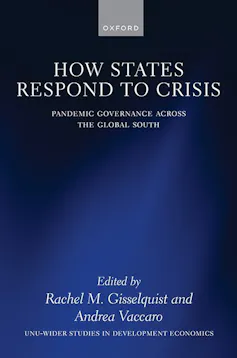
How States Respond to Crisis – Pandemic governance across the Global South, Rachel M. Gisselquist and Andrea Vaccaro (Oxford University Press)UNU-WIDER
Covid-19 responses across the Global South reveal uneven preparedness
The Philippines, Nicaragua, and Tanzania illustrate the consequences of weak legitimacy and authority.
In these countries, political leaders used the pandemic to consolidate authoritarian power by further repressing political opposition, manipulating mortality data, or denying the crisis outright, with deleterious public health outcomes.
Vietnam, by contrast, shows how legitimacy and authority can compensate for limited capacity. State authority allowed the country to promptly adopt strong public health measures, while legitimacy, especially at the local level, fostered citizens’ compliance with these measures.
Ghana underscores the importance of international cooperation. While not considered as a high-capacity country, during the pandemic, Ghana managed to act more effectively than expected, thanks to residual capacity acquired through cross-border collaboration and experiences with past health crises. For example the Africa Centres for Disease Control and Prevention (Africa CDC) quickly activated its emergency coordination mechanisms, developed a joint strategy – drawing on technical expertise and experience with past epidemics – to improve domestic detection and containment, and helped in increasing the continent’s testing labs from 2 to 43 just in a few weeks.
What were the key takeaways?
Lessons from how Global South countries responded to Covid-19 tell us that a combination of institutional quality and international cooperation are crucial for successful crisis response.
State capacity made effective responses easier, while legitimacy and authority increased citizens’ compliance and political trust. International cooperation, in turn, facilitated cross-border coordination and allowed countries to share resources and expertise, improving domestic ability to respond to the pandemic beyond what states could do on their own.
Dismantling global health cooperation and reducing aid will not advance any of these factors. Rather, they are likely to erode preparedness for health crises.
While it is still possible to revert the dismantling of global health cooperation and shrinking aid, we must prioritise a long-term strategy over short-term political considerations.
Resources allocated to aid have never been colossal – e.g. Official Development Assistance (ODA) has rarely been greater than 1% of GDP for any country. It is short-sighted and counterproductive, for countries both in the Global South and Global North, to run down structures that have proven their ability to facilitate better public health responses.
A weekly e-mail in English featuring expertise from scholars and researchers. It provides an introduction to the diversity of research coming out of the continent and considers some of the key issues facing European countries. Get the newsletter!
Rachel M Gisselquist a reçu des financements de UNU-WIDER.
Andrea Vaccaro ne travaille pas, ne conseille pas, ne possède pas de parts, ne reçoit pas de fonds d'une organisation qui pourrait tirer profit de cet article, et n'a déclaré aucune autre affiliation que son organisme de recherche.
OSCAR GONZALEZ FUENTES/ShutterstockIn recent months, corruption allegations have increasingly surrounded figures close to Spanish Prime Minister Pedro Sánchez, from his wife and brother to former senior officials of his party and even former prime minister José Luis Rodríguez Zapatero.
Eight years ago, on June 1 2018, Pedro Sánchez became Spain’s prime minister after a successful vote of no confidence against the conservative government of Mariano Rajoy. The motion was triggered by the Gürtel
In recent months, corruption allegations have increasingly surrounded figures close to Spanish Prime Minister Pedro Sánchez, from his wife and brother to former senior officials of his party and even former prime minister José Luis Rodríguez Zapatero.
Eight years ago, on June 1 2018, Pedro Sánchez became Spain’s prime minister after a successful vote of no confidence against the conservative government of Mariano Rajoy. The motion was triggered by the Gürtel corruption scandal, and was supported by a broad coalition of left-wing and nationalist parties.
That parliamentary majority then became the foundation of a new political cycle in Spain. Since then, Sánchez has governed through a complex alliance bringing together three different groups: his own Socialist Workers’ Party (PSOE), parties to its left (first Unidas Podemos and later Sumar), and a diverse set of peripheral nationalist forces, mainly located in the Basque Country and Catalonia.
This coalition proved more resilient than many expected. It has survived the pandemic, delivered major social and labour reforms, and secured enough parliamentary support for Sánchez to remain in office after the 2023 general election.
Yet the coalition has now become increasingly fragile. And for the first time since 2018, the source of instability may be the PSOE itself.
The first signs of weakness appeared among the parties to the left of the PSOE. The alliance that once revolved around Unidas Podemos fragmented, while its successor, Sumar, struggled to maintain unity among its constituent parties. The coalition’s second pillar, the nationalist and regional parties that support Sánchez in parliament, has also become more difficult to manage.
The consequences are visible. The government has not approved a new state budget since 2022, relying instead on extensions of previous budgets, and parliamentary defeats have become commonplace.
Despite these difficulties, the PSOE – and Sánchez himself – remained the coalition’s strongest asset. Sánchez consistently outperformed expectations, survived electoral setbacks, and maintained a central position in Spanish politics. While coalition partners generated uncertainty, the Socialists provided stability. That may now be changing.
Over the past two years, a growing number of investigations and allegations have affected figures connected to the PSOE and Sánchez’s inner circle. The cases involve former senior party officials, members of the prime minister’s inner circle, and individuals close to the government.
Supporters of the government argue that these investigations are textbook “lawfare” – politically motivated use of the courts to undermine or directly attack enemies. There is evidence to support this view, as some of the corruption allegations have been brought forward by Manos Limpias (“Clean Hands”), a self-styled trade union with far-right links. Critics, meanwhile, maintain that the cases reflect legitimate judicial scrutiny of those in power.
Regardless of which interpretation prevails, the political consequences are already evident.
The attorney general was disqualified last year in a case involving the disclosure of confidential information. Sánchez’s brother is currently on trial over allegations related to his appointment to a public-sector post, and Sánchez’s wife is also under investigation. The most damaging case for the PSOE has been the Koldo scandal, which allegedly involved former ministers and senior party officials in a corruption scheme linked to the purchase of face masks during the pandemic.
Other controversies have only added to the pressure. PSOE member Leire Díez is accused of seeking information and exerting pressure on judges investigating corruption cases involving the party, with support of party officials.
While Sánchez himself has not been implicated in any of the cases, allegations of bribery, leaked recordings, favouritism and political interference have combined to create a perfect storm around him.
The latest blow came with the investigation into former Socialist prime minister José Luis Rodríguez Zapatero over his alleged links to Venezuela and the airline Plus Ultra. For the PSOE, the significance is not only judicial but also political. Zapatero remains the most prominent member of the party’s old guard. He is widely regarded as a totem of the Spanish left, and has consistently backed Sánchez.
Spanish businessman Julio Martínez appears before a Senate investigative committee regarding the ‘Koldo case’ and the bailout of the airline Plus Ultra, which is linked to former prime minister José Luis Rodríguez Zapatero.Gil Corzo/Shutterstock
Zapatero symbolises not only the PSOE but also the generation of Socialists who governed Spain between 2004 and 2011. He is remembered above all for expanding social rights, particularly through the legalisation of same-sex marriage and abortion reform. This image as a progressive leader has largely overshadowed memories of his austerity measures, spending cuts and agreements with the right-wing Popular Party (PP).
The allegations against him have resonated strongly on the left. Speaking in Spain’s national congress on May 20, left-wing Catalan leader Gabriel Rufián summarised the mood succinctly: “If it’s true, it’s shit. But if it’s a lie, it’s even worse.”
As a result of these allegations, the issue dominating public debate is no longer one chosen by the government. Housing, inflation and public services remain major concerns for Spanish voters, but corruption allegations have increasingly come to dominate political and media attention.
This represents a significant challenge for any government. One of the main advantages of incumbency is the ability to shape the political agenda. When governments lose that capacity, they often find themselves on the back foot, reacting to events rather than steering them.
The symbolism is particularly striking in Sánchez’s case. His rise to power in 2018 came through a vote of no confidence in Mariano Rajoy’s PP, after it became mired in its own string of corruption scandals. Eight years later, his opponents are attempting to frame the PSOE through a similar lens.
The end of a political cycle?
At this point, some perspective is needed. Spanish politics has experienced remarkable continuity since 2018. Sánchez has remained in office longer than many observers expected, navigating a fragmented parliament and an increasingly polarised political environment.
The current left-wing government is one of the longest-lasting of Spain’s democratic period. Sánchez’ eight year tenure is second only to Felipe González, also of the PSOE, who governed from 1982 to 1996.
We also cannot ignore the possibility that some of the current wave of allegations could be politically or judicially motivated lawfare. The words of former PP prime minister José María Aznar, spoken after Sánchez secured a second term in 2023, still resonate on the right: “Whoever can do it, do it.” In other words, remove the government by whatever means are available.
Former prime minister José María Aznar, during the 2025 European People’s Party Congress in Valencia.EPP/Flickr, CC BY
Sánchez’s governments have achieved notable policy successes, including labour market reforms, increases in the minimum wage, and an active role in European and international affairs. More recently, the government has pushed ahead with the regularisation of more than 500,000 undocumented migrants.
Even his critics acknowledge Sánchez’s extraordinary capacity for political survival. Still, after eight years in office, some observers, particularly on the right, believe Spain may be approaching the end of a political cycle.
If this is the case, it is not solely the result of corruption allegations and judicial investigations. The parties to the left of the PSOE are weaker than they once were, and relations with parliamentary allies have become more complicated. Legislative productivity has slowed. The party has performed poorly in regional elections in Extremadura, Castile and León, Aragón and its former stronghold of Andalusia.
This does not necessarily mean that Sánchez’s government is approaching immediate collapse. The prime minister has little incentive to call a snap election, particularly when most opinion polls suggest that a coalition between the PP and far-right Vox could emerge as the alternative. Nor is it clear that voters have definitively turned against the Socialists. Spanish politics has repeatedly shown that public opinion can shift rapidly, especially during election campaigns. Nevertheless, the mood has changed.
For years, the PSOE functioned as the strongest pillar supporting Spain’s governing coalition. Problems usually came from junior coalition partners or parliamentary allies. Now, for the first time, the main source of uncertainty appears to be the party at the coalition’s centre.
Whether the current allegations ultimately lead to convictions, exonerations or political dead ends, their impact is already being felt. They have weakened the government’s control of the political agenda, increased tensions among coalition partners, and fuelled speculation about the durability of the ruling coalition established in 2018.
There are echoes here of the final years of Felipe González’s premiership in the 90s, which was marked by corruption allegations and the GAL scandal. Those last years are often remembered as the slow decline of a long Socialist government and the prelude to José María Aznar’s victory in 1996.
So, 30 years later, are we witnessing the final stage of the Sánchez era and the prelude to a new coalition of right-wing and far-right forces? It would be premature to answer yes. But the broad coalition that brought Sánchez to power seems more fragile today than at any other point over the last eight years.
A weekly e-mail in English featuring expertise from scholars and researchers. It provides an introduction to the diversity of research coming out of the continent and considers some of the key issues facing European countries. Get the newsletter!
Asbel Bohigues no recibe salario, ni ejerce labores de consultoría, ni posee acciones, ni recibe financiación de ninguna compañía u organización que pueda obtener beneficio de este artículo, y ha declarado carecer de vínculos relevantes más allá del cargo académico citado.
I was texting a museum director friend in Asia recently. We were discussing whether a trip to this year’s “artworld Olympics”, the Venice Biennale, justified the carbon release.
I felt ambivalent. The main exhibition is curated by Koyo Kouoh, whose 2016 edition of Ireland’s Biennale, EVA International, on the 1916 Easter Rising centennial I had admired. Kouoh died of cancer earlier this year. Her posthumously realised Venice Biennale, titled In Minor Keys, seemed a final opportunity to apprecia
I was texting a museum director friend in Asia recently. We were discussing whether a trip to this year’s “artworld Olympics”, the Venice Biennale, justified the carbon release.
I felt ambivalent. The main exhibition is curated by Koyo Kouoh, whose 2016 edition of Ireland’s Biennale, EVA International, on the 1916 Easter Rising centennial I had admired. Kouoh died of cancer earlier this year. Her posthumously realised Venice Biennale, titled In Minor Keys, seemed a final opportunity to appreciate the subtle, intelligent work of Africa’s leading curator.
Against the lure of Kouoh’s exhibition, though, was a queasy realisation that the Biennale seemed to be ideologically backsliding. Russia and Israel, both accused of war crimes, were controversially participating.
Alongside the huge guest-curated show of contemporary art, the Biennale invites countries to present exhibitions they curate themselves in national pavilions in the Giardini di Biennale and citywide venues. Following Putin’s full-scale invasion of Ukraine in 2022, Russia was excluded, its pavilion remaining shuttered throughout the 59th and 60th editions. But last year Giorgia Meloni’s government appointed rightwing ideologue Pietro Buttafuoco as Biennale director.
Buttafuoco revoked Russia’s exclusion. He also facilitated the relocation of Israel’s exhibition from its usual Giardini pavilion to a high security cul-de-sac in the Biennale’s second official venue, the massive Arsenale.
“This biennale seems cursed,” texted my friend. Despite feeling hypocritical about the environmental burden, I booked a flight to Venice.
Angry protests and violent reprisals
In the weeks leading up to the exhibition, my friend’s suggestion looked increasingly on point. A complicated choreography of war, state violence and activism began to play out. They culminated during the Bienniale preview in angry protests and violent reprisals.
The Art Not Genocide Alliance (ANGA) gathered 236 curators, artists and art workers to campaign for Israel’s exclusion and improved conditions for cultural workers.
When Kouoh’s international jury refused to consider Israel and Russia for the Biennale’s prestigious Golden Lion awards, artist Belu-Simion Fainaru, who was representing Israel, threatened them with legal action, according to the Italian news agency Adnkronos and arts publication Hyperallergic. The jury resigned. Their subsequent silence has not been explained.
Relieved of the professional all-female expert jury that Kuouh appointed, Buttafuoco instated a Eurovision-style audience prize. At the time of writing, over 70 artists have withdrawn from the awards in protest.
Like an artwork, a curse is a performative utterance at the nexus of ritual symbolism and magic. People like to believe that art, unlike curses, is a force for good. But as I argue in my book The Deployment of Art, there is a long history of state co-option of art and artists in the service of malign agendas of state violence. To me, The 61st Biennale seems one such example.
In a statement on the Biennale website, Buttafuoco amplifies the spiritual dimensions of Kouoh’s vision. “It is an exhibition permeated with spirit, with a sacredness that puts the person, the human being, back at the heart of things … looking to the sky once more.”
Much art in the main exhibition is hard to square with such whimsy. Pio Abad’s precise critical drawings of everyday objects of imperial plunder, like houseplants and chocolate, alongside stolen Benin bronzes. Walid Raad’s series of found photographs of beds slept in by Palestine Liberation Organization leader Yasser Arafat. Joana Hadjithomas and Khalil Joreige’s extraordinary sculptural excavation of the lost ancient city of Orthosia, hidden beneath a buried refugee camp in southern Lebanon.
But other works better serve Buttafuoco’s vague, obfuscating narratives of “sacredness” and “spirituality”.
In the Arsenale, an uprooted olive tree that recalls images of the desecration of Palestinian olive groves rotates on a plinth to the perverse accompaniment of tinkly ballerina music. This work by Theo Eshetu is titled Garden of the Broken Hearted, but the accompanying label doesn’t explain why the tree was uprooted, or from where, only that it “stands as a poetic reflection of impermanence”.
Alfredo Jaar’s “shrine” to base materials, a thrumming scarlet cathedral titled The End of the World meanwhile, so overwhelms the senses that I felt faint. I later saw a young woman collapsed outside it, attended by paramedics. Numerous other works draw on ritual traditions and spiritual practices from “the powerhouse of Africa” (Buttofuocco’s term).
Police presence was pervasive throughout the previews. Armed, helmeted officers held a line around Pussy Riot’s demonstration at the Russian pavilion, where protesters released blue, yellow and pink smoke canisters chanting “bloody Russian art” and “curated by Putin, corpses included”.
On the final preview day, as many pavilions closed early in strike protest, police stomped through the Giardini in heavily armed groups ten or 20 strong. At 4.30pm a peaceful crowd of ANGA protesters, many with young children in pushchairs or carried on shoulders, marched from the Giardini to the Arsenale where riot police used batons to beat them back. Surveillance helicopters hovered over the city until long after midnight.
Visions of hell
When future art historians study the 61st Biennale, they may notice a poster slogan from the ANGA protest: “Palestine is the Future of the World.” Meanwhile, visitors would do well to venture beyond the Giardini and Arsenale to an unofficial collateral exhibition organised by the Museo Moderno Buenos Aires.
Taking its title from John Milton’s description of hell, Darkness Visible: The Long Shadow of the Dictatorship brings together a trans-generational group of artists. Their work has been shaped by a regime of state terror (1976-83) that implemented a systemic policy of kidnappings, torture, murder and the forced disappearance of thousands.
Darkness Visible positions art as a vehicle for understanding history, protecting memory and human rights, and engaging in activism against state violence. One photograph by Marcelo Brodsky documents a demonstration by the Madres de Plaza de Mayo demanding information about their forcibly disappeared children. Brodsky’s mother (whose son was disappeared) appears in the image holding a banner that draws connections between second world war concentration camps in Warsaw and ESMA, a clandestine torture and extermination centre used by the Argentinian junta during the dictatorship.
As I contemplated this image, the exhibition’s curator Victoria Noorthoorn explained: “We wanted to present this show in Venice now because our Argentinian artists have much to say about fear, violence, pain and trauma that remain as scars from Argentina’s repressive regime. Their work reminds us of the need to protect core values: human and civic rights, democracy, freedom of expression and artistic creation.”
The protests I witnessed in Venice were marked by real anger, solidarity but also moments of tenderness and joy. A hopeful sign of how art and artists might imaginatively reinvent future biennales, undo the cursed present and lead us away from the darkness closing in.
Clare Carolin does not work for, consult, own shares in or receive funding from any company or organisation that would benefit from this article, and has disclosed no relevant affiliations beyond their academic appointment.
Anoopc79/ShutterstockA holy grail of environmental policy is an economy that delivers prosperity without requiring the ever-increasing consumption of raw materials.
Increasing incomes while reducing environmental pressures hinges on the “decoupling” of energy emissions from economic growth. Some countries in the global economy are moving in the right direction.
But this good news can be misleading. Our new study takes a long-term (50 years) look at the economy in over 100 countries, and an e
But this good news can be misleading. Our new study takes a long-term (50 years) look at the economy in over 100 countries, and an even longer-term look at the UK’s economy (over 150 years). Our findings are much less reassuring.
We used the most recent data for a measure called the material footprint. This counts everything a country actually consumes – including the resources extracted abroad to make its imports. To begin with the results were positive: 25 countries appear to have pulled off decoupled growth – the UK among them. Their GDP keeps climbing while their material use drifts downward.
But certain claims were being inflated in three ways. This is not to say green growth is impossible – only that the evidence claims too much.
1. Resource use isn’t falling enough
Economies are not getting to the safe limits we need to operate in. Imagine you owe £50,000 on credit cards. Last year your debt grew by £5,000; this year it grew by only £4,000. You’re improving. But you’re still going further into the hole every month, and the hole is already deep.
Researchers have estimated that a fair per-person share of the world’s materials would be somewhere between six and eight tonnes a year. The UK currently sits at more than double that range. Spain, Germany, Belgium are in similar territory. Their lines on the chart are bending downward, but from a level so high that it is premature to call them success stories. By contrast, Cuba and Somalia – alongside many other low- and middle-income country-years – fall within the sustainable-limit corridor, although at much lower income levels.
The overall picture across all 105 countries shows no turning point. As countries grow richer over time, resource use accelerates, especially at the very top of the income ladder.
Repeat the exercise year by year, from 1970 to today, and the same upward-bending shape comes back. The promised downturn never arrives.
This suggests that the 25 success stories are exceptions rather than signs of a pattern other countries can follow as they grow. They are not being used as guides on the path we need to travel. They are outliers other countries may be avoiding.
The successes also have multiple origin stories. The European declines mostly track the 2008 financial crash and the housing bust that followed, not a quiet technological revolution.
Some commodity exporters look greener because high prices lifted their GDP while their domestic construction stayed flat. Cuba kept material use modest while GDP per person rose, through decades of agroecology and urban farming.
Taken together, these cases do not show the kind of smooth technological improvement imagined in green-growth narratives. The declines come from different historical processes: crisis, housing busts, price effects, and specific political choices, rather than a general global shift toward cleaner production.
3. The dip is just a blip
The third problem is time. Direct material footprint records only go back to 1970. Britain has rich historical data on material use but also on trade, household spending and investment, and we used those to reconstruct the UK’s material footprint all the way back to 1875. The neat downward bend you see if you start in 1990 vanishes.
Across nearly a century and a half, the relationship between British incomes and resource use is essentially a straight line going up. The current dip has happened before. It may just be a prelude to further coupled growth: a blip on a long upward climb.
It’s not that rich countries have done nothing. Real efforts have been made, and recent lines on the chart do go in the right direction. But what if they are wobbles, not turns. What if they do not bring countries below safe limits? What if they are not effective models for other countries to follow?
To make real progress, countries consuming above a fair, sustainable share of the world’s materials – the UK among them – need to cut consumption in absolute terms, not just slow its rise. And it is possible: a few countries, including Cuba and Somalia, have reduced material use while incomes rose, within those limits.
Quite how they manage it varies and deserves closer study, but it shows the goal is real. The way forward is to measure growth and resource use honestly – over long horizons and against real limits.
Marina Requena-i-Mora is affiliated with The University of Sheffield and a postdoctoral researcher at ICTA-UAB. Marina receives funding from the European Union (ERC, CONDJUST, 101054259). Views and opinions expressed are, however, those of the author(s) only and do not necessarily reflect those of the European Union or the European Research Council Executive Agency. Neither the European Union nor the granting authority can be held responsible for them. This work contributes to ICTA-UAB “María de Maeztu” Programme for Units of Excellence of the Spanish Ministry of Science and Innovation (CEX2024-001506-M/funded by MICIU/AEI/ 10.13039/501100011033).
Dan Brockington receives funding from the ERC and the Spanish government. This article is based on work supported by an Advanced ERC grant, CONDJUST (101054259). Views and opinions expressed are however those of the author(s) only and do not necessarily reflect those of the European Union or the European Research Council Executive Agency. Neither the European Union nor the granting authority can be held responsible for them. This work also contributes to ICTA-UAB “María de Maeztu” Programme for Units of Excellence of the Spanish Ministry of Science and Innovation (CEX2024-001506-M/funded by MICIU/AEI/ 10.13039/501100011033).

 Login
Login