Normal view

Where did language come from? Nobody really knows, but the theories are fascinating

Sriharu Kapu/Unsplash

Humans are the only species known to use fully symbolic language: a system capable of expressing abstract ideas, imaginary worlds and endless combinations of meaning. But how did we get there?

The origins of language have fascinated philosophers, scientists and storytellers for thousands of years. Despite all our advances in linguistics, archaeology and cognitive science, we still don’t know exactly how language began.

That uncertainty hasn’t stopped people from trying to solve the mystery. In fact, some of the earliest theories of language’s origins are among the strangest and most entertaining ideas in the history of science.

Bow wow, ding-dong

In the 19th century, scholars proposed a flurry of curious theories to explain how speech first emerged. Many of these theories were given playful nicknames by the German philologist Max Müller, who intended them partly as satire. Yet the theories were genuine attempts to tackle one of humanity’s biggest questions.

German philologist Max Müller gave playful nicknames to competing theories of language’s origins. Public domain, via Wikimedia Commons

The most famous is probably the Bow-Wow Theory. This suggested language began through imitation of natural sounds. Early humans, according to this theory, copied the noises around them: animal cries, splashing water, thunderclaps and birdsong. Words such as “buzz”, “hiss”, “bang” and “splash” seem to support the idea because they sound like what they describe.

But there is a problem. Different languages hear the same sounds differently. English dogs go “woof” or “bow-wow”, but in Turkish they go “hev-hev”, while Indonesian dogs go “guk-guk”. Even animal noises, it turns out, are filtered through culture and language.

And onomatopoeic words (words that imitate sounds) make up only a tiny fraction of our vocabularies. Most words sound nothing like their meanings. For instance, there is nothing inherently tree-like about the word “tree”.

That brings us to the Ding-Dong Theory, which argued that sounds and meanings are naturally connected in some deeper, almost mystical way.

Some words do seem to fit their meanings uncannily well. “Mini”, “teeny” and “itsy-bitsy” feel small and delicate. “Lump”, “rump” and “plump” sound heavier and rounder.

Modern linguists call this sound symbolism. One famous experiment asked participants to match two nonsense words, “bouba” and “kiki”, to two shapes: one rounded and one jagged. Most people matched “bouba” with the soft shape and “kiki” with the sharp one.

The effect is real, but it is limited. Most language still appears to be arbitrary, which means there is no natural reason why a particular sound should mean a particular thing.

Pooh-pooh, la-la, ye-he-ho

Other theories focused less on imitation and more on emotion and social interaction.

The Pooh-Pooh Theory proposed that speech began with instinctive emotional cries such as “ouch”, “oh” or perhaps less publishable exclamations uttered after stubbing a toe. According to this idea, language evolved from spontaneous vocal reactions to pain, surprise, fear or joy.

Again, though, there are complications. Interjections vary widely across languages. English speakers say “ouch”. Greeks say “aou”. Czechs might exclaim “ach”. Emotional sounds are not nearly as universal as they seem.

Then there is the wonderfully named Yo-He-Ho Theory, which suggested language emerged from rhythmic chants used during collective labour, like sailors chanting “yo-heave-ho” while hauling ropes, or workers singing together to coordinate physical effort.

The theory may sound quaint, but modern researchers do think rhythm, cooperation and social bonding played important roles in human evolution. Language is, after all, deeply social.

Charles Darwin speculated that speech evolved from musical expression. Herbert Rose Barraud, Public domain, via Wikimedia Commons

Another proposal, the La-La Theory, linked language to music. Charles Darwin entertained the possibility that speech evolved from musical calls used in courtship and emotional expression. Before humans spoke, perhaps we sang?

Some modern theories echo this idea. One hypothesis suggests that, as early humans began walking upright, parents increasingly needed to soothe babies from a distance. Sing-song vocalisations, cooing and proto “baby talk” may have helped strengthen emotional bonds and eventually paved the way for speech.

Gestures, symbols and brains

Today, most scientists think no single theory fully explains language origins. Instead, language probably emerged gradually through a combination of gestures, vocalisations, facial expressions, social cooperation and increasing cognitive complexity.

Some researchers argue that language began with gestures before shifting to speech. Others believe language evolved as a tool for social bonding, allowing larger groups of humans to cooperate and share information. Still others see language as tied to the evolution of symbolic thought itself: our ability to imagine, plan, remember and communicate abstract ideas.

Biology is also a factor. Humans have developed unusually precise control over the tongue, lips and vocal tract. We have evolved specialised brain regions linked to language processing.

But anatomy alone cannot explain language. Parrots can mimic speech sounds. Many animals communicate. None, however, appear to possess grammar and symbolism on the human scale. And, frustratingly, early language leaves no evidence behind. Spoken words don’t fossilise.

That lack of evidence is one reason the topic became so controversial that, in 1866, the Société de Linguistique de Paris banned discussions about language origins altogether, dismissing the field as hopelessly speculative.

Saraswati, Hindu goddess of knowledge and speech – Raja Ravi Varma (1894) Public domain, via Wikimedia Commons

Of course, theories about language origins also appear in religion and mythology. In Greek mythology, the messenger god Hermes was associated with language and communication. In the Hindu tradition, the goddess of knowledge and speech Saraswati bestowed Sanskrit upon humanity. In the Judeo-Christian tradition, language was a gift from God, who enabled Adam to name the animals in the Garden of Eden.

These stories reflect something deeply human: our urge to explain where language came from, because language itself feels almost magical. Every theory of language origins captures a small piece of the puzzle. Imitation, emotion, rhythm, music, gesture, cooperation and symbolic thought probably all played some role.

But none can provide a complete answer. The truth is that language evolved so long ago, and likely so gradually, that we will never pinpoint a single moment when it began, unless someone invents a time machine.

The birth of language will probably remain one of humanity’s greatest unsolved mysteries. Still, the theories themselves tell us something important. Humans are always trying to explain what makes us human. And language may be the most human thing of all.

The Conversation

Karen Stollznow does not work for, consult, own shares in or receive funding from any company or organisation that would benefit from this article, and has disclosed no relevant affiliations beyond their academic appointment.
Politicians have long misunderstood the ‘working class’. The rise of the far right shows how mistaken they have been

Class has always mattered, and now social democratic parties that sprung from a working class — including the Australian Labor Party – are finding out why.

Over many years, and in many countries, a growing view among political actors and within political science was that class was losing its punch. The line was something like this. The working class once voted for labour parties. The middle class voted conservative. But over many years) that difference between how the classes voted got smaller and smaller. In some places it disappeared.

The “decline of class” narrative suited the leaders of labour and social democratic parties.

They could safely adopt market-based neoliberal policies, with a human touch added, in the knowledge their base wouldn’t desert them. But their base was changing. It was becoming more middle class, more individualistic, more awake to the benefits of market solutions to complex problems.

Now, those politicians are shocked by the rise of far-right political parties that now claim to represent the working class. In Australia, One Nation is close to matching Labor — in some polls, it is already ahead.

In the United Kingdom, Reform is leading in all the polls, while the governing Labour party is below 20%. In Germany, the neo-nazi AfD is presently leading in all opinion polls, while the Social Democrats are below 14%.

In the United States, the Republican Party has gone full Trump, on an agenda with aspects that look eerily reminiscent of prewar Germany. In France, the National Rally candidate is ahead in all opinion polls for the next presidential election.

‘Blue collar’ is not the same as ‘working class’

In many countries, the labour and social democratic parties are mere shadows of their former selves.

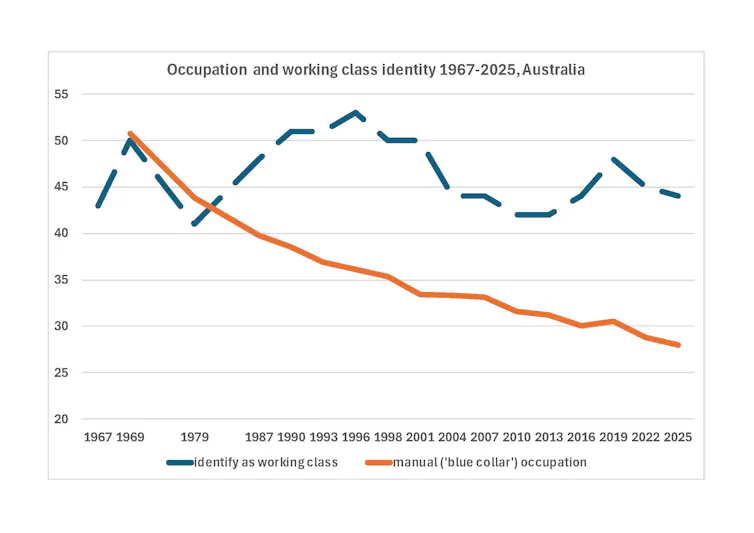
Perhaps the labour parties mistook the decline in “blue-collar” (manual) jobs for the decline of the working class. In Australia, the blue-collar share of jobs fell from 44% in 1979 to 28% in 2025. It’s fallen in the UK, the US and elsewhere.

Union membership, once a mostly “blue-collar” phenomenon, declined in most industrialised countries. It fell from an average of 30% of employees across the OECD in 1985 to 19% in 2005 and 15% in 2023. The fall was even greater in Australia.

But these changes did not reflect how likely people were to identify as working class.

In Australia, national attitude and election surveys give us a good idea of trends in people’s views. Between 1979 and 2007, the proportion of respondents in a standard national survey defining themselves as working class or lower class temporarily grew from 40%, to the low 50s in the 1980s and ‘90s, then back to 44% by 2007. In 2025, after a bit more movement, it was still 44% working class.

A chart with two lines, showing (in red) a gradual decline in blue collar occupations and *b) a variable but relatively flat proportion of peoploe identifying as working class.
Occupation x working class identity. Australian Election Study and Australian Bureau of Statistics, CC BY

A British survey in 1983 found 58% of people claimed to be working class. By 2005, those identifying as working class had barely fallen to 57%. In 2023, still 53% of people identified as working class.

In the US, where the phrase “working class” appeared absent from public discourse for decades until Trump, a differently worded question showed that in 1976, 51% of Americans thought of themselves as either working class or lower class. In 2006, the same survey showed 52% identifying as either working class or lower class. Within this period, numbers had fluctuated from year to year — but always between 48% and 55% expressed working or lower class identity.

A Gallup poll added “upper-middle class” to the options, and the proportion claiming working or lower class status was only 39% in 2006. In 2024, that number was 43%.

In Canada, the proportion identifying as working or lower class was 36% in 1980 and still 36% in 1995. In 2017, a different poll found 37% identified as working class.

In short, while “blue-collar” jobs have sharply declined almost everywhere, the experience of “working class” has been relatively stable, within some fluctuating bounds. Differences in class identity between countries seem more notable than differences over time, perhaps due to how questions are asked or how different cultures interpret them.

This is not to say that giving a “working class” response to a forced-choice survey question is the same as a deeply thought position on class. But if people no longer thought of themselves as working class, you would expect to see some pretty big changes over time in answers to these questions.

How the working class was left behind

Sure, jobs changed, a lot. But there has never been much middle-class glamour in the “white collar” jobs at the checkout counter, behind the hamburger hotplate or in the call-centre factory.

Class relations didn’t weaken. In fact, inequality worsened in many countries. Neoliberal policies, including those adopted by social democratic parties, made the rich much richer, but they slowed the growth in the wellbeing of the majority of people, and left the working class behind.

The proportion that thought big business had too much power, and income and wealth should be redistributed, became larger.

Unions lost ground not because their ideas became unpopular with workers. It simply became much harder for unions to recruit and retain members in the face of increasingly hostile employers, governments and laws.

Working class voters didn’t have solutions to hand. But nor were they offered any by social democratic parties that barely spoke their language. Now the door has been opened to far-right parties, presenting alternatives that appeal to some facing those class problems.

There’s life in class voting yet, just not in the way we thought of it.

The Conversation

Over the years David Peetz has received funding for research from the Australian Research Council, various unions and employers, the Fair Work Commission, state and national governments of both political flavours in Australia and overseas, the International Labour Organisation and the Organisation for Economic Cooperation and Development. He is presently employed by the Centre for Future Work.

What would it take for Pauline Hanson to become prime minister?

There has been a lot of speculation lately, not least from Pauline Hanson, about the possibility of the One Nation leader riding her surging polling figures into the Lodge at the next election.

So what are the rules around who can be prime minister? What would need to happen first? Is it likely Hanson will ever hold the position, or is this just hype?

What are the rules?

While the prime minister has historically come from the House of Representatives and not the Senate, where Hanson is, this is not actually stipulated in the Constitution.

This means many of our rules are mostly conventions inherited from the Westminster traditions of the United Kingdom, rather than legal requirements.

By these conventions, the prime minister has historically been the leader of the party or parties that can maintain the confidence of the House of Representatives. To be eligible, section 64 of the Constitution requires only that all government ministers have a seat either in the Senate or House within three months of being appointed to the role.

So, given Hanson holds a seat in the Senate, she’s eligible to be a government minister and will remain so unless she loses her seat and can’t get it back.

By convention, prime ministers have traditionally been drawn from the House of Representatives. This convention is so strong that when Senator John Gorton was voted by the Liberals to become their leader in 1968, he resigned and moved to the lower house almost immediately.

Having the prime minister in the lower house means they are directly accountable to the people of an individual electorate, can face more scrutiny during question time, and helps to show they’re better in control of their own ministers and backbenchers. It also means they share in the three-year electoral cycle with the majority of MPs, rather than six-year terms of senators.


Read more: The new leader of the Greens sits in the Senate. Why is that so unusual in Australian politics?


What would need to happen?

First, One Nation would need to get a large enough share of seats in the lower house to ensure Hanson could survive a vote of no confidence. This would need to be either a majority (76 of the 150 seats up for grabs) or a large enough share to persuade other parties to join a coalition or at least guarantee her confidence.

An example of this in practice occurred after the 2010 election, when Prime Minister Julia Gillard needed to negotiate with independents and Greens to form government.

It is likely Hanson would want to move from the Senate (where she’s very safe) to a lower house seat, either by resigning and running herself in 2028 or persuading another member to vacate the seat. In the latter scenario, she would still need to win a byelection in that seat. If her party or coalition could obtain the right numbers, either by election or defection from other parties, she could then make a case to the governor-general for appointment to the top job.

What is likely to happen?

The reason we are asking these questions is because One Nation for the first time in its history has been polling better than the Liberal-National Coalition federally (and with a higher primary than Labor in two recent polls).

This comes as the conservative parties, after several leadership changes and election defeats, are at one of their lowest ebbs. It is also reflective of an environment in which none of the major parties is attracting as enthusiastic support as in the past. Similarly, Albanese and Labor are at a point in the electoral cycle where incumbents are generally in decline.

History may prove me wrong, but I think Hanson’s ambitions are unlikely to be achieved for three reasons.

First, although the Liberal and National parties are struggling at the moment, they may bounce back in the coming years. Polling outside of an election period is also different from when an election is looming – and the next federal election is not due until 2028.

Low satisfaction with Albanese in 2024 didn’t translate to a win for his opponent Peter Dutton in 2025. The polls reversed just before the election when people were paying more attention, and Albanese was elected with a large majority.

Voters closer to an election may put more scrutiny on One Nation’s policies around economic management, or their positions on vaccines, abortion and gun control. With migration falling, the importance of their core issue area may have lessened as well, although much will depend on how people are feeling about the state of the economy, and how much they connect migration with other pressing issues such as housing.


Read more: What does One Nation actually believe in?


Second, despite some recent polling suggesting as many as 18 Labor seats were potentially under threat from One Nation, the main contest – at least for now – will be between One Nation and the Coalition for rural and regional seats.

Unless Hanson’s appeal can spread much further than it has in the past into the seats where most people live in cities with a more multicultural electorate, it’s unlikely One Nation would win more seats than Labor. The centrist independents who are doing well in these areas where Labor struggles would be unlikely to team up with her.

Finally, Hanson has historically been both the party’s greatest strength, and its greatest weakness. Her initial win in Oxley in 1996 was as a disendorsed Liberal candidate. By 1998 she was voted out again. When she was out of politics (and contemplating a move to the UK), the party struggled, despite an initial surge of enthusiasm at the 1998 Queensland state election (winning 11 seats from around 22% of the primary vote). By the next election, none of those elected were still with the party.

She has famously fallen out with other MPs in the past, including former Labor leader Mark Latham, who led the party in New South Wales, and the longstanding member for Mirani in Queensland, Stephen Andrews. One Nation has reportedly been aiming to create a more stable and traditional party branch structure recently. However, the party has often been run from the top down while lacking the organisational discipline of other parties.

Until the Farrer byelection last month, they had never won a federal lower house seat under their own label. It remains to be seen whether recent success in South Australia and the inclusion of high-profile but divisive figures such as Barnaby Joyce and Cory Bernardi will make the party more or less stable in the long term.

The Conversation

Pandanus Petter is employed with funding received from The Australian Research Council.

‘Some people’s lives matter more than others’: local responders in Sudan feel ignored as the world focuses on other crises

In April 2026, Sudan marked three years of civil war – one of the most ignored humanitarian crises in the world.

This conflict began between two factions that seized power after a coup in 2021: the Sudanese Armed Forces (SAF), led by Abdel Fattah al-Burhan, and the Rapid Support Forces (RSF), a paramilitary group led by Mohamed Hamdan “Hemedti” Dagalo.

The actions of these men have thrown Sudan into the worst humanitarian crisis in the world. It has involved crimes against humanity, genocide, the death of potentially more than 150,000 people, the forced displacement of more than 15 million civilians and 19 million people facing acute hunger.

In one of the most dangerous places in the world, local leaders are putting their lives at risk to provide humanitarian assistance within their communities.

These volunteers have formed Emergency Response Rooms or غرف الطواريء to coordinate, resource and carry out life-saving assistance. They describe being motivated by nafeer – a Sudanese tradition focused on a “deep sense of social responsibility” and “collective volunteerism”.

This concept is grounded in the idea that one must “lift your bowl to your neighbour”. Diaspora communities around the world have been funding and coordinating this work for years.

As one 25-year-old female volunteer told us:

The success of emergency rooms stems from the spirit of volunteerism and the desire to help others. This motivation keeps people working despite the challenges they face, like lack of funding, security threats from authorities and working in active war zone.

However, nafeer, by its nature, should only last for a limited period. After three years, these crisis leaders are exhausted, and the international humanitarian system is not stepping up to support them.

In fact, our recent research shows the system’s own structures are making their work harder.

Our research

We spoke to 20 local leaders from Emergency Response Rooms, civil society organisations and women’s associations. These interviewees were based in Darfur, Greater Khartoum, Gezira, Kassala, Al-Qadarif, Kordofan and the Nuba Mountains.

Interviews were conducted online in Arabic by Mayada Elmaki, a Sudanese-British researcher living between Europe and Qatar.

Responders’ names, organisations and locations were taken out, due to safety concerns. Of the 20 leaders we spoke with, only a quarter received a salary. The remainder were unpaid volunteers.

Because these community organisations have not been formally recognised as “humanitarian” by the international humanitarian system itself, their people are not considered “humanitarian workers”. This means they are not given the legal protection afforded those conferred on humanitarian workers under international law, including the Geneva Conventions. This puts them at extra risk of harm from military and paramilitary forces.

The Sudanese emergency workers say funders from within the humanitarian system – including governments, nongovernmental organisations and UN agencies – are often more focused on managing perceived risk than on what the community actually needs.

Funding is often so inflexible, it takes an “extremely, extremely long time” to access. Getting money from funders require negotiating quite different templates and procedures.

As one person told us:

when our priority is saving lives first, it’s problematic when donors dictate what we should focus on.

Sudan is one of the most dangerous places in the world to deliver humanitarian assistance. It is also home to one of the most chronically underfunded humanitarian crises.

The number of organisations in Sudan getting money from these major humanitarian funders has fallen dramatically in recent years. This isn’t because things have improved, but because the priorities of many international organisations have shifted elsewhere.

As one Sudanese humanitarian leader put it:

When one crisis receives more attention and support than another, it means some people’s lives matter more than others.

At the heart of the international humanitarian system’s ethical foundation is the idea that assistance should be based on need alone – not factors such as geopolitical interest. But this is not what many of our interviewees have experienced.

The international community has taken some notice. Sudan’s Emergency Response Rooms were awarded major humanitarian prizes in 2025 and have been twice nominated for the Nobel Peace Prize.

But awards are not protection, funding, or recognition within the humanitarian system.

As Sudanese leaders, community members and volunteers endure one of the world’s worst humanitarian crises, the international system needs to step up.

Local priorities

Our research seeks to amplify the priorities of local Sudanese responders.

They are calling for:

  • better protection and compensation for those on the front lines
  • more flexible agreements with major funding bodies
  • direct funding that acknowledges operational costs
  • funding for long-term rebuilding of Sudan (not just the emergency response).

Otherwise, the international humanitarian system and the major players in it will, as one person told us, continue “ploughing the sea”, and “keep going in circles without real progress”. They added:

I hope my words reach them and make them reconsider their policies and establish long-term strategies for developing local communities.

The Conversation

Max Kelly recevies funding from the Norwegian Refugee Council. This research is funded in part by Deakin University, and the Norwegian Refugee Council (NRC).

Julia Hartelius and Mayada Elmaki do not work for, consult, own shares in or receive funding from any company or organisation that would benefit from this article, and have disclosed no relevant affiliations beyond their academic appointment.

We analysed the TikTok history of 142 men. Here’s what it taught us about the manosphere

Sarazh Izmailov/Pexels, The Conversation, CC BY-SA

Interest in the manosphere has recently surged yet again, with the recent Louis Theroux documentary catapulting the term “manosphere” back to the forefront of our cultural psyche.

The term has become a catchall for the most inflammatory content and communities in young men’s digital worlds. Alarm bells are ringing, but our understanding of what the manosphere actually is – where it begins and ends – has more questions than answers.

As concern grows, so does the ambiguity around how to define the manosphere and how young men actually experience it. Our policy responses, interventions and public discourse assume it’s one thing, one ideology, populated by one type of young man: a singular algorithmic journey from loneliness to radicalisation. It isn’t, and overlooking the complexity and nuance misses large parts of the problem.

So what is it instead? Our new research answers this question.

Simulations vs reality

Addressing ambiguity matters, whether you’re a researcher trying to measure the full spectrum of harm being experienced, or part of a community trying to talk about it with sons, brothers and friends. You cannot diagnose a problem without truly understanding it, and that means going into these online ecosystems to explore their bounds.

Previous research has included the use of dummy accounts to simulate internet use. These have been criticised by social media companies, who say the simulations don’t reflect the real experiences of users on their apps.

In response, our new research looked at the real TikTok viewing histories of 142 young men across Australia, the United States and the United Kingdom. We watched what they watched, 2,000 videos over the past month, and built a framework to map the full spectrum of masculinity content that young men encounter online.

It’s the first time academic research has used real user data in this space. It means we can respond to what young men and boys are actually seeing, rather than simulations of user experiences and what we think they’re seeing.

Almost half of the videos we analysed (44%) contained masculinity-related themes. Masculinity content fell into three distinct categories. Understanding these categories, how they escalate and who’s watching it makes tailored intervention possible, from policymakers to support services, and even the platforms themselves.


Read more: How boys get sucked into the manosphere


Beginning the journey

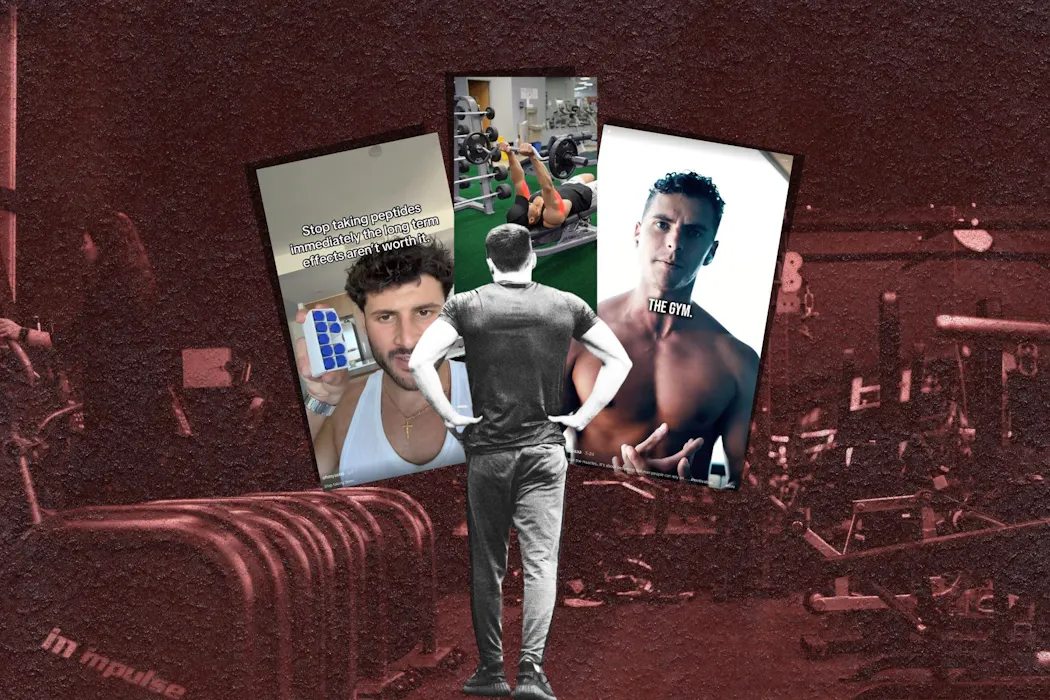
The journey can start somewhere ordinary. Three videos. Same young man. Same day. Same algorithm.

In the first video, a young, buff man located in a gym, demonstrating to his audience the correct technique when completing the “perfect lying tricep extension”.

We called this tier “cultural touchpoints”. It includes gym, sport, fashion and dating tips content. It made up 38% of what young men in our study watched, making it the most common type of content.

On the surface, none of it raises alarm. But it quietly sets a norm. One type of male body, one set of male interests, one way of moving through the world.

Travelling deeper

In the second video, a shirtless young man delivers a motivational-style speech about gym and discipline. He argues that physical commitment produces results in other areas of life, such as earning admiration from his girlfriend and becoming a “superhero” to his future children.

We called this tier “masculine status” content. It constituted 6% of the videos we analysed.

Outwardly, it looks like self-improvement, motivational and informative content with messages of discipline, ambition, levelling up as a man.

Underneath, the rigid moulds become clear: muscularity, emotional suppression, financial abundance, the “high-value” male archetype.

Women are framed as rewards to be earned. The content is ideologically hardened, but also easy to miss.

The destination

In the third video, a male creator sarcastically warns his audience against peptides. He then proceeds to list the side-effects of “getting leaner, shredded and getting more bitches”, while showing the vials to the audience.

We called this tier “degrading health” content. It made up less than 1% of content.

Most of it violates TikTok’s own community guidelines prohibiting the promotion of peptide hormones, testosterone boosters, and content that demeans, endangers or advocates for self-harm.

This category includes overt misogyny and graphic depictions of violence against women.

It’s infrequent, but not isolated. This content sits at the end of a journey that began with a tricep extension tutorial.

Three videos. Three very different messages about masculinity and health. This is how the manosphere finds young men: through platforms they’re already on, creators they already follow and in a cultural language they appreciate.

Cultural touchpoints lay the foundation that make messages of misogyny, risk-taking, violence and hate not just palatable, but reasonable. Ideological shifts happen because it feels like much of the same.

Exploiting insecurities

The manosphere doesn’t create these pressures – it finds genuine unmet needs and exploits them for profit and views. Often girls, women and other minority groups are at the receiving end of that harm, as well as the boys and men themselves.

Our broader framework, in which these classifications are a part, gives researchers, regulators, and platforms a tool to identify and intervene across the full spectrum of young men’s digital lives, not just at the extremes.

Current moderation and regulation approaches are reactive. Content is removed once platform guidelines are violated, but often that comes too late, after thousands if not millions of users have already seen it.

This research makes early and tailored intervention possible, disrupting the masculinity content pipeline at different points along the spectrum, before young men reach the most extreme end.

For example, tech companies could embed this classification framework into the design of recommender systems to ensure an age appropriate user experience. Cultural touchpoint content may be appropriate for a 16-year-old, but masculine status and degrading health videos may not be, and thus should not be recommended to them. Our work provides a defensible evidenced standard for appropriate moderation and digital platform design.

Lastly, it helps create a shared language and collective understanding of the manosphere. We can talk about masculinity content in a way that aligns with young men’s actual digital experiences, and to build solutions that fit the problem.

The manosphere has spent years speaking directly to young men’s fears and insecurities, building narratives that are fluent, persuasive and hard to counter. We need to be just as fluent, delivering effective responses and alternative narratives grounded in what young men actually see, watch and feel.

This research is the first attempt to do that. Now we need to use these insights to expand our evidence on the manosphere’s harm, develop tailored solutions, call for platform reform and develop community resources to help protect the men and boys exposed to this content online.

The Conversation

Krista Fisher is affiliated with the Movember Institute of Men's Health. Krista Fisher had support from the Polarization & Extremism Research & Innovation Lab (PERIL) and Diverting Hate when conducting this research.

Emily Lewis is affiliated with the Movember Institute of Men’s Health.

Zac Seidler has been awarded an National Health and Medical Research Council Investigator Grant. He is also the Global Director of Research with the Movember Institute of Men's Health. He advises government on men's suicide, masculinities, violence prevention and social media policy.

Cynthia Miller-Idriss and Ruben Benakovic do not work for, consult, own shares in or receive funding from any company or organisation that would benefit from this article, and have disclosed no relevant affiliations beyond their academic appointment.

How to encourage a child to try new, scary things (without traumatising them in the process)

Justin Paget/ Getty Images

If your child has ever dug their heels in on the morning of the school athletics or cross country day, or refused to speak in front of the class, you’re not alone.

For some children, these kinds of events bring a heavy, anxious feeling: what if I’m the slowest, what if everyone’s watching, what if I get it wrong?

For parents, it can be hard to know what to do. Push too hard and the morning becomes a meltdown. Let them off and you worry you’ve taught them to opt out.

Is it ever okay to follow their lead? And how do you give them the best chance of having a go next time?

Why (gently) facing fears matters

When we avoid something we’re afraid of, we feel instant relief. That relief is powerful, and it teaches the brain that avoiding worked. Over time, the fear grows and the impulse to avoid gets stronger. This is true for all of us, not just children.

So, in general, it helps for children to face fears sooner rather than later, before avoidance settles in.

But that doesn’t mean forcing a child through a panic. Pushing too hard can confirm to them the situation really is dangerous.

It’s worth helping your child face the fear before avoidance takes hold. What that looks like depends on what’s driving it.

Start by understanding what’s going on

If you can see a tricky day coming, talk to your child about how they are feeling ahead of time. Ask gentle questions to work out what the resistance is actually about.

Did something happen last time? Is something going on with friends? Is your child worried about failing, being judged, or being laughed at?

You might say:

I noticed you got really quiet when Dad mentioned athletics day. Is something about it worrying you?

Children won’t always have the words straight away, so give them time. It can help to have these conversations side-by-side rather than face-to-face: at bedtime, walking or driving together. Without eye contact, children find it easier to think and talk about hard things.

Try not to jump in to say “you’ll be fine” or “there’s nothing to worry about”. This can come across as dismissing the feeling, and your child may stop talking. Just listening can help children open up.

Validate the feeling

Once you have a sense of what’s going on, let your child know the feeling makes sense before moving to suggesting what to do. Children find it easier to think about solutions once they feel heard. You might say:

I can see this feels really big right now. It makes sense you’re worried.

Pause and stay silent for a moment. They may start crying, which is often part of processing fears.

This is often when we are tempted to rescue or reassure them. Instead, try to just remain a supportive presence. You can offer a hug and say, “This sounds really hard”.

Then work out a plan together

At this point, help your child think about what taking part might look like in a way that feels safe and manageable for them. You might say:

I wonder what might make it easier to go? What’s one small part of it you think you could manage?

Options might be walking the cross country instead of running it, reading the speech to one trusted teacher before presenting to the class, or going along and just observing to start with.

For some events, it’s worth having a quiet word with the teacher too, so the plan works at school as well as at home. The goal isn’t a perfect performance, it’s helping your child take part in a way they can manage.

Try not to rush or pressure them. If they say “I don’t know” acknowledge it can be hard to think when you are feeling worried. Sometimes it helps to take a brief break and come back to explore options later.

On the day

You can calmly remind them of what has been discussed. It can help to state what you would like to happen and then provide opportunity for the child to express how they are feeling:

It’s time to go. I know this is not easy and a part of you really doesn’t want to do this.

If they become upset, stay close and let the feelings be there. You don’t need to fix it or hurry them through it. A hand on their back or a quiet “I’m here” is often enough.

Children often need to feel their fear before they can move through it. This is where courage grows. Courage isn’t the absence of fear, it’s being able to move forward even when fear is present.

When children see they can carry their worries and still take part, they begin to develop confidence in their ability to cope with challenges.

Is it ever okay to follow their lead?

Sometimes, yes, if your child is really distressed, a brief step back will help them regain a sense of control.

A one-off opt-out isn’t a problem, and children are allowed to dislike things.

The warning sign is a pattern: when avoidance is creeping in more often, or your child is missing out on things they actually want to do.

If there’s a history of bullying, a bad past experience, or their fear and anxiety is starting to limit daily life, it’s worth seeing your GP for a referral to a psychologist who works with children.

How to approach ‘achievement’ and ‘participation’ in general

Most of what helps a child “have a go” is built in to the everyday conversations at home, not on the morning of the event. It’s about gently setting expectations: that we don’t always have to win, be the best, or get it right, and that’s okay.

A few themes are worth weaving in often.

The first is everyone has different brains and bodies so some things will come more or less easily to each of us. Difference is normal, and worth admiring rather than ranking. You might say:

I loved learning from my colleague Penny at work today. She knows so much about how water works in the environment.

The second is that skill is built, not bestowed. Children often think of sport, music or performance as fixed talents you either have or you don’t. But ability develops with practice. A child who plays sport every day will find running at athletics day easier, because they’ve put in the time, not because they were born for it.

The third is to help children notice progress against their own past self, rather than the ranking.

Last week you could swim 20 metres, and now you are swimming almost 30!

And the fourth, persisting at something hard is the real achievement. It’s easy to do what you’re already good at. Sticking with the thing that doesn’t come easily is harder, and worth naming when you see it.

I can see how frustrated you are with your reading. Keeping going – when it’s this hard is the bit I’m most proud of.

The goal isn’t a fearless child

The goal is a child who learns, over time and in small steps, that they can do hard things, and that being different from the child next to them is okay and a normal part of life.

The Conversation

Elizabeth Westrupp receives funding from the National Health and Medical Research Council. She is Editor-in-Chief of the journal Mental Health & Prevention, affiliated with the Parenting and Family Research Alliance, and is a registered clinical psychologist.

Christiane Kehoe is co-author on the Tuning in to Kids suite of programs and receives royalties from the sale of the facilitator manuals used by clinicians who deliver the parenting groups. She is affiliated with the Parenting and Family Research Alliance and Deputy Editor of the journal Mental Health & Prevention.

Rebecca Knapp does not work for, consult, own shares in or receive funding from any company or organisation that would benefit from this article, and has disclosed no relevant affiliations beyond their academic appointment.

Australia now has access to Anthropic’s Claude Mythos. It may improve cyber safety – but not for everyone

Google DeepMind

Artificial intelligence (AI) giant Anthropic has expanded access to a highly advanced model deemed too dangerous for public release, including Australia in the select handful of users.

The large language model, known as Claude Mythos, is now being rolled out to an additional 150 organisations across 15 countries, including the Australian government and several local businesses, as part of Project Glasswing.

In an era where large-scale AI launches are happening on a day-by-day basis, this limited, gradual release may seem particularly surprising. But Mythos is not like most other AI systems. Instead it’s an automated tool for assessing software to find critical bugs and vulnerabilities.

This managed release is deliberate, as the discovery of vulnerabilities in computer systems is useful for those who want to defend them and those who want to hack them.

However, the real nature of the impact of AI systems on cybersecurity is significantly more complex.

Finding hundreds of severe vulnerabilities

Under initial testing, Mythos has been able to identify multiple new high-risk vulnerabilities. Left unfixed, such flaws allow attackers to easily steal data or induce system crashes.

While these reports are promising, the raw data needs context. Of the 23,000 vulnerabilities flagged by Mythos, only 6,200 were estimated as high-risk by Mythos. However AI isn’t perfect, as human experts could only validate two in every three of these vulnerabilities as high-risk. Even still, the nature and severity of identified vulnerabilities has led developers to say that with Mythos “defenders finally have a chance to win, decisively”.

And winning this battle is extremely valuable.

Over the last few years, Australians have repeatedly been the victims of costly cybersecurity incidents, including Optus, Medibank Private, the Melbourne International Film Festival, and Canvas.

This barrage of attacks likely explain why the Australian Signals Directorate welcomed Australia’s inclusion in Anthropic’s Project Glasswing. While this AI-driven security offers huge potential benefits, the government so far has been tight-lipped on the specifics of how Mythos will actually be used.

Dangerous in the wrong hands

While discovering vulnerabilities is useful, defenders need to be able to respond to them. This is problematic when tools like Mythos produce large numbers of false reports, which have the potential to overwhelm unprepared cybersecurity teams.

More concerningly, while access to Mythos is currently tightly controlled, it will not be long until similar tools are available to help support hackers.

And it’s not just the vulnerabilities that AI can discover that pose risks.

AI systems more broadly are incredibly vulnerable to being tricked or exploited, with highly damaging consequences.

Just this week, hackers used Meta’s AI powered chatbot to gain access to high-profile Instagram accounts, including Barack Obama’s. They did so by tricking AI chatbots into changing account details. And, even after Instagram announced it fixed the issue, within hours there were reports of further accounts being compromised.

A similar attack known as Echoleak last year revealed how tying Microsoft Copilot to email accounts could introduce significant risks. This was made possible by sending emails to accounts monitored by Copilot’s AI. These emails tricked the AI into leaking large amounts of private and confidential information, without the email ever needing to be opened by a human. No longer do we live in a world where hackers need to convince users to click a malicious link, if they can instead convince the AI that reads emails to act dangerously.

Both Echoleak and the Instagram hacks underscore the risks we face as more and more organisations tie their critical functions to AI systems that are difficult to audit, and easy to exploit – even by just being persuasive.

A new balance point

All of this suggests the current cybersecurity landscape might be shifting to a new balance point, where defenders and hackers race to develop and exploit powerful AI tools.

Tools like Mythos aren’t a silver bullet. While they provide defenders with an additional set of eyes on where to look, it still will require expertise to work out what is real, and what isn’t.

But the advent of the AI era has already fundamentally changed the risks associated with poor cybersecurity practices. Every day a user or service provider delays a software update on one of their devices is a day where a vulnerability can be exploited.

For cybersecurity teams, ensuring compliance is already a difficult enough process that will only get worse when the speed of vulnerability discovery increases.

While they are high value targets for hackers, large organisations will likely remain safe, as they will have the resources to access and deploy tools like Mythos. But smaller, less resourced companies will likely not have the capacity to access these tools – or to react to the upcoming tsunami of cybersecurity updates.

And if they fall behind on these updates, these smaller companies will likely find themselves at far more risk than they ever have been before.

The cybersecurity divide between those with and without resources will only grow. Bridging this gap is not just an IT challenge – it’s a public safety concern that will affect us all.

The Conversation

Andrew Cullen does not work for, consult, own shares in or receive funding from any company or organisation that would benefit from this article, and has disclosed no relevant affiliations beyond their academic appointment.

Trump says he may not renew USMCA with Mexico and Canada

11 June 2026 at 00:13
President Trump on Wednesday said he may not renew the free trade agreement between the U.S., Canada and Mexico six years after he implemented it in his first term to replace the North American Free Trade Agreement (NAFTA). “Well, I’m not looking to renew it,” Trump told reporters in regard to the United States-Mexico-Canada Agreement...

Teenage pupil forgotten, left sitting in locked school van at East Auckland house for two hours

9 June 2026 at 22:10
The girl sat in the car in a suburb she didn’t know, too terrified and confused to react.

A 17-year-old special needs student was left in a van for two hours after the driver failed to take her to work placement.

A 17-year-old special needs student was left in a van for two hours after the driver failed to take her to work placement.

A 17-year-old special needs student was left in a van for two hours after the driver failed to take her to work placement.

A 17-year-old special needs student was left in a van for two hours after the driver failed to take her to work placement.

School mourns Gurshabad Singh as investigations continue into van tragedy

2 June 2026 at 05:00
The community is still trying to come to terms with a loss that had been a 'huge shock'.

Gurshabad Singh's parents hold photos of him in their West Auckland home on May 30. Photo / Alyse Wright

Gurshabad Singh's parents hold photos of him in their West Auckland home on May 30. Photo / Alyse Wright

Gurshabad Singh's parents hold photos of him in their West Auckland home on May 30. Photo / Alyse Wright

Gurshabad Singh's parents hold photos of him in their West Auckland home on May 30. Photo / Alyse Wright

GLP-1 drugs like Ozempic show promise for more than weight loss. But what’s science vs hype?

Pavel Danilyu/Pexels

You’ve probably heard of Ozempic or Wegovy. These are the injectable drugs that have become household names for weight loss and diabetes.

Now, researchers are investigating whether these medications known as GLP-1 agonists or GLP-1 drugs could treat everything from cancer and brain disease to depression, addiction and endometriosis.

Some findings are genuinely exciting. Others are being oversold. Here’s what the science actually says.

First, how do these drugs work?

GLP-1 (glucagon-like peptide-1) is a hormone your gut naturally releases after eating. It tells your pancreas to produce insulin and signals to your brain that you’re full. These drugs mimic that hormone.

But GLP-1 receptors aren’t just in the gut. They’re found in the heart, kidneys, liver and brain. That’s what makes scientists think these drugs might do far more than manage weight.


Read more: The rise of Ozempic: how surprise discoveries and lizard venom led to a new class of weight-loss drugs


Where the evidence is already solid

Beyond diabetes and obesity, GLP-1 drugs have now earned regulatory approval in several new areas.

A trial of more than 17,000 people found semaglutide (the active drug in Ozempic/Wegovy) cut the risk of serious heart attacks and strokes by 20%, even in people without diabetes.

In a trial of almost 1,200 patients, semaglutide outperformed a placebo in treating a type of advanced liver disease.

Tirzepatide (Mounjaro) has also been shown to significantly reduce the severity of sleep apnoea, mostly because weight loss puts less pressure on the airways.

GLP-1s and cancer: promising but no clinical trial evidence

Obesity is a risk factor for at least 13 cancers, so reducing weight using GLP-1 drugs can also be expected to limit cancer risk. This was shown in a study of 86,000 adults with obesity. It found GLP-1 users had a 17% lower cancer risk.

New data suggests GLP-1 users were also less likely to see cancer spread to other organs, but this work is yet to be verified by other researchers. The anti-inflammatory effects of these drugs, which appear to work independently of weight loss, may be playing a role.

However, there have not yet been any well-controlled clinical trials that establish the link between GLP-1 drugs and preventing cancer.

Endometriosis: early but promising signs

Endometriosis affects roughly one in ten women of reproductive age. This is where tissue similar to the womb lining grows outside the uterus.

Because GLP-1 receptors are also present in reproductive tissue, these medications have shown promise in improving symptoms, with a survey of 161 women supporting this.

But, similar to cancer, there are no randomised human trials.

Close up of a semaglutide injector pen
While these medications show promise for a number of conditions, the evidence base is still emerging. Haberdoedas/Unsplash

Addiction and smoking

GLP-1 receptors are concentrated in the brain’s reward pathways. These same circuits drive cravings for alcohol, nicotine and drugs.

An analysis of more than 1.3 million people found GLP-1 users had significantly lower rates of opioid overdose and alcohol intoxication.

A randomised trial found semaglutide reduced drinking in people with alcohol use disorder.

Early quit-smoking trials are encouraging, too.

The brain: the least clear picture for GLP-1 therapy

This is where the story gets genuinely complicated.

There are real biological reasons GLP-1 drugs could help with neurodegeneration and mental ill-health. They reduce brain inflammation, interact with dopamine (the brain’s motivation chemical) and support the gut-brain axis (the communication network that carries signals to and from the gut and brain).

However, current clinical evidence is conflicting.

For Alzheimer’s disease, researchers gave 204 participants with mild to moderate disease liraglutide (a GLP-1 that pre-dated Ozempic) and measured how much brain volume they lost. Those taking the drug showed significantly less shrinkage in key brain regions, including their temporal lobe and overall grey matter.

However, a large phase 3 trial of oral semaglutide found it wasn’t effective at slowing clinical disease progression.

Similarly, exenatide (another earlier GLP-1) showed no evidence for disease modification in a phase 3 Parkinson’s disease trial.

For mental health, current evidence is also mixed. Meta-analyses and large cohort studies show significant reductions in depression and anxiety scores among GLP-1 users.

But a separate observational study found people on these drugs had almost double the risk of major depression.

Another paper found that people with a genetic tendency toward low dopamine levels may face higher risk of depression and suicidal thoughts on these medications.

There are also case reports of serious psychiatric episodes appearing within weeks of starting treatment.

We don’t yet know who these drugs will help, and who they could seriously harm.


Read more: Taking a drug like Ozempic? What you need to know about risks of suicidal thoughts and contraception failure


What we need to be cautious about

Crucially, most of the new uses for these medications haven’t yet been tested in proper clinical trials. Large real-world studies are useful, but they can’t rule out crucial confounding factors. This means the effects may be due to external influences.

For example, most major GLP-1 trials have enrolled people with obesity or diabetes. People with mental health conditions, neurodegenerative diseases, or addiction were largely excluded. Yet, these are the very populations now being considered for treatment.

Long-term effects are also unknown. A study of more than 200,000 patients found a 2–2.5 times higher risk of drug-induced pancreatitis (dangerous inflammation of the pancreas).

Rapid weight loss also strips lean muscle, not just fat, affecting strength and metabolism, especially in older adults.

Studies have also indicated these medications carry a risk for thyroid cancer, prompting a warning on drug labels, but evidence is highly conflicting.

Time and further research will tell, but there are genuine safety concerns associated with the widespread use of these medications.

So, while the science here is genuinely exciting, we should continue to approach with informed caution.


Read more: Mounjaro is more effective for weight loss than Ozempic. So how does it work? And why does it cost so much?


The Conversation

Paul Joyce receives funding from The Hospital Research Foundation, Cancer Council SA, and the Australian Research Council. He is director of the Australian Controlled Release Society.

  • ✇TheHill - Just In
  • Rogan says ICE deployment sets 'dangerous precedent' Ashleigh Fields
    Podcaster Joe Rogan said the deployment of Immigration and Customs Enforcement (ICE) officers across the country by the Trump administration sets a “dangerous precedent.” “A different ruler could use this precedent in a very damaging way for our free society. That's my perspective on it,” Rogan said during the Wednesday episode of his podcast. “It's...
     

Rogan says ICE deployment sets 'dangerous precedent'

4 June 2026 at 22:03
Podcaster Joe Rogan said the deployment of Immigration and Customs Enforcement (ICE) officers across the country by the Trump administration sets a “dangerous precedent.” “A different ruler could use this precedent in a very damaging way for our free society. That's my perspective on it,” Rogan said during the Wednesday episode of his podcast. “It's...

❌
Subscriptions