The Kelowna construction worker had recently landed a job with Northland Properties and was settling into the role when his life took an unexpected turn.
The Kelowna construction worker had recently landed a job with Northland Properties and was settling into the role when his life took an unexpected turn.
SINGAPORE: A woman who mistreated the domestic helper who worked for her was given a jail sentence of four months on June 3 (Wednesday). She has additionally been ordered to pay compensation of S$5000, particularly since the helper has not been able to work since 2024.
Hasnah Hashim, 55, a Singaporean woman, entered a guilty plea to two counts of causing hurt. Three other charges were considered in her sentencing.
The backstory
On the morning of August 23, 2034, the helper, whose name has not be
SINGAPORE: A woman who mistreated the domestic helper who worked for her was given a jail sentence of four months on June 3 (Wednesday). She has additionally been ordered to pay compensation of S$5000, particularly since the helper has not been able to work since 2024.
Hasnah Hashim, 55, a Singaporean woman, entered a guilty plea to two counts of causing hurt. Three other charges were considered in her sentencing.
The backstory
On the morning of August 23, 2034, the helper, whose name has not been disclosed, accompanied Hasnah to the market. When they returned home, the helper pushed the button for the lift to close at the same time the employer was entering.
She grew enraged at the helper and forcibly grabbed her headscarf. According to Deputy Public Prosecutor Timotheus Koh, Hasnah’s action caused the helper pain when her hair was pulled, as well as humiliation, since she wears the scarf for religious reasons.
The helper went to the police on the same day. When a medical exam was carried out, a bruise on her lip was found, and it was discovered that she had gotten it when Hasnah slapped her three days before, after she made a mistake concerning food.
In other incidents that same month, the helper had been hit by Hasnah on her forehead with her mobile phone, and her thigh was pinched and her ears twisted by the employer.
DPP Koh said that the helper has been unemployed since she filed the police report, as she could not be employed if she had to miss work if she were asked to testify in court due to the case.
He asked for a compensation order of S$8,500. From this, S$1,000 would be for pain and suffering, and the rest of the amount would be for lost earnings.
Hasnah’s lawyer, meanwhile, asked only for three months’ jail for his client, saying that she had spent S$14,600 for the helper’s food and lodging since she has been unemployed.
Judge Ong Hian Sun asked for a compensation order of S$1,000 for suffering and S$4,000 for the loss of salary for a total of S$5,000.
Singapore treats offences against migrant domestic workers MDWs seriously, and its law imposes mandatory enhanced penalties (up to one and a half times the standard maximum sentence) for employers and household members who abuse domestic workers. /TISG
SINGAPORE: A domestic helper took to social media to share that she “felt small” after her employer did not allow her to join the family for a meal at a restaurant.
Posting in the SINGAPORE TRANSFER (No Fees/SD), DIRECT HIRE & NEW HELPER Facebook group, the helper explained that she is still new to the household and is trying her best to adjust to the family’s routines and expectations.
Before heading out that day, she said she had already prepared herself for the possibility that food might
SINGAPORE: A domestic helper took to social media to share that she “felt small” after her employer did not allow her to join the family for a meal at a restaurant.
Posting in the SINGAPORE TRANSFER (No Fees/SD), DIRECT HIRE & NEW HELPER Facebook group, the helper explained that she is still new to the household and is trying her best to adjust to the family’s routines and expectations.
Before heading out that day, she said she had already prepared herself for the possibility that food might not be provided for her.
“Before leaving the house, I already ate breakfast, and I also brought small biscuits and candy just in case.”
When they arrived at the restaurant, her concerns were confirmed. The helper said her employer ordered food only for the family, leaving her to look after the children during the meal.
“I focused on taking care of the children and feeding them. I understand that employers are not always obligated to buy food for helpers in restaurants, especially expensive ones, and eventually I was given takeaway food later on,” she wrote.
“But honestly, I felt shy and uncomfortable because I was sitting there with no food while people around me were looking. I know maybe I am just overthinking, but it made me feel small somehow.”
She also brought up another issue that has been quietly bothering her at home. According to the helper, the family usually eats directly from shared dishes using their own chopsticks and does not use serving spoons.
Because of that, she sometimes feels “uncomfortable” eating whatever food remains after the family has finished their meal.
“I’m trying to understand if maybe this is normal in some households or maybe I’m just too sensitive because I’m still adjusting. I don’t want to create problems because overall the work is manageable and I want to finish my contract peacefully,” she said.
“I just want to hear some advice or experiences from others in a respectful way. Thank you.”
“Do your job well, and don’t feel small.”
In the comments section, many netizens sympathised with the helper and said they could understand why she felt hurt and embarrassed by the experience.
At the same time, several pointed out that household practices differ widely from one employer to another. While some families treat their helpers like extended family members and include them in meals and outings, others prefer to keep a more formal employer-employee relationship.
One user shared, “I am an employer, and I could never imagine going out to eat while the person caring for my children sits there without food. No matter where we go or how expensive the restaurant is, I make sure my helper eats with us too.”
Another commented, “It is really up to individuals. I cannot speak for others, but I usually treat my helper as a teammate. Whatever my kids eat, she gets to eat too. We eat together. I will ask my helper what she would like to eat.”
Others encouraged the helper not to take the situation too personally.
A third told her, “Hi dear, it’s normal here. There will be various types of people, but I want you to know that you’re not alone, and don’t lose hope because not everyone will behave the same way. You may experience different and kinder treatment in the future, so keep it up, do your job well, and don’t feel small.”
In other news, a man has touched hearts online after sharing how his wife and in-laws helped him heal from a toxic upbringing and showed him what a happy family truly feels like.
In a post titled “I got my happy ending” on the SGWhispers Facebook group, the man said that he grew up in an “extremely toxic family full of narcissists,” which severely affected his understanding of what was normal and what was not.
SINGAPORE: There has been no shortage of headlines, LinkedIn posts, and workplace presentations warning that artificial intelligence is coming for everyone’s jobs. From tech workers and administrators to customer service staff, employees are constantly being told that AI will soon be capable of doing what humans do, only faster and cheaper.
However, one Singaporean employee is not buying into the hype.
Posting on the r/asksg forum on Wednesday (Jun 3), the worker said they are becoming increasin
SINGAPORE: There has been no shortage of headlines, LinkedIn posts, and workplace presentations warning that artificial intelligence is coming for everyone’s jobs. From tech workers and administrators to customer service staff, employees are constantly being told that AI will soon be capable of doing what humans do, only faster and cheaper.
However, one Singaporean employee is not buying into the hype.
Posting on the r/asksg forum on Wednesday (Jun 3), the worker said they are becoming increasingly frustrated with the endless claims that AI is on the verge of replacing large numbers of employees. In their view, the reality inside many workplaces looks very different from the glossy promises being made by executives and consultants.
“Maybe this is an unpopular opinion, but I’m getting tired of hearing ‘AI will replace jobs’ every other week,” they wrote. “AI is nowhere near as good as bosses think it is.”
They then shared, “My company has been pushing AI quite heavily. Every meeting somehow comes back to AI. All departments are expected to use AI. We’re all expected to ‘embrace AI.’”
The problem, however, is that the technology itself does not appear nearly as revolutionary as management makes it out to be.
The employee said the AI tools being rolled out across the company still make far too many mistakes to be trusted on their own.
“Half the time we’re still manually checking its work,” they said, adding that there are occasions when the system produces completely wrong answers.
“It misses obvious details and creates more work because we have to fix its mistakes. And whenever we point this out, management’s response is basically: ‘It’s still improving.’Okay, but then why are employees being told they can be replaced by something that’s still being developed?”
“Maybe AI will eventually get there, I don’t know, but right now, it feels like companies are treating AI as both the future that will replace workers and a work-in-progress that still needs workers to constantly babysit it. Am I the only one seeing this contradiction?”
“Your way of thinking is totally wrong.”
In the discussion thread that followed, quite a few users said they could relate to the original poster’s frustrations.
One user argued that many managers are simply following the trend without fully understanding the technology themselves.
“That’s the problem. A lot of bosses only ‘think’ AI is great because their fellow bosses tell them it is. I, for one, work in a company where the bosses have no idea how AI works. They are all cluelessly telling staff to use/implement AI without knowing what it really is.”
“It’s a recipe for disaster that has already happened twice before in two previous dot.com booms, but now even worse due to the haemorrhage of real human talent thanks to AI so competently taking over our jobs.”
Another user said, “Those who are retrenching workers already know that; they’re merely using it as a legitimate excuse to get rid of the people they’ve always wanted to get rid of. Ground staff think management are fools, but they’re just shrewd.”
However, others in the thread pushed back on that view.
One told him, “Your way of thinking is totally wrong. AI doesn’t replace ‘a person.’ It can replace maybe 10-50% of the work a person does, depending on what job you’re talking about. So this means one employee can now do things faster or increase output/productivity by 30%, maybe.”
Another remarked, “AI definitely improves efficiency and output of skilled workers. Companies might be able to cut a few jobs due to the increased output of a few workers.”
A third added, “No contradiction. AI will replace fresh graduates because it’s still better than having to deal with some hormonal 20-year-old. It will still need experienced hires to shepherd it along until it improves enough to do better than the experienced. Over time, it will do better than the 5-year employee than the 10-year one.”
In other news, a man has shared online that his sister and brother-in-law have been keeping their distance from his parents after they allegedly demanded an “extravagant Guo Da Li package”, complete with large angbaos, during the couple’s wedding preparations.
In a post published on the r/askSingapore subreddit on Monday (May 11), the man explained that his family used to get along very well with his sister’s husband before wedding planning began.
SINGAPORE: An employer has complained online that her domestic helper expects meals to be cooked for her despite having access to a fully stocked fridge.
On Wednesday (Jun 3), the employer posted in the “Myanmar Maids in Singapore” Facebook group, stating, “Nowadays, are helpers so demanding? Expect employer to cook for them? My fridge is full, but she’s so lazy to cook lunch, then complains that I never give her food. Any employer in the same shoes as me? Any helper can help explain her actions
SINGAPORE: An employer has complained online that her domestic helper expects meals to be cooked for her despite having access to a fully stocked fridge.
On Wednesday (Jun 3), the employer posted in the “Myanmar Maids in Singapore” Facebook group, stating, “Nowadays, are helpers so demanding? Expect employer to cook for them? My fridge is full, but she’s so lazy to cook lunch, then complains that I never give her food. Any employer in the same shoes as me? Any helper can help explain her actions? She really pisses me off every day.”
She added, “I initially cooked for her to show her how to turn on the stove, but subsequently she started thinking that ma’am is supposed to cook for her.”
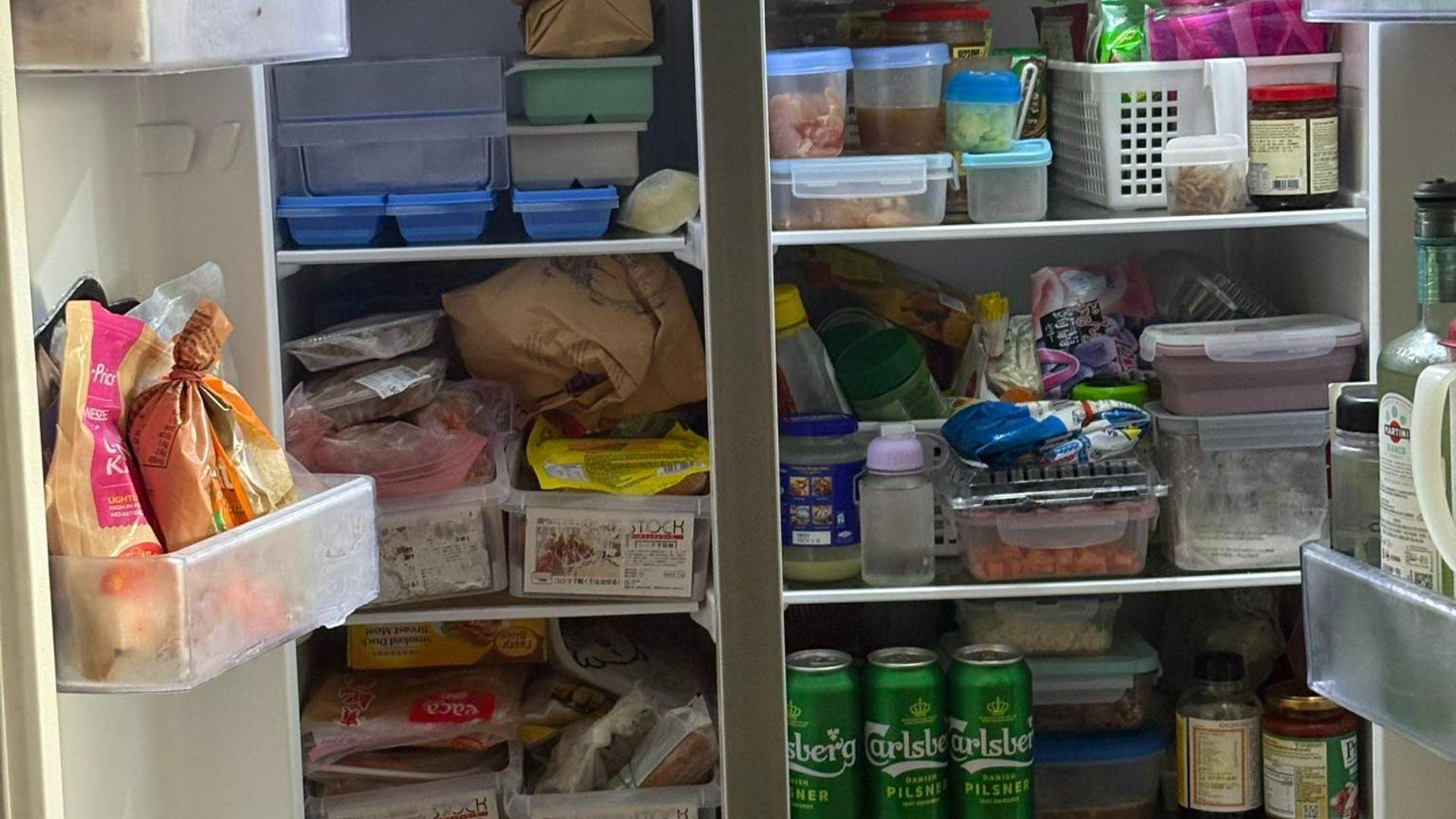
To support her claims, the employer shared a photo showing a refrigerator packed with food.
Photo: Facebook/ Myanmar Maids in Singapore
Beyond the food-related complaints, the employer said that the helper, whose main role is to care for children, had repeatedly shown little enthusiasm for the job.
The helper allegedly told the family she was “too old to run after kids” and claimed she did not know how to organise toys or properly engage with children because such practices were uncommon where she came from.
The employer also raised concerns about the helper’s conduct while supervising the children outdoors.
She claimed that when crossing roads, the helper would sometimes tell the children to “run” across instead of waiting for vehicles to pass.
Adding to her growing list of grievances, the employer said that the helper rarely greets her, regularly “spoils” the children, spends long periods on her phone, and has damaged toys, pots and pans without apologising.
“[My helper] just wants to find an easy job. She doesn’t cook, doesn’t clean, expects the employer to serve her, and uses her phone the whole day.”
“I am returning to the agent, and she is looking at a transfer at the maid agency. She has a 7-month loan (cleared 1.5 months with me). If you wish to get her name, you can comment.”
“We don’t know the full story.”
In the comments, one fellow employer said she felt frustrated after reading about the helper’s alleged behaviour.
“Employers must provide 3 meals a day, BUT they must COOK FOR THEMSELVES not we cook for them. So many maids apply for the job, expect to be paid monthly, expect employers to provide as per MOM regulations, but they are lazy and totally useless!”
Another commenter said the story reminded her of a former helper.
“Wow… you reminded me of my ex-helper. Food was prepared for her, but she would say to keep it in the fridge because she would eat it the next day. However, the food stayed there for two weeks. She couldn’t even be bothered to throw it away, even though she was the one who [asked to keep] it. She thought she was a princess.”
A third commenter claimed to have had a similar experience.
“My previous helper also had the same pattern. Worst case, she accused us of not giving 3 meals to eat (but she was the one who didn’t prepare for herself). And telling lies, all sort of lies…”
Others, however, were not entirely convinced by the employer’s account. One user pointed out that some employers keep their refrigerators fully stocked but do not allow their helpers to eat certain food items. “We don’t know the full story. Let MOM investigate,” they added.
Another questioned whether the employer had clearly communicated that the helper was free to cook whatever food was available.
“Yes, we see your fridge is full!! No doubt, BUT did you tell her she can cook anything she wants?”
In other news, a new domestic helper has raised concerns after finding out that the family she was hired to work for included more people than what was originally stated in her contract.
In an anonymous post in the “SINGAPORE TRANSFER (No Fees/SD), DIRECT HIRE & NEW HELPER” Facebook group, the helper shared, “In my contract, it states that I am only supposed to care for Sir, Ma’am, and two kids. However, when I arrived at my employer’s house, two aunties were also living here.”
SINGAPORE: A foreign worker sparked concern online after sharing details of a cooking job in Singapore that would require him to work up to 14 hours a day for a monthly salary of just S$2,000.
Posting on the r/asksg forum on Saturday (May 30), the worker said his contract stated a 44-hour work week. However, he claimed that the staff roster he had seen told a different story, with employees allegedly working around 14 hours a day and receiving only one or two rest days a month.
“I have seen the
SINGAPORE: A foreign worker sparked concern online after sharing details of a cooking job in Singapore that would require him to work up to 14 hours a day for a monthly salary of just S$2,000.
Posting on the r/asksg forum on Saturday (May 30), the worker said his contract stated a 44-hour work week. However, he claimed that the staff roster he had seen told a different story, with employees allegedly working around 14 hours a day and receiving only one or two rest days a month.
“I have seen the roster schedule, and everybody is doing 14 hrs a day, and they only have 1 or 2 days off a month only,” he wrote. “They even fight for a day off.”
To make matters worse, incentives would only be available after completing three months on the job, while his seven days of annual leave would only become available after a full year of service.
Unfamiliar with Singapore’s job market, the worker turned to Reddit to ask whether such conditions were normal for cooks in the F&B industry.
“Is this normal for a cook job in Singapore?” he asked. “I would appreciate any advice from people working in F&B.”
In an edit to his post, the worker revealed he had already accepted the offer and signed the contract because his visa was due to expire in just two weeks.
“PLEASE RUN IF YOU CAN.”
The post quickly drew strong reactions from netizens, many of whom were shocked by the long hours and low pay. Several commenters said the arrangement sounded excessive and urged the worker to look elsewhere for employment.
One user called the conditions “insane,” while another said, “2 off days per month? This is extortion. To put it into perspective, you are working 14 hours per day, that’s 28 days of working in a month (2 off days per month), and you’re working 14 hours x 28 days in a month = 392 hours in a month. S$2,000/392 = S$5/hour? Even McDonald pays better.”
A third wrote, “My dear, you’re a COOK, which demands more technical skills. PLEASE RUN IF YOU CAN. S$2,000 can be earned by doing part-time service staff alone. Do not get played.”
A fourth added, “That schedule is crazy even by F&B standards. To be honest, 14 hours a day plus only 2 off days a month is going to burn you out hard, and 7 days’ leave after 1 year is low. I’d start looking around for other kitchens, but yeah, everything is trash now. Finding a job is miserable.”
According to the Ministry of Manpower (MOM), a new hire can still back out of a job offer even after signing a letter of employment, provided they have not yet started work on their first day.
In such situations, the individual is expected to notify the employer and, where possible, provide a reason for withdrawing.
MOM notes on its website: “If an employee does not show up on the first day of work, the Employment Claims Act does not apply as the employee has not started work.”
Moreover, employers cannot claim notice pay or compensation under the Act, although they may still choose to file a civil claim in court.
SINGAPORE: A woman has gone online to share how upset she feels over the possibility that her family’s domestic helper could end up living in a tiny utility room when they relocate to a new house.
Sharing her concerns online, she explained that the helper currently has a pretty decent setup. Since the woman’s sister already moved out, the helper has been staying alone in a proper room with her own attached toilet.
But that arrangement may soon disappear.
“My parents are relocating to a new house
SINGAPORE: A woman has gone online to share how upset she feels over the possibility that her family’s domestic helper could end up living in a tiny utility room when they relocate to a new house.
Sharing her concerns online, she explained that the helper currently has a pretty decent setup. Since the woman’s sister already moved out, the helper has been staying alone in a proper room with her own attached toilet.
But that arrangement may soon disappear.
“My parents are relocating to a new house that only has 3 bedrooms—for my parents, me, and my brother—and I believe they’re going to put her into the bomb shelter,” she wrote on Reddit’s r/asksg forum on Wednesday (May 27).
In an edit to her post, the woman clarified that the space is actually a small utility room, not a bomb shelter, which can only fit a “small bed, but no wardrobe, etc.”
“I feel quite stressed about this. How is she going to keep her stuff? My mom and [the helper] don’t have a good relationship, but I feel like she’s nice, and I wouldn’t say I’m very close to her as she just came recently (end of last year), but she’s still very nice.”
She added that the thought of the arrangement made her feel “really bad” for the helper, especially since it would be a major downgrade from her current living conditions.
“I will talk to my parents about this shortly, but is there anything they can even do now that they have signed the papers to buy the new house?” she wrote, hoping to hear some advice.
“Perhaps you can offer to share your room with her?”
In the comments section, many Singaporean Redditors sympathised with the woman’s concerns and offered practical suggestions on how the family could make the small utility room more comfortable and livable for the helper.
One Redditor said, “It’s a tough conversation to have, for sure. As a student, you may not be able to make a decision for your parents, but you can help them find an innovative solution for your helper.”
“Sometimes with clever carpentry, there can be a way for the helper to have her bed and storage in the utility room, but really without windows or air conditioning, it can be very stifling, so ventilation is important. There should be a built-in fan at least.”
Another offered a simple solution, saying, “Perhaps you can offer to share your room with her? This is a solution that is within your control.”
Meanwhile, a third user advised the woman to speak directly with the helper first rather than assume what she may or may not be comfortable with.
“Speak to her about what she needs? ” they wrote. “If she needs privacy, then the utility room may be the only available choice. Give her a space outside to store things, and get her a wall fan and a portable air conditioner to keep herself comfy. Maybe you can install a curtain and keep doors open, so it is not suffocating.”
A fourth added, “Allow her to put a wardrobe/cupboard in your room for her belongings so the utility room is only for the bed. Put in a wall fan for better ventilation and make sure she has power outlets for charging her electronics.”
According to the Ministry of Manpower’s (MOM) guidelines, employers are strongly encouraged to provide domestic helpers with a separate room.
If this is not feasible due to space constraints or housing arrangements, employers must still ensure that the helper’s accommodation provides sufficient space, privacy, proper ventilation, and protection from environmental elements such as heat, rain, and strong winds.
SINGAPORE: A local employer is seeking opinions online after claiming her newly hired Indonesian domestic helper gave “rotting” food to her elderly grandmother, stored large amounts of food in secret, and ate it privately inside the bathroom.
In a post published on the r/askSingapore forum on Sunday (Jun 7), the employer said she had found around “10–15 plates and containers” in the bathroom cabinet. She also found food that was already “two days old” placed in a plastic bag, tucked under one of
SINGAPORE: A local employer is seeking opinions online after claiming her newly hired Indonesian domestic helper gave “rotting” food to her elderly grandmother, stored large amounts of food in secret, and ate it privately inside the bathroom.
In a post published on the r/askSingapore forum on Sunday (Jun 7), the employer said she had found around “10–15 plates and containers” in the bathroom cabinet. She also found food that was already “two days old” placed in a plastic bag, tucked under one of her grandmother’s used diapers inside the trash bin.
The employer said she kept the two-day-old food aside and later discovered that the helper had taken it back, eaten part of it, and given the remainder to her elderly grandmother.
“My grandmother started having diarrhoea because she was given this rotting food,” the employer wrote, adding that the helper denied it when confronted.
“She lied that some outside people offered her the food, whereas I clearly saw the food was all cooked by me from two days earlier.”
The employer also claimed that the helper had been clashing with another domestic helper who had worked for the family for years.
“She started fighting with my long-time helper (Indonesian) from day one, saying she is from a city in Indonesia, and my old helper is from a kampong/village. They fight 5–6 times every day over minor issues, creating a lot of drama, with both running to me to complain.”
“And it’s probably because of her fighting with my old helper, who cooks most of the time in the kitchen, that she started [hiding food in the bathroom].
According to the employer, the helper’s previous employer had terminated her employment because they believed she was “too slow.”
However, after observing her firsthand, she found that the helper was actually not slow but rather “absent-minded and always on the phone.”
“My helper was responsible for all household tasks there—cooking, cleaning, laundry, marketing, taking care of elderly, etc. So, I thought her lower workload at my house will be okay because good attitude, in my opinion, is the key. I stay home, so I quickly found out she is not slow but absent-minded and always on her phone. She would only work when I was watching her.”
“She would also clean 1 bathroom for 2 hours because she locks the door, and I found her busy on the phone talking to Bangla workers. If I find something is not done, she says sorry and says she will do it tomorrow. But it never gets done.”
Seeking advice from the community, she wrote at the end of her post: “Should I give her more time or send her back? Because if I give her a transfer, I wouldn’t be able to give her a good recommendation.”
“She clearly cannot be trusted.”
Many readers were stunned by the employer’s post, particularly the allegation that the helper had given spoiled food to an elderly woman. For many, that alone was serious enough to warrant immediate dismissal.
One individual said, “Did you just write that this helper gave ROTTING FOOD to your grandmother and you’re wondering if you should give her another chance??? Bruh, get your priorities right.”
Another wrote, “Omg, so many red flags. Send her back! She clearly cannot be trusted, and to top it all off, she is unhygienic with her eating habits plus disturbing your household’s peace with all that fighting.”
A third added, “You’re either too nice, or you’re just being bullied/taken advantage of. Feeding rotting food to grandma would be the final straw for most. I think you know very well what really needs to be done.”
A fourth, meanwhile, suggested stricter supervision. “If you want to keep her, I suggest take her phone away during working hours.”
In other news, a university student has turned to Reddit for advice after finding himself trapped in what he sees as an impossible situation.
While his mother refuses to contribute to his university expenses or allow him to take out a bank loan, she has also forbidden him from taking on certain part-time jobs in the F&B industry to support himself.
SINGAPORE: An employer has decided to send her Filipina domestic helper home after discovering that she had borrowed money from an unlicensed moneylender, a situation that allegedly resulted in the family receiving “threatening messages, relentless spam calls and even physical harassment.”
Posting anonymously in the SINGAPORE TRANSFER (No Fees/SD), DIRECT HIRE & NEW HELPER Facebook group on Wednesday (Jun 3), the employer said she was shocked to learn that her helper had provided the family’
SINGAPORE: An employer has decided to send her Filipina domestic helper home after discovering that she had borrowed money from an unlicensed moneylender, a situation that allegedly resulted in the family receiving “threatening messages, relentless spam calls and even physical harassment.”
Posting anonymously in the SINGAPORE TRANSFER (No Fees/SD), DIRECT HIRE & NEW HELPER Facebook group on Wednesday (Jun 3), the employer said she was shocked to learn that her helper had provided the family’s details to the moneylender without their knowledge.
“We treated her like family and she has been with us for 1.5 years. She didn’t even try to ask us for a loan because of her ego. Until the day she left, she didn’t feel remorse for her actions and didn’t tell her family what she did. It is very disappointing.”
According to the employer, the debt issue was not the only concern. She claimed the helper had also engaged in a number of “unethical” activities.
Among the examples she listed were communicating with multiple foreign workers through TikTok, meeting men during her days off, and allegedly lying after using the family’s laundry detergent to wash her own clothes.
She also said that the helper frequently spent beyond her means and would even pawn gold jewellery to obtain quick cash when money was tight.
The employer claimed that these habits led the helper to accumulate more than S$1,500 in debt within just five months.
She continued, “Honestly, we would’ve allowed her to transfer or wanted to give her a chance but after discovering that she also provided our child’s details and photo to unknown people, this has severely broken trust.”
Concerned that the helper may eventually seek employment in Singapore again, the employer said she decided to make the post as a warning to prospective employers.
“She mentioned that she will try to come back to Singapore to work; hence, we are writing this post for potential employers to take note.”
“If you are considering a Filipina helper and worried it might be her, please feel free to comment and I’ll PM her name so you can take note and avoid her. Not posting her name here because there’s no point in publicly shaming her. We’ve done the necessary updates to MOM and made a police report.”
“However, we’re not very confident that she will be blacklisted because multiple calls to MOM provided us with different answers. Yes, she needs a job, but it’s not right for her to potentially sabotage another family.”
“I urge all employers to leave feedback on the MOM website.”
In the comments, one employer said, “I’m so sorry you had to experience this. My ex-helper had the same issue of borrowing money.”
Another commented, “The new cohort of Filipino maids has tarnished all the good reputation their seniors built up over the years.”.
A third encouraged employers to be more proactive when it comes to leaving feedback, writing:
“I urge all employers to leave feedback on the MOM website for any helper who has previously worked for them. Please include your contact information so future employers can reach out for reference checks,” highlighting the need for proper references before hiring.”
“Give feedback on positive and negative, providing a testimonial can help new employers make more informed decisions.”
As per the Ministry of Manpower (MOM), domestic helpers are prohibited from borrowing money from unlicensed moneylenders. Those found engaging in such activity may be permanently banned from working in Singapore.
SINGAPORE: On Friday (May 29), an employer claimed on social media that hiring domestic helpers has become increasingly difficult and frustrating, as many candidates “overpromise” and “exaggerate” their skills and experience during the recruitment process, only for employers to later discover that they are unable to perform even simple household tasks.
Sharing her experience in the SGWhispers Facebook group, the employer said she had come across helpers whose resumes and interviews made them see
SINGAPORE: On Friday (May 29), an employer claimed on social media that hiring domestic helpers has become increasingly difficult and frustrating, as many candidates “overpromise” and “exaggerate” their skills and experience during the recruitment process, only for employers to later discover that they are unable to perform even simple household tasks.
Sharing her experience in the SGWhispers Facebook group, the employer said she had come across helpers whose resumes and interviews made them seem highly experienced, but the reality turned out to be very different.
She claimed that some helpers say they can cook but end up struggling with simple dishes because they are afraid of “oil splattering.”
Others reportedly state that they have experience caring for babies or young children, only for employers to later realise that they lack even basic childcare skills.
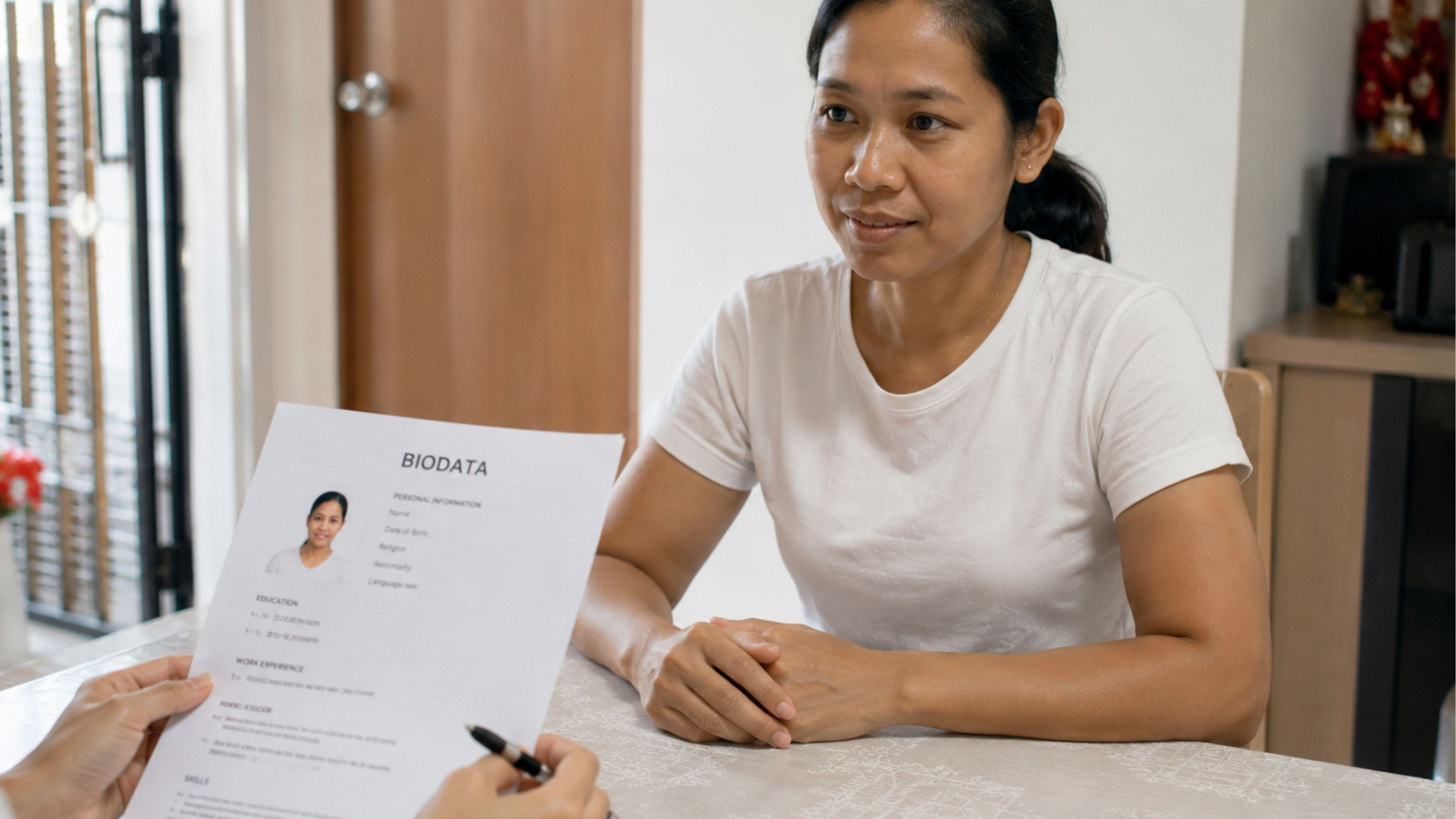
“It’s frustrating, and frankly, it feels misleading,” she wrote. “The biodata can be polished to look impressive, interviews feel rehearsed, and half the time you don’t know what’s real and what’s not.”
She also questioned who should be held accountable when things do not work out.
According to her, employers pay significant sums in agency fees and other hiring costs, yet agencies often respond by saying they cannot guarantee a helper’s quality, performance, or level of training.
On top of that, she expressed frustration that some helpers who allegedly exaggerate their qualifications are still very particular about working conditions and benefits.
“These helpers demand their rights to use their phones all day and access to WiFi, insist on only working in small households of 2-3 people, want their own room, want weekly days off plus PH days off, and cannot take it when corrected for something like forgetting to turn off the stove… it’s too much.”
The employer further claimed that some would threaten to return to their agency or ask to be sent home whenever disagreements arise.
She added, “It is already stressful working full time, managing a household, being a caregiver, raising a child/children and then facing uncertainty with helpers who run away, threaten to go back agent or be sent home. This is a real concern, and not talked about enough. If you’ve gone through this, you’ll understand how draining it is.”
“At the end of the day, it’s just pure luck that leads you to a good helper.”
In the comments, one netizen encouraged employers to leave feedback on the Ministry of Manpower’s (MOM) website for any helper who has previously worked for them. They suggested including contact details so that future employers can reach out for reference checks.
“Give feedback that is positive and negative; providing a testimonial can help new employers make more informed decisions,” they added. “This could go a long way in reducing the number of problematic helpers in Singapore, especially since the system is not doing enough to protect us.”
Others, however, felt that while feedback systems and reference checks might help a bit, they would not completely remove the uncertainty of hiring.
One said, “At the end of the day, it’s just pure luck that leads you to a good helper. We’ve had a few terrible ones, and yet we’ve also had truly wonderful ones—so, in essence, it’s really up to their motivation to be good human beings and, more importantly, their value system (which boils down to luck for us because no biodatas can capture this).”
Another chimed in, “It’s luck. Some came here with the wrong expectation that SG is rich, and so if they stay in a house, they should feel rich.”/TISG
SINGAPORE, June 3 — A 55‑year‑old woman who repeatedly assaulted her domestic worker — including pulling off the helper’s headscarf in a lift — was sentenced today to four months’ jail and ordered to pay S$5,000 (RM15,567) in compensation.CNA reported that Hasnah Hashim pleaded guilty to two charges of voluntarily causing hurt, while three other similar offences were taken into consideration for sentencing. The incidents took place in August 2024, when the victim
SINGAPORE, June 3 — A 55‑year‑old woman who repeatedly assaulted her domestic worker — including pulling off the helper’s headscarf in a lift — was sentenced today to four months’ jail and ordered to pay S$5,000 (RM15,567) in compensation.
CNA reported that Hasnah Hashim pleaded guilty to two charges of voluntarily causing hurt, while three other similar offences were taken into consideration for sentencing. The incidents took place in August 2024, when the victim, a 32‑year‑old Indonesian national, was employed in her household.
On Aug 23, 2024, the pair were returning from the market when the maid entered the lift first and pressed the button to close the doors. Hasnah managed to step in but became angry, grabbing the helper’s headscarf with both hands and yanking it down.
According to the prosecution, the act caused pain when the victim’s hair was pulled and left her humiliated, as she wears the headscarf for religious reasons. The incident was captured on video and submitted to the court.
Earlier Assaults Included Slaps, Pinching and Ear‑Pulling
The victim later reported the matter to police. A medical check revealed a bruise on her upper lip from an earlier assault three days before, when Hasnah slapped her for mistakenly placing tofu in the freezer.
Other incidents that month — including hitting the helper with a mobile phone, pinching her thigh and twisting her ears — formed the remaining charges considered during sentencing.
The prosecution noted that the maid has been unable to secure new employment since the case began, as potential employers were concerned she might be required to testify. Her last drawn salary was S$882.
Prosecutors sought between four and six months’ jail and S$7,500 in compensation, while the defence asked for a three‑month term and S$1,000 compensation, citing Hasnah’s remorse and previous positive references from former helpers.
Senior District Judge Ong Hian Sun ultimately ordered S$1,000 for pain and suffering and S$4,000 for lost wages.
Under the law, offences committed against a domestic worker by her employer carry up to twice the maximum penalty for voluntarily causing hurt.
Police investigations into the case have concluded.
SINGAPORE: One helper’s gamble appears to have backfired after she dared her employer to “send her back to the agency” if she was unhappy with her work.
Instead of brushing off the remark, the employer said she took the helper up on the challenge and wasted no time arranging for her to be sent home.
In a post on a local forum on Friday (June 5), the employer wrote, “I told the agent to buy the tickets to send her home (at my own expense). Afterwards, the agent informed me that she was begging to
SINGAPORE: One helper’s gamble appears to have backfired after she dared her employer to “send her back to the agency” if she was unhappy with her work.
Instead of brushing off the remark, the employer said she took the helper up on the challenge and wasted no time arranging for her to be sent home.
In a post on a local forum on Friday (June 5), the employer wrote, “I told the agent to buy the tickets to send her home (at my own expense). Afterwards, the agent informed me that she was begging to keep her job. I replied, ‘Not going to happen.’”
Still clearly frustrated by the experience, the employer said she believes too many helpers assume they can simply move to another household if things do not go their way.
“Cocky people who cannot tell the difference between privilege and entitlement need to be humbled. There are far too many helpers who come here thinking they can transfer to a less demanding household just by doing a bad job and asking to go back to the agency. Unfortunately for my helper, she will find that I am not a pushover.”
The employer then listed a series of incidents that she said convinced her the helper was not suitable for the job. Among them were allegedly mixing up different sets of clothes, dressing her child in clothes worn inside out, and repeatedly packing her child’s school bag with missing items despite a packing list being clearly displayed.
She also claimed the helper would refill an insulated bottle with hot water from the previous day, even after it had already gone cold.
Then came the request that she found particularly cheeky. According to the employer, the helper wanted to spend her day off in Kuala Lumpur and even asked the family to help her buy BTS concert tickets.
The employer said she had already been warned that the helper had “an attitude problem” before joining the household.
Even so, she and her family decided to give her a chance, believing she might simply have been misunderstood or that her previous employers, who were elderly, had been overly impatient or critical.
Looking back, she said that assumption turned out to be wrong.
“Boy, were we wrong. So we decided not to pass this rotten apple around,” she said. “If financially possible, I strongly encourage everyone who has problematic helpers to send them back to where they came from instead of passing the rotten apple around.”
“Good job.”
Many commenters appeared to support the employer’s decision.
One Singaporean Redditor praised her for standing firm, writing, “Well done. Some of these helpers really think they are very smart and can challenge employers.”
Another commented, “Kudos. Your statement of not passing the bad apple.”
A third joked, “Requested to help her buy a BTS ticket. Lol… But we Sinkies are the entitled ones, wor. Anyway, good job.”
Meanwhile, another commenter argued that the helper’s last-minute pleas were probably motivated by self-interest rather than genuine remorse.
“The worst part is these people aren’t begging out of contrition or a real lesson learned. They just want to get back and continue.”
In other news, a 32-year-old healthcare worker earning up to S$8.5k a month says the brutal hours and constant stress of her job eventually destroyed her health, leaving her with “stage 3 cancer, chest pains, gastritis, burnout, depression, and anxiety.”
In a Reddit post, the woman shared that she spent seven years in the healthcare sector, often surviving on just three hours of sleep while juggling full-day shifts and 24/7 on-call duties for an entire week.
 Login
Login