Normal view

Fidan Novruzova’s Cult-Favorite Havva Boots Were Just the Beginning

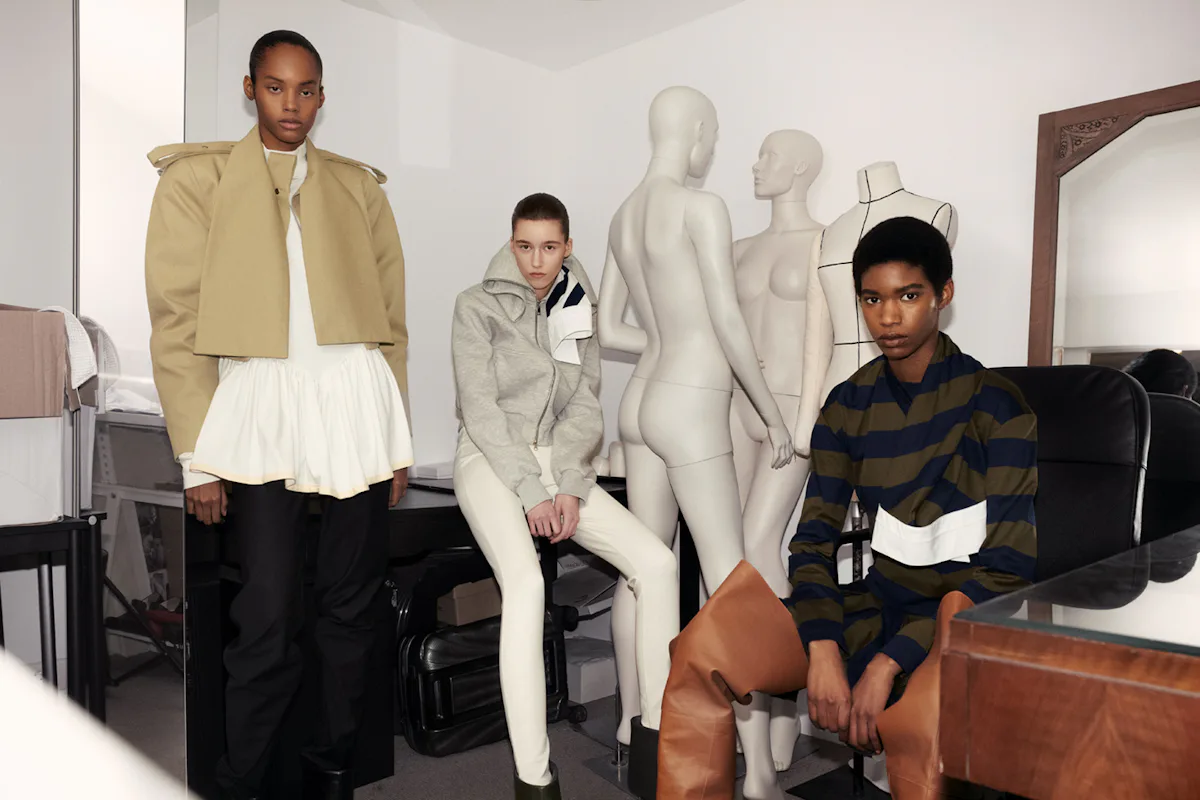
From left: Models Sabryna Oliveira, Kaat Van Herbruggen, and Yuliana Perez wear Fidan Novruzova clothing and boots (throughout).

As a student at Central Saint Martins, in London, Fidan Novruzova expected to start her career by joining a Parisian heritage house. Her 2019 thesis collection was a portfolio for potential employers featuring retro-futuristic looks reminiscent of The Jetsons: skirts with stiffened hems that appeared permanently windblown; tops with cartoonishly sharp shoulders; and heavy knee-high “Havva” boots with a sculptural square toe. But soon after she presented it, requests from store buyers and private customers started pouring in—including one from Bella Hadid, who bought the boots over Instagram. A year after graduating—and with just a Burberry internship as professional experience—Novruzova officially launched her label.

Bella Hadid in Novruzova’s Havva boots. | Robert Kamau/GC Images/Getty Images

In March, Novruzova, who is 31, presented her 11th collection, for fall 2026, at a cocktail party in her Paris showroom. She was inspired by the 20th-century Polish painter Tamara de Lempicka’s saturated palette of scarlets, emeralds, and teals, and by the way the artist projected herself onto her subjects. “Her paintings were about the affluent women and socialites of the 1920s, but they all look like her,” explains Novruzova. Lempicka’s process felt familiar to her. “You have women around you who inspire you—your muses—but at the same time, it’s still about what you want to wear yourself.” She has a penchant for jackets, and presented drop-waist trenches, tuxedo-lapel leather bombers, and boleros with stiff architectural collars. There were also riding trousers tucked into over-the-knee iterations of the Havva boot, and polo shirts with collars so exaggerated they almost resembled capes. Although her designs still have the experimental, futuristic feel of those from her college days, now “every piece is something that can be incorporated into a modern woman’s wardrobe,” she says.

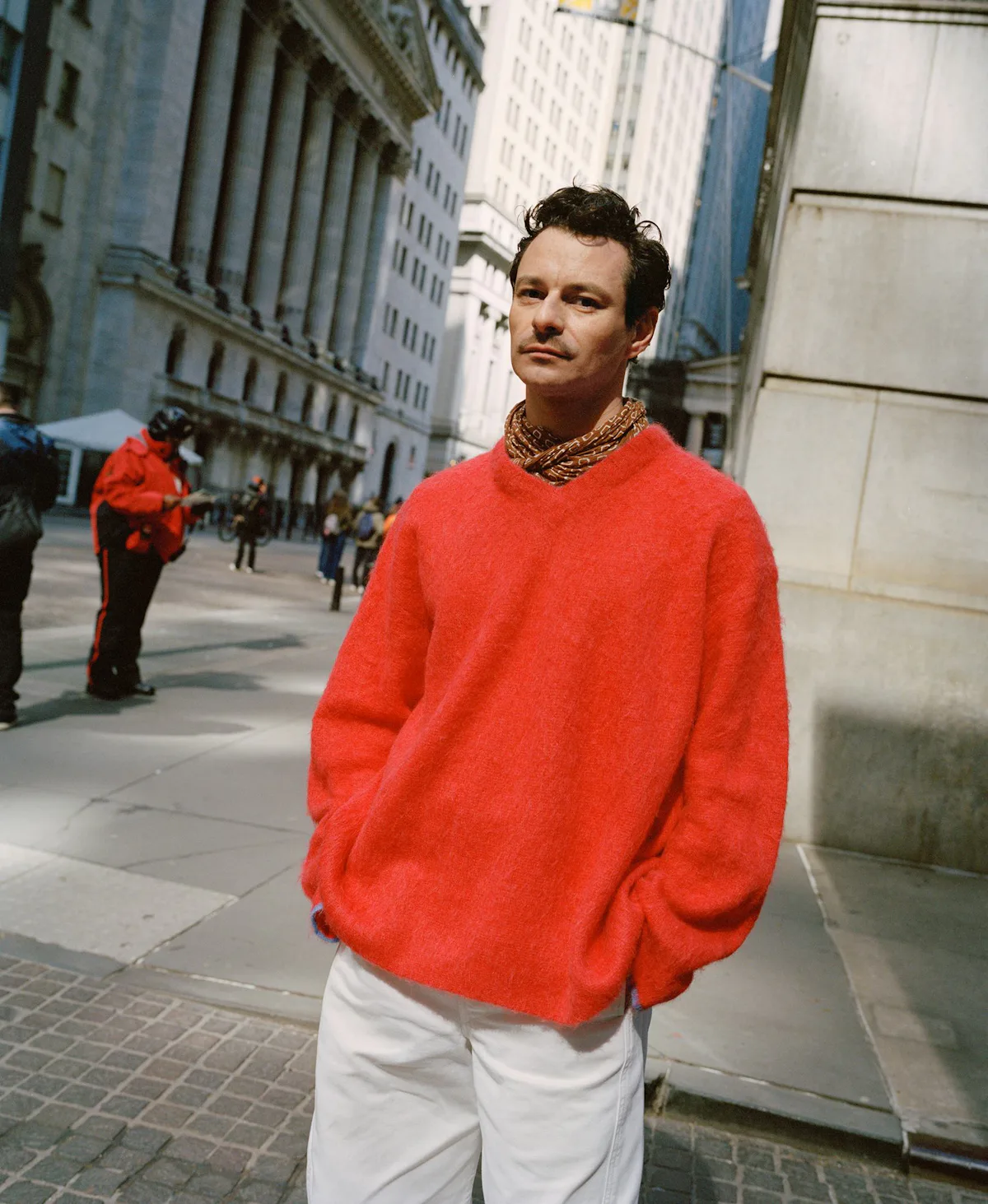
Fidan Novruzova in Paris.

Novruzova grew up in Chisinau, the capital of Moldova, with Azerbaijani parents. Moldova isn’t exactly known as a high-fashion hub, but Novruzova spent much of her late teens on the Internet, where she discovered the work of Azzedine Alaïa and Yohji Yamamoto. Although she’s the only person in her family to work in a creative field, she says her mother instilled in her “the importance of dressing well,” and her heritage often figures into her work. The brand’s initial logo was a pomegranate, an emblem of prosperity across the South Caucasus, and her first collection was inspired by 1970s Azerbaijani starlets. Early on, she designed a dress made of raffia crocheted to look like wild rue, drawing on a west Asian folk belief passed down through her mother and grandmother: Burning the plant with salt while praying wards off the evil eye.

Kaat Van Herbruggen.

Novruzova’s designs start with materials, not sketches. She sources fabric from Italy and leather from a tannery in Istanbul, but her production remains rooted in Chisinau, which she visits often. She still works with the same family of shoemakers who produced the original Havva boot for her graduate collection; their studio is just minutes away from her parents’ house. Like many young designers, Novruzova is concerned about sustainability. For her, a sustainable brand doesn’t simply work with deadstock and upcycled fabrics, but focuses on designs that last. “The versatility of the clothes is what matters,” says Novruzova. “They should feel relevant over time.” When we met, she wore a black velvet jacket with a mandarin collar from the brand’s fall 2024 collection, as well as ballet flats from spring of that year, both of which still felt current.

Sabryna Oliveira and Yuliana Perez.

Six years in, Novruzova’s brand is steadily growing. In 2024, she was a semifinalist for the LVMH Prize, making her the first Moldovan designer ever to get nominated. She’s expanding her brand’s footwear offerings, which currently consist of seasonal iterations of her Havva boot. Last year, she had her first major collaboration, working with Asics to turn its Gel-Cumulus 16 into a fashionable but still functional sneaker. (Imagine a running shoe with tassels and oversize tongues crossed with a classic men’s brogue.) Her only brief for the future: something “different,” she says. “I’m loyal to my aesthetic, but what’s important for me is to never put myself in a box.”

Hair by Tosh at Artlist Paris; Makeup by Elena Bettanello at Julian Watson; Models: Kaat Van Herbruggen at Noah Mgmt; Sabryna Oliveira at Oui Management; Yuliana Perez at Silent Models; Casting by Ashley Brokaw; On-Set Producer: Louise Akani; Photo Assistant: Matheus Agudelo; Digital Technician: Andreas Strunz; Retouching: Split Peas; Fashion Assistant: Lisa Fulchignoni; Hair Assistant: Lucile Bertrand; Makeup Assistant: Flavie Terracol.

  • ✇AllBusiness.com
  • How to Choose a Web Design Company That Understands Your Customers Gail Gardner
    The right web design company can optimize your website for higher conversions. But who knows your customers better? You, or the design team you plan to hire? Because businesses and their customers have industry- and niche-specific needs, it’s critical that your web design company understands your business. Great design happens when your customer knowledge meets designer expertise. But that isn’t enough anymore. You will also need search engine optimization (SEO) and conversion rate optimization
     

How to Choose a Web Design Company That Understands Your Customers

16 April 2026 at 16:34


The right web design company can optimize your website for higher conversions. But who knows your customers better? You, or the design team you plan to hire? Because businesses and their customers have industry- and niche-specific needs, it’s critical that your web design company understands your business.

Great design happens when your customer knowledge meets designer expertise. But that isn’t enough anymore. You will also need search engine optimization (SEO) and conversion rate optimization (CRO).

Ruler Analytics reported in 2025 an average conversion rate of just 2.9% across fourteen industries. This means there is massive optimization potential.

Source: Ruler Analytics

With search traffic declining and zero-click searches becoming the norm, isn’t it time you optimized your website for conversions? This is where the right web design company comes in.

Choosing the Best Fit in Web Design Specialists

Choosing which web design company to hire is more complex than ever, as skill sets vary among developers. So, start with your business goals.

Do you only need a website or does it need to integrate with internal or third party systems, your CRM, or dashboards? Will you be integrating existing processes or is developing them part of this project’s roadmap?

Most web designers are not developers capable of building complex systems. Many do not even have experience integrating existing systems. There is also a difference between UX/UI designers and UX/UI developers. You need both, but you may not need AI UI/UX design or development.

Plan First: Would Your Site Benefit from AI UI/UX?

What is your vision for the totality of how your website interacts with existing processes?

Most businesses think in terms of individual needs:

  • CRM
  • Calendar/appointment setting
  • Call tracking
  • Inventory management
  • Accounting
  • Project management
  • Analytics

These individual needs vary by type of business. If there is a business case for it and you have the funding, integrating everything into an all-encompassing solution may be preferable.

But how do you know what to build? Take the advice of Marc Caposino, founder of the AI Design Agency Fuselab Creative:

“The best user research happens in the wild. Watch how people currently solve the problem you’re addressing. What workarounds have they created? Where do they get frustrated? What do they do immediately after they complete the task?”

If you want to go beyond just having a website built, find an agency that has demonstrated success with similar projects.

Review Portfolios of Web Designs for Businesses Like Yours

Your business may seem simple to you because it is what you know. However, for many niches, that simply isn’t accurate. Stick to designers who specialize in your industry.

Most designers will have a page showing a portfolio that allows you to click through to live websites. Study their layouts and make notes about what you like and dislike.

When you’re searching for web designs, choose sites for businesses in your niche that are most similar to your own. For example, if you own a dental practice, search for “dental website design”. You may even want to look for differences between a site for a pediatric dentist versus an oral surgeon.

Some designers make that easier. For example, this dental web design portfolio uses filter tabs at the top to make navigation of their design portfolio intuitive and efficient.

Interview Niche-Specific Web Developers

Do not expect every web development company to be familiar with the requirements of your business. It is up to you to make sure they are qualified.

That is why I recommend you work with a company with experience in your industry. Here’s an example.

Dentistry doesn’t seem complicated. Everyone knows a dentist. But every dental practice offers different procedures. Not all do implants or offer Invisalign. Within dentistry, there are also specialties, such as orthodontists, pediatric dentists, oral surgeons, periodontists, and others.

While they all have a primary goal of scheduling patient appointments, some use a simple appointment form while others integrate with dental management software such as Dentrix and Oryx. Inquire whether the company you plan to hire is familiar with integrating any industry-specific applications your business uses.

Focus on Your Business Goals

Make a list of every application essential to your business. Determine which applications the developer you hire will need to incorporate into your website.

Include your:

  • CRM
  • Office management
  • Accounting package
  • Appointment booking
  • Advertising
  • Dashboards
  • Call tracking and analytics platforms

Failure to plan could mean delays and increased costs if you have to hire additional specialists or programmers to complete your project.

How to Know What Customers Want in Website Design

Use behavioral analytics tools to analyze how visitors to your site use it. There are many paid options, as well as the free option Microsoft Clarity. This video explains how this type of tool works and the pros and cons of HotJar versus Microsoft Clarity.

Now that you can do this at no cost, why wouldn’t you? Analytics tools can answer questions such as:

  • Are visitors clicking in the wrong place?
  • How often do they land on a page and immediately exit?
  • Did they leave your appointment scheduling option without completing it?

The answers to these questions can be indicators that your design needs improvement.

Ideally, your business should be willing to accommodate whatever your potential customers want in terms of how booking and other processes work.

I’ve had younger clients who only wanted customers to book their own appointments, yet they were running ads targeting an older, more prosperous demographic–then becoming unhappy that it was making their phone ring!

Involve an SEO Expert Before You Move an Existing Site

Over the decades, I’ve seen many sad stories of businesses losing traffic and incoming links because they launched a new website without 301 redirects of the existing URLs.

Any time you do a website redesign, an SEO expert should be involved. This is essential to avoid technical mistakes, slow load times, poor mobile responsiveness, or bad UX. If the development company will be handling the technical SEO of your site, ask for references specific to their SEO capabilities.

Test Your Website Before Launching

When you’re negotiating the contract for your website, make sure testing is included. A final testing process that catches problems before launch is essential. Even if the development company is doing this testing, repeat it in-house as well. Have someone with strong attention to detail read every page and test every link, form, and integration.

If you use third-party solutions, verify that those work and are optimally configured. For example, appointment setting apps may have two to three steps or as many as 14! Every additional step can reduce conversions. If one-click checkout works best for Amazon, why would anyone think asking 14 questions is a good idea?

Reassess what information you’re asking potential customers for. Call in a few favors and observe others go through the process of buying or booking on your website. Any confusion will cause abandonment, so watch for any hurdles that slow the process.

With search traffic declining, it's crucial to make the most of every visitor to your site by increasing conversions. To do this, you’ll need to streamline appointment scheduling and checkout processes to ensure as little friction as possible.

Remember that your website is an extension of your brand’s reputation. To make a great impression on visitors, you’ll want to make sure everything works perfectly.

  • ✇W Magazine
  • Henry Zankov Is the New Artistic Director of Diane von Furstenberg Carolyn Twersky Winkler
    Photograph by Lukas Wassmann for WKnitwear designer and emerging New York Fashion Week favorite Henry Zankov has been named the artistic director at Diane von Furstenberg. The 45-year-old is the first to hold this position at the company, which will have him oversee the brand’s total creative vision, including collections and visual identity. He will make his DVF debut this September during New York Fashion Week. Nathan Jenden, who was brought on as the brand’s chief design officer and vice pres
     

Henry Zankov Is the New Artistic Director of Diane von Furstenberg

27 May 2026 at 14:33
Photograph by Lukas Wassmann for W

Knitwear designer and emerging New York Fashion Week favorite Henry Zankov has been named the artistic director at Diane von Furstenberg. The 45-year-old is the first to hold this position at the company, which will have him oversee the brand’s total creative vision, including collections and visual identity. He will make his DVF debut this September during New York Fashion Week. Nathan Jenden, who was brought on as the brand’s chief design officer and vice president, creative last year will report to Zankov.

This new job will actually mark Zankov’s return to DVF, as the designer first joined the company in 2014 under then-creative director Jonathan Saunders. Zankov remained at DVF for four years before he left and eventually started his namesake knitwear brand, Zankov, in 2020. He returned to the DVF fold last September when he designed an exclusive collection for the brand to much success.

“I have always been surrounded and inspired by strong women and Diane is the ultimate embodiment of that,” Zankov said in a statement. “The DVF woman is a rebel—confident, curious and independent. It is an honor and privilege for me to build on Diane’s legacy and to carry the brand into the future.”

Photograph by Lukas Wassmann for W

Zankov was born in St. Petersburg, Russia and moved to the United States with his parents when he was nine. He was raised in New Jersey, where his proximity to New York City shaped his love of fashion early on. He took sewing classes at the Fashion Institute of Technology in high school and went on to officially enroll in the school to study women’s design, where he eventually gravitated toward knitwear. “I’ve always been drawn to softer materials, whether it’s jersey, sweaters, or silk,” he told W in 2024. “I really enjoy creating something from nothing. But it’s so tedious to knit, and knitting machines are so precarious. So I had to learn how to be patient.”

While in school, Zankov interned at the cashmere brand TSE and moved to Donna Karan upon graduation, where he acted as an assistant menswear designer. It was at DVF, though, that he said he found his love of color. That came in handy as he launched his own brand, which has become known for its bold hues and imaginative uses of knit. In 2023, Zankov landed his first wholesale account, with Net-a-Porter. That same year, he was a runner-up for the CFDA/Vogue Fashion Fund prize, for which he received $100,000. In 2024, he was named American Emerging Designer of the Year by the CFDA. Since then, Zankov has become a staple in the New York Fashion scene, and he will continue to work on his brand alongside his new role with DVF.

Zankov with his CFDA Award in 2024. | Dimitrios Kambouris/Getty Images Entertainment/Getty Images

Last year, global chief executive officer of DVF, Graziano de Boni, took the company back from its Chinese licensee and distributor Glamel. He began thinking about the future of the brand, known for its wrap dresses, when a colleague recommended he speak to DVF alum Zankov. That led to the capsule collection, as well as a friendship between the two men. “I came to the conclusion that Henry was the right person that could bring us that freshness and that modernity, and even broader, the cultural relevance that I’ve been working to re-establish for our product,” de Boni told WWD.

Furstenberg, meanwhile, has given Zankov her seal of approval. The designer is 79 and currently spends most of her time in Venice, Italy. She told Vogue that she and Zankov “come from the same tribe.”

❌
Subscriptions