Normal view

  • ✇National Herald
  • Of sugar highs and water lows Jaideep Hardikar
    Think one day at a time. This was the strategy of farmers to stay afloat in Takwiki village, in Maharashtra’s drought-prone Dharashiv district in the summer of 2013. A crippling water scarcity devastated its economy, driving people out in search of work and water.Three more devastating droughts have since ravaged Marathwada region in which Takwiki falls, and each time, some of its people left the village and translocated to other places.That year, Maharashtra crushed 80 million tonnes of cane to
     

Of sugar highs and water lows

9 May 2026 at 06:29

Think one day at a time. This was the strategy of farmers to stay afloat in Takwiki village, in Maharashtra’s drought-prone Dharashiv district in the summer of 2013. A crippling water scarcity devastated its economy, driving people out in search of work and water.

Three more devastating droughts have since ravaged Marathwada region in which Takwiki falls, and each time, some of its people left the village and translocated to other places.

That year, Maharashtra crushed 80 million tonnes of cane to produce 8 million quintals of sugar. Sugar mills in Dharashiv crushed over 25 lakh tonnes of sugar-cane — a record.

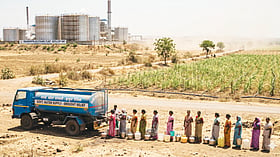
In my successive trips to this village and tens of others in this rain-shadow, low-rainfall, arid region of the state, one paradox stood out: villages that clamour for tankers to supply drinking water grow tonnes of water-guzzling sugarcane for the state’s sugar daddies. This, in a changing climate.

Year after year, they dig deep borewells to extract groundwater to irrigate cane crops, feeding factories that produce millions of tonnes of sugar and now ethanol, while a large section of people, especially in summer, are crying themselves hoarse for drinking water during drought years.

A few years ago, a geologist at the Maharashtra government Groundwater Surveys and Development Agency (GSDA) told me that Marathwada was sucking water from the palaeolithic age to grow orchards and cultivate sugarcane. The crisis is that serious.

In 2013, when the harangued district collector wrote to chief minister Prithviraj Chavan pleading for the suspension of the Diwali-to-March crushing season to preserve water for drinking needs, the entire political class was up in arms against him. He was snubbed, and transferred. People went without water, were forced to buy cans and packaged water by shelling out astronomical sums, but sugar mills worked round the clock, using millions of litres of water to produce the sweetener.

Cut to 2026. The water crisis has worsened, yet the Centre wants to push for vehicles to run on 100 per cent ethanol — produced by sugar factories — to tide over fuel shortages in the aftermath of the war in West Asia. It intends to amend the regulatory framework for mills, bringing ethanol into the framework in addition to sugar, molasses and other byproducts. This year, more of Maharashtra’s sugarcane will not become sugar, but ethanol — fuel for India’s vehicles.

The shift is part of India’s aim to achieve, over time, 100 per cent ethanol blending in petrol. Oil marketing companies are expanding procurement and sugar mills across Maharashtra are rapidly adding distillation capacity. What was once a by-product — molasses — has now become a central economic driver.

For five years, the Centre and states have, through policy tweaks, incentivised private and cooperative sugar factories to invest heavily in ethanol production. But in a state where water is already contested, the ethanol story is not just about energy. It is about how water is being used — and who decides.

Last week, the Modi-government took a step toward enabling cars in India to run entirely on ethanol. Under normal circumstances, such a move would be welcome. But these are not normal times. Ongoing geopolitical tensions in West Asia have disrupted global oil supplies, raising fears of fuel shortages. Reducing dependence on petrol and diesel is therefore understandable.

Early in April 2026, the ministry of consumer affairs, food and public distribution released the draft Sugarcane (Control) Order 2026 that aims to replace the 1966 order, to ‘modernise the sugar sector’. Aside from what it will achieve and why, among the 14 key proposals in the draft is the move to expand the regulatory scope to include ethanol production from sugarcane juice, syrup and molasses, formally integrating ethanol into the regulatory framework.

In principle, this seems like a forward-looking decision. But implementing it now is akin to digging a well when thirsty. Energy demand is predictable and should have been prepared for in advance. This policy carries two serious risks.

The first concern is impending water scarcity.

This year’s forecasts by multiple agencies including the IMD suggest that the 2026-27 monsoon may fall short by around 8 per cent due to the looming shadow of El Niño. Governments — right from the Centre down to municipalities — are already preparing for water shortages. Cities like Mumbai have announced water cuts.

Against this backdrop, accelerating ethanol production begs a critical question. Ethanol manufacturing requires enormous quantities of water. Using conventional methods, producing one litre of ethanol can require up to 10,000 litres of water. Even when produced from grains like rice or maize, efficiency is limited — one tonne yields about 475 litres of ethanol. So how economic and ecological is the decision to harp on higher ethanol blends?

In India, ethanol is primarily derived from sugarcane. In Maharashtra alone, nearly 350 sugar factories have invested heavily in ethanol production. Yet from a tonne of sugarcane juice (about 1,000 litres), only 70 litres of ethanol is produced. The process is doubly water-intensive: first, to grow a crop that guzzles vast quantities of water, and then, to expend further energy and resources to extract ethanol from it.

Just as you need to spend money to earn money, producing energy also consumes energy. The question is how much and at what cost.

If water itself is scarce, as in the regions that cultivate sugarcane, should it be used for drinking, farming and essential needs — or diverted toward fuel production? The answer is obvious. That is why pushing ethanol production at this moment appears deeply problematic.

The second concern is overcapacity and policy distortion.

Before the current energy crisis, the government had strongly incentivised ethanol production. As a result, India’s ethanol production capacity has increased dramatically — from about 518 crore litres a decade ago to nearly 2,000 crore litres today. However, current demand is only about 1,100 crore litres. In other words, capacity far exceeds demand.

Even within ethanol production, there is a hierarchy. Ethanol made from sugarcane is now being overshadowed by ‘new’ ethanol derived from grains like rice (also a water-guzzling crop) and maize. Government procurement policies appear to favour these newer producers, spelling uncertainty for traditional sugar-based ethanol producers — mainly sugar mills.

In Maharashtra and elsewhere, around 350 such producers have invested heavily, encouraged by earlier policies. But oil companies are now procuring only about half of their output, which leaves these producers struggling to recover their investments.

If India moves from 20 per cent blending to 85 or 100 per cent ethanol, demand will rise dramatically. But ethanol has lower energy density than petrol or diesel. This means vehicles require more ethanol to travel the same distance. Higher consumption will therefore drive even greater demand for ethanol production. And that, in turn, means even greater demand for water.

At present, India’s cropping patterns can support ethanol blending up to around 30 per cent. Moving to 85 or 100 per cent would require a massive expansion in ethanol-producing crops.

This raises other concerns. Sugarcane and rice — both water-intensive crops — are already under scrutiny. Yet they continue to receive policy support due to political considerations and food security needs. This has led to growing pressure on water resources. In addition, excessive irrigation brings risks like soil salinity and land degradation, as seen in Satara.

Ethanol has altered the financial logic of the sector. Instead of being trapped in cycles of sugar surplus and low prices, mills now have an alternative market.

Industry voices argue that ethanol has effectively stabilised the sector — indeed, Union minister Nitin Gadkari, a strong advocate for and player in the sugar sector and biofuels, recently claimed that without ethanol, a majority of mills in western Maharashtra would have shut down. There is little doubt that ethanol has revived the mills. But its mindless expansion rests on sugarcane and water, disregarding concerns about water availability and food security.

At the heart of Maharashtra’s ethanol turn lies a familiar political economy, now reconfigured rather than replaced. The cooperative sugar mill — once the backbone of rural patronage — has evolved into an increasingly private agro-industrial hub that converts cane into sugar, power and fuel.

Control over mills meant control of credit societies, transport contracts, labour networks, subsidies and ultimately electoral influence, particularly in western Maharashtra. Ethanol deepens this nexus. By improving cash flows through assured procurement by oil companies, it strengthens both cooperative and private mills, linked to political families across parties.

The beneficiaries are layered: mill owners secure new revenue streams, political actors consolidate influence through financially viable institutions, and relatively larger cane-growing farmers gain from more reliable payments.

The costs, however, are more diffuse — borne by regions like Marathwada, where groundwater is overdrawn to sustain cane, and by smallholders locked into a water-intensive crop because mills dictate local cropping patterns.

In effect, ethanol has not democratised the sugar economy; it has shifted its centre of gravity from a cooperative-led model to a hybrid regime of cooperatives and private mills, tightening the nexus between water, capital and political power while expanding it into newer, more fragile landscapes.

As Amey Tirodkar notes in Frontline, ‘sugar built Maharashtra’s cooperative power structure’, a structure now under strain. The traditional cooperative model, once the backbone of rural political control, is being reshaped by debt, rising costs and uneven access to ethanol capacity.

Mills with capital and political backing are adapting — investing in distilleries and securing new revenue streams — while weaker cooperatives struggle with unpaid dues running into thousands of crores. The result is a reconfiguration: from a broad-based cooperative network to a more uneven landscape where private mills and politically aligned entities consolidate control.

In this transition, ethanol acts as both stabiliser and filter — rewarding those who can invest, marginalising those who cannot. The benefits accrue upward, to mill owners and political actors, while the risks — water depletion, crop dependency and income volatility — are pushed onto farmers and labour.

In Maharasthra, sugarcane is not just a crop but a system of power. From Kolhapur and Sangli to Ahmednagar and Solapur, the geography of sugar overlaps with the geography of political influence. Cooperative mills historically anchored local economies, shaping access to credit, employment and electoral mobilisation.

Ethanol reinforces this system. By strengthening mill finances, it increases the institutional leverage of sugar networks. It also locks farmers into cane cultivation. Studies show that in Maharashtra, expansion in sugarcane production has been driven more by increase in area than productivity, indicating a steady spread of the crop across regions. That expansion has increasingly moved into drought-prone regions like Marathwada, or parts of western Maharashtra, where the ecological costs are far higher.

The impact of this transition is not the same across Maharashtra. Western Maharashtra — with canal irrigation systems and relatively higher rainfall — has historically supported sugarcane cultivation. Regions like Kolhapur, Sangli and Pune form the core of the sugar belt.

But Marathwada and parts of Vidarbha tell a different story. Here, sugarcane depends on groundwater extraction. Repeated droughts have already exposed the fragility of this model. Despite this, cane acreage has expanded into these regions, driven by the economic pull of mills. Ethanol risks accelerating that trend.

The shift also has implications for cropping diversity. As more land is committed to cane, less water is available for millets, pulses and oilseeds — crops that are both nutritionally and ecologically more suited to dryland agriculture. In effect, ethanol may be narrowing the state’s agricultural choices and aggravating the water crisis even as it expands its energy options.

Jaideep Hardikar is a senior Nagpur-based journalist and author of Ramrao: The Story of India’s Farm Crisis. Read more by him here

  • ✇National Herald
  • Switching to organic farming is no walk in the park Jaideep Hardikar
    With the assembly elections to five states done and dusted, and Assam and West Bengal in the bag for the BJP, Prime Minister Narendra Modi decided it was time to ask Indians to brace themselves for price shocks and other crises emanating from the war in West Asia. As always, the onus of sacrifice was on citizens — don’t buy gold, use less oil, work from home... All too familiar exhortations to exercise restraint and discipline and take patriotic responsibility.He had one for farmers too: to “mov
     

Switching to organic farming is no walk in the park

16 May 2026 at 07:13

With the assembly elections to five states done and dusted, and Assam and West Bengal in the bag for the BJP, Prime Minister Narendra Modi decided it was time to ask Indians to brace themselves for price shocks and other crises emanating from the war in West Asia. As always, the onus of sacrifice was on citizens — don’t buy gold, use less oil, work from home... All too familiar exhortations to exercise restraint and discipline and take patriotic responsibility.

He had one for farmers too: to “move to 50 per cent organic farming”. But is the switch such a cinch?

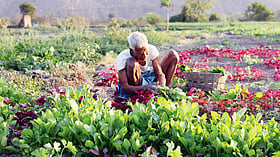
It takes seven to ten years to move from chemical-intensive agriculture to organic — or sustainable — farming. The transition, as this writer has learnt in conversations with tens of thousands of farmers across the country, comes with big risks and massive shocks — sudden drops in production, spikes in labour wages, pest attacks, uncertain inputs...

The consensus is that while productivity stabilises over time, change requires constant guidance and services that are not available in the market. While India has some 400 definitions of organic farming in different regional languages, the agriculture science fraternity has not yet adopted it as a system of production.

By and large, organic farming has spread in India through community-based organisations, NGOs and, in some cases, highly motivated individual farmers, rarely through public institutions or universities.

At first glance, Modi’s proposal to make a big switch to organic farming may seem ecologically sound. The crisis in Indian agriculture is real — farmers have had it rough for decades. Excessive use of chemicals has irreparably degraded soils, contaminated groundwater, reduced biodiversity and trapped farmers in expensive input-intensive systems. Few serious environmentalists would deny the urgent need for more sustainable agricultural practices.

The latest 2026 report by the Research Institute of Organic Agriculture (FiBL) and IFOAM Organics International shows that organic agriculture spans nearly 99 million hectares in over 180 countries, involving 4.8 million producers. The global organic food market has grown to nearly 145 billion. India, with four million hectares, has one of the world’s largest numbers of certified organic farmers, topped by Australia with 53 million hectares.

The report does not consider farmers who practise organic farming but are not certified. In India, for instance, the Participatory Guarantee System (PGS) is used by millions of farmers as a process of certification for domestic consumption, in addition to the third-party certification usually required for export.

In India and worldwide, organic farming is a small fraction of the overall production ecosystem, but it is growing. For instance, India is a leader in organic cotton. Ditto for millets. Millions of small farmers in tribal and lagging geographies use less chemicals and are de facto organic, but not certified by any of the expensive and difficult certification systems.

Note the gap though, between the first and the second. Australia has a systemic approach; India does not. Our problem is policy — or the lack of it. Farmers want to switch away from chemicals, no one needs to preach at them. What they await is policy support to do so.

As G.V. Ramanjaneyulu of the Centre for Sustainable Agriculture (CSA) in Hyderabad, one of the most ardent advocates of sustainable farming practices, puts it: “Farmers have done everything in the past 20 years to increase their incomes and switch to sustainable practices.” They have tweaked their cropping choices, learnt organic practices, invested time and money and shouldered the risks during the transition.

With public institutions and systems overwhelmingly leaning on modern i.e. industrialised agriculture, organic farmers cannot compete in volatile markets.

“It is the Indian Council of Agriculture Research (ICAR) and agriculture universities that must be asked to institutionalise organic farming research and strategy,” he says. “Policy must support the farmers who practise non-chemical agriculture production systems.”

Over 25 years, the CSA has steadily organised farmers in Telangana and Andhra Pradesh under its cooperatives and farmers’ produce companies, helping them switch from chemical to organic or integrated pesticide management systems, under Sahaja Aharam, a brand of its own.

Yet, challenges remain: remunerative prices, access to markets, quality inputs, knowledge support and so on. Ramanjaneyulu says policy hasn’t evolved to support farmers who made the switch; prices, credit flows, input markets remain stagnant; and the science of organic farming has not yet been institutionalised.

“Chemical farming systems have all the pillars in place: public institutions push it, banks and financial institutions support it, and markets latch it up,” he says. For farmers to switch from one system to the other, they need similar pillars. “Who will provide those? What kind of knowledge systems are needed for the switch? These are critical issues that need government backing and strategy.”

A farmer cannot switch to organic farming or stop using chemicals because someone says so. Before the prime minister tells farmers to feel the moral obligation and bear the burden of the transition, he must put policy and systems in place.

The PM (and his cabinet) must answer some of these questions for farmers to practise what he preaches. What is the timeline for the transition? Under which procurement structures? Through what extension systems? What kind of financial support? How are they to absorb transitional yield losses? How will certification be managed? What happens to small cultivators already trapped in huge debt? How will states compensate for lower output during conversion years? Who will bear the economic risk of experimentation?

These are not technical details. They are the difference between grandstanding and implementation.

****

For a sobering lesson, we need look no farther than Sri Lanka. In 2021, the Sri Lankan government abruptly banned the import of chemical fertilisers and aggressively pushed the country towards organic farming. The decision was wrapped up in ecological jargon and national pride.

The results were disastrous. Crop yields fell sharply. Tea production suffered severe losses. Food shortages ballooned. Inflation spiralled. Rural distress deepened.

The lesson from Sri Lanka’s experiment with organic farming is not that it’s impossible or undesirable, but that agricultural practices cannot be altered overnight through executive fiat. These transitions require years of preparation, scientific planning, farmer consultation, market redesign, transition finance and decentralised adaptation to local ecological realities. Many organisations have done the spadework in India. We can learn from their experiences. Sikkim moved to a fully organic model, but farmers in the state did not benefit economically.

Ecological transitions are extraordinarily complex processes that cannot be reduced to moral exhortation from podiums. Agriculture is not theatre. Soil systems do not obey slogans.

Wars disrupt oil supplies, inflation rises, currencies weaken, uncertainty spreads across markets. Prudence, moderation, even austerity can become necessary. But what distinguishes democratic leadership from political theatre is whether sacrifice is evenly shared or selectively imposed.

By now, we know the most reliable way to understand this regime is not to listen to what it says but to observe what it does. For over a decade, structural crises in India have repeatedly been translated into moral obligations for citizens. Recall the prime minister’s exhortations during the demonetisation of 2016 and the COVID-19 pandemic of 2020.

Now, geopolitical instability is being converted into another sermon on austerity instead of a serious national conversation about sustainable agriculture, fossil fuel dependence, resource conservation and ecological repair. That responsibility cannot be delegated downwards to already vulnerable citizens.

Jaideep Hardikar is a senior Nagpur-based journalist and author of Ramrao: The Story of India’s Farm Crisis. Read more by him here
  • ✇National Herald
  • The cow, the carcass and the republic Jaideep Hardikar
    India’s cattle economy is marred by a profound contradiction. The regime that invokes the cow as a sacred symbol and fails to curb vigilante attacks on those who trade in cattle also presides over one of the world’s largest bovine meat export industries, earning billions from exports. It claims to protect rural India but destabilises the economic chain that links farmers, traders, tanneries, transporters and leather workers. Most recently, that contradiction played out sharply in West Bengal ahe
     

The cow, the carcass and the republic

31 May 2026 at 15:19

India’s cattle economy is marred by a profound contradiction. The regime that invokes the cow as a sacred symbol and fails to curb vigilante attacks on those who trade in cattle also presides over one of the world’s largest bovine meat export industries, earning billions from exports. It claims to protect rural India but destabilises the economic chain that links farmers, traders, tanneries, transporters and leather workers. Most recently, that contradiction played out sharply in West Bengal ahead of Eid al-Adha.

Soon after the installation of the new chief minister Suvendu Adhikari, Bengal’s BJP government tightened regulations, effectively restricting the slaughter of cattle below 14 years of age unless certified unfit for breeding or work. The Calcutta High Court declined to stay the order, observing that cow sacrifice is not an essential part of Eid rituals.

Amid fears of harassment, seizures and communal targeting, reports from Bengal’s cattle markets suggest that many Muslim cattle traders and buyers have become overly cautious. Not only are they dissuading cattle breeders from selling their livestock for slaughter, they are turning them down.

Hindu livestock farmers have reportedly complained that weak demand is hurting prices and disrupting rural economies. In some cattle markets in Bengal, buyers are simply not turning up. Having invested money in rearing cows for Eid, many farmers fear ending up in debt. In an economy built on interdependence between Hindu farmers and Muslim cattle traders, fear of retribution from vigilante groups seems to have travelled quickly.

Meanwhile, the meat export business has been thriving.

The billion-dollar contradiction

India officially prohibits the export of cow meat. But buffalo meat — marketed globally as ‘carabeef’ — is one of India’s largest agricultural export sectors.

According to the APEDA animal products export database, India exported more than 1.25 million metric tonnes of buffalo meat in 2024-25 alone, worth over $4 billion, accounting for nearly 80 per cent of all animal product exports. The biggest buyers include Vietnam, Egypt, Malaysia, the UAE and Saudi Arabia.

As per a recent Lok Sabha reply, India has 94 APEDA-registered export-grade slaughterhouses spread across Uttar Pradesh, Maharashtra, Haryana and Punjab.

Vigilantism, however, rarely distinguishes between cows and buffaloes, legal exports and illegal smuggling. Muslims have been killed or thrashed at the mere whiff of a suspicion. The politics around beef obscures the fact that our export industry is overwhelmingly buffalo meat, not cow meat. That ambiguity has led to a thriving export economy in an atmosphere of fear around cattle transport.

Cow vigilantism has become one of the defining social phenomena of the last decade. Data compiled by journalists, rights groups and researchers show that most reported cow-related mob attacks occurred after 2014, with Muslims disproportionately targeted. The date is crucial. That’s when Narendra Modi came to power at the Centre. In 2017, Reuters reported that at least 28 people — 24 of them Muslims — had been killed in cow-related violence between 2010 and mid-2017.

That violence altered the livestock economics.

The broken rural chain

For generations, rural India functioned through a circular cattle economy. Farmers sold ageing or unproductive cattle to traders. Traders supplied slaughterhouses and meat processors. Hides moved to leather clusters. Bones, fat and by-products fed ancillary industries. Selling ageing cattle gave farmers the liquidity to buy seeds, repay loans or survive a bad agricultural season. Cow vigilantism has disrupted that chain, leaving farmers vulnerable in moments of crisis. Mind you, livestock is a reliable liquid asset.

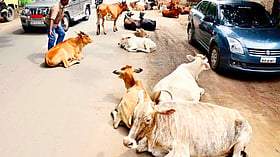
With cow vigilantism galloping across India — save in those BJP-ruled states where eating beef is permitted for political goals — that circular economy began to founder. Transporters no longer move cattle at night. Traders fear highway attacks. In several states, farmers abandon ageing cattle because selling them is too risky. The result is a surge in stray cattle destroying standing crops, especially in Uttar Pradesh.

One of India’s distinguished geneticists and animal scientists, Dr Chanda Nimbkar, argues that Maharashtra’s cow slaughter restrictions have severely distorted the livestock economy. In an illuminating essay in the Marathi daily Loksatta, she urged the lifting of the ban on cattle sale and slaughter to provide relief. ‘Even buffalo traders are increasingly targeted by self-styled gau rakshaks… directly hurting small livestock farmers’.

She is right. Two years ago, Qureshi traders — increasingly under attack in Maharashtra — boycotted the cattle trade in all the major markets of the state (similar to what is unfolding in West Bengal today). Prices of male calves and buffalos plummeted, creating great unrest among farmers and ill will against the state government. Nimbkar writes, if the government can’t control vigilante violence, it must compensate the farmers.

Sales resumed only after mediation, pushback from the farmers and assurances from the Maharashtra government that no harm would come to the traders. Till date, they haven’t returned to normalcy. Economically lagging dry-land areas have been hardest hit by the disrupted cattle trade, which has crippled the small farmer economy and added to their financial woes.

Dr Nimbkar’s critique cuts deeper. She argues that governments subsidise overcrowded gaushalas while denying farmers the economic flexibility to manage unproductive animals. The irony, she notes with frustration, is that indigenous cattle and bull populations in Maharashtra have continued to decline despite aggressive ‘cow protection’ politics, while goat populations — linked to a freer, more flexible market — have risen significantly.

In short, cow vigilantism, patronised by the state’s ruling regime, exposes the fundamental contradiction at the heart of cow politics: laws framed in the name of protection actually undermine both livestock conservation and rural livelihoods.

Few sectors reveal this contradiction more starkly than India’s leather industry which depends on the slaughter economy for hides. Disrupt slaughter, transport and cattle markets, and the leather sector feels the shock almost immediately.

As early as 1950, the Centre had warned states that blanket slaughter bans would hurt India’s tanning industry and exports. Today that warning is proven prophetic.

India’s leather industry employs roughly 4-4.5 million people directly and indirectly, many of them Dalits and Muslims concentrated in tanning, carcass handling, leather processing and footwear manufacturing. Current estimates show the sector contribute roughly $5 billion annually when domestic market value and exports are combined.

In FY 2024-25, the leather industry’s export earnings stood at around $4.8-5.7 billion. The domestic market is even bigger. In 2025, the council for leather exports (CLE) estimated that India’s domestic leather and footwear market was worth about $19 billion with ambitious plans to expand substantially over the next decade.

Major leather clusters in Kanpur, Unnao, Chennai and Kolkata depend on a stable supply of hides. Bengal is one of India’s important leather-processing centres, with Kolkata and Bantala accounting for nearly a quarter of India’s tanning activity. In a state where industry is flagging, a big dent in its leather trade could be fatal.

After cattle trade restrictions intensified in 2017, leather industry bodies warned of falling hide availability and shrinking exports. Industry reports documented declining domestic hide supply as slaughter rates fell and cattle transport became increasingly risky.

The economic logic is brutal: fewer sales devastate farmers, disrupted slaughter reduces hide supply, tanneries slow down, exports weaken, workers lose jobs.

The worst affected are those on the margins — Muslim traders, Dalit leather workers, transporters and informal sector labourers.

Who owns the beef economy?

One of the least discussed aspects of India’s meat economy is that it cuts across religious identities more than politics reveals.

Some of India’s largest buffalo meat exporters are Hindu-owned firms. The export industry itself is not controlled by any one community. Yet public discourse has communalised the entire trade, collapsing distinctions between legal export businesses, local livestock markets and everyday cattle transport.

A single video of vigilante attacks has the potential to cripple transport routes and turn rural markets into communal flashpoints. Entire groups start withdrawing from traditional trades out of fear.

The republic at a crossroads

India’s cattle economy has always involved an uneasy weave of religion, caste, livelihood, agriculture and commerce. But during the Modi regime, it has also become a theatre of nationalism.

The same State that promotes export-oriented buffalo meat production because it earns foreign exchange criminalises and intimidates the people who keep that economy functioning.

The burden falls on the farmer with an unproductive animal he cannot sell; on the transporter waylaid by vigilantes; on the tannery worker without raw hides to cure; on the cattle trader who quits a market out of fear; and on communities learning to mistrust each another in spaces once built on everyday cooperation.

The cow may be sacred in India’s politics. But the economy around it is unholy.

Jaideep Hardikar is a senior Nagpur-based journalist and author of Ramrao: The Story of India’s Farm Crisis. Read more by him here
❌
National Herald