❌

Normal view

Singapore rolls out another S$500 CDC voucher support to help Singaporean households cope with cost-of-living pressures

12 June 2026 at 03:01

SINGAPORE: Singaporean households can now claim another S$500 in Community Development Council (CDC) vouchers, with the government bringing forward support that was initially scheduled for January 2027.

The date was brought forward as Singapore keeps a close watch on rising global costs linked to ongoing tensions in the Middle East. The latest tranche became available from June 11 and is expected to benefit about 1.38 million households.

According to Channel NewsAsia (CNA), the voucher package will cost the government about S$700 million and forms part of efforts to help families manage daily expenses while supporting neighbourhood businesses.

More help arrives ahead of schedule

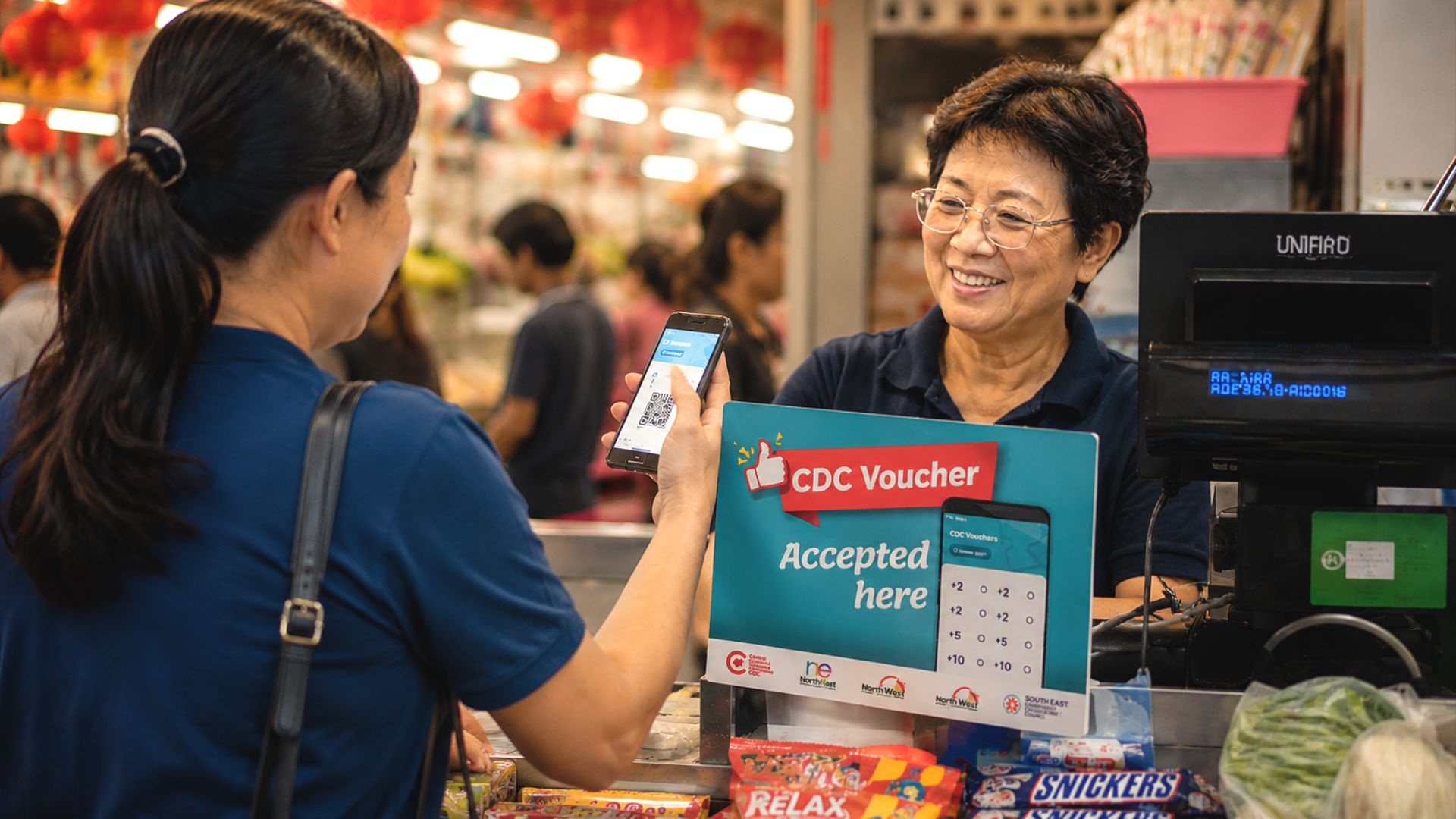
Half of the S$500 vouchers can be spent at participating hawkers and heartland merchants, while the other half can be used at participating supermarkets.

Speaking at the launch, Deputy Prime Minister and Minister for Trade and Industry Gan Kim Yong said the impact of the Middle East conflict has so far been milder than initially feared. However, he noted that the situation is still uncertain and that the government is prepared to step in again if necessary.

Core inflation eased to 1.4% in April, down from 1.7% in March. Even so, higher energy and production costs could still push prices upward in the coming months as businesses absorb higher expenses due to disruptions in global supply chains.

The decision to release the vouchers early demonstrates the government’s concern that global events can affect household budgets in Singapore, particularly through food, transport and utility costs.

Singaporeans continue to use the scheme heavily

The strong take-up rate suggests the voucher scheme has become a regular part of household budgeting for many Singaporeans.

South West District Mayor and Senior Minister of State for Trade and Industry Low Yen Ling said more than 500,000 households had already claimed the vouchers by Thursday evening, just hours after the launch.

Ms Low also noted that 94.5% of vouchers issued in January 2026 had been claimed. About 80% of those vouchers have already been spent, with spending split almost evenly between supermarkets and heartland merchants.

Since the scheme began, Singaporeans have spent more than S$4.64 billion across eight CDC voucher tranches and two SG60 voucher distributions.

Those figures suggest the programme has moved beyond emergency pandemic support and has become a useful tool for easing the cost of living while directing spending towards local businesses.

Hawkers and shop owners see benefits

For many merchants, the vouchers have provided a steady boost in customer spending. Ms Zaheera Rasool, who runs Putris Asia Ghani with her mother in Jurong West, said that dine-in sales have risen significantly since CDC vouchers were introduced.

Ms Zaheera also said supplier costs have increased by around 20% to 30% following developments in the Middle East, though the business has held off raising prices. She believes the vouchers give customers greater confidence to spend on meals outside the home during periods of higher living costs.

Nearby retailer Mr Chinnathambi Muniyandi, who operates Amman Household Supplies, reported similar benefits. He said revenue increased by around 20% to 30% after the scheme was introduced and credited the vouchers for attracting shoppers to participating stores. Like many businesses, he has experienced higher operating costs but hasn’t raised prices yet.

How households can claim the vouchers

One member from each Singaporean household can claim the vouchers through the government’s CDC voucher portal using Singpass. A voucher link will then be sent via SMS and can be shared among household members. The vouchers remain valid until Dec 31, 2027.

CDC Voucher S$500 for June 2026
Nick Karean/The Independent Singapore News
Source: Community Development Council (CDC), June 11, 2026: CDC Voucher S$500

S$500 may or may not significantly affect the finances of many families, but spread across groceries, daily meals and household essentials, it can soften the impact of rising prices. At the same time, the spending flows directly into neighbourhood businesses that continue to face cost pressures of their own.

As global uncertainties persist, targeted support that reaches both households and small businesses is nevertheless one of the more practical ways to ease pressure on everyday Singaporeans.

This article (Singapore rolls out another S$500 CDC voucher support to help Singaporean households cope with cost-of-living pressures) first appeared on The Independent Singapore News.


  • βœ‡The Independent SG
  • Singapore’s cost-of-living squeeze reaches even affluent households: Sun Life Mary Alavanza
    SINGAPORE: The squeeze of the rising cost of living has reached even affluent households in Singapore. According to Singapore Business Review, citing Sun Life Asia’s third β€œFinancial Resilience Index: Asia Navigates Rising Costs” report released on Tuesday (June 9), rising living costs have affected all income groups, including high earners. Among high-net-worth individuals (HNWIs) earning at least S$250,000 a year, nearly eight in 10 (76%) said inflation made it more difficult to cover their mo
     

Singapore’s cost-of-living squeeze reaches even affluent households: Sun Life

10 June 2026 at 15:05

SINGAPORE: The squeeze of the rising cost of living has reached even affluent households in Singapore.

According to Singapore Business Review, citing Sun Life Asia’s third β€œFinancial Resilience Index: Asia Navigates Rising Costs” report released on Tuesday (June 9), rising living costs have affected all income groups, including high earners.

Among high-net-worth individuals (HNWIs) earning at least S$250,000 a year, nearly eight in 10 (76%) said inflation made it more difficult to cover their monthly expenses, while nearly six in 10 (59%) said they would likely need to make moderate to significant changes to their lifestyle if living costs continue to rise.

Still, seven in 10 HNWIs reported feeling financially secure. Nearly three in 10 (27%) also believe they could last a year without income.

The share of highly resilient households in Singapore fell to 21%, from 34% last year. Low-resilience households also more than doubled to 20%, from 9% a year earlier.

Highly resilient households were defined as those that feel financially secure, plan at least five years ahead, are prepared to cope with a financial emergency, consider themselves financially literate, and are confident of meeting their long-term financial goals.

Low-resilience households, meanwhile, tend to feel financially insecure, plan only a few months ahead or not at all, are unprepared for financial emergencies, rate their financial literacy poorly, and lack confidence in achieving their long-term financial goals.

The report also found that only one in 10 respondents feels very secure financially, compared to two in 10 last year.

Rising everyday costs, including groceries (95%), utilities (94%), transport fuel (92%), cooking fuel (91%) and healthcare (91%), remain the biggest concerns among households. Over the past six months, respondents said the costs of food and groceries (80%), utilities (58%) and transport (55%) increased the most.

When asked about their top financial priorities over the next 12 months, they cited daily expenses (55%), retirement savings (44%) and building an emergency fund (37%).

More than half (52%) of respondents also said the rising cost of living remains a barrier to improving their financial control.Β 

While 69% believe having sufficient savings is critical to achieving financial security, only 41% said they could survive without income or external support.

Respondents said they have been cutting back on non-essential spending (54%), tapping into their savings (24%), reducing essential expenses (24%), and pausing retirement contributions (14%) to cope.

Still, those with higher financial literacy were found to be more confident (+44 percentage points) and more optimistic (+41 percentage points) about their financial future, although seven in 10 respondents rated their financial literacy as basic or below basic.

In terms of financial decision-making, 53% use generative artificial intelligence (AI) tools occasionally, with usage expected to rise to 55%. Among HNWIs, 74% already use the tool regularly, while 69% expect to use it more. /TISG

Read also: Netizens say cost-of-living concerns are taking a back seat to politics

This article (Singapore’s cost-of-living squeeze reaches even affluent households: Sun Life) first appeared on The Independent Singapore News.

  • βœ‡The Independent SG
  • Singaporeans share what life is really like on S$10k to S$15k a month Aiah Bathan
    SINGAPORE: Does earning two or three times Singapore’s median income make life feel easy? That was the question one Redditor posed online after wondering what life is really like for people bringing home around two to three times the median take-home pay in Singapore. β€œWhat’s life like in Singapore? Do you also feel the inflation, or does everything feel easy? Would SG feel like Utopia at this point?” the Redditor asked, inviting others to share their experiences. Many commenters were quick to p
     

Singaporeans share what life is really like on S$10k to S$15k a month

13 June 2026 at 19:30

SINGAPORE: Does earning two or three times Singapore’s median income make life feel easy?

That was the question one Redditor posed online after wondering what life is really like for people bringing home around two to three times the median take-home pay in Singapore.

β€œWhat’s life like in Singapore? Do you also feel the inflation, or does everything feel easy? Would SG feel like Utopia at this point?” the Redditor asked, inviting others to share their experiences.

Many commenters were quick to point out that earning two or three times the median income does not make someone β€œcrazy rich.”

Instead, they described it as being financially comfortable, with more flexibility in daily life but not complete freedom from money worries.

One commenter said that regardless of how much people earn, many eventually adjust their lifestyles to match their income.

β€œEarnings increase, lifestyle choices become more premium,” the commenter wrote.

Others said the key is not necessarily how much a person earns, but how much they spend.

One Redditor argued that learning to live below one’s means brings a greater sense of security, adding that even high earners can feel stressed if they spend everything they make.

Another commenter who said they earn around three times the median income shared that they still do not feel rich.

β€œYou don’t have to think so hard about the money you spend. Upgrade. More expensive restaurants. Can afford more extra activities for children. More holidays. Can give parents more,” the commenter wrote.

β€œThat being said, we still count our pennies and live within our means. Money can come in and go the next day. Stay humble and be grateful.”

This article (Singaporeans share what life is really like on S$10k to S$15k a month) first appeared on The Independent Singapore News.

❌
Subscriptions