Normal view

After eight years, Lebanese jeweller says ‘vindicated’ by RM67.5m judgment against Rosmah

12 June 2026 at 01:59

Malay Mail

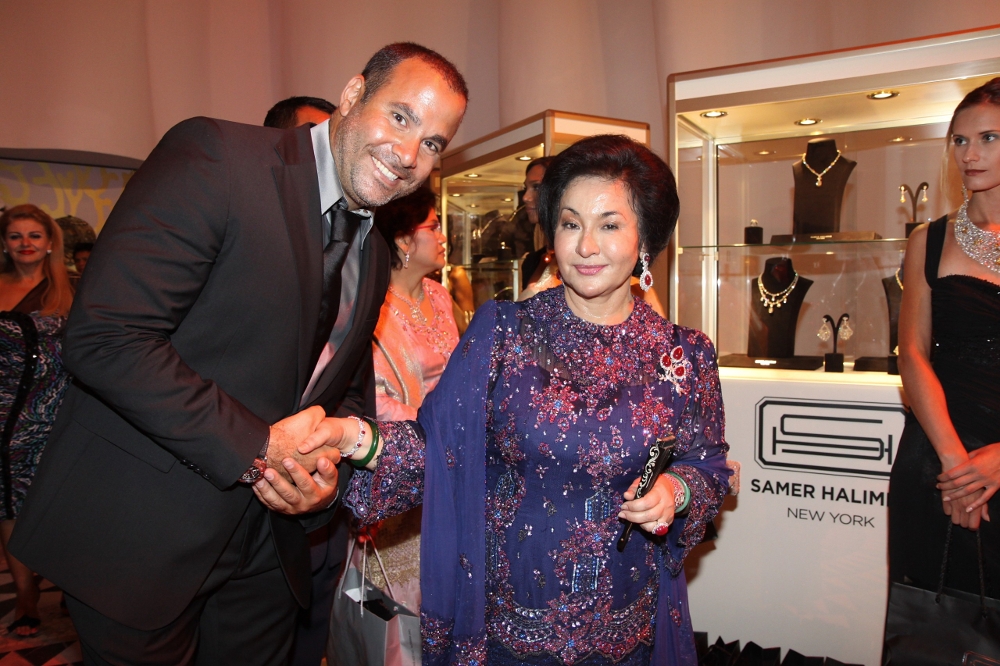
KUALA LUMPUR, June 12 — Lebanese jeweller Samer Halimeh today said he felt vindicated after winning an eight-year legal battle against Datin Seri Rosmah Mansor, whom the High Court ordered to pay RM67.5 million over 43 missing pieces of luxury jewellery.

The founder of Global Royalty Trading SAL described the ruling as proof of the Malaysian judiciary’s independence after years of challenges to both his claim and personal credibility, the New Straits Times reported today.

“I am pleased with the outcome. The Malaysian courts have shown again that they are independent,” Halimeh was quoted as saying.

The 51-year-old businessman said the case had been marked by allegations that the claim was fabricated and attempts to discredit him.

“It took eight years to get to this result, with many hurdles, including negative social media campaigns by certain quarters claiming that the company and the claim were fake,” he was quoted as saying.

Halimeh said he was grateful to his legal team for seeing the case through and hoped the matter could now be resolved.

“Not many people believed I would get justice in Malaysia. Justice has prevailed,” he added.

Last Tuesday, the High Court ordered Rosmah to pay RM67,461,027.37 within a month after finding her liable for failing to return 43 pieces of jewellery supplied on a consignment basis.

Halimeh’s lawyer, Datuk David Gurupatham, said his client would pursue all available legal avenues to recover the award, including bankruptcy proceedings as a last resort.

The dispute centred on 44 pieces of luxury jewellery worth US$14.57 million that Global Royalty said were delivered to Rosmah in 2018 for viewing under a consignment arrangement.

The court found Rosmah had received the jewellery, did not purchase or pay for it, and failed to return 43 pieces.

Only one item – a diamond and emerald bracelet – was eventually recovered and returned to the Lebanese company following separate forfeiture proceedings.

In its ruling, the High Court said Rosmah failed to account for the missing jewellery and did not prove her claim that the pieces had been seized during a 2018 police raid linked to investigations into her husband, former prime minister Datuk Seri Najib Razak.


  • ✇Malay Mail - All
  • When words fail: How anatomical dolls help child abuse victims find their voice in court Kenneth Tee
    PUTRAJAYA, June 10 — For child witnesses, speaking about traumatic abuse experiences in a courtroom setting can be overwhelming and distressing, especially when they struggle to recount important details of what they endured.Enter the anatomical dolls — seemingly ordinary playthings with facial features (including a retractable tongue), limbs, clothing and realistic body proportions, including private parts — used by the Malaysian Judiciary in child witness proce
     

When words fail: How anatomical dolls help child abuse victims find their voice in court

9 June 2026 at 23:00

Malay Mail

PUTRAJAYA, June 10 — For child witnesses, speaking about traumatic abuse experiences in a courtroom setting can be overwhelming and distressing, especially when they struggle to recount important details of what they endured.

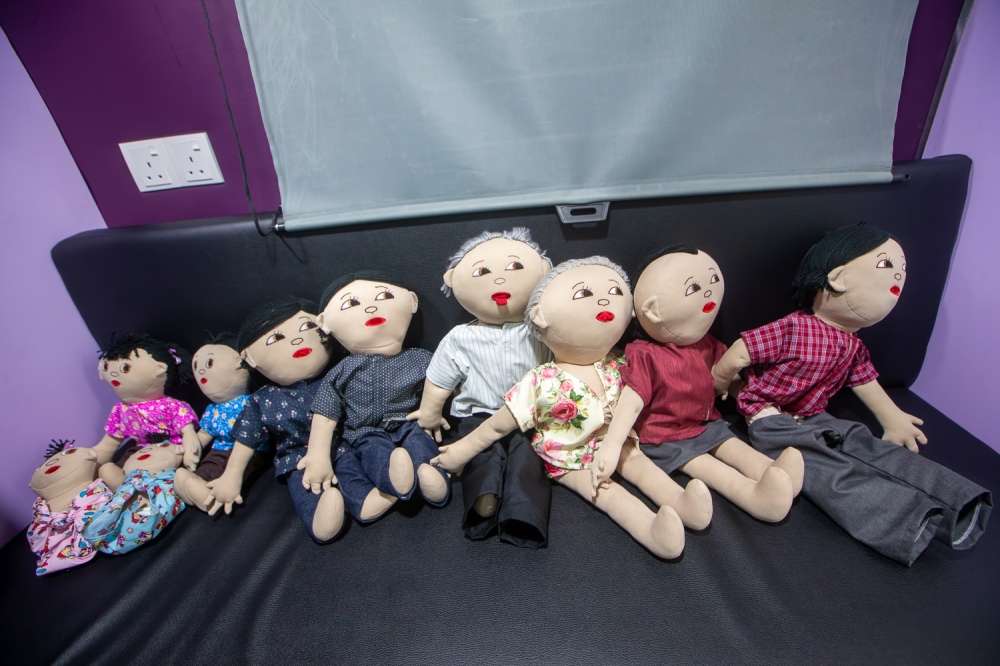
Enter the anatomical dolls — seemingly ordinary playthings with facial features (including a retractable tongue), limbs, clothing and realistic body proportions, including private parts — used by the Malaysian Judiciary in child witness proceedings.

Though unable to speak themselves, these specially tailored anatomical dolls play a crucial role in giving child witnesses a voice when trauma, shyness or limited vocabulary makes verbal testimony difficult.

In almost all cases involving sexual abuse, Registrar of the Subordinate Courts of Malaya Mohammed Mokhzani Mokhtar noted that anatomical dolls tend to play their most important role precisely when language falls short.

“In a psychological course I attended many years ago, we were told that there are almost 80 different names for the male genitalia in Bahasa Malaysia.

“Sometimes children go to court with that knowledge (of euphemistic terms), like they refer to the male genitalia as burung or ‘birdbird’, but they don’t use the correct terminology, right?

“So, instead of explaining it to the court, they explain it by showing, which is what the anatomical doll does,” he told Malay Mail during a recent interview at the Palace of Justice here.

The anatomical dolls feature facial characteristics, including a retractable tongue, as well as limbs, clothing and anatomically accurate body proportions, including genitalia. — Picture by Raymond Manuel

Mohammed Mokhzani explained that prosecutors or judicial officers use the anatomical doll during interviews with child witnesses to indicate where a child was abused, either physically or sexually.

Describing a real-life example, he recalled handling a case involving a five-year-old victim sent to a nursery, whose molestation by the premises owner’s father was communicated through a brushing gesture made using the anatomical doll’s finger, indicating that she had been touched on her private parts.

“We ask the child what their abuser did, and then use the doll to help them narrate or describe their ordeal.”

The child’s account, conveyed through the anatomical doll, is then recorded as evidence and is admissible in court, he added.

While the use of anatomical dolls is not new, Mohammed Mokhzani said each Children’s Court — designated courtrooms that hear sexual offence cases involving children — in every court complex in Peninsular Malaysia is equipped with a full set, totalling five pairs.

Each pair is assigned to a specific age group and comprises both male and female dolls, representing infants, children, teenagers, adults and older persons.

Due to their importance in evidence-taking, he said anatomical dolls are a staple of the Judiciary’s Children’s Mobile Court initiative, with a set also kept in the Victims’ Nexus to Justice (VNEJ) — a specially designed van that serves as a mobile child witness room.

The VNEJ, which forms one of the initiative’s three components, is generally used in proceedings involving sexual offences against minors under the Sexual Offences Against Children Act.

Deputy Registrar Zuhair Rosli demonstrates how the anatomical doll’s retractable tongue works. — Picture by Raymond Manuel

*If you suspect child abuse, call the following hotlines for free and confidential support: Talian Kasih at 15999 or WhatsApp 019-2615999 (24/7); Talian BuddyBear at 1800-18-2327(BEAR) (noon-midnight daily); and One Crisis Centre (24/7) Wilayah Persekutuan at 03-26155555 (Kuala Lumpur General Hospital), 03-61454333 (Sungai Buloh Hospital) or 03-83124200 (Putrajaya Hospital).

Justice’s reach must be long: How mobile courts have helped child victims, witnesses face their fears (VIDEO)

8 June 2026 at 23:00

Malay Mail

PUTRAJAYA, June 9 — Chief Justice Tun Wan Ahmad Farid Wan Salleh once said that justice must reach those who had long stood furthest from its protection, a simple yet enduring belief that the Malaysian judiciary continues to reaffirm today.

The remark, made during his speech at the Opening of the Legal Year 2026, referred to the Mobile Courts initiative launched in circa 2018.

“It was born out of necessity, to serve communities in remote and interior areas where travelling to a courthouse was often an insurmountable challenge, and in places where no permanent court buildings existed,” Wan Ahmad Farid was quoted as saying.

Nearly eight years later, the Mobile Courts initiative has since expanded into the Children’s Mobile Court, reflecting a shared commitment between the Judiciary and the federal government to a fairer, more child-sensitive justice system.

“When it comes to court, everyone feels scared and intimidated, especially children, whether as victims or witnesses.

“Before this, you including the children had to go to court in person but now the court comes to you.

“We don’t want people coming to court and not being able to give their evidence properly because they are intimidated by the building and the proceedings,” Registrar of the Subordinate Courts of Malaya Mohammed Mokhzani Mokhtar told Malay Mail during a recent interview at the Palace of Justice here.

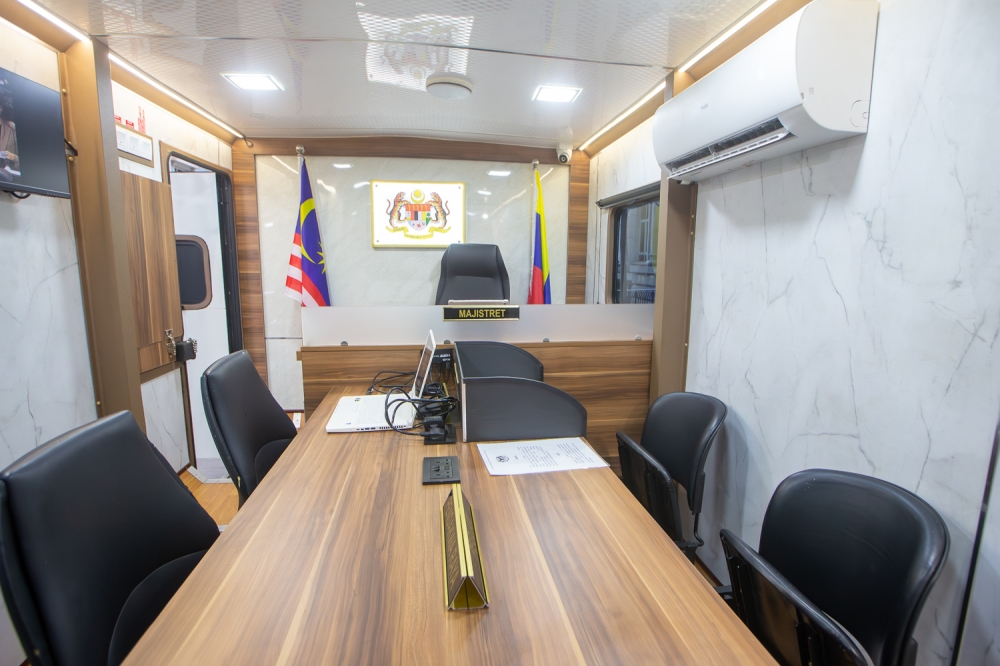
An interior view of the Mobile Court (Mahkamah Bergerak) reveals a fully equipped hearing room, complete with a magistrate's bench, pictured during an exclusive interview with Malay Mail in Putrajaya. May 19, 2026. — Picture by Raymond Manuel

At the heart of the initiative are three components: 

  • The Vehicle for Meaningful Redress (VMR), which safely transports child victims and witnesses
  • The Victims’ Nexus to Justice (VNEJ), where children can testify remotely in a comfortable environment 
  • The Vehicle for Nationwide Justice (VNJ), a courtroom on wheels equipped to hear cases outside conventional court settings.

“Though the feedback is not quantifiable, the information we gathered from our judges and prosecutors indicates it has been favourable.

“The reason is that child victims who attend court and hesitate while giving evidence are now able to complete their testimony without much difficulty.

“I cannot say the quality of their testimony is now better (as compared to in court), but the Children’s Mobile Court has facilitated and eased their anxiety during court proceedings,” Mohammed Mokhzani said.

In essence, the Children’s Mobile Court aims to create a conducive environment — physically, economically and emotionally — for children at every step, from their homes through their journey and into the courtroom.

“Because every time a victim goes to court, it can be a traumatic experience even if they are placed in a separate room from the accused (who may try to make their presence known).

“They go through it once and are then often required to relive it again when giving testimony, so our aim is to reduce that burden and make the process as supportive and least distressing as possible,” he said.

He noted that some families of child victims or witnesses also come from less privileged backgrounds, making trips to court a costly undertaking and the Children’s Mobile Court helps alleviate these costs by bringing court services closer to the children and their families.

An exterior view of the Mobile Court (Mahkamah Bergerak) truck parked outside the court complex in Putrajaya, showcased during an exclusive interview with Malay Mail. May 19, 2026. — Picture by Raymond Manuel

Specially designed

Mohammed Mokhzani said the Judiciary’s Mobile Court primary setup is built around the VNEJ and the VNJ, and is later complemented by the VMR.

The VNEJ — a modified Weststar Maxus V80 multipurpose van — is equipped with daybeds, pillows, books, toys, air-conditioning and anatomical dolls to help children feel more comfortable while giving evidence, particularly in cases under the Sexual Offences Against Children Act.

It also doubles as a child witness room where children can testify via video conferencing during ongoing hearings, or as a temporary child witness room where specially appointed Victim Liaison Officers (VLOs) assist in recording evidence.

Unlike the VNEJ, the VNJ — a modified Isuzu medium-duty truck — is essentially a courtroom on wheels, complete with nearly all the facilities found in a conventional courtroom.

This includes areas for the judge, prosecutors, lawyers, court staff, auxiliary police, the witness and the accused, except for a public gallery due to space constraints.

As the VNJ is a fully functioning courtroom, it may hear cases before a Magistrate, Sessions Court judge or High Court judge, provided all parties consent to its use.

Last but not least, the specially designated VMR — a modified Weststar Maxus G10 multipurpose van — is used to safely transport child victims and witnesses involved in criminal trials to court.

An exterior view of the Mobile Court (Mahkamah Bergerak) truck parked outside the court complex in Putrajaya, showcased during an exclusive interview with Malay Mail. May 19, 2026. — Picture by Raymond Manuel

Not without challenges

While the Mobile Court initiative has had a positive impact since its launch, Mohammed Mokhzani noted that challenges remain, including the need for a stable power supply and reliable internet connectivity to ensure optimal function.

“While both the VMR and VNJ are equipped with their own generators, we prefer an external power source because it will be quieter and cause less disruption,” he said.

Security can also be a concern on certain occasions, as the VMR or VNJ are sometimes parked in public or less secure areas rather than within police stations or court complexes.

Nevertheless, Mohammed Mokhzani expressed the Judiciary’s appreciation to the federal government and the Minister in the Prime Minister’s Department (Law and Institutional Reform) Datuk Seri Azalina Othman Said for allocating RM5 million to procure 15 additional VNEJ units for nationwide deployment.

“The allocation will allow each state to have at least one van, except for Kedah and Perlis, which will share one, while Sabah and Sarawak will each receive two,” he said, adding that the procurement is expected to be completed by year’s end.

He also assured that if children must go through court proceedings, families can be assured that their welfare and protection will be better safeguarded than before.

“With our VLOs and this mobile court, we try to reduce the intimidation level to a minimum.

“It might work or not work, but at the very least we try to do something to alleviate the fear of going to court,” he said.

Registrar of the Subordinate Courts of Malaya, Mohammed Mokhzani Mokhtar, speaks to Malay Mail during an exclusive interview regarding the mobile court and children witness van initiatives in Putrajaya. May 19, 2026. — Picture by Raymond Manuel


❌
Subscriptions