❌

Normal view

  • βœ‡Malay Mail - All
  • Johor rolls out economic plan targeting RM167.4b in investments
    JOHOR BAHRU, June 18 β€” The state government launched the Johor Economic Transformation Plan (JETP) by identifying 83 investment projects across eight priority industries, which are expected to contribute investments worth RM167.4 billion.State Investment, Trade, Consumer Affairs and Human Resources Committee chairman Lee Ting Han said that the industries, which include health and pharmaceuticals, logistics, aerospace, tourism, agriculture, energy, electrical and
     

Johor rolls out economic plan targeting RM167.4b in investments

18 June 2026 at 08:13

Malay Mail

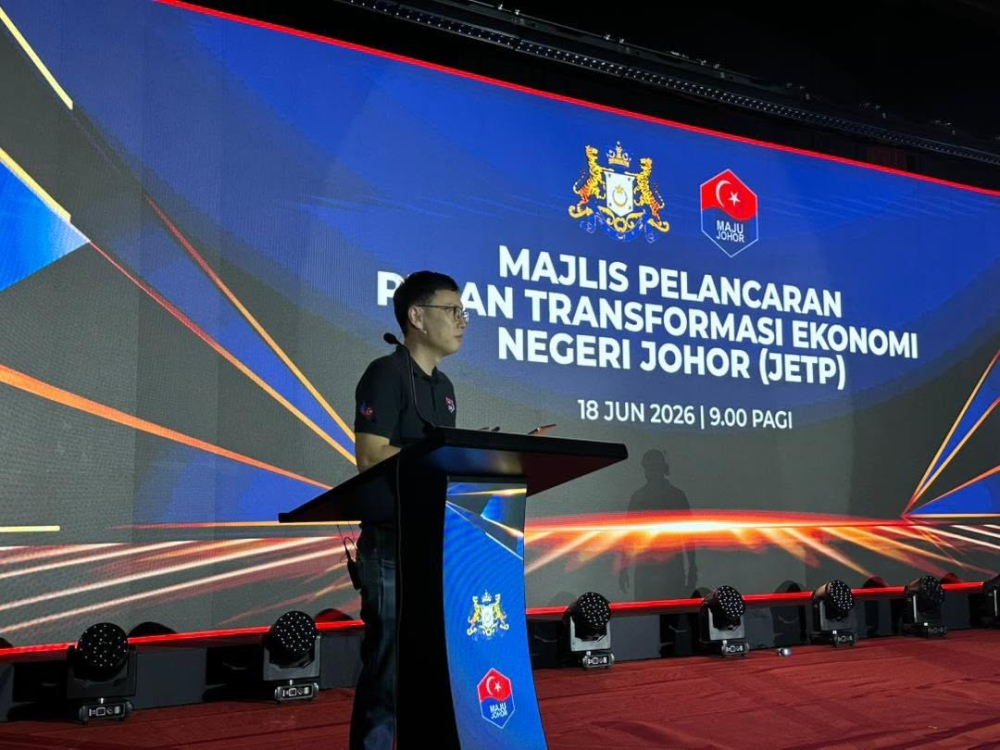
JOHOR BAHRU, June 18 β€” The state government launched the Johor Economic Transformation Plan (JETP) by identifying 83 investment projects across eight priority industries, which are expected to contribute investments worth RM167.4 billion.

State Investment, Trade, Consumer Affairs and Human Resources Committee chairman Lee Ting Han said that the industries, which include health and pharmaceuticals, logistics, aerospace, tourism, agriculture, energy, electrical and electronics, as well as chemicals and petrochemicals, will further elevate Johor’s economy to a higher level.

He said focusing on these industries would strengthen the state’s investment narrative, thereby giving investors confidence in the government’s consistent support.

According to him, JETP is capable of accelerating investment realisation in the state through the implementation of 32 strategic intervention initiatives, which were identified based on key challenges and opportunities raised by stakeholders in the private sector and relevant public agencies.

β€œAll these initiatives have undergone a filtering and prioritisation process to ensure that the state focuses on the most critical interventions. These initiatives are then evaluated based on their economic impact and ease of implementation,” he said while presenting the JETP at the Persada Johor International Convention Centre here today.

Also present were Johor Menteri Besar Datuk Onn Hafiz Ghazi, the Economic and Investment Advisor of Johor Datuk Seri Hasni Mohammad, and President and Chairman of Pemandu Associates Datuk Seri Idris Jala.

Lee said the JETP was introduced to strengthen Johor’s position as the country’s main economic hub and to support the growth of existing and future industries.

The plan, he said, was developed to strengthen the second core of Maju Johor 2030, namely economic development, by focusing efforts on attracting high-quality investments from international and domestic sources, stimulating economic growth through incentives, infrastructure development and a business-friendly environment.

β€œThis plan also aims to empower the workforce with skills and knowledge aligned with industry needs and to create quality job opportunities for the people, in support of inclusive and sustainable economic growth,” he said.

Lee said three main targets were also set under the plan to ensure the state government achieves a gross domestic product (GDP) target of RM260 billion, with an expectation of more than 200,000 new job opportunities by 2030.

β€œThrough the development of high-value sectors, Johor’s GDP per capita is expected to exceed RM69,000 by 2030, with a compound annual growth rate (CAGR) of 7.5 per cent, thus surpassing the threshold of high-income states according to the World Bank benchmark,” he said.

He added that under the JETP, each district will play a strategic role in ensuring more inclusive and balanced economic growth, thereby complementing and strengthening the Johor-Singapore Special Economic Zone (JS-SEZ) through the development of local sector ecosystems. β€” Bernama

Β 

Johor Bahru rail plans raise fear of worsening traffic congestion ahead of JB-SG RTS Link launch due to confusion over ART-LRT plans

9 June 2026 at 12:00

SINGAPORE/MALAYSIA: As the Johor Bahru-Singapore Rapid Transit System (RTS) Link nears its January 2027 launch, attention is shifting from the train itself to another question: how will passengers get around once they arrive in Johor Bahru?

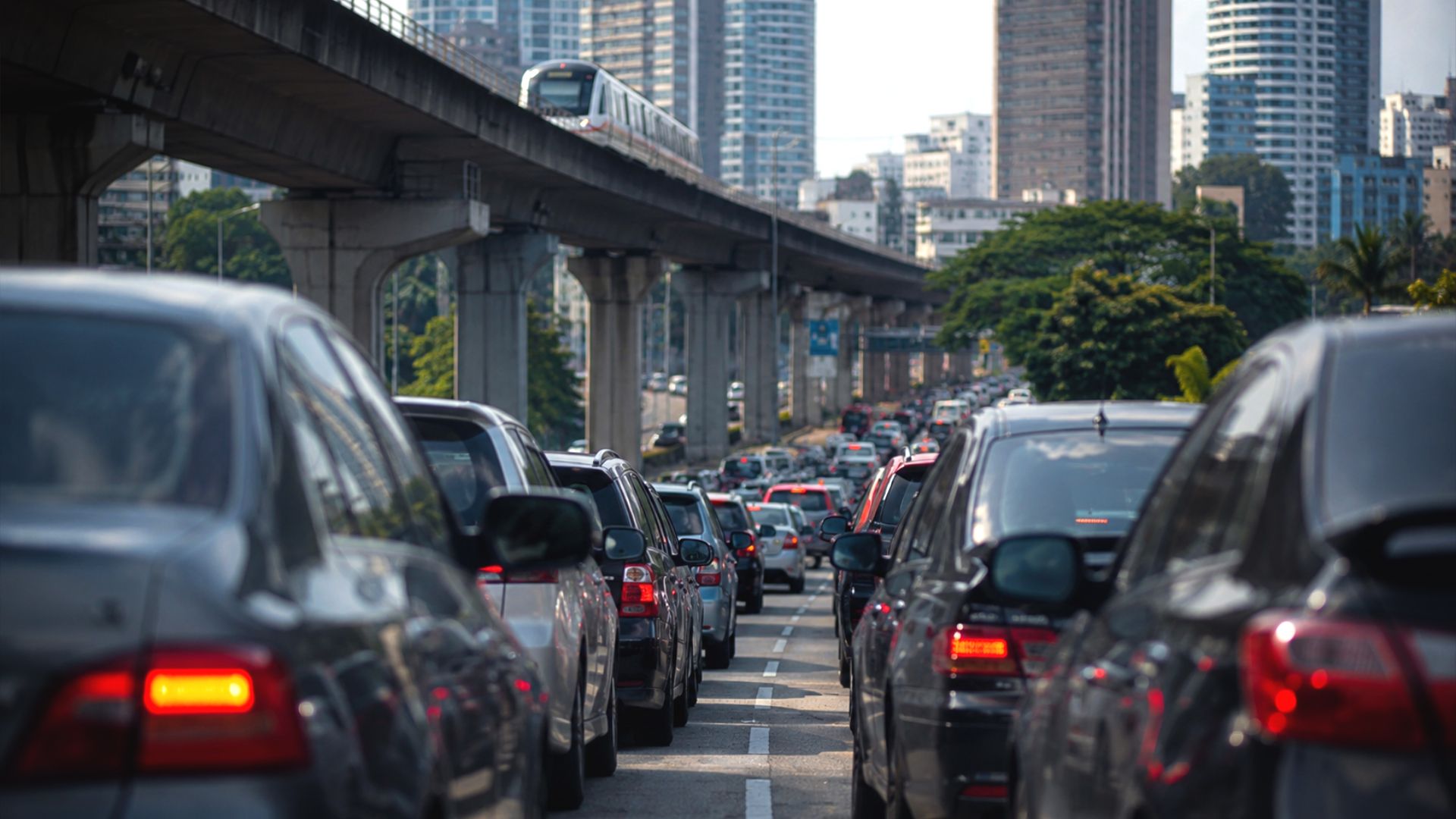
The uncertainty surrounding Johor’s planned feeder rail network has raised growing concerns among transport experts, commuters and politicians. Many fear that without a reliable connection beyond Bukit Chagar station, traffic congestion could simply move from the Causeway to Johor Bahru’s streets.

The debate centres on the RM10 billion (S$3 billion) elevated transit project approved by Malaysia’s Cabinet. The project was originally presented as an Autonomous Rapid Transit (ART) system, a trackless tram-like network designed to connect key parts of southern Johor.

However, according to a June 8 report by Channel NewsAsia (CNA), the winning proposal may instead use a Light Rail Transit (LRT)-style automated people mover system, which has created confusion about the project’s final direction.

Confusion over ART or LRT plans

The lack of clarity has become a talking point among transport specialists. Urban planning expert Samuel Tan questioned whether all bidders were evaluated on the same basis if the project specifications had changed during the process. Others have also raised concerns about transparency and whether competing proposals were assessed fairly.

Transport consultant Rosli Azad Khan said that reports suggesting a shift from ART to a rail-based system represent a major change from the project’s original scope. He argued that authorities should clearly explain how decisions were made and whether the final design meets Johor Bahru’s long-term transport needs.

The Malaysian Transport Ministry and Prime Minister’s Department didn’t respond to CNA’s questions on whether the project will ultimately proceed as an ART or LRT system.

RTS Link may expose a bigger congestion problem

The RTS Link itself is expected to be a major improvement for cross-border travel, carrying up to 10,000 passengers per hour in each direction between Johor Bahru and Singapore. Yet experts say the train is only one part of the journey.

Many Johoreans live in areas such as Tebrau, Skudai, and Pasir Gudang. Without efficient feeder transport, commuters could face long waits, packed buses, or traffic jams after leaving the station.

Infographic map showing Johor Bahru's proposed elevated Autonomous Rapid Transit (ART) network, including the Skudai, Tebrau and Iskandar Puteri lines converging at JB Sentral and connecting to the Johor Bahru-Singapore RTS Link at Bukit Chagar, as the map highlights key locations such as Taman Ungku Tun Aminah, Taman Molek, Taman Mount Austin, Medini and Woodlands North, alongside an illustration of the planned integrated transit development
Nick Karean/The Independent Singapore News
Proposed elevated ART network linking Johor Bahru to RTS Link and key growth corridors

Analysts warned that adding more buses may provide temporary relief but is unlikely to solve bigger transport issues. Buses would still have to navigate some of Johor Bahru’s busiest roads, where congestion is already common.

Transport analyst Nasser Ismail described the challenge as a β€œlast-mile connectivity” problem. While the main rail link may be ready, connections to residential areas remain limited.

A key issue ahead of the Johor elections

The issue has also become politically sensitive. Johor’s state assembly was dissolved on June 1, setting the stage for elections within 60 days. Analysts believe transport infrastructure, alongside cost-of-living concerns, could become a major campaign issue.

For many residents, the concern is practical rather than political. Some commuters already struggle to find parking near border transport hubs and worry that passenger numbers will rise sharply once the RTS Link opens.

The discussion goes beyond trains and traffic. It raises another question of whether infrastructure planning can keep pace with the growing economic ties between Johor and Singapore, especially as the Johor-Singapore Special Economic Zone (JS-SEZ) is expected to increase cross-border movement.

Getting the connections right

The RTS Link promises a faster, more comfortable border crossing; few people would dispute that, but the real test begins after passengers step off the train.

If commuters can quickly reach their homes, workplaces and towns, the project could transform daily travel. If not, Johor Bahru may find itself dealing with a new version of an old problem, and we certainly don’t want that.

As election season approaches, many residents seem to be looking for a clear plan, a realistic timeline and transport links that work beyond the station.

This article (Johor Bahru rail plans raise fear of worsening traffic congestion ahead of JB-SG RTS Link launch due to confusion over ART-LRT plans) first appeared on The Independent Singapore News.

❌
Subscriptions