Normal view

  • ✇Malay Mail - All
  • Chief Justice: Public trust is judiciary’s most valuable asset, must be earned
    KUALA LUMPUR, June 19 — Public trust remains the judiciary’s most valuable asset and must be earned through integrity, accountability and consistent conduct, said Chief Justice Tun Wan Ahmad Farid Wan Salleh.Drawing on the legacy of former Chief Justice Tun Zaki Azmi, he said institutional leaders must be prepared to make difficult decisions and work to leave behind stronger, more trusted institutions for future generations.“Public trust is not inherited or assum
     

Chief Justice: Public trust is judiciary’s most valuable asset, must be earned

19 June 2026 at 07:40

Malay Mail

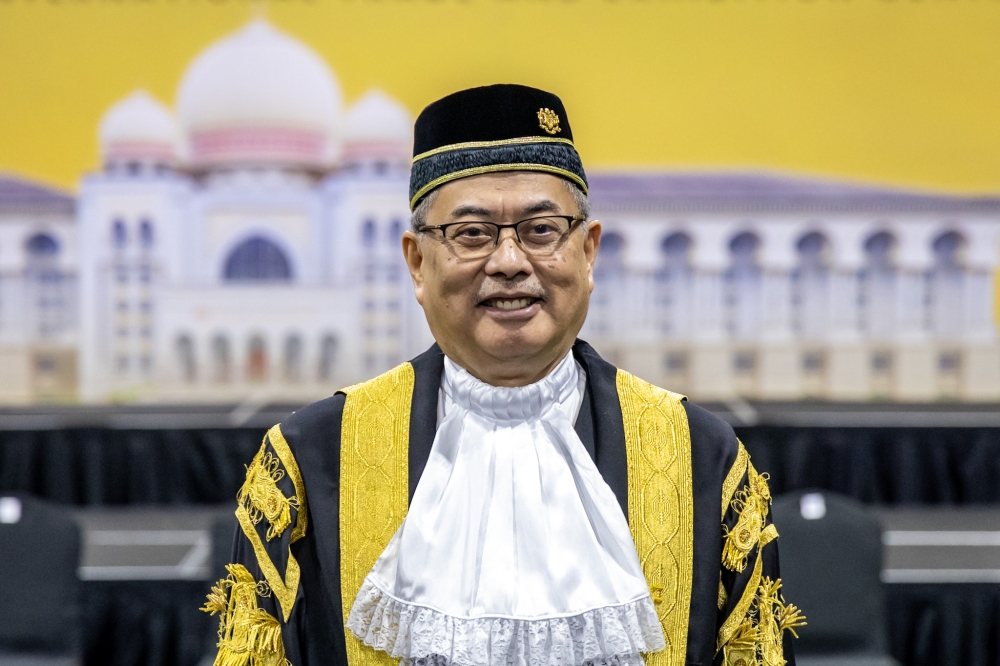
KUALA LUMPUR, June 19 — Public trust remains the judiciary’s most valuable asset and must be earned through integrity, accountability and consistent conduct, said Chief Justice Tun Wan Ahmad Farid Wan Salleh.

Drawing on the legacy of former Chief Justice Tun Zaki Azmi, he said institutional leaders must be prepared to make difficult decisions and work to leave behind stronger, more trusted institutions for future generations.

“Public trust is not inherited or assumed, but earned gradually through consistent conduct and integrity in judicial outcomes across every level of the court system.

“He (Tun Zaki) earned it, he protected it and he left this institution more worthy of it than he found it,” he said in his speech at the inaugural Tun Zaki Azmi Lecture titled ‘Leading with Courage, Stewarding Justice’ at the Asian International Arbitration Centre (AIAC) here today.

The nation’s top judge said that everyone entrusted with leadership responsibilities should recognise the value of their contributions, noting that decisions made behind the scenes, often under pressure and without recognition, play an important role in strengthening institutions.

“I want to say this to every person in this room who carries a responsibility, who has felt the weight of institutional leadership, who has asked themselves whether they are leaving things better than they found them: your work matters.

“The decisions you make in quiet rooms, under pressure, without applause, matter. And the wisdom you have built through those decisions is not yours alone to keep. It belongs to us. To this community. To the next generation of leaders who will inherit what we build here, and who deserve to inherit something worthy of their dedication,” he said.

Elaborating on the objectives of the lecture series, he said the Tun Zaki Lectures on Leadership and Stewardship and the Leadership and Stewardship Research Initiative were intended to promote meaningful dialogue on leadership and develop practical scholarship relevant to the realities of institutional leadership.

“The Tun Zaki Lectures on Leadership and Stewardship are not a ceremonial series. They are a serious, sustained effort to create a living dialogue between those who have led and those who are preparing to lead, to bring experience and principle into conversation with each other, in a space that takes both seriously.

“Meanwhile, the Leadership and Stewardship Research Initiative will do the longer, deeper work alongside it, building scholarship that is rigorous, honest, and directly relevant to the realities of leading institutions under pressure. Not theory for its own sake, but knowledge we can actually use and pass on,” he said.

The public lecture platform is named in recognition of the sixth Chief Justice of Malaysia, Tun Zaki Azmi, for his continuing contributions to leadership, stewardship and institutional responsibility, and serves as the founding platform for the Leadership and Stewardship Research Initiative.

The Leadership and Stewardship Initiative is a long-term platform dedicated to advancing leadership, stewardship, governance and public trust.

Founded on the belief that leadership lessons should be preserved and shared, the initiative seeks to capture the wisdom of distinguished leaders and transform it into lasting knowledge for future generations. — Bernama
 

Singapore and Malaysia strengthen cross‑border dispute‑resolution links with twin MOUs, says minister

4 June 2026 at 08:08

Malay Mail

SINGAPORE, June 4 — The deepening cooperation in alternative dispute resolution (ADR) between Singapore and Malaysia highlights the strong ties in legal and dispute resolution communities, said Singapore Minister for Law and Second Minister for Home Affairs Edwin Tong. 

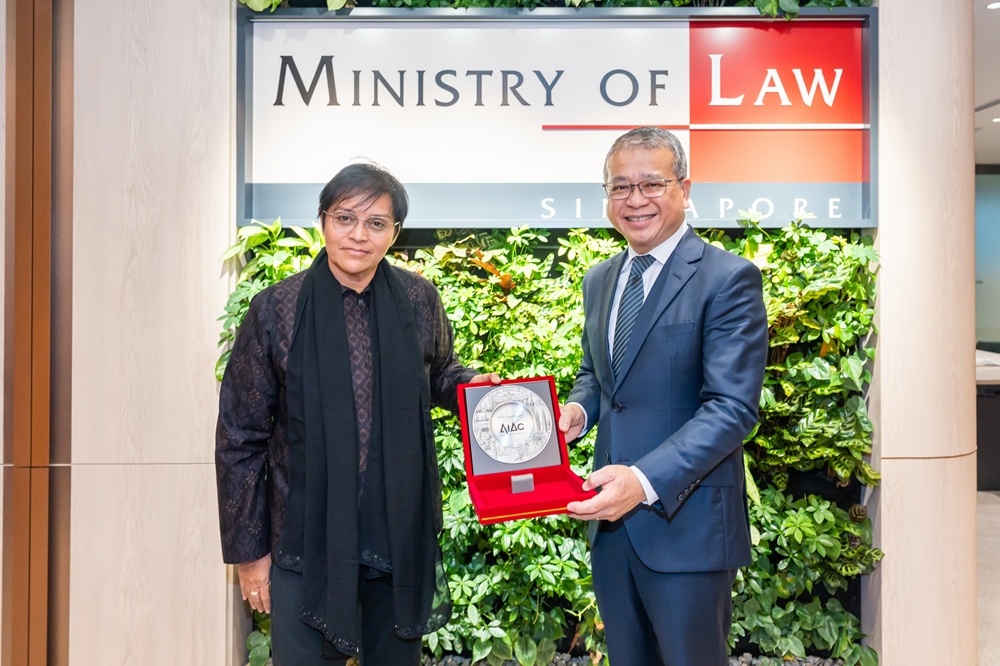
The enhanced collaboration was formalised yesterday through the signing of two memoranda of understanding (MOUs) between the Singapore International Arbitration Centre (SIAC) and the Asian International Arbitration Centre (AIAC), and between the Singapore International Mediation Centre (SIMC) and AIAC.

Tong said the MOUs also project a shared commitment to providing businesses and investors with trusted, efficient, and effective avenues for resolving disputes. 

“As cross-border trade and investment continue to grow, collaboration between dispute resolution institutions becomes increasingly important. 

“These partnerships will create more opportunities for exchanges, knowledge-sharing, and joint initiatives, while strengthening the region’s dispute resolution ecosystem,” he said in a statement yesterday. 

The signing of the MOUs was witnessed by Tong and Malaysia’s Minister in the Prime Minister’s Department (Law and Institutional Reform) Datuk Seri Azalina Othman Said after their meeting in Putrajaya.

The MOUs build on discussions between the two ministers on the sidelines of the Commonwealth Law Ministers Meeting in Fiji in February 2026, where they explored ways to deepen bilateral cooperation in dispute resolution services.

“At today’s meeting, Tong and Azalina reaffirmed the close and enduring relationship between Singapore and Malaysia. 

“They discussed areas of mutual interest, including the Johor-Singapore Special Economic Zone, the Singapore Convention on Mediation, and strengthening people-to-people ties,” said Singapore Ministry of Law. — Bernama


  • ✇Malay Mail - All
  • Is your child bullying others? New law makes parents legally responsible, says Azalina
    KUALA LUMPUR, June 16 — Parents may now be held legally liable for acts of bullying committed by their children under the Anti-Bullying Act 2026, which introduces the concept of shared family responsibility.Minister in the Prime Minister’s Department (Law and Institutional Reform) Datuk Seri Azalina Othman Said said the provision is among the key reforms under the Act, extending accountability for bullying misconduct beyond the perpetrator to family members.She s
     

Is your child bullying others? New law makes parents legally responsible, says Azalina

16 June 2026 at 08:32

Malay Mail

KUALA LUMPUR, June 16 — Parents may now be held legally liable for acts of bullying committed by their children under the Anti-Bullying Act 2026, which introduces the concept of shared family responsibility.

Minister in the Prime Minister’s Department (Law and Institutional Reform) Datuk Seri Azalina Othman Said said the provision is among the key reforms under the Act, extending accountability for bullying misconduct beyond the perpetrator to family members.

She said the approach differs from most criminal offences, which typically involve only the offender. 

In contrast, the Anti-Bullying Act incorporates an element of shared responsibility that may bind family members, including in relation to the payment of fines imposed.

“Under this Act, we have included a clause on parental responsibility. As such, matters such as the payment of fines and related penalties will also be binding on the family. We are transferring liability, or imposing joint liability, on the family,” she said.

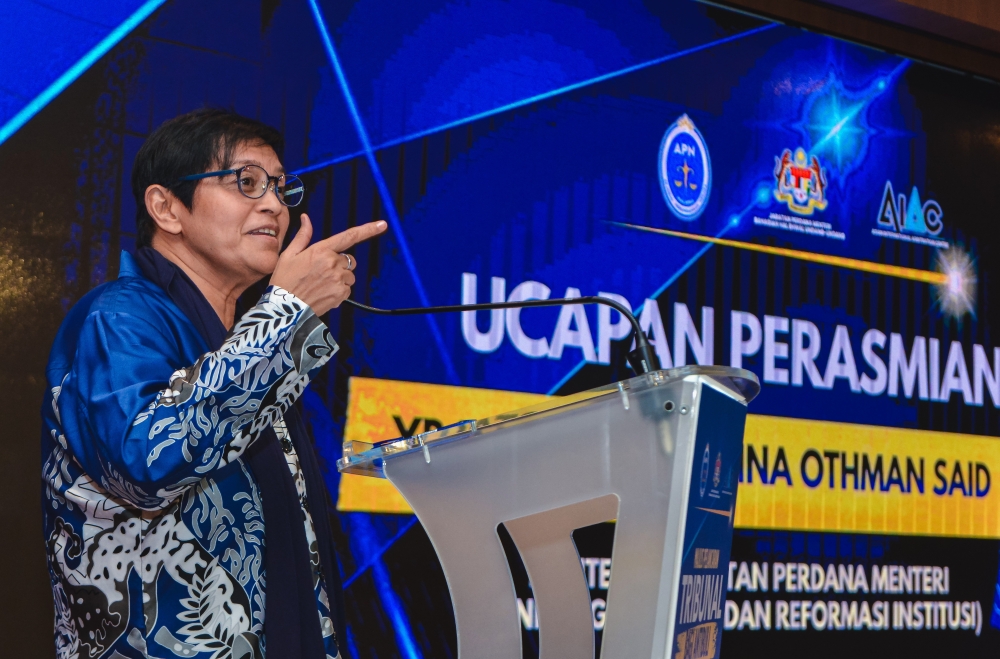
She told reporters this after officiating the launch of the Anti-Bullying Tribunal headquarters at the Asian International Arbitration Centre (AIAC) here today, which was also attended by Majlis Amanah Rakyat (MARA) chairman Datuk Dr Asyraf Wajdi Dusuki.

Azalina said the establishment of the Anti-Bullying Tribunal was driven by the alarming rise in bullying cases and their serious consequences, including incidents resulting in loss of life.

“We want to raise awareness among children about the seriousness of bullying and the fact that action can be taken through this channel. They must not regard bullying as a trivial matter,” she said.

A total of 56 tribunal members, comprising legal experts and specialists in child-related fields, have been appointed to handle cases referred to the tribunal.

According to her, the tribunal headquarters will operate from the AIAC, although proceedings may be conducted nationwide, including at schools, Legal Aid Department offices or online.

To broaden access to justice, six physical and virtual hearing zones have been established nationwide by optimising existing facilities under the Legal Affairs Division (BHEUU), the Insolvency Department, the Legal Aid Bureau and unused courtrooms.

She said victims also have the right to bring cases directly before the Anti-Bullying Tribunal if incidents occur outside school or hostel premises, without having to go through the management of the institution concerned.

To facilitate the submission of complaints, the tribunal has also established a public portal that allows cases to be registered online at https://tab.bheuu.gov.my/. — Bernama 

❌
Subscriptions