Regulator approval means patients who meet criteria will be able to purchase tablets with private prescription
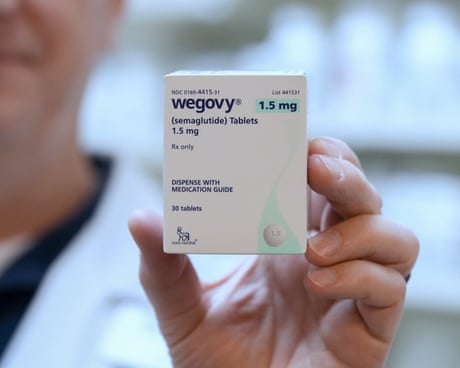
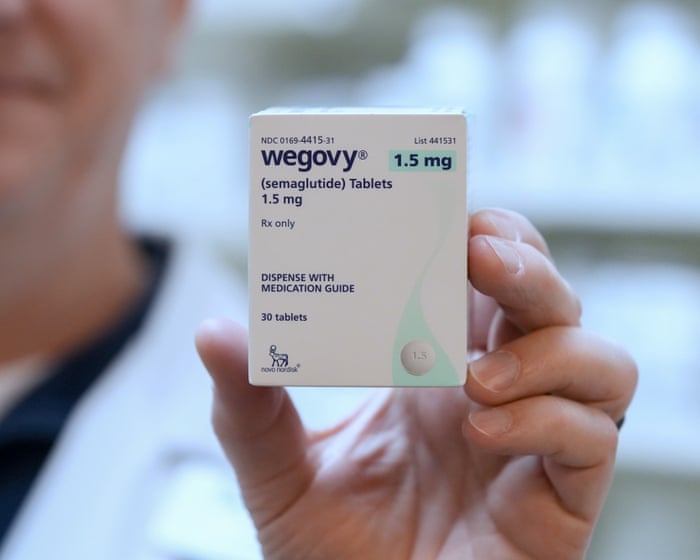
Patients in the UK will soon be able to buy the Wegovy weight-loss pill, the medicines regulator announced on Thursday.
It is the first GLP-1 receptor agonist tablet for weight-loss to be approved by the Medicines and Healthcare products Regulatory Agency (MHRA), making the UK the third country to authorise the pills, behind the US and the United Arab Emirates.
SINGAPORE: A 52-year-old Singaporean woman has been sentenced to four years in jail after allowing her 15-year-old son to regularly smoke methamphetamine and providing him with the equipment needed to do so.
The sentence, handed down on June 5, comes after the court heard that the boy had been using the drug every two to three days for several months while living with his mother and stepfather. The couple supplied him with methamphetamine and left drug paraphernalia within easy reach in their home, Channel NewsAsia (CNA) reports.
To protect the victim’s identity, none of the individuals involved in this case may be named.
How the curiosity of a teenager turned into regular drug use
Court documents showed that the boy first became aware of the drug utensils in January 2025 after spotting them in a sink at home. Curious about what they were, he asked his mother. She told him they were used for smoking methamphetamine.
Over the following months, the teenager began using methamphetamine frequently, smoking it once every two to three days, using utensils that had been left openly in the living room.
The mother later admitted that she and her husband had provided both the drugs and the equipment needed to consume them.
Court stresses duty of parents
Deputy Public Prosecutor Etsuko Lim argued that the case called for a strong deterrent sentence because it involved a child under the age of 16.
The prosecution said the woman wasn’t merely negligent. Instead, she actively supplied drugs to her son over a period exceeding five months and enabled his growing dependency.
District Judge Brenda Choo agreed. In sentencing the woman, Judge Choo said children rely on their caregivers for protection and safety. In this case, the adults responsible for the boy had done the opposite by exposing him to drugs and allowing him to consume them.
The judge also noted that the offence was serious because the teenager had ready access to both the drugs and the paraphernalia supplied by the adults in the household.
Drug exposure and legal consequences
The woman was also convicted of consuming methamphetamine herself. The court heard she had been using the drug since 2022, with her usage becoming more frequent over time. By the time of her arrest in June 2025, she was taking methamphetamine once or twice a week.
Her husband and the boy’s stepfather were arrested in the same operation. His case remains before the courts.
Singapore’s drug laws impose heavy penalties on adults who expose children to controlled drugs or drug paraphernalia. Those convicted of knowingly leaving such items accessible to children can face up to 10 years in jail, a S$20,000 fine, or both.
Cases involving youth and drugs usually focus on enforcement. This one centred on something more fundamental: the role of parents. When the people meant to safeguard a child instead encourage harmful behaviour, the consequences can stretch far beyond a courtroom sentence.
Weight-loss drugs are saving users’ households more than £400 a year on grocery bills, according to a survey, which found use of GLP-1s has nearly tripled in the past two years to 1.9 million adults.
More than 6.3% of households in Great Britain now include at least one GLP-1 user, according to the research by Worldpanel by Numerator. This marks a sharp rise from 4.1% of households in 2025 and 2.3% in 2024.
Transnational organised crime groups have diversified their drug trafficking routes and methods of smuggling to evade detection and bring multi-million Euro drugs consignments to Europe, according to the latest EU drugs report.
NEW YORK, June 10 — Use of GLP-1 drugs for diabetes or obesity early in the first trimester of pregnancy, before a woman realises she is pregnant, is not a cause for alarm, a large new data analysis suggests.
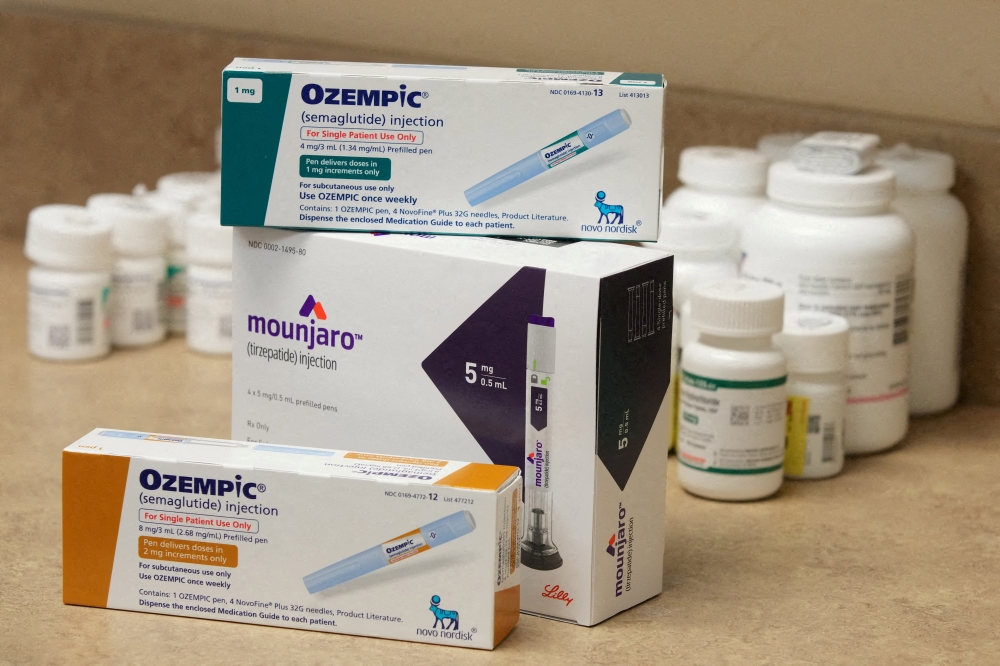
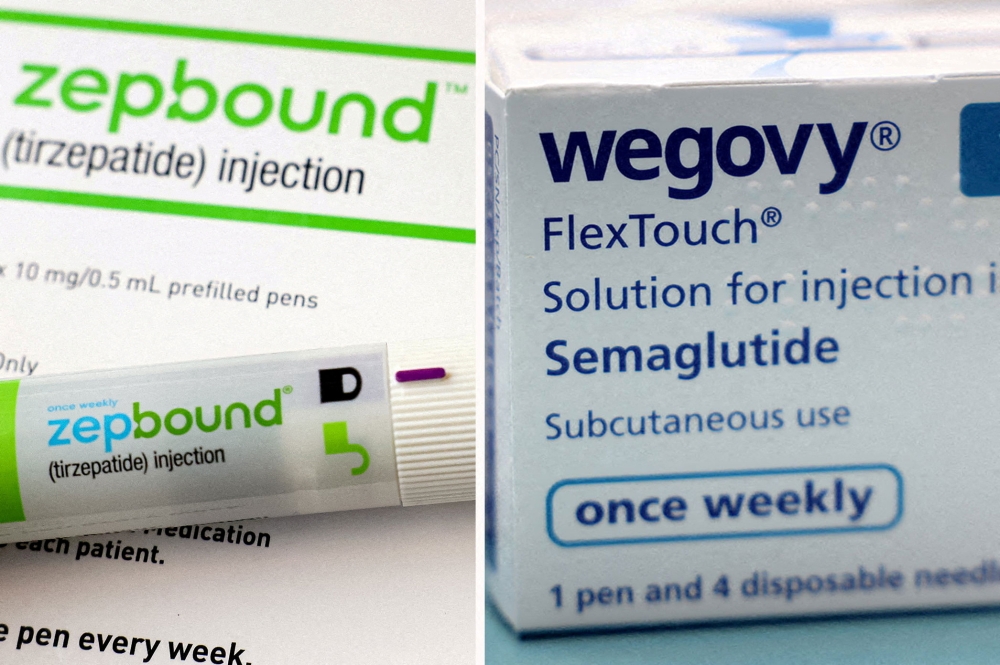
These medications, which include Novo Nordisk’s semaglutide, sold as Ozempic and Wegovy, and Eli Lilly’s tirzepatide, sold as Zepbound and Mounjaro, are not recommended for use during pregnancy because their safety for the fetus is unknown and animal studies have suggested potential risks.
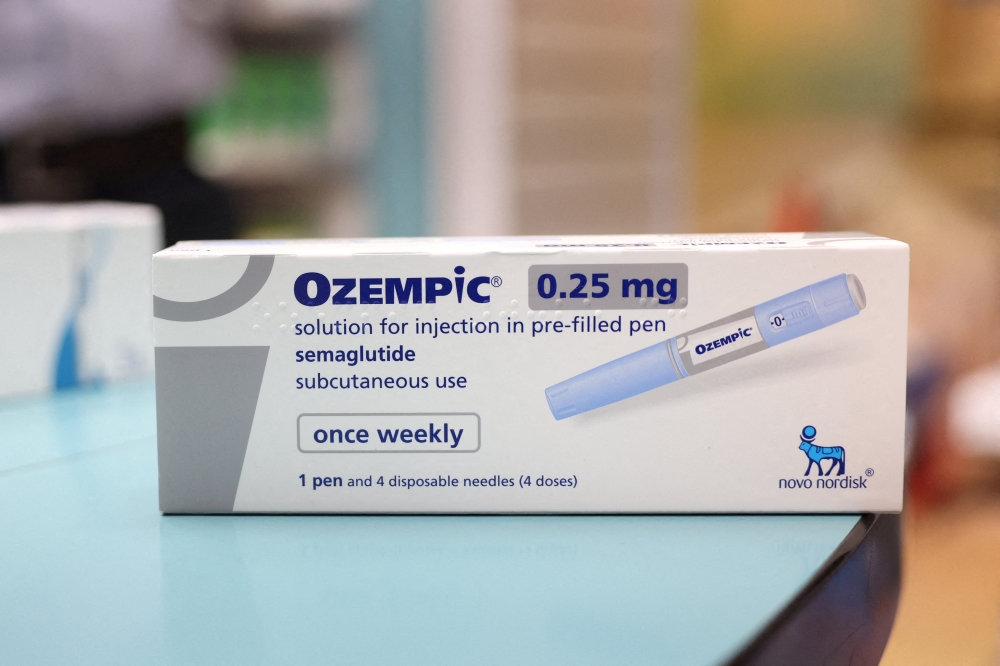
A box of Ozempic made by Novo Nordisk is seen at a pharmacy in London March 8, 2024. — Reuters pic
Researchers at the Harvard T.H. Chan School of Public Health analysed 3,572 pregnancies in women who were taking GLP-1 drugs prior to conception, including 1,467 in women with type 2 diabetes. They looked at outcomes that occurred with continued GLP-1 use into the first trimester, comparing them to non-continuation of the medicines.
After taking individual risk factors into account, the risk for non-live birth was 29.7 per cent with medication continuation versus 27.1 per cent with non-continuation, a difference that was not deemed statistically significant.
Staying on the drugs also did not appear to substantially increase the risks for low or high birth weight or major congenital malformations, although estimates for these outcomes were imprecise.
As GLP-1 use among women of reproductive age becomes more prevalent, “this provides some reassurance regarding unintentional exposure to GLP-1s early in pregnancy,” said study leader Dr. Jeremy Brown.
GLP-1 drugs can improve fertility in some obese women through weight reduction and enhanced insulin sensitivity. — Reuters pic
GLP-1 drugs can improve fertility in some obese women through weight reduction and enhanced insulin sensitivity. In addition, tirzepatide in particular has been found to compromise the absorption of oral contraceptives, which can contribute to accidental pregnancy.
Medical guidelines advise stopping GLP-1 drugs at least one or two months before pregnancy, and “our study cannot on its own change such recommendations,” said Dr. Sonia Hernandez-Diaz, senior author of the report published in Annals of Internal Medicine.
It is not possible to guarantee the drugs are safe, but women who used them before discovering they were pregnant needn’t panic, she said.
“Based on accumulated evidence, it does not seem like GLP-1 drugs when used during the months after conception increase the risk of common (adverse) outcomes substantially. That is as much as we can tell right now, which is reassuring,” Hernandez-Diaz said.
“The message would still need to be for pregnant women and those planning pregnancy to follow the label and their clinicians’ advice regarding GLP-1 when pregnant or planning pregnancy,” she said. — Reuters
Health Secretary Robert F. Kennedy Jr. and podcaster Joe Rogan look on as President Donald Trump shakes hands with W. Bryan Hubbard, CEO of Americans for Ibogaine, during an executive order signing ceremony in the Oval Office on April 18, 2026. | Jim Watson/AFP via Getty Images
The Trump administration has a surprising new agenda item: It’s all-in on legalizing a psychedelic drug called ibogaine.
Ibogaine is classified as a Schedule I drug, which means it’s illegal on the federal level. But some studies show it may be able to treat opioid addiction, and researchers are also hopeful that it can help with PTSD.
It’s that second use that has caught the White House’s ear. Veterans and veterans’ groups have been lobbying hard for ibogaine as a way to treat PTSD and traumatic brain injuries. Last month, they made some headway on that project when President Donald Trump signed an executive order to fast-track the Food and Drug Administration review process.
Mattha Busby, a freelance journalist writing about drug policy and other topics, told Today, Explained guest host Jonquilyn Hill that, naturally, podcaster Joe Rogan was also involved. Busby spoke with Hill about what ibogaine does, how the right got into psychedelics, and whether the FDA could soon approve some of them for use.
Below is an excerpt of their conversation, edited for length and clarity. There’s much more in the full episode, so listen to Today, Explained wherever you get podcasts, including Apple Podcasts, Pandora, and Spotify.
When did Trump become interested in psychedelics?
Well, he’s famously never smoked a cigarette, had a drink, certainly not had a trip. So in the Oval Office the other week, he’s kind of joking about taking ibogaine. There’s a lot of bravado there, but ibogaine is an incredibly potent psychedelic. It famously gives people sort of recalls of every traumatic moment in their life.
It’s an extracted molecule from a West African — Gabonese, specifically — root bark from a shrub, and basically became known as being able to rid opioid addicts, heroin addicts, of withdrawal symptoms in one trip.
Ibogaine and psychedelics have now entered the mainstream conversation with the Trump administration talking about legalizing certain psychedelics. How did we get here?
Psychedelics have obviously long belonged to the cultural left, the counterculture, but it seems now there’s almost like a counter-counterculture with these right-wing, mostly Christian former special forces fighters, soldiers in the US Army, that are suffering from really debilitating conditions — from PTSD and [traumatic brain injuries] — and they’ve basically figured out that ibogaine and other psychedelics provide them the relief that conventional medicines don’t.
How is Joe Rogan involved in the policymaking here?
He’s had figures talking about psychedelics on his podcast since it began. The original sort of bro-cast dude, Aubrey Marcus, he’s had the former Texas governor and Trump’s first energy secretary, Rick Perry, on his podcast twice, along with a Kentucky lawyer and ibogaine advocate named Bryan Hubbard, who sounds like a Christian Southern revivalist and always quotes his favorite passage out of Isaiah.
Joe Rogan had this unlikely duo — who have both done ibogaine and are waxing lyrical about the benefits — on his podcast like three weeks before the executive order and they basically said, “Look, Joe, we need to make this happen.” So Joe texts Donald Trump, and apparently Donald Trump responds almost instantaneously saying, “Sounds good. Do you want FDA approval?”
This culminates with Joe Rogan actually going to the White House to attend the signing of an executive order about psychedelics. What’s in that executive order?
“But we shouldn’t be under any illusions. This is a seriously potent and dangerous psychedelic when used improperly.”
The thing about the executive order is it is sort of shouting into the wind a bit, but there is this money to go into the research side.
It has five or six prongs. One of the main ones is that now under [the Right to Try Act] that Trump [signed] in his first term to allow end-of-life patients to try experimental drugs. That will be extended to psychedelics, so long as the DEA doesn’t try and obstruct that process.
There’s $50 million for psychedelic research, most of which it seems is going to support state-led initiatives to investigate ibogaine and allow a US-first human trial. It’s also accelerating the path to a potential approval for psychedelic drugs. Three candidates that just submitted their data got fast-tracked for potential approval, so their applications will be considered more quickly. This would open the floodgates more widely to research.
Do you expect the FDA to say, “This is great, go ahead, use psychedelic drugs, they will help you.”
It’s quite likely really, within this presidency, to see several psychedelic drugs approved now. There was talk about [Joe Biden] setting up a federal task force and helping stuff along, and he didn’t seem to put any political will behind it. Trump has really seized the mantle here and he’s surfing the zeitgeist, as he weirdly seems to be able to on certain topics, all the while outraging and provoking us along the way.
There does seem to be some dissonance here, though. The GOP traditionally was all about the war on drugs.
There’s a lot of dissonance. I think that broadly, we’re seeing the war on drugs coming to an end little by little, despite the rhetoric, and I think this is a significant threshold moment.
Trump’s always been kind of outside the Republican Party establishment compared to some previous presidents. It is not like it’s been some sort of topsy-turvy issue. The Democrats, when they’ve come in, there have been piecemeal changes. Joe Biden himself introduced the law when he was a senator to make the punishments for crack cocaine, which is more likely used by people of color, is like 30 times more stringent than for powder cocaine, which is used more often by white people. I think that there’s been a bipartisan war on drugs.
Do we know who’s using psychedelics?
I think the interesting thing with psychedelics now, as opposed to maybe 10 or 15 years ago, is that they’ve crossed the political divide. A lot of people from unexpected segments of society are getting turned on because they are seeing, broadly, the benefits, even while there are serious risks, especially with ibogaine.
There was only one drug named in that executive order: ibogaine. Why?
The veterans. These stories from veterans about the transformative effects of ibogaine have been really difficult to refute politically. Twenty-two veterans, on average, are committing suicide in the US every day. And Trump in the Oval Office, when he signed the order, said that “Since 9/11, we’ve we’ve lost over 21 times more veteran lives to suicide than on the battlefield.”
There are so many [representatives] and senators who are veterans themselves. There was a study from Stanford a couple of years ago that looked at 30 ex-special forces [soldiers] and found that a dose of ibogaine reduced all of their traumatic brain injury significantly.
But we shouldn’t be under any illusions. This is a seriously potent and dangerous psychedelic when used improperly, and there’s been a whole spate of deaths. Indeed, the deaths are probably underreported because the drug disrupts the QT interval in the heart and can lead in some cases to fatal cardiac arrest.
Hong Kong Customs seized around 31 kilograms of suspected cannabis buds in Tuen Mun on Tuesday and arrested a 33-year-old man.
Suspected cannabis buds, with a total estimated market value of about HK$6 million, were seized on May 19, 2026, by Customs. Photo: GovHK.
The value of the suspected cannabis was estimated to be around HK$6 million, according to a government press release on Wednesday.
During Tuesday’s anti-narcotics operation, officers stopped a suspicious man and found he was carrying 20.5 kilogrammes of suspected cannabis buds in two canvas bags.
Customs and Excise Department. Photo: Kelly Ho/HKFP.
“Customs officers then escorted the man to an industrial unit in Tuen Mun for a search and found about 10.5kg of suspected cannabis buds and a batch of drug packaging paraphernalia in the unit,” the press release said.
The suspect was charged with two counts of trafficking in a dangerous drug and will appear at the Tuen Mun Magistrates’ Courts on Thursday.
Those found to have trafficked a dangerous drug face a maximum penalty of HK$5 million and life imprisonment.
The Food and Drug Administration (FDA) is moving ahead with a safety review of the abortion pill mifepristone, according to an administration official. The move marks a victory for anti-abortion groups that could pave the way for the Trump administration to restrict its use and how it can be distributed. The retrospective analysis of data...
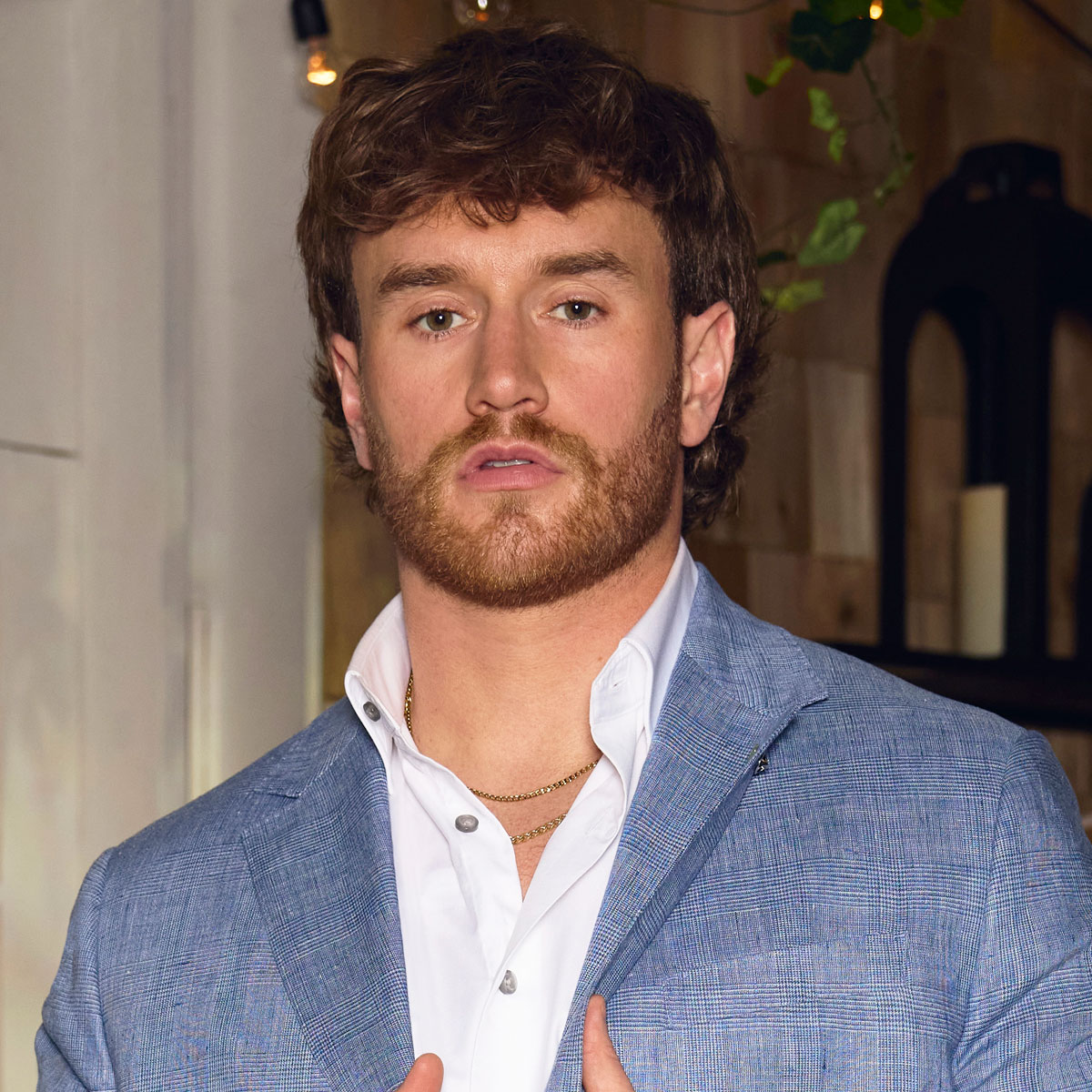
As the Summer House reunion heated up, West Wilson remained cool, calm and collected.
Which is why after fans pointed out that West seemed shockingly serene while being grilled about the fallout...
The Mexican military captured Audias Flores Silva, alias ‘El Jardinero’, on Monday – one of the top leaders of the Jalisco New Generation Cartel (CJNG).
Flores Silva was considered to be one of the key candidates to succeed alias ‘El Mencho’, the former leader of the CJNG who was killed by authorities in February.
The drug lord’s arrest comes amid a wider crackdown by Mexican security forces against organized crime, driven partly by pressure from Washington.
According to authorities, Monday’s operation did not involve any shooting, injuries, or collateral damage. The military deployment included 120 direct action troops, four close air support helicopters, four fixed-wing aircraft, and two troop transport helicopters, with 400 naval personnel providing support.
The CJNG leader’s more than 60-strong escort group dispersed in different directions upon the arrival of security forces, attempting a tactical distraction maneuver, but the target was located through air and ground tracking.
Official footage of the operation shared by Omar García Harfuch, Secretary of Security and Citizen Protection of Mexico, shows the moment of the capture, with Flores Silva extracted from a roadside drainage conduit, where he was hiding. The arrest happened near El Mirador, a rural community in the western state of Nayarit.
Hours after the news became public, several stores and vehicles were set on fire across Nayarit. While the unrest fell short of the level of retaliation following the killing of ‘El Mencho’ in February 2026, the Government of Nayarit urged citizens to stay in their homes as a preventative measure.
A major blow to CJNG
The arrest was praised by the U.S. Ambassador to Mexico, Ronald Johnson, who congratulated Mexico’s Security Cabinet and Secretary of the Navy.
In 2021, the U.S. Drug Enforcement Agency offered a US$5 million reward for information leading to Audias Flores Silva’s arrest or conviction. Flores Silva was defined as “closely aligned” with former CJNG leader ‘El Mencho’, whose real name is Nemesio Oseguera Cervantes.
In June 2025, the U.S. Department of the Treasury’s Office of Foreign Assets Control (OFAC) sanctioned Flores Silva, identifying him as a CJNG regional commander in charge of significant portions of territory in the states of Zacatecas, Guerrero, Nayarit, Jalisco, and Michoacán.
According to U.S. authorities, Flores Silva was in control of clandestine laboratories producing methamphetamine and other illicit drugs in central Jalisco and southern Zacatecas. In addition, Silva managed the logistics of cocaine trafficking operations from Central America through Mexico to the United States, including the supervision of several clandestine airstrips.
‘El Jardinero’ was also believed to have coordinated a deadly 2015 attack against Mexican police forces in Jalisco that left 15 agents dead.
Flores Silva’s arrest is a hard hit to CJNG, as security analysts considered him a potential successor to the group’s command after the death of ‘El Mencho’ last February.
“Flores Silva was the closest thing the CJNG had to a chief operating officer, the man who once ran Mencho’s personal security, managed the Pacific corridor’s labs and airstrips, oversaw a timeshare fraud network and U.S. money-laundering pipeline, and brokered the alliance with Los Chapitos after the Sinaloa civil war,” Chris Dalby, director of World of Crime and senior analyst at Dyami Security Intelligence, told Latin America Reports.
Authorities dealt a second blow to CJNG yesterday when the Special Forces of the Mexican Army and the National Guard detained César Alejandro N, alias “El Güero Conta”. He was identified as the main financial operator for ‘El Jardinero’ and accused of laundering money through companies and frontmen.
“Losing Silva alongside his financier on the same day hits the CJNG operationally and financially simultaneously. It doesn’t spell an end to the CJNG, however, and may actually help Juan Carlos Gonzalez Valencia secure leadership by removing a rival,” said Dalby.
Featured image description: Wanted poster for Audias Flores Silva, alias ‘El Jardinero’.
Featured image credit: Omar García Harfuch via Facebook.
Three people are facing charges after Winnipeg police seized over $140,000 worth of goods, including high-end jewelry and clothes, from various homes last month.

 Login
Login







 As the Summer House reunion heated up, West Wilson remained cool, calm and collected.
Which is why after fans pointed out that West seemed shockingly serene while being grilled about the fallout...
As the Summer House reunion heated up, West Wilson remained cool, calm and collected.
Which is why after fans pointed out that West seemed shockingly serene while being grilled about the fallout...