Reading view

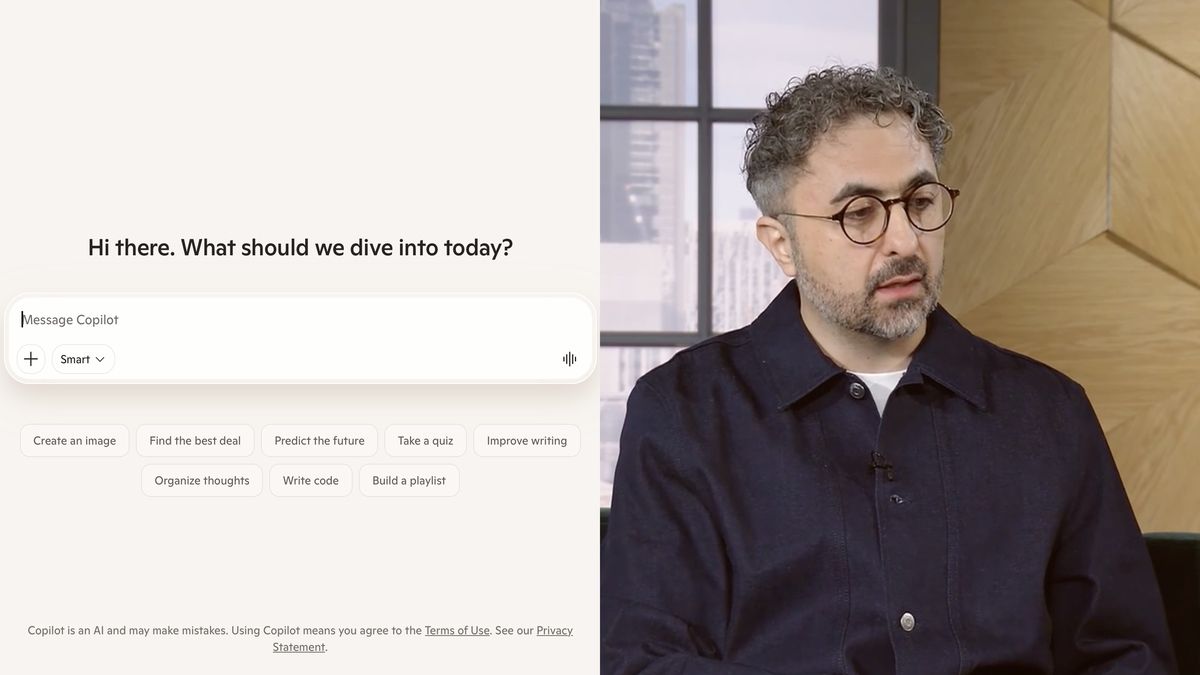
Microsoft Copilot draws backlash after AI chief says AI would soon automate white-collar jobs within 18 months

Microsoft Copilot has drawn backlash after Microsoft artificial intelligence (AI) CEO Mustafa Suleyman predicted that within 12 to 18 months, most tasks in white-collar work would be fully automated by AI—jobs where people are “sitting down at a computer.”

He described such roles as “either being a lawyer or an accountant or a project manager or a marketing person” in a conversation with the Financial Times earlier this year.

In the same interview, when asked about AI hallucinations and whether they could ever be fully eliminated, he said he believed they would be “largely eliminated,” saying the technology had improved at an “unbelievable” rate.

Instead of getting convinced, netizens, however, poked fun at “how well Copilot is going”. One commenter even quipped: “Copilot is obviously where he got this information from.”

Another called the tool “useless,” saying, “Copilot output takes me more time to correct than if I were to just do it myself.” Others, meanwhile, compared it to rival AI tools on the market, including Claude.

Backlash against AI tools like Copilot has recently pushed top tech executives to soften earlier claims about the technology’s ability to replace jobs. While AI primarily benefits tech companies, including Nvidia, Nvidia CEO Jensen Huang told CNA last month that CEOs who blame AI for job cuts are “just too lazy” and do it to “sound smart,” but they only end up “scaring people.” /TISG

Read also: MOM: AI is ‘augmenting but not replacing’ jobs; no indication of significant job displacement due to AI ‘at this point’

This article (Microsoft Copilot draws backlash after AI chief says AI would soon automate white-collar jobs within 18 months) first appeared on The Independent Singapore News.

  •  

Singapore retrenchments rise in Q1 as degree holders and older workers face sharper impact

Malay Mail

SINGAPORE, June 15 — Retrenchments in Singapore climbed in the first quarter of 2026, with higher‑educated and older workers experiencing a more pronounced increase as companies continued restructuring efforts across key sectors.

CNA reported that layoffs rose to 3,830 between January and March, up from 3,690 in the previous quarter, with the Manpower Ministry (MOM) attributing most job cuts to organisational restructuring rather than cost‑cutting. The incidence of retrenchment among degree holders jumped from 2.6 to 3.1 per 1,000 resident employees — the highest across all education groups.

Older workers aged 50 to 59 also saw a rise in retrenchment incidence, from 2.8 to 3.1 per 1,000. MOM said the trend reflects ongoing adjustments in professional, financial and manufacturing industries, which remain sensitive to global conditions and technological shifts.

Despite the uptick, overall retrenchment incidence remained within non‑recessionary norms at 1.6 per 1,000 employees. Professionals, managers, executives and technicians (PMETs) continued to face the highest incidence among occupational groups, holding steady at 2.6 per 1,000.

Labour market resilience persisted in other areas. The share of retrenched residents who found work within six months improved to 60.7 per cent, up from 57.4 per cent previously. Manpower Minister Tan See Leng said the quicker re‑entry into employment was encouraging, even as workers navigate uncertainty linked to economic headwinds and the rise of artificial intelligence.

MOM’s report also incorporated, for the first time, data on AI’s impact on jobs. While a minority of firms adopting AI reported reduced hiring or headcount, a larger share redesigned roles instead. About 85 per cent of workers using AI tools reported productivity gains and better work quality.

Employment growth slowed, rising by 9,400 in Q1 compared with 17,700 in Q4 2025. The moderation was driven mainly by weaker non‑resident employment in construction and manufacturing. Resident employment, however, expanded more quickly than in the previous quarter, supported by gains in administrative support, travel‑related services, transportation and public administration.

Job vacancies fell to 73,300 in March from 77,700 in December, though vacancies continued to outnumber jobseekers. Unemployment rates remained stable at 2 per cent overall.

More firms turned to short work‑weeks or temporary layoffs — 1,230 employees were placed on such arrangements, the highest since late 2021. MOM said these measures suggest companies are using reduced hours to manage manpower needs rather than resorting to retrenchments.

Resignation rates also hit historic lows, with workers opting to stay put amid global uncertainty. Recruitment rates similarly dipped, reflecting cautious hiring sentiment.

MOM expects labour conditions to stay resilient but warned that firms may remain conservative in hiring and wage decisions if global risks persist.

  •  

‘You cannot work at all from home?’: Redditors slam manager after employee requests leave for appendix surgery

SINGAPORE: People online are criticising a manager in Singapore after an employee shared on Reddit that they feel unsure about taking 14 days of hospitalisation leave, because their manager seems unhappy with the idea.

In a post on the r/askSingapore forum, the employee explained that they had been experiencing “persistent stomach pain” and that a doctor had advised them to undergo a “laparoscopic appendectomy” — a minimally invasive procedure to remove an inflamed appendix.

“I’m lucky it hasn’t ruptured yet. My doctor told me I need not be warded, just some discomfort for a few days after. He said he will give me 14 days of hospital leave to rest up.”

However, when the employee told their manager about the situation and asked for two weeks off, the manager reportedly replied: “Wah, 14 days so generous ah, you cannot work at all from home?”

“By right, if I feel better a few days after surgery already, should I work from home? Manager sounded like I am going to skive over a small surgery, and I am afraid it is going to leave a bad impression. Is taking 14 days of hospital leave too much?”

The employee added that this wasn’t the first time this occurred. Last year, when they had “fever, chills, and other symptoms of COVID,” they had also asked for five days off.

“When I took 5 days off for COVID last year, I said I would wfh when I was better. Day 3 he sent a message asking where are we on this task I was working on, the task was non-urgent by the way.”

“Don’t work from home even if you feel better.”

In the comments, readers criticised the manager for being “annoying,” “toxic,” and lacking sympathy for his employee.

One wrote: “Huh? If your doctor’s view is that you should take 14 days, you should take 14 days. Tell your manager that it is your doctor’s professional opinion that you should take 14 days!! If your recovery is impeded by lack of rest, how? Your company is going to compensate you, is it??”

Another advised the employee to ignore the manager’s remarks, pointing out that employees are entitled to hospitalisation leave.

They said: “Do note you are entitled to 60 days of hospitalisation leave. This is not your 14 days of MC, which is the one for flu/cough/whatever. Please just take the hospitalisation leave and rest. No work should be done. Your manager got a problem; you escalated to HR. As an HR person, I also don’t want you to be working if you’re on hospitalization leave.”

A third commenter urged the employee not to delay the operation, writing: “I suggest that you do the surgery because if your appendix ruptures, then it would require a more complex surgery and longer rest period.”

A fourth remarked: “What a bad manager.”

A fifth added: “If the doctor gave you hospitalisation leave, just take it because you’re supposed to rest. They don’t give it out for fun one la. Don’t work from home even if you feel better—medical leave for a legit reason is your entitlement.”

According to the Ministry of Manpower (MOM), eligible employees covered by the Employment Act who have served their employer for at least three months are entitled to paid hospitalisation leave.

Employees who have served for three months are entitled to 15 days of hospitalisation leave, while those who have served four, five, and six months are entitled to 30, 45, and 60 days, respectively.

Read also: ‘I’m not your lifetime meal ticket’: Man wants to cut mum’s allowance after nearly 20 years to focus on marriage

This article (‘You cannot work at all from home?’: Redditors slam manager after employee requests leave for appendix surgery) first appeared on The Independent Singapore News.

  •  

Only 2 in 5 Singapore employers offer flexible work even though jobseekers consider it a priority

SINGAPORE: While Singapore workers are placing a growing premium on flexibility and work-life balance, many employers have yet to fully meet those expectations, according to Indeed’s latest Global Talent Report.

The study found that only 40 per cent of employers in Singapore offer flexible schedules for agile roles, while 42 per cent provide remote work options. The findings come as more job seekers show a preference for working arrangements that give them greater control over their time and personal lives.

Compared with the global average, job seekers in Singapore place a stronger emphasis on workplace flexibility. More than a third of respondents, 38 per cent, said flexibility and greater control over their schedules would be the main reason they would consider agile work. Another 35 per cent cited improved work-life balance as their key motivation.

When asked what would make agile roles more appealing, 64 per cent pointed to flexible schedules, while 60 per cent said remote work options would increase their interest.

Saumitra R Chand, Career Expert at Indeed, said the results highlight an opportunity for employers to better align their workforce strategies with changing employee priorities.

“The findings suggest there is a meaningful opportunity for employers in Singapore to better align workforce strategies with evolving employee expectations,” Ms Chand said, “Workers are increasingly open to more flexible ways of working, but they are still looking for stability, clarity and trust from employers.”

The report also found growing interest in alternative career paths among Singapore professionals. Although only 15 per cent of respondents currently consider themselves agile workers, 60 per cent said agile roles are attractive. This surpassed the 52 per cent who said traditional employment arrangements appeal to them.

Researchers also identified a gap between employers and employees when it comes to internal mobility. While 40 per cent of employers said they look within their organisations to fill agile roles, only 12 per cent of job seekers said they actively seek agile opportunities with their current employer.

Artificial intelligence is emerging as another area where employers and workers appear to be moving at different speeds.

Singapore employers were among the strongest adopters of AI tools for workforce planning and agile work arrangements. Just 10 per cent said they are not using AI in support of workforce agility. In contrast, 35 per cent of job seekers said they are not using AI for similar purposes.

Views differed sharply on AI’s impact on career opportunities, as well. Eight in 10 employers believe AI is helping to create more high-paying agile roles, but only 42 per cent of job seekers share that view.

The findings are based on a global survey of 10,283 respondents. In Singapore, the study included 503 job seekers and 100 employers.

This article (Only 2 in 5 Singapore employers offer flexible work even though jobseekers consider it a priority) first appeared on The Independent Singapore News.

  •  

‘Complete nonsense’ — Jensen Huang rejects the need for global workers to fear AI-driven job losses, says more software engineers will be needed

TAIWAN: Artificial intelligence (AI) may be portrayed as a threat to jobs for many workers around the globe at present times, but NVIDIA Chief Executive Officer (CEO) Jensen Huang believes that fear is simply overblown.

Speaking at Computex 2026 in Taipei, Huang pushed back against claims that AI will lead to widespread unemployment among software engineers. He described the idea that AI is reducing jobs as “complete nonsense” and argued that the technology is having the opposite effect. Instead of shrinking workforces, companies are hiring more engineers to take advantage of AI’s growing capabilities.


Huang’s remarks coincide with a growing effort by businesses across the globe to integrate AI into products, services and daily operations, raising ongoing questions about how the technology will restructure the workforce.

AI’s profitability is making engineers more productive

Huang’s argument centres on productivity. He said software engineers who use AI effectively can now produce far more work than before. Rather than making engineers obsolete, that increase in output makes them more valuable to employers.

Huang estimated that the world’s 30 to 40 million software developers, who collectively earn around US$3 trillion (S$3.85 trillion) in annual salaries, are now generating roughly three times as much productive output with the help of AI tools.

From his perspective, higher productivity creates more business opportunities. As companies discover new products and services they can build, they need more engineers to develop and maintain them.

He suggested that employers would only reduce hiring if overall output remained unchanged. Instead, businesses are expanding because AI is allowing them to do much more.

AI has become a business tool, not just an experiment

Huang also argued that AI has reached a turning point. He pointed to the rise of “agentic AI,” systems that can perform tasks using tools such as web browsers, spreadsheets and coding platforms with limited human input. Unlike traditional chatbots that mainly answer questions, these systems can plan and carry out actions.

Such upgrades are helping companies generate revenue from AI products and services. To support his view, Huang cited data from GitHub showing that software development activity continues to rise despite rapid advances in AI.

Developers made nearly one billion software updates in 2025, while more than 36 million new developers joined the platform during the year. The figures suggest that interest in software development remains strong even as AI tools become more capable.

NVIDIA’s vision for the next generation of computing

Beyond the jobs debate, Huang used the event to unveil Nvidia’s RTX Spark AI superchip, developed with Microsoft and MediaTek.

The chip is designed to run powerful AI models directly on personal computers without requiring an internet connection. Huang described it as one of the biggest changes to personal computing in decades.

He also outlined a future where dedicated AI systems operate in homes, offices, factories and robots, helping people manage everyday tasks and work more efficiently.

The long-term impact of AI on jobs remains a subject of debate. However, Huang’s message was that workers who learn to work alongside AI may find themselves in greater demand, not less.

As companies continue to invest heavily in technology, the challenge may be adapting skills fast enough to keep pace with the changes ahead.


Read related: NVIDIA to launch its new research hub in Singapore, marking latest boost to city-state’s artificial intelligence drive

This article (‘Complete nonsense’ — Jensen Huang rejects the need for global workers to fear AI-driven job losses, says more software engineers will be needed) first appeared on The Independent Singapore News.

  •  

Foreign worker offered S$2k salary for 14-hour shifts sparks concern online, netizens say conditions are ‘insane’

SINGAPORE: A foreign worker sparked concern online after sharing details of a cooking job in Singapore that would require him to work up to 14 hours a day for a monthly salary of just S$2,000.

Posting on the r/asksg forum on Saturday (May 30), the worker said his contract stated a 44-hour work week. However, he claimed that the staff roster he had seen told a different story, with employees allegedly working around 14 hours a day and receiving only one or two rest days a month.

“I have seen the roster schedule, and everybody is doing 14 hrs a day, and they only have 1 or 2 days off a month only,” he wrote. “They even fight for a day off.”

To make matters worse, incentives would only be available after completing three months on the job, while his seven days of annual leave would only become available after a full year of service.

Unfamiliar with Singapore’s job market, the worker turned to Reddit to ask whether such conditions were normal for cooks in the F&B industry.

“Is this normal for a cook job in Singapore?” he asked. “I would appreciate any advice from people working in F&B.”

In an edit to his post, the worker revealed he had already accepted the offer and signed the contract because his visa was due to expire in just two weeks.

“PLEASE RUN IF YOU CAN.”

The post quickly drew strong reactions from netizens, many of whom were shocked by the long hours and low pay. Several commenters said the arrangement sounded excessive and urged the worker to look elsewhere for employment.

One user called the conditions “insane,” while another said, “2 off days per month? This is extortion. To put it into perspective, you are working 14 hours per day, that’s 28 days of working in a month (2 off days per month), and you’re working 14 hours x 28 days in a month = 392 hours in a month. S$2,000/392 = S$5/hour? Even McDonald pays better.”

A third wrote, “My dear, you’re a COOK, which demands more technical skills. PLEASE RUN IF YOU CAN. S$2,000 can be earned by doing part-time service staff alone. Do not get played.”

A fourth added, “That schedule is crazy even by F&B standards. To be honest, 14 hours a day plus only 2 off days a month is going to burn you out hard, and 7 days’ leave after 1 year is low. I’d start looking around for other kitchens, but yeah, everything is trash now. Finding a job is miserable.”

According to the Ministry of Manpower (MOM), a new hire can still back out of a job offer even after signing a letter of employment, provided they have not yet started work on their first day.

In such situations, the individual is expected to notify the employer and, where possible, provide a reason for withdrawing.

MOM notes on its website: “If an employee does not show up on the first day of work, the Employment Claims Act does not apply as the employee has not started work.”

Moreover, employers cannot claim notice pay or compensation under the Act, although they may still choose to file a civil claim in court.

Read also: ‘Why is it so hard for everyone to shower in the morning?’: MRT commuter breaks down over poor hygiene on public transport

This article (Foreign worker offered S$2k salary for 14-hour shifts sparks concern online, netizens say conditions are ‘insane’) first appeared on The Independent Singapore News.

  •  

‘Just resign’: Netizens discuss reality of workplace bullying after landmark case

MALAYSIA: A recent court ruling involving an American Express employee has reignited discussions on Reddit about workplace bullying and whether employees can realistically challenge unfair treatment at work.

While some Reddit users argued that workers should stand up for their rights, others said the reality is often more complicated, especially when the alleged bully is someone in a position of power.

The discussion emerged following reports by several media outlets, including NST, Says and The Rakyat Post, on a case involving an American Express employee who successfully challenged their dismissal in court.

According to The Rakyat Post, the company justified the dismissal by citing poor performance, behavioural issues and breaches of company procedures. However, the court found that many of the allegations were vague, exaggerated or lacked sufficient evidence.

The ruling has since prompted wider conversations about workplace culture in Malaysia, where some workers feel that questioning a superior is still discouraged and where speaking up against unfair treatment can come with significant risks.

For some Reddit users, the case demonstrated why employees should not stay silent.

One user wrote, “Not just in the call centre or customer service industry… all industries… everyone should fight for their rights… if employers impose unreasonable rules… people need to voice out.”

Another simply commented, “Congratulations to the person who won the case.”

Others, however, felt that challenging workplace bullying is not always realistic, particularly when senior management is involved.

One Reddit user remarked, “If HR is ineffective, the boss is the CEO, or someone you can’t confront without risking your job… just resign.”

The differing views highlighted a broader debate over how employees should respond when they believe they are being mistreated at work.

While many agree that workers should be able to report bullying and harassment without fear of retaliation, others argue that power imbalances within organisations can make it difficult for complaints to be addressed fairly.

The discussion also served as a reminder of the options available to employees who experience workplace bullying.

Experts generally recommend documenting incidents and reporting concerns through a company’s existing channels. If the behaviour continues, employees may consider seeking legal advice or approaching the relevant authorities for assistance.

Malaysia has also strengthened its anti-bullying protections through the Penal Code (Amendment) Act 2025 and the Criminal Procedure Code (Amendment) Act 2025, providing additional avenues for individuals seeking recourse.

While opinions remain divided on whether employees should fight back or walk away, the recent case has renewed attention on workplace bullying and the challenges workers may face when raising complaints against those in positions of authority.

This article (‘Just resign’: Netizens discuss reality of workplace bullying after landmark case) first appeared on The Independent Singapore News.

  •  

1,000 new jobs coming to Singapore as semiconductor equipment maker Applied Materials’ operation expands amid rising AI chip demand

SINGAPORE: Singapore’s semiconductor industry is getting another boost, with US-based semiconductor equipment maker Applied Materials planning to create 1,000 new jobs in Singapore over the next few years as demand for artificial intelligence (AI) chips continues to surge.

The announcement came during the opening of the company’s new S$600 million manufacturing facility at Tampines Industrial Crescent on June 10, Channel NewsAsia (CNA) reported. The expansion is more than just a factory upgrade. It is also a signal that Singapore is firmly in the race to support one of the fastest-growing industries in the global economy.

Deputy Prime Minister and Minister for Trade and Industry Gan Kim Yong said the expansion will generate 1,000 roles across manufacturing, research and development (R&D), headquarters functions and field services. He described them as quality “good jobs” that will give Singaporeans opportunities to work with advanced technologies while gaining exposure to international operations.

The company is also expanding its internship programme, with plans to offer 100 placements annually by 2027, giving more students a direct pathway into the semiconductor industry at a time when demand for skilled talent continues to rise.

AI demand is driving the next chapter in Singapore’s technology advancement and job opportunities

The investment comes as AI systems require increasingly powerful chips and data centres, creating strong demand throughout the semiconductor supply chain.

Applied Materials said its new facility has already begun volume production and is focused on supporting chipmakers that are increasing output to meet AI-related demand.

The site more than doubles the company’s advanced cleanroom capacity in Singapore and includes autonomous assembly and testing systems, AI-assisted quality inspections, and augmented and virtual reality tools for technician training and maintenance work.

Gary Dickerson, President and Chief Executive Officer of Applied Materials, said AI is reshaping industries and creating unprecedented demand for advanced semiconductors. He added that the operation expansion in Singapore will help the company deliver equipment to chip manufacturers more efficiently as they develop next-generation chips.

Singapore’s semiconductor ecosystem continues to attract AI chip investments

Singapore has spent decades building a semiconductor ecosystem that spans wafer fabrication and chip design to advanced packaging, chemicals, precision engineering, and research, a network that has become one of the country’s strongest selling points.

Mr Gan noted that companies today need more than factory space. They are looking for locations that offer skilled workers, reliable infrastructure, deep industry connections and long-term stability.

Competition for semiconductor investments has intensified in recent years as countries around the world try to strengthen their own chip industries. Against that backdrop, landing a major expansion from a global player like Applied Materials reinforces Singapore’s standing in the sector.

Their operation expansion to Singapore is also expected to benefit local suppliers and supporting industries. As multinational manufacturers expand, smaller Singapore-based companies gain opportunities to join global supply chains and grow alongside them.

The artificial intelligence chip race is also a human intelligence talent race

The semiconductor industry always makes headlines for billion-dollar factories and advanced technology today, yet the more profound story is the people behind those investments.

The promise of 1,000 new jobs and more internship opportunities points to a growing need for engineers, technicians, researchers and skilled workers who can support increasingly sophisticated manufacturing processes.

Students considering future careers or mid-career workers looking to enter high-growth sectors, Applied Materials’ expansion of operations offers another sign that semiconductors remain one of Singapore’s most important industries.

As with major investments, developing local talent is crucial in the country’s overall growth and success. New buildings can be constructed in a few years, but building a strong pipeline of skilled Singaporeans takes much longer, and that is what will determine whether the industry continues to thrive in the decades ahead.


Read related: NVIDIA to launch its new research hub in Singapore, marking latest boost to city-state’s artificial intelligence drive

This article (1,000 new jobs coming to Singapore as semiconductor equipment maker Applied Materials’ operation expands amid rising AI chip demand) first appeared on The Independent Singapore News.

  •  

Shopee cuts Singapore jobs as AI takes over their work; even local software engineers among hundreds of global developer roles are also affected

SINGAPORE: Shopee has cut jobs in Singapore, with software engineers among those affected, as the e-commerce giant continues a major dive into artificial intelligence (AI).

The company confirmed the workforce adjustment on June 10, saying it regularly reviews staffing needs and may make changes based on business and operational priorities. The decision was made as Shopee’s parent company, Sea Limited, accelerates investment in AI projects across its businesses.

Employees at Shopee’s Singapore headquarters were informed of the layoffs on Monday. The company was also cutting hundreds of developer roles globally, representing about 8 per cent of its developer workforce, Channel NewsAsia (CNA) reported, citing Bloomberg.

Software engineers among those affected

Two Shopee software engineers, on condition of anonymity, said they were among those retrenched. One of them said he first received a message through the company’s internal communication platform before being called into a meeting with human resources.

Affected staff were reportedly offered an “N+2” package, which provides one month’s salary for every year of service, plus an additional two months of pay. The total number of affected employees in Singapore is still unknown.

Another employee, whose role wasn’t impacted, said there was no company-wide town hall or email announcing the exercise. He was aware of at least 10 colleagues who lost their jobs, mostly from product and engineering teams.

The retrenchments are concerning because they involve software developers, a profession viewed as one of the safer bets in the digital economy.

Read related: ‘Complete nonsense’ — Jensen Huang rejects the need for global workers to fear AI-driven job losses, says more software engineers will be needed

As AI tools become more capable of writing code, testing software and automating routine development work, technology firms are increasingly reassessing how many engineers they need.

Union and task force step in

Sea Limited isn’t unionised in Singapore, but the company informed the Creative Media and Publishing Union (CMPU) before the retrenchment exercise.

The union said the advance notice allowed it to work with management to support affected employees and ensure compensation packages met expectations. Union representatives were also present during the exercise to assist.

The Taskforce for Responsible Retrenchment and Employment Facilitation said Sea was working with CMPU to support affected employees whose final working days fall between late June and late August.

The task force added that Sea had committed to providing retrenchment benefits that align with Singapore’s tripartite guidelines on responsible retrenchment.

Read related: NTUC: Singapore is looking into ways to better support workers before job losses

AI becomes a bigger priority for the business

The layoffs come against the backdrop of Sea’s growing AI ambitions. Sea’s chief executive officer (CEO), Forrest Li, has previously described AI as a major growth opportunity for the company.

Mr Li told employees in 2025 that Sea could potentially reach a trillion-dollar market valuation if it made the right decisions around AI and doubled down on the technology.

Last month, Bloomberg reported that Sea had committed fresh funding to both internal and external AI initiatives as it looked for new growth opportunities beyond e-commerce.

In April, the company launched an Artificial Intelligence Centre of Excellence in Singapore with support from Digital Industry Singapore. At the launch, Mr Li described AI as a core capability that would strengthen product development, operations and long-term value creation.

Read related: ‘Singaporeans will definitely get retrenched at least once’ — HR consultant and author of ‘Still Relevant in the Age of AI?’ says, ‘It’s only a matter of when’

Workforce cut even when business profits rise despite higher spending

For the first quarter of 2026, the company reported net income of US$438.2 million (S$564.31 million), up 6.7 per cent from a year earlier. Adjusted earnings before interest, taxes, depreciation and amortisation (EBITDA) rose 9.3 per cent to US$1 billion (S$1.28 billion).

At the same time, Sea’s spending climbed sharply. Operating expenses rose 43.4 per cent year-on-year to nearly US$2.6 billion (S$3.34 billion), while cost of revenue increased 51.7 per cent to US$4 billion (S$5.15 billion).

Read related: Singapore retrenchments 2026: Amazon, Tiger Beer, Yeo’s, and more firms cut jobs amid rising energy costs and weak demand

AI is taking over jobs at every level of the workforce

The latest cuts again show a change taking place across the technology sector. Companies are pouring money into AI while seeking ways to streamline teams and automate work previously handled by humans.

The development is another reminder that AI is taking over jobs at every level of the workforce. The subject is no longer whether AI will affect knowledge workers; it is increasingly about which tasks are still uniquely human and how workers can adapt as technology takes on a larger role.

Job cuts are never easy for those affected. Companies pursuing AI-driven growth should continue investing in retraining and skills development, helping employees move into new roles instead of leaving them behind.

Read related: Meta terminates 8,000 jobs globally, while Singapore staff receive their termination e-mails at 4 AM, as the company moves on with its new AI-focused teams

This article (Shopee cuts Singapore jobs as AI takes over their work; even local software engineers among hundreds of global developer roles are also affected) first appeared on The Independent Singapore News.

  •  

‘There’s 0 flexibility’: Singapore worker opens up about burnout and workplace stress

SINGAPORE: One burnt-out employee says they are beginning to question whether their job is worth the constant stress after returning from the weekend to an inbox overflowing with “urgent” requests from colleagues.

The employee, who shared their frustrations on Reddit, said they had already stayed back in the office until 9 pm the previous Friday, trying to clear a massive backlog, only to log in again after the weekend and find yet another pile of work waiting for them.

“When I opened my email, it got flooded with urgent task after task,” the employee wrote, adding, “It just feels exhausting again since I opened my email today. I have been in this job for about 8 months, and I dread going to work every day.” 

“The workload is insane, the company culture is toxic, and there’s 0 flexibility given to me. There is no WFH, colleagues are all yes-men, and [I have] a toxic manager.”

The employee said they have been trying to push through for quite some time, repeatedly convincing themselves that “work is just work” and that things would eventually improve.

However, the situation appears to have worsened as work increasingly spills into weekends, with colleagues sending tasks during off days and clients calling outside working hours.

Now feeling completely burnt out, they turned to others online for advice and asked the question that had clearly been weighing on them for some time

“I just find myself mentally and physically drained. Should I just quit?” they wrote.

“If you want to quit, find a job first. The market is volatile.”

The post quickly drew responses from other Singaporeans, many of whom shared similar experiences working in high-pressure environments.

One Redditor, who said they had once been in the same situation, urged the employee to begin searching for a new role immediately.

“Start your job hunt now. Disregard any and all negatives; mental health is often under-appreciated. No point in daily torturing yourself, especially if you’re below your 40s; there’s still a long runway ahead. I’m in my 50s and honestly don’t care, just working towards my final 1/3 of working life… You will do better once you take the 1st step.”

Another commenter suggested a different approach and advised the employee to simply “quiet quit.”

“Just quiet quit. Weekends are for resting. These people know no boundaries in disturbing your off days. If they try to pinpoint your mistakes, make sure to keep all receipts to cover your ass. Don’t think it’s right to squeeze people dry like that.”

A third commenter shared that they had also resigned from a similarly toxic situation.

“I was in a similar situation as you, and I chose to leave on impulse while I was interviewing. It was really a leap of faith; I cried multiple times because I was anxious, and I really guilt-tripped myself because I had big-ticket items coming up (BTO, wedding). I think ultimately it depends on whether you have big-ticket items coming up and if you’re okay with losing that ‘leverage.’”

A fourth added, “Always use this as a guideline nowadays—if you want to quit, find a job first. The market is volatile.”

In other news, a Singaporean who graduated from a “well-known” university in the United Kingdom revealed online that despite sending out more than 100 job applications since December 2025, she is still unable to secure a full-time role.

In a post shared on a local forum on Friday (May 22), the graduate said she returned to Singapore believing her qualifications and experience would give her a decent shot at landing work.

Read more: UK graduate says she has sent over 100 job applications but still cannot land marketing role in Singapore

This article (‘There’s 0 flexibility’: Singapore worker opens up about burnout and workplace stress) first appeared on The Independent Singapore News.

  •  

U.S. Added 172,000 Jobs In May, Beating Expectations; Movie And Music Employment Falls

The U.S. added 172,000 jobs in May, beating expectations, as the unemployment rate remained unchanged at 4.3%. With gains in leisure and hospitality, health care and local government, the job situation again showed signs of improvement after a lackluster year in 2025. But the gains were not felt across industries. Jobs in movies and music […]

  •  

Singapore man with S$400K portfolio says he’s struggling to find purpose

SINGAPORE: On paper, the life of a 29-year-old finance professional might look like a clear success story. He has a stable job in the Central Business District, earns about S$5,500 a month, and has built up roughly S$400,000 in savings and investments over the years through trading US stocks.

But in a post shared on a local forum on Thursday (Jun 4), he confessed that his life has started to feel rather “meaningless” and “sad” as his job no longer fulfills him.

“Every day, I seem to be stuck in a loop where I struggle to wake up because I stayed up late till 1 a.m. the previous night, sit on the train to work like a zombie to the CBD, and do my job.”

“My job has pretty standard working hours, no OT, and is not extremely stressful but not enjoyable either. I mostly fix problems that pop up and also do tedious work that requires me to be meticulous. I feel mentally drained by the end of the day. After work, I wander around aimlessly. I reach home late at night, check my US stocks, and sleep at around 12 or 1 a.m. ”

Over time, he said, the routine has begun to wear him down.

The days seem to blur into one another, and he feels as though he is trapped in a cycle that never really changes.

His weekends, he added, are not much different either. He admitted that he mostly stays home and sleeps, completely disinterested in going out or taking part in activities.

As for his personal life, the man revealed that he has never had a girlfriend despite making efforts over the years. He has tried dating apps, attended social gatherings, and taken part in sports and hobbies in hopes of meeting someone, but none of those attempts have led to a meaningful relationship.

As he watches the years pass, he feels increasingly aware of how quiet his life has become.

With no partner, no family of his own, and no clear passion outside work and investing, he said he often wonders what exactly he is working towards.

“Am I being ungrateful in this situation or are my woes actually valid?” he asked others. “I have no partner, no dates, no marriage, no housing in the future to look forward to, hence no motivation to grind day-in, day-out for a salary.”

He also shared, “Lately, the thoughts of quitting my job seem to be intensifying, because I felt that the salary is so little compared to my investment gains. I keep thinking of wanting to start a business or do something more freelance, independent, and with more freedom. I also tried to apply to other jobs, hoping that a change in environment or increase in salary may make me happier, but so far I have not gotten any successful interviews.”

“Is life only about net worth?”

From the way the post author described his daily routine and emotions, many Singaporean Redditors speculated he might be experiencing burnout or even depression.

One individual said, “Your life has become monotonous, which is why you crave excitement but are too burnt out to actually seek it. Hence, you subconsciously want to quit to change your lifestyle drastically. Don’t. A well-paying boring job is actually the best job, especially if you are investing on the side.”

Another wrote, “Sounds like you are burnt out. Don’t ever self-label yourself ‘ungrateful’ if you have negative feelings that show strongly and persistently. It’s your body’s way of telling yourself that you have unmet needs.”

Meanwhile, some encouraged him to find ways to break out of the cycle and start doing things again, even if it feels difficult at first. They suggested spending his free time on activities he genuinely enjoys so that he would have something to look forward to outside of work.

One commenter pointed out, “If all you do is work and trade and not do something you genuinely like during the week after work hours… obviously you would feel this way. Is life only about net worth? Have you tried showing up regularly for any hobby (hopefully social) 2-3 times a week? Make new friends of both genders?”

Another added that meditation might be worth trying as well. “Give mindfulness meditation a try, can check out the 10-minute guided version by Sam Harris. Completely secular and no frills.”

In other news, a furious online rant about poor hygiene on Singapore’s public transport system has gone viral after one fed-up commuter blasted fellow passengers for allegedly skipping their morning showers before squeezing onto packed MRT trains.

Posting on a local Reddit forum, the woman said, “I have had it with taking the MRT every day and smelling all the stanky [people] who don’t shower in the morning, sia. Like, I don’t get it. Why is it so hard to spend just 5-10 minutes showering?”

Read more: ‘Why is it so hard for everyone to shower in the morning?’: MRT commuter breaks down over poor hygiene on public transport

This article (Singapore man with S$400K portfolio says he’s struggling to find purpose) first appeared on The Independent Singapore News.

  •  
❌