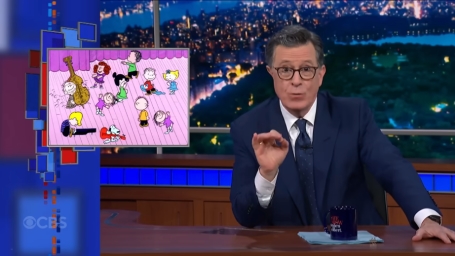
As noted here yesterday Lee Mendelson Film Production is suing entities that illegally used recordings of Vince Guaraldi music specifically created for Peanuts specials. Part of Stephen Colbert’s finale last night included his band playing Peanuts music with Colbert then worrying whether that would incite a lawsuit against CBS. At the three minute ten second […]
The Bryn Mawr-New Yorker Connection Cartoonist Maggie Larson contributed a cartoon to her alma mater’s Bryn Mawr Bulletin and they included a brief profile and an addendum noting Bryn Mawr past cartoons in The New Yorker. Letting Go Jonny Manning for the BBC tells of Peter Hansen thinning his comics collection. Many children collected comic […]
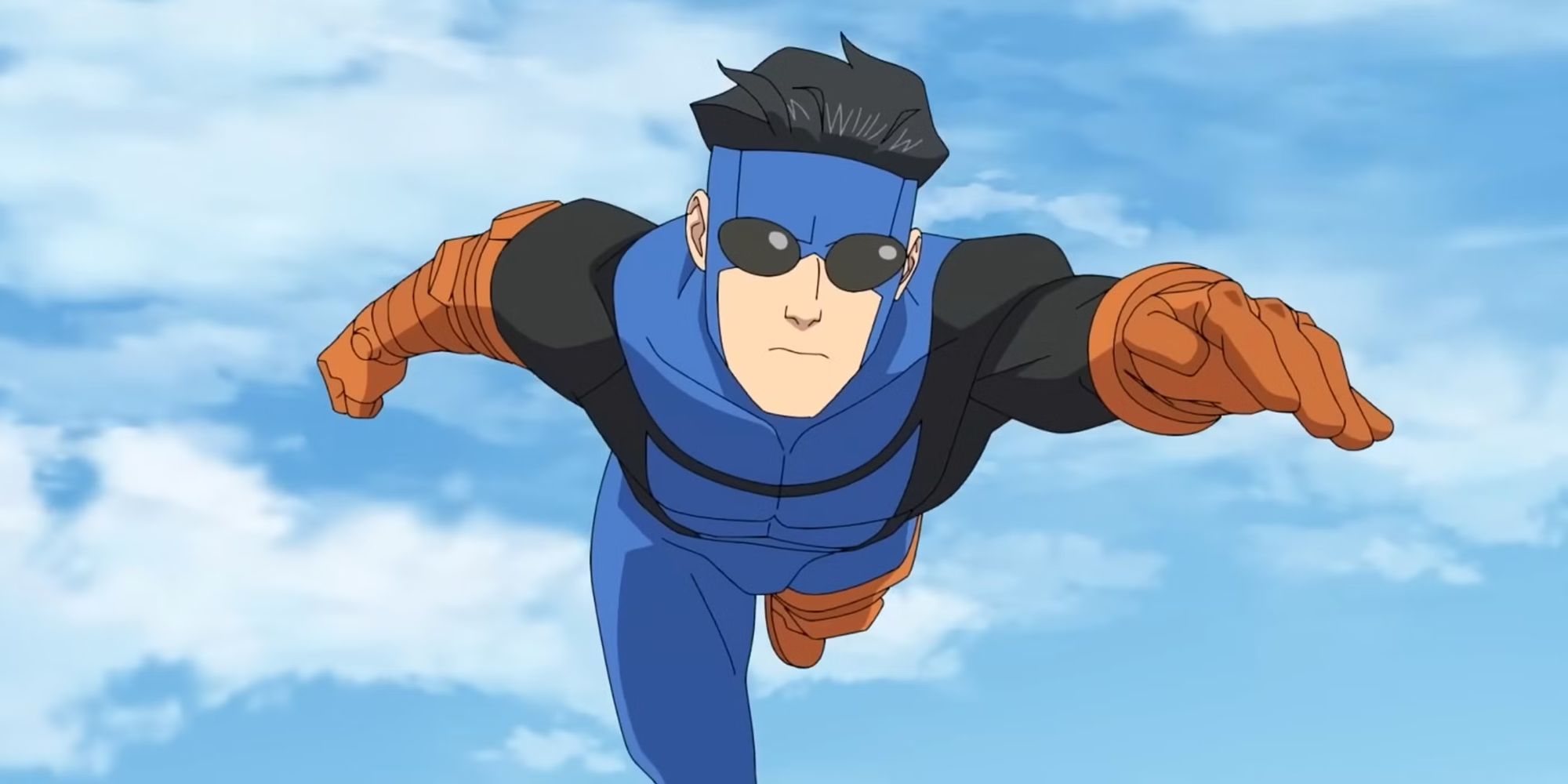
Invincible burst onto screens in a wave of bright colors and epic action brilliance that quite frankly stunned its entire audience. The series centers around the young Mark Grayson (Steven Yeun), who finally gains his superpowers after his 17th birthday and desires to follow in his superhero father's footsteps — only to discover that his father isn’t as heroic as he once believed. While its story and adult animated action are both unapologetically brutal and brilliant, there are quite a few epic animated sagas that have the superhero icon beat.
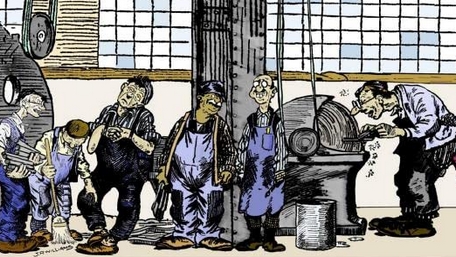
A roundup of various comics related news items featuring Mafalda, Hunt Emerson, Hoo-Hah (with J. R. Williams), Tony Millionaire, and Cheeky Pandas. ‘Mafalda’ original publisher Ediciones de la Flor shuts down As the Mafalda comic strip gets a boost with an American series of translated books in English the publisher that first published Mafalda books […]
Childhood movies become fuzzier as you get older. Sometimes all that's left is a snippet of a long-forgotten catchy tune or a specific animated scene that lives in the depths of your brain. You'll often wonder, “Where is that from?” just to realize that the mouse family on a train was an obscure film you saw as a youngster.
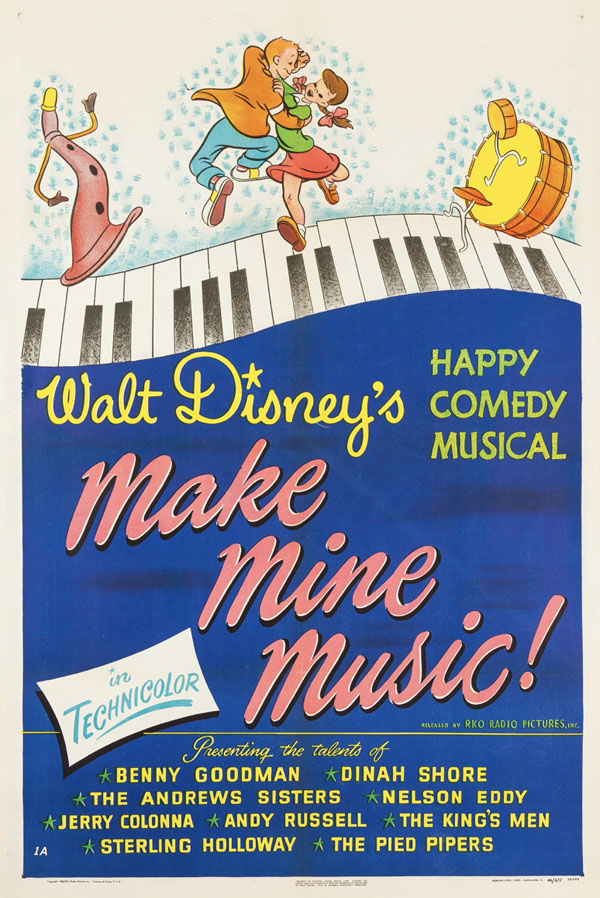
When Make Mine Music opened in 1946, The New York Post called it “…a veritable vaudeville show, a three-ring circus, and grand opera thrown together into one technical masterpiece.”
It may be the best description for this film made during a difficult time for Walt Disney and his Studio. Between an animators’ strike, and America’s involvement in World War II, production at the Studio had been a challenge during most of the 1940s.
Walt kept animation production going during this period by producing lower-budgeted, easy-to-execute films, known as “package films,” which didn’t have a traditional plot but instead were a series of short subjects strung together during a feature-length running time.
One of these was Make Mine Music, with a common theme among the segments being that each was set to a particular piece of music. As each is so vastly different, the Post’s description of the film is appropriate.
The film plays with the Fantasia formula, opening like a concert complete with a program that reads: “Make Mine Music: A Musical Fantasy.”
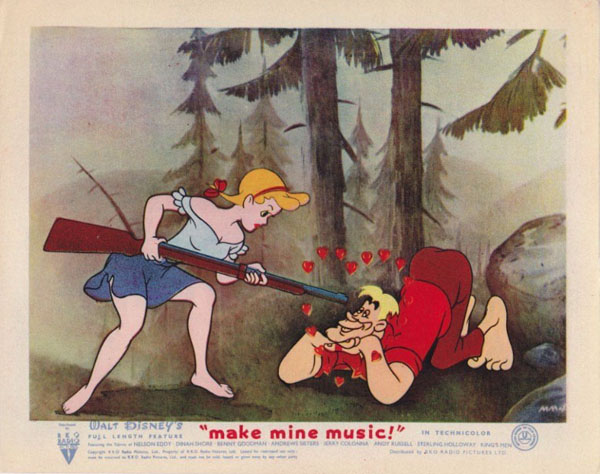
From here, the film segues to the first section of the film, “The Martins and the Coys” (billed on the program as “A Rustic Ballad”), narrated by the singing group The King’s Men, as it tells the musical tale of two feuding mountain families.
After this, the Ken Darby Chorus performs the title song, “Blue Bayou.” The slow-paced music features accompanying visuals of a nighttime bayou as a bird takes flight, in a sequence that reuses animation intended for a sequel to 1940’s Fantasia, originally intended to accompany the musical composition “Clair de lune.”
Next up is Benny Goodman and his Orchestra with “All the Cats Join in.” Two “hepcat bobbysoxer” teens of the decade dance to the upbeat music as they get ready for a date, with animation introduced by a pencil that draws images that come to life.
Singer Andy Russell performs the next segment, “Without You,” a ballad, with sad, surreal images that transition into views of lonely woods and nighttime stars.
The following segment is one of the film’s most famous, “Casey at the Bat,” narrated as a “Musical Recital” by comedian Jerry Colonna, in his over-the-top style, as a re-telling of the “baseball poem” by author Ernest Thayer about the Mudville team and their star player. This segment was released later in 1946 as a stand-alone short subject and even spawned a sequel with Casey Bats Again, in 1954.
Singer Dinah Shore sings “Two Silhouettes,” the next segment, a “Ballade Ballet” featuring two ballet dancers in rotoscoped silhouette animation, performing in front of a stylized backdrop and assisted by two cherubic figures.
Next is arguably the most popular segment, “Peter and the Wolf,” narrated by the familiar, comforting voice of Disney stalwart Sterling Holloway, from the famous musical composition by conductor Sergei Prokofiev. This segment (sans narration) was also created to be an additional component to Disney’s Fantasia.
Set in Russia, the segment tells the tale of young Peter and his friends Sascha, a bird, Sonia the duck, and Ivan the cat, who venture off into the woods to hunt a wolf. A different musical instrument represents each character, with a distinct theme.
“Peter and the Wolf” was such a substantial segment that it has been shown on its own several times and even released as a record album (paired with “The Sorcerer’s Apprentice” on the flip side).
“Peter and the Wolf” is followed by another Benny Goodman number, “Since You’ve Been Gone,” which provides the backdrop for a march of anthropomorphized musical instruments.
The Andrews Sisters then perform the musical narration for “Johnny Fedora and Alice Blue Bonnet,” a sweet story of two hats who fall in love after meeting in a department store window.
The concluding segment is baritone singer Nelson Eddy and the story of “The Whale Who Wanted to Sing at the Met,” about a whale named Willie with incredible operatic talents and dreams. He is hunted by a music conductor who believes that the whale has swallowed an opera singer.
Although it contains a sad ending, this segment includes beautiful, lush animation, particularly where Willie sings as Pagliacci the Clown, and full opportunity is taken for sight gags involving the size and scale of Willie.
Directed by Jack Kinney, Clyde Geronimi, Hamilton Luske, Joshua Meador, and Robert Cormack, Make Mine Music features animation by Disney Legends Ward Kimball, Ollie Johnston, and Eric Larson, among others.
The artists balance the different styles. There’s the entertaining, overly caricatured design of “Casey,” with the main character’s jut-jaw, and a player who touches the base with his giant handlebar mustache. This is offset by scenes with such images in “Without You,” which play out like rain cascading down a window.
Make Mine Music has been shown on The Disney Channel and released on home video in 2000 (with “The Martins and the Coys” removed due to violence and gunplay concerns), and on Blu-ray in 2021, but as of this writing, the film is still not available on Disney+ (although it is available on Amazon Prime).
Make Mine Music had its premiere in New York City on April 20, 1946, and went into general release on August 15. As the film now celebrates 80 years, it’s the perfect time to revisit this “vaudeville show, three-ring circus, and grand opera” from a unique era in Disney history.
When James and the Giant Peach came out, Henry Selick was already an animation veteran. Not only had he directed Tim Burton’s The Nightmare Before Christmas, which was released just three years prior, but he had been working in the industry since the late 70s. Selick had been part of Disney’s staff, animating on films such as The Fox and the Hound, but it was stop-motion animation that he eventually fell in love with.
Selick’s dedication to stop-motion extended well beyond James and the Giant Peach. After the film, he went on to direct the live-action/animated Monkeybone in 2001, the Oscar-nominated Coraline in 2006, and 2022’s Wendell and Wild, continuing his journey in this unique animation style.
“It’s something I grew into. I always enjoyed the stop motion [Ray] Harryhausen films,” said Selick in a 1996 interview, reflecting on his career. “When I was a kid, I saw a lot of European puppet films, cut-out films. When I got into animation, I was going to art school already. So, I was experimenting with cut-out photos, and I even did these sorts of life-size figures that were hinged before I got into animation. I made new ones, animated them, and had them moving and talking. I went from 2D animation into 3D, and it’s sort of hard to go back.”
This dedication is evident in James and the Giant Peach, a film celebrating its 30th anniversary this spring, where Selick’s passion for the arduous and beautiful art of stop-motion truly shines.
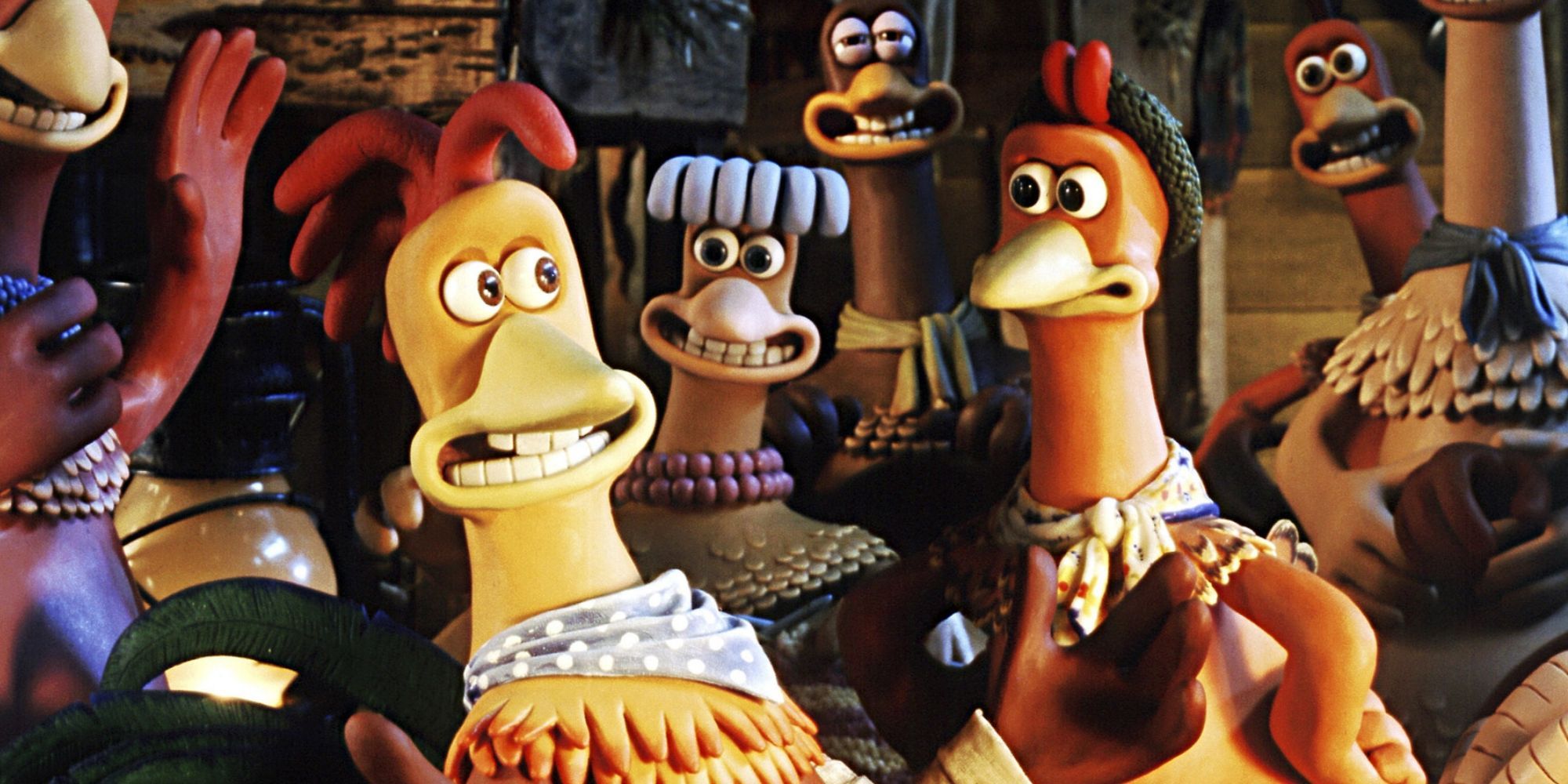
When it was released on April 12, 1996, filmmakers were looking toward the ever-emerging technology of computer-generated imagery—Toy Story had just been released five months earlier. Despite this industry’s focus on computer graphics, Selick remained very comfortable in his stop-motion lane.
“Even in this day of super-impressive computer effects, which are only going to get more impressive over time, stop-motion still has this hold on my imagination,” said Selick in ‘96, adding, “I feel like I’m further and further out on a limb in the land of stop-motion, but the last thing I’m going to do is throw in the towel and try to compete, head-to-head, with everyone else in computers.”
Based on a book by author Roald Dahl, most famous for Charlie and the Chocolate Factory, the tale features the author’s trademark macabre story elements. “I come from this really strong visual background, so I was in love with the visual possibilities,” said Selick in 1996. “I really like the sort of flavor of Roald Dahl‘s books. There’s some pretty twisted, dark things set off against imaginative, heroic children.”
The film James and the Giant Peach opens in live-action, telling the story of young James Henry Trotter (Paul Terry), a lonely orphan living with his wicked aunts, Spiker and Sponge (Joanna Lumley and Miriam Margolyes, respectively).
A mysterious man (Pete Postlethwaite) gives James a bag of glowing green seeds, which he drops near an old peach tree outside his aunts’ house. The next day, a peach appears on the tree and keeps growing. The aunts begin charging the public admission to see it while forbidding James from going near the peach.
James sneaks away one night and enters a tunnel in the giant peach (the film then transitions to stop-motion animation). Once inside, James meets a group of large insects, who soon set the peach rolling out to sea, and he joins them on a magical journey to New York City, a place he has always dreamed of seeing.
The insect characters feature an impressive all-star voice cast. Susan Sarandon is Miss Spider, Richard Dreyfuss is the gruff Centipede, Simon Callow (Four Weddings and a Funeral) is Grasshopper, Jane Leeves (Daphne on TV’s Frasier) is Lady Bug, Margolyes as Mrs. Glowworm, and David Thewlis, is the voice of the Earthworm. “He did a remarkable job of this basic coward who’s blind and always imagines things being worse than they really are,” said the director of Thewlis, adding, “He did this amped-up performance, a quivering voice that really fueled the animation.”
There’s another character in James and the Giant Peach that audiences will immediately recognize. In one sequence, James and the insects run across an army of skeletal pirates. Look closely at the pirates, and you’ll notice a cameo that Lane Smith, the film’s character designer, snuck into the movie. “Lane kept putting in this tall, skinny guy against these other shapes,” remembered Selick in ‘96. “I finally said, ‘Well, he keeps looking like Jack Skellington, let’s just put him in the movie.”
Jack Skellington’s tale of The Nightmare Before Christmas is a film that, although not a success during its initial run, has generated a following that few films have. Sadly, this was originally not the case with James and the Giant Peach.
Despite not achieving box-office success initially, the film has since gained a following, helped by home video and its availability on Disney+.
Thirty years later, what audiences appreciate about James and the Giant Peach is reflected in the original review of The New York Times’ film critic Janet Maslin, who wrote: “Together, this prodigiously clever group has come up with expert animated effects and some boldly beautiful sights unlike anything else on screen…”
Disney built an empire on fairytales and talking animals and earworm songs, but it's important to note that they do sometimes go off the beaten path and try something different. Unfortunately, that doesn't always work for them, and this is a great example of that. It wasn't a traditional Disney movie but that's maybe why time has made its reputation stronger and 25 years later, the underrated sci-fi is getting a sequel.
There's a fantasy boom on TV right now, with the rights to popular novels being snapped up left and right for adaptations. Even Brandon Sanderson is finally getting into the streaming game. And now, a long-running series is set to hit the screen for the very first time.
It’s time for the 2024 Golden Globe Awards, which will honor some of the year’s best movies and TV shows. The award show will be broadcast live on CBS on Sunday, Jan. 7 from 8 – 11 p.m. You can also stream the ceremony on Paramount+.
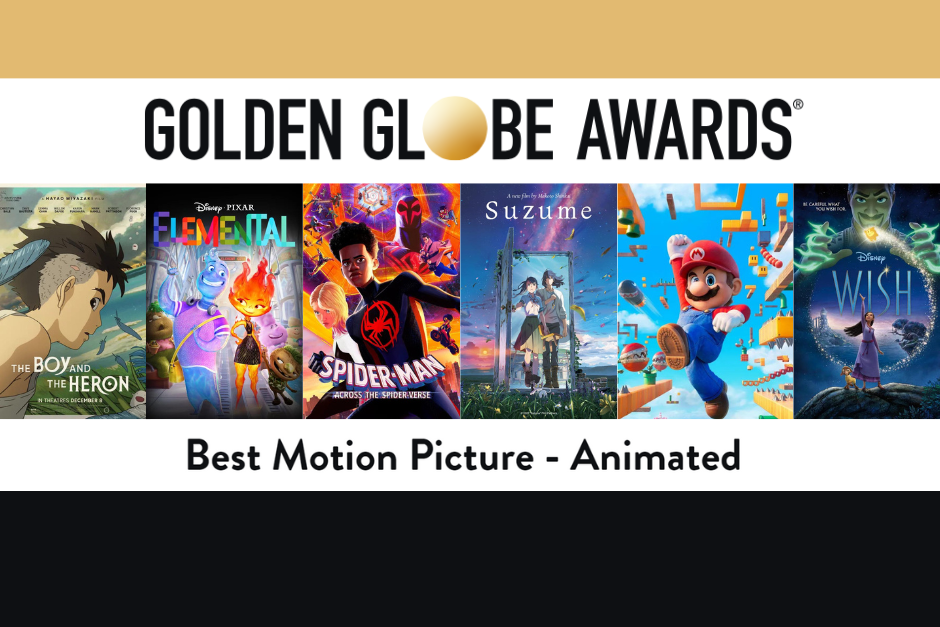
The 2024 Best Motion Picture Animated Movies Nominees
There are six nominees for the Best Motion Picture Animated Movies category, each with a unique style and innovative animation. My personal favorite is Spider-Man: Across the Spider-Verse, but The Boy and the Heron is also a strong contender.
The Boy and the Heron : The Winner
The Boy and the Heron is a coming-of-age drama directed by Hayao Miyazaki, one of the greatest living directors of animation. This 2D animation features a mythical heron that visits a young boy as he tries to make sense of the world around him.
Elemental
Dive into a world where Earth, Wind, and Fire live among one another but not together. This “COOL” movie by Disney discusses how cultures, or in this case, elements can work together and understand one another. This uniquely animated love story packs an emotional punch with great visual effects from Pixar.
Spider-Man: Across the Spider-Verse
Welcome to the Spider-verse! This movie is by far my favorite of the nominees! Spider-Man: Across the Spider-Verse is a thrilling animated movie that follows Miles Morales across multiple universes. It pays homage to many versions of the web-slinger’s appearance from comics to TV shows and has a stunning storyline. It’s my personal favorite of the nominees.
Suzume
Suzume is a visually stunning anime directed by Makoto Shinkai. The movie follows a 17-year-old girl named Suzume and a stranger she meets, who team up to prevent a series of disasters across Japan. The film was inspired by the director’s feelings about the 2011 Tohoku earthquake and tsunami and its devastating impact on the country.
The Super Mario Bros. Movie
The Super Mario Bros. Movie has become a hit with audiences of all ages, grossing over $1.3 billion. It incorporates many gaming and contemporary styles of animation from Illumination. The movie delivers a delightful origin story for Mario and Luigi, and its silly and memorable quotes make it a fun watch for everyone. I give it 4 stars out of 5.
WISH
Can Wish, the movie, make its dream come true and win a Golden Globe? The film marks the 100th anniversary of the Walt Disney Animation Studio and follows the story of Asha, a young woman who learns how to make her wishes come true. Although the animation is beautiful and the story is interesting, it’s not one of my favorite Disney movies. However, I did enjoy the references to the studio’s wishing star and some of the characters that have been featured throughout Disney’s history.
The Ottawa International Animation Festival (OIAF) has provided animation and entertainment since 1976. The second oldest film institute in the world and also the hub of animation in Canada, has a lot to offer. The festival will be held online from September 22 to October 3, 2021.
Ottawa International Animation Festival Shorts Competition 3
Comeback
Photo Credit: Ottawa International Animation Festival
Director: Vladimir Leschiov From: Latvia & Lithuania About: It’s never too late for a comeback.
electric +
Photo Credit: Ottawa International Animation Festival
Director: Brandon Blommaert From: Canada About: A slow sensuous dance gives way to a technical barrage of prismatic shards of love.
Papa Zaza
Photo Credit: Ottawa International Animation Festival
Director: Géraldine Charpentier From: Belgium About: Fleur and her brothers’ games are put on hold when their father, Zaza, is taken to the hospital.
World Brain ‘Dance II (Discovery Zone Cover)’
Photo Credit: Ottawa International Animation Festival
Director: Julian Gallese From: Costa Rica & Germany About: A dream computer land inhabited by animals that like to party and frequent museums.
Babičino seksualno življenje (Granny’s Sexual Life)
Photo Credit: Ottawa International Animation Festival
Director: Urška Djukić & Emilie Pigeard From: Slovenia & France About: A trip into grandmother’s youth and the memories of her intimate life illustrate the status of Slovenian women in the first half of the 20th century.
Festivalska špica Animafest Zagreb 2020 (Animafest Zagreb 2020 Festival Trailer)
Photo Credit: Ottawa International Animation Festival
Director: Yoriko Mizushiri From: Croatia About: A trailer for the Animafest Zagreb 2020.
Nichts (Nothing)
Photo Credit: Ottawa International Animation Festival
Director: Paul Hartmann From: Germany About: Since nothing really matters why not change things.
Rites of Spring
Photo Credit: Ottawa International Animation Festival
Director: Yiorgos Tsangaris From: Cyprus About: The Christian Orthodox tradition and traveling theatre troupes with their pagan roots are two seemingly opposite worlds, both mysterious and enchanting.
Dior ‘A New Continent’
Photo Credit: Ottawa International Animation Festival
Director: Bárbara Cerro From: Argentina About: Femininity in the world of animation according to Dior.
Impossible Figures and Other Stories
Photo Credit: Ottawa International Animation Festival
Director: Marta Pajek From: Poland & Canada About: Following an explosion, a mysterious and elegant elderly woman wanders deserted city streets, recalling what was and what could have been.

 Login
Login




 When it was released on April 12, 1996, filmmakers were looking toward the ever-emerging technology of computer-generated imagery—Toy Story had just been released five months earlier. Despite this industry’s focus on computer graphics, Selick remained very comfortable in his stop-motion lane.