Reading view

Thai court to deliver verdict in 2015 Bangkok shrine bombing that killed 20
Malay Mail


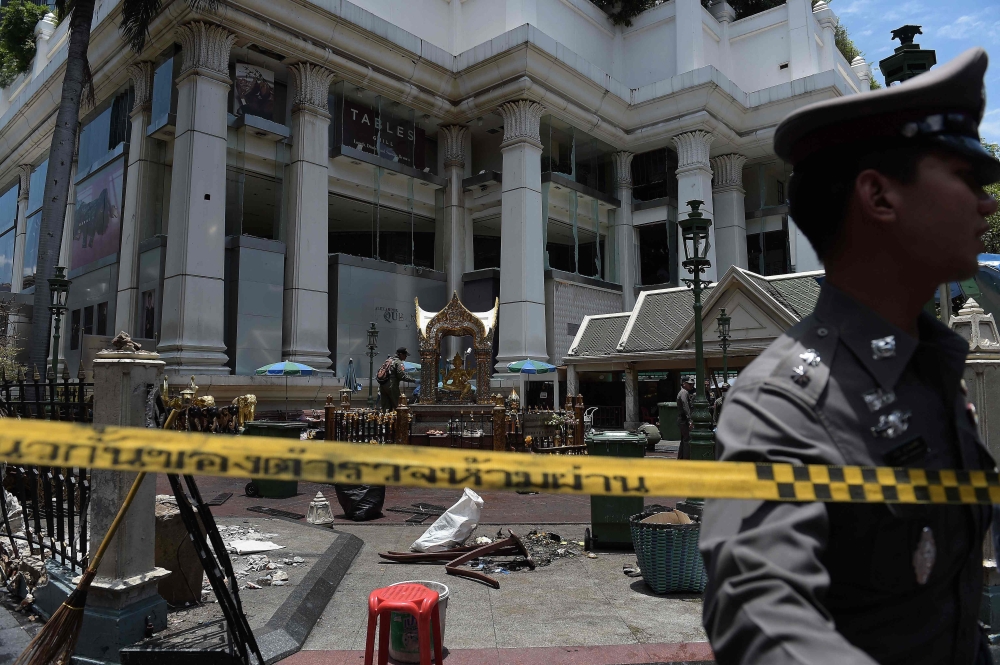
BANGKOK, June 11 — A Thai court will deliver its verdict today in the long-delayed case of a 2015 attack at a Bangkok shrine that killed 20 people, the deadliest bombing in the country’s history.

Two Uyghur men, Yusufu Mieraili and Bilal Mohammed, stand accused of planting a bomb at a Hindu shrine in Bangkok’s commercial heart in August 2015. The defendants have denied the charges.

The decade-long trial over the horrific attack in Thailand’s capital that also wounded more than 100 people was beset by delays due to coronavirus disruptions and problems securing translators.

Multiple Chinese tourists were among the dead when explosives—apparently left in a backpack—detonated at the Erawan Hindu shrine popular with tourists.

The blast came weeks after Thailand’s then-ruling junta forcibly repatriated 109 Uyghurs to China, where rights groups say the Muslim minority face cultural and religious repression.

The timing prompted speculation that the attack was part of a revenge plot against a country that had been a key transit hub for Uyghurs as Thailand’s then-military leaders grew closer to Beijing.

Delays and drugs 

Shortly after the bombing, police named 17 suspects, but only Mieraili and Mohammed were initially apprehended.

Thailand’s junta authorities were criticised for a murky investigation that appeared to wind down shortly after the arrest of the two men.

They went on trial in 2016, accused of planting the explosives.

But the proceedings—which have involved hundreds of witness testimonies—have been delayed multiple times, once because the translator for the accused was hit with drugs charges.

In 2017 a Thai woman called Wanna Suansan was detained on arrival in Bangkok on a warrant linked to the shrine blast—making her the third named suspect arrested by police.

She was charged with attempted murder, associated murder and possession of bombs and weapons, but was acquitted in 2024.

Uyghurs, a Turkic minority, hail from China’s westernmost province, Xinjiang.

Beijing is accused of widespread human rights abuses in the region, including the incarceration of around one million Uyghurs and other Muslim minorities. It denies the allegations.

Thailand deported dozens of Uyghurs to China in February 2025 despite warnings from human rights groups that they would face persecution on their return, drawing swift condemnation from the United Nations.

Erawan Shrine remains a popular draw for Chinese tourists to the kingdom’s capital, but none AFP spoke to ahead of the verdict said they knew about the case.

“I have not heard about it,” said a young Chinese woman on Monday.

A Chinese man who said he came to the shrine “every year” declined to answer when asked about the 2015 bombing.

“It’s nice to come here to pray,” he said before walking away. — AFP
 

  •  

Thai court sentences two Uyghur men to death for 2015 Bangkok bombing

Twenty people were killed and 120 injured in the attack at the Erawan Shrine, a popular tourist destination

A Thai court has handed out death sentences to two Uyghur men from the north-western Chinese region of Xinjiang for a 2015 bombing in the centre of Bangkok that killed 20 people.

The explosion occurred at the Erawan Shrine in the centre of Bangkok, an area popular with foreign tourists. As well as the 20 people killed, another 120 were injured. Five of the dead were from mainland China and two from Hong Kong.

Continue reading...

© Photograph: Sakchai Lalit/AP

© Photograph: Sakchai Lalit/AP

© Photograph: Sakchai Lalit/AP

  •  

Chinese dissident flees to South Korea on rubber boat

Dong Guangping featured image

By Kang Jin-kyu

A Chinese dissident who has long been a thorn in Beijing’s side has escaped to South Korea on a rubber boat, his lawyer confirmed on Wednesday, after repeated attempts to flee China.

Chinese dissident Dong Guangping. Photo: Front Line Defenders.

Dong Guangping, a former policeman who was imprisoned for his activism, was found by South Korean authorities on Monday night drifting off the country’s west coast on a 3.3-metre (11-foot) rubber boat with a 9.9-horsepower engine, according to police.

He was taken to shore for questioning on suspicion of violating immigration laws.

The man’s lawyer, Kim Joo-kwang, confirmed his identity to AFP.

Dong, 68, is known for his opposition to the Chinese Communist Party (CCP) and his advocacy for political reform and human rights.

He was dismissed from his work as a policeman after signing a petition a decade after Beijing’s 1989 Tiananmen Square crackdown, according to US-based advocacy group Human Rights in China.

He later spent about three years in prison from 2001 for “inciting subversion of state power”, United Nations experts said, and was detained again in 2014 over Tiananmen-related activities.

Dong fled to Thailand with his family, who later resettled in Canada as refugees, but Thai authorities handed him over to Chinese police in 2015 despite his UN-recognised refugee status.

He was released from prison after completing his sentence in 2019.

But faced with constant police surveillance, harassment and a lack of access to housing, work and financial resources, he decided to flee again in an attempt to reunite with his family, according to a UN report from 2022.

Before arriving in South Korea, Dong made several failed attempts to flee China.

In 2019, he tried to swim to the Kinmen archipelago, a Taiwanese territory, but nearly drowned at sea. In 2020, he crossed into Vietnam, but was detained by Vietnamese police.

Dong’s attorney told AFP his client’s current situation is “highly likely to be a political asylum case”.

Full protection

Chinese-Canadian journalist and human rights activist Sheng Xue, who described Dong as a friend, said in a post on X Wednesday that Dong set off from Weihai, in China’s Shandong province, after “meticulous inspection and preparation”.

Chinese-Canadian human rights activist Sheng Xue. Photo: Sheng Xue, via X.

“Last night, I spoke with him on the phone… He hadn’t slept for over fifty hours and had been at sea for more than thirty hours,” she said.

His rubber boat was spotted by the captain of a fishing boat at 9:30 pm (1230 GMT) on Monday, about 18 kilometres (11 miles) northwest of Taean County, South Chungcheong province, who then alerted the police, according to Sheng.

The Coast Guard dispatched a patrol vessel that arrived at the scene about an hour later, and Dong was detained, she added.

South Korea has granted political asylum to a relatively small number of applicants since it began formally processing refugee claims in 1994, with an overall recognition rate in the low single digits despite tens of thousands of applications.

Critics say the low approval rate reflects strict screening and lengthy procedures, while the government maintains that decisions are made on a case-by-case basis and take security considerations into account.

Seoul’s foreign ministry did not respond to a request for comment.

The opposition People Power Party has called on the government to offer Dong “full protection”.

“It should take swift humanitarian measures to ensure that he can safely travel to Canada, where his family is anxiously awaiting him,” party spokesman Choo Hyun-chul said in a statement to AFP.

“This is a matter of a fundamental responsibility as a liberal democratic state.”

In August 2023, Kwon Pyong, a Chinese dissident, fled China on a jet ski to South Korea, where he was later convicted of illegal entry and given a suspended prison sentence.

  •  

Thailand condemns 2 Uyghur men to death for 2015 shrine bombing

Uyghurs Erawan shine bombing featured image

By Montira Rungjirajittranon

Two Chinese Uyghur men were sentenced to death Thursday for carrying out a 2015 attack on a Bangkok shrine that killed 20 people, a long-awaited verdict in Thailand’s deadliest bombing case.

Bilal Mohammed (centre) and Yusufu Mieraili (back right), defendants in the 2015 Erawan shrine bombing case, arrive at a military court in Bangkok on February 16, 2016. Photo: Nicolas Asfouri/AFP.
Bilal Mohammed (centre) and Yusufu Mieraili (back right), defendants in the 2015 Erawan shrine bombing case, arrive at a military court in Bangkok on February 16, 2016. File photo: Nicolas Asfouri/AFP.

A Bangkok court convicted Yusufu Mieraili and Bilal Mohammed of premeditated and attempted murder for their role in planting a bomb at the popular Erawan Shrine in the capital’s commercial heart.

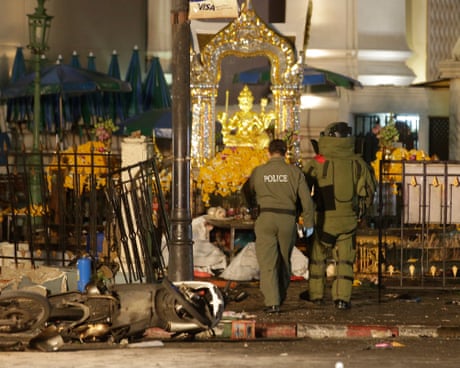
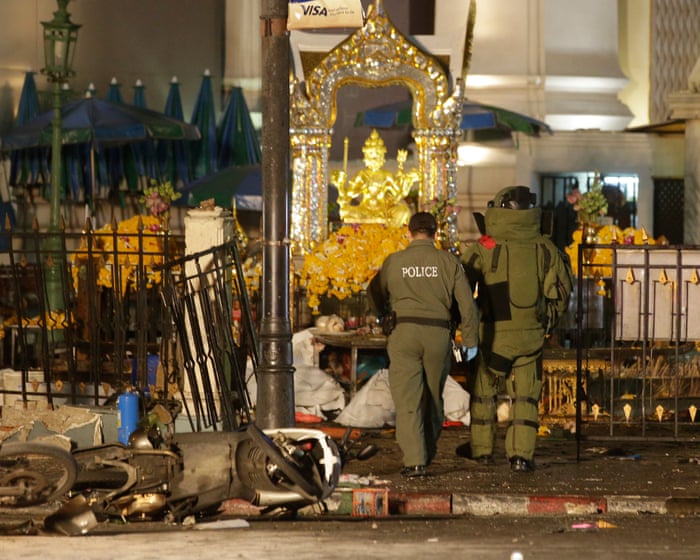
The blast tore apart the site where worshippers and tourists had gathered, wounding more than 100 people and leaving the shrine to the Thai representation of Brahma littered with motorbike fragments and singed debris.

Seven Chinese tourists were among the fatalities when explosives — apparently left in a backpack — detonated.

“The defendants committed a single act that violated multiple laws. The court therefore imposed the harshest penalty available under the law, the death sentence,” one member of the four-judge panel said Thursday as the lengthy verdict was read out.

The defendants — both Chinese nationals who arrived in court in prison garb — were acquitted of charges stemming from a separate bombing at a Bangkok pier.

Following the verdict, Mieraili said: “RIP Thailand’s justice system. I don’t accept any of this. I didn’t do anything wrong.”

Choochat Kanpai, the defendants’ lawyer, told reporters they “will appeal the ruling because there are many aspects of the case that the court has not fully considered, including the treatment of the defendants during the proceedings”.

The decade-long trial was beset by delays due to coronavirus disruptions and problems securing translators.

The blast came weeks after Thailand’s then-ruling junta forcibly repatriated 109 Uyghurs to China, prompting speculation that it was part of a revenge plot.

Beijing welcomed the death sentences.

“The attackers were totally inhumane and extremely heinous,” foreign ministry spokesman Lin Jian told reporters.

Chinese foreign ministry spokesman Lin Jian during a press conference on March 20, 2026. Photo: China's Ministry of Foreign Affairs.
Chinese foreign ministry spokesman Lin Jian during a press conference on March 20, 2026. Photo: China’s Ministry of Foreign Affairs.

“China supports Thailand in conducting the trial in accordance with the law and severely punishing the murderers.”

Delays and drugs

Shortly after the bombing, police named 17 suspects, but only Mieraili and Mohammed were initially apprehended.

Thailand’s junta authorities were criticised for a murky investigation that appeared to wind down shortly after the arrest of the two men.

They went on trial in 2016, accused of planting the explosives.

But the proceedings — which have involved hundreds of witness testimonies — have been delayed multiple times, once because the translator for the accused was hit with drugs charges.

In 2017 a Thai woman called Wanna Suansan was detained on arrival in Bangkok on a warrant linked to the shrine blast — making her the third named suspect arrested by police.

She was charged with attempted murder, associated murder and possession of bombs and weapons, but was acquitted in 2024.

The Uyghurs, a Turkic minority, primarily hail from China’s westernmost region, Xinjiang.

Beijing has been accused of detaining more than a million Uyghurs and other Muslims since 2017, part of a campaign that the United Nations previously said could constitute crimes against humanity.

China vehemently denies these allegations, saying its policies have rooted out extremism in Xinjiang and boosted economic development.

Thailand deported dozens of Uyghurs to China in February 2025 despite warnings from human rights groups that they would face persecution on their return, drawing swift condemnation from the United Nations.

Erawan Shrine in Bangkok on January 16, 2015, seven months before the deadly bombing.
Erawan Shrine in Bangkok on January 16, 2015, seven months before the deadly bombing. Photo: Wikimedia Commons.

The Erawan Shrine remains a popular draw for Chinese and other tourists to the Thai capital, and dozens of visitors made traditional offerings of marigold garlands and incense as usual on Thursday.

Devotee and online vendor Satiwan Phobangwai, 45, approved of the sentences.

“As a Buddhist, I was taught to only do good deeds and good things, right? It’s like karma, as the saying goes, ‘you reap what you sow,'” she said.

“So they must face the consequences of the wrongdoing they committed.”

  •  

Thai police probe military-grade weapons cache at Chinese man’s home

Thailand weapons found featured image

Thai police are investigating a vast arsenal of military-grade weapons — including assault rifles, explosives, grenades and anti-personnel mines — found at the home of a Chinese man, authorities said Saturday.

A photo published by Thai police on May 8, 2026, shows weapons found at a home near the beach resort of Pattaya. Photo: ThaiPoliceOfficial, via Facebook.

Two M16 assault rifles, hundreds of rounds of ammunition, Russian landmines, projectiles, gasoline and nearly five kilos (11 pounds) of explosives were found at the home of Sun Mingchen, 31, near the beach resort of Pattaya.

A photo published by Thai police on May 8, 2026, shows weapons found at a home near the beach resort of Pattaya. Photo: ThaiPoliceOfficial, via Facebook.

There were no clear links to a planned attack, Chonburi province’s public relations department said in a statement, but local police chief Pongphan Wongmanithet told reporters at the scene they were “investigating security implications”.

Sun was charged with illegal possession of unauthorised weapons and could face up to 10 years in prison.

Thai media reported that the suspect’s phone contained AI chatbot searches on military plastic explosive properties and videos of him handling the weapons, fuelling concerns of possible “terrorist” intent.

Police are looking into the motive of the suspect, who will be taken for psychological evaluation, Pongphan said.

The raid on Sun’s home was prompted after police found a pistol in a car with two Chinese nationals on board during a traffic stop on Friday.

According to authorities, he held a long-term visa in Thailand and had lived in the property for about two years.

  •  

JDT, Kuching City drawn into separate groups for Asean Club Championship

Malay Mail

KUALA LUMPUR, June 5 — Johor Darul Ta’zim (JDT) and Kuching City FC have been drawn in different groups for the group stage of next season’s Asean Club Championship (ACC) during the draw conducted by the Asean Football Federation (AFF) today.

AFF, in a statement, said JDT have been drawn in Group B with Port FC (Thailand), Lion City Sailors FC (Singapore), Công An Hà Nội FC (Vietnam), PKR Svay Rieng FC (Cambodia), Persib Bandung (Indonesia) and the winner of playoff 2.

ACC debutants Kuching City, meanwhile, are in Group A with Buriram United FC and Ratchaburi FC (both Thailand), Tampines Rovers FC (Singapore), Borneo FC Samarinda (Indonesia) and the winner of playoff 1.

The top four teams from each group will advance to the quarter-finals, which will be played on a home-and-away basis.

The semi-finals and final will also be played on a home-and-away format.

The ACC 2026-2027 brings together the best clubs in Southeast Asia, with group-stage matches played in a single round-robin format whereby each team will play three home and three away matches. — Bernama


  •  

Thailand finally adopts ICAO power bank rules after airline fire scares

Malay Mail

BANGKOK, June 6 — Thailand’s aviation regulator has tightened rules on power banks on flights after a series of lithium-battery scares, more than two months after standards set by the International Civil Aviation Organisation (ICAO) took effect.

The move follows the January 2025 Air Busan fire in South Korea, where early investigations suggested a power bank may have been involved, as well as Thai-linked incidents on Thai AirAsia in January 2024 and Bangkok Airways in July 2025. 

The Civil Aviation Authority of Thailand said power banks must now be carried only in cabin baggage and are banned from checked luggage, The Bangkok Post reported this week.

It capped devices at 100 watt-hours, or 20,000 milliampere-hours, while power banks between 101Wh and 160Wh require airline approval.

Each passenger may carry no more than two lithium-battery power banks, and devices with unclear or missing capacity labels are not allowed on board.

Passengers are also barred from charging power banks or using them to charge phones or other devices during flights. 

Power banks must be kept within reach, such as in a seat pocket, under the seat in front or on the passenger, and cannot be stored in overhead lockers.

The safety logic is simple: a lithium battery fire in the hold is hard to detect, while a smoking battery in the cabin can be isolated, cooled and contained by trained crew.

The ICAO guidelines, set on March 27, limits passengers to two power banks each, besides barring them from recharging the devices during flights. 

That means Thailand took about 10 weeks, or 69 days, to turn the latest international safety practice into a local regulator rule.

But Thailand was not starting from zero, as Thai Airways had already announced similar power bank restrictions in early April based on ICAO requirements. 

Malaysia Airlines, Firefly and MASwings tightened power bank controls on April 1, 2025, requiring passengers to keep devices with them, barring overhead storage and banning the charging of power banks in flight. 

Malaysia-based budget carrier AirAsia also moved to require power banks to be kept in the cabin and within reach, while barring their in-flight use and charging. 

Malaysia had also put core lithium-battery flight limits into a regulator directive as far back as December 2015, showing that parts of Thailand’s new package reflect safety practice that has existed regionally for more than a decade. 

Singapore moved faster on the 2026 ICAO update, limiting passengers flying out of the island nation to two power banks from April 15.

Singapore Airlines and Scoot had already banned passengers from using or charging power banks in flight from April 1, 2025, after a series of battery-related cabin fire incidents. 

The common international baseline remains that power banks and spare lithium batteries should travel in the cabin, devices under 100Wh are generally allowed, 101Wh to 160Wh devices require airline approval, and higher-capacity units are banned from passenger baggage.

Thailand’s version is slightly stricter in practice because it states the standard limit as 20,000mAh, below the roughly 27,000mAh often treated as the 100Wh equivalent for typical 3.7-volt power banks.

For travellers, the message is blunt: bring no more than two clearly labelled power banks, keep them in hand luggage, do not put them overhead, do not use them in flight, and charge your phone before boarding.


  •  

Thailand Launches Bangkok International Content Market, B2B Platform for Film, Series and Animation

Thailand’s Creative Economy Agency (CEA) is launching the Bangkok International Content Market 2026 (BICM2026), one of the country’s first dedicated international marketplaces for film, series, and animation, set to run July 20–22 at the Queen Sirikit National Convention Center in Bangkok. The event is being developed jointly with the Department of International Trade Promotion under […]

  •  

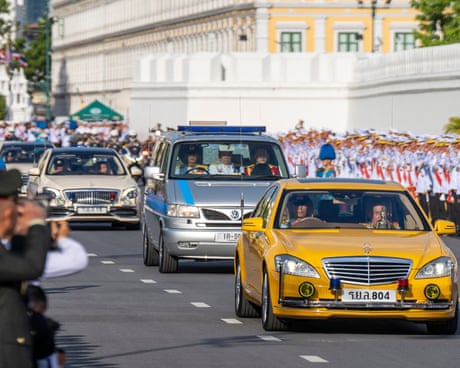
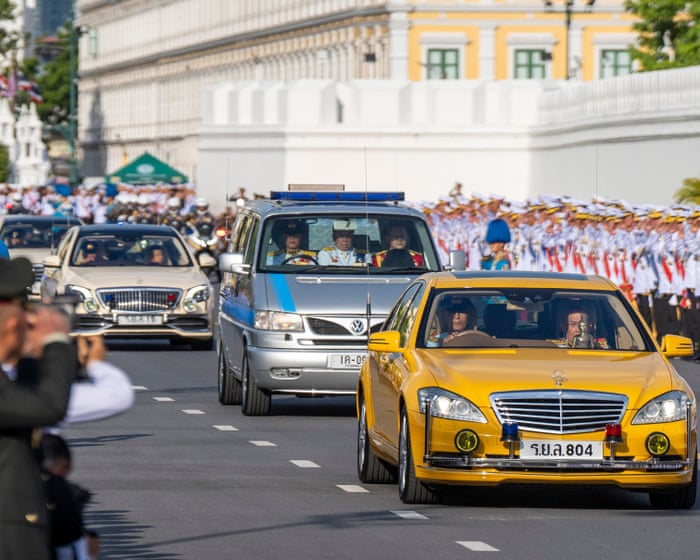
Mourners line Bangkok streets to pay respects to Thailand’s Princess Bha

Funeral procession travels to palace as people remember royal’s campaigning and work for underprivileged

As the sun began to set on the golden spires and gilded finials of Bangkok’s Grand Palace, the gates were open, waiting for the return of a princess.

Since December 2022, Princess Bajrakitiyabha had been in hospital, having collapsed while out training her dogs. After nearly four years in a coma, the princess died earlier this week.

Continue reading...

© Photograph: Adryel Talamantes/ZUMA Press Wire/Shutterstock

© Photograph: Adryel Talamantes/ZUMA Press Wire/Shutterstock

© Photograph: Adryel Talamantes/ZUMA Press Wire/Shutterstock

  •  

Thailand to appoint conciliators for UN‑backed mediation with Cambodia, says foreign minister

Malay Mail

BANGKOK, June 5 — Thailand will appoint two conciliators and join a little-used UN arbitration process that Cambodia ‌has invoked to help resolve a long-running maritime boundary dispute between the neighbours, Thai Foreign Minister Sihasak Phuangketkeow said today.

Cambodia said on Tuesday it had launched a compulsory conciliation ‌process under the United Nations Convention on the Law of the Sea (UNCLOS), following Bangkok’s decision last month to unilaterally terminate a 2001 bilateral agreement that provided a framework for talks over a disputed maritime belt.

For more than 25 years, Cambodia and Thailand have both laid claim to about 26,000 square km of sea in the Gulf of Thailand, an area estimated to hold nearly 12 trillion cubic feet of natural gas and large quantities of oil, together valued at about US$300 billion (RM1.2 trillion).

“Both side should have spoken bilaterally first,” Sihasak told reporters ‌in Bangkok, expressing dismay at Cambodia’s move to utilise the mediation mechanism and ⁠use it to also address resource sharing. “If ⁠we had talked and there was no progress, ⁠then we could go to UNCLOS.”

A ⁠spokesperson for the ⁠Cambodian government did not immediately respond to a request for comment.

Minister says conciliation will not improve ties

Bilateral relations between Thailand and Cambodia have been on edge following ⁠two round of intense border clashes last year that killed nearly 150 people and displaced at least 300,000 on both sides, although a December ceasefire is still holding.

Cambodia’s decision to use compulsory conciliation — where a five-member panel delivers a set of non-binding recommendations — will not improve overall ties between the two ⁠countries, said Sihasak, who also serves as deputy prime minister.

“We simply don’t agree with how they approached this,” he said, referring to Cambodia’s stance.

So ⁠far, the UN-backed mechanism has only been used by East Timor, also known as ⁠Timor Leste, ⁠to successfully resolve a decades-long maritime dispute with Australia. That process took a little less than two years.

“If we do this through bilateral talk in a friendly way, it may ‌take shorter time to reach an amicable solution,” Sihasak said, “Now, we don’t know how long this will take.” — Reuters


  •  

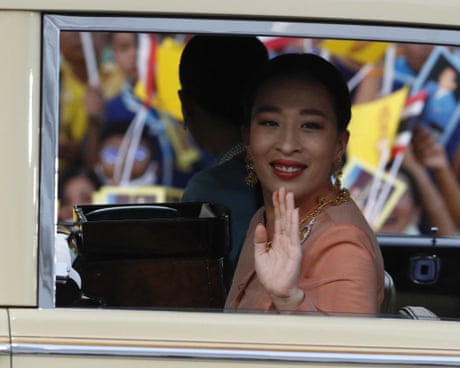
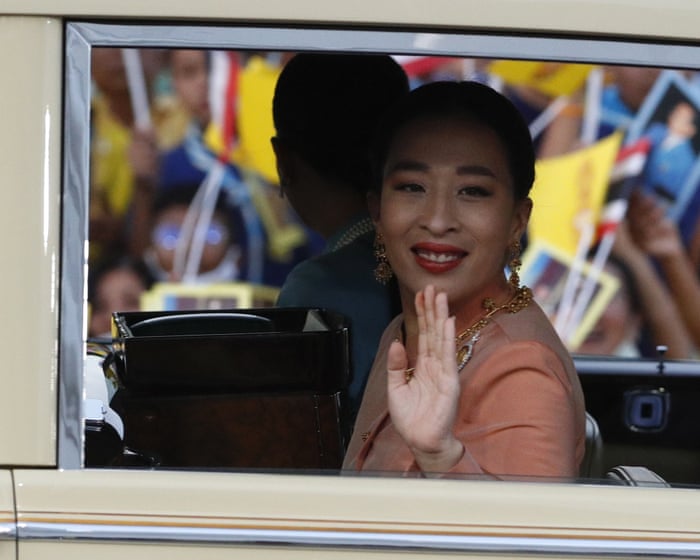
Thailand’s Princess Bajrakitiyabha dies aged 47 after years in a coma

Princess Bajrakitiyabha Mahidol’s health had worsened since she was hospitalised in December 2022 with heart problems that left her gravely ill

The eldest child of Thailand’s King Maha Vajiralongkorn has died aged 47, the palace has said, after nearly four years in a coma.

Princess Bajrakitiyabha Mahidol, known in Thailand as Princess Bha, had been in hospital since December 2022 when she became gravely ill after having heart problems while out training her dogs.

Continue reading...

© Photograph: Rungroj Yongrit/EPA

© Photograph: Rungroj Yongrit/EPA

© Photograph: Rungroj Yongrit/EPA

  •  
❌