The presidents of Brazil, Luiz Inácio Lula da Silva, and Paraguay, Santiago Peña, agreed on Sunday in Campo Grande to intensify negotiations over Annex C of the Itaipú treaty, the instrument that governs the financial terms and energy sales of the binational hydroelectric dam, one of the largest in the world.
Brazilian group BTG Pactual, Latin America's largest investment bank, is awaiting authorisation from Uruguay's Central Bank (BCU) to begin operating in the local financial market following its $175 million acquisition of HSBC Uruguay, agreed in July 2025. Group executives expect regulatory approval to come through by mid-year, allowing them to begin operations gradually in the second half of 2026.
SINGAPORE: On paper, the life of a 29-year-old finance professional might look like a clear success story. He has a stable job in the Central Business District, earns about S$5,500 a month, and has built up roughly S$400,000 in savings and investments over the years through trading US stocks.
But in a post shared on a local forum on Thursday (Jun 4), he confessed that his life has started to feel rather “meaningless” and “sad” as his job no longer fulfills him.
“Every day, I seem to be stuck in a loop where I struggle to wake up because I stayed up late till 1 a.m. the previous night, sit on the train to work like a zombie to the CBD, and do my job.”
“My job has pretty standard working hours, no OT, and is not extremely stressful but not enjoyable either. I mostly fix problems that pop up and also do tedious work that requires me to be meticulous. I feel mentally drained by the end of the day. After work, I wander around aimlessly. I reach home late at night, check my US stocks, and sleep at around 12 or 1 a.m. ”
Over time, he said, the routine has begun to wear him down.
The days seem to blur into one another, and he feels as though he is trapped in a cycle that never really changes.
His weekends, he added, are not much different either. He admitted that he mostly stays home and sleeps, completely disinterested in going out or taking part in activities.
As for his personal life, the man revealed that he has never had a girlfriend despite making efforts over the years. He has tried dating apps, attended social gatherings, and taken part in sports and hobbies in hopes of meeting someone, but none of those attempts have led to a meaningful relationship.
As he watches the years pass, he feels increasingly aware of how quiet his life has become.
With no partner, no family of his own, and no clear passion outside work and investing, he said he often wonders what exactly he is working towards.
“Am I being ungrateful in this situation or are my woes actually valid?” he asked others. “I have no partner, no dates, no marriage, no housing in the future to look forward to, hence no motivation to grind day-in, day-out for a salary.”
He also shared, “Lately, the thoughts of quitting my job seem to be intensifying, because I felt that the salary is so little compared to my investment gains. I keep thinking of wanting to start a business or do something more freelance, independent, and with more freedom. I also tried to apply to other jobs, hoping that a change in environment or increase in salary may make me happier, but so far I have not gotten any successful interviews.”
“Is life only about net worth?”
From the way the post author described his daily routine and emotions, many Singaporean Redditors speculated he might be experiencing burnout or even depression.
One individual said, “Your life has become monotonous, which is why you crave excitement but are too burnt out to actually seek it. Hence, you subconsciously want to quit to change your lifestyle drastically. Don’t. A well-paying boring job is actually the best job, especially if you are investing on the side.”
Another wrote, “Sounds like you are burnt out. Don’t ever self-label yourself ‘ungrateful’ if you have negative feelings that show strongly and persistently. It’s your body’s way of telling yourself that you have unmet needs.”
Meanwhile, some encouraged him to find ways to break out of the cycle and start doing things again, even if it feels difficult at first. They suggested spending his free time on activities he genuinely enjoys so that he would have something to look forward to outside of work.
One commenter pointed out, “If all you do is work and trade and not do something you genuinely like during the week after work hours… obviously you would feel this way. Is life only about net worth? Have you tried showing up regularly for any hobby (hopefully social) 2-3 times a week? Make new friends of both genders?”
Another added that meditation might be worth trying as well. “Give mindfulness meditation a try, can check out the 10-minute guided version by Sam Harris. Completely secular and no frills.”
In other news, a furious online rant about poor hygiene on Singapore’s public transport system has gone viral after one fed-up commuter blasted fellow passengers for allegedly skipping their morning showers before squeezing onto packed MRT trains.
Posting on a local Reddit forum, the woman said, “I have had it with taking the MRT every day and smelling all the stanky [people] who don’t shower in the morning, sia. Like, I don’t get it. Why is it so hard to spend just 5-10 minutes showering?”
Brazil consolidated its position as South America's leading defense spender during 2025, with a military budget of approximately USD 23.9 billion and a 13% year-on-year increase, while Uruguay recorded one of the steepest relative rises in the region, according to the annual report of the Stockholm International Peace Research Institute (SIPRI) released on Saturday. The region as a whole increased its military spending by 3.4% compared with 2024, in line with a global trend of armed forces modernization, open conflicts, and growing geopolitical tensions.
The Capricorn Bioceanic Corridor, one of the most ambitious infrastructure projects underway in South America, is moving through its final stretch on the border between Paraguay and Brazil, with just twenty-one metres remaining to complete the physical link of the so-called Bioceanic Bridge, according to Paraguayan government authorities cited in late May 2026. The structure, built over the Paraguay River, will connect the cities of Carmelo Peralta, in the department of Alto Paraguay, and Puerto Murtinho, in the Brazilian state of Mato Grosso do Sul, and constitutes one of the central pieces of a logistics corridor that will link the Atlantic Ocean with the Pacific across four South American countries.
Securities litigation is undergoing a quiet but consequential transformation. The rise of artificial intelligence and a shifting regulatory environment are changing not only the types of claims being brought, but also how plaintiffs plead cases, how regulators shape and enforce rules, and how companies manage litigation risk. Together, these forces are challenging traditional approaches that no longer fit the realities of today’s market.
As these dynamics evolve, companies and their advisors are being pushed to rethink disclosure practices, litigation strategy, and the role of experts earlier than ever in the process. Precision, innovation, and the ability to translate complex financial and market data into defensible positions have become increasingly critical, particularly at the motion to dismiss stage, where cases are often won or lost outright.
We sat down with Eric Poer, Managing Director at Secretariat International, an expert advisory and disputes consulting firm whose professionals have worked on some of the most impactful matters across the globe, to discuss the changing landscape of securities litigation.
Q: Can you tell us about Secretariat and your role within the firm?
A: Secretariat is a leading advisory firm that specializes in disputes and investigations with more than 700 experts and advisors worldwide. Our experts have been engaged by most of the Am Law 100 law firms and have completed more than 10,000 engagements on six continents. We operate strategically, growing by selectively hiring top-tier professionals who not only bring deep subject matter expertise, but also fit a highly collaborative and entrepreneurial culture.
I now lead Secretariat’s securities litigation and complex financial disputes practices. Our work sits at the intersection of financial markets, regulation, and litigation, supporting clients in matters where the factual, economic, and accounting issues are both highly technical and highly consequential. I have practiced in this area for more than 20 years and have worked on some of the largest, most complex, and highest-profile securities litigation and investigations matters in the country, including the Wells Fargo sales practices investigation, one of Apple’s most significant securities litigation matters, the recent Rivian Automotive securities litigation related to its IPO, and many more.
Q: What types of clients and matters does your practice focus on?
A: Our primary clients are Am Law 100 law firms and directors and officers facing regulatory inquiries, enforcement actions, or securities litigation. We are most often engaged in situations where the issues are technically demanding and time-sensitive, and where early strategic decisions can materially affect the trajectory of a case. From an industry perspective, we routinely work with large, global financial institutions and many of the most highly regarded Fortune 100 technology companies in the world.
The matters we typically work on include securities class actions, derivative litigation, complex financial disputes, including damages assessments, and forensic investigations involving disclosure issues, market activity, valuation, or transaction-related allegations. Increasingly, we are brought in early, often before a motion to dismiss is even filed. At this early stage, we help to shape defense strategy before positions harden and costs escalate.
Q: What differentiates your securities litigation practice from others in the market?
A: The core differentiator is our expert-led, technology-enabled team model. We operate with a lean, deeply experienced group of professionals who have worked together for more than 15 years. That continuity matters. It allows us to move quickly, communicate efficiently, and apply judgment that has been refined across decades of dealing with similar matters.
Our size also enables us to take a highly strategic and tactical approach. Rather than applying a one-size-fits-all framework, we tailor our analysis to the specific allegations and strategic objectives of each case. We are technology-enabled, but expert-driven—the tools support the analysis, not the other way around.
Just as important, we are comfortable going very narrow and deep. In many cases, the most impactful issues hinge on a very specific nuance and our clients require niche expertise to support their needs. We have access to more than 1 million industry experts that we frequently partner with to supplement our accounting, economic, and financial experts. Our experience allows us to surface those nuanced issues early and help clients focus their resources where they matter most.
Q: How have client expectations in securities litigation evolved in recent years?
A: Securities litigation is quickly changing—both procedurally and due to technological shifts.
Settlements are increasingly growing, with median settlement value in 2025 at a 10-year high, particularly if a matter survives a motion to dismiss. As a result, clients increasingly expect advisors who can help them win—or significantly narrow—the case early. There is far less appetite for broad, unfocused analysis. Instead, clients want precision, credibility, and a clear articulation of why certain theories fail under scrutiny at the pleadings stage.
This has elevated the importance of targeted financial and market analysis and the ability to respond creatively and credibly when translating complex technical issues into persuasive, defensible positions under intense judicial scrutiny.
In addition, clients increasingly expect that experts know how to use AI effectively and responsibly. Deliverables that rely on generative or analytical AI must meet rigorous and defensible standards—with robust human oversight.
Q: What major enforcement and regulatory shifts are influencing securities litigation this year?
A: One of the most notable shifts is the increased role of state attorneys general in enforcement activity. As federal enforcement priorities have shifted and staffing reductions have affected agencies like the SEC and DOJ, state attorneys general appear poised to step in to fill perceived gaps. That dynamic introduces new risks for companies that may have historically focused their compliance and litigation strategies on federal regulators.
At the same time, the SEC itself has undergone significant changes, with more anticipated. These developments are creating uncertainty, but also opportunity, for public companies as they reassess disclosure practices, governance structures, and litigation risk.
Q: What about arbitration provisions as a way to limit litigation?
A: One of the more interesting and potentially transformative developments is the emerging opportunity for public companies to enforce arbitration provisions that could limit or eliminate securities class actions as we know them. The SEC has taken a more neutral stance on arbitration clauses in registration statements, opening the door for companies to revisit this issue.
What’s especially significant is that costs for companies and insurers could skyrocket, while opportunities for plaintiffs could diminish. Securities class actions in their current form, often lasting for several years, are still far more efficient than dozens or even hundreds of individual arbitration claims, each requiring separate defense.
It is an area that warrants close attention, as future challenges and regulatory responses will shape how viable this strategy ultimately becomes.
Q: We haven’t really talked about the focus that seems to be on everyone’s minds these days: artificial intelligence. How is AI influencing securities litigation?
A: AI-related securities claims have emerged as one of the most significant recent developments. Plaintiffs are increasingly focusing on alleged misrepresentations about companies’ AI capabilities, deployment, or strategic importance. Many of these cases revolve around what has been described as “AI-washing,” where companies are alleged to have overstated the sophistication or impact of AI initiatives.
Plaintiffs are testing how courts will evaluate statements about AI that may be aspirational, forward-looking, or grounded in rapidly changing technical realities. As a result, we are seeing that AI-related filings generally have been dismissed at a lower rate than other filings but are settled at a higher rate.
Outside of trends in securities class actions, my personal view is that we need to be leaning into AI or we’ll be left behind. At Secretariat, we are actively pursuing and implementing opportunities to utilize AI in a smart and responsible way.
We like to equate AI to a first-year analyst. It’s smart and capable but needs to be checked for accuracy and reasoning. So yes, we are always looking for ways to deploy advanced technology to benefit our clients, but that technology is always supported by expert judgment and never replaces it; the stakes are simply too high in our business to do otherwise.
Q: AI is certainly an increasingly litigated area. What other topics are seeing increased litigation?
A: Crypto-related disputes and enforcement remain a growing area. In 2025, there were 14 cases with crypto-related claims, 75% more than in 2024. In addition, healthcare-related filings always account for a significant portion of securities litigation filings, and this continued in 2025, with healthcare-related filings accounting for more new filings than any other sector. Each of these trends is likely to continue in 2026.
Conclusion on the Securities Litigation Landscape
Although the SEC has shifted from its regulation by enforcement era, it is evident that private litigation and state attorneys general will fill at least some of the enforcement void. In addition, the potential for public companies to enforce arbitration provisions could have a transformative effect on securities litigation as we know it; however, at this time, it is not clear that a significant number of companies have or will adopt such provisions. Undoubtedly, this year will be a year of change in the securities litigation space.
Brazil is expanding its Antarctica presence and activities with the introduction of a new polar vessel currently under construction in the county. The vessel “Almirante Saldanha” is considered an operational and scientific leap for the Brazilian Navy in the context of the strategic development of the Brazilian Antarctic Program.
Foreign residency applications in Paraguay surged 85% in the first quarter of 2026, reaching 18,071 compared to 9,760 in the same period of 2025, the National Migration Directorate reported. Temporary residency requests jumped 105% to 14,995, while permanent residency applications rose 25% to 3,076.
Brazilian aircraft manufacturer Embraer unveiled on Wednesday the first F-39E Gripen fighter jet manufactured in Brazil, a milestone the country's presidency called "unprecedented in Latin America." It is the first of 15 supersonic combat aircraft Embraer will produce at its facility in Gavião Peixoto, São Paulo state, under a total contract for 36 jets ordered from Swedish firm Saab.
KANGAR, June 3 — The Perlis state government must explore innovative approaches suited to local potential to address increasingly complex economic challenges, said the Raja of Perlis, Tuanku Syed Sirajuddin Jamalullail.
Tuanku Syed Sirajuddin said this includes strengthening high-value sectors, attracting strategic investments, and leveraging geographical advantages as well as existing resources.
His Royal Highness said the approaches adopted should be based on best practices that have proven successful, whether domestically or internationally, while taking into account the state’s specific context.
“Focus should be given to high-impact initiatives capable of generating long-term returns, rather than short-term programmes that offer limited value to the state’s economy,” he said in his royal address at the opening of the fourth term of the Perlis State Legislative Assembly sitting at Kompleks Seri Putra here today.
Also in attendance was the Raja Perempuan of Perlis, Tuanku Tengku Fauziah Tengku Abdul Rashid.
The Raja Muda of Perlis, Tuanku Syed Faizuddin Putra Jamalullail, and the Raja Puan Muda of Perlis, Tuanku Dr Hajah Lailatul Shahreen Akashah Khalil, were also present.
Tuanku Syed Sirajuddin also emphasised the importance of efforts to generate state revenue and to explore new, more sustainable and resilient sources of income.
Meanwhile, His Royal Highness stressed that all expenditure must be carried out prudently, transparently and with integrity, while delivering maximum returns to the people in the implementation of development projects in Perlis.
“I am of the view that true progress is not measured solely by figures, but by the level of well-being genuinely experienced by all segments of society. Therefore, every policy and initiative must be carefully designed, with a focus on improving the quality of life of the people in a comprehensive, inclusive and sustainable manner.
Tuanku Syed Sirajuddin also expressed hope that the state government will continue to maintain good relations with the federal government to ensure the well-being of the state. — Bernama
Paraguay's President Santiago Peña met on Sunday in Campo Grande, the capital of Brazil's Mato Grosso do Sul state, with business leaders from the state's Federation of Industries (FIEMS) to promote investment opportunities in his country. The meeting, organized at the association's request, brought together representatives from sectors including bioenergy, food, construction and logistics.

 Login
Login
 The presidents of Brazil, Luiz Inácio Lula da Silva, and Paraguay, Santiago Peña, agreed on Sunday in Campo Grande to intensify negotiations over Annex C of the Itaipú treaty, the instrument that governs the financial terms and energy sales of the binational hydroelectric dam, one of the largest in the world.
 Brazilian group BTG Pactual, Latin America's largest investment bank, is awaiting authorisation from Uruguay's Central Bank (BCU) to begin operating in the local financial market following its $175 million acquisition of HSBC Uruguay, agreed in July 2025. Group executives expect regulatory approval to come through by mid-year, allowing them to begin operations gradually in the second half of 2026.
 Brazil consolidated its position as South America's leading defense spender during 2025, with a military budget of approximately USD 23.9 billion and a 13% year-on-year increase, while Uruguay recorded one of the steepest relative rises in the region, according to the annual report of the Stockholm International Peace Research Institute (SIPRI) released on Saturday. The region as a whole increased its military spending by 3.4% compared with 2024, in line with a global trend of armed forces modernization, open conflicts, and growing geopolitical tensions.
 The Capricorn Bioceanic Corridor, one of the most ambitious infrastructure projects underway in South America, is moving through its final stretch on the border between Paraguay and Brazil, with just twenty-one metres remaining to complete the physical link of the so-called Bioceanic Bridge, according to Paraguayan government authorities cited in late May 2026. The structure, built over the Paraguay River, will connect the cities of Carmelo Peralta, in the department of Alto Paraguay, and Puerto Murtinho, in the Brazilian state of Mato Grosso do Sul, and constitutes one of the central pieces of a logistics corridor that will link the Atlantic Ocean with the Pacific across four South American countries.

 Brazil is expanding its Antarctica presence and activities with the introduction of a new polar vessel currently under construction in the county. The vessel “Almirante Saldanha” is considered an operational and scientific leap for the Brazilian Navy in the context of the strategic development of the Brazilian Antarctic Program.
 Foreign residency applications in Paraguay surged 85% in the first quarter of 2026, reaching 18,071 compared to 9,760 in the same period of 2025, the National Migration Directorate reported. Temporary residency requests jumped 105% to 14,995, while permanent residency applications rose 25% to 3,076.
 Brazilian aircraft manufacturer Embraer unveiled on Wednesday the first F-39E Gripen fighter jet manufactured in Brazil, a milestone the country's presidency called "unprecedented in Latin America." It is the first of 15 supersonic combat aircraft Embraer will produce at its facility in Gavião Peixoto, São Paulo state, under a total contract for 36 jets ordered from Swedish firm Saab.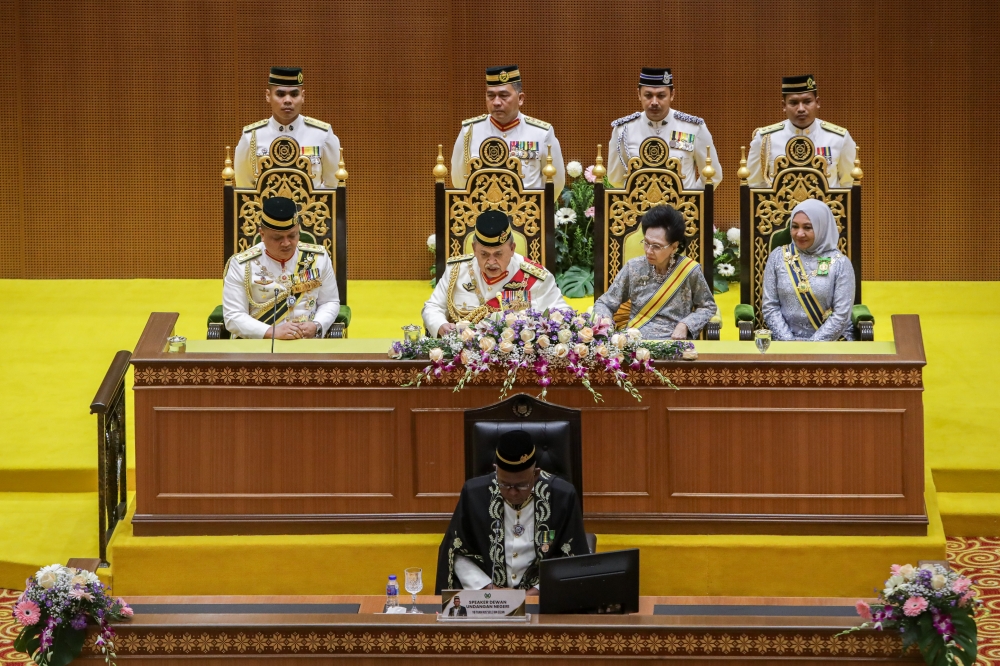
 Paraguay's President Santiago Peña met on Sunday in Campo Grande, the capital of Brazil's Mato Grosso do Sul state, with business leaders from the state's Federation of Industries (FIEMS) to promote investment opportunities in his country. The meeting, organized at the association's request, brought together representatives from sectors including bioenergy, food, construction and logistics.