❌

Reading view

An Off-Road Itinerary

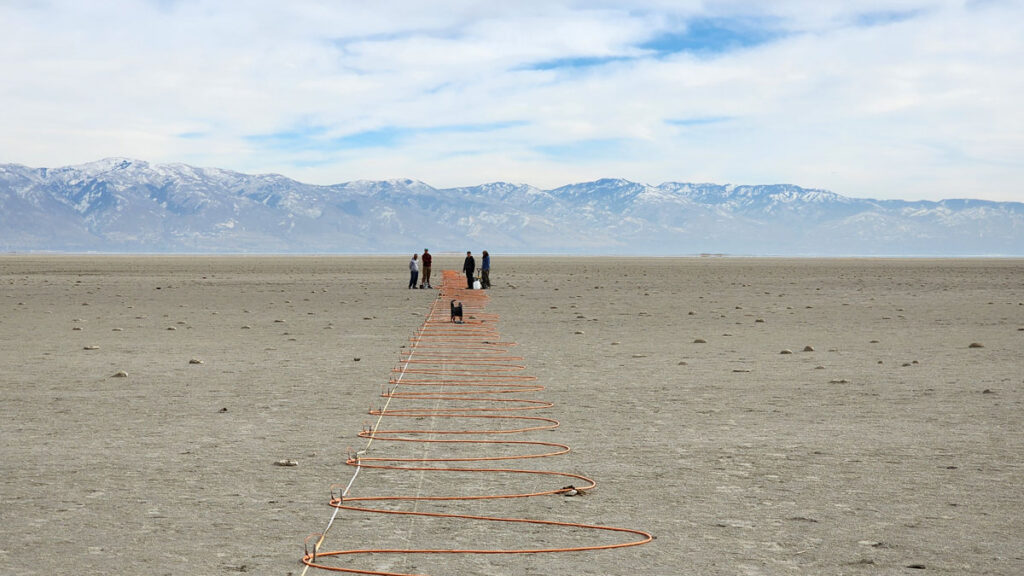
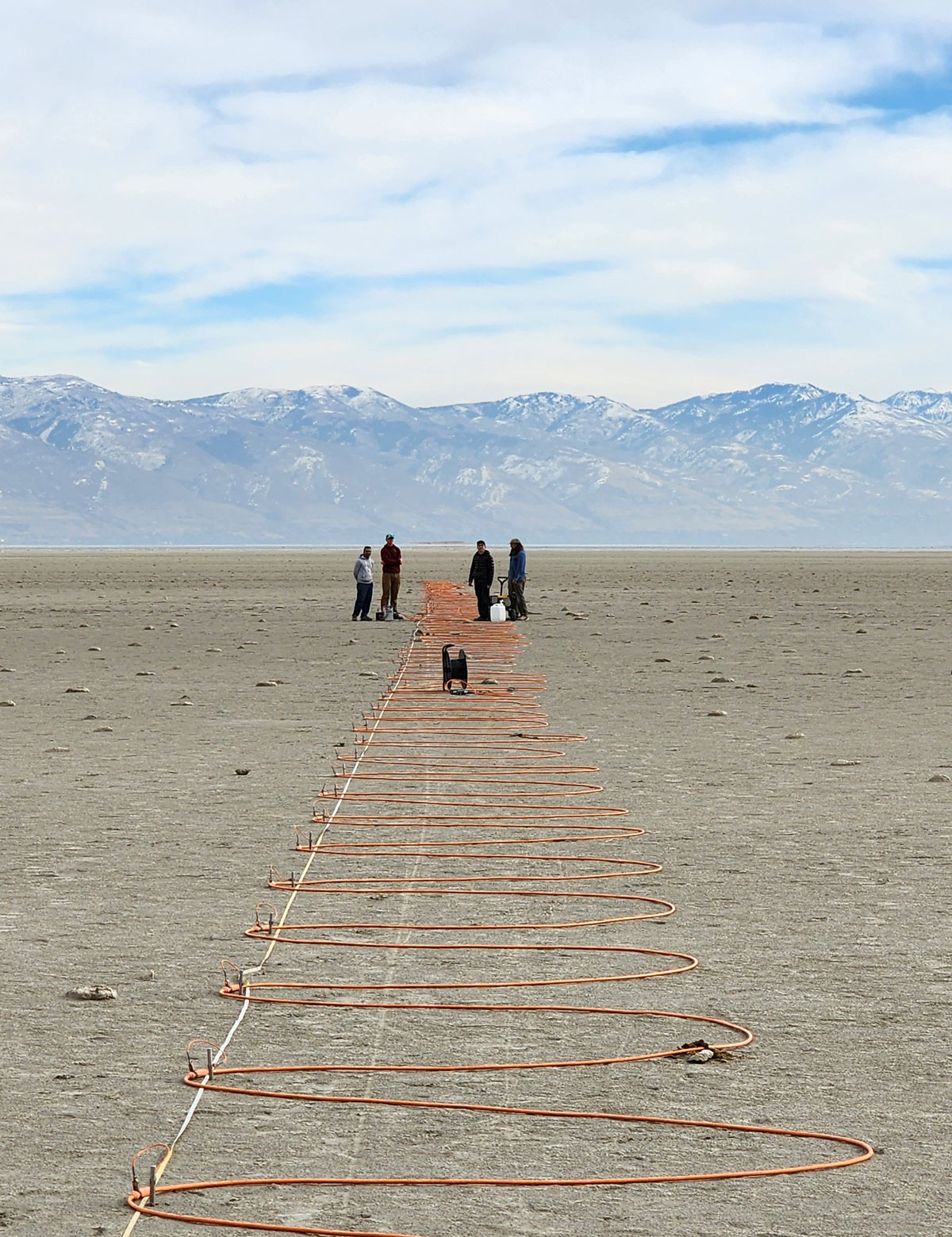
Researchers stand in the distance as an orange electrical cord snakes across a dry lake bed in the Great Salt Lake.

Iceland, Chile, Kenya, Antarctica, Papua New Guinea, and the Great Salt Lake. That ambitious lineup covers (most of) the destinations where scientists featured in our annual fieldwork collection have ventured to test innovative instruments and answer pressing questions about natural processes onβ€”and offβ€”Earth.

Read along to learn about some fascinating field science and to hit all these hot spots and cool destinations for yourself.

In β€œDiscovering Venus on Iceland,” scientists describe a multiweek effort traversing three rugged and rocky sites to collect samples and validate airborne radar measurements. Iceland’s basaltic lava fields are about the closest analogue to the surface of Venus that Earth has to offer, and the team’s data collection is helping to test the performance of instruments that will be a part of NASA’s VERITAS (Venus Emissivity, Radio Science, InSAR, Topography, and Spectroscopy) mission in several years’ time.

From Iceland, travel west and south to Chile, Guatemala, and Idaho to learn how researchers have been building and using their own inexpensive, lightweight sensors to detect infrasound emanating from volcanoes, earthquakes, and wildfires in β€œSensing the Sounds from Earth’s Hazardous Environments.” At Villarica volcano in the Chilean Andes, for example, they have deployed sensor clusters on, around, and even hanging from a cable above the volcano’s summit crater to better understand how infrasound may be useful for eruption monitoring.

Meanwhile, at Lake Turkana in Kenya, scientists have been partnering with local industries to map the subsurface and better understand how the continent is unzipping along the East African Rift System, as Kimberly Cartier describes in β€œEastern Africa Is Splitting Apart, but Not Where We Expected.”

Stick with Cartier for another leg of our fieldwork trip as she relates how researchers have instrumented an underwater volcanic vent off Papua New Guinea to track effects of ocean acidification on corals in β€œCoral Diversity Drops as Ocean Acidifies.”

From there, head to the decidedly less tropical climes of the South Pole, where a team recently installed a pair of seismometers deep in the Antarctic ice, completing a challenging and years-long feat of engineering, reports Grace Van Deelen in β€œThese South Pole Seismometers Will Detect Vibrations 1.5 Miles Under the Ice.”

Finally, journey to the North American interior to learn what scientists found when they installed electrodes on the now-desiccated surface of Utah’s Great Salt Lake in Carolyn Wilke’sβ€”spoiler alertβ€”β€œWhat’s Below the Great Salt Lake? More Water.”

We’ll understand if you need a break after all that globe-trotting. But you’re always welcome to join us for more adventures in the field.

β€”Timothy Oleson, Eos Senior Science Editor
Citation:Β Oleson, T. (2026), An off-road itinerary,Β Eos, 107, https://doi.org/10.1029/2026EO260181. Published on 1 June 2026.
Text Β© 2026. AGU.Β CC BY-NC-ND 3.0
Except where otherwise noted, images are subject to copyright. Any reuse without express permission from the copyright owner is prohibited.
  •  

The Persistence of PFAS

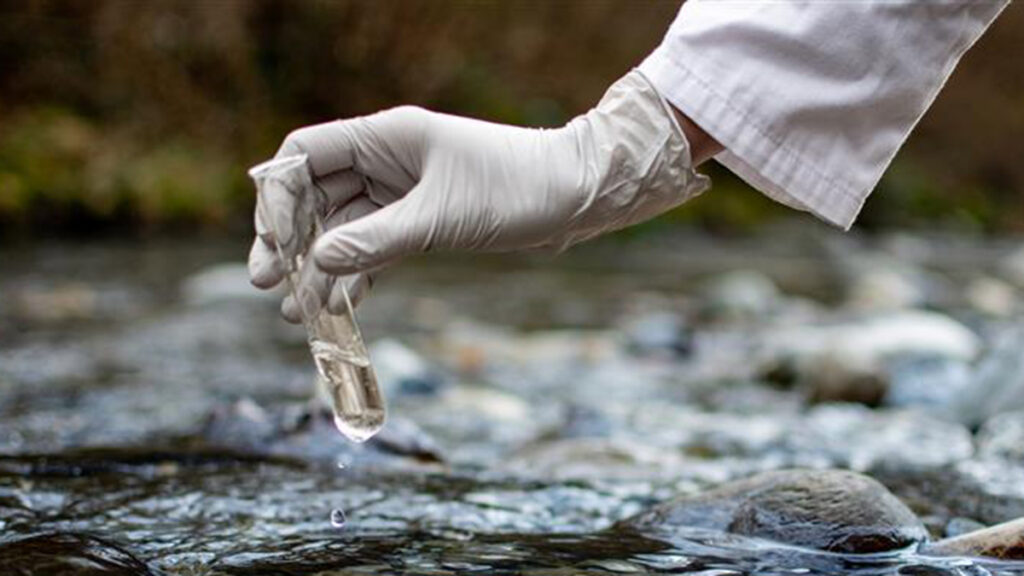
A person’s right arm extends into the frame from the right over a running stream. The gloved hand holds a test tube partially filled with water that’s just been collected; a partial droplet of water is collecting at the bottom of the tube.

This month, Eos is taking a long look at β€œforever chemicals.” Per- and polyfluoroalkyl substances (PFAS) have been percolating through our industrial environment since the 1940s. They help make products nonstick, waterproof, and stain resistant. They also make their way into air, soil, and water, as well as our bodies, where they have been linked to impaired immune systems, developmental delays in children, and some cancers.

Since discovering that PFAS might be harmful to human and environmental health, researchers and industries have reformed the chemicals into novel substances. The behaviors of these novel PFAS are proving difficult to pin down, as Grace van Deelen explores in her feature β€œChemical Companies Are Churning Out New PFAS. Where in the World Are They Ending Up?”

From the deep ocean to alpine glaciers, scientists are being forced to play β€œchemical Whac-A-Mole” to study novel PFAS, one scientist told van Deelen. Researchers are also searching forβ€”and findingβ€”PFAS in the isolated interior of the White Continent, as described in Rebecca Owen’s β€œTracing the Path of PFAS Across Antarctica.”

Once PFAS have been identified, scientists work to disarm them with filtration, heat, and even sunshine. In an innovative approach, β€œA Peculiar Polymer Paired with Sunlight Could Remove PFAS,” writes Emily Gardner.

Another option is to put PFAS to work. Read about how scientists are using trifluoroacetic acid, a less toxic PFAS, to gain a rough idea of how recently an aquifer has been recharged in Saima May Sidik’s β€œPollution Is Rampant. We Might As Well Make Use of It.”

As PFAS permeate our environment in different ways, scientists are taking the lead in developing proactive approaches to search for, study, and maybe take the β€œforever” out of β€œforever chemicals.”

β€”Caryl-Sue Micalizio, Editor in Chief

Citation:Β Micalizio, C.-S. (2026), The persistence of PFAS,Β Eos, 107, https://doi.org/10.1029/2026EO260135. Published on 30 April 2026.
Text Β© 2026. AGU.Β CC BY-NC-ND 3.0
Except where otherwise noted, images are subject to copyright. Any reuse without express permission from the copyright owner is prohibited.
  •  
❌