At a friend’s cottage I recently uncovered a copy of The Reptiles of Ontario published in 1939 by the Royal Ontario Museum of Zoology. It’s an artifact that thrills with the mention of the extraordinary nature once found near human settlement.
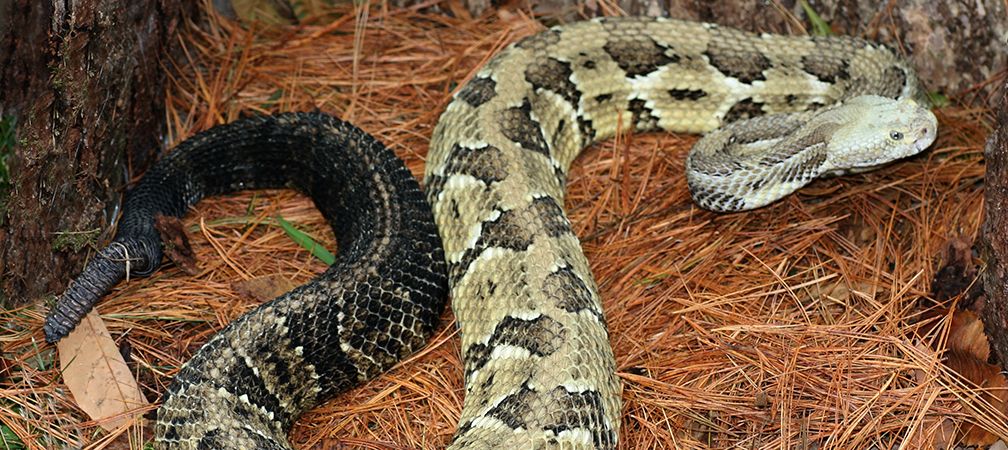
It says that, in 1877, a timber rattlesnake, a species now extirpated from Ontario, was discovered a mile from Niagara Falls and even into the late 1930s this large snake—which can be five feet or longer—was found at Niagara Glen.
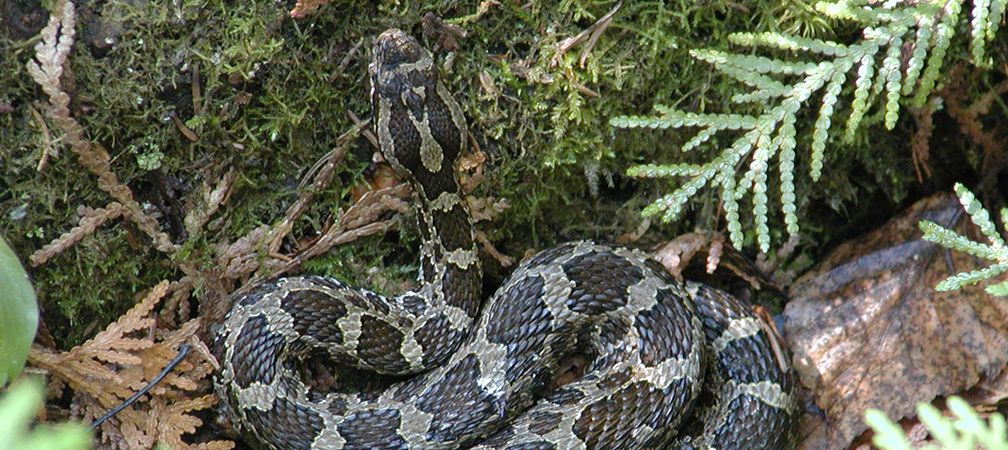
The book’s most uplifting section is devoted to the Massasauga rattlesnake. The author, E.B.S. Logier, offers it a measure of empathy. In fact, he hints that it has intrinsic value.
This is extraordinary given that it’s long been reviled in the province. From the time of early settlement on, many considered it dangerous. Elizabeth Simcoe, wife of the first lieutenant-governor of Upper Canada, wrote in her diary in the 1790s that 700 rattlesnakes were killed during the building of a mill on the Humber River.
Logier laments that the creature is rarely seen and adds, “There will be multitudes of serious-minded people in the generations yet to come who will wish to see and study rattlesnakes…so there is a responsibility incumbent on us who are living today, and who by the very nature of the case are trustees of an estate to be passed on, not to wantonly destroy any living thing, regardless of whether from our point of view it is a desirable creature or not.”
Logier says we should protect rattlers because it would benefit humans: future Ontarians may want to experience them. But by urging their preservation even if they aren’t desirable ‘from our point of view’ he also suggests wildlife has inherent worth. It’s his use of ‘our point of view’ — coming decades before the modern environmental movement — that’s impressive here.
Further, in calling us “trustees of an estate”, he implies our job is not to exploit the natural world but to safeguard it. This echoes the message and conservation work of Ontario Nature, which reminds us that the environment is entrusted to us for future generations, not as something to own, but as something to steward.
Logier isn’t ready to grant the Massasauga constitutional rights (what might be called “security of the serpent”), but he’s gesturing in that direction.
And given he was writing 87 years ago, that’s admirable.
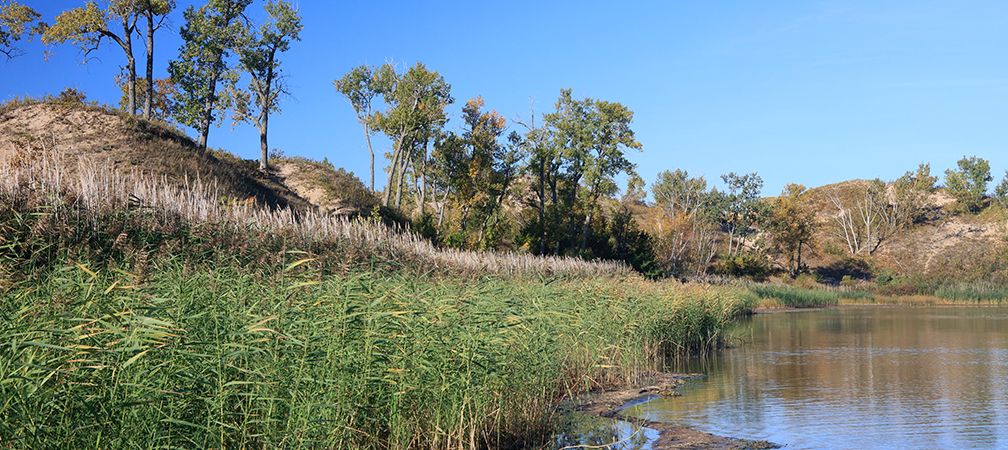
Like many regions across Ontario, West Lake in Prince Edward County is experiencing altered shorelines, habitat fragmentation, and growing development pressure. The 1,903-hectare lake is bordered by the largest freshwater baymouth barrier dune system in the world, found within Sandbanks Provincial Park. West Lake contains a large provincially significant wetland and is home to at least 35 species at risk.
West Lake Community Association (WLCA) is a volunteer non-profit that was formed to engage residents and visitors of the small community with the aim of preserving its uniqueness and protecting West Lake’s biodiverse and fragile ecosystems. WLCA is a member of Ontario Nature’s Nature Network.
Understanding the Threats to West Lake
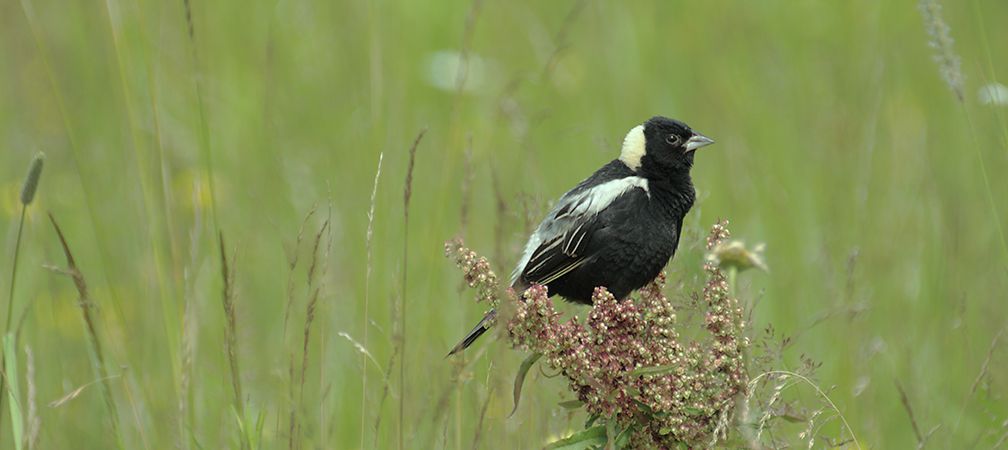
WLCA and Ontario Nature began a collaborative project with a fundamental question: where is the most vulnerable habitat around West Lake? Several major threats are impacting the ecosystems in and around the lake, including shoreline erosion and development pressure. Parts of West Lake are being choked out by rapidly spreading invasive aquatic vegetation. These threats are affecting a variety of species at risk in the area, including Blanding’s turtle, monarch butterfly and bobolink.
Creating Habitat Suitability Models for Species at Risk in West Lake
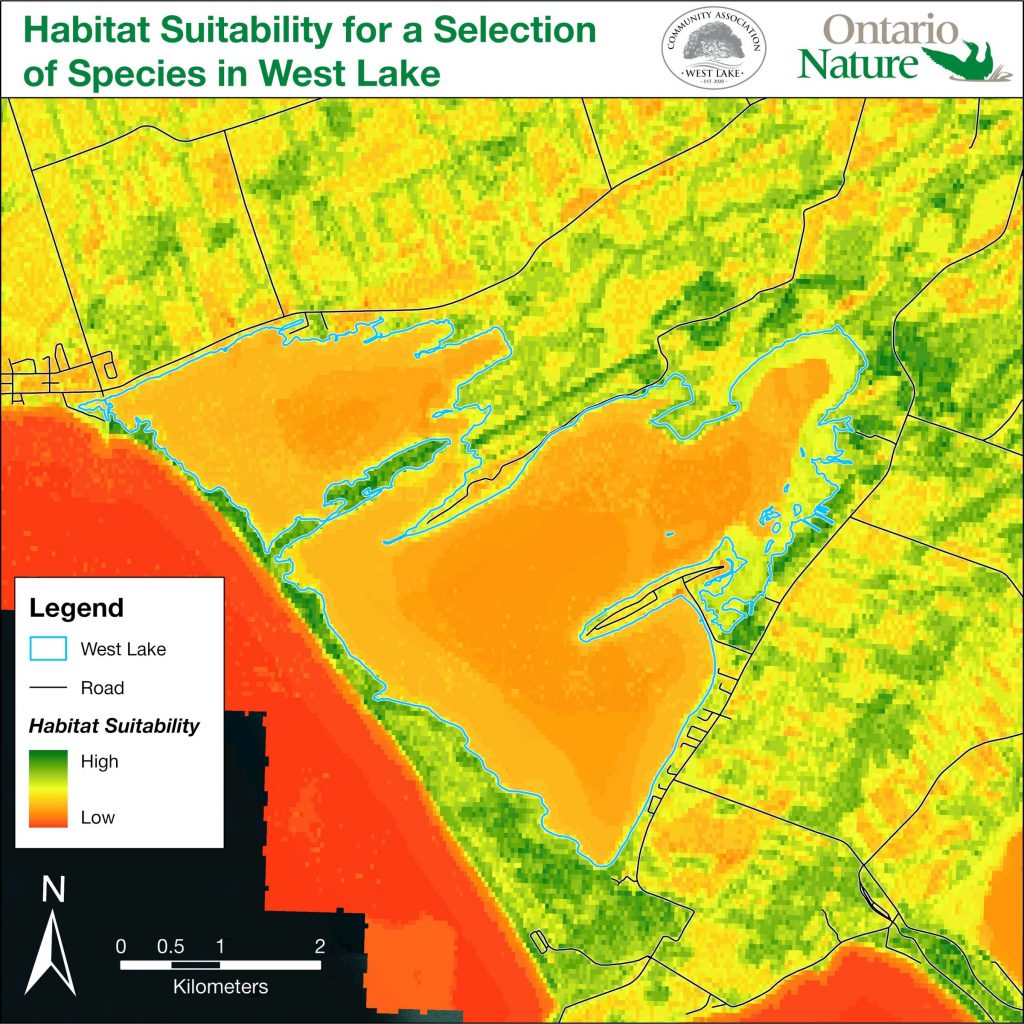
Through a collaborative effort to identify where species are most vulnerable in West Lake, partners created habitat suitability models to show where important habitat exists and where habitat restoration and stewardship efforts may be needed.
Selecting Species for Our Models
Our project chose four “representative species” whose habitat needs overlap with those of many other plants and animals in the area: butternut, Eastern meadowlark, Eastern musk turtle and pugnose shiner. These species were selected because together they represent a range of terrestrial and aquatic habitat needs. When the models for these four species were combined, it highlighted these specific vulnerable habitats: healthy woodlands that support butternut, open meadows and fields used by Eastern meadowlark, wetlands and shorelines that are needed by Eastern musk turtles, and clean, vegetated water where pugnose shiner live.
Model of suitable habitat for a variety of species in West Lake, Ontario (green indicates the most ideal habitat).
Identifying Important Habitat for Protection and Restoration
Much of the ideal habitat was near the provincially significant West Lake Wetland, along shorelines in the northeast corner of the lake, and within Sandbanks Provincial Park. These areas may represent priority locations where habitat restoration and conservation efforts could be focused.
Sharing the Importance of West Lake with an Interactive Story Map
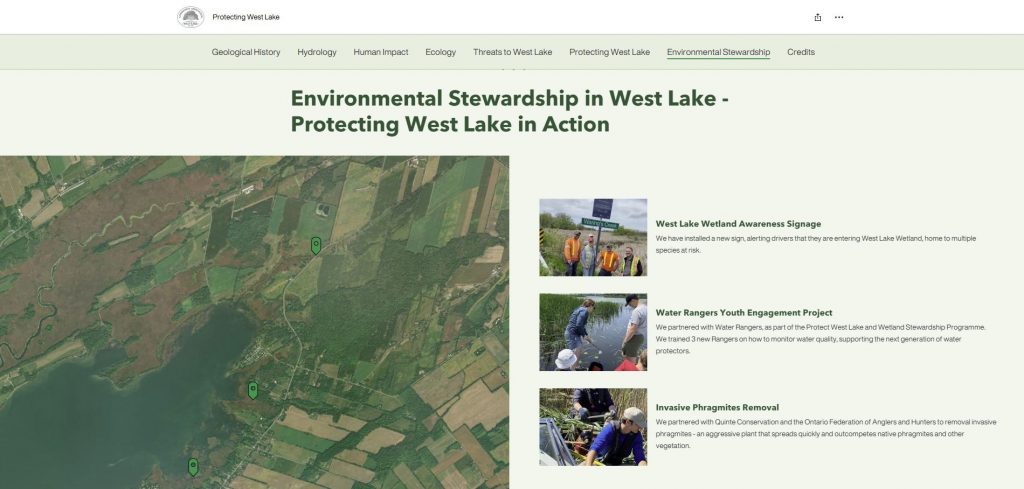
Engaging with the community and sharing knowledge about West Lake was another goal of the project. WLCA works to encourage interest and engagement among residents to help preserve the uniqueness of the West Lake watershed. They have hosted numerous educational workshops and events, including an annual Environmental Symposium, creating signage to raise awareness of the West Lake Wetland, and partnered with Water Rangers on their Youth Engagement project to train youth on water quality monitoring.
West Lake Community Association and Ontario Nature have published an interactive StoryMap to learn about threats to its ecosystems and recent stewardship projects.
Through collaboration, partners have created the West Lake StoryMap, an interactive mapping tool that blends maps and images to share information about West Lake’s history and ecology. The West Lake StoryMap allows residents and visitors to:
Discover the history of West Lake
Identify threats to its ecosystems
Explore areas vulnerable to flooding, erosion and other natural hazards
Learn about actions WLCA has taken to steward West Lake
By bringing together community perspectives and spatial analyses, the West Lake community has a clear picture of what makes this place special and what threatens its ecosystems. These tools are intended to inspire residents and visitors to get involved in the conservation and protection of West Lake, through shoreline restoration, invasive species removal or by simply learning more about the species that call this area home. With this StoryMap and the continued leadership of the West Lake Community Association, everyone can play a part in keeping West Lake in Prince Edward County healthy for generations to come.
If you or your organization are interested in exploring a conservation or habitat modelling project in Ontario like this, please reach out to Graeme Smith by email at graemes@ontarionature.org or by submitting a request form.
Graeme Smith is the GIS Coordinator at Ontario Nature. He has completed a B.Sc. in biology at Laurentian University and a M.Sc. in environmental and life sciences at Trent University. In his spare time, he enjoys reading, playing board games and exploring the outdoors.
Cathie Coultis is the Chair and Co-Founder of West Lake Community Association. She lives in the hamlet of West Lake with her husband and family dog, enjoys kayaking, cycling, bird watching, gardening, snowshoeing and being active in their rural community.
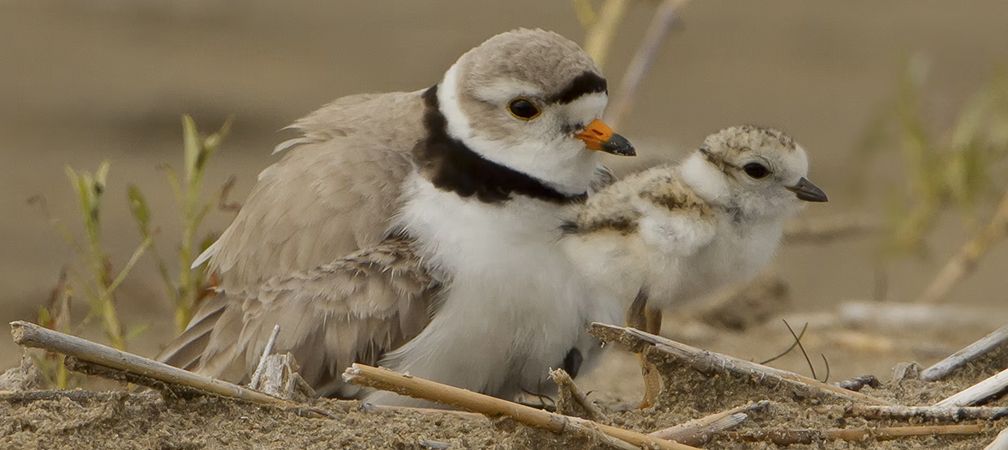
Wasaga Beach Provincial Park is one of Ontario’s most beloved natural places and provides habitat for endangered piping plovers. Stretching 14 kilometres along the Georgian Bay shoreline, it attracts more than one million visitors annually. Wasaga Beach is the most visited provincial park in the province. Beyond the crowds, the park protects dune ecosystems and habitats that are vital to other at-risk species like the eastern hognose snake, Hill’s thistle and the monarch butterfly.
Now, the Government of Ontario has removed provincial park protections from a significant portion of the beach and intends to transfer the lands to the Town of Wasaga Beach. This would weaken long-standing protections for these fragile habitats, and the piping plovers that depend on them.
The news came in May 2025, when the Government of Ontario announced the transferring of lands to the Town of Wasaga Beach to develop the waterfront for tourism.
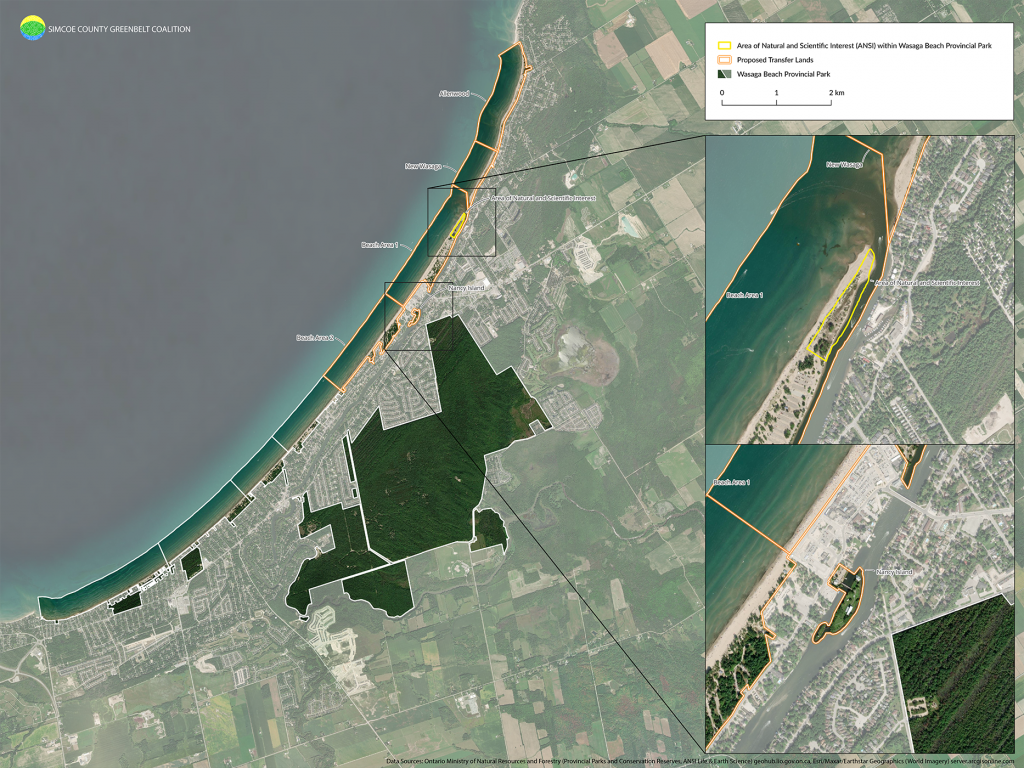
In June, the government posted a proposal on the Environmental Registry (ERO #025-0694) to amend the Provincial Parks and Conservation Reserves Act. The proposal would remove several parcels of land from Wasaga Beach Provincial Park (roughly 60 hectares). Four of the park’s eight beach areas, including Areas 1 and 2, New Wasaga Beach and Allenwood Beach are included in the transfer. These areas are the most important piping plover habitat at Wasaga Beach.
Public response to the proposal was overwhelmingly opposed, with approximately 98 percent of comments objecting to the removal of beach areas from the park. Key concerns focused on potential environmental impacts, legal and governance issues, and implications for public access and equity.
Despite this feedback, no changes were made to the proposal, citing the Town of Wasaga Beach’s commitments to maintaining public access, and avoiding development on the beach. Lands removed from the park will remain subject to Ontario’s environmental protection laws.
While the province has stated the beaches will remain public, what remains unclear is how these lands and their ecological integrity would be managed once they are no longer under provincial park legislation. These changes come at the hills of over 100 species losing protection under the province’s new Species Conservation Act.
The changes to both land ownership and species at risk laws significantly heighten the endangerment to piping plovers at Wasaga Beach.
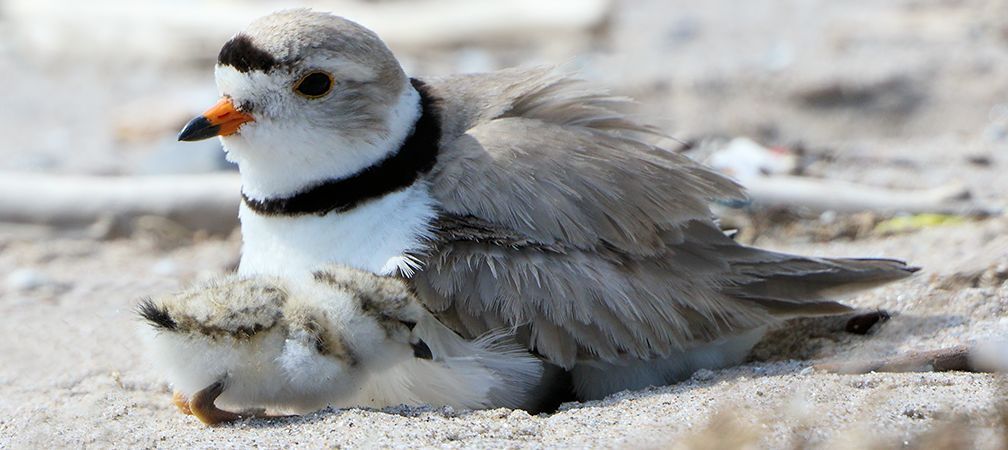
Piping plovers are small shorebirds that nest directly on open sand, making them especially vulnerable to disturbance. In Ontario, they are listed as endangered under federal law, and Wasaga Beach has played a critical role in their population recovery. Successful nesting depends on a healthy dune ecosystem, undisturbed beaches, and careful seasonal management – conditions that can be easily disrupted if the lands are developed for tourism.
With decisions about shoreline use, tourism infrastructure, and beach “maintenance” now under municipal authority, activities like beach raking could threaten nesting piping plovers and weaken the dune systems that naturally protect the shoreline from erosion, storms, and climate impacts.
The replacement of Ontario’s Endangered Species Act with the Species Conservation Act narrows the definition of protected habitats, potentially leaving dunes and foraging areas outside nesting sites unprotected. In addition, the Government of Ontario intends to de-list migratory birds all together to “remove duplication for species already receiving federal protections.” To date, the federal government has been reluctant to implement the Species at Risk Act on non-federal lands, which is why complementary provincial legislation was always necessary.
In a 2025 media release, Ontario Nature’s Conservation Policy and Campaigns Director Tony Morris said transferring these areas to the town puts both wildlife and long-standing conservation efforts at risk.
Under municipal ownership, decades-long dune restoration and habitat protections, carried out by Ontario Parks, could disappear. Without the Provincial Parks and Conservation Reserves Act in place, Morris says the town would not be required to manage the land for ecological health.
The emergency order request seeks immediate protection for critical piping plover habitat at Wasaga Beach. With the nesting season approaching, conservation groups are calling for action by March 1, 2026, noting that further delays could have serious consequences for the species’ survival and recovery in Ontario.
Call or email your MPP, and elected officials from the Town of Wasaga Beach to ask what they are doing to ensure Wasaga Beach remains a natural shoreline that balances tourism and a healthy ecosystem for the species that call it home.
Under the SCA, no migratory birds, aquatic species or species of special concern will be provincially listed. The rationale for removing protections for migratory birds and aquatic species is that they already receive federal protection under the Species at Risk Act (SARA). In the case of special concern species, the provincial government is not listing them because they were not subject to “prohibitions under the ESA”. The provincial government is thus abandoning responsibility for 106 out of the 270 or so species currently deemed to be at risk in Ontario.
In 1996, federal, provincial and territorial ministers responsible for wildlife committed to a national accord to protect species at risk by agreeing to “establish complementary legislation and programs that provide for effective protection of species at risk throughout Canada.” Canada and Ontario went a step further in 2011 by developing an Agreement on Species at Risk that commits to coordination and cooperation on preventing species from becoming at risk, as well as protecting and recovery identified species.
The Government of Ontario has abandoned these commitments. Species do not recognize arbitrary political boundaries, and cooperative federalism is absolutely necessary to conserve species at risk, especially amid a biodiversity crisis.
The SARA is not equivalent to the ESA and to date, the federal government has been reluctant to exercise its power under the act on non-federal lands. The Government of Ontario has given no indication that the federal government was engaged on the draft SCA or agreed to step in and provide protections for the migratory birds and aquatic species that have lost provincial protections. On the contrary, Minister McCarthy along with the Alberta Environment Minister senta letter to their federal counterpart in June, 2025 that requested the federal government amend SARA “to respect the constitutional jurisdiction of the provinces”, along with request to weaken other environmental regulations.
Further evidence that SARA is not fit to purpose to make up for the once gold standard provincial ESA, is that the backlog of species needing reassessment by Environment and Climate Change Canada will grow to 574 by the end of 2030. Additionally, as of 2022, the Auditor General of Canada found that 10% of federally listed species did not have recovery strategies or management plans in place as required by the act. Furthermore, of the 409 recovery strategies prepared by 2022, 20% did not identify the species’ critical habitat, which is necessary for protections under SARA.
Despite the Government of Ontario’s claims that the protections under the ESA for migratory birds and aquatic species were duplicative with federal protections, it is clear that SARA and the federal government are not equipped to provide equivalent protections.
Ontario’s weakening of protections for species at risk threatens our long-term well-being. Join us in urging the Government of Ontario to repeal Bill 5.

 Login
Login