Reading view

Cloudland Canyon Waterfalls

I’d half expected the falls to be dry. It’s hardly rained in northwest Georgia this autumn. But nature always delights as she often reminds me. The tiered unnamed falls cascade in a soft veil to join the creek and meander among the fallen leaves. The low water level made for easy scrambling across narrow streams, allowing me to fully explore this beautiful gorge in solitude.

Sitton's Gulch Creek Sitton's Gulch Creek

I’d parked at the north end of Sitton’s Gulch Trail in a quiet residential neighborhood instead of the busy Cloudland Canyon State Park lot. It’s a rolling uphill hike from here to the steps above the falls and an easy hike back. It turns out that was a blessing, as I’d lingered at the falls and dusk was quickly approaching as I tried to ignore scores of puffball mushrooms and striking leaves along my way to get to the car before the last of the light, which disappears earlier in the canyon bottoms.

pear-shaped puffball mushrooms

It’s mid-November, and most of the leaves have fallen. Those still in the treetops twirl in the breeze, mimicking the gentle patter of a spring rain. I’m a half-mile from the parking lot when the full aroma of decaying leaves envelopes me and stops me in my tracks. I close my eyes and inhale deeply, savoring the nostalgia and peace of an eastern hardwood forest. My shoulders fall, and I’m instantly relaxed. It brings me back to barefoot summers full of exploration.

Cloudland Canyon Waterfalls Sitton's Gulch Creek Trail Cloudland Canyon Waterfalls

A couple of weeks ago, the falls were reportedly dry. Since then, there’s been some rain. And the snow flurries two days ago. I glimpsed a pool of water as I rounded a bend in the trail. What I’d thought was the sounds of rustling leaves was actually the gentle sound of water splashing down the boulder-strewn gulch! I’m elated!

I had an image in my head of the red maples in full color with the motion-blurred water falling behind them. It’s an image I missed on my last trip here, because I didn’t have my tripod. I had to hand-hold a long exposure, and all of the images turned out blurry.

Cloudland Canyon Waterfalls Cloudland Canyon Waterfalls

I wanted a do-over, even though I know we can never visit the same river twice. Today, most of the red leaves are on the ground, leaving the ochres and golds aloft to sing the song of the season.

The creek widens as I move up the path; small cascades roll over rocks in miniature torrents. Just before the unnamed falls, the Sitton’s Gulch Creek is only a few feet wide, carrying leaves, eddying in pools, and spilling down the canyon.

Cloudland Canyon Waterfalls
Unnamed Tiered Falls

I lingered at the base of these falls for an hour, enthralled with the way the water moves and all of the leaf mosaics plastered on the rocks.

Cloudland Canyon Waterfalls Cloudland Canyon Waterfalls Cloudland Canyon Waterfalls Cloudland Canyon Waterfalls

Climbing the wooden steps, I crossed the creek on a boardwalk at the lip of the falls. I took the short spur to Hemlock Falls. A viewing platform overlooks the ninety-foot waterfall.

Cloudland Canyon Waterfalls Cloudland Canyon Waterfalls
Dusk is coming

Social trails descend steeply to the base of the falls, an area that would be pooled with water when the creek runs full. Today, it would be a safe scamper down. But. I’m three miles from my car and one-and-a-half hours from sunset. Next time. This canyon keeps calling me.

Cloudland Canyon Waterfalls

If you’re interested in purchasing or licensing any images you see here, please email me at SNewenham at exploringnaturephotos.com, and I’ll make it happen.

Subscribe here to receive an email whenever a new blog posts.


The post Cloudland Canyon Waterfalls appeared first on Exploring Nature by Sheila Newenham.

  •  

Waterton Park and the 2017 Kenow Fire

When I set out for Waterton National Park in Alberta, Canada, I imagined fall forests resplendent in golds, accented by oranges and reds. The smell of leaves composting into the earth and the peace of the earth quieting into winter. What I found was a blackened landscape, still deeply scarred by the 2017 Kenow Fire eight years ago.

Crandall Lake, Waterton Kenow fire
Crandall Lake Vista

When the foliage is gone, the structure lies bare. Undulations ripple along the mountainsides; seeps and drainages stand out. 

Waterton Kenow 2017 Fire Waterton Kenow 2017 Fire Waterton Kenow 2017 Fire

The rhythms of the forest are speaking in structure, not color. This gift in this landscape of open vistas is long sightlines – a dream for wildlife spotting.

Waterton Kenow 2017 Fire Waterton Kenow 2017 Fire

The Kenow Fire ignited with a lightning strike and burned slowly until September 11, 2017, when it blew up in critically dry conditions, surging from 30,000 to 104,000 acres overnight, overtaking Waterton National Park. The Kenow Wildfire was a fire of exceptional severity exceeding every fire since the Park’s records began in 1700. In the end, half of the vegetated land and 80% of the hiking trails in the Park were burnt. 

In almost all of this burn area, most or all of the organic matter was seared away by the fire. The topsoil burned away to a depth of three feet.

Waterton Park Bellevue Prairie Trail Waterton Kenow 2017 Fire

Dense conifer forests are being replaced by young aspens and shrubs such as Saskatoon berry, thimbleberry, and huckleberry. It’s a bear’s delight! The conifers will come back, too. They grow relatively slowly.

Black Bear
Licking the berries off the branches like lollipops.

Fire is necessary, natural, “normal” for these forests. Our human misunderstanding and resulting meddling have given rise to an increase in these large, catastrophic (by human standards) fires. This was a dramatic fire. The recovery is being documented and studied, providing insights into the land’s history and the resilience of nature.Waterton Kenow 2017 FireIt’s often not what I expected, but it’s always an adventure.

If you’re interested in purchasing or licensing any images you see here, please email me at SNewenham at exploringnaturephotos.com, and I’ll make it happen.

Subscribe here to receive an email whenever a new blog posts.


The post Waterton Park and the 2017 Kenow Fire appeared first on Exploring Nature by Sheila Newenham.

  •  

Ghost Cat Revealed

With varying degrees of hope, I commonly say that I’m going to find wild cats when I head into the wild with my camera. And so it was that I excitedly shared this cougar alert post from Waterton National Park just a few days before my arrival there. I never expected what happened next.

Here, Kitty, Kitty. Psspsspss.

On the eve of my first day in the park, during a wildlife drive, I lamented the lack of wildlife sightings. All of the park’s communications warn visitors to be prepared for encountering wildlife while hiking. One hundred yards into any trail is this warning sign.The massive 2017 Kenow Fire razed the dense forests, resulting in extensive sightlines. And yet.

Stuck in My Head

I passed by a small gathering of photographers with their big lenses pointed at a black bear high up on a slope. He was too far away, and, honestly, I’m beyond fortunate to be spoiled by previous, intimate bear encounters.

Black bear
Black bear eating berries high up on the hillside

I’d come here to help reset my head. It’d been way too long since I’d been able to wander the wilderness in this way that feeds my soul, and there’s a lot of stress at home. I craved some forest bathing!

Here’s Your Sign

I was having a hard time shedding the stress. “I’ve lost my wildlife mojo,” I said to myself. The wild is responding to my negative energy, I thought as I rounded a bend to see the unmistakable long tail of a mountain lion crossing the road. A wild, North American mountain lion!!

Ghost cat, mountain lion
First sighting – uncropped at 120mm!

I stopped in the road and activated my flashers while simultaneously grabbing my binoculars. I didn’t expect to locate the ghost cat, master of camouflage, in the low aspens and serviceberry bushes. But there he was. Standing broadside. This magnificent, muscular tomcat looking back at me. Ghost cat, mountain lion

I’ve spent a lot of time in mountain lion territory. I’ve seen tracks, scat, and sign. One delightful winter day, I heard a cougar calling to her kittens. I’m sure plenty of wild cats have seen me. But, until now, I’d never seen one in North America. Ghost cats!Ghost cat, mountain lion

I quickly exchanged the binoculars for my camera. The puma made some assessment of me and turned to pad up the burnt hillside. He moseyed, moving at a relaxed walk, stopping to look around, gently wagging the tip of that long feline tail, doing all the cat things. I reveled in this magical, solitary moment. 

Ghost cat, mountain lion Ghost cat, mountain lion
ghost cat, mountain lion
Imagine if these trees were green. He’d been gone.

As I watched him disappear and reappear through trees and brush, he crouched below a boulder and scrunched his ears out to the side. The stealthy cat pose. I thought he might be stalking a hare.

ghost cat, mountain lion ghost cat, mountain lion

It was at this moment that I heard a car approaching. I am stopped in the lane of traffic below a blind curve. I started the car and crept forward with my eyes on the rear-view mirror. In the car behind me, one of the photographers I’d passed activated her flashers, and we both stopped.

I glassed and glassed the hillside but could not find the cougar. The person behind me had their big lens out the window, focused on the slope. I scanned the area where she was looking, astonished that she had found this elusive cat so quickly, when I’d been watching him and can’t find him. Only then do I realize that she’s photographing a black bear higher up the hillside to the left. To the right, a cinnamon-phase black bear is ambling along the hillside toward the other bear. This must be what caught the mountain lion’s attention, causing him to crouch. Bears and cats don’t play well together. I’m sure “my” cat is long gone now.

Still in Awe

When I got home, I checked the time stamps on my images. I spent almost five minutes with this elegant, wild cougar. FIVE MINUTES! A glimpse is a gift. I don’t even know what to call this—unreal, unbelievable, blessed, connection, becoming.

The image of that lion crossing the road when I first saw him is seared in my mind. Today, I’m the luckiest girl in the world.

If you’re interested in purchasing or licensing any images you see here, please email me at SNewenham at exploringnaturephotos.com, and I’ll make it happen.

Subscribe here to receive an email whenever a new blog posts.

The post Ghost Cat Revealed appeared first on Exploring Nature by Sheila Newenham.

  •  

Documenting the Decline: Ontario Nature’s Resource on Weakened Environmental Protections

Since 2018, Ontario’s nature protections have been repeatedly weakened. While a few stories such as the ongoing changes to Conservation Authorities or the Greenbelt scandal made headlines, dozens of major changes have flown under the radar, buried deep inside massive government bills. It has been a lot to track, even for us.

Today, Ontario Nature is releasing a comprehensive new resource: Tracked Changes: The Decline of Ontario’s Legal Protections for Nature since 2018. We tracked every single piece of legislation that weakened legal protections for nature and biodiversity from the first term of the current provincial government to today. We broke it all down in plain language, cutting through the legislative jargon to reveal exactly how our environmental laws have been rewritten.

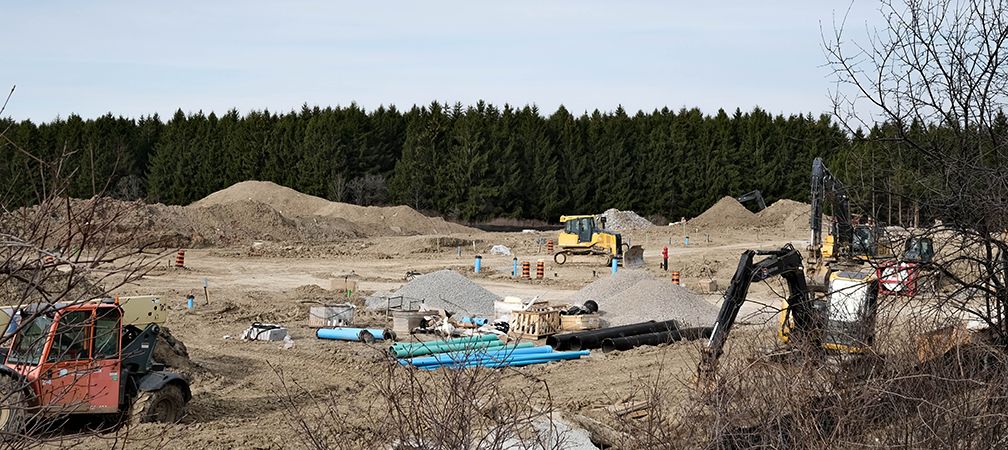
Development next to Mount Albion Conservation Area, sprawl, MZO, degradation
Development next to Mount Albion Conservation Area © Michael Hunter CC BY 2.0

What We Found: A Disturbing Pattern

Our review, detailed in the full report, catalogs the changes made bill-by-bill and schedule-by-schedule. Over the past seven years, key environmental laws, built over decades, have been systematically dismantled.

The Endangered Species Act (ESA) has been a primary target. Changes began with Bill 108 in 2019, which created a “Species at Risk Conservation Fund.” Critics called this a ‘pay-to-slay’ scheme, allowing proponents to pay a fee instead of being legally required to provide an “overall benefit” to the species they are harming. This process culminated in 2025 with Bill 5, which fundamentally rewrote the ESA to prioritize economic considerations over science-based recovery and even created a new law, the Species Conservation Act, to eventually replace it entirely.

Conservation Authorities (CAs), our frontline defenders against flooding and protectors of wetlands, have been substantially weakened. Bill 229 in 2020 forced CAs to issue permits for developments authorized by a Minister’s Zoning Order, even if those projects would be denied under their own standards for flood protection. The Auditor General criticized this move for shifting environmental decision-making from qualified professionals to political processes.

Public oversight and democratic accountability have been sidelined at every turn. The independent Environmental Commissioner of Ontario was eliminated in 2018 through Bill 57. The government has repeatedly circumvented the Environmental Bill of Rights, sometimes passing legislation before public comment periods on those very proposals have even closed, as happened with Bill 150 in 2023.

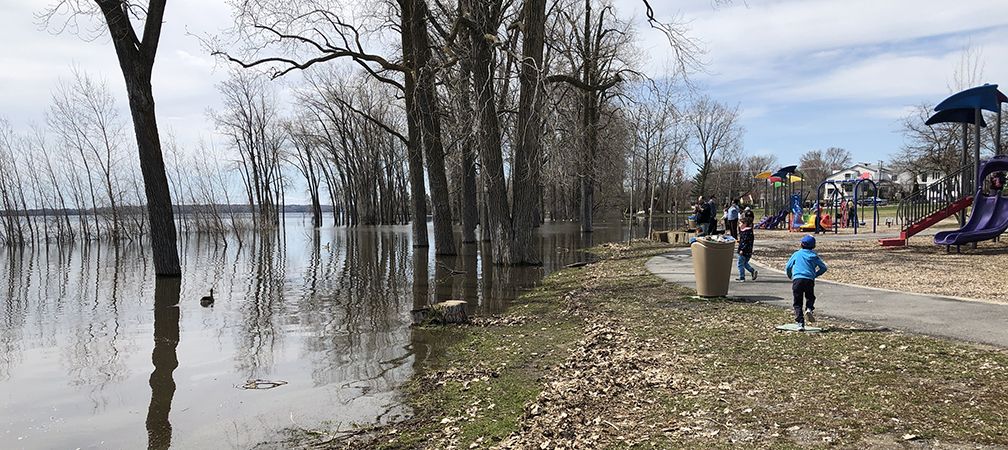
Major flooding, submerged landscape nearby playground
Ottawa River flood © Ross Dunn CC BY-SA 2.0

The Strategy: Buried in Omnibus Bills

Few of these changes got the headlines they deserved. Nearly all of them were buried inside massive omnibus bills. These are bills that bundle dozens of changes into a single piece of legislation.

For example, Bill 5, the Protect Ontario by Unleashing our Economy Act, 2025, was a single bill that:

  • Repeals the Endangered Species Act.
  • Cancelled environmental agreements for the Eagle’s Nest mine project and exempted the Chatham-Kent waste site from certain approvals. 
  • Centralized mining authority in the Minister, enabling fast-tracked permits. 
  • Removed public consultation rights for permits related to the Ontario Place redevelopment. 
  • Established Special Economic Zones where selected projects can be exempted from provincial and local laws, including environmental protections. 

This strategy of putting so much into a single bill ensures that major changes to environmental protections pass into law with little media coverage or public awareness. Our new resource cuts through this volume, separating each schedule so you can see exactly what changed and how.

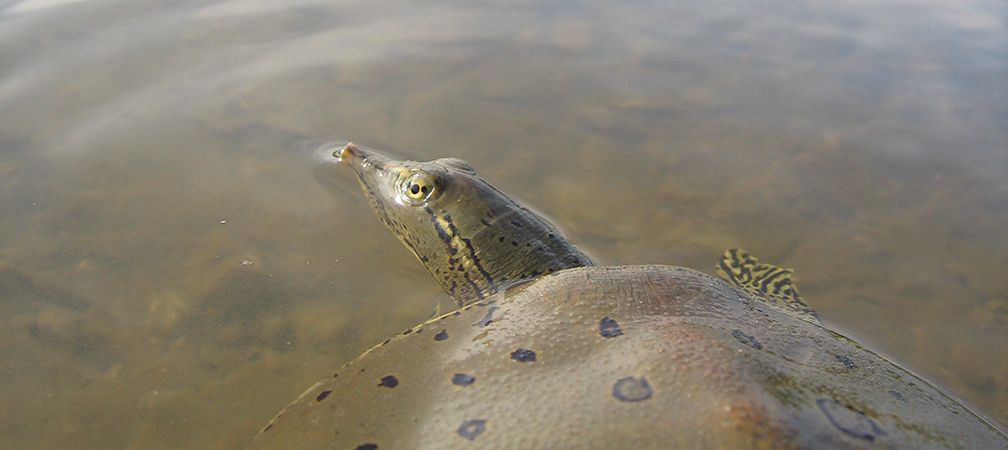
Eastern spiny softshell turtles, Endangered, Species at Risk
Eastern spiny softshell turtle © Scott Gillingwater

Why This Resource Matters

These changes didn’t happen all at once, and taken together, they systematically dismantle many of Ontario’s most significant legal environmental protections.

This report is designed as a tool for advocates, journalists, and anyone who wants to understand what has happened to nature protections in Ontario over three terms of the current government. We hope this will make it easier for people to see the full picture and understand not only what laws have changed, but how these changes have circumvented democratic transparency.

You can read the full report here.

  •  
❌