
Reading view

Taxi nearly hits security officer at Westgate, netizens split over blame
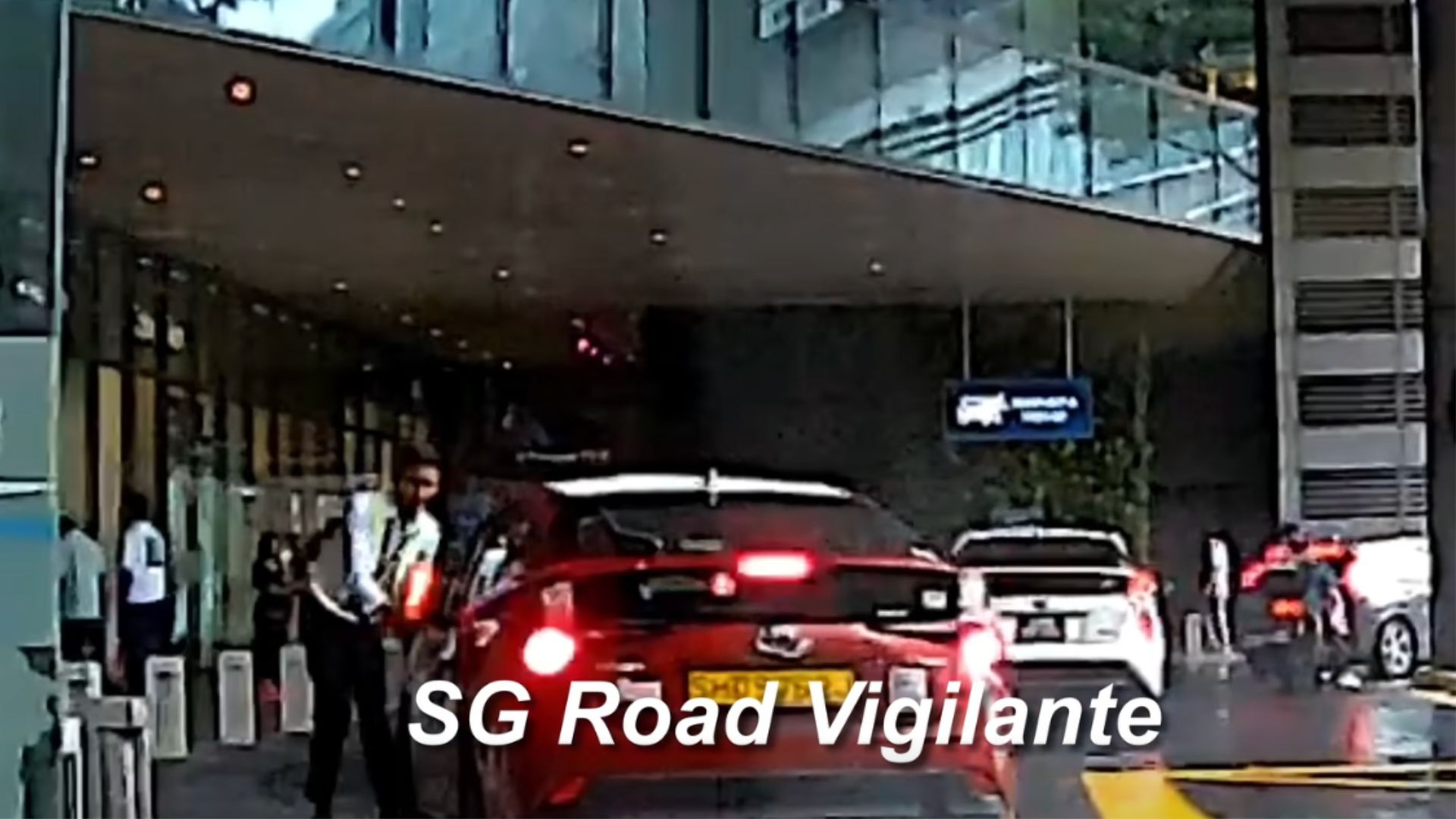
SINGAPORE: A near-miss incident at Westgate has sparked debate online after a taxi was seen driving towards a security officer on duty.

In a video shared on Facebook, a TransCab vehicle appeared to move forward suddenly while the officer was directing traffic at the entrance. The officer managed to react quickly and avoid being hit.

The officer was seen talking to the driver before everything happened, so it was uncertain if this was done intentionally. 

With this, netizens expressed their thoughts and opinions in the comments section, stating their sides on who was at fault in the first place. 

Some criticised the driver, saying the situation could have easily led to serious injury.

“The security officer is in a good mood today, man… Or else things would have been different! Anyway, it was great to see his fast reflexes! That cab could’ve broken some bones!” 

Another comment remarked: “Purposely one very obvious.”

However, for other people, the officer is also at fault. Others questioned why he was standing in the way of the vehicle, and that the driver just wanted to follow the lane. 

“Don’t blame the driver. I have met many road marshallers who wave you to proceed, but they stand in your way. If you try to avoid him, you will hit another car on your right. I never trust these so-called road marshals,” one netizen said. 

Other related news 

In a separate case, a 40-year-old passenger complained that his whole ride felt like he was flying, especially when the driver was caught speeding at 5 a.m. 

“If there were elderly passengers in the car, they would definitely get carsick or feel unwell… If there were motorcyclists or pedestrians on the road at the time, the driver would not have been able to brake in time, and an accident would have definitely occurred,” the passenger claimed. 

Read more about the news story here.

This article (Taxi nearly hits security officer at Westgate, netizens split over blame) first appeared on The Independent Singapore News.

  •  

Concerns grow over UAE hotel workers facing extended leave or termination amid rising hotel vacancies

UAE: Concerns have grown among netizens over hotel workers in the United Arab Emirates facing extended leave or termination amid the Middle East war.

One netizen, raising awareness of the situation, wrote on r/UAE: “It’s no secret anymore that the current hotel occupancy levels are at record low. As low as 10% but ranging from 10% to 30%. Hotels and resorts, especially the top-tier ones, cannot sustain this level of occupancy levels for longer. Many top tiers have already announced closures.”

Mentioning hotels such as Jumeirah Burj Al Arab, Armani Hotel Dubai, Atlantis The Palm, Park Hyatt Dubai and Radisson Blu Hotel Dubai, he added, “Most employees will be sent out on long leave or termination. Each of these hotels easily employs 500+”

Besides hotel workers, he pointed out that hotel closures lasting several months, whether temporary or for refurbishment, will affect not only the hotels themselves but also hundreds of other companies, including food suppliers, laundry services, transport companies, event planners, cleaning contractors, and tourism businesses.

“This will send a literal shockwave. Hundreds of companies are tied to the hotel industry. Multiple banks carry huge amounts of loan load by these hotels, on the other hand. That’s another domino on its own when the defaulters are in the tens or hundreds of millions AED. Every industry will start feeling the heat, and most already have, obviously. Just 10x worse in a month.”

Commenters shared the same sentiment. 

One said, “Wars always hurt civilians first. Hotel workers don’t start wars. They just lose jobs. That’s the tragedy. Not the buildings. The people.”

Another commenter claimed, “Last week, 700 staff were laid off at Atlantis. This isn’t me guessing or speculating. My close friend works there, and one of the big names in my industry was laid off, who had been there 18 years.”

However, one Dubai traveller, who often goes there for leisure, shared a more optimistic note, saying, “I wouldn’t fly to Dubai right now because there is so much uncertainty, but once this is all over, I wouldn’t be afraid of going back. I’m sure Dubai will bounce back. It’ll just take a little bit of time, as hotels will need to rehire and retrain.”

The Economic Times reported that at least seven premium hotels in Dubai, including Armani Hotel Dubai and Jumeirah Burj Al Arab, have announced temporary closures or scaled-back operations for renovations, as tourist arrivals slow amid the US–Israel–Iran conflict.

Others, such as Park Hyatt Dubai, St. Regis The Palm, and Radisson Blu Hotel Dubai, will also undergo refurbishments, while Atlantis Dubai has paused operations at several restaurants across The Palm and The Royal.

Industry executives expect more luxury properties to follow, with weaker demand likely to persist through summer, alongside hotel upgrades to improve resilience and security.

The region is also seeing fewer flights, Airbnb cancellations and more cautious household spending, CNBC reported.

In March, the World Travel & Tourism Council (WTTC) estimated the conflict had already cut at least US$600 million a day from international visitor spending, as disruptions to air travel, traveller confidence and regional connectivity weigh on demand in the region. /TISG

Read also: ‘I’m job hugging even harder’: Some Singaporeans share how they’re navigating rising costs amid the Middle East war

This article (Concerns grow over UAE hotel workers facing extended leave or termination amid rising hotel vacancies) first appeared on The Independent Singapore News.

  •  

Singaporeans empathise with local baggage handler who was caught throwing suitcases at Changi Airport

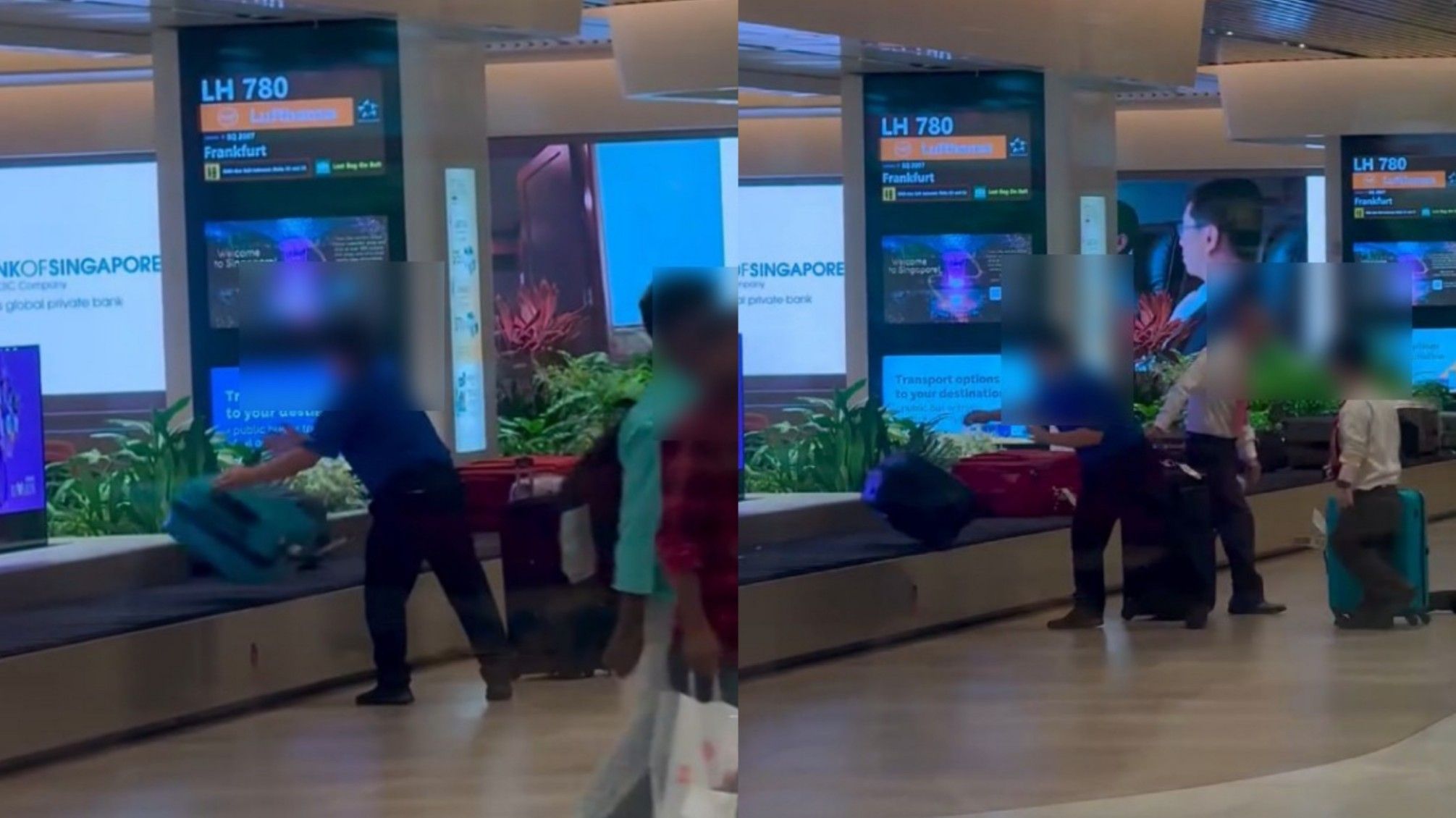
SINGAPORE: A baggage handling incident at Changi Airport Terminal 2 has sparked an outpouring of public empathy, after a video showing a SATS employee tossing luggage onto a conveyor belt circulated online.

The incident, which took place on April 23, came to light after Instagram user Eric Yoong shared footage of the baggage handler throwing suitcases and boxes onto a baggage belt. In his post, Mr Yoong questioned the worker’s actions, writing, “I don’t think that’s the correct way for a baggage officer to handle those unclaimed luggage by throwing it back to the luggage belt instead of placing it back nicely or leaving it at the side.”

SATS later confirmed to the press that it had investigated the matter. The ground handling company told Mothership, “The behaviour seen in the video does not reflect our service standards or the care with which we expect baggage to be handled. We are sorry that this occurred.”

The company added that the employee involved has since been counselled and reminded of the importance of proper baggage handling, even under operational pressure.

However, rather than criticising the worker, many Singaporeans responding online expressed understanding and sympathy for the physical demands of the job.

Several commenters pointed to the weight of the luggage and the strain involved. One wrote, “Imagine lifting 20 kg and [needing] to swing across to the belt,” while another said, “See how heavy those luggage and the poor elderly man has to pick up so many? Try, and you get a back injury…” A similar sentiment was echoed by another user who commented, “Sorry…the luggage bags are mostly heavy plus one staff handle. Do you think you can carry properly if you work like him?”

Others suggested that the tossing motion may have been a practical way to reduce physical strain. “They do this to avoid injury, using momentum and swing. Otherwise, it’s backbreaking for a man of his age,” one commenter said, adding that luggage is generally designed to withstand rough handling.

Some also questioned the need to publicise the incident in the first place. “Why need to film this? Don’t break people’s rice bowl la,” one user wrote, while another added, “Ask him to work there, see if he still can complain.”

Several commenters felt the handling seen in the video was not excessive. “Looks normal, leh? If your bag cannot handle this, please go fly a private jet and load your own bags,” one said. Another remarked, “What’s wrong?! He was next to the conveyor belt when he lifted & tossed the luggage on it. He wasn’t throwing like really hard…Slight knock and the suitcases cannot take it?!”

Others highlighted the realities of manual labour and high workloads. “TBH, what’s wrong with the tossing? It’s not like they’re being particularly rough. It’s manual labour; they carry thousands of pieces of luggage every day, it’s no easy job. Do you expect them to put every single piece of luggage down gently?” one commenter wrote. Another added, “Try placing a 32kg bag on a moving belt… Don’t talk big.”

Some responses also reflected frustration at what they saw as excessive complaining. “Like I say, we are becoming a nation of complainers. This complain, that complain,” one user wrote, while another commented, “Everything wants to complain…they never really throw it harshly…please lah…you know how heavy a bag can be sometimes…can give you a slipped disc.”

The incident has since sparked broader discussion about the physical demands faced by airport ground staff, as well as public expectations around service standards and working conditions.

This article (Singaporeans empathise with local baggage handler who was caught throwing suitcases at Changi Airport) first appeared on The Independent Singapore News.

  •  

Thailand wants SG to invest in $31 billion ‘Land Bridge’ proposal as Hormuz deadlock persists

SINGAPORE: Thailand is moving to revive a long-standing plan to create a logistics link between the Indian and Pacific oceans, given the recent disruptions in the Strait of Hormuz that highlight the vulnerability of key global shipping routes.

The government said it is pushing forward with its “Land Bridge” project across the country’s narrow southern peninsula, an idea that had previously stalled amid political turbulence, incomplete public hearings and environmental and health impact assessments, as well as resistance from some local communities.

Renewed interest in the project comes as concerns grow over chokepoints such as the Strait of Hormuz and the nearby Malacca Strait, both critical arteries for global trade.

Reuters reports that Transport Minister Phiphat Ratchakitprakarn said over the weekend that a proposal is expected to be submitted to the cabinet between June and July. The government would then begin seeking investors for the project, estimated to cost around 1 trillion baht (US$30.97 billion), potentially starting in the third quarter.

The Land Bridge concept, which has been discussed for decades, involves the construction of two deep-sea ports, one in Ranong on the Andaman Sea and another in Chumphon on the Gulf of Thailand. These would be linked by about 90 kilometres of road and rail infrastructure, along with energy systems such as pipelines.

If realised, the route would offer an alternative to the Malacca Strait, a 900-kilometre channel bordered by Indonesia, Malaysia, Thailand and Singapore. It is the shortest maritime route between East Asia, the Middle East and Europe, with more than 100,000 ships, mostly commercial vessels, passing through it last year.

Thailand has begun reaching out to potential investors, including Singapore. Prime Minister Anutin Charnvirakul discussed the plan on Monday during a meeting with Singapore’s Defence Minister Chan Chun Sing.

Government spokesperson Rachada Dhanadirek claimed that Mr Chan viewed the project as an economic opportunity for both Thailand and foreign investors, and expressed interest in the proposal if it progresses.

The renewed focus on alternative trade routes comes amid broader regional debate. Indonesia’s finance minister recently sparked discussion by suggesting that countries could consider imposing tolls on ships using the Malacca Strait, before later clarifying that such a move would not be feasible.

Within Thailand, the Land Bridge is generally seen as a more viable option than the long-proposed Kra Canal, which would involve cutting a shipping passage across the peninsula. That idea has historically faced opposition due to environmental, financial and security concerns.

This article (Thailand wants SG to invest in $31 billion ‘Land Bridge’ proposal as Hormuz deadlock persists) first appeared on The Independent Singapore News.

  •  

Is Singapore’s humidity draining people? Netizens share their take

SINGAPORE: With Singapore’s heat and humidity, it’s not unusual to feel drained—but could the weather actually be affecting how tired people feel day to day?

One Redditor recently raised the question, wondering if Singapore’s humidity might be quietly impacting people’s productivity, especially during their commute to and from work. The post also suggested that this could be why people here seem more tired compared to those in other countries.

Many netizens expressed their thoughts and opinions on the subject.

One comment agreed that the weather affects people’s moods. The netizen declared: “Heat plus humidity, the air when you breathe in is different from the cool air from autumn/winter countries. I feel very refreshed when I inhale the air from those countries. Over here, the air is thick and heavy. Sometimes, it’s so stuffy and humid and hot I feel like I’m gonna faint.”

Another pointed out that feeling hot slows people down, makes people irritable, and causes drowsiness that may have an impact on how they do their work.

But not everyone thinks humidity is the main issue.

For some, the work culture in Singapore is a stronger reason because everything feels so urgent, and even though the humidity might be draining, the effects of it on a person really depend on how exposed they are daily.

Others also noted that colder countries aren’t necessarily better.

“I think you haven’t felt the cold and humid weather of countries like Japan, Korea and Taiwan. Especially between the seasons when you can’t sleep at night because the temperature change is wild. Also, have you tried going to work in temperatures below 10 when the wind outside is trying to dry your eyeballs? I think it’s just a way of releasing stress. Singapore has very few ways to relax or places to go out to,” a netizen admitted.

The summer seasons in other countries can also be worse than Singapore’s weather.

A netizen stated: “In Tokyo, summer temperatures can be over 36 deg C before 11 a.m. and the humid heat persists throughout nighttime. Of course, the heat takes a toll on you if you walk under such weather in SG, but that doesn’t mean other countries are much better than SG in certain seasons.”

Indeed, the heat in Singapore may be one of the reasons why Singaporeans are tired, but so is the work culture. It is important to note that what the country is experiencing is not worse than other countries with different weather. Still, people in Singapore must push through and call for work-life balance.

This article (Is Singapore’s humidity draining people? Netizens share their take) first appeared on The Independent Singapore News.
  •  

Netizens call out top EU diplomat for asking Southeast Asia not to ‌buy Russian oil amid Iran war

BANDAR SERI BEGAWAN: After she met with foreign ministers from the Association of Southeast ‌Asian Nations (ASEAN) in Brunei on April 28 (Tuesday), Kaja Kallas, the foreign policy chief from the European Union, called for partners in the region not to look to Russia for their supply of oil, as this would allow Russia to continue its war against Ukraine.

Netizens commenting on Ms Kallas’ remarks have characterised the call as “removed from reality.”

Asia continues to be the hardest hit by the war in the Middle East, which began on Feb 28 when the United States and Israel started bombing Iran. This led to the effective closure of the Strait of Hormuz, a chokepoint over which 20% of the world’s fuel needs transits, resulting in a global energy crisis.

Because Asia, especially Southeast Asia, is heavily dependent on the Middle East for its energy supply, its governments have been scrambling to secure fuel for their domestic needs, paying more for oil as prices have soared. 

The US temporarily halted sanctions on Russian oil that is already at sea. It did this initially for India in the first week of March, but the easing of sanctions has spread. From March 12 to April 11, countries were allowed to buy oil from Russia. 

Indonesia, the Philippines, Thailand, and Vietnam have since shown interest in buying oil from Russia.

Russia has also reportedly offered liquefied natural gas (LNG) shipments to Asian countries at a 40% discount.

Ms Kallas urged Southeast Asia to see the “big picture” concerning the war in Ukraine, according to a Reuters report. 

“You have an energy crisis, and you need to have supplies. On the other hand, you have to see the big picture, which is that… if you buy Russian oil, they are able to continue with this war,” the report quotes her as saying.

Earlier this month, new sanctions were approved by the EU that included more oil trade restrictions designed to affect Russia’s funding of its attack on Ukraine, which began in February 2022. Ms Kallas pointed out that the war in the Middle East has been to Russia’s advantage because of the oil shortage, and asked for ASEAN to cooperate with the EU’s sanctions on Russia.

She also noted that buying oil from Russia is helping to keep the Strait of Hormuz closed, though the diplomat did not elaborate further.

Ms Kallas’ remarks did not land well with netizens, with one asking, “What suggestions did Kalas make to relieve the South East Asian countries?” 

“Will the EU compensate ASEAN for the shortfall?” wondered another.

Others called the EU “unrealistic” and “entitled,” adding that the bloc should mind its own business.

“Yes, barrels of oil can also be harvested from banana trees,” one wrote sarcastically, adding, “The world is coping with a 15% reduction in global crude oil output due to the ME crisis. And this woman thinks that nations around the world should also forego buying Russian exports that make up about 5% of global supplies?”/TISG

Read also: War in Iran leaves Southeast Asia scrambling for oil from Russia

This article (Netizens call out top EU diplomat for asking Southeast Asia not to ‌buy Russian oil amid Iran war) first appeared on The Independent Singapore News.
  •  

Asia hit hardest by energy crisis but could benefit in the long run

ASIA: While Asia has suffered the most due to the energy crisis that resulted from the war in the Middle East, a much-syndicated article argues that it may just emerge as a long-term economic winner because the conflict accelerates a number of favourable global trends.

The piece, written by Manishi Raychaudhuri, the founder and CEO of Emmer Capital Partners Ltd and the former head of Asia-Pacific Equity Research at BNP Paribas Securities, was published by Reuters on April 27.

Asia, which is heavily dependent on energy from the Middle East, has been greatly affected by the closure of the Strait of Hormuz, over which 20% of the world’s energy supply transits. This has caused governments in Asia to scramble to ensure an adequate supply for their domestic needs while contending with significantly higher prices. 

Some countries in Asia have imposed partial work-from-home schedules for government offices, or are cutting down on air-conditioner use amid sweltering summer days, and there have been shortages in fuel stations as well.

Mr Raychaudhuri argues, however, that the fuel shock Asian countries are experiencing may yet result in structural changes that will ultimately be to the region’s advantage.

He enumerated the benefits to Asia resulting from the conflict in the Middle East, starting with an increase in defence and arms manufacturing growth. With the uptick in military spending across the globe, including a higher demand for drones, this will benefit manufacturers in South Korea and other countries with strong industrial and semiconductor bases.

The author also noted that because of Asia’s strength in hardware, the increase in cyberthreats will mean an expansion in the growing cybersecurity sector.

Additionally, because the war in the Middle East has exposed energy vulnerability across the globe, it is likely that the transition to clean energy will be hastened. China, along with other Asian countries, is leading in the field of electric vehicle batteries and other green tech.

Other commentaries have made the same points as Mr Raychaudhuri, particularly when it comes to the speeding up of nuclear and green energy transition. The Institute for Energy Economics and Financial Analysis pointed out that governments in Asia are already treating the crisis as a “wake-up call” to pivot toward domestic energy sources like solar, EVs, and grids.

Related to this would be a supply chain diversification that could result from the war, as the dependence on the Strait of Hormuz exposed another structural vulnerability. This would lead to new infrastructure projects where Asian firms could take a vital part.

Nevertheless, Mr Raychaudhuri pointed out that should the closure of the Strait of Hormuz end up prolonged, this may cause shortages of energy that affect manufacturing in Asia. Furthermore, Western countries could resort to re-shoring production, bringing it back home, and higher costs overall may end up slowing investments in the region. /TISG

Read also: How Asia’s widespread fuel shock will also affect the US

This article (Asia hit hardest by energy crisis but could benefit in the long run) first appeared on The Independent Singapore News.

  •  

Rare National Service evasion case: Prosecutors push for maximum jail term for Singaporean over dual citizenship dispute

SINGAPORE: The prosecution is asking for the toughest sentence available against a Singaporean who skipped National Service (NS), in what appears to be a rare full trial for such an offence.

Deputy Public Prosecutor Tay Jia En urged the court to impose up to three years’ jail, along with a S$3,000 fine, for related immigration offences. The accused, Edmond Yao Zhi Hai, had failed to report for enlistment in 1997.

The case has drawn attention because of Yao’s dual citizenship. His defence argued that serving NS would have cost him his Indonesian citizenship, placing him in a legal bind from a young age, Channel NewsAsia (CNA) reports (April 28).

Court rejects “good faith” argument from Yao’s defence

District Judge James Elisha Lee didn’t accept the defence’s explanation. He ruled that Yao and his mother would have known about his NS duties early on.

The judge also dismissed the claim that Yao believed he was treated as a foreigner. He noted that the Ministry of Defence’s Central Manpower Base (CMPB) had informed Yao of his obligations.

The offence itself is strict liability, the judge found, which means the prosecution needs only to show that Yao failed to enlist, not why. This effectively shut down the defence’s main argument that Yao acted in good faith.

Prosecution: dual citizenship doesn’t excuse the NS evasion offence

Prosecutors stated that Yao’s dual nationality shouldn’t affect sentencing. They argued that Singapore law applies to its citizens, regardless of other passports. They also described the case as highly serious, pointing to the long period of non-compliance and what they saw as a lack of remorse.

However, the defence took a different view. Lawyer Sunil Sudheesan said a jail term would ignore the reality of Yao’s situation. Serving NS in Singapore would have meant losing his Indonesian citizenship. He also argued that enforcement had been inconsistent, as authorities were aware of Yao’s status, yet didn’t act earlier.

Yao had travelled openly using his Indonesian passport and didn’t attempt to hide, the defence added.

How should Singapore treat citizens with competing legal obligations in another country?

Cases like this rarely go to trial, as most NS evasion matters are resolved earlier, usually with guilty pleas. This one, however, raises a more complex question: How should Singapore treat citizens with competing legal obligations in another country?

The prosecution’s stance suggests dual citizenship doesn’t dilute NS duties. The defence, on the other hand, presented it as a unique case with no established precedent, arguing that general deterrence doesn’t apply when the situation is so specific.

When two systems conflict, ignoring one rarely ends well

The court has adjourned Yao’s sentencing to May. The outcome could set a reference point for how similar cases are handled in future, even if they remain rare.

At its core, obligations tied to citizenship are not optional, even when another country’s rules pull in a different direction.

A simple lesson lies beneath the legal arguments: when two systems conflict, ignoring one rarely ends well, and addressing the conflict early would have saved years of uncertainty.

This article (Rare National Service evasion case: Prosecutors push for maximum jail term for Singaporean over dual citizenship dispute) first appeared on The Independent Singapore News.
  •  

Regional child abuse crackdown nets 326 arrests, 11 held in Singapore across cross-border probe

SINGAPORE/ASIA: A regional police operation has led to 326 arrests across Asia, including 11 men in Singapore, in a coordinated effort targeting online child abuse networks. The four-week crackdown signals how widespread and organised these crimes have become and how much they rely on digital platforms.

The operation ran from March 23 to April 17 and involved law enforcement agencies from seven places, including Singapore, Malaysia, Japan, and South Korea. Officers raided 382 locations and seized hundreds of devices linked to the offences, Channel NewsAsia (CNA) reports (April 28).

Singapore cases show a digital criminal trail

In Singapore, the 11 men arrested are aged between 22 and 44. Another 16 individuals are assisting with investigations.

Early findings suggest most of the suspects accessed or stored illegal materials through messaging apps and peer-to-peer platforms. In one case, two men allegedly made cross-border payments through a Telegram channel to obtain such content. The lead came from Malaysian police.

In another case, a man arrested in March had materials linked to two victims exploited overseas. Authorities traced the case through a non-governmental organisation and worked with foreign agencies to identify and arrest the offender.

A regional crime problem with the same tools used

Across the seven regions, authorities investigated 445 people in total. Most were men, aged 12 to 72. Officers seized:

  • 116 computers

  • 340 mobile phones

  • 25 tablets

  • 140 storage devices

  • 16 routers

The scale of the operation points to a recurring crime trend as these offences often rely on the same tools: encrypted messaging apps, online payment channels and cloud storage.

The Singapore Police Force said close cooperation with tech firms, financial institutions and non-profits was vital to tracking these criminal networks.

Crimes are executed fast, making enforcement harder

This case demonstrates how easily such crimes cross borders. A seller in one country can reach buyers in another within seconds. Payments move just as fast.

The speed at which these crimes are executed makes enforcement harder. Therefore, no single country can handle it alone. The success of this operation came from shared intelligence and coordinated raids.

It also raises a serious concern when these platforms are part of everyday life because the same tools used for work and socialising can also be misused in abusive ways.

Those convicted can face up to 10 years in jail, along with fines or caning

Singapore law treats these offences seriously. Those convicted of producing such materials can face up to 10 years in jail, along with fines or caning. Possession or access can result in up to 5 years’ jail time.

Though there is no quick fix to completely prevent these heartless crimes, the direction is well-defined: stronger cross-border coordination works.

As faster data sharing also helps, platforms need tighter monitoring where abuse is detected. And when the digital crime space moves fast, enforcement has to move faster.

This article (Regional child abuse crackdown nets 326 arrests, 11 held in Singapore across cross-border probe) first appeared on The Independent Singapore News.

  •  

Malaysian man jailed and loses S$400K after Tuas checkpoint undeclared cash seizure in Singapore

SINGAPORE: A 57-year-old Malaysian man has lost nearly S$400,000 after Singapore authorities traced the money to illegal activities and seized it at Tuas Checkpoint.

According to the Singapore Police Force (SPF), Diong Gin Ing was convicted on Mar 26, 2026. He pleaded guilty to possessing benefits derived from criminal conduct and to making an inaccurate cash declaration upon entering Singapore. He was sentenced to 10 months and 3 days in jail.

On April 16, the court approved the prosecution’s request to forfeit the entire sum to the state.

Cash found during a joint operation

The case dates back to May 23, 2025, when officers from the Commercial Affairs Department (CAD) and the Immigration and Checkpoints Authority (ICA) were conducting a joint operation.

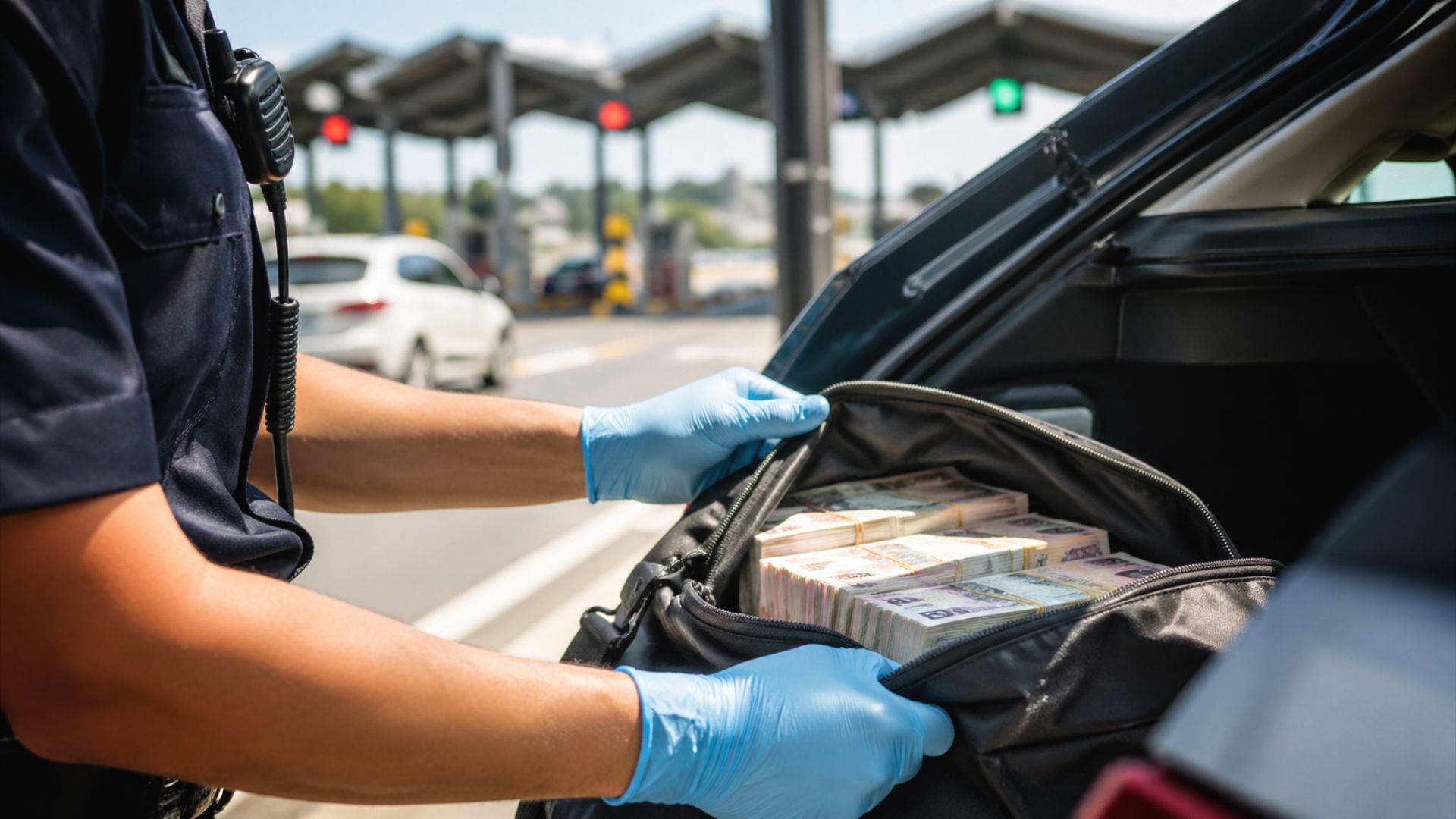
Diong was stopped at Tuas Checkpoint. Officers found S$398,775 and RM1,621 (S$523) in a bag inside his car boot. He failed to declare the amount accurately and couldn’t explain where the money came from.

The cash was seized on suspicion of being linked to criminal activity.

Cash linked to illegal betting and loans

Further investigations showed the money came from commissions earned as a runner for illegal betting and unlicensed moneylending operations in Malaysia.

Ms Peggy Pao, Director of the Commercial Affairs Department, said the case shows how Singapore’s system detects and intercepts suspicious cash movements. She added that authorities will act firmly to strip criminals of gains linked to unlawful activities.

Strict declaration rules remain in force

Singapore requires travellers to declare any physical currency or bearer instruments above S$20,000 when entering or leaving the country. Failing to declare, or declaring inaccurately, is an offence. It carries penalties of up to S$50,000 in fines, up to three years’ jail, or both. The money involved may also be confiscated.

Singapore prevents illegal money from moving through the country

This case demonstrates how Singapore treats undeclared cash as a serious risk rather than a minor oversight. It is about tracing the source of funds and preventing illegal money from moving through the country.

For travellers, the message is that large sums must be declared and explained. If the source cannot be accounted for, the money will not stay with you. Clear declarations and honest accounts aren’t optional.

This article (Malaysian man jailed and loses S$400K after Tuas checkpoint undeclared cash seizure in Singapore) first appeared on The Independent Singapore News.
  •  

Residents raise concerns as 146 rats cleared from Tampines estates

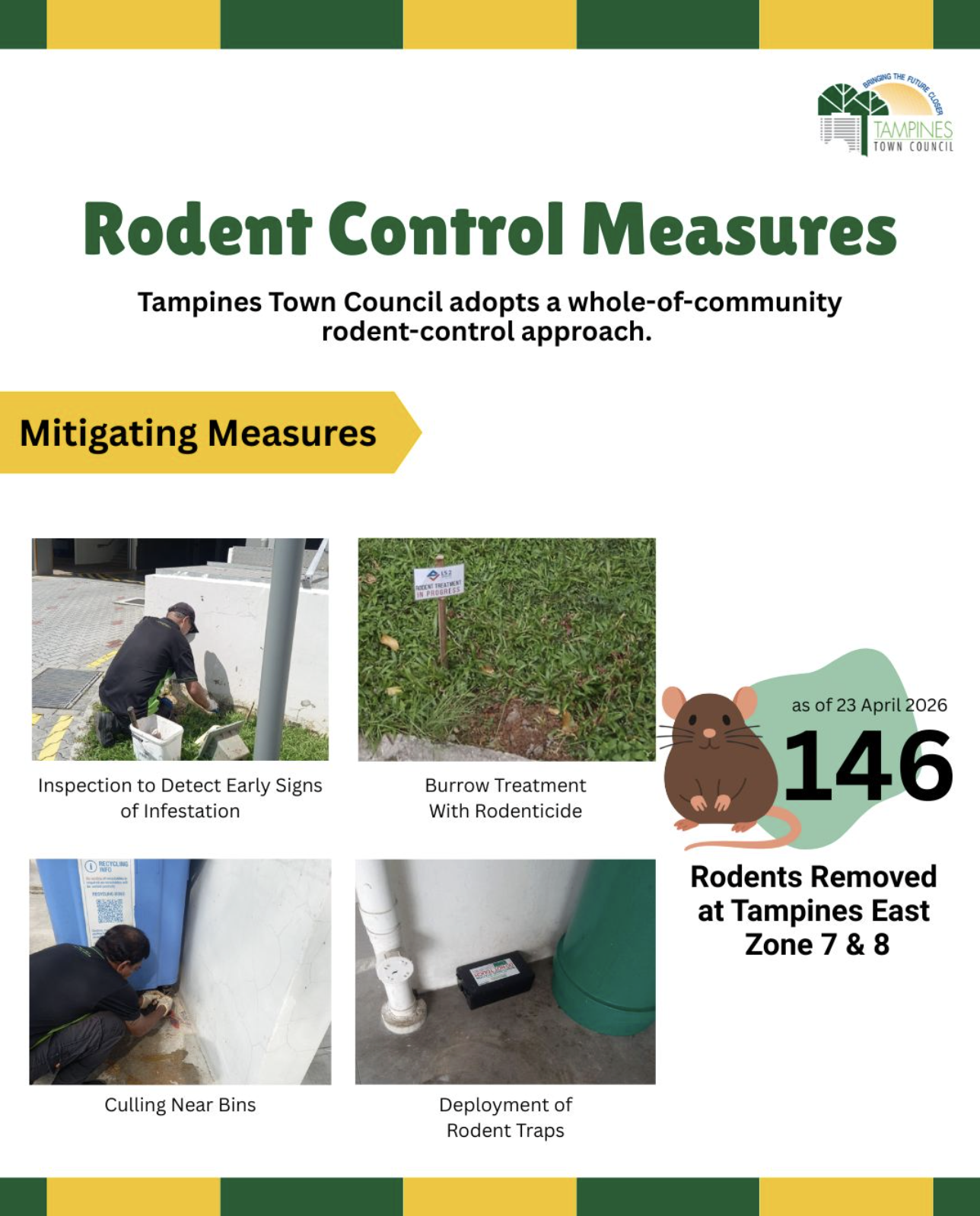
SINGAPORE: A rat infestation in parts of Tampines has raised concern among residents, with the town council removing 146 rats from Sections 7 and 8 in Tampines East as of April 23.

On Facebook, the Tampines Town Council shared updates about their control measures, and assured that they have heard the complaints of people and are taking the appropriate actions to take care of the problem. 

Screenshot 2026-04-29 at 3.05.39 PM
Tampines Town Council Facebook Page

Part of the process is the Town Council’s mitigating measures, which involve inspection to detect early signs of infestation, burrow treatment with rodenticide, culling near bins, and deployment of rodent traps. 

The town council is also working on improving housekeeping. Measures include washing bins to remove food waste, ensuring bin lids are properly closed, and offering free bulky item removal to reduce clutter that could attract pests.

An upcoming food waste digester in N2 is also expected to help by reducing food odours and limiting accessible food sources for rodents.

Residents are being encouraged to do their part by disposing of waste properly and keeping bins clean and closed.

“Keeping rodents at bay requires everyone’s effort, and residents play an important role, too…Please dispose of waste properly and recycle food waste where possible. Every small action makes a difference in keeping our estate clean and liveable,” the Town Council declared in their post.

Aside from rats, birds are also causing stress to some local residents. In a recent report, crows nesting near Chinatown Complex have been attacking passersby, with more than 10 people affected in the past week.

Read more about the news story here.

This article (Residents raise concerns as 146 rats cleared from Tampines estates) first appeared on The Independent Singapore News.

  •  

Malaysia court rejects Singapore casino bankruptcy bid over S$8M gambling debt

MALAYSIA: A Malaysian court has shut down a Singapore casino’s attempt to bankrupt a local businessman over a gambling debt worth RM26 million (S$8 million), reinforcing a long-standing legal stance: gambling debts aren’t enforceable in Malaysia.

The Ipoh High Court dismissed a petition filed by Resorts World at Sentosa Pte Ltd against restaurant owner Lee Fook Kheun. The casino had sought bankruptcy action after Lee allegedly failed to repay the RM26 million tied to gambling credit, Free Malaysia Today (FMT) reports (April 28).

Court draws a firm legal line

Justice Moses Susayan ruled that the debt couldn’t be recognised under Malaysian law because it arose from gambling, which is considered illegal and void.

The case leaned on a prior Federal Court decision that treats gambling debts as matters of honour, not law. In simple terms, even if someone owes money from gambling, the courts will not help recover it.

The casino had relied on a 2018 Singapore High Court judgment, later registered in Malaysia under the Reciprocal Enforcement of Judgments Act 1958, but the judge stated that foreign rulings don’t override Malaysian public policy.

He also stressed that local courts aren’t obliged to enforce overseas decisions that conflict with domestic laws.

Lee’s legal argument holds in the court

Lee challenged the claim, arguing that the debt, though framed as a credit, was still rooted in gambling. This made it invalid under Malaysian law and unsuitable for bankruptcy proceedings.

The court agreed and cited provisions under the Civil Law Act 1956 and the Contracts Act 1950, both of which render gambling-related agreements void.

Interestingly, while the casino lost the case, the court didn’t order it to pay legal costs.

Malaysia doesn’t allow legal recovery of casino debts

The court’s decision reinforces a sharp divide between jurisdictions, as Malaysia doesn’t allow legal recovery of casino debts. For such cross-border cases, this creates a limitation: a debt recognised in one country may carry no weight in another.

For Singapore-based operators, the takeaway is that legal wins at home don’t guarantee enforcement abroad.

For Malaysians, it confirms that local courts will prioritise national law over foreign judgments, especially on issues tied to public policy.

This article (Malaysia court rejects Singapore casino bankruptcy bid over S$8M gambling debt) first appeared on The Independent Singapore News.

  •  
❌