
 Login
Login
“We are oppressed in Brazil”: thousands of conservative Brazilians seek new life in Paraguay
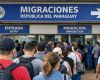 Hundreds of Brazilians camped overnight on beach chairs, plastic benches and tarps outside an immigration center in Ciudad del Este, on the border with Brazil, to secure a spot in a Paraguayan government drive to fast-track residency applications. Some organized an improvised barbecue on a barrel while they waited. Others had traveled more than 1,500 kilometers by bus. All shared a common thread: the desire to leave Brazil for reasons they describe as political, economic and ideological, according to a report by BBC News Brasil.
 Brazil consolidated its position as South America's leading defense spender during 2025, with a military budget of approximately USD 23.9 billion and a 13% year-on-year increase, while Uruguay recorded one of the steepest relative rises in the region, according to the annual report of the Stockholm International Peace Research Institute (SIPRI) released on Saturday. The region as a whole increased its military spending by 3.4% compared with 2024, in line with a global trend of armed forces modernization, open conflicts, and growing geopolitical tensions.
 Mariano Páez, father of lawyer and influencer Agostina Páez, was filmed imitating monkey gestures at a bar in Santiago del Estero — the same racist gesticulations that led to his daughter's indictment for racial slur in Brazil, where she spent over two months detained in Rio de Janeiro. The incident took place just hours after the young woman's return to her home province.
 Brazil's nominal public sector deficit reached 9.41% of gross domestic product in the twelve months to March 2026, nearly one percentage point higher than the previous period, according to data published on Thursday by the Central Bank. The combined shortfall of all public administrations — central government, states, and municipalities — stood at 1.21 trillion reais, equivalent to around $244 billion, in one of the highest readings in recent years for Latin America's largest economy.
 Former Brazilian President Jair Bolsonaro returned to his home in Brasilia on Friday after being discharged from hospital following a two-week stay for acute bilateral pneumonia. Bolsonaro, 71, will serve at least 90 days of his 27-year prison sentence under house arrest, following a decision by Supreme Court Justice Alexandre de Moraes.
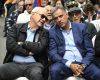 Uruguayan President Yamandú Orsi made a day trip to São Paulo on Tuesday to meet Brazilian business leaders interested in investing in Uruguay, in an agenda Foreign Minister Mario Lubetkin described as an opportunity to "move to a new phase in the levels of commercial development and Brazilian investments" in the South American country. The official delegation included Lubetkin himself, Economy and Finance Minister Gabriel Oddone, Uruguay's ambassador to Brazil Rodolfo Nin Novoa, and the executive director of investment promotion agency Uruguay XXI, Mariana Ferreira.
 Brazil’s Central Bank following its two days meeting 28–29 April of the Monetary Policy Committee (COPOM) announced the reduction of its SELIC rate by 25 basis points to 14.50%.
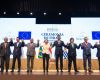 The association agreement between Mercosur and the European Union (EU) enters provisionally into force on Friday May 1, after more than a quarter-century of negotiations, in what constitutes one of the world's most ambitious trade deals and the largest reciprocal opening ever finalised by the South American bloc. The final signing took place on January 17 in Asunción and, although final ratification by the European Court of Justice and subsequent approval by the European Parliament remain pending, provisional entry into force allows the immediate start of tariff reductions covering 95% of Mercosur products and 91% of EU products.
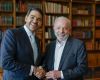 Jorge Messias, Brazilian President Luiz Inácio Lula da Silva's nominee to fill the open seat at the Federal Supreme Court (STF), defended on Wednesday before the Senate the need to limit the power of judges, in a bid to expand support for his candidacy in what is shaping up to be a closely contested vote. The Solicitor General of the Union appeared before the Constitution and Justice Committee, where he made explicit overtures toward the Bolsonarist right-wing opposition, particularly critical of the country's top court's recent rulings.
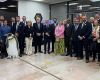 A delegation from the United Kingdom’s Royal College of Defense Studies (RCDS) visited Chile the week of 18 May as part of its annual tour of Latin America, aimed at strengthening strategic analysis and global understanding of challenges related to security, defense and international cooperation.
 Year-on-year inflation in Brazil accelerated to 4.39% in April, up from 4.14% in March, pressured mainly by rising prices for food and pharmaceuticals, the Brazilian Institute of Geography and Statistics (IBGE) reported on Tuesday. The national consumer price index advanced 0.67% from the previous month, 0.21 percentage points below March, reflecting a slower monthly pace even as the annual comparison continues to climb.
 World food commodity prices rose in March for the second month in a row, due largely to higher energy prices linked to the conflict escalation in the Near East, according to the latest benchmark measure released by the Food and Agriculture Organization of the United Nations (FAO).