Reading view

Protected area targets face potential pitfalls

Boardwalk at Elkwater Lakes in the Alberta portion of the Cypress Hills Interprovincial Park.

Alberta’s government recently claimed almost all Crown land in the province should be considered protected, even though caribou herds there are edging closer to local extinction as logging and oil and gas development continue to degrade and fragment their habitat.

Alberta’s claim comes in light of the federal commitment to meet an international target of 30 per cent land protection by 2030. As a Globe and Mail article reported, only 14 per cent of Canada’s land base is protected, so an additional 1.6 million square kilometres must be added over the next four years to meet the objective.

Alberta could be trying to take advantage of what some interpret as a grey area under the federal government’s vision: the category of “other effective conservation measures.” In March, Prime Minister Mark Carney recommitted to achieve Canada’s protected areas goal with a new nature strategy that identifies at least eight per cent of the target as Other Effective Area-Based Conservation Measures (OECMs).

“Nearly 60 per cent of the province’s land base is publicly managed Crown land,” Grant Hunter, Alberta’s environment and protected areas minister, said. “This represents about 40 million hectares that have been responsibly managed, stewarded and conserved for decades. Land use is regulated to protect watersheds, conserve wildlife habitat, support forestry and agriculture, enable outdoor recreation and allow for responsible, carefully managed resource development.”

OECM areas are managed for long-term conservation outside of traditionally regulated parks. Canada has clear criteria for them, including, “Conservation is year round and will be maintained in the long term,” and “conservation objectives are not threatened by other site objectives.”

They make sense in some places. Indigenous protected and conserved areas (many governed by Indigenous law) can be good examples. The muddying of OECMs comes in part from industry, which also proclaims “conservation” despite caribou declines and argues land under its purview should be designated as OECMs.

A 2019 article by Wilfrid Laurier University associate professor Christopher Lemieux and colleagues in Marine Policy outlined potential risks: “Ambiguous language used to define and prescribe application of OECMs is being used as the basis for a revisionist paradigm that promises to undermine national and international conservation standards, fracture partnerships, and jeopardize the integrity of Canada’s PA network.”

Other potential pitfalls hamper the path to securing Canada’s conservation objectives. Numbers-based targets contain inherent risks. An article by European scientist Piero Visconti and colleagues in Science notes, “percentage area targets disregard the quality of what is being represented, with degraded ecosystems given the same value as those that are still functionally intact.”

Protected areas are often too small to capture ecological processes. They can be islands of green in seas of development and extraction, lacking connectivity, often surrounded by deteriorated areas where wildlife that moves beyond the boundaries becomes threatened.

Nature is dynamic, constantly shifting and evolving over long periods that allow for adaptation. Climate change alters landscapes at a faster pace. As the international Wildlife Society points out, “Protected areas are havens of biodiversity across the globe, but under a warming climate, species using them may shift their niches to areas that are no longer protected.” So too might tree and plant species move outside of protected areas in response to a changing climate.

Parks are not panaceas for addressing the ecological crises we face, but they are a primary tool. The land outside of protected areas must also be managed for biodiversity outcomes. Landscape-level restoration is needed to repair damaged ecosystems. Buffer zones and connectivity corridors can create spaces for movement of wildlife and of ecosystems that migrate as the climate changes.

Ultimately, protected areas safeguard natural processes from deterioration as a result of development and industrial resource extraction, supporting resiliency. As a Frontiers in Science article recently underscored in response to the biodiversity crisis, “the top priority should be preventing the loss of intact biomes, ecosystems, natural processes, and species assemblages, as they are irreplaceable and cannot be quickly restored.”

Alberta’s grandstanding is just that; its announcement ignores its own protected areas legislation. The federal government must uphold OECM criteria and report on conservation outcomes, not just percentages. We must support Indigenous land governance and meet the land protection target by conserving healthy, resilient ecosystems — and pivot away from biodiversity loss and extinctions.

David Suzuki is a scientist, broadcaster, author and co-founder of the David Suzuki Foundation. Written with David Suzuki Foundation Boreal Project Manager Rachel Plotkin.

The post Protected area targets face potential pitfalls appeared first on rabble.ca.

  •  

National security means halting and reversing nature loss

A forest in Robson Valley, BC.

Prime Minister Mark Carney recently released “A Force of Nature: Canada’s Strategy to Protect Nature.” It describes a vision “that protects, restores, and values nature as a foundation of our economy, sovereignty, and well-being, leading at home and globally, to ensure healthy ecosystems, resilient communities, and prosperity for present and future generations.”

What’s the link between the federal government’s commitment to protect and restore nature and its much-discussed commitment to strengthen national security? It’s a good question.

“A Force of Nature” acknowledges that nature “provides essential defences. Wetlands absorb carbon and excess rainfall, forests prevent erosion, and healthy ecosystems reduce the impacts of severe weather. Protecting nature supports jobs, food security and Canada’s long-term competitiveness on the world stage.”

Yet when it comes to federal conversations about Canada’s security, talk centres on the armed forces — on building Canada’s military prowess — not natural forces. Reflecting this focus, the Canadian army has had its highest enrolment in three decades.

The 2024 federal report “Our North, Strong and Free: A Renewed Vision for Canada’s Defence” opens with a message from the defence minister: “One of the most important roles of any government is to protect its country and its people. In a rapidly changing world, we are committed to fulfilling this essential responsibility.”

Among other challenges, that report acknowledges security threats posed by climate change, stating, “Our Arctic is warming at four times the global average, opening the region to the world, which was previously protected by the Polar Ice Cap year-round. By 2050, the Arctic Ocean could become the most efficient shipping route between Europe and East Asia. We are seeing greater Russian activity in our air approaches, and a growing number of Chinese vessels and surveillance platforms are mapping and collecting data about the region.” Prime Minister Carney also released a plan to defend the North.

But what about Canada’s obligation to protect its citizens from climate change and biodiversity loss impacts that threaten drinking water (pollution, plastics), the air we breathe (forest degradation), homes (floods and fire events) and food systems (droughts, pollinator declines)?

The federal government seems oblivious to the connection between security and halting and reversing nature loss; there is a misaligned sense of passivity when climate change is identified as a threat. Yes, climate change is already here. But that doesn’t mean the government, which has the power to make laws and regulations, shouldn’t do everything it can to limit ongoing and future climate pollution that will exacerbate current threats, rather than building pipelines and approving new liquefied natural gas projects.

It’s possible to recognize that climate change and nature degradation are significant to national security, as evidenced by the United Kingdom’s 2026 national security assessment, “Global Biodiversity Loss, Ecosystem Collapse and National Security.” Its premise is that, “Nature is a foundation of national security. Biodiversity loss is putting at risk the ecosystem services on which human societies depend, including water, food, clean air and critical resources. The impacts will range from crop failures, intensified natural disasters and infectious disease outbreaks to conflict within and between states, political instability, and erosion of global economic prosperity.”

Canada gets a (dis)honourable mention in the U.K.’s assessment. It notes, “Ecosystem degradation is occurring across all regions. Every critical ecosystem is on a pathway to collapse (irreversible loss of function beyond repair)” and points to the “realistic possibility” of the ecological collapse of Canada’s boreal forest, starting in 2030.

The boreal forest is often referred to as “the lungs of the planet,” as it purifies air and provides oxygen. It also sequesters and stores carbon — in trees, mosses, lichens and soil. It’s being degraded by climate change impacts, industrial logging, mining and oil and gas extraction.

The U.K. doesn’t stand alone. The World Economic Forum’s “Global Risks 2026” report ranked threats by severity, identifying the top three long-term risks as extreme weather events, biodiversity loss and ecosystem collapse, and critical change to Earth systems.
Clearly security isn’t merely a matter of protecting against invading armies. Canada’s approach must be integrated. Happily, the federal government can feed two birds with one seed: protecting and restoring natural ecosystems can support national security and deliver on Canada’s commitments outlined in the new nature strategy.

David Suzuki is a scientist, broadcaster, author and co-founder of the David Suzuki Foundation. Written with David Suzuki Foundation Boreal Project Manager Rachel Plotkin.

The post National security means halting and reversing nature loss appeared first on rabble.ca.

  •  

Don’t throw that home away!

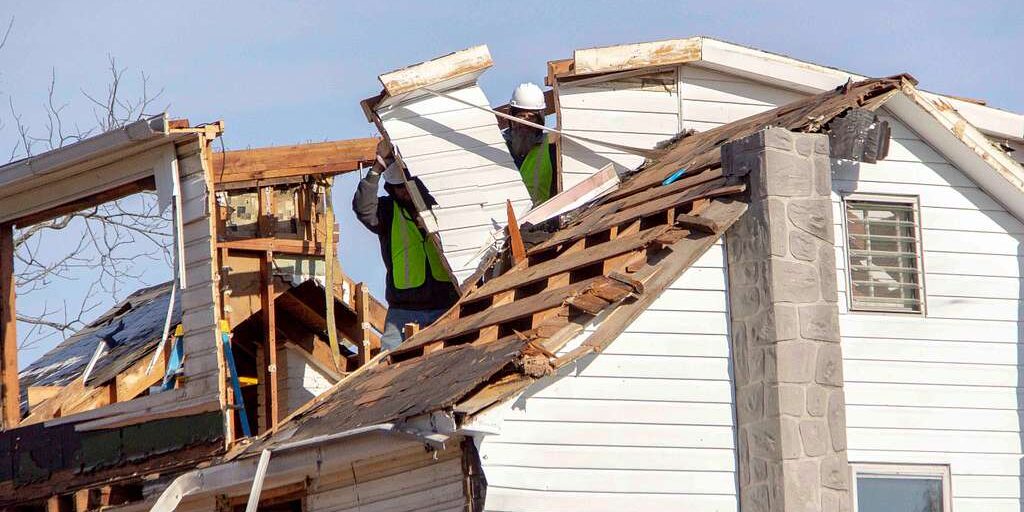
A home being demolished.

Ours is a throw-away culture. That even applies to houses. When homes or buildings are demolished to make way for a road, condo development or another house or building, the materials and contents are usually sent to the landfill. As with other characteristics of our consumer-driven societies, it’s wrong.

Many components — wood, concrete, bricks, metal, plastic, vinyl — can be reused, repurposed or recycled. It’s not a new idea, but it hasn’t taken off the way it should. In many jurisdictions, people have been able to apply for salvage rights, allowing them to take useful items from a home or structure slated for demolition. And “deconstruction” companies have been around for a while, but they’re the exception rather than the rule.

In some cases, entire houses are moved to another location and fixed up rather than being demolished. Vancouver circular construction think tank Light House estimates about 20 per cent of demolished homes here could have been moved and another 60 per cent could have been deconstructed, with materials reused or recycled.

Some municipalities are finally seeing the value in keeping materials out of landfills, implementing bylaw and regulation changes to encourage salvaging and recycling. It’s about time!

Vancouver has some rules around recycling materials from house demolitions, depending on the age and character of the home, and offers a “Construction and Demolition Waste Toolkit.”

As a Tyee article reports, population growth in Vancouver meant tearing down 7,100 single-family homes from 2012 to 2023 and about 2,700 every year in the larger Metro Vancouver region to make way for multiplex housing such as highrise towers. About one-third of Metro Vancouver’s landfill is from construction and demolition.

The problem isn’t just the waste of good materials. A 2025 Australian study notes that disposing of construction and demolition waste in landfills “has been widely recognized as a source of leachate, containing toxic contaminants, which pose significant environmental risks.”

And the building and construction sector accounts for about 37 per cent of global greenhouse gas emissions, with close to one-third of that from the energy used to produce materials for a building.

According to the CBC, “Replacing one building with another generates an entire building’s worth of emissions, which means that, from a climate perspective, it’s better to extend the lifetime of those materials and reuse them than discard them.”

The Tyee article highlights a Vancouver company, Vema Deconstruction, that claims to have saved from 135,000 to 225,000 kilograms of construction materials since its founding in 2022. It’s not just buildings that can be recycled. The Patullo Bridge that connected New Westminster and Surrey across the Fraser River was recently replaced, and steel, asphalt and concrete from the old bridge will be recycled.

Diverting construction materials has many benefits. As the City of Vancouver notes, “Recycling and reusing building materials has cost-saving incentives, saves trees, conserves landfill space, reduces greenhouse gas emissions, and supports affordable housing.”

Reclaiming wood is especially beneficial. It means no trees have to be cut down, leaving them to sequester climate-altering carbon dioxide, and for the numerous other benefits trees, especially old-growth, provide. The retained or reused wood continues to store carbon dioxide and other greenhouse gases — when wood decomposes, it emits methane, a potent greenhouse gas. And it can cost less than cutting, transporting and processing timber.

Of course, deconstructing a home takes longer and usually costs more than demolishing and carting it to the landfill. That’s why government incentives and regulations are often necessary, as well as more avenues to sell reclaimed materials.

As with just about everything in our consumer-based societies, though, the economic system itself creates the problem. The bottom line rarely underlines the most environmentally sustainable path. Using more products, doing things quickly and discarding and replacing products and materials all generate more profit than conserving, reducing, reusing and recycling.

We need to aim for a circular rather than a linear economy. This means considering the entire life cycle of the goods we produce — designing products to create zero or minimal waste and pollution, keeping products in use through better design, repair, reuse and recycling and safely returning materials to the natural environment while using renewable energy.

Homes and buildings are a good place to start. Deconstruction should be mandatory.

David Suzuki is a scientist, broadcaster, author and co-founder of the David Suzuki Foundation. Written with David Suzuki Foundation Senior Writer and Editor Ian Hanington.

The post Don’t throw that home away! appeared first on rabble.ca.

  •  

Connected crises contain opportunities for a better world

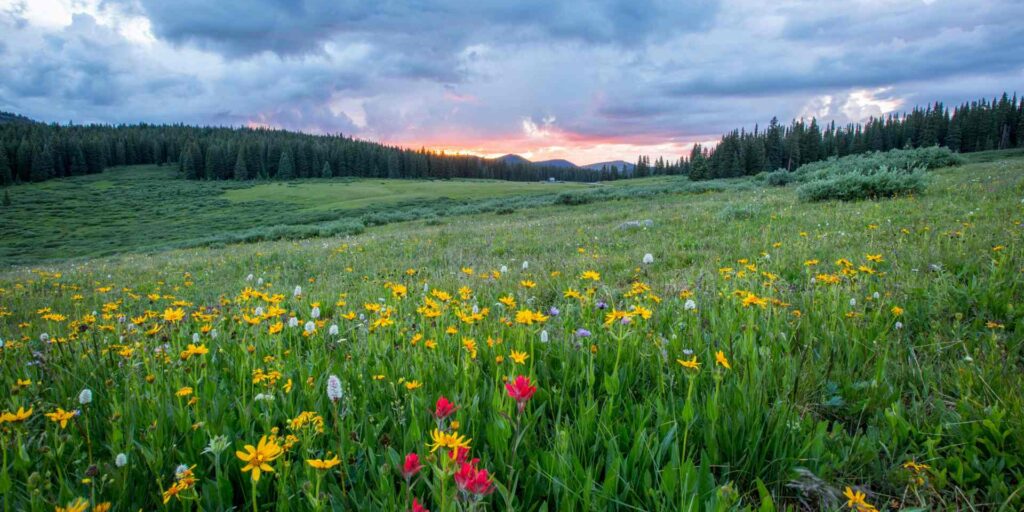
Some of the fields, flowers, and forests of beautiful nature.

The climate crisis is not simply an isolated technological challenge. It’s part of a much larger “polycrisis.” After all, everything is interconnected.

The magnitude of this “system disequilibrium,” as Canadian author, social scientist and Cascade Institute executive director Thomas Homer-Dixon calls it, can cause a sense of hopelessness, but it is resolvable — with major changes in the ways we conduct ourselves on this small planet.

That’s the message of a comprehensive new study. The World Inequality Lab’s “Global Justice Report: A Plan for Equality & Prosperity Within Planetary Boundaries” — by 45 authors using databases compiled by more than 200 researchers from around the world — states that “it is possible to reconcile planetary habitability and high well-being for all, but only if the transformation rests on three pillars simultaneously.”

The pillars are rapid decarbonization of energy systems, a shift from overconsumption toward “sufficiency” (including reduced labour hours and raw materials use and large changes in food habits, land use and forest cover) and a “drastic reduction in inequality of income, wealth and power” between and within countries.

This will require significantly altering the power structures that now govern our world and that are driving us toward calamity. It would include “hefty wealth taxes on billionaires, sharp reductions in working hours, a change in diets and a shift of investment from materially intense sectors, such as industry and mining, to education and health,” the Guardian reports.

The majority of humans would benefit, as it would double the incomes of 89 per cent of the world’s population by 2100 and keep global heating below 2 C above the preindustrial average. It would also reduce the average workweek to about 2.5 days, increasing leisure time.

Wealth inequality would be sharply reduced, with the poorest half of humanity increasing its portion from two to 30 per cent, while the billionaire class would see its share fall from six to 0.05 per cent.

“Close to 90% of the world’s population would double their income between 2026 and 2100, and once leisure and a habitable planet are counted, more than 99% come out ahead,” WIL co-director and Paris School of Economics professor Thomas Piketty and others wrote in a Guardian article.

Piketty says the ideology of people currently in power or rising in the United States and many other countries can’t deliver what most of humanity needs.

“At the end of the day we’ll have to come to this kind of cooperative redistribution of resources and power because the alternative will simply lead to disastrous outcomes both on the environment, on the climate, but also on social grounds,” he told the Guardian.

Homer-Dixon argues that, although the interrelated crises may seem dire, they also present opportunities. That requires understanding how they connect, and how feedback loops exacerbate the problems. For example, fossil fuel consumption leads to climate change, which produces economic costs. “As people feel less economically secure, they support authoritarian leaders, but that then leads to a backlash against green policies, undermining efforts to reduce fossil fuel consumption.”

The opportunity, he says, is that this “delegitimizes the existing way of doing stuff, the existing vested-interest stakeholders who are hunkered down and don’t want anything to change.”

The Cascade Institute and the WIL report attempt to understand the holistic nature of the polycrisis to find solutions. Given that one underlying cause is wealth hoarding and inequality, the backlash from the ultra-wealthy and their political backers will likely heat up. The “Global Justice Report” notes that average per capita gross national income worldwide would increase for almost everyone but, “The exception would be the mega-rich, who would be highly taxed because they are most responsible for the climate crisis.”

As well as taxing the overly affluent, the report recommends measures such as “a global justice fund to finance the energy transition and oversee an increase in education and healthcare spending” and “a world sovereign fund, which would rebalance global holdings of public and private wealth closer to proportions last seen in 1970.”

It concludes that a better, more equal world is materially possible. “What stands in the way is not technical impossibility but political choice and the hard but crucial work of building a coalition behind it.”

It’s a coalition we should all get behind.

David Suzuki is a scientist, broadcaster, author and co-founder of the David Suzuki Foundation. Written with David Suzuki Foundation Senior Writer and Editor Ian Hanington.

Learn more at davidsuzuki.org.

The post Connected crises contain opportunities for a better world appeared first on rabble.ca.

  •  
❌