Indian equity benchmarks climbed sharply in early trading on Wednesday, with the Sensex and Nifty gaining nearly 1 per cent each amid improving global sentiment and hopes of de-escalation in the West Asia conflict.
The BSE Sensex rose 657 points, or 0.85 per cent, to touch an intraday high of 77,675, while the NSE Nifty advanced 217 points, or 0.90 per cent, to trade around 24,250.
Banking, auto, metal and IT stocks led the rally, with the Nifty PSU Bank, Private Bank, Auto, Metal and IT indices gaining up to 2 per cent. Most sectoral indices traded in positive territory during the session.
However, some heavyweight stocks including Larsen & Toubro, Hindustan Unilever, ONGC, Power Grid Corporation of India and ITC Limited lagged behind the broader market gains.
One analyst noted that the market’s technical outlook remained positive, but added that the Nifty would need to sustain a close above the 24,250 mark to extend gains towards the 24,350–24,450 range. Failure to hold above 23,900 could trigger a pullback towards 23,800 or lower, the analyst added.
Another market expert said the broader trend remained constructive, although consolidation and volatile trading were likely in the short term.
Investor confidence was boosted by a decline in global oil prices for the second consecutive session, fuelled by hopes that tensions in West Asia could ease and disrupted energy supplies may resume.
Optimism also strengthened after US President Donald Trump signalled the possibility of a peace agreement with Iran, suggesting progress towards a broader diplomatic settlement. Iran has yet to respond publicly to the remarks.
Despite the diplomatic overtures, the US Navy continues to maintain restrictions around Iranian ports.
In the commodities market, Brent crude fell more than 2 per cent to $107.56 a barrel, while US benchmark West Texas Intermediate dropped 3 per cent to $99.12 a barrel.
Asian markets also traded higher, reflecting the upbeat global mood. Japan’s Nikkei gained 0.71 per cent, Hong Kong’s Hang Seng rose more than 1 per cent and South Korea’s KOSPI surged nearly 7 per cent.
On Wall Street overnight, the S&P 500 closed 0.81 per cent higher, while the Nasdaq gained 1 per cent.
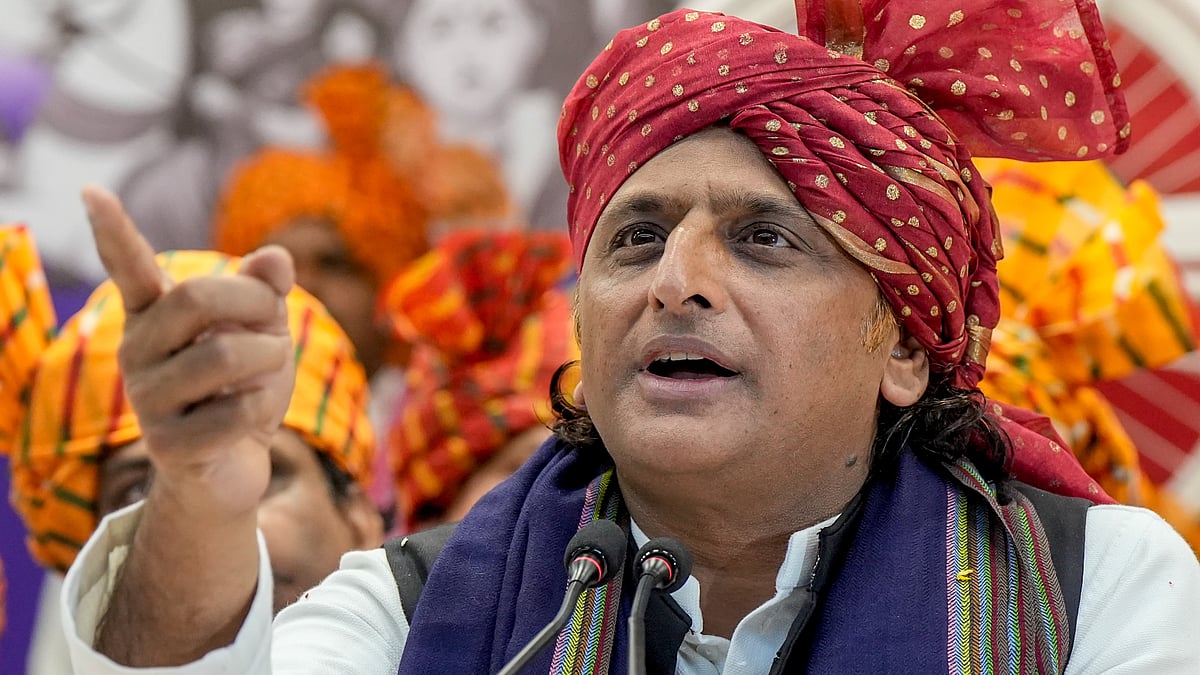
Ahead of the much-anticipated expansion of the Bharatiya Janata Party (BJP) government in Uttar Pradesh, Samajwadi Party (SP) chief Akhilesh Yadav on Sunday launched a sharp attack on the ruling party, questioning how it plans to accommodate defectors, dissatisfied legislators and alliance partners within the limited vacancies available in the state cabinet.
The expansion of the government of Uttar Pradesh cabinet led by chief minister Yogi Adityanath is scheduled later in the day.
In a strongly worded post on X, the Samajwadi Party chief said the public was asking whether leaders who switched over to the BJP from rival parties would now be rewarded with ministerial positions despite there being only six vacant berths in the cabinet.
“People are asking that there are only six vacancies in the Uttar Pradesh cabinet, while the number of leaders who switched sides from other parties is much higher. Will all of them be rewarded with ministerial positions?” Yadav wrote.
The former Uttar Pradesh chief minister also questioned the criteria likely to be used in selecting ministers from among legislators belonging to the same caste or community.
“If one MLA is chosen from among several legislators belonging to a community, what will be the basis of that selection?” he asked.
समाचार : उप्र में मंत्रिमंडल का विस्तार
जनता के विचार और सवाल:
- उप्र में मंत्रिमंडल में केवल 6 रिक्तियाँ हैं, इससे ज़्यादा तो दूसरे दल से पाला बदल कर आए लोग हैं, क्या उन सभी को मंत्री पद से नवाज़ा जाएगा? - क्या उनमें से सबसे कमज़ोर को चुना जाएगा जिससे कि उसकी कमज़ोरी कुछ कम…
Akhilesh Yadav further suggested that many turncoat leaders could feel humiliated if denied cabinet positions after joining the BJP.
“What will happen to the remaining turncoats? Will their neglect and humiliation be pacified through some compromise, or will they also realise that the BJP belongs to no one?” he remarked.
The Samajwadi Party leader claimed those left out of the expansion may struggle politically in their constituencies.
“Will those left out not feel betrayed? Will they be able to show their faces in their constituencies?” he asked.
Targeting BJP legislators waiting for ministerial roles, Yadav said several leaders within the ruling party had spent years hoping for cabinet positions.
“What about the BJP's own people who have been drying up like thorns while waiting to become ministers?” he said in a swipe at the party leadership.
He also questioned whether reshuffling or reducing portfolios of existing ministers would amount to an admission of poor governance.
“If departments are taken away from current ministers, will that not send a message that they were unsuccessful and therefore stripped of their ministries? Such ministers may lose elections without even fighting,” he said.
Yadav also took aim at the BJP’s allies, asking whether coalition partners would receive meaningful representation or continue to remain marginalised within the government.
“Will alliance partners get something more than mere assurances, or will they be ignored with the message — ‘tum the jinke sahare, wo hue na tumhare’,” he said, quoting a Hindi film song lyric to underscore his criticism.
Sharpening his attack on the BJP government’s overall performance, the SP chief said the final months before the next Assembly election would not change public opinion.
“The public is also asking what these ministers can achieve in the last nine months when the government could not deliver anything in nine years,” he alleged.
Accusing the BJP government of corruption, inflation and unemployment, Yadav claimed the ruling dispensation had burdened citizens while targeting PDA communities — a political term used by the Samajwadi Party for backwards, Dalits and minorities.
“The BJP government has only delivered corruption and atrocities, attacks on PDA, and the burden of inflation and unemployment, making life difficult for people,” he said.
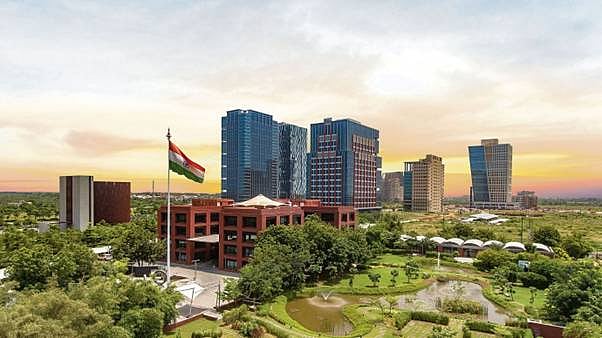
GIFT (Gujarat International Finance Tec-City) is India’s first International Financial Services Centre (IFSC) that competes with global hubs like Singapore and Dubai. Among its various services, it also offers banking services for NRIs. This opens a new avenue to manage your foreign income in India. If you’ve been curious about it, this blog explores everything you need to know about a GIFT City account for upgrading your banking experience in India.
What is a GIFT City bank account?
A GIFT City account is essentially a foreign-current bank account that IFSC Banking Units (IBUs) offer. You can hold and make transactions directly in foreign currencies like USD, GBP, EUR, etc., with this global bank account.
It is ideal for cross-border transactions. A GIFT City combines global access with a familiar banking setup in India. You are eligible to open the GIFT City account as an NRI, OCI, or PIO. You can use the account to save, make seamless transfers, and explore international markets.
Key features and benefits of the GIFT City account
GIFT City account includes a host of features that enhance your banking journey as per the international standards within India. Some of them include:
Transact in foreign currency
With banking in GIFT City, you can hold and use your funds directly in currencies like USD, EUR, AUD, GBP, etc. This reduces the need for constant conversions and saves cost.
Access to global investment avenues
A GIFT City bank account opens up opportunities to explore international investments easily. Since your finances are already aligned with the global markets, you get easy access.
Tax-efficient structure
Under the IFSC framework, certain investments incur zero capital gains tax, no GST on offshore services, no STT on certain investments. This helps you earn efficiently from overseas markets.
Globally competitive interest rates
As the interest rates are linked to international benchmarks, your deposits get to grow in line with the global trends.
Simplified banking experience
Much like a regular NRI account, a GIFT City account also comes with seamless digital operations. You can perform day-to-day transactions through the convenient banking app.
Strong regulatory framework
The IFSCA, a government body, authorises banking activities within the GIFT City. Hence, you are assured of a transparent and globally compliant system.
Ease of remitting money
As the GIFT City global account is connected to the international markets, moving funds across borders is a breeze. There are no unnecessary delays or hefty charges.
Cheaper borrowing cost
You can access cheaper dollar loans or External Commercial Borrowing (ECBs) with your GIFT City bank account. This is possible thanks to IFSC entities that reduce borrowing costs and enhance capital access.
How to open a GIFT City bank account
The process of opening a GIFT City account is straightforward with a fully digitised system. Follow these simple steps:
Choose an IBU
Select a bank registered as an IBU. Compare the specialised bank-specific offers, the reputation, and service experience of each bank to finalise the GIFT City account.
2. Fill out the application
Provide your basic identity-specific details and contact information. If you need assistance, you can seek the help of a relationship manager.
3. Complete documentation
Provide basic documents like your passport, visa, residence proof, and PAN (if applicable). If you are an existing customer, you only need to fill out the application.
4. Activate your account
Once approved, you can activate the account by remitting funds in foreign currency directly from your overseas account.
Final words
As global financial services evolve, financial hubs like IFSC highlight growing potential. You can participate in this revolution as an NRI with a GIFT City bank account. It is easy to open through any of your preferred IBUs, and you can set it up in minutes. Once done, explore seamlessness of global transactions with India, investing in capital markets, and advanced investment avenues. The possibilities are endless for your foreign income to grow. This is yet another way to connect to your homeland besides NRI savings accounts.
This is an advertorial. The article is published as received.
What is a GIFT City bank account, and who can open one?
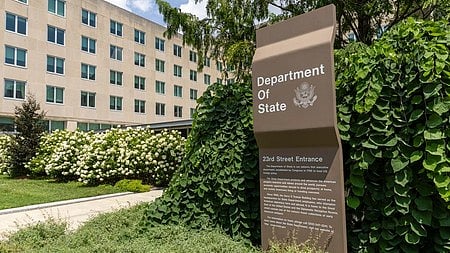
The United States has announced the phased closure of its consulate general in Peshawar, citing security considerations and operational efficiency, in a move that signals a notable shift in its diplomatic footprint in north-western Pakistan.
In a statement issued on Tuesday, the US Department of State said responsibility for diplomatic engagement with Pakistan’s Khyber Pakhtunkhwa province would be transferred to the US Embassy in Islamabad.
“The US Department of State is announcing the phased closure of the US Consulate General in Peshawar,” the department said. “Responsibility for diplomatic engagement with Khyber Pakhtunkhwa will transfer to the US Embassy in Islamabad.”
The closure marks a significant development in a region that has long been affected by militancy, cross-border tensions and counterterrorism operations linked to neighbouring Afghanistan.
Despite the move, the US stressed that its wider engagement with Pakistan and Khyber Pakhtunkhwa would remain unchanged.
“While our physical presence in Peshawar is changing, the Administration’s policy priorities in Pakistan remain steadfast,” the statement said.
US officials added that Washington would continue working with local authorities and communities in the province to strengthen economic cooperation, support regional security and advance bilateral interests.
The State Department also reaffirmed its commitment to maintaining diplomatic relations with Pakistan through its remaining missions in Islamabad, Karachi and Lahore.
“The Department, through the US Mission to Pakistan, remains dedicated to advancing the US-Pakistan relationship through our remaining diplomatic posts in Islamabad, Karachi, and Lahore,” it added.
One person died and more than 30 others were injured after a sleeper bus overturned on the Ganga Expressway in Uttar Pradesh’s Badaun district in the early hours of Monday, police officials said.
The accident took place near Sarai Piparia village in the Musajhaag area at around 12.30 am. The bus was travelling from Khaga in Fatehpur district to Ludhiana in Punjab when the mishap occurred.
According to Senior Superintendent of Police Ankita Sharma, the tyre of the bus burst near the 202-kilometre mark of the expressway, causing the driver to lose control.
“The bus overturned several times, crossed the divider and landed on the opposite carriageway,” Sharma said.
A passenger identified as Anuj, 34, from Fatehpur district, died at the scene.
Officials said more than 30 passengers suffered injuries, with six reported to be in a critical condition. They were later referred to a hospital in Bareilly for specialised treatment.
Several passengers became trapped inside the damaged vehicle following the crash. Police teams from Musajhaag, Dataganj and nearby stations, along with health department personnel and ambulance services, rushed to the site and carried out a rescue operation.
Rescuers reportedly smashed windows and cut through seats to free those trapped inside the overturned coach.
The injured passengers were initially taken to nearby community health centres and the district hospital. While many sustained minor injuries and were discharged after treatment, six remained under medical supervision.
District magistrate Avneesh Rai said the administration was closely monitoring the condition of the injured passengers.
Preliminary investigations suggest that overspeeding, combined with the tyre burst, may have led to the accident, officials added.
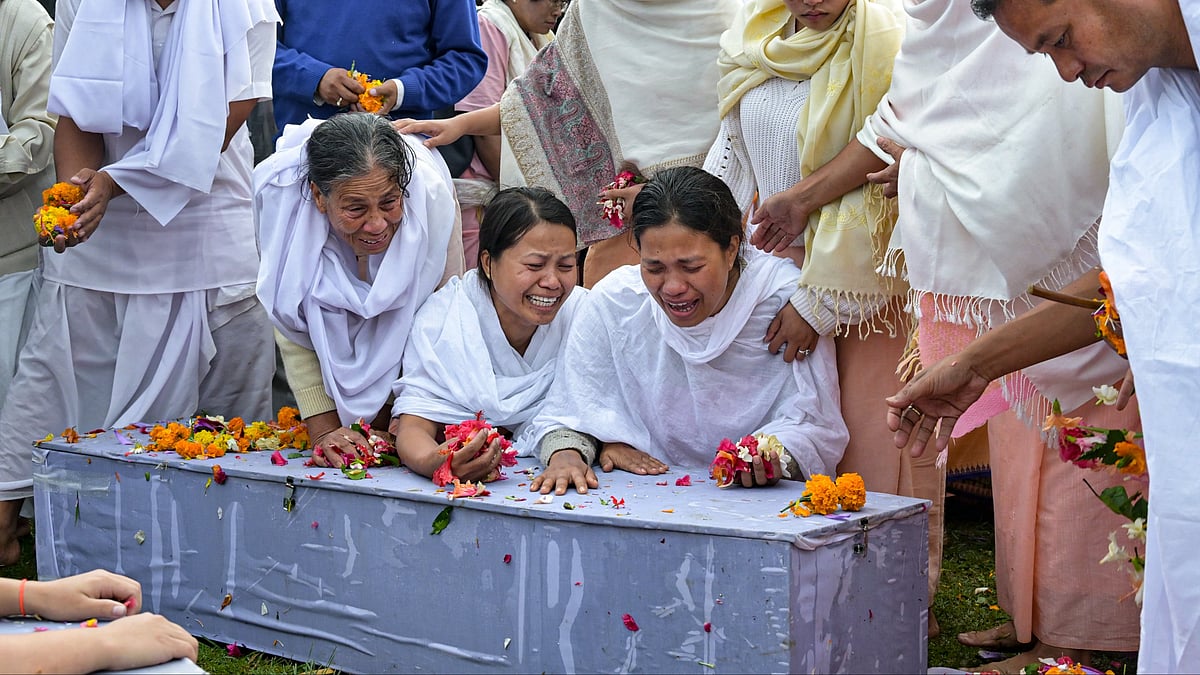
Rallies, shutdowns, memorial meetings and prayer gatherings were held across Manipur on Sunday as the state marked the third anniversary of the ethnic conflict between Meitei and Kuki communities that has left at least 260 people dead, displaced thousands and reshaped the state’s political landscape.
The violence first erupted on 3 May 2023 after a ‘Tribal Solidarity March’ organised in the hill districts to oppose the Meitei community’s demand for Scheduled Tribe status.
Three years later, the divisions remain deeply entrenched, with Meitei and Kuki organisations holding separate programmes across the state while reiterating sharply opposing political demands.
Meitei groups demand NRC, protection of Manipur’s integrity
Several Meitei civil society organisations organised rallies and public meetings across Imphal Valley districts demanding implementation of the National Register of Citizens (NRC) before the next census and protection of Manipur’s territorial integrity.
Hundreds participated in a rally at Nambol in Bishnupur district organised by the United Protection Committee.
“The rally was organised to highlight the ongoing suffering of the people and to demand accountability and justice for the victims of the conflict,” said United Protection Committee convenor Th Lamjingba.
At Iboyaima Shumang Leela Shanglen in Imphal East district, women’s groups including the Meira Paibi and the COCOMI held a public discussion titled “three years on Manipur crisis”.
“The public discourse is being held on the occasion of three years of conflict in the state in the context of armed attacks on the indigenous people of Manipur by Kuki terrorists,” said Shanta Nahakpam.
Floral tributes were also paid across several valley districts to more than 100 Meitei victims killed during the violence.
Kuki groups observe shutdown, renew separation demand
In Kuki-majority Kangpokpi district, a 12-hour shutdown called by the Committee on Tribal Unity (COTU) brought business activity to a halt, officials said.
COTU has continued to demand a separate administrative arrangement for Kukis, arguing that coexistence with Meiteis had become impossible after the violence.
Floral tributes were offered at the Martyrs’ Cemetery in Phaijang for more than 100 Kuki-Zo victims killed during the conflict.
Kuki-Zo groups also observed what they described as a “Separation Day from Meiteis” in Churachandpur district.
The Indigenous Tribal Leaders Forum (ITLF) organised a programme at Peace Ground while the Zomi Council held another at Martyrs Park.
Prayer services for victims of the violence were conducted at both venues.
ITLF spokesperson Ginza Vualzong claimed that around 250 Kuki people were killed during the conflict, while 40,000 were displaced.
He also alleged that more than 7,000 houses and around 360 churches had been destroyed.
“We can never forget these atrocities that we have faced,” Ginza said.
Conflict reshaped Manipur politics
The conflict triggered one of the most prolonged and violent internal crises in Manipur’s recent history.
The Meiteis constitute roughly 53 per cent of the state’s population and are concentrated mainly in the Imphal Valley, while tribal communities including Kukis and Nagas account for around 40 per cent and largely inhabit the hill districts.
Months of unrest eventually led to the resignation of the BJP-led government headed by N. Biren Singh on 9 February last year.
President’s Rule was imposed in the state on 13 February, with the 60-member Assembly placed under suspended animation.
The central rule was later revoked on 4 February this year shortly before the formation of a new government led by BJP leader Y. Khemchand Singh.
Despite the restoration of an elected government, core issues linked to territory, ethnic identity, security and political representation remain unresolved.
The anniversary events reflected how the conflict continues to shape public sentiment, with both Meitei and Kuki groups using the occasion to reinforce competing narratives over victimhood, legitimacy and Manipur’s future political structure.
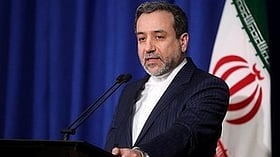
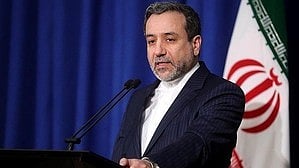
China's foreign minister Wang Yi on Wednesday held talks with Iran’s foreign minister Abbas Araghchi in Beijing, as pressure mounts on Tehran to reopen the Strait of Hormuz to global shipping and move toward a deal with the United States to end the conflict.
Araghchi’s one-day visit — his first to China since the outbreak of the US-Iran war — comes just days before US President Donald Trump is scheduled to visit Beijing on 14–15 May for talks with Chinese President Xi Jinping, where a potential trade agreement and the West Asia situation are expected to feature prominently.
Chinese state media said the two sides discussed the escalating situation triggered by the US blockade of Iranian ports, imposed to pressure Tehran into lifting its own restrictions in the Strait of Hormuz — a vital corridor that carries over 20 per cent of global oil and gas supplies.
China, Iran’s largest crude oil buyer and a key strategic partner, has significant stakes in ensuring stability in the waterway. Beijing has also been critical of Washington’s blockade, warning that it risks further destabilising global energy markets.
The visit comes a day after US secretary of state Marco Rubio announced that “Operation Epic Fury” — a major US-Israeli military campaign launched on 28 February — had concluded after achieving its objectives.
Rubio has urged China to use its influence with Tehran. “I hope the Chinese tell him what he needs to be told — what you are doing in the Strait is causing you to be globally isolated,” he said, according to media reports. Calling Iran “the bad guy” in the standoff, Rubio added that China’s export-driven economy is particularly vulnerable to disruptions in Hormuz.
“It is in China’s interest that Iran stop closing the Strait,” he said, noting that while many countries want to help reopen the route, not all are in a position to do so.
With both Washington and Beijing keen to avoid further escalation ahead of Trump’s visit, diplomatic efforts have intensified. China is also reported to be working through regional intermediaries, including Pakistan, to help ease tensions and bring the US and Iran closer to a negotiated settlement.
At the same time, the US blockade of Iranian ports has added pressure on Beijing to secure alternative energy supplies, underlining the high economic stakes driving China’s engagement with Tehran.
The Beijing talks signal a delicate balancing act for China — maintaining its strategic ties with Iran while quietly encouraging de-escalation to safeguard global trade and energy flows.
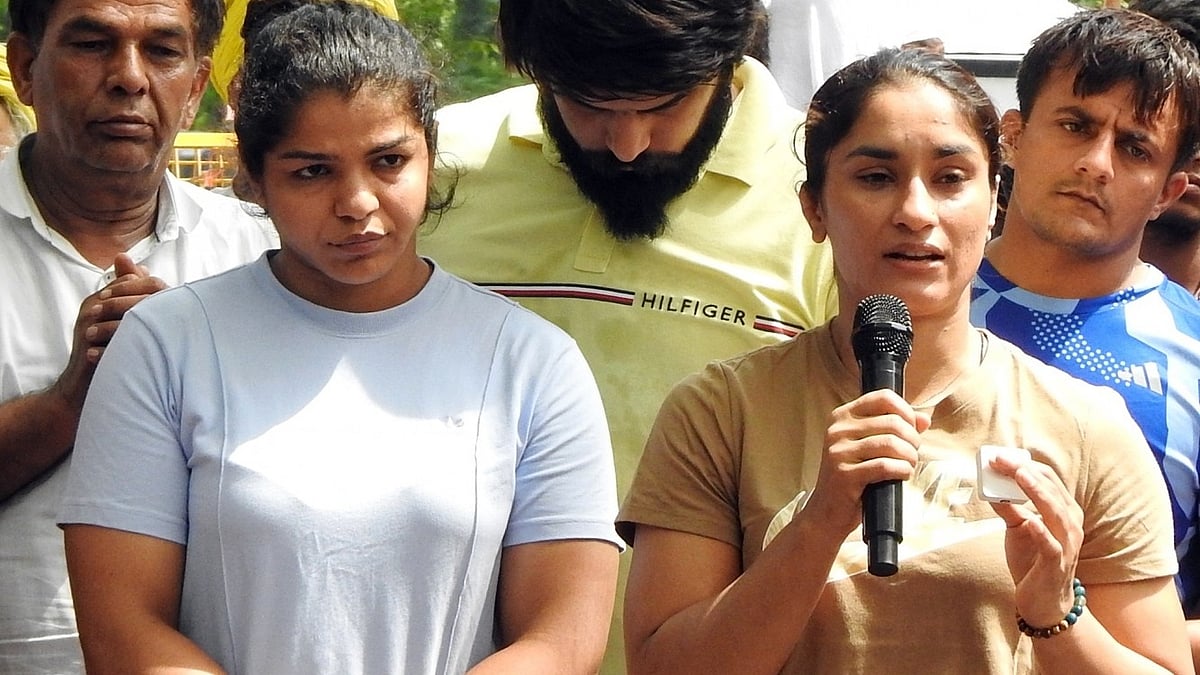
Olympic bronze medallist Sakshi Malik has strongly backed fellow wrestler Vinesh Phogat amid the ongoing row over her eligibility, urging Prime Minister Narendra Modi, Sports Minister Mansukh Mandaviya and the Wrestling Federation of India to allow her to compete and make an international comeback.
Vinesh, who announced her retirement shortly after her dramatic disqualification from the Paris Olympics 2024, later reversed her decision after becoming a mother last year and has been attempting to return to competitive wrestling after nearly 20 months away from the sport.
However, in a 15-page show-cause notice, the Wrestling Federation of India declared Vinesh “ineligible” to participate in sanctioned competitions until at least 26 June 2026. The decision effectively bars her from competing in the 2026 Senior Open Ranking Tournament in Gonda, Uttar Pradesh.
Backing Vinesh publicly, Sakshi appealed to authorities to permit the wrestler to take part in trials.
“I request my Prime Minister Narendra Modi, sports minister Mansukh Mandaviya, and the Wrestling Federation to take Vinesh’s trials so that she can also win medals for the country and make the country proud,” Sakshi said.
She further said Vinesh’s return could become an important example for women athletes balancing motherhood and professional sport.
“And to set such an example, so that women can play in their own country, even after becoming a mother, win medals and make the country proud,” she added.
Sakshi also criticised the federation’s handling of the issue, arguing that many international sports bodies actively support female athletes returning after childbirth.
“I can give many such examples where sports federations of other countries make rules easier for their players so that even after becoming a mother, women can play for the country and win medals,” she said in a video posted on social media.
“Whereas our federation implements such rules two days before so that Vinesh cannot make a comeback,” Sakshi alleged.
Despite being declared ineligible, Vinesh appeared at the Senior National Open Ranking Tournament in Gonda and maintained that both the International Testing Agency and the World Anti-Doping Agency had cleared her to return to competition from 1 January 2026.
The controversy has sparked wider debate within Indian sports over athlete welfare, federation transparency and support mechanisms for women athletes returning to elite competition after motherhood.
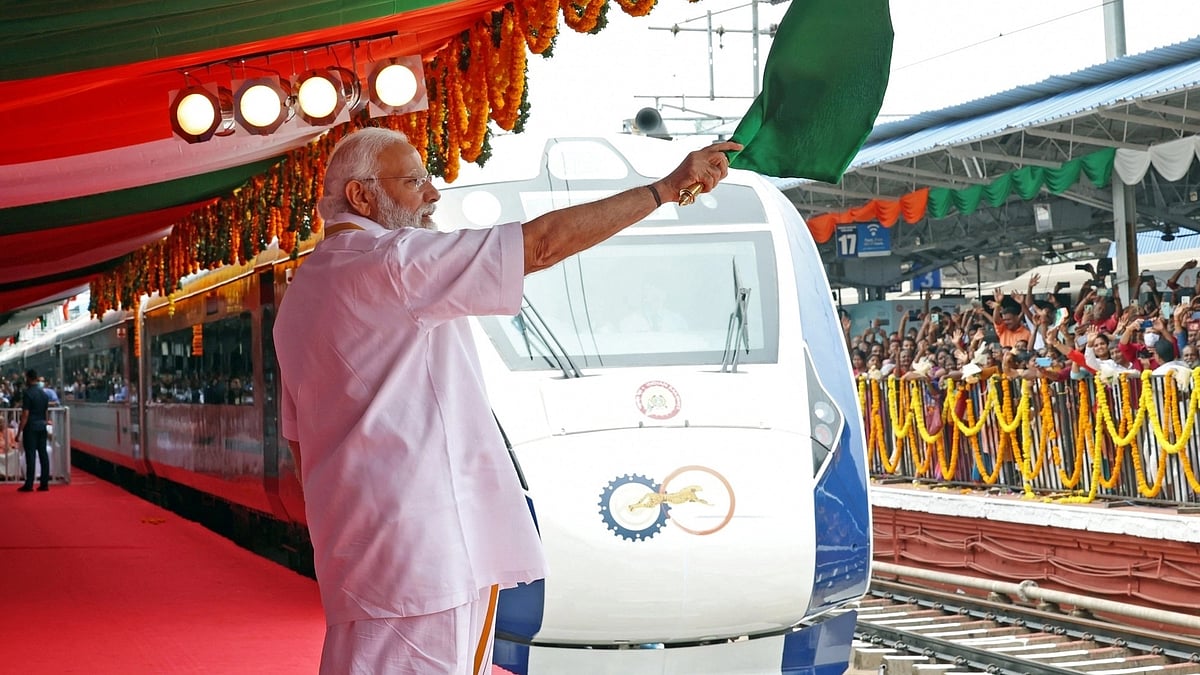
Even as Prime Minister Narendra Modi has been urging citizens to prefer train travel, more than 3.39 crore railway passengers were unable to travel in 2025–26 after their waitlisted tickets remained unconfirmed and were automatically cancelled, according to data provided by the Ministry of Railways under the RTI (Right to Information) Act.
The figures, disclosed in response to an RTI query filed by Bhopal-based activist Chandrasekhar Gaur, point to mounting pressure on the country’s rail network and continuing shortages of confirmed berths on high-demand routes.
According to the Railway Ministry’s reply, around 2.19 crore PNRs (Passenger Name Records) were automatically cancelled during 2025–26 after tickets failed to get confirmed before reservation charts were prepared. These cancellations affected more than 3.39 crore passengers, especially those holding online waitlisted tickets.
The ministry’s class-wise data showed that the highest number of automatic cancellations involved passengers travelling in Sleeper Class and AC 3-tier (3AC).
Nearly 74.55 lakh passengers booked under the 3AC category were unable to travel because their tickets remained unconfirmed, while the highest number of cancellations occurred in Sleeper Class, where more than 1.05 crore PNRs were automatically cancelled.
The ministry also stated that 2.78 lakh PNRs were cancelled in First AC (1AC), affecting around 3.85 lakh passengers, while 16.41 lakh PNRs under Second AC (2AC) were cancelled, impacting nearly 24.21 lakh passengers.
The figures indicate a steady rise in the number of passengers unable to travel because of unconfirmed waitlisted tickets over the past five years:
1.65 crore passengers in 2021–22
2.72 crore in 2022–23
2.96 crore in 2023–24
3.27 crore in 2024–25
3.39 crore in 2025–26
Commenting on the data, Gaur said the figures reflected a serious shortage of trains and confirmed berths on major routes.
“It is a matter of serious concern that even after 78 years of Independence, the Railways has not been able to ensure confirmed tickets for passengers, especially in sleeper classes,” he said.
He added that the rising cancellations highlighted the urgent need to expand train capacity and increase services on heavily used routes across the country.
Rail crisis: Modi urges Indians to travel by train but 3.39 cr passengers unable to get tickets
There was a time in Nehruvian India when the poor had faith in a simple yet revolutionary idea: ‘Padh jaayenge, toh badh jaayenge’. Education was the great leveller. It was the escape route out of caste, out of poverty, out of the inherited disadvantages of birth. Education was enshrined in the Constitution as a promise to India’s most poor and disadvantaged citizens.
Public universities, the IITs, the IIMs, government medical colleges were not merely institutions; they were the physical architecture of social mobility.
But the faith India’s poor and excluded had in education is faltering. And it’s not by accident but the consequence of a policy drift.
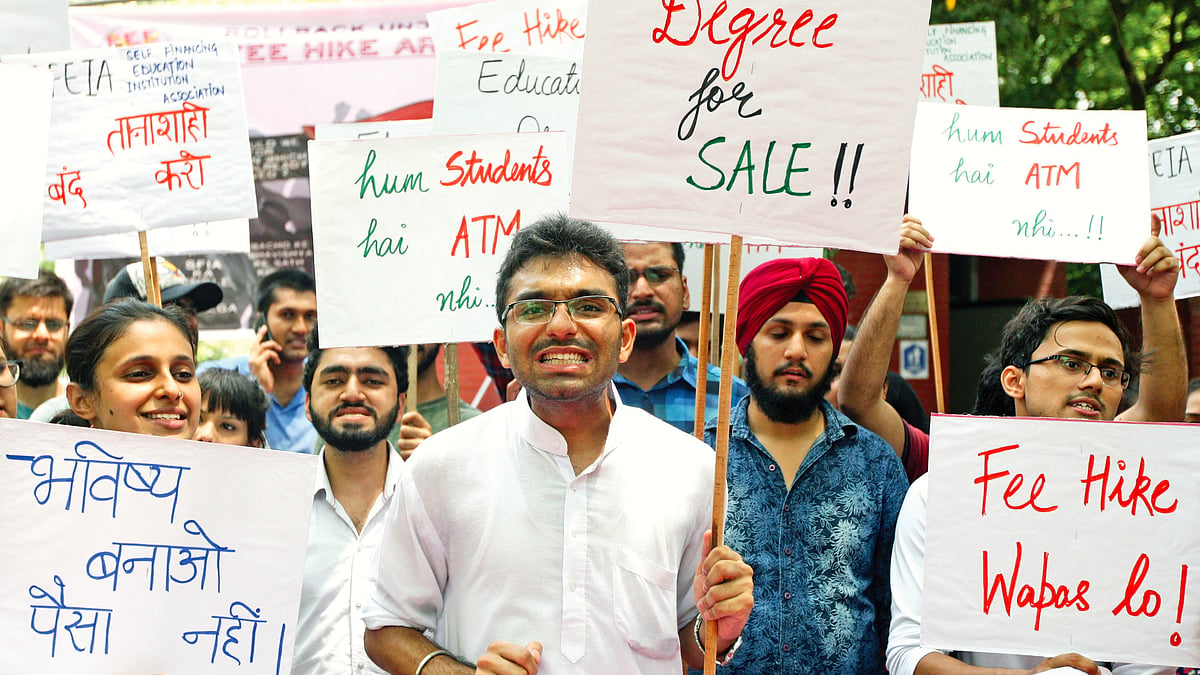
What began as creeping privatisation two decades ago has been deliberately accelerated under 12 years of BJP rule, turning it into a strategy designed to price education out of the reach of the poor. Coupled with stagnant salaries, the cost of education is leading to worsening poverty.
The entry of private capital into higher education began in the late 1990s and accelerated through the 2000s. It was propelled by the experience of underperforming and crumbling public universities. The infusion of private capital, it was believed, would bring both quality and greater access. But the experience of the past three decades has proven the folly of those expectations.
India’s higher education system is the third largest in the world by enrolment. We have 43 million students in over 60,000 colleges and 1,200 universities. These numbers underline the monumental wasted potential.
A country that aspires to be a knowledge superpower is producing graduates who can’t find jobs and innovators who fail the test of commercial application. It is re-engineering education in a way that dulls critical faculties and equates success with the ability to crack multiple-choice tests.
The higher education economy
The single most consequential effect of privatisation has been the transformation of a public good into a private commodity. Private institutions have mushroomed while public ones by and large are starved for resources.
The fees of premium institutions have shot up. The tuition fees of IIM-A (Ahmedabad), for example, surged from Rs 4 lakh in 2007 to Rs 27 lakh in 2021; of IIT Bombay from Rs 1.08 lakh in 2008 to Rs 8 lakh in 2024-25. In the private sector, a regular BA degree in an average university today costs Rs 3–6 lakh; a BTech Rs 8–20 lakh. Management degrees can cost from Rs 5–30 lakh. And the burden of higher cost has been passed on to students.
High tuition fees is not the whole story. India’s higher education system has been captured at the point of entry by a parallel, unregulated, multi-billion-rupee coaching industry. JEE and NEET, the two national entrance examinations for engineering and medicine, are so disconnected from the school curriculum that it is now practically impossible to crack these exams without coaching. The entrance examination, which is supposed to select talent from the educational system, has itself become a separate educational system.
The GST collection from coaching institutes grew from nearly Rs 2,200 crore in 2019-20 to over Rs 5,500 crore in 2023-24! This is an industry that profits from the failure of the formal education system; it’s a business model built on institutional inadequacy.
The coaching industrial complex is not educating India; it is extracting wealth from anxious families by exploiting the gap between what schools teach and what entrance tests demand.
Education as a loss-making investment
In the UPA years under Dr Manmohan Singh, salaries in India grew three to five times over ten years. Nurses, engineers, teachers, civil servants, private sector employees, all saw real income growth.
In these circumstances, the investment in education felt like a rational decision because the ‘returns’ were generous. The social contract between education and its reward was intact.
By contrast, for nearly a decade in the Modi years, starting salaries for fresh graduates have stagnated at Rs 3-4 lakh per annum, even as the cost of education has multiplied three to seven times. And this, if they get a job. Most don’t!
The last available figures of the All-India Survey of Higher Education (AISHE) 2021-22 show total enrolment in higher education at 4.33 crore. The average has hovered in the same range for the past few years. In 2023, only 81.2 lakh got a job, including 39.1 lakh in sectors like IT services and banking.
The India Skills Report 2025 places graduate employability at 60 per cent for BTech graduates and 45 per cent for arts graduates. Nearly 45 per cent of graduates aged 20 to 24 are jobless. In 2024, two out of five IIT graduates, or 40 per cent, went unplaced.
Meanwhile, corporate profits in several sectors have gone up five times. Wealth is being generated alright, but it’s not reaching those who labour. Wages are decoupled from growth. By design. Labour protections have been weakened systematically. Wage floors have not been raised to compensate for inflation and employment has been ‘casualised’. The rich are getting richer and the poor graduate gets a crippling debt with his degree.
This is not a market outcome; it’s a policy outcome. When corporate profits grow five times and salaries do not move, the distribution of economic gains has been determined by a government that chose whose interests it will prioritise and protect.
The accreditation scandal
Aspiring families will pay any price for a degree if the brand has cachet, if the positioning is attractive. This psychology drives the explosion of private universities. Designer courses are being fashioned with fancy names for maximum marketability and advertised aggressively with fraudulent placement statistics.
Gullible students and their families are often unable to tell a good course from a scam. Accreditation ratings and NIRF (National Institute Ranking Framework) ratings are of little help. The accreditation architecture itself is in a shambles. In February 2025, the CBI arrested NAAC inspection committee members for accepting cash, gold, laptops and phones in exchange for A++ ratings.
The NAAC (National Assessment and Accreditation Council) dismissed 900 of its 5,000 assessors after the scandal, but it still didn’t invalidate the fraudulent grades they had awarded! Tainted institutions with fake A++ ratings continue to attract students and their families’ hard-earned money.
In March 2025, the Madurai bench of the Madras High Court stayed the NIRF rankings. It found that the National Board of Accreditation (NBA) relies entirely on unverified, self-submitted data. A 2024 exposé found over 50 institutions falsely advertising accreditations or using forged certificates.
****
The government’s own Economic Survey 2024-25 acknowledged the need for regulatory transparency in higher education. It’s an admission that the current framework is failing.
Investing in education is today making families poorer. Even those fortunate enough to get jobs work on salaries that will take them years to recover just the fees paid for their education.
During the UPA years, an entire generation moved into their own houses, buying them on EMIs. Today, it’s practically impossible for young employees to dream of their own house.
When the poor and marginalised conclude that education is no longer affordable, that a degree will lead nowhere, that the salary will never recover the cost, they will gravitate towards a rational decision: to stop sending their children to universities.
When that happens, these children will perforce return to hereditary, caste-based occupations, undoing the Constitutional promise of social mobility for all Indian citizens.
Gurdeep Singh Sappalis a Permanent Invitee to the Congress Working Committee. More by the author here
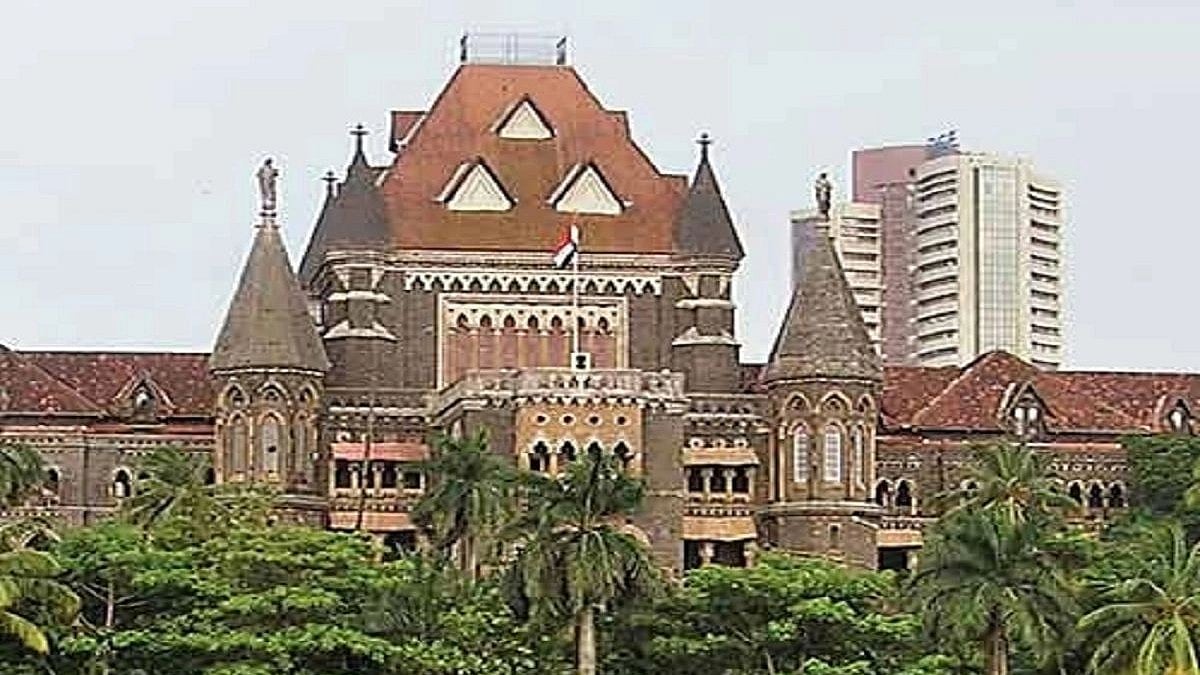
The Bombay High Court on Monday granted bail to activist Surendra Gadling, who was arrested in 2018 in the Elgar Parishad–Maoist links case, citing his prolonged incarceration and the unlikelihood of the trial beginning soon.
A bench led by Justice A.S. Gadkari, while hearing Gadling’s plea, also observed that all other accused in the case have already been granted bail, and that he should receive the same relief on grounds of parity.
With this order, all those arrested in the over eight-year-old case are now out on bail. Stan Swamy, an 84-year-old priest and tribal rights activist, had died in custody in July 2021 while awaiting trial.
Bombay HC has granted bail to lawyer-activist Surendra Gadling, who is in prison from June 6, 2018 in Bhima-Koregaon - Elgar Parishad case, considering his long incarceration.
At least 16 individuals — including lawyers, activists and academics — were booked in connection with allegedly provocative speeches delivered at the Elgar Parishad conclave held at Shaniwarwada in Pune on 31 December 2017.
Police had alleged that the speeches triggered violence at Koregaon-Bhima on the outskirts of Pune the following day. The initial probe by Pune Police claimed Maoist backing for the event, before the National Investigation Agency took over the investigation.
Other accused in the case include Varavara Rao, Sudha Bharadwaj, Anand Teltumbde, Vernon Gonsalves, Arun Ferreira, Shoma Sen, Gautam Navlakha, Sudhir Dhawale, Rona Wilson, Jyoti Jagtao and Mahesh Raut.
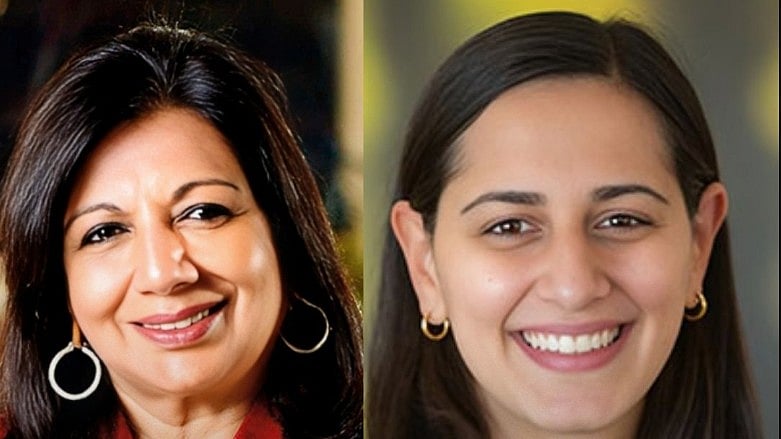
Kiran Mazumdar-Shaw, founder and chairperson of Biocon, has set out a clear succession plan for the company, identifying her niece Claire Mazumdar as her eventual successor.
Mazumdar-Shaw said Claire, currently founder and chief executive of Bicara Therapeutics, is being prepared to lead the Bengaluru-based group into its next phase, Fortune India reported. While no timeline has been announced, she indicated that the transition would be gradual rather than immediate, with Claire expected to assume greater responsibilities over time.
Moneycontrol said Claire Mazumdar brings a combination of academic and industry experience to the role. She holds degrees from the Massachusetts Institute of Technology and Stanford University, including a doctorate in cancer biology, and has worked with global biotech organisations. Bicara Therapeutics, incubated by Biocon, went public in 2024 and has since established a presence in the international market.
Claire will transition into my role at the right time so not planning to hang up my boots just yet!! https://t.co/pidlRfRZRs
Mazumdar-Shaw said she is not stepping down in the near term and will oversee a phased transition to ensure continuity and stability within the company.
Alongside leadership planning, Biocon has been restructuring its operations. The company has consolidated its generics and biologics businesses, reduced debt and simplified its corporate structure. It is also strengthening its focus on biosimilars, which form a significant portion of its revenues, while expanding its research and development pipeline.
Senior management changes are also under way. Shreehas Tambe has taken charge of Biocon Biologics, while Siddharth Mittal is set to lead Syngene International from July.
Looking ahead, Mazumdar-Shaw said the company would continue investing in emerging technologies, particularly artificial intelligence, to accelerate drug discovery and strengthen its innovation capabilities.
She added that while Claire has been identified as her successor, the broader family, including her brother Eric Mazumdar and husband Thomas Roberts, could also contribute to the company’s future growth.
The announcement marks a significant milestone for Biocon as it prepares for leadership transition while positioning itself for the next stage of expansion in the global biotechnology sector.

 Login
Login