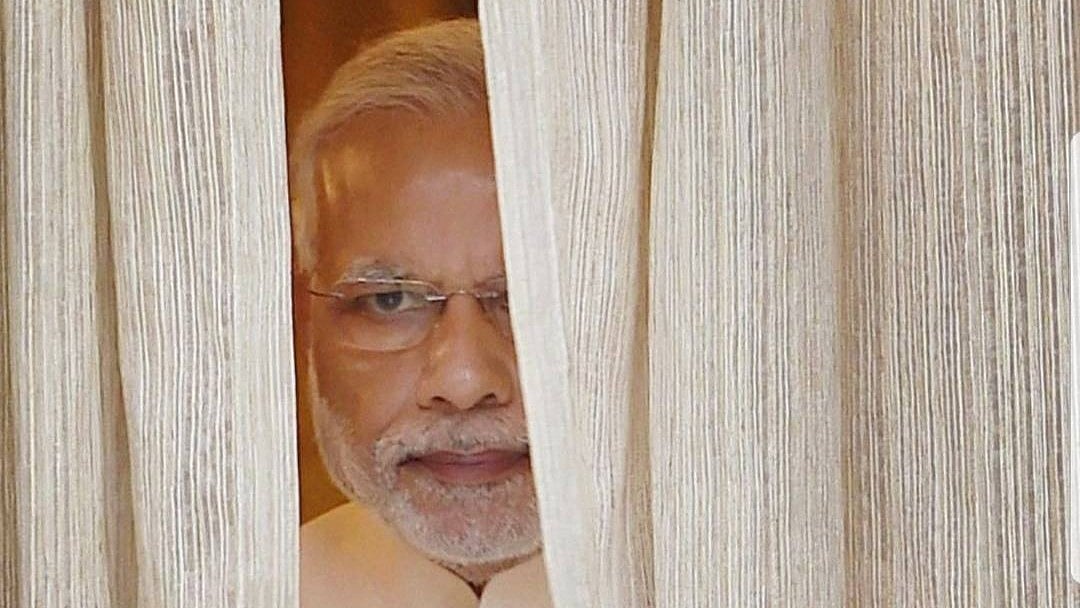
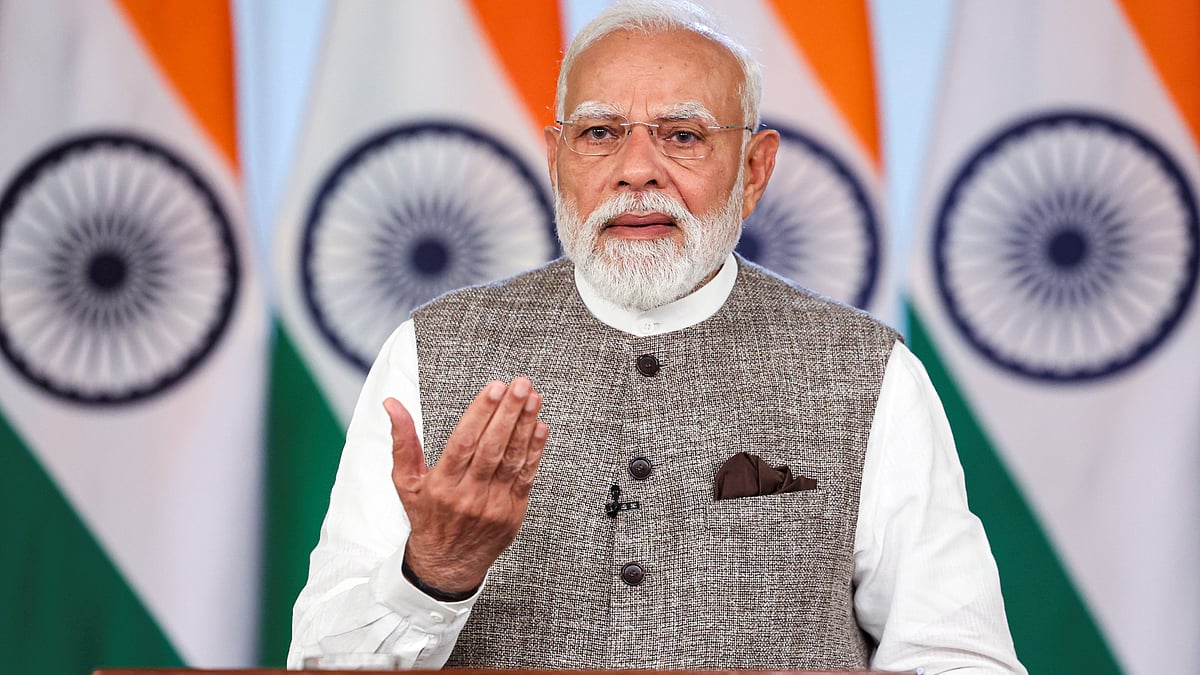
Sharad Pawar has written an open letter to Prime Minister Narendra Modi expressing concern over the Centre’s recent austerity appeal and demanding that an all-party meeting be convened to discuss the emerging economic situation and its implications.
Pawar, a former defence minister and former agriculture minister, wrote the letter on X two days after Modi appealed to citizens to conserve fuel, avoid foreign travel and postpone gold purchases in view of rising global energy prices and pressure on foreign exchange reserves caused by the continuing West Asia conflict.
The letter was issued ahead of Modi’s proposed five-day foreign tour from 15 to 20 May, during which he is expected to visit the United Arab Emirates, Netherlands, Sweden, Norway and Italy.
Pawar urged Modi to personally chair an all-party meeting on the issue, saying decisions involving national economic concerns should be taken after consultations with opposition parties, economists and experts.
He said the Prime Minister’s appeal asking citizens to reduce fuel consumption, avoid gold purchases and limit foreign travel had created “unease and anxiety” among ordinary people, industry and investors.
Pawar also expressed concern over the possibility of shortages of fuel and other essential resources because of the worsening situation in West Asia and criticised what he described as sudden announcements with potentially long-term economic consequences.
The Nationalist Congress Party (Sharad Pawar faction) leader said the government should take expert advice before implementing major economic measures and stressed that consensus-building on issues affecting the national economy was in the country’s larger interest.
Raj Thackeray attacks Centre’s policies
Raj Thackeray, chief of the Maharashtra Navnirman Sena, also criticised Modi’s appeal in a separate letter posted on X.
Questioning the Centre’s policies, Thackeray asked why citizens should bear the burden of policy failures and suggested that the government should convene a special session of Parliament to discuss the economic situation.
BJP leaders draw criticism over ‘mixed signals’
The austerity appeal has also triggered criticism over alleged contradictions within the ruling Bharatiya Janata Party.
Mumbai BJP president Amit Satam came under attack after undertaking a nala inspection tour with a convoy of around 25 vehicles, prompting opposition parties to accuse the BJP of double standards on fuel conservation.
Varsha Gaikwad of the Indian National Congress shared videos of the convoy on social media and criticised what she described as continuing “VIP culture” despite calls for austerity.
Meanwhile, the Maharashtra Government has begun implementing a series of cost-cutting measures following Modi’s remarks.
The office of Maharashtra Assembly Speaker has cancelled a proposed Japan visit by 12 MLAs, while the state government has decided not to send any official delegation to the Cannes Film Festival in France.
Under the new guidelines, ministers will now require prior approval from Chief Minister Devendra Fadnavis before using government aircraft, chartered planes or helicopters, and officials have been encouraged to conduct meetings online.
BJP MLA Pravin Darekar has also reportedly booked an electric vehicle following Modi’s appeal, amid indications that governments may increasingly promote EV adoption as part of fuel conservation measures.
All-party meet on West Asia crisis: BJP, Opposition spar over PM Modi's absence
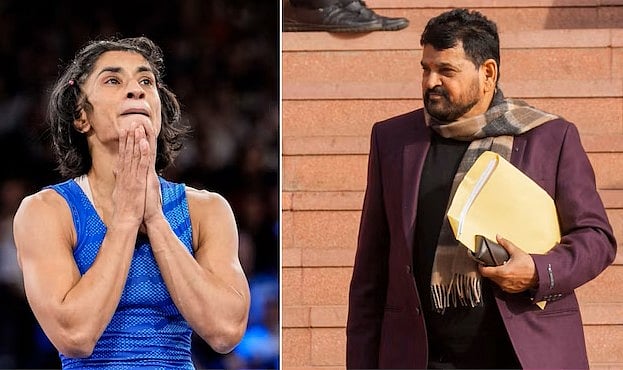
Has anything changed in Indian wrestling ever since the trio of Sakshi Malik, Vinesh Phogat and Bajrang Punia took to the streets at Jantar Mantar in 2023, seeking removal of Brij Bhushan Singh — the then tainted president of WFI (Wrestling Federation of India)?
A sense of déjà vu has gripped followers of the sport as Vinesh, who plans to make a comeback after her retirement following the heartbreak of Paris 2024, was ruled ‘ineligible’ from taking part in the Asian Games trials at the National Open Ranking Tournament in Gonda, Uttar Pradesh on Monday.
The event could have seen the first competitive bout for Vinesh, now 31, who had left Paris in tears after being found ‘overweight’ by 100 grams in the weigh-in ahead of the final bout – with at least a silver assured to boost a flagging Indian campaign at the Games.
However, the WFI found her reply to their showcause (issued barely two days back) on issues ranging from her Paris Olympics disqualification to missed anti-doping whereabouts filings and alleged technical violations during trials, ‘inadequate’ and have barred her from taking part in the ongoing Gonda event.
No wonder that the timing of the showcause, so close to the date of the trials which could have paved the route for her comeback in the international arena, is being seen as a deliberate ploy by the wrestler to scuttle her dreams.
Taking to her X handle, the former bronze medallist at World Championships says: ‘’I have been given written permission by the ITA (International Testing Agency) to compete from 1 Jan, 2026, I was allowed to register for the 2026 Senior Open Ranking Tournament at Nandini Nagar, Gonda on the 28th of April, 2026. I came to Gonda today to participate but I have neither been allowed to complete my verification, nor been allowed to use the training hall here. I don’t want any special privileges, I just want to compete on merit.’’
I have been given written permission by the ITA to compete from 1 Jan, 2026, I was allowed to register for the 2026 Senior Open Ranking Tournament at Nandini Nagar, Gonda on the 28th of April, 2026. I came to Gonda today to participate but I have neither been allowed to complete… pic.twitter.com/xq6gmQ8nmF
She had also posted a PDF of the email of the ITA communication to her (dated 3 July, 2025), marked to world governing body as well, which says Vinesh is eligible to participate in competitive events from the start of the year. The six-month embargo from ITA for participation was because of the fact Vinesh had missed one of the three ‘whereabouts’ call-ups from the agency for a dope test and hence a six-month hiatus would be required before she could take to the mat again.
Speaking to media after her disqualification in Gonda, Vinesh clarified: “I had missed one whereabouts. And there are three of them. I had become a mother at that time. I also had an assembly session which I forgot to update. I even apologised to WADA for that. They gave me a clean chit. They told me that I can participate in any international event.”
Calling the showcause notice a ‘pre-planned conspiracy,’ Vinesh alleged that the timing was deliberately chosen to leave her with little legal recourse before the tournament. ‘’I got the notice on Friday night, on Saturday I was reducing weight and doing paperwork. They knew exactly when to send the notice, when courts would be closed and when filing would become difficult. This is all pre-planned,’’ alleged Vinesh, now a Congress MLA from Julana in Haryana.
The conspiracy theory behind the entire controversy gains credence from the fact that Vinesh – alongwith Olympic medallists Sakshi Malik and Bajrang Punia – had proved to be a bete noire for Brij Bhushan who is still believed to running the show in WFI despite stepping down for their elections.
Speaking to National Herald in a phone call, Anita Sheoran, a 2010 Commonwealth Games gold medallist who ran for presidency against the current incumbent Sanjay Singh, said: ‘’It’s an open secret that Brij Bhushan’s words are still the law in WFI and Sanjay is a shadow candidate. I agreed to contest the elections in the hope if we could make wrestling a safer place for the girls, but I am not sure if much has changed.’’
Asked whether Anita sees any vendetta in the manner Vinesh is being treated, the former champion said: ‘’The Asian Games is only in the second half of September, so why do you need to hold the trials so early in the year? Normally, it’s never held at least before June-July but then the current dispensation does it on their free will. This would have helped Vinesh complete the so-called WFI rule of a six month embargo as per their anti-doping rules.’’
Meanwhile, Sakshi Malik — who had been conspicuously silent since the days of protest — joined issue with her fellow wrestler. In a carefully worded video, the Rio 2016 bronze medallist said while many countries would ‘relax’ rules to help women athletes continue with their careers, ‘’But our federation has come up with rules to stop Vinesh from making a comeback.’’
Meanwhile, Brij Bhushan claimed that he has no role in wrestling body’s decisions now. The former WFI chief, who attended a hearing in the sexual harassment case against him at the capital’s Rouse Avenue Court on Tuesday, told the media: ‘’I am currently cleaning up the mess that this lady has left behind. Furthermore, the question of where a wrestling match will or will not take place does not concern me. That subject currently falls under the purview of the WFI.’’
VINESH VS WFI? A TIMELINE
August 2024: Paris exit
Vinesh is disqualified from the women’s 50kg gold medal bout at the Paris Olympics for failing to make weight and retires the next day.
December 2024: WFI flags retirement
WFI cites UWW communication confirming Vinesh had informed the ITA of her retirement. Her husband disputes this, saying no formal procedure was followed.
December 2025: Vinesh comeback plans
Vinesh notifies UWW, SAI, and WFI of her comeback. WFI simultaneously flags a missed whereabouts filing from December 18. Vinesh says WADA reviewed it and gave her a clean chit.
1 January, 2026: International clearance granted
The ITA officially clears Vinesh to resume training and competition — a date she says WFI has deliberately ‘misrepresented’ as 26 June, 2026.
May 9, 2026: WFI showcause
Two days before the Gonda tournament, WFI issued a showcause notice charging her with anti-doping violations, breach of return-to-competition procedure.
May 11, 2026: Barred from trials
Vinesh arrives to compete but is denied verification and training hall access. She addressed the media, made X posts and says she will fight back with the Asian Games in her sights.
Vinesh vs WFI: Déjà vu for wrestling fans as star barred from trials
Mayawati on Tuesday said Prime Minister Narendra Modi’s recent appeal for austerity and fuel conservation reflected a deepening economic crisis in the country that extends beyond rising petroleum prices.
In a post on X, the Bahujan Samaj Party chief referred to Modi’s appeal made amid the ongoing conflict in West Asia and said the Prime Minister’s remarks indicated broader economic stress linked to foreign exchange pressures and rising fuel costs.
“This proves that the crisis confronting India is not limited merely to petroleum products such as petrol, diesel and cooking gas; rather, an economic crisis is also set to deepen,” Mayawati said.
She added that the economic situation was already affecting millions of Indians and warned that the hardships could continue in the coming months.
“In other words, at a time when nearly 100 crore citizens of the country, having already faced the severe blow of the COVID-19 era, are struggling even to secure their daily livelihood, there is nothing left of any significance to lose or to be more restrained about,” she said.
The BSP leader urged both the Centre and state governments to take proactive measures to support economically weaker sections and provide relief to poor and working-class families.
“Under these circumstances, the central and state governments should take proactive measures to provide some relief and support to these poor and hardworking families,” she said, adding that such steps would be in the interest of both the people and the country.
Modi had urged fuel conservation
Modi, while addressing a BJP rally in Hyderabad on Sunday, had called for judicious fuel consumption and conservation of foreign exchange in view of the continuing conflict in West Asia and its impact on global crude oil and fertiliser prices.
The Prime Minister urged citizens to reduce petrol and diesel usage, prefer metro rail services, adopt carpooling, increase use of electric vehicles and utilise railway freight services wherever possible.
He also appealed to people to postpone foreign travel and gold purchases for one year in order to conserve foreign exchange reserves.
“We have to save foreign exchange by any means,” Modi had said, while also encouraging greater use of work-from-home arrangements, virtual meetings and video conferencing methods that became common during the Covid-19 pandemic.
The remarks came amid sharp increases in global crude oil prices triggered by geopolitical tensions in West Asia, raising concerns over inflationary pressure and India’s import bill.
Although the rebel leaders denied that the AIADMK — founded by former chief minister and iconic actor M.G. Ramachandran (MGR) — had formally split, multiple media reports suggested that the party was facing a deep internal vertical divide over support to the TVK government.
According to the AIADMK faction, party chief Edappadi K. Palaniswami retained the support of only around 20-22 legislators, while most MLAs favoured extending support to the Vijay-led government in the interest of political stability.
Chennai, Tamil Nadu: AIADMK leader CV Shanmugam says, "...We decided to extend our support to the TVK, which emerged victorious."
"We founded this party against DMK. For 53 years, our politics have been against the DMK. Given this history, a proposal suggesting that an AIADMK… pic.twitter.com/pNiCWcDyQI
TVK emerged as the single largest party in the Assembly elections, winning 108 seats in the 234-member House, but fell 10 short of the majority mark. The Congress extended support with five MLAs, but intense political negotiations continued over securing the remaining numbers needed to form the government.
It was during this phase that the Shanmugam-led AIADMK faction — which claims the backing of 47 legislators — pushed for supporting the TVK government.
Shanmugam, who is expected to join the Vijay government, pointed to the AIADMK’s repeated electoral setbacks as a key reason behind the rebellion. He said the party had suffered three successive defeats at the hands of the DMK and that its alliance with the BJP had failed to revive its fortunes. Since the death of former chief minister J. Jayalalithaa, he said, the party had been grappling with a prolonged leadership and organisational crisis.
“We need to revive the party and discuss its future. We urge the General Secretary to convene the party council,” Shanmugam said, while also criticising sections within the AIADMK for exploring an understanding with the DMK.
At the same time, he insisted that he had no intention of splitting the AIADMK, setting the stage for a dramatic confrontation with the party’s leadership led by EPS, who had earlier rejected calls from the rebel faction to support Vijay and the TVK.
Shanmugam also declared that the AIADMK’s alliance with the BJP revived by EPS last year in an attempt to regain political ground was effectively over. The development is politically significant as Vijay had repeatedly cited the AIADMK’s ties with the BJP as a major ideological obstacle to any alliance.
Meanwhile, another group of senior AIADMK leaders considered loyal to EPS, including KP Munusamy and Thambidurai, met Palaniswami at his residence amid the escalating crisis.
சொந்த மாவட்டத்தில் வெற்றி பெற வக்கில்லாதவர்களின் சங்கமம் பொய் மூட்டைகளை அவிழ்த்து விட்டிருக்கிறது!
திமுக-வுடன் கூட்டணி என்று ஊடகங்களில் வந்த சில வதந்திகளை தூக்கிக் கொண்டு வருவதை தான் இத்தனை நாள் நீங்கள் தீட்டிக் கொண்டிருந்த மாபெரும் திட்டமா?
அதே ஊடகங்களில் நீங்கள் மூன்று பேரும்…
— AIADMK - SayYesToWomenSafety&AIADMK (@AIADMKOfficial) May 12, 2026
The AIADMK’s IT wing also attacked the rebel leaders on X, branding them “betrayers” and accusing them of being incapable of winning seats in their own districts. “It is EPS who protects the party. People voted for the AIADMK only because of EPS,” the post said.
The political drama follows reports last week that several AIADMK legislators loyal to EPS had been shifted to a resort in Puducherry amid pressure from within the party to support the TVK government. Leaders close to EPS denied reports of a rebellion and claimed the move was aimed at preventing poaching attempts by rival camps.
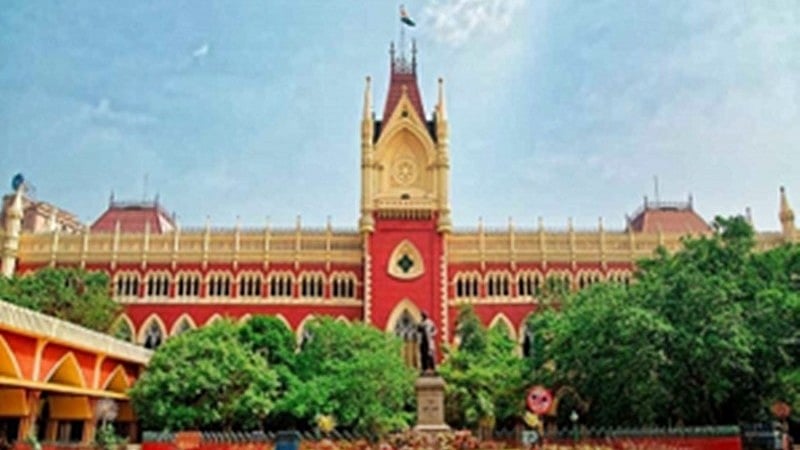
A bench of the Calcutta High Court headed by justice Rajasekhar Mantha on Tuesday recused itself from hearing matters related to the rape and murder of a woman doctor at RG Kar Medical College and Hospital, citing an excessive workload and lack of sufficient time to dedicate to the sensitive case.
While stepping aside, the bench observed that there was a surplus of pending matters before the court and noted that, in the interest of justice, the case should be heard by a bench capable of devoting adequate time and attention to the proceedings.
The development comes amid indications that the West Bengal government may constitute a judicial commission in connection with the case.
During Tuesday’s proceedings, the court accepted a status report submitted by the Central Bureau of Investigation, which is currently probing the matter following directions from the High Court.
At an earlier hearing, Justice Mantha’s bench had clarified that the CBI was free to interrogate the convicted accused as well as any other suspects if required to further the investigation.
“The CBI can interrogate any person to take the investigation forward,” the bench had observed, following which the central agency submitted its updated report.
This is not the first time a bench has withdrawn from hearing the matter. In March 2025, a division bench headed by Justice Debangshu Basak also recused itself from hearing the petition filed by the victim’s family, citing an inability to allocate sufficient time for detailed proceedings. The victim’s family had sought an expedited hearing but the matter could not proceed fully before that bench.
The case relates to the recovery of the woman doctor’s body from RG Kar Medical College and Hospital on 9 August 2024, triggering nationwide outrage and protests over women’s safety and conditions in public hospitals.
A day after the incident, civic volunteer Sanjay Roy was arrested by the Kolkata Police. The investigation was later transferred to the CBI on the orders of the Calcutta High Court.
On 18 January 2025, a court in Sealdah found Roy guilty in the case, and two days later Judge Anirban Das sentenced him to life imprisonment.
However, even before the trial court delivered its verdict, the victim’s parents had approached the High Court raising questions over the CBI probe and seeking further investigation into possible larger conspiracies and additional suspects.
The petition was initially placed before Justice Tirthankar Ghosh, who declined to hear the matter, noting that proceedings related to the RG Kar case were also underway in the Supreme Court of India.
The victim’s family subsequently moved the Supreme Court. During the hearing, then chief justice Sanjiv Khanna questioned why the same plea should be heard simultaneously in multiple courts and directed that the matter be pursued before the high court.
The case has since continued before different benches of the Calcutta High Court, with the victim’s family continuing to seek answers regarding the scope and direction of the investigation.
A year after Operation Sindoor, the Narendra Modi government of India still describes it as proof of a new doctrine, a signal that terrorism traced to Pakistan will invite punishment across borders. That claim has political force. Yet wars are not judged by intent alone.
They are judged by the balance they leave behind. By that measure, Operation Sindoor looks less like a strategic success than a costly misadventure that exposed the limits of India’s military and diplomatic power, revived Pakistan’s relevance, and gave China an unexpected advertisement for its weapons.
The operation began after the Pahalgam massacre of April 2025, in which twenty-six civilians were killed in Kashmir. India immediately blamed Pakistan-linked militants and struck targets across Pakistan and Pakistan administered Kashmir on the night of 6 and 7 May.
New Delhi intended to hit terror infrastructure, keep escalation below the nuclear threshold, and demonstrate that the old restraint after major terror attacks had ended. In that narrow sense, the strike achieved visibility. It showed that India was willing to use force in the heartland of Pakistan despite nuclear risks. But the battlefield quickly slipped beyond the neat script of calibrated punishment.
Pakistan responded militarily and, more importantly, survived and succeeded politically, diplomatically, and psychologically. Before the conflict, India enjoyed not just a larger economy and a larger military, but also a deeply entrenched perception of conventional superiority.
That perception mattered. It shaped diplomacy, deterrence, media narratives, and Pakistan’s own sense of vulnerability. Operation Sindoor punctured it. Whether Pakistan shot down two, five, or more Indian aircraft remains contested.
But even limited confirmation from India’s senior military officials and several outside officials that Chinese made Pakistani aircraft brought down Indian jets, including at least one Rafale, was enough to alter the strategic conversation. A country presumed to be outmatched had shown it could impose visible costs.
This is the central military lesson India should not evade. Conventional superiority is not a slogan. It must be proven across sensors, missiles, electronic warfare, command networks, quality of fighter jets, pilot training, and information discipline.
India may have hit Pakistani air bases and military infrastructure later in the conflict. It may have adapted after initial losses and used long range precision weapons effectively. But in modern conflict, the first images and first claims shape the global story. India’s silence created a vacuum. Pakistan filled it.
China amplified it. The world noticed not India’s declared punitive precision, but the possibility that Chinese platforms and Pakistani tactics had successfully challenged India’s airpower.
Pakistan did not need to prove every claim beyond doubt. It needed only to cast doubt on India’s presumed air dominance. Operation Sindoor therefore did not establish uncontested asymmetry, as BJP supporters argue. It revealed contested asymmetry.
India remains militarily stronger in arithmetic aggregation, but Pakistan demonstrated that strength on paper can be blunted by new weapons, networking, Chinese support, long range missiles, and a carefully managed escalation strategy.
The diplomatic consequences have been no less uncomfortable for India. Washington was closer to India, the Gulf was more pragmatic, and Islamabad was weighed down by debt, political instability, and insurgency. After Sindoor, Pakistan did not become powerful, but it became useful again.
Donald Trump repeatedly claimed credit for the ceasefire, publicly inserted himself into the crisis, and treated Pakistan’s army chief Asim Munir as a consequential interlocutor. For India, which insists that Kashmir and India-Pakistan tensions are bilateral matters, this was a diplomatic setback. The crisis meant to show India’s action reopened space for outside mediation talk.
Munir gained from this. Pakistan’s army, battered by domestic criticism before the conflict, recast itself as the defender that had stood up to India. The general’s global profile rose, especially in Washington’s highly personalized diplomacy under Trump. Pakistan also positioned itself as a useful actor in the West Asia and around Iran and Gulf security. This may not be a durable strategic revival, but it weakened India’s claim that Pakistan no longer matters. Modi wanted to punish Pakistan. He helped Rawalpindi recover attention it had lost.
The China angle is even more consequential. Pakistan has long depended on Chinese arms, but Operation Sindoor has deepened the military and intelligence fusion between the two. China provided Pakistan with real time support and used the crisis as a live laboratory for its weapons against Indian systems.
For Beijing, this was low-cost strategic learning. It did not have to fight India directly. It could watch Indian responses, test Chinese platforms, assess Western aircraft, and gather lessons for a possible future conflict in the Himalayas or the Indo Pacific.
For China’s defence industry, the gains were immediate. The J-10C entered global debate not as an untested Chinese fighter but as an aircraft associated with combat success against India and its French fighter jets. AVIC Chengdu’s revenues and share prices surged, and interest in Chinese aircraft grew among states seeking cheaper and reliable alternatives to Western systems.
Even if Pakistan’s claims were inflated, perception did the work. Defence markets are shaped by narrative as well as performance. A single contested battle can become a sales pitch. India, by launching an operation that allowed Pakistan and China to showcase their systems, unintentionally boosted the prestige of the military ecosystem it should be trying to contain.
This does not mean India should have ignored Pahalgam. No government can remain passive after such a cold-blooded massacre. The question is not whether India had a right to respond. The question is whether Modi’s chosen highly-politicised response improved India’s security.
A punitive strike that triggers aircraft losses, strengthens Pakistan’s military narrative, draws Trump into mediation claims, deepens China-Pakistan cooperation, and raises Chinese fighter stocks is not a clean success. It is a warning about the difference between tactical action and strategic outcome.
The deeper danger is that both India and Pakistan may now believe escalation can be managed. India has announced a new normal in which terrorism will be treated as an act of war. Pakistan believes rapid retaliation can internationalise the crisis and force intervention.
Both sides have learned that drones, missiles, standoff weapons, and information warfare can be used under the nuclear shadow. It lowers the threshold for the next confrontation and compresses decision time for leaders already trapped by domestic divisive nationalism.
Operation Sindoor should therefore be remembered not as a triumphant doctrine but as a stress test India failed to fully control. It exposed serious gaps in intelligence, air combat preparedness, strategic communication, and diplomatic anticipation.
It showed that China is not a distant third party but an active force multiplier. It showed that Washington under Trump cannot be assumed to privilege Indian sensitivities over Pakistani utility. Above all, it showed that performative toughness can produce strategic embarrassment.
A year later, the ceasefire holds, but little else does. The Indus Waters Treaty remains suspended, diplomacy is frozen, and public opinion on both sides has become more militarized. Modi wanted Operation Sindoor to announce India’s arrival as an unrestrained regional power. Instead, it revealed a harsher truth.
Power is not measured by the bravado to strike first. It is measured by the ability to shape what happens after. On that front, Modi’s misadventure gave Pakistan a narrative, China a market, Trump a stage, and South Asia a more dangerous future.
Ashok Swain is a professor of peace and conflict research at Uppsala University, Sweden. More by the author here
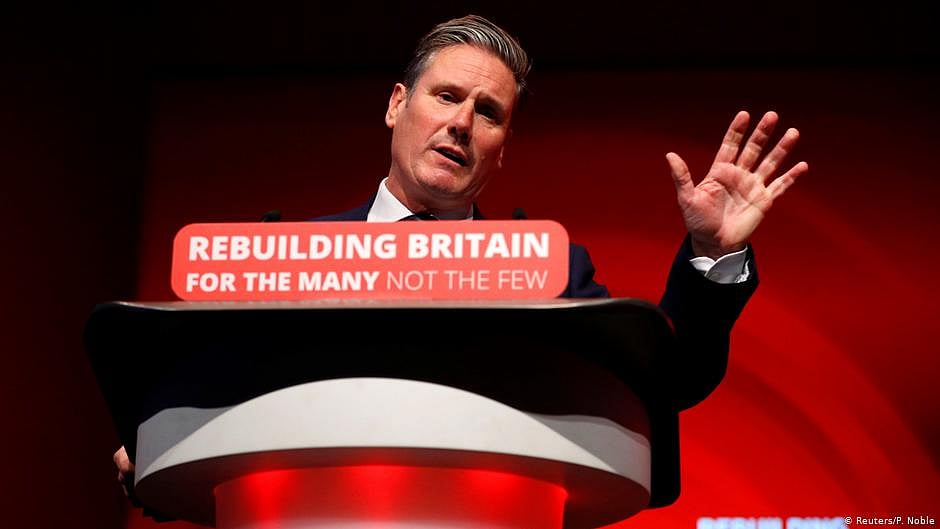
British Prime Minister Keir Starmer was on Tuesday consulting senior colleagues over his political future amid a widening rebellion within the ruling Labour Party, with reports suggesting several cabinet ministers and nearly 80 lawmakers want him to announce a timeline for stepping down.
The political crisis has erupted less than two years after Labour’s sweeping parliamentary victory, following the party’s poor performance in last week’s local elections and mounting dissatisfaction within its ranks over Starmer’s leadership.
According to British media reports, senior ministers including Home Secretary Shabana Mahmood and Foreign Secretary Yvette Cooper have privately urged Starmer to clarify when he intends to leave office in order to pave the way for a leadership contest.
Almost 80 Labour MPs from across ideological factions within the party have reportedly demanded that Starmer announce a departure timetable.
Senior minister Darren Jones said Starmer was speaking to colleagues and weighing his options ahead of a crucial cabinet meeting.
“He’s listening to colleagues, and he’s talking to colleagues. I can’t get ahead of any decision he may or may not take,” Jones told Times Radio.
The pressure on Starmer intensified despite his attempt on Monday to stabilise his position by pledging to govern with greater urgency and boldness in response to Britain’s economic and social challenges.
However, sections of Labour’s parliamentary party openly renewed calls for his resignation soon after the speech, deepening uncertainty around the government’s stability and contributing to a rise in British borrowing costs.
Starmer had warned that another Labour leadership contest could damage the party and revive the political instability that marked British politics in the years following the country’s decision to leave the European Union in the 2016 Brexit referendum.
Britain has already had four prime ministers in the past five years.
The latest turmoil comes just a day before King Charles III is scheduled to formally outline the government’s legislative agenda during the traditional State Opening of Parliament ceremony on Wednesday.
Keir Starmer faces growing revolt within Labour as ministers, MPs push for exit timeline
The National Testing Agency (NTA) on Tuesday cancelled the NEET-UG 2026 examination conducted on 3 May following allegations of a paper leak and other irregularities, with the Union government ordering a comprehensive investigation by the Central Bureau of Investigation (CBI).
The examination, held for admission to undergraduate medical courses across the country, will now be conducted again on dates that are yet to be announced.
In a statement issued on X, the NTA said the decision had been taken after reviewing inputs received in coordination with central agencies and findings shared by law enforcement authorities.
According to the agency, the material gathered during the preliminary inquiry indicated that the integrity of the existing examination process had been compromised, making it impossible for the results to stand.
The NTA said the cancellation and re-conduct of the examination had been approved by the Government of India in order to preserve transparency and maintain public confidence in the national examination system.
The agency also confirmed that the matter had been formally referred to the CBI for a detailed investigation into the alleged irregularities linked to the examination process.
The NTA said it would extend full cooperation to the central agency and provide all necessary documents, records and logistical support required for the inquiry.
In continuation of its press release dated 10 May 2026, the National Testing Agency wishes to inform candidates, parents, and members of the public of the following decisions taken in respect of NEET (UG) 2026. NTA had, on 8 May 2026, referred the matters then under consideration…
— National Testing Agency (@NTA_Exams) May 12, 2026
Acknowledging the disruption caused to students and their families, the agency said the decision to cancel the examination had not been taken lightly but was necessary to avoid long-term damage to the credibility of the testing system.
The agency clarified that candidates who had registered for the May 2026 examination would not need to apply again. Existing registration details, candidature records and examination centre preferences would automatically be carried forward for the fresh examination cycle.
It also announced that no additional examination fee would be charged and that fees already paid by students would be refunded. The re-conducted examination, the agency said, would be organised using the NTA’s internal resources.
Fresh dates for the examination and the revised admit card schedule are expected to be announced through official channels in the coming days.
The NTA urged students and parents to rely only on verified updates released by the agency and avoid misinformation circulating online.
The development comes days after the NTA publicly defended the conduct of the examination, stating that strict security protocols had been followed during the May 3 test. According to the agency, question papers were transported in GPS-enabled vehicles carrying traceable watermark identifiers, while examination centres were monitored through AI-assisted CCTV surveillance from a central control room.
The agency had earlier stated that information regarding suspected malpractice was received on the evening of 7 May, four days after the examination, and was subsequently escalated to central authorities for independent verification and further action.
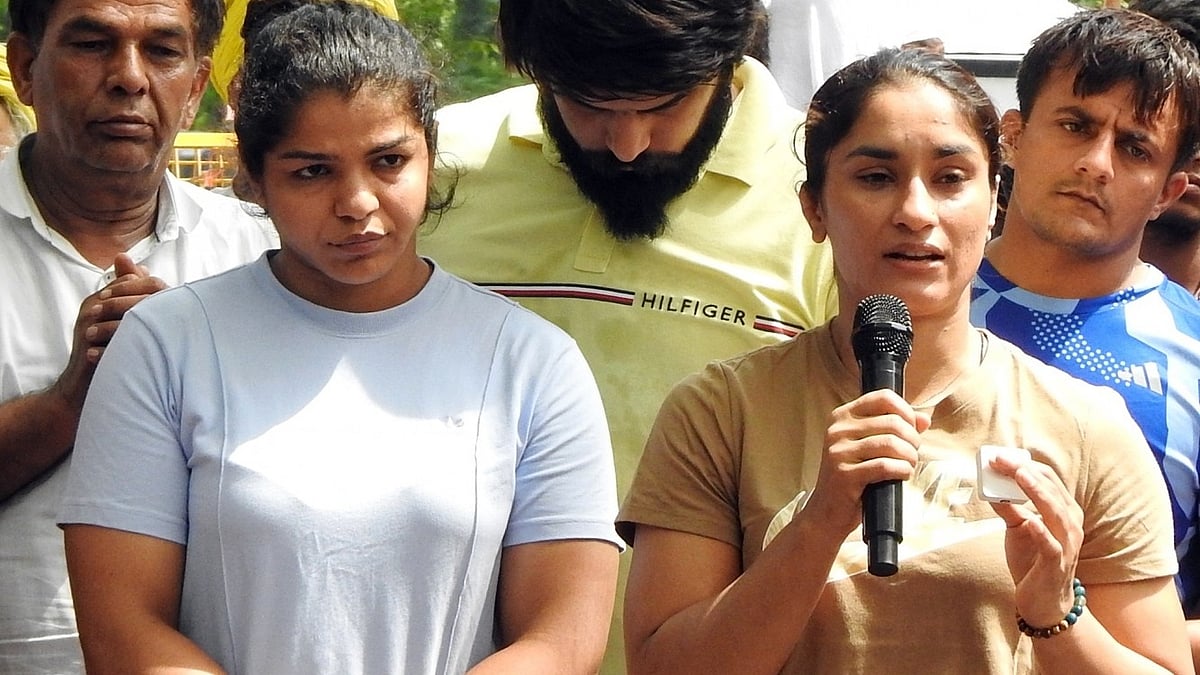
Olympic bronze medallist Sakshi Malik has strongly backed fellow wrestler Vinesh Phogat amid the ongoing row over her eligibility, urging Prime Minister Narendra Modi, Sports Minister Mansukh Mandaviya and the Wrestling Federation of India to allow her to compete and make an international comeback.
Vinesh, who announced her retirement shortly after her dramatic disqualification from the Paris Olympics 2024, later reversed her decision after becoming a mother last year and has been attempting to return to competitive wrestling after nearly 20 months away from the sport.
However, in a 15-page show-cause notice, the Wrestling Federation of India declared Vinesh “ineligible” to participate in sanctioned competitions until at least 26 June 2026. The decision effectively bars her from competing in the 2026 Senior Open Ranking Tournament in Gonda, Uttar Pradesh.
Backing Vinesh publicly, Sakshi appealed to authorities to permit the wrestler to take part in trials.
“I request my Prime Minister Narendra Modi, sports minister Mansukh Mandaviya, and the Wrestling Federation to take Vinesh’s trials so that she can also win medals for the country and make the country proud,” Sakshi said.
She further said Vinesh’s return could become an important example for women athletes balancing motherhood and professional sport.
“And to set such an example, so that women can play in their own country, even after becoming a mother, win medals and make the country proud,” she added.
Sakshi also criticised the federation’s handling of the issue, arguing that many international sports bodies actively support female athletes returning after childbirth.
“I can give many such examples where sports federations of other countries make rules easier for their players so that even after becoming a mother, women can play for the country and win medals,” she said in a video posted on social media.
“Whereas our federation implements such rules two days before so that Vinesh cannot make a comeback,” Sakshi alleged.
Despite being declared ineligible, Vinesh appeared at the Senior National Open Ranking Tournament in Gonda and maintained that both the International Testing Agency and the World Anti-Doping Agency had cleared her to return to competition from 1 January 2026.
The controversy has sparked wider debate within Indian sports over athlete welfare, federation transparency and support mechanisms for women athletes returning to elite competition after motherhood.
Google Search experienced a widespread outage on Tuesday morning, leaving users across several countries unable to access the platform or perform searches for a period of time.
The disruption affected users in India, the United States and multiple other regions, with many encountering an error message stating that an “internal server error” had occurred while processing their request.
The message informed users that engineers had been alerted to the issue and were working to restore services.
Many users said they were unable to access search results or experienced intermittent disruptions while attempting to use the service.
The issue was identified as a “500 Internal Server Error”, a technical problem that generally points to a failure on the company’s server side rather than faults with users’ internet connections or devices.
Such errors typically occur when communication between a web browser and backend servers is interrupted due to technical difficulties within the platform’s infrastructure.
Google had not immediately issued a detailed public explanation for the outage at the time reports emerged.
The disruption follows a series of outages affecting major digital platforms and AI services in recent months.
In March, Chinese artificial intelligence platform DeepSeek reportedly suffered a prolonged outage lasting more than seven hours. Around the same time, Instagram users worldwide reported problems with direct messages, missing chat themes and malfunctioning search features.
Earlier this year, YouTube also experienced a global service disruption before the platform later confirmed that operations had been restored.
The Indian rupee fell to a fresh record low against the US dollar on Tuesday morning as escalating concerns over the fragile Iran ceasefire and rising crude oil prices weighed heavily on market sentiment.
The domestic currency slipped 35 paise in early trade to touch an all-time low of 95.63 against the dollar at the interbank foreign exchange market. The rupee had opened at 95.57 before extending losses, following Monday’s sharp decline of 79 paise, when it closed at a record low of 95.28.
Speaking at the Oval Office on Monday, Trump described the ceasefire as being on “massive life support” after rejecting Tehran’s latest response to a US-backed peace proposal. He said hopes of a quick resolution to the conflict had faded and reiterated his administration’s hardline stance against Iran.
The comments triggered renewed anxiety in global energy markets, with investors concerned that the 10-week-old conflict could further disrupt oil supply chains.
Brent crude, the international oil benchmark, rose more than 0.8 per cent to trade above 105 dollars per barrel in futures trading, while oil prices remained elevated across Asian markets after gaining nearly 3 per cent in the previous session.
Currency market experts said the combination of rising oil prices and geopolitical uncertainty had increased pressure on emerging market currencies, including the rupee.
The dollar index, which measures the strength of the US currency against a basket of major global currencies, also edged higher during the session.
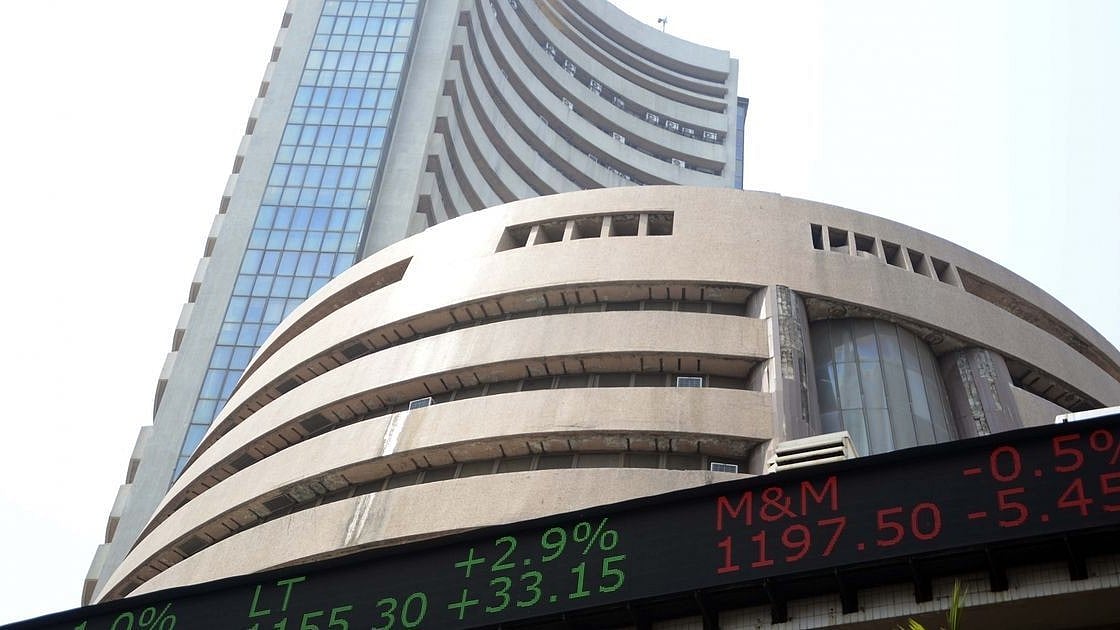
Indian equity markets mirrored the cautious sentiment, with benchmark indices opening sharply lower. The Sensex dropped more than 525 points in early trade, while the Nifty slipped over 160 points.
Investor sentiment was further dampened by continued foreign fund outflows. According to exchange data, Foreign Institutional Investors sold Indian equities worth more than Rs 8,400 crore on Monday.
Indian equity markets opened lower on Tuesday, extending losses for a second straight session as rising crude oil prices and mounting geopolitical tensions dampened investor sentiment.
Selling pressure was most visible in information technology, chemicals, real estate, cement and financial stocks, with sectoral indices in these segments falling by more than 2 per cent during morning trade.
Among the major laggards were Infosys, Tech Mahindra, Tata Consultancy Services, HCL Technologies, Wipro, ICICI Bank, Bajaj Finance, Maruti Suzuki, Asian Paints and Dr Reddy’s Laboratories.
In contrast, metal, oil and gas, and PSU banking stocks bucked the broader trend and traded in positive territory.
The Sensex had opened at 75,688, down more than 300 points from the previous close, while the Nifty began the session lower by around 93 points at 23,722.
Market analysts attributed the weak sentiment largely to concerns surrounding geopolitical instability and the sharp rise in global crude oil prices.
Experts said sectors with relatively inelastic demand, such as pharmaceuticals and fast-moving consumer goods (FMCG), were likely to remain resilient despite broader market volatility. They noted that pharmaceutical companies could also benefit from rupee depreciation.
Analysts also pointed to improving trends in private capital expenditure, particularly in capital goods, automobiles and renewable energy sectors. According to market observers, a strong recovery in private investment activity has been overshadowed by negative global developments, but continued momentum in capex spending could support select industrial stocks.
In the commodities market, Brent crude climbed above $105 per barrel, while US benchmark West Texas Intermediate crude approached the $100 mark, intensifying concerns over inflation and input costs.
Asian markets traded mixed during the session. Japan’s Nikkei index advanced modestly and Hong Kong’s Hang Seng posted gains, while South Korea’s KOSPI fell sharply.
Wall Street had ended marginally higher overnight, with both the S&P 500 and Nasdaq recording slight gains.

 Login
Login