Reading view

Adhikari aide murder: Row erupts over alleged shooter's purported BJP link

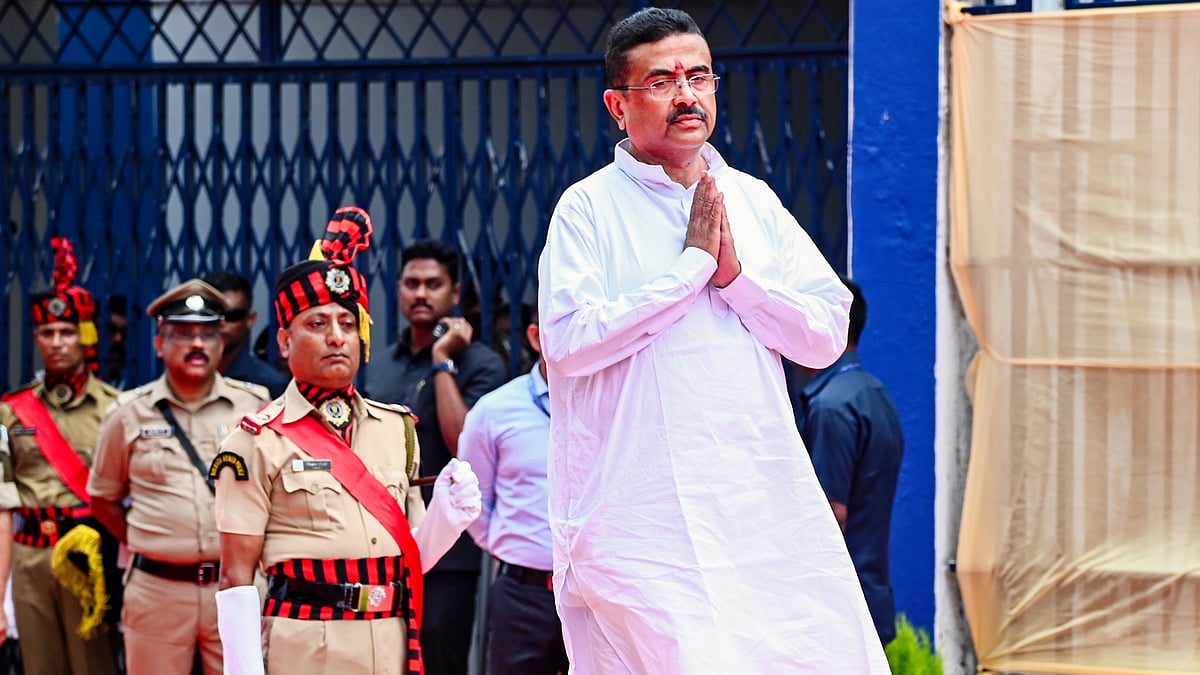
The arrest of an alleged sharpshooter in connection with the murder of Chandranath Rath, personal assistant to West Bengal chief minister Suvendu Adhikari, has triggered a political controversy after videos surfaced on social media purportedly showing one of the accused campaigning for the BJP in Uttar Pradesh.

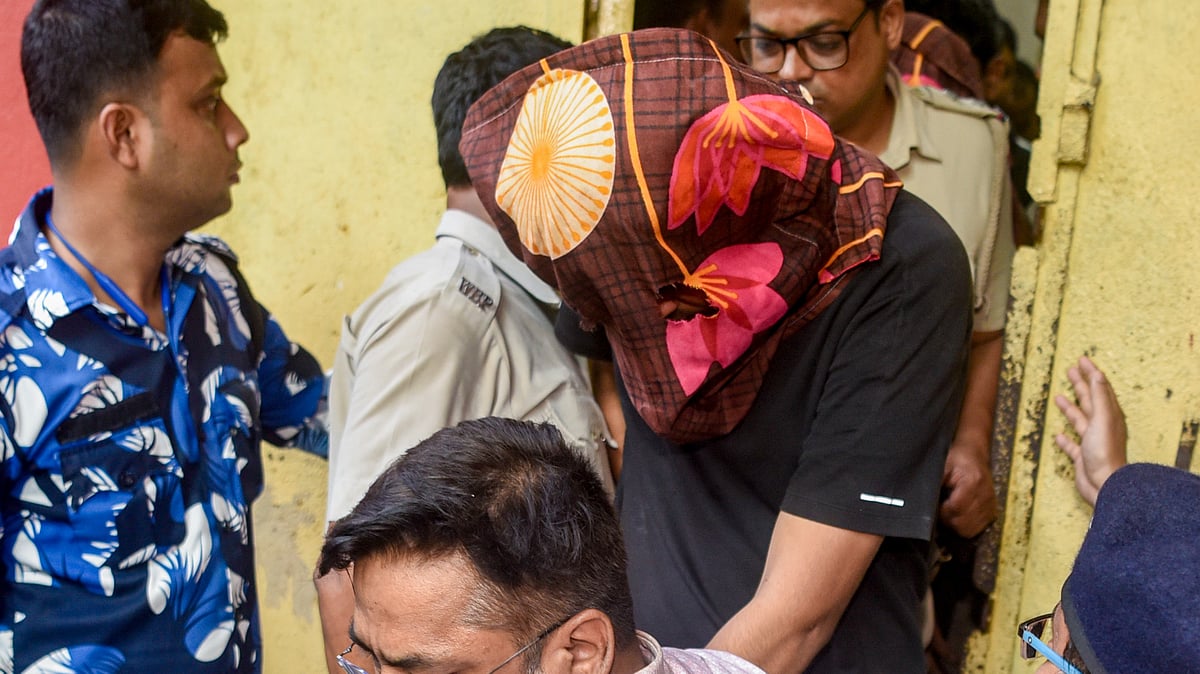
Raj Singh, arrested by West Bengal Police from Ballia in Uttar Pradesh, is alleged to be one of the key shooters involved in Rath’s killing in Madhyamgram earlier this month. Investigators claim the murder was a meticulously planned contract killing executed by multiple assailants in less than a minute.

A video circulating on X allegedly shows Raj Singh canvassing for BJP candidates during an election campaign in Uttar Pradesh. Photographs shared online also appear to show him alongside political figures, including Uttar Pradesh MLC Brijesh Singh and state transport minister Daya Shankar Singh. In several social media posts, Raj Singh has also been identified as a former office-bearer of the All India Kshatriya Mahasabha.

However, National Herald could not independently verify the authenticity of the video or the photographs.

The emergence of the visuals has intensified political sparring, with opposition leaders questioning whether the accused had links to members of the BJP. So far, neither the BJP leadership in Uttar Pradesh nor the West Bengal government has officially commented on the allegations surrounding the footage.

पीले कुर्ते वाला राज सिंह है जिसे बंगाल पुलिस मुख्यमंत्री सुवेन्दु अधिकारी के PA चंद्रनाथ रथ की हत्या के आरोप में गिरफ़्तार करके ले गई है…

बगल में कलफदार कुर्ते में यूपी के MLC बृजेश सिंह प्रिंसू हैं…एक तस्वीर में यूपी के परिवहन मंत्री दया शंकर सिंह के साथ है राज…

राज सिंह… pic.twitter.com/hS954edxCI

— Mamta Tripathi (@MamtaTripathi80) May 11, 2026

Police sources said Raj Singh has a long criminal record, with more than a dozen cases allegedly registered against him, including offences under the Arms Act. Investigators suspect he acted as a hired sharpshooter and may have been paid a substantial sum to participate in the killing.

According to the Special Investigation Team (SIT), Raj Singh was arrested during a late-night raid in Ballia, while two other accused — Mayank Raj Mishra and Vicky Maurya — were apprehended from Bihar’s Buxar district. Investigators believe seven to eight people may have been involved in the conspiracy.

The murder took place on the night of 6 May, just two days after the West Bengal Assembly election results were declared. Police said Rath’s vehicle was first intercepted by another car before armed men on motorcycles surrounded it from both sides and opened fire through the windows at close range.

Around 10 rounds were allegedly fired during what investigators described as a “50-second operation”.

Officials said digital payment trails played a key role in cracking the case. FASTag and UPI transactions linked to toll payments reportedly helped investigators track the movement of the accused across multiple states.

शुभेंदु अधिकारी के PA चंद्रनाथ रथ की हत्या में पुलिस ने यूपी से एक शूटर गिरफ्तार किया है.

इस शूटर का नाम राज सिंह है, जो यूपी के बलिया का रहने वाला है.

इस वीडियो में राज सिंह BJP प्रत्याशी के लिए वोट मांग रहा है. pic.twitter.com/fjQoBo2pim

— Ranvijay Singh (@ranvijaylive) May 11, 2026

The accused were produced before the Barasat Court under heavy security, where the CID sought custody for further interrogation. The court granted 13 days of police remand.

Meanwhile, Raj Singh’s family has strongly denied the allegations against him. His mother claimed that he was in Lucknow attending the wedding of an MLC’s daughter at the time investigators believe the conspiracy was unfolding. “We have no connection with Kolkata and have never gone there with my son. I do not know why he is being implicated,” she told reporters.

She further claimed that several people, including family members, friends and a driver, had travelled together to Lucknow and insisted there was evidence proving his presence there. “His mobile phone records should be checked. There is proof that he was in Lucknow,” she said.

The family has appealed for a fair investigation and demanded that police examine all available evidence before reaching conclusions.

Political reactions to the case continue to escalate. Opposition parties have alleged that the murder points to a deeper conspiracy, while BJP supporters have accused rivals of attempting to politicise a criminal investigation before the facts are fully established.

VIDEO | Suvendu Adhikari aide murder case: Accused Raj Singh’s mother says, "My son had gone to Lucknow to attend the wedding of an MLC’s daughter. I also accompanied him. My driver, Omprakash Singh, was with us. Another boy had gone to take photographs, and one of Raj’s friends,… pic.twitter.com/rzcFhOPn9y

— Press Trust of India (@PTI_News) May 11, 2026

Adhikari had earlier described the killing of his aide as “brutal”, “premeditated” and a “contract killing”, claiming the attack bore signs of detailed planning and reconnaissance carried out over several days.

Investigators are now focusing on identifying who financed the operation and whether a larger network was involved. Police officials said multiple angles — including political motives, organised crime links and personal enmity — remain under investigation.
  •  

50 paise! That's what Maharashtra farmers are making per kg of onions

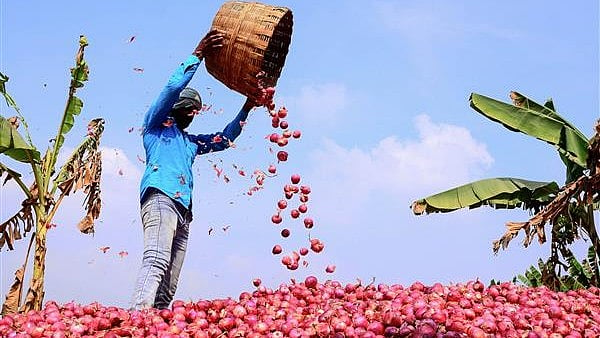
Farmers across Maharashtra are facing mounting distress after unseasonal rain and hailstorms damaged standing crops while onion prices — often called “red gold” in the state — crashed to as low as 50 paise to Re 1 per kilogram in several mandis, triggering anger and protests among cultivators.

Large parts of Maharashtra witnessed unseasonal rainfall and hailstorms during March and April, damaging rabi crops across more than 1.59 lakh acres of agricultural land. The worst-hit regions include Nashik, Ahmednagar and parts of Marathwada, where onion, wheat, mango, cashew, grape and pomegranate crops suffered extensive losses.

Among them, onion farmers have been hit hardest. Around 44,000 hectares of onion cultivation has reportedly been affected, while market prices have collapsed due to record production, weak exports, inadequate storage infrastructure and declining demand.

Farmer organisations led by the Swabhimani Shetkari Sanghatana have announced a protest march in Mumbai on 15 May. The march will begin from Girgaum Chowpatty and proceed to Maharashtra Chief Minister Devendra Fadnavis’s official residence Varsha. Shiv Sena (UBT) led by Uddhav Thackeray has extended support to the agitation.

Farmers burn crops in despair

Maharashtra is among India’s largest onion-producing states, with lakhs of farmers dependent on the crop in districts such as Nashik, Ahmednagar, Dharashiv, Beed, Pune and Chhatrapati Sambhajinagar.

Agriculture market experts say rising cultivation costs — including seeds, fertilisers, labour, irrigation and transportation — have sharply increased farmers’ input burden while mandi prices have collapsed below production cost. In several markets, farmers are reportedly receiving only Rs 2 to Rs 5 per kilogram, while some distress sales have occurred at Re 1 or below.

In Dharashiv district’s Tintaraj village, onion farmer Bhagwan Sable allegedly set fire to his own crop after failing to secure viable prices in the market.

Sable had cultivated onions on nearly four acres of land, with produce from around two-and-a-half acres already harvested and packed into 600 sacks. According to him, the crop required an investment of around Rs 3–4 lakh, but mandi prices had fallen to around Re 1 per kilogram, making sale economically unviable.

Similarly, farmer Prakash Galdhar from Varudi village in Paithan taluka of Chhatrapati Sambhajinagar district reportedly received only Rs 100 per quintal for 1,262 kg of onions packed in 25 sacks — effectively around Re 1 per kilogram.

Demand for MSP, export relief

Farmer groups say onion cultivators are once again staring at mounting debt after hopes of income recovery collapsed this season.

They are demanding an MSP (Minimum Support Price)-like mechanism for onions, government procurement centres and relaxation in export policy restrictions to ensure remunerative prices for farmers.

Farmers have also criticised the Maharashtra government’s compensation announcement of Rs 22,000 per hectare for crop damage, calling it grossly inadequate compared to actual losses.

Farmer organisations claim that mango and cashew crops in several parts of the Konkan region have also been severely damaged, causing losses worth crores of rupees to cultivators.

Maharashtra farmers rage as onion prices crash to 50 paise a kilo after crop losses
  •  

Bengal CEO Manoj Agarwal to be CS, second poll official to join BJP govt

West Bengal's chief electoral officer Manoj Kumar Agarwal has been appointed the state’s new chief secretary, becoming the second senior official linked to the recently concluded election process to join the BJP government headed by chief minister Suvendu Adhikari. Agarwal's predecessor Dushyant Nariala — appointed by the Election Commission of India (ECI)ahead of the election — will move to Delhi as Bengal's resident commissioner.

The appointment comes just days after retired IAS officer Subrata Gupta — who had served as the ECI-appointed special roll observer during the controversial Special Intensive Revision (SIR) of the state's electoral rolls — was brought into the new administration as adviser to the chief minister.

The developments are likely to trigger fresh political debate in the state, particularly because both officials were closely associated with election-related exercises that had drawn strong criticism from the previous Trinamool Congress (TMC) government before the Assembly polls.

Media reports had earlier stated that Agarwal was emerging as the frontrunner for the chief secretary’s post after he was seen attending Adhikari’s first cabinet-level administrative meeting on Monday, 11 May. According to a Quint report, his presence at the high-level meeting had fuelled speculation within bureaucratic and political circles that he was being considered for the top administrative role in the state government.

The Quint report pointed out that there are precedents for election officials moving into senior government roles after polls — although the publication noted that an immediate transition from CEO to chief secretary remains “relatively uncommon and politically sensitive”.

One example cited by was Odisha, where then CEO Nikunja Bihari Dhal was appointed additional chief secretary in the chief minister’s office shortly after the BJP came to power in the state in 2024.

Another example mentioned was that of Vijay Kumar Dev, who became Delhi chief secretary in 2018 a few months after being appointed Delhi’s CEO. Though, as The Quint noted, Dev had not overseen any major election in the capital at the time.

The Quint also quoted former Chief Election Commissioner S.Y. Quraishi as saying there was “nothing procedurally wrong” with a CEO returning to a government posting after election duty. At the same time, Quraishi acknowledged that the optics were “bad”, especially at a time when there was heightened scrutiny surrounding the ECI’s functioning.

Neither the BJP nor the West Bengal government has directly addressed criticism surrounding the appointments. The administration has instead projected both Agarwal and Gupta as experienced bureaucrats being assigned governance responsibilities based on seniority and administrative competence.

Agarwal, who is due to retire in July 2026, is among the senior-most IAS officers in the Bengal cadre. According to The Quint report, his seniority and handling of the election process had already strengthened his position as a likely contender for the chief secretary’s post even before the formal announcement was made.

His appointment also comes amid a wider bureaucratic restructuring by the new BJP government, which has already removed several nominees appointed under the previous Trinamool administration while signalling tighter alignment with the Centre.

  •  

No fuel rationing planned, India has adequate stocks: Oil secy after Modi's austerity appeal

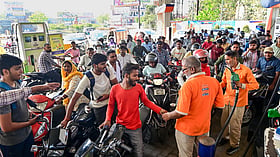
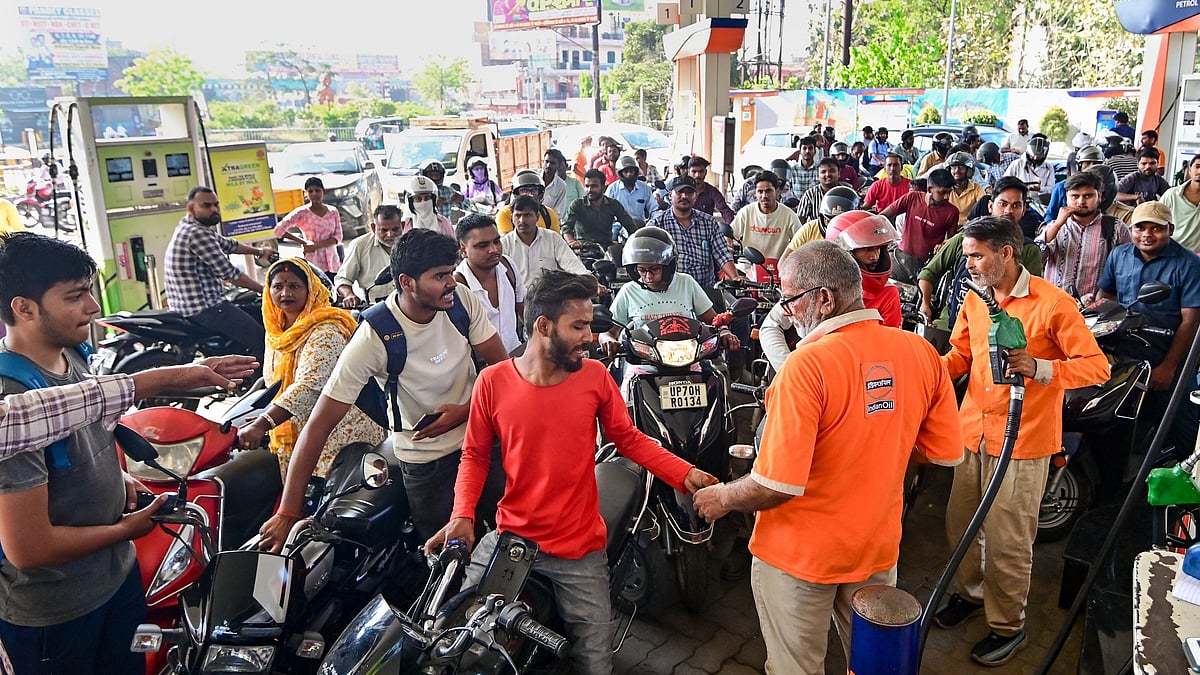
Even as Prime Minister Narendra Modi urged citizens to conserve fuel and reduce imports amid rising global energy prices, the Centre on Monday asserted that India has adequate fuel stocks and no plans to introduce rationing despite continuing disruptions in global oil markets.

“There is no need to panic. There are sufficient supplies. There is no rationing in place. It’s not going to happen,” Oil Secretary Neeraj Mittal said at the Confederation of Indian Industry Annual Business Summit in New Delhi.

The government’s reassurance came barely a day after Modi publicly appealed for austerity measures, asking citizens to conserve fuel, reduce import dependence and exercise restraint in gold purchases as soaring crude prices strain India’s foreign exchange reserves.

The Prime Minister’s remarks had triggered speculation about a possible fuel price hike or supply restrictions, particularly as retail petrol and diesel prices have remained frozen for nearly two years despite sharp increases in international crude prices.

Govt projects calm amid market turmoil

Mittal said India had maintained around 60 days of fuel stocks and roughly 45 days of LPG inventories during the past 67 days of geopolitical disruption affecting global energy shipments.

He said India had secured additional cargoes, diversified suppliers and increased procurement from existing exporting nations to stabilise domestic supplies.

“We have procured from other sources. We have procured from other countries. We have increased procurement from existing countries and that has kept us going in terms of supply management in the short run,” he said.

Mittal added that India had managed to safely move 14 ships through the conflict-hit Strait of Hormuz during the ongoing crisis.

A senior government source said the “default mode” of the administration remained maintaining stability in fuel prices and supplies.

Oil firms absorb mounting losses

Despite the official assurance, state-run oil marketing companies are facing growing financial pressure as global crude prices have surged by over 50 per cent since the escalation of the West Asia conflict around 10 weeks ago.

Officials indicated that oil firms are currently absorbing daily losses estimated between Rs 1,000 crore and Rs 1,200 crore because domestic petrol and diesel prices have not been revised upward in line with international rates.

Mittal said the government had absorbed part of the global price shock through excise duty cuts on petrol and diesel, resulting in a revenue impact of around Rs 1.6 lakh crore.

Push for energy security

India, the world’s third-largest oil importer and consumer, is also accelerating efforts to strengthen energy security through domestic exploration, strategic reserves and alternative fuels including green hydrogen, ethanol blending and sustainable aviation fuel.

Mittal said the government was examining “creative ways” to expand strategic crude reserves without locking up excessive capital.

“For a country like India which consumes 5 million barrels a day, to have a 90-day reserve would be putting a lot of money in a box without using it at all,” he said.

No fuel rationing planned, India has adequate stocks
  •  

Bengal: New BJP govt ‘implements’ already existing BNS, promises welfare continuity and border push

The first cabinet meeting of West Bengal’s new BJP government on Monday, 11 May offered an early glimpse into the priorities — and occasional contradictions — of the Suvendu Adhikari administration.

A key point of the meeting was chief minister Suvendu Adhikari’s announcement that the Bharatiya Nyaya Sanhita (BNS) would now be implemented in West Bengal, accompanied by accusations that the previous Trinamool Congress (TMC) government had delayed adopting the new criminal laws.

There is, however, one complication: the BNS has already been in force in West Bengal — along with the rest of India — since 1 July 2024.

Like every other state, West Bengal automatically came under the Bharatiya Nyaya Sanhita, Bharatiya Nagarik Suraksha Sanhita and Bharatiya Sakshya Adhiniyam after Parliament replaced the IPC, CrPC and Indian Evidence Act in 2023. States are free to adjust administrative preparedness, police training and implementation mechanisms, but not to opt in or out of Central criminal laws once notified.

Which made the new government’s triumphant declaration of implementation sound less like a policy breakthrough and more like a knowledge gap.

Still, the BNS confusion did not stop the cabinet meeting from laying out the BJP government’s broader political roadmap: retain existing welfare schemes for now, foreground Narendra Modi-branded Central programmes and push an aggressively securitised border narrative.

“No ongoing social welfare scheme is being discontinued,” Adhikari said after the meeting at Nabanna.

The assurance was politically necessary. During the election campaign, the TMC had repeatedly warned that a BJP government would dismantle or dilute Bengal’s sprawling welfare architecture associated with the Trinamool Congress. The BJP, meanwhile, had campaigned on a parallel promise of introducing its own welfare benefits and expanding central schemes.

• Ayushman Bharat and all Central schemes to be implemented in Bengal
⁰• Central training/deployment for bureaucrats cleared; BNS implemented from today
⁰• State recruitment process to begin after years of no hiring

— Sreyashi Dey (@SreyashiDey) May 11, 2026

Now in office, the government appears to have concluded that abruptly withdrawing popular welfare programmes may not be the wisest opening move. Instead, the administration seems to be attempting a careful balancing act: preserve existing schemes while gradually shifting political ownership towards the Centre and PM Modi’s welfare branding.

That strategy was visible in the government’s decision to formally join the Ayushman Bharat Pradhan Mantri Jan Arogya Yojana after years of resistance from the Mamata Banerjee government. “Modiji had promised that, in our very first cabinet meeting, we would join Ayushman Bharat,” Adhikari declared.

The cabinet also announced full implementation of schemes such as the Pradhan Mantri Fasal Bima Yojana, PM-SHRI, Vishwakarma, Beti Bachao Beti Padhao and the Ujjwala Yojana — effectively turning the first cabinet meeting into a demonstration of the BJP’s “double engine government” template.

But the Ayushman Bharat rollout may not be entirely frictionless. The previous TMC government had long argued that Bengal’s Swasthya Sathi scheme offered broader and near-universal coverage irrespective of income category, unlike Ayushman Bharat, which is restricted largely to economically vulnerable households identified through the 2011 Socio-Economic Caste Census.

Eligibility under Ayushman Bharat depends on deprivation criteria in rural areas and occupational categories in urban areas. Critics have argued that sections of lower middle-class families who were covered under Swasthya Sathi could fall through the cracks unless the state continues parallel coverage mechanisms.

The second major pillar of Monday’s cabinet meeting was border security — a theme the BJP has consistently used both administratively and politically in Bengal.

The government announced that the long-pending process of transferring land to the Border Security Force (BSF) for fencing along the India-Bangladesh border had officially begun and would be completed within 45 days. “With the security of Bengal as the paramount concern, approval has been granted to initiate the land transfer process required to secure our borders,” Adhikari said.

The BJP had repeatedly accused the previous government of delaying land transfer for fencing and thereby 'weakening national security'.

West Bengal shares a 2,216.7-km border with Bangladesh. According to official figures, fencing has already been completed along 1,648 km, while 569 km remain unfenced. Around 113 km are riverine stretches where fencing is not feasible, while the Union home ministry says another 456 km can still be fenced if land disputes are resolved.

The state government said 105 acres of land would now be transferred to the BSF. The matter had earlier reached the Calcutta High Court, which directed the state to hand over acquired border land by 31 March.

A senior TMC leader, speaking on condition of anonymity, dismissed the cabinet announcements as political score-settling dressed up as governance. “BJP is just trying to settle scores with us. Have they announced any compensation for those who would lose land in the process?” the leader asked.

Adhikari also revived the BJP’s familiar demographic (read Muslim) rhetoric, claiming that “the demographic profile of the state has undergone a transformation” — remarks likely to sharpen already polarised debates over migration and identity politics.

The cabinet additionally announced a five-year relaxation in the upper age limit for state government job applicants, with Adhikari arguing that irregular recruitment examinations since 2015 had left many candidates overage.

The government also unveiled a wider bureaucratic shake-up. Nominated chairpersons and directors appointed under the previous TMC administration have reportedly been removed from boards and public bodies, while IAS, IPS and state civil service officers will now be required to participate in Central training programmes.

Adhikari further accused the previous government of deliberately delaying Census work to obstruct delimitation and women’s reservation measures — another charge that fit neatly into the BJP’s larger narrative of institutional obstruction by the former regime.

  •  

Who is Faustino Oro, the wonderkid called the Messi of chess?

Faustino Oro, the 12-year-old from Buenos Aires nicknamed the ‘Messi of chess,’ turned heads once more when he became the second youngest grandmaster as he secured his final GM norm at the Sardinia World Chess Festival 2026 in Italy on Sunday, 10 May.

At 12 years, 6 months and 26 days old to be precise, Faustino officially earned the grandmaster title, which places him only behind American prodigy Abhimanyu Mishra, who holds the all-time record after becoming a GM at 12 years, 4 months and 25 days in 2021.

The Argentine now joins an exclusive club of only seven players who have become GMs before turning 13 — a list also featuring Sergey Karjakin, Yagiz Kaan Erdogmus, Javokhir Sindarov, and two Indians, R. Praggnanandhaa and reigning world champion D. Gukesh.

It was back in March that Faustino looked set to become the youngest grandmaster ever during the Aeroflot Open in Moscow. However, Russian teenager Aleksey Grebnev spoiled the fairytale by defeating the wonderkid in the final round, delaying the historic moment by just a few months. He had already made history before this latest milestone, becoming the first under-12 player ever to cross the 2500 rating mark.

There is a 9 year old boy from Argentina named Faustino Oro. He is 2800 on https://t.co/vOomBHOxzv. And he is the youngest player to ever reach 2200 elo.

The future Messi of chess?

— GothamChess (@GothamChess) March 26, 2023

Faustino scored his first GM norm at the Legends and prodigies Round Robin Tournament in Madrid last year, scoring an undefeated 7.5/9 points and also crossing the 2500 rating barrier. His second GM norm came at the Magistral Szmetan-Giardelli Masters last December, while the third and final GM norm came in Sardinia where he bagged it with a round to spare, scoring 6/8 points.

Oro’s popularity exploded after he defeated five-time world champion Magnus Carlsen in an online game as a 10-year-old back in 2024. The world no. 1 Norwegian, arguably the greatest of all time in the sport himself, has repeatedly praised the youngster’s talent.

“He’s (Oro) a great player. He has a wonderful positional feeling for chess, which is quite rare among such young players,’’ Carlsen said in an interview. “He seems to really love chess, seeing as he plays a ton online and plays every tournament that he can. He’s on an incredible path.’’

  •  

Rail crisis: Modi urges Indians to travel by train but 3.39 cr passengers unable to get tickets

Even as Prime Minister Narendra Modi has been urging citizens to prefer train travel, more than 3.39 crore railway passengers were unable to travel in 2025–26 after their waitlisted tickets remained unconfirmed and were automatically cancelled, according to data provided by the Ministry of Railways under the RTI (Right to Information) Act.

The figures, disclosed in response to an RTI query filed by Bhopal-based activist Chandrasekhar Gaur, point to mounting pressure on the country’s rail network and continuing shortages of confirmed berths on high-demand routes.

According to the Railway Ministry’s reply, around 2.19 crore PNRs (Passenger Name Records) were automatically cancelled during 2025–26 after tickets failed to get confirmed before reservation charts were prepared. These cancellations affected more than 3.39 crore passengers, especially those holding online waitlisted tickets.

The ministry’s class-wise data showed that the highest number of automatic cancellations involved passengers travelling in Sleeper Class and AC 3-tier (3AC).

Nearly 74.55 lakh passengers booked under the 3AC category were unable to travel because their tickets remained unconfirmed, while the highest number of cancellations occurred in Sleeper Class, where more than 1.05 crore PNRs were automatically cancelled.

The ministry also stated that 2.78 lakh PNRs were cancelled in First AC (1AC), affecting around 3.85 lakh passengers, while 16.41 lakh PNRs under Second AC (2AC) were cancelled, impacting nearly 24.21 lakh passengers.

The figures indicate a steady rise in the number of passengers unable to travel because of unconfirmed waitlisted tickets over the past five years:

  • 1.65 crore passengers in 2021–22

  • 2.72 crore in 2022–23

  • 2.96 crore in 2023–24

  • 3.27 crore in 2024–25

  • 3.39 crore in 2025–26

Commenting on the data, Gaur said the figures reflected a serious shortage of trains and confirmed berths on major routes.

“It is a matter of serious concern that even after 78 years of Independence, the Railways has not been able to ensure confirmed tickets for passengers, especially in sleeper classes,” he said.

He added that the rising cancellations highlighted the urgent need to expand train capacity and increase services on heavily used routes across the country.

Rail crisis: Modi urges Indians to travel by train but 3.39 cr passengers unable to get tickets
  •  

Everyone is an activist: SC on ‘anti-development’ litigation in Pipavav case

The Supreme Court on Monday, 11 May, sharply criticised what it described as a growing tendency to use environmental litigation to stall infrastructure projects, while hearing a plea linked to the expansion and modernisation of Gujarat’s Pipavav port — a long-contentious coastal project that has faced years of environmental objections and regulatory scrutiny.

Hearing a challenge to a National Green Tribunal (NGT) order upholding environmental and Coastal Regulation Zone (CRZ) clearances for the port expansion, a bench of Chief Justice Surya Kant and Justice Joymalya Bagchi questioned whether the country could progress if every major project was met with litigation.

“Show us even a single project in this country where these so-called environmental activists have said that we welcome this project,” the bench remarked. “In this country, the kind of petitions being filed are only to stall development. That is the problem. How the country is going to progress?”

At the same time, the bench clarified that courts remained conscious of environmental concerns and had consistently intervened where ecological damage was evident. It said activists and environmental groups should instead focus on offering constructive suggestions that balanced development with environmental protection.

“The attempt should never be to stall developmental projects,” the bench said.

BREAKING: Supreme Court Grants Leave In Plea Against NGT’s Pipavav Port Expansion Order, But Says It Is Not Inclined To Interfere,
"Nowadays, everyone is an activist, everything cannot be stalled, there has to be development also" the CJI said. https://t.co/NAEoDy4V2b

— LawBeat (@LawBeatInd) May 11, 2026

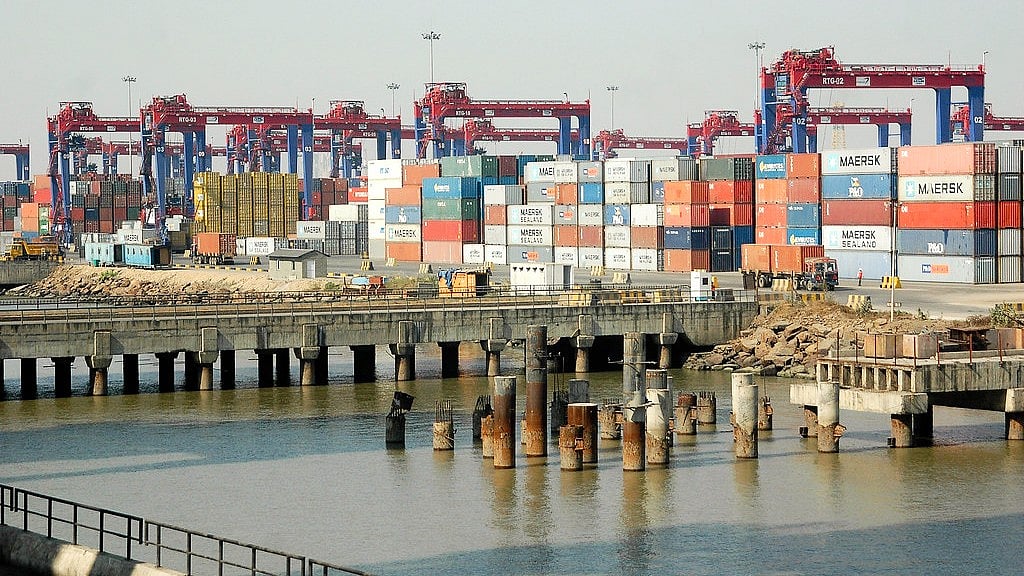
The case concerns the expansion and modernisation of Gujarat Pipavav Port Ltd (GPPL), India’s first private port developed under the public-private partnership model at Pipavav in Amreli district of Gujarat. The project involves expanded cargo handling facilities, new berths, dredging activity and upgraded container and liquid cargo infrastructure aimed at significantly increasing the port’s handling capacity.

The project has had a long and controversial environmental history. Environmental and CRZ clearance for the expansion was first granted in 2012 under the UPA government, but portions of the project were later challenged before the NGT over concerns relating to mangroves, grazing land, coastal ecology, fishing livelihoods and potential salinity impacts.

In 2013, the NGT had even asked the environment ministry to reconsider the clearance, observing that the environmental impact assessment process required closer scrutiny. Activists and local groups had alleged that earlier expansions of the port had already affected mangroves and coastal ecology in the region.

Yet the project continued to receive extensions and fresh approvals over the years. The Ministry of Environment, Forest and Climate Change extended the validity of environmental and CRZ clearances in 2019 after large parts of the approved work remained incomplete.

'The Great Nicobar project to develop a transshipment terminal, airport, and township, with an outlay of nearly one lakh crores, is likely to destroy over 160 sq km of pristine rainforest, cut down nearly 10 lakh trees, displace the indigenous Shompen tribe and irreparably damage…

— Dr PV Ramesh (@RameshPV2010) May 11, 2026

That trajectory, critics note, mirrors a broader policy shift under the Narendra Modi government, which has repeatedly stressed “ease of doing business” and accelerated infrastructure approvals while simultaneously diluting or relaxing environmental compliance norms in several sectors.

Over the past decade, amendments to environmental regulations — including post-facto clearances, extended validity periods for approvals and streamlined appraisal procedures — have frequently been justified in the name of speeding up development projects, such as the currently ongoing and immensely controversial Great Nicobar project.

Against that backdrop, the Supreme Court’s remarks on Monday appeared strikingly aligned with the Centre’s development-first policy approach, which has often viewed prolonged environmental litigation as an obstacle to economic growth.

The bench, however, stopped short of dismissing environmental concerns altogether. It noted that apprehensions about ecological damage could initially be genuine whenever large projects were proposed.

Dealing with the present plea, the court observed that the NGT had passed a “very detailed order” in the matter. It granted liberty to the petitioner to approach the NGT through a review application specifically on the question of whether the environmental impact assessment report had adequately considered the issues raised by the petitioner. The apex court also directed the NGT to examine that aspect.

The judges reiterated that while development was necessary, environmental safeguards could not be ignored. At the same time, they stressed that litigation should not become a means to indefinitely halt projects that governments consider vital for economic growth and infrastructure expansion.

With PTI inputs

  •  

MAHE Launches Online BCom with ACCA Accreditation

By: PR

Manipal Academy of Higher Education (MAHE) has launched a three-year Bachelor of Commerce (BCom) with ACCA accreditation in the online mode. Offered through Online Manipal, the program is best suited for students who want to build global careers in finance, accounting, and business.

The BCom (Professional) program allows learners to get exemptions for up to 9 ACCA exam papers. During this 3-year program, students also receive training for 4 strategic professional papers, accelerating learners’ pathway to a globally recognized ACCA Affiliate credential.

Candidates with a minimum of 50% marks in their 10+2 or 10+3 examinations are eligible to apply. The program fee is INR 49,000 per semester, with a total course fee of INR 2,94,000.

What is ACCA?

Association of Chartered Certified Accountants (ACCA) is a globally recognized professional accounting body offering the Charted Certified Accountant qualification that helps professionals develop competency in finance, accounting, and business management.

The Association of Chartered Certified Accountants (ACCA), headquartered in the United Kingdom and widely recognized as the global equivalent of India's Chartered Accountant designation, presents a comprehensive curriculum encompassing International Financial Reporting Standards (IFRS), ethics, law, taxation, and advanced management disciplines. Candidates seeking ACCA Affiliate status are required to successfully complete 13 examinations as outlined within the qualification framework.

How an ACCA-Accredited Online BCom Enhances Career Prospects

The integrated BCom with ACCA combines the academic rigor of a university degree with a globally recognized professional qualification valued by employers worldwide. At MAHE, this pathway is streamlined and structured to make pursuing both credentials more accessible and achievable for aspiring finance and accounting professionals.

The program offers:

●        Dual Advantage
 Get a UGC-entitled BCom degree from MAHE while studying a curriculum aligned with Association of Chartered Certified Accountants standards. This means less time spent studying the same material twice.

●        Up to 9 Paper Exemptions in ACCA
 Get exemptions across Applied Knowledge and Applied Skills levels. Reduce the number of exams and fast-track your ACCA journey. Learners will receive exemptions in Business and Technology, Management Accounting, Financial Accounting, Corporate and Business Law, Taxation, Audit and Assurance, Financial Management, Financial Reporting, and Performance Management.

●       ACCA Affiliate Status
 Achieve ACCA Affiliate status by successfully passing the Strategic Professional modules: Strategic Business Leader (SBL), Strategic Business Reporting (SBR), Advanced Financial Management (AFM), and Advanced Performance Management (APM).

●       Cost-Savings

Save up to INR 5,00,000* by pursuing this integrated BCom with ACCA and    significantly reducing your overall education and qualification costs.

* - Basis calculation of costs of 9 paper exemptions for obtaining ACCA certification independently (Source: ACCA website).

●       Career Readiness

ACCA opens doors in over 180 countries. Unlock diverse career paths in finance, accounting, and consulting in Big Four companies like Deloitte, PwC, EY, and KPMG. Career outcomes include roles such as Financial Analyst, Auditor, Tax Consultant, and Finance Manager across global organizations.

●       Path to ACCA Membership

Work towards full ACCA membership with relevant experience. Complete ethics modules and gain professional recognition. ACCA qualified professionals can also pursue an MSc in Professional Accountancy from the University of London.

For more details about the program, please visit https://www.onlinemanipal.com/online-bcom-professional-mahe

About Manipal Academy of Higher Education

Manipal Academy of Higher Education (MAHE) is one of India’s leading academic and research institutions. It is ranked #3 by NIRF, along with a NAAC A++ rating and prestigious Institution of Eminence (IoE) recognition. The institution has been offering world-class education across diverse streams since 1953.

MAHE’s online learners get free access to Coursera courses and certifications during the tenure of the program. They are also offered placement assistance in the form of skill assessments & enhancement, industry-readiness sessions, resume building, and virtual placement drives.

MAHE currently offers 10 degrees & certification programs in online mode and caters to 14,000+ learners across 44 countries and over 25 states.

About Online Manipal

Online Manipal is the digital home of Manipal Academy of Higher Education (MAHE), Manipal University Jaipur (MUJ), and Sikkim Manipal University (SMU). These three Manipal universities, accredited with NAAC A++ and NAAC A+, offer UGC-entitled online degrees equivalent to on-campus programs.

Since its inception in 2021, Online Manipal has empowered over 160,000 learners to realize their potential by providing them with accessible, affordable & industry-relevant degrees and new-age certifications in a 100% online mode.

Online Manipal’s integrated learning platform gives access to extensive e-learning material, recorded sessions, webinars, doubt clearing sessions, quizzes, assignments, and more.

This is an advertorial. The article is published as received.

MAHE Launches Online BCom with ACCA Accreditation
  •  

Sensex crashes 1,313 points as Modi’s austerity plea, oil surge spook investors

Stock markets extended their losing streak for a third straight session on Monday, 11 May, with benchmark indices plunging sharply as Prime Minister Narendra Modi’s call for austerity measures amid the West Asia crisis amplified investor concerns over inflation, fuel costs and pressure on India’s economy.

The 30-share BSE Sensex tanked 1,312.91 points, or 1.70 per cent, to settle at 76,015.28. During intra-day trade, it had fallen as much as 1,370.79 points, or 1.77 per cent, to 75,957.40.

The NSE Nifty also slumped 360.30 points, or 1.49 per cent, to close at 23,815.85. Over the last three sessions since Thursday, the Nifty has dropped more than 515 points, or over 2 per cent, while the Sensex has shed nearly 1,950 points, or 2.5 per cent.

Analysts said Monday’s sharp sell-off was driven not only by escalating geopolitical tensions in West Asia and rising crude oil prices, but also by fears triggered by Modi’s remarks on conserving foreign exchange.

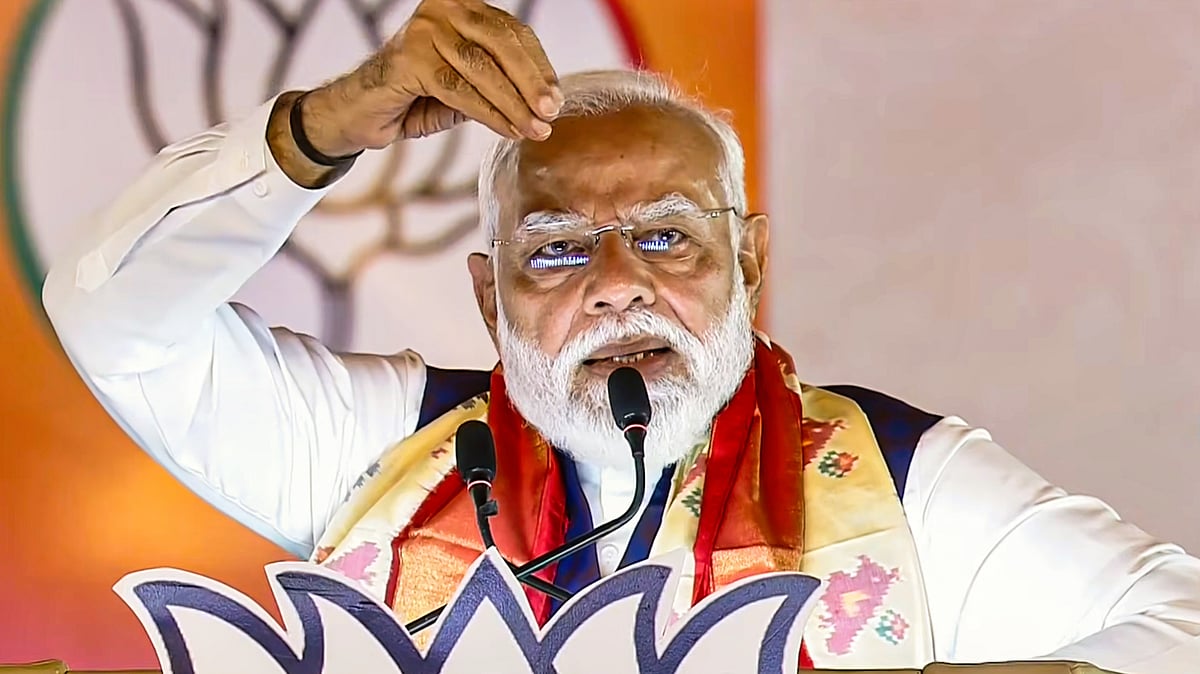
Addressing a BJP rally in Hyderabad on Sunday, Modi urged people to reduce petrol and diesel consumption, postpone gold purchases and defer foreign travel for a year in view of the ongoing crisis in West Asia.

The prime minister also advocated greater use of Metro rail services, electric vehicles, carpooling, railway freight movement and work-from-home arrangements to cut fuel consumption and save foreign exchange reserves. “We have to save foreign exchange by any means,” Modi had said, while warning that the conflict in West Asia had significantly increased petrol and fertiliser prices.

जब “ग़रीबी में आटा गीला” हो रहा है तब मोदी जी देश को बचत करने का पाठ पढ़ा रहे हैं।

28 फ़रवरी को West Asia में जंग शुरू हुई, कांग्रेस पार्टी ने हर पहलू को highlight किया —

अर्थव्यस्था की बर्बादी,
रुपये का लगातार गिरना,
पेट्रोल-डीज़ल-LPG के दाम और क़िल्लत,
किसानों के लिए…

— Mallikarjun Kharge (@kharge) May 11, 2026

Market experts said the appeal was interpreted as a sign of mounting macroeconomic stress. “The immediate trigger for today’s weakness came after PM Narendra Modi’s speech on 10 May, which the market interpreted as a sign of mounting macroeconomic stress,” said Hariprasad K., research analyst and founder of Livelong Wealth.

“While global uncertainty surrounding the US-Iran conflict and surging crude oil prices had already weakened sentiment, the prime minister’s appeal for austerity measures amplified investor concerns around India’s forex reserves, fuel costs and consumption outlook,” he added.

Investor sentiment was further hit after US President Donald Trump dismissed Iran’s response to the latest peace proposal as “totally unacceptable”, dimming hopes of an immediate diplomatic breakthrough to end the conflict in West Asia.

Brent crude, the global oil benchmark, rose 2.23 per cent to USD 103.5 per barrel. “Brent crude emerged as the key market trigger, surging 4 per cent to around USD 105.7 per barrel, intensifying concerns around imported inflation and India’s external balances,” said Siddhartha Khemka, head of research, wealth management, at Motilal Oswal Financial Services.

मोदी जी ने कल जनता से त्याग मांगे - सोना मत ख़रीदो, विदेश मत जाओ, पेट्रोल कम जलाओ, खाद और खाने का तेल कम करो, मेट्रो में चलो, घर से काम करो।

ये उपदेश नहीं - ये नाकामी के सबूत हैं।

12 साल में देश को इस मुक़ाम पर ला दिया है कि जनता को बताना पड़ रहा है - क्या ख़रीदे, क्या न…

— Rahul Gandhi (@RahulGandhi) May 11, 2026

Titan emerged as the biggest loser among Sensex stocks, tumbling nearly 7 per cent amid intense selling in jewellery counters after Modi’s remarks on postponing gold purchases.

Jewellery stocks came under broad pressure, with Sky Gold and Senco Gold falling more than 12 per cent during intra-day trade before trimming some losses. Senco Gold eventually closed 7.8 per cent lower after hitting a 10 per cent decline earlier in the session.

Other major laggards included InterGlobe Aviation, State Bank of India, Bharti Airtel, Eternal and Reliance Industries. Among the gainers were Sun Pharma, Hindustan Unilever, Adani Ports, Kotak Mahindra Bank, Axis Bank and ICICI Bank.

“The benchmark index slipped below the 24,000 mark as renewed Gulf tensions, following Trump’s rejection of Iran’s peace proposal, weighed on investor sentiment,” said Vinod Nair, head of research at Geojit Investments Ltd.

“The cautious mood deepened after the PM’s appeal to conserve energy and avoid non-essential foreign travel, prompting investors to reassess the economic impact of higher crude prices, rupee weakness and pressure on the current account deficit,” he added.

In the interest of the nation, please follow what you preach pic.twitter.com/My74PFEAlm

— Congress (@INCIndia) May 11, 2026

Broader markets also ended lower, with the BSE MidCap Select index falling 1.09 per cent and the BSE SmallCap Select index declining 0.44 per cent.

Among sectoral indices, Consumer Durables tumbled 3.76 per cent, Realty fell 2.74 per cent, PSU Banks declined 2.28 per cent and Consumer Discretionary stocks dropped 2.14 per cent. Healthcare and hospital stocks bucked the trend and ended higher.

A total of 2,892 stocks declined on the BSE, while 1,457 advanced and 189 remained unchanged.

In Asian markets, Japan’s Nikkei ended lower, while South Korea’s Kospi, Shanghai’s SSE Composite and Hong Kong’s Hang Seng settled with gains. Most European markets were trading lower, while US markets had ended higher on Friday.

Foreign Institutional Investors offloaded equities worth Rs 4,110.60 crore on Friday, according to exchange data. On Friday, the Sensex had tanked 516.33 points, or 0.66 per cent, to settle at 77,328.19, while the Nifty dropped 150.50 points, or 0.62 per cent, to close at 24,176.15.

With PTI inputs

  •  

Delhi: 2 NE women molested, assaulted outside hotel; 4 accused identified

Two women from India’s northeastern region were allegedly molested, assaulted and subjected to racist remarks by a group of men outside a hotel in southeast Delhi’s Nehru Place area, police said on Sunday.

Delhi Police said four accused had been identified and multiple teams were conducting raids to arrest them.

The incident took place around 6:30 am on 10 May near a tea stall outside a hotel in the area. According to police, a PCR call regarding women in distress was received at Kalkaji Police Station around 7 am, following which officers reached the spot and found the two women there.

A senior police officer said preliminary inquiry revealed that the women were allegedly subjected to abusive and derogatory remarks by a group of men, which later escalated into a violent confrontation.

According to the complainants, they were having tea outside the hotel when two men allegedly began catcalling them. Several others later joined in, leading to an argument that turned physical.

“One of the complainants alleged that she was molested during the incident and that her clothes were torn. The women also alleged that racist remarks were passed against them by the accused,” the officer said.

Police said one of the women also alleged that she was attacked with a bamboo stick while they were trying to leave the area. The accused allegedly restrained the women and threatened them against reporting the matter.

Both women were taken to All India Institute of Medical Sciences for medical examination after police arrived at the scene.

Police registered a case on 10 May under various provisions of the BNS (Bharatiya Nyaya Sanhita), including voluntarily causing hurt, assault with intent to outrage modesty, wrongful restraint, criminal intimidation, stalking and common intention.

Investigators said the women informed police that they would be able to identify the accused persons if produced before them.

As part of the investigation, police examined CCTV footage from nearby locations and questioned witnesses and passersby present during the incident. Officials said eight individuals were rounded up for questioning, following which four main accused were identified.

Police said raids were being carried out at locations linked to the accused, though no arrests had been made so far.

Delhi: 2 northeastern women molested, assaulted outside hotel; 4 accused identified
  •  

Ahead of crucial floor test, CM Joseph Vijay calls on DMK supremo Stalin

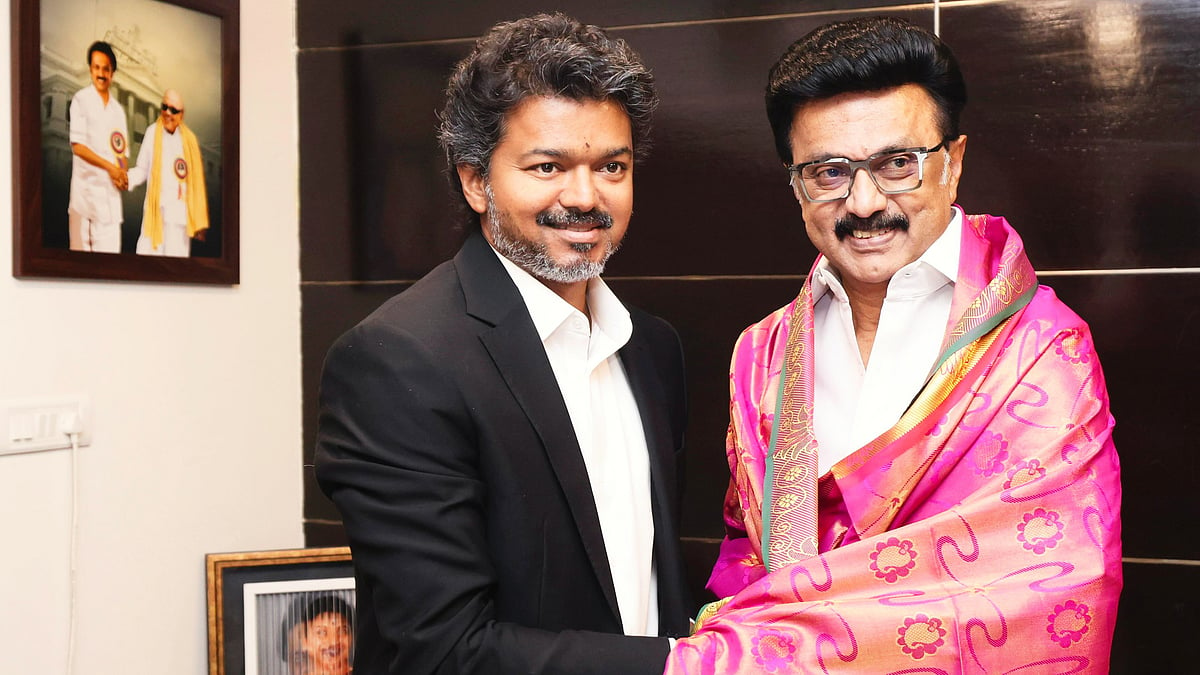
New Tamil Nadu chief minister C. Joseph Vijay on Monday, 11 May met his predecessor and DMK president M.K. Stalin at the latter’s Alwarpet residence in Chennai, days before the crucial floor test the ruling TVK government is scheduled to face in the state Assembly.

The meeting, described by government sources as a “courtesy call”, marked the first interaction between Vijay and Stalin since the TVK chief assumed office as chief minister following his party’s victory in the 23 April Assembly elections.

Stalin and his son Udhayanidhi Stalin received Vijay warmly at the residence. Udhayanidhi greeted the chief minister with a handshake and embrace upon his arrival, while Stalin later hugged Vijay, held his hands and escorted him inside the house.

The meeting comes barely a day after Vijay launched a sharp attack on the previous DMK regime over the state’s alleged Rs 10 lakh crore debt burden. He had also taken an indirect swipe at the DMK over the existence of “multiple power centres”, asserting that he alone would remain the power centre in the TVK government.

Stalin had responded strongly to Vijay’s remarks on the debt issue.

A day after taking the oath as Tamilnadu Chief Minister, C Joseph Vijay met former CM and DMK President MK Stalin.

Stalin and his son Udhayanidhi Stalin accorded a warm welcome to CM Vijay.

Visuals show the leaders hugging and greeting each other cordially, underlining a… pic.twitter.com/W1jXnFnKSj

— Surya Reddy (@jsuryareddy) May 11, 2026

Vijay’s outreach assumes significance as the TVK government prepares for a floor test in the Tamil Nadu Assembly on 13 May to prove its majority. The ruling party currently has 107 MLAs in the 234-member House following Vijay’s resignation from the Tiruchirappali East constituency.

The TVK has secured the backing of 13 legislators from the Congress, VCK, IUML and Left parties. While the VCK, IUML and Left parties are part of the DMK-led alliance, the Congress — which has extended support to the TVK government — was formerly aligned with the DMK.

During the meeting, Vijay and Stalin exchanged silk shawls and bouquets. Udhayanidhi also presented Vijay with a book documenting the DMK’s political journey titled Kalathin Niram Karuppu Sivappu-DMK 75.

The interaction between the two leaders comes weeks after an acrimonious electoral contest between the DMK and Vijay’s Tamilaga Vettri Kazhagam ahead of the Assembly polls, which the actor-turned-politician’s party won.

Later in the day, Vijay visited the residence of MDMK founder Vaiko and met the veteran leader. Vaiko’s son Durai Vaiko welcomed the chief minister on arrival.

Vaiko draped Vijay with a white silk shawl and garlanded him, while Vijay reciprocated by honouring the senior leader with a shawl. The two leaders were later seen engaged in a brief conversation as supporters and party workers gathered at the residence greeted the chief minister.

Speaking to reporters after the meeting, Vaiko said Vijay had emerged as a major political leader following the election results and claimed that the verdict reflected the people’s desire for change in Tamil Nadu.

Praising Vijay for reaching out to opposition leaders, Vaiko said the gesture sent out a positive message that “healthy politics should be encouraged in Tamil Nadu”.

  •  
❌