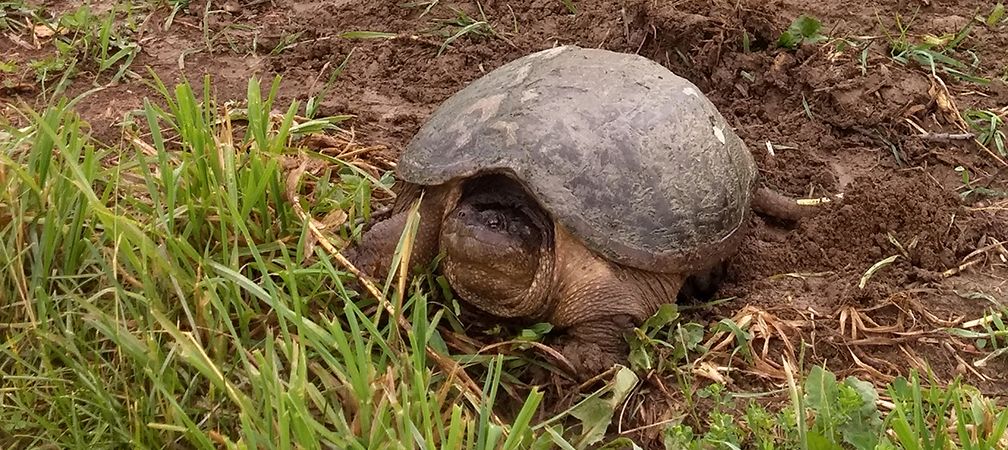
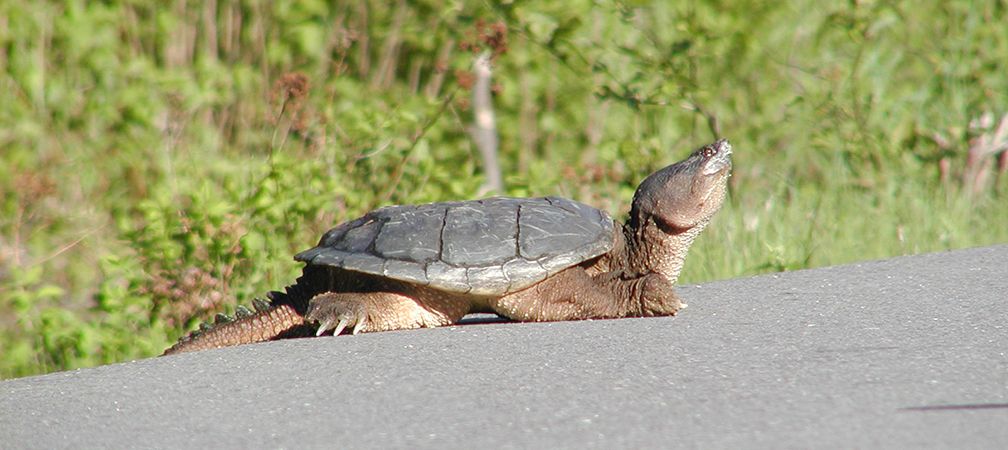
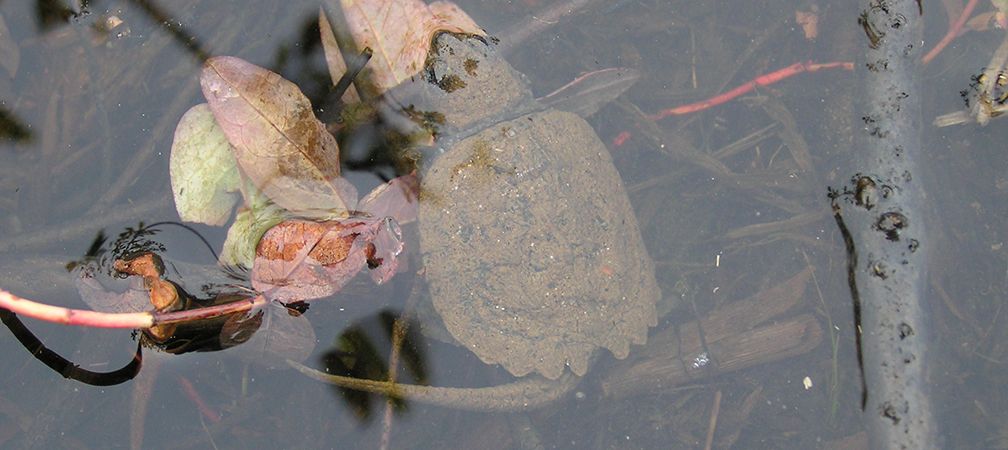
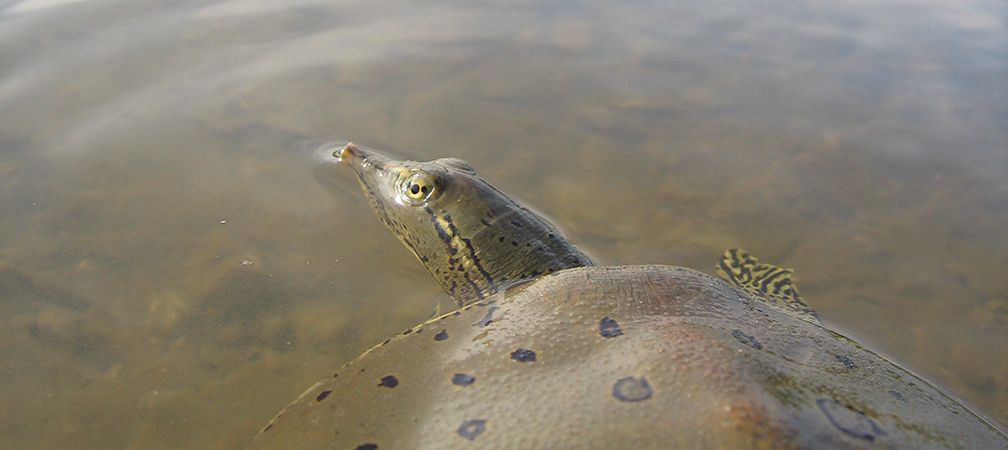
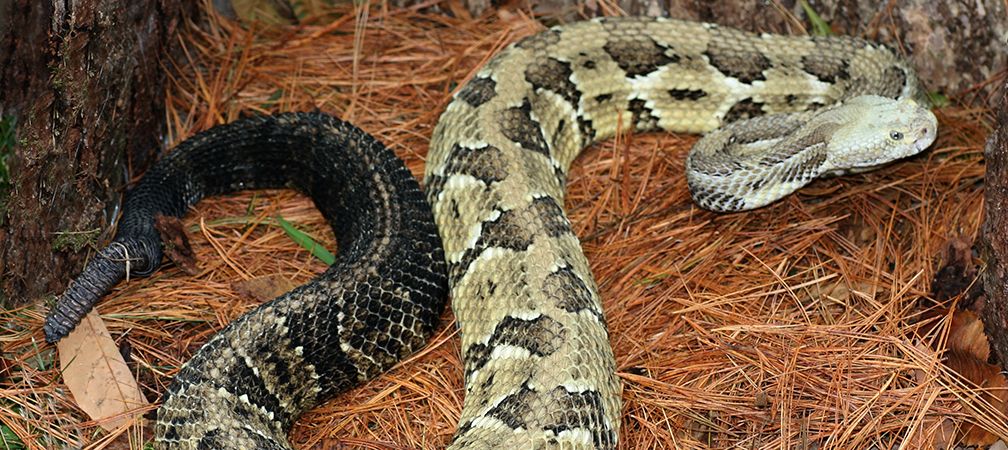
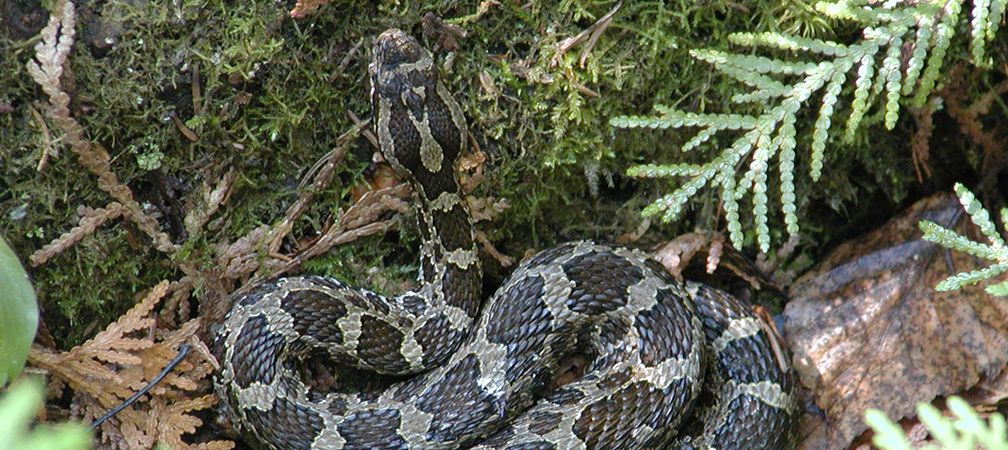
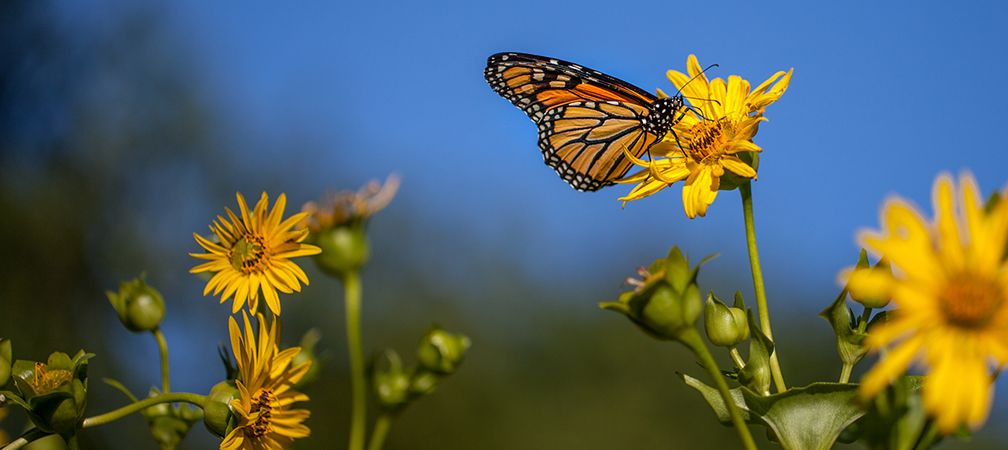
World Turtle Day on May 23rd is dedicated to appreciating these extraordinary reptiles. It is also a good opportunity to highlight the need to protect these ancient species, as they are one of the most interesting and important groups of reptiles in Ontario. On this year’s World Turtle Day, we shed light on the significance of one of Ontario’s most beloved turtle species, the snapping turtle.
Incredible Snapping Turtles in Ontario
The snapping turtle, recognized for its large size and dinosaur-like features, is commonly found in shallow water bodies such as marshes, swamps, and creeks from the north of Lake Superior to the edges of southern Ontario. Although aquatic, snapping turtles migrate across terrestrial land in search of many resources, making their habitat range up to 20-30 square hectares!
These reptiles are necessary for maintaining the habitat of many water bodies. Their consumption of dead/decaying plant matter helps clean water bodies to support the survival of other organisms. Turtle eggs are also part of the diet of many young mammals and bird species.
In addition to their ecological benefits, snapping turtles have a strong cultural significance for Indigenous Peoples from across Ontario. The turtle is a symbol of creation, balance and patience. Further, wetland habitats are important sources for food and medicine, and also crucial for controlling floods, water pollution and storing carbon.
Passed in June 2025, Bill 5, also known as Protect Ontario by Unleashing Our Economy Act, poses significant threats to many species, including snapping turtles.
Through this bill, the Species Conservation Act (SCA) replaces the Endangered Species Act. The SCA weakens many protections for species at risk and will not even continue to list special concern species like the snapping turtle making it unclear how their wellbeing will be assessed on an ongoing basis.
One of the major problems with the SCA is that it defines “habitat” solely as a species nesting area, ignoring the fact that many species – including the snapping turtle – depend on a large area of land to survive.
Migration plays a key role in maintaining snapping turtle populations. They travel across terrestrial environments to find food and mates, and later nest in aquatic environments.
While listed as special concern, increasing habitat loss and fragmentation is likely to continue to impact this species with slow reproductive rates, making it difficult for them to recover from population declines.
World Turtle Day is the perfect opportunity to be the voice for the protection of snapping turtles and their habitats.
Turtles and wetlands provide underacknowledged benefits that are necessary for the health of Ontario’s most beautiful spaces.
Sign and share the repeal Bill 5 petition so that we restore protections for our precious biodiversity. Ontario Nature has also created a wetland advocacy toolkit, which includes information regarding wetlands, their role in the environment and what you can do to help keep them protected.
The protection of turtles is not only dependent on how valuable they are to humans or the environment, but also their value as living beings. Ontario is also their home, show that you care by taking action this World Turtle Day.
Under the SCA, no migratory birds, aquatic species or species of special concern will be provincially listed. The rationale for removing protections for migratory birds and aquatic species is that they already receive federal protection under the Species at Risk Act (SARA). In the case of special concern species, the provincial government is not listing them because they were not subject to “prohibitions under the ESA”. The provincial government is thus abandoning responsibility for 106 out of the 270 or so species currently deemed to be at risk in Ontario.
In 1996, federal, provincial and territorial ministers responsible for wildlife committed to a national accord to protect species at risk by agreeing to “establish complementary legislation and programs that provide for effective protection of species at risk throughout Canada.” Canada and Ontario went a step further in 2011 by developing an Agreement on Species at Risk that commits to coordination and cooperation on preventing species from becoming at risk, as well as protecting and recovery identified species.
The Government of Ontario has abandoned these commitments. Species do not recognize arbitrary political boundaries, and cooperative federalism is absolutely necessary to conserve species at risk, especially amid a biodiversity crisis.
The SARA is not equivalent to the ESA and to date, the federal government has been reluctant to exercise its power under the act on non-federal lands. The Government of Ontario has given no indication that the federal government was engaged on the draft SCA or agreed to step in and provide protections for the migratory birds and aquatic species that have lost provincial protections. On the contrary, Minister McCarthy along with the Alberta Environment Minister senta letter to their federal counterpart in June, 2025 that requested the federal government amend SARA “to respect the constitutional jurisdiction of the provinces”, along with request to weaken other environmental regulations.
Further evidence that SARA is not fit to purpose to make up for the once gold standard provincial ESA, is that the backlog of species needing reassessment by Environment and Climate Change Canada will grow to 574 by the end of 2030. Additionally, as of 2022, the Auditor General of Canada found that 10% of federally listed species did not have recovery strategies or management plans in place as required by the act. Furthermore, of the 409 recovery strategies prepared by 2022, 20% did not identify the species’ critical habitat, which is necessary for protections under SARA.
Despite the Government of Ontario’s claims that the protections under the ESA for migratory birds and aquatic species were duplicative with federal protections, it is clear that SARA and the federal government are not equipped to provide equivalent protections.
Ontario’s weakening of protections for species at risk threatens our long-term well-being. Join us in urging the Government of Ontario to repeal Bill 5.
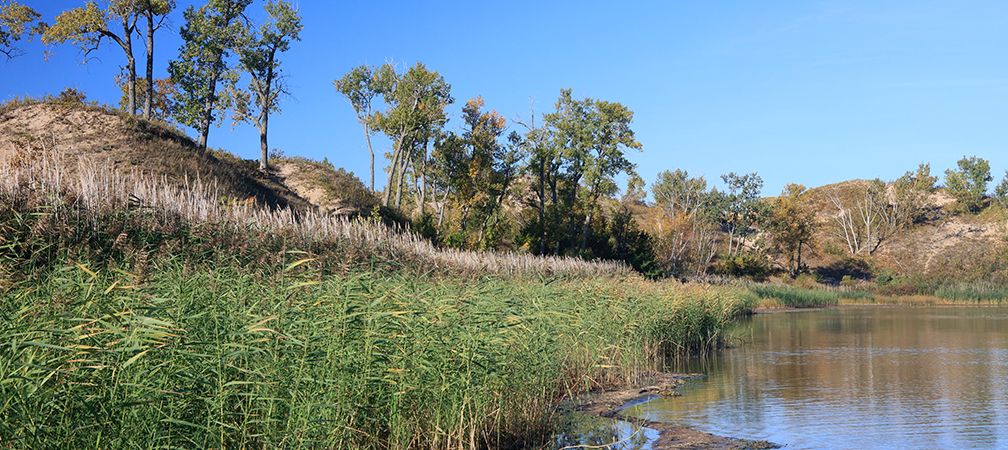
Like many regions across Ontario, West Lake in Prince Edward County is experiencing altered shorelines, habitat fragmentation, and growing development pressure. The 1,903-hectare lake is bordered by the largest freshwater baymouth barrier dune system in the world, found within Sandbanks Provincial Park. West Lake contains a large provincially significant wetland and is home to at least 35 species at risk.
West Lake Community Association (WLCA) is a volunteer non-profit that was formed to engage residents and visitors of the small community with the aim of preserving its uniqueness and protecting West Lake’s biodiverse and fragile ecosystems. WLCA is a member of Ontario Nature’s Nature Network.
Understanding the Threats to West Lake
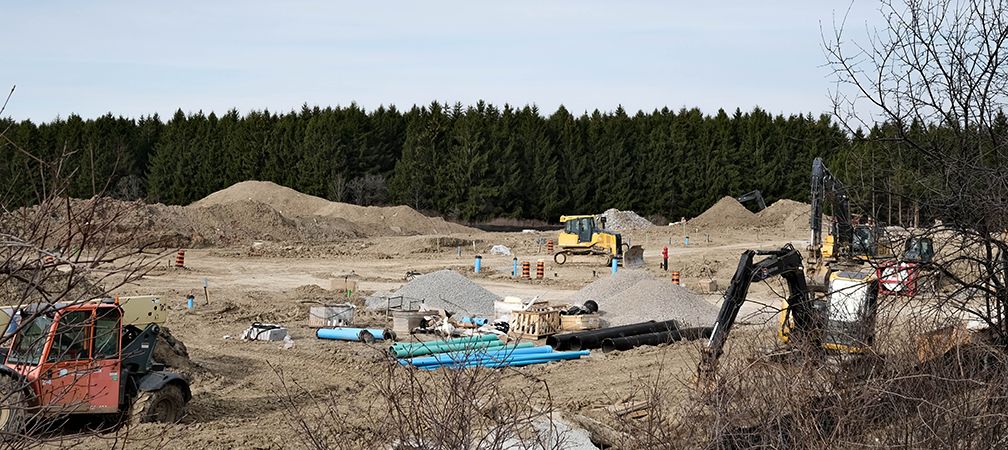
WLCA and Ontario Nature began a collaborative project with a fundamental question: where is the most vulnerable habitat around West Lake? Several major threats are impacting the ecosystems in and around the lake, including shoreline erosion and development pressure. Parts of West Lake are being choked out by rapidly spreading invasive aquatic vegetation. These threats are affecting a variety of species at risk in the area, including Blanding’s turtle, monarch butterfly and bobolink.
Creating Habitat Suitability Models for Species at Risk in West Lake
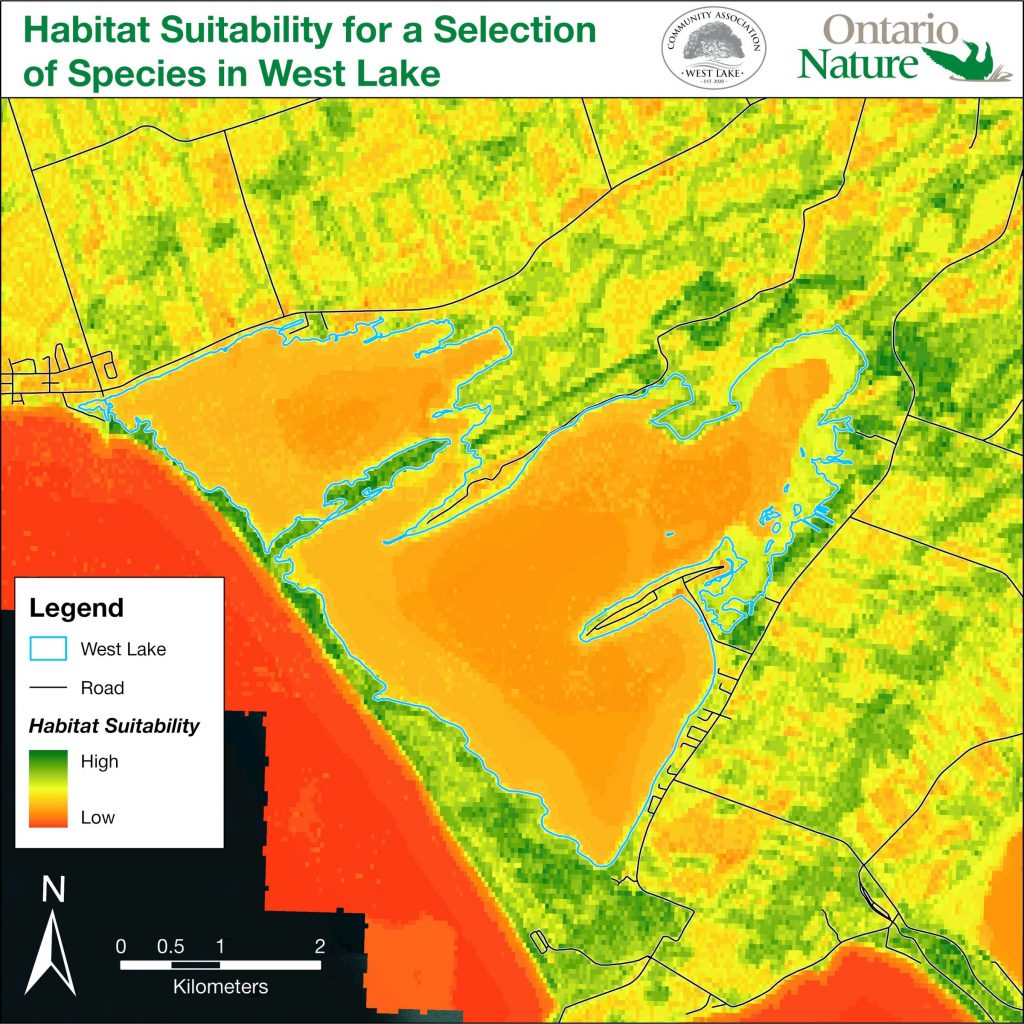
Through a collaborative effort to identify where species are most vulnerable in West Lake, partners created habitat suitability models to show where important habitat exists and where habitat restoration and stewardship efforts may be needed.
Selecting Species for Our Models
Our project chose four “representative species” whose habitat needs overlap with those of many other plants and animals in the area: butternut, Eastern meadowlark, Eastern musk turtle and pugnose shiner. These species were selected because together they represent a range of terrestrial and aquatic habitat needs. When the models for these four species were combined, it highlighted these specific vulnerable habitats: healthy woodlands that support butternut, open meadows and fields used by Eastern meadowlark, wetlands and shorelines that are needed by Eastern musk turtles, and clean, vegetated water where pugnose shiner live.
Model of suitable habitat for a variety of species in West Lake, Ontario (green indicates the most ideal habitat).
Identifying Important Habitat for Protection and Restoration
Much of the ideal habitat was near the provincially significant West Lake Wetland, along shorelines in the northeast corner of the lake, and within Sandbanks Provincial Park. These areas may represent priority locations where habitat restoration and conservation efforts could be focused.
Sharing the Importance of West Lake with an Interactive Story Map
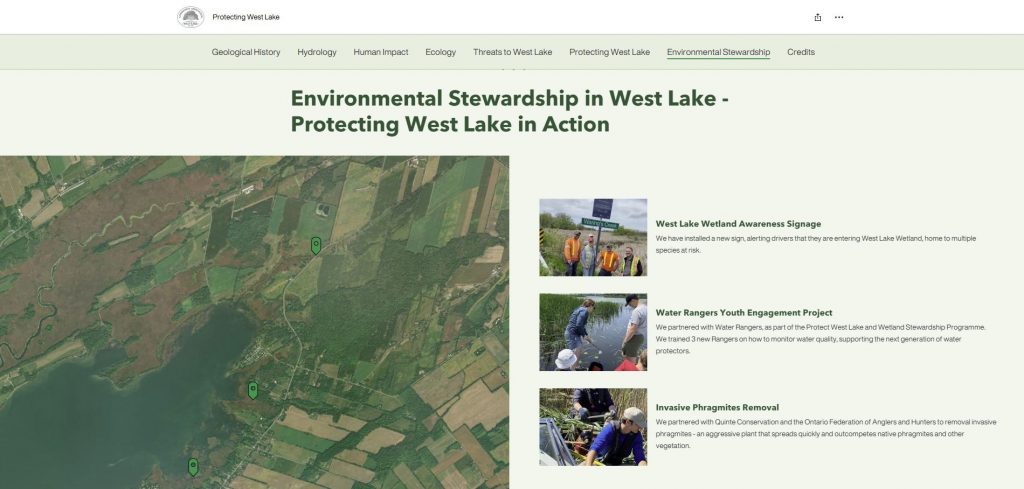
Engaging with the community and sharing knowledge about West Lake was another goal of the project. WLCA works to encourage interest and engagement among residents to help preserve the uniqueness of the West Lake watershed. They have hosted numerous educational workshops and events, including an annual Environmental Symposium, creating signage to raise awareness of the West Lake Wetland, and partnered with Water Rangers on their Youth Engagement project to train youth on water quality monitoring.
West Lake Community Association and Ontario Nature have published an interactive StoryMap to learn about threats to its ecosystems and recent stewardship projects.
Through collaboration, partners have created the West Lake StoryMap, an interactive mapping tool that blends maps and images to share information about West Lake’s history and ecology. The West Lake StoryMap allows residents and visitors to:
Discover the history of West Lake
Identify threats to its ecosystems
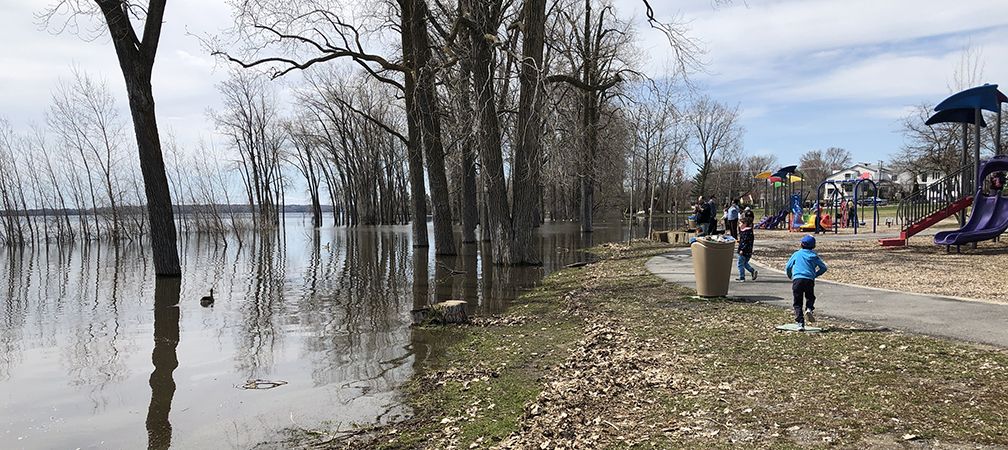
Explore areas vulnerable to flooding, erosion and other natural hazards
Learn about actions WLCA has taken to steward West Lake
By bringing together community perspectives and spatial analyses, the West Lake community has a clear picture of what makes this place special and what threatens its ecosystems. These tools are intended to inspire residents and visitors to get involved in the conservation and protection of West Lake, through shoreline restoration, invasive species removal or by simply learning more about the species that call this area home. With this StoryMap and the continued leadership of the West Lake Community Association, everyone can play a part in keeping West Lake in Prince Edward County healthy for generations to come.
If you or your organization are interested in exploring a conservation or habitat modelling project in Ontario like this, please reach out to Graeme Smith by email at graemes@ontarionature.org or by submitting a request form.
Graeme Smith is the GIS Coordinator at Ontario Nature. He has completed a B.Sc. in biology at Laurentian University and a M.Sc. in environmental and life sciences at Trent University. In his spare time, he enjoys reading, playing board games and exploring the outdoors.
Cathie Coultis is the Chair and Co-Founder of West Lake Community Association. She lives in the hamlet of West Lake with her husband and family dog, enjoys kayaking, cycling, bird watching, gardening, snowshoeing and being active in their rural community.
Recycling in Ontario is changing in a big way. As of January 1, 2026, the province has fully transitioned to a new Blue Box system that changes who is responsible for recycling and is intended to make the process more consistent across Ontario.
Under the new rules, recycling is now managed and funded by the companies that produce packaging and paper products, rather than municipalities. This shift is known as Extended Producer Responsibility (EPR). The idea is that companies should take more responsibility for the waste they create, while making recycling systems easier for residents to navigate.
The goal is to recycle more, send less waste to landfills, and move toward a more circular economy. But for many Ontarians, the new rules also raise a lot of questions. Here are some of the most common ones.
Frequently Asked Questions
1. What changed in Ontario’s recycling system in 2026?
Ontario’s Blue Box program is now fully run by producers – the companies that create packaging and paper products. That means they are responsible for collecting, sorting, and recycling those materials.
An organization called Circular Materials now helps operate the Blue Box program across Ontario.
For most residents, the day-to-day experience may still look similar. The province will continue using the same blue boxes, the same curbside pickup and will continue to accept many of the same items. But behind the scenes the system has changed significantly, with the goal of creating more consistent recycling rules across the province.
2. Why is Ontario changing its recycling system?
Before this transition, municipalities shared the cost and responsibility of recycling programs, and each city or region often had its own rules. That meant something recyclable in one community might not be accepted in another.
The new system is meant to reduce that confusion. By making producers responsible for the materials they put into the marketplace, the Blue Box program should, in theory, put more pressure on companies to reduce unnecessary packaging and design products that are easier to recycle. However, advocates have raised concerns about the true efficacy of this program, including looser reporting requirements, lack of transparency in operations, increased incineration of recyclable materials, and the exclusion of many groups like multi-residential buildings, public spaces and schools.
3. Will recycling rules still differ depending on where I live?
Historically, yes. What you could recycle in Toronto might not have been accepted in London, Kingston, or another municipality.
The new Blue Box system is designed to make accepted materials more consistent across Ontario. However, some local differences may still exist in how recycling is collected. For example, some municipalities may use blue boxes, while others use large recycling carts. Pickup schedules and collection contractors may also vary by region.
So while the rules about what can be recycled are becoming more standardized, the way recycling is collected may still look different from place to place.
4. Can I recycle…?
If you’ve ever stood over your recycling bin wondering, “can I recycle this?” You’re not alone.
Some cities across Ontario have helpful tools. For example, if you live in Toronto, one of the easiest ways to check is by using the Waste Wizard, an online tool that lets you search specific items and find out whether they belong in recycling, garbage, organics, or special drop-off.
Although Toronto’s Waste Wizard is one of the best-known examples, other municipalities across Ontario offer similar search tools or waste apps. They can be especially helpful for sorting items like black plastic, coffee pods, takeout containers, or mixed-material packaging.
The updated Blue Box program expands the list of accepted materials. In many cases, you can now recycle more types of packaging than before, including items like foam containers, black plastic, and certain flexible plastics. But contamination — such as food waste, liquids, or hazardous materials — can still create major problems in the recycling stream.
5. If the province has one system, why do municipalities still matter?
Even though the recycling rules are now set at the provincial level, municipalities still play a major role in waste management.
They are often responsible for services like garbage collection, green bins or organics, household hazardous waste depots and local public education. Municipalities also help residents understand changes to collection schedules, bin types and local disposal options.
In other words, the province may be standardizing the recycling system, but municipalities are still an important part of how that system works in practice.
This is one of the most important questions and one of the hardest to answer simply.
Recycling can help reduce landfill waste and recover useful materials, but it is far from a perfect solution. In Canada, recycling rates remain low. Currently, only 7% of Ontario’s waste is recycled through the Blue Box. This is due to a combination of factors, including contamination, complex materials, and limited recycling markets.
Ontario’s new recycling system is intended to improve outcomes by making producers more accountable and expanding what can be collected. But recycling alone will not solve the waste crisis.
Reducing waste in the first place and reusing materials whenever possible remains essential.
7. What should I do with electronics or hazardous waste?
Electronics and hazardous materials should never go in your Blue Box.
Items like batteries, old phones, chargers, paint, propane tanks, light bulbs, and cleaning chemicals require special handling. If they are placed in recycling, they can contaminate other materials, damage equipment, or create safety risks for workers.
Instead, these items should be taken to a designated drop-off depot, household hazardous waste site, or e-waste collection program in your municipality. Many communities in Ontario offer permanent depots or seasonal collection events for these materials.
If you are unsure, your municipality’s waste lookup tool is the best place to check.
The Bottom Line
Ontario’s new recycling rules are a major shift. By making producers responsible for the packaging they create the province is trying to improve recycling and reduce confusion for residents.
But even the best recycling system depends on public understanding and participation. Knowing what belongs in your Blue Box and taking the extra moment to check when you’re unsure can make a real difference.
At the same time, recycling is only one part of the solution. If Ontario is serious about reducing waste and protecting the environment, we also need to focus on addressing the systemic root of continuous waste generation in the first place.
Since 2018, Ontario’s nature protections have been repeatedly weakened. While a few stories such as the ongoing changes to Conservation Authorities or the Greenbelt scandal made headlines, dozens of major changes have flown under the radar, buried deep inside massive government bills. It has been a lot to track, even for us.
Today, Ontario Nature is releasing a comprehensive new resource: Tracked Changes: The Decline of Ontario’s Legal Protections for Nature since 2018. We tracked every single piece of legislation that weakened legal protections for nature and biodiversity from the first term of the current provincial government to today. We broke it all down in plain language, cutting through the legislative jargon to reveal exactly how our environmental laws have been rewritten.
Our review, detailed in the full report, catalogs the changes made bill-by-bill and schedule-by-schedule. Over the past seven years, key environmental laws, built over decades, have been systematically dismantled.
The Endangered Species Act (ESA) has been a primary target. Changes began with Bill 108 in 2019, which created a “Species at Risk Conservation Fund.” Critics called this a ‘pay-to-slay’ scheme, allowing proponents to pay a fee instead of being legally required to provide an “overall benefit” to the species they are harming. This process culminated in 2025 with Bill 5, which fundamentally rewrote the ESA to prioritize economic considerations over science-based recovery and even created a new law, the Species Conservation Act, to eventually replace it entirely.
Conservation Authorities (CAs), our frontline defenders against flooding and protectors of wetlands, have been substantially weakened. Bill 229 in 2020 forced CAs to issue permits for developments authorized by a Minister’s Zoning Order, even if those projects would be denied under their own standards for flood protection. The Auditor General criticized this move for shifting environmental decision-making from qualified professionals to political processes.
Public oversight and democratic accountability have been sidelined at every turn. The independent Environmental Commissioner of Ontario was eliminated in 2018 through Bill 57. The government has repeatedly circumvented the Environmental Bill of Rights, sometimes passing legislation before public comment periods on those very proposals have even closed, as happened with Bill 150 in 2023.
Few of these changes got the headlines they deserved. Nearly all of them were buried inside massive omnibus bills. These are bills that bundle dozens of changes into a single piece of legislation.
For example, Bill 5, the Protect Ontario by Unleashing our Economy Act, 2025, was a single bill that:
Cancelled environmental agreements for the Eagle’s Nest mine project and exempted the Chatham-Kent waste site from certain approvals.
Centralized mining authority in the Minister, enabling fast-tracked permits.
Removed public consultation rights for permits related to the Ontario Place redevelopment.
Established Special Economic Zones where selected projects can be exempted from provincial and local laws, including environmental protections.
This strategy of putting so much into a single bill ensures that major changes to environmental protections pass into law with little media coverage or public awareness. Our new resource cuts through this volume, separating each schedule so you can see exactly what changed and how.
These changes didn’t happen all at once, and taken together, they systematically dismantle many of Ontario’s most significant legal environmental protections.
This report is designed as a tool for advocates, journalists, and anyone who wants to understand what has happened to nature protections in Ontario over three terms of the current government. We hope this will make it easier for people to see the full picture and understand not only what laws have changed, but how these changes have circumvented democratic transparency.
At a friend’s cottage I recently uncovered a copy of The Reptiles of Ontario published in 1939 by the Royal Ontario Museum of Zoology. It’s an artifact that thrills with the mention of the extraordinary nature once found near human settlement.
It says that, in 1877, a timber rattlesnake, a species now extirpated from Ontario, was discovered a mile from Niagara Falls and even into the late 1930s this large snake—which can be five feet or longer—was found at Niagara Glen.
The book’s most uplifting section is devoted to the Massasauga rattlesnake. The author, E.B.S. Logier, offers it a measure of empathy. In fact, he hints that it has intrinsic value.
This is extraordinary given that it’s long been reviled in the province. From the time of early settlement on, many considered it dangerous. Elizabeth Simcoe, wife of the first lieutenant-governor of Upper Canada, wrote in her diary in the 1790s that 700 rattlesnakes were killed during the building of a mill on the Humber River.
Logier laments that the creature is rarely seen and adds, “There will be multitudes of serious-minded people in the generations yet to come who will wish to see and study rattlesnakes…so there is a responsibility incumbent on us who are living today, and who by the very nature of the case are trustees of an estate to be passed on, not to wantonly destroy any living thing, regardless of whether from our point of view it is a desirable creature or not.”
Logier says we should protect rattlers because it would benefit humans: future Ontarians may want to experience them. But by urging their preservation even if they aren’t desirable ‘from our point of view’ he also suggests wildlife has inherent worth. It’s his use of ‘our point of view’ — coming decades before the modern environmental movement — that’s impressive here.
Further, in calling us “trustees of an estate”, he implies our job is not to exploit the natural world but to safeguard it. This echoes the message and conservation work of Ontario Nature, which reminds us that the environment is entrusted to us for future generations, not as something to own, but as something to steward.
Logier isn’t ready to grant the Massasauga constitutional rights (what might be called “security of the serpent”), but he’s gesturing in that direction.
And given he was writing 87 years ago, that’s admirable.
With National Volunteer Week now underway, it’s an ideal time to reflect on the role people play in protecting Ontario’s biodiversity. Community science is one meaningful way to get involved. And as spring returns to Ontario, pollinators begin to reappear in fields, forests, wetlands, and gardens making them a natural group of species to observe for community science programs.
While these sightings may feel routine, they are becoming less predictable for many species. Pollinator populations are declining due to habitat loss, pesticide exposure (especially neonicotinoids), disease, invasive species, and climate change. These threats are reshaping where species can survive and fragmenting habitats that once supported stable populations. Getting involved as a volunteer observer is one of the most direct ways to support pollinator conservation in Ontario.
Pollinators — such as bees, butterflies, moths, and even birds — are important indicators of ecosystem health. They support plant reproduction and help sustain food webs across the province and country. Because many species depend on specific plants or habitats, even small environmental changes can have significant impacts.
This also makes pollinators especially valuable for community science. Each observation helps researchers track biodiversity changes across Ontario over time.
Pollinators at Risk in Ontario
Under the Endangered Species Act, 2007, many species at risk received legal protection. However, Ontario’s new Species Conservation Act, 2025, introduced through Bill 5, changes how species are protected and may reduce protections for some, including certain pollinators.
Monarch (Endangered in Canada / Special Concern in Ontario)
Herbicides and insecticides reduce milkweed, a crucial piece of the Monarch’s breeding habitat. Their long-distance migration also exposes them to threats such as habitat loss and declining wildflower availability.
Rusty-patched Bumble Bee (Endangered)
Once common in southern Ontario, this species has declined sharply. The last confirmed observation records in Canada come from two Ontario Parks, Pinery Provincial Park (2009) and St. Williams Conservation Reserve (2000).
Mottled Duskywing (Endangered)
This butterfly depends on rare oak woodlands and plants such as the New Jersey Tea and Prairie Redroot. These habitats are limited and fragmented, making populations vulnerable.
An early spring pollinator of wild plants and crops such as blueberries and apples. This bumble bee’s abundance has decreased in Ontario and is associated with habitat loss, pesticide exposure, climate change, and disease.
Contribute your Sightings
If you spot these or other species, you can contribute to community science projects:
You can also join the global community of iNaturalist users to share and verify observations. The Natural Heritage Information Centre has a Rare Species of Ontario project.
The Ethics of Observation
Observe wildlife responsibly to avoid disturbance and ensure useful data. Follow A Nature Viewer’s Code of Ethics and be aware that many species are protected under Ontario’s Fish and Wildlife Conservation Act and Canada’s Species at Risk Act.
Every observation matters. Whether you notice pollinators in your garden, birds overhead, or frogs in a wetland, your sightings contribute to a better understanding of Ontario’s ecosystems—and how they are changing.
Rabbits and hares are often overlooked, even though they are a crucial part of our ecosystems serving as a key food source for many species and even an indicator of climate change.
“Poor rabbits. It’s the exact reason I started rehabbing them, because I felt sorry for them,” says Tallulah, founder of My Wildlife Rescue, the only authorized wildlife custodian in Ontario that specializes in rehabilitating neonatal and juvenile wild rabbits and hares. “Other animals have the ability to defend themselves.”
Tallulah, who opened her rescue in 2018, suggests there are two reasons that rabbits and hares are underrated animals: people see rabbits as common and often assume wild native rabbits and domestic rabbits are similar, so they lose interest in learning about wild ones. “Basically, they are just seen as common, and you can just get [a domestic] one in the store,” she says.
And unlike bears, lynx and wolves, “They aren’t charismatic megafauna…Humans like to learn about predators, I don’t know why, but it seems like something we can relate to,” Tallulah hypothesizes, “They are also very hard to study because they are small, quiet and active at dusk and dawn.”
Although largely understudied in Ontario, Tallulah argues that native rabbits and hares are sensitive indicators of climate change. Droughts, for example, can drastically reduce rabbit litters mid-summer, as extreme heat stresses mothers, limits food, and increases mortality among kits. “Last year, we had loads of babies in the spring, then nothing in the middle of the summer, and it picked up again in the fall,” says Tallulah, reflecting how a summer drought directly affects rabbit populations.
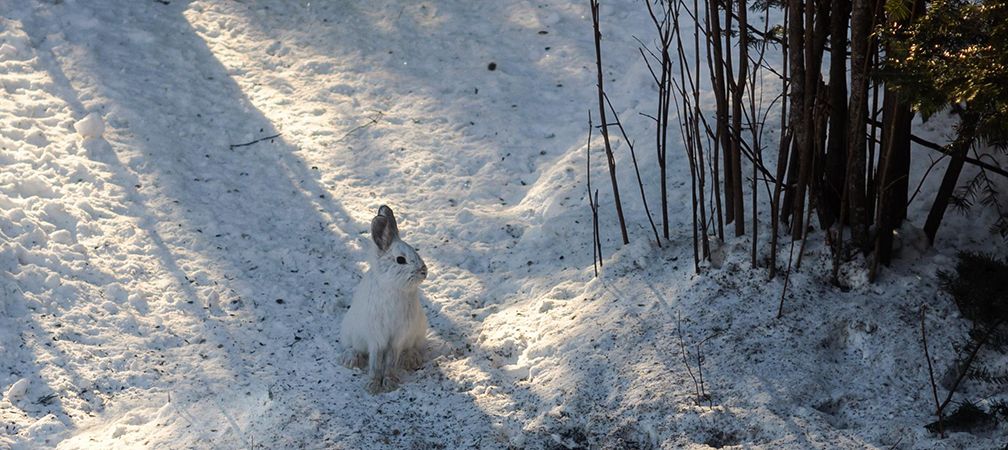
Snowshoe hares face another challenge: their fur changes colour based on day length, not snow cover. With winters arriving later and ending earlier, the white hares stand out against snowless ground, making them more vulnerable to predators. Changes in populations and survival rates of these animals reflect the broader impacts of shifting weather patterns.
Because wild rabbits and hares are often not seen as having economic value, rescues that care for them tend to receive limited public or government support and fewer donations. This is unfortunate, as species like the snowshoe hares form a crucial part of the food web. “They basically feed everybody. For example, the Canada lynx lives and dies by the cycle of the snowshoe hare. If there are very few hares, there will be very few lynx because that’s usually what they eat.”
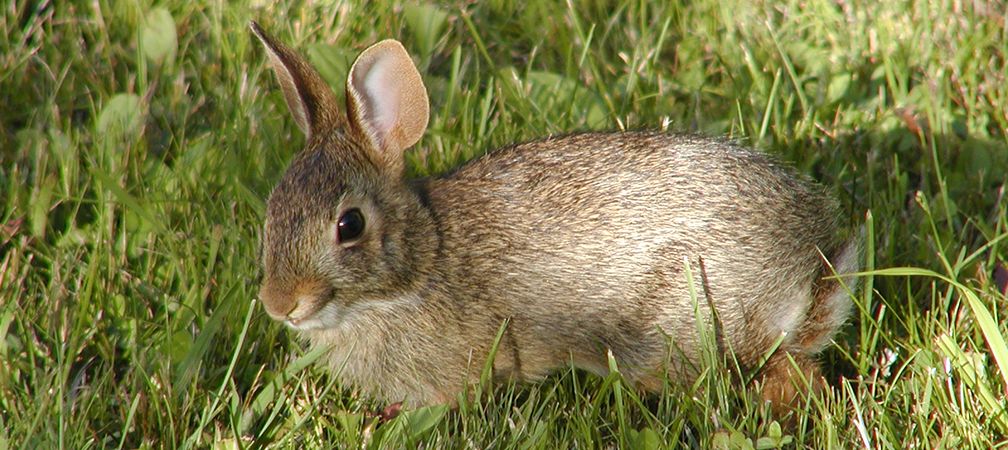
At her Ottawa-based rescue, Tallulah cares for two of Ontario’s most common young rabbits (kits) and hares (leverets): Eastern cottontails and snowshoe hares. In total, Ontario is home to five species, including the white-tailed jackrabbit, Arctic hare in the far north, and the non-native European hare, which was introduced over a century ago but is rarely seen today. Chances are that the Eastern cottontail and snowshoe hare are the two you’ll most likely spot in the wild.
The Main Difference Between Rabbits and Hares
If you come across a young rabbit or hare, these key differences can help you identify them:
Rabbits are born blind, hairless, and completely helpless. They grow fur and open their eyes around seven to eight days old. Eastern cottontail rabbits build small nests, shallow indentations in the grass lined with fur and vegetation.
Hares are born with fur, with their eyes open, and are ready to move. Snowshoe hares do not burrow; instead, their leverets are born in the open. Within a day, the young start exploring and hiding, though they remain near the birthplace because the mother returns twice daily to feed them, similar to Eastern cottontails. Additionally, mature hares fur changes colour with seasons, helping them blend into their environment.
How to Help Rabbits and Hares
“Everybody can do something [to help rabbits and hares this spring],” says Tallulah. Here’s what she recommends:
Let grass grow the entire season, from early spring until late fall. Avoid mowing certain areas as tall grass provides food, cover and nesting spots. Mowing grass risks destroying nests and hurting or killing the kits and leverets.
For adult rabbits and hares living in the wild, provide clean water, not food. Never feed or attempt to tame wild rabbits and hares.
Plant native vegetation. Include extra vegetables in your garden for the rabbits instead of chasing them or letting pets harass them. “They don’t have a grocery store they can go to. Be kind,” says Tallulah.
Keep pets in check: Leash dogs and keep cats indoors or build a catio to protect wildlife.
Avoid rodenticides. Hire professionals that use humane ways to capture animals and keep harmful chemicals out of the food chain.
For wild rabbits and hares that need help, contact a wildlife centre that takes in rabbits. Tallulah also warns that domestic rabbits should never be released into the wild. Their bright colours make them easy targets for predators, and they lack the camouflage, instinct and hardiness of wild rabbits and hares. Additionally, they are too friendly towards humans and pets and the harsh climate is fatal for them. Released domestic rabbits often die quickly from starvation, predation or disease. Contact a rabbit rescue like https://rabbitrescue.ca/ or use this rabbit rescue resource page https://wabbitwiki.com/wiki/Ontario to rehome an unwanted pet.
In 2022, Carleton University biologist, Grégory Bulté arrived at Opinicon Lake for his first day of field work for the season. Bulté has been studying and tracking northern map turtles since 2003, returning every spring to the lake.
As he went to retrieve his camera from the hibernation site, he spotted a dead turtle. He paddled towards it and then noticed another. Sightings of turtles with crushed shells and missing limbs continued. In his wetsuit, he swam the shoreline to pick up the carcasses, counting 142 in total —10 per cent of the total population.
This was the first time Bulté had witnessed a mass mortality like this. His research points to river otters accessing the hibernating turtles through holes in the ice.
It is uncertain how the holes in the ice formed. Climate change, human-made openings, and shifting ecosystems may be potential causes.
“We don’t have direct evidence that any cause led to this particular event. However, we thought it was important to publish this study, because what it did show, is that map turtles hibernate in such a way that it makes them vulnerable to fatality if something goes wrong,” said Bulté.
Ice protects turtles from predation. While there are no de-icing bubblers, which push bubbles into the water to stop it freezing around docks, next to the hibernation site at Opinicon Lake, Bulté has seen an increasing trend in their overall use.
“We are worried that without any regulation or knowledge of where map turtles spend their winters, we could decimate a population rapidly if these tools are put in close proximity,” said Bulté.
Since 2022, Bulté has not witnessed another mass mortality event. He is currently working alongside a statistician to analyze data from 2022 to 2026 to better understand how the population has been affected.
He believes that humans need to learn how to cohabitate better with wildlife.
“If we cannot keep them in their environment, what does that say about everything else we do to the environment?”
Ontario Nature’s Acting Conservation Science and Stewardship Director, Jenna Quinn emphasized that turtle species are at risk and cannot afford additional threats.
“It is important that we always move with nuance and understand that every action we take has a consequence,” said Quinn.
Work is being conducted to conserve the ecosystems that inhabit the turtles.
Ontario Nature’s Reptile and Amphibian Atlas (ORAA) is one tool that is currently being used to inform ongoing conservation work. It documents current knowledge of the distribution of reptiles and amphibians in the province, increasing public awareness and appreciation of these species.
Additionally, the Rideau Canal is a part of Preserving Legacies, a global organization dedicated to safeguarding heritage places and practices by advancing climate adaptation solutions that strengthen community resilience.
The canal is currently in its second phase of the project, which involves the creation of a comprehensive Risk Assessment that will be shared with the community.
Incorporating nature into local development can have a significant impact on human health. Examples include improved sleep and academic performance in children, metabolic risk reduction in adults, and longevity in seniors. Though there is evidence for human benefit, it is particularly important for other species who may call these spaces home.
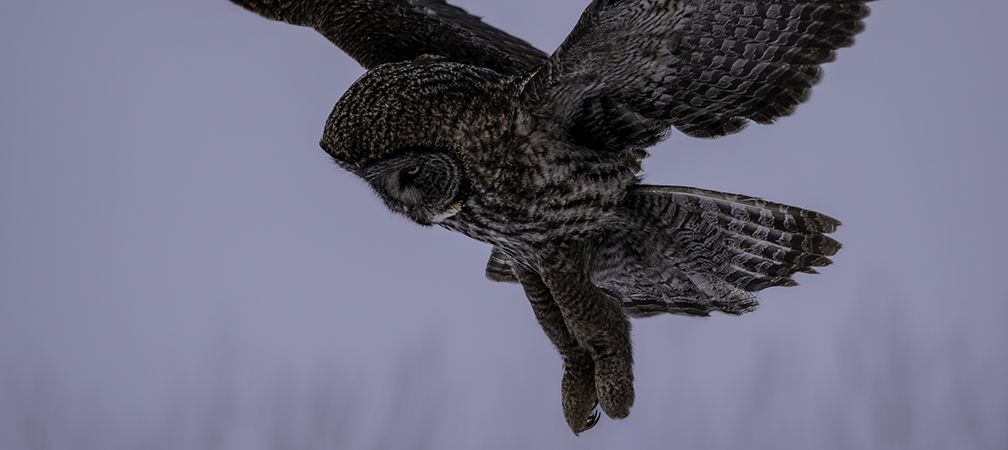
This is highlighted by a rare visitor to the Simcoe area this winter, as a great grey owl took up residence in a local wooded lot. Great grey owls are not known to be migratory species, however, will travel south during particularly harsh winter months in search of food sources. Great grey owls typically live in coniferous forests and muskegs. They will hunt during the day while watching prey from a low perch as they are elusive and often go unnoticed.
The owl brought birders from hours away for a chance to observe and photograph the rare visitor. It has been given the nickname, the “Phantom of the North” for its elusive nature, silent flight and ability to disappear into the forest, making it particularly special to witness.
With the rarity of the species brings challenges with ethical implications. Here are some practical tips to keep in mind:
In the day and age of social media, photographers and observers should caution on location sharing to avoid overcrowding and stressing the bird. Additionally, observers should obtain permission to post observations from Indigenous Reserve lands, respecting both community protocols and cultural considerations. It is recommended to delay sharing images until the bird has left the area.
Give a respectable distance to observe the species so they can behave normally and utilize their full senses for hunting. Noise and movement can make hunting more challenging, and flushing the owl forces it to expend valuable energy.
It is best to limit the amount of time spent with the animal so that it can both rest and hunt as needed. A constant flow of observers, even if brief, can be detrimental to any species.
Be aware of baiting – a harmful practice that can leave owls more prone to vehicle collisions and expose them to pathogens carried through rodents. It also brings attention to the importance of choosing ethical tours and workshops.
As the owl spent several months in the area, it was an amazing opportunity to observe such a magnificent species. It also highlighted the large role that humans play in their survival. The area that the owl spent most of the winter in is approximately 0.1-0.2 km² and is surrounded by commercial, industrial and medical infrastructure.
Though a strong case can be made for larger uninterrupted green spaces, the small size of the area highlights the significant impact a small area can have in conservation and wildlife protection. While urban development can follow many models, the 3-30–300 rule developed by Dr. Cecil Konijnendijk suggests that every resident see at least three decently-sized trees from home, have 30 percent tree canopy in their neighbourhood and live within 300 metres of the nearest park or public green space. These small changes can have a significant impact on both human health and provide valuable habitat for migratory species. For this rare visiting great grey owl this small green space meant survival in the harsh winter months.
“A moss survey?” Asked Roberta Buchanan, local property steward for Sydenham River Nature Reserve, who didn’t quite hear me while we were walking outside.
“No, moths. Like a nocturnal equivalent to the butterfly survey. Who knows what we’ll find?”
It was 2023. I knew how unique the reserve was through my involvement with the annual butterfly and breeding bird surveys, and I suspected this oasis of biodiversity had fantastic potential for moths.
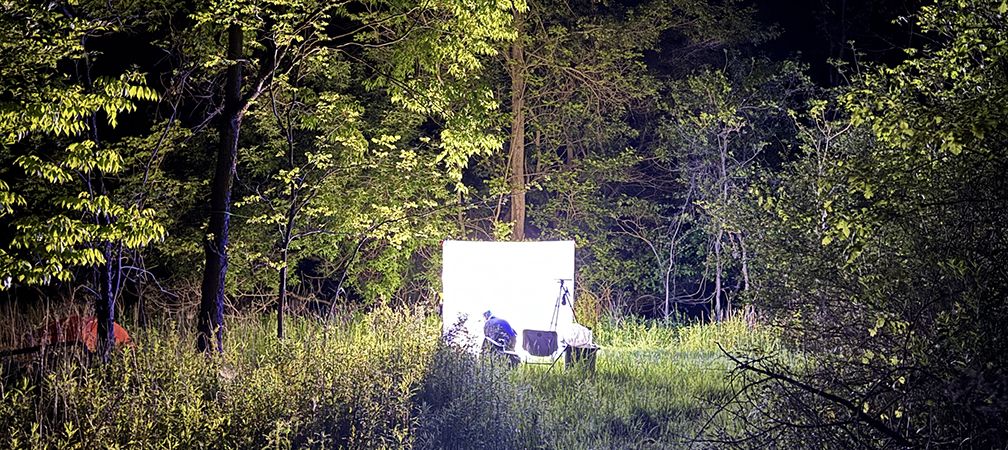
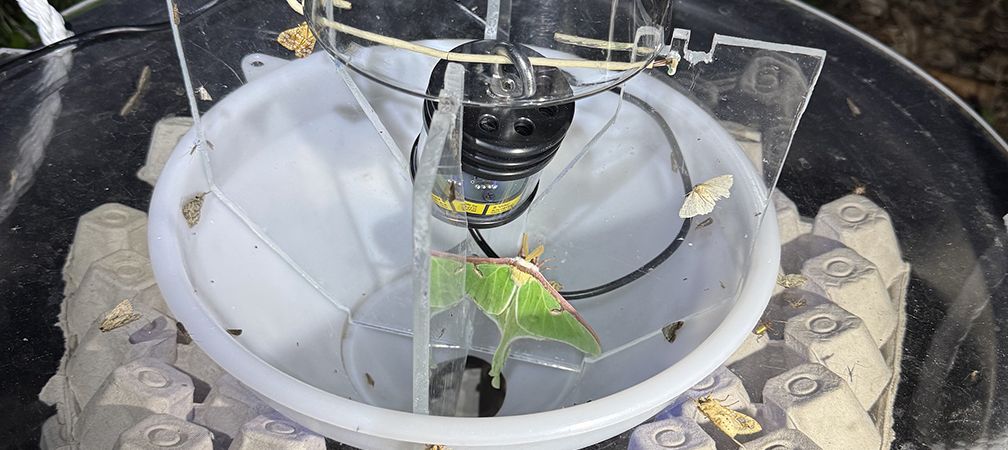
Compared to their diurnal counterparts, moths are relatively under-surveyed. Most species are nocturnal and inconspicuous, and documenting them requires specialized survey techniques – sheets and live traps baited with light or food. It also requires dedicated surveyors willing to stay up all night!
On the evening of June 24, 2024, a team of volunteers (Roberta Buchanan, Mark Buchanan, Paul Carter, Pete Chapman, Scott Connop, Deryl Nethercott, Dale Buchner, and myself) from Lambton Wildlife set up two light sheets and two traps across the Sydenham River Nature Reserve property. We documented hundreds of individual moths well into the night, and even more when we opened the traps the following morning. Then came the real fun: sorting through thousands of photos and identifying every moth.
Identifying all these moths is no trivial task. There are over 3,000 species of moths in Ontario, so field guides include only the most common species. Encountering moths that aren’t in the guide is common, and several groups of moths are notoriously hard to identify, even for experienced moth-ers. My approach is to photograph every moth, upload these photos to iNaturalist with my tentative ID, and wait for confirmation by a moth expert. For those who don’t know, iNaturalist is an online platform where you can post photos or recordings of an organism and crowdsource identifications from experts all over the world.
To keep track of the growing species list, I created an iNaturalist project which automatically consolidates all the moth observations from the property. The strength of this approach is that it stays current, as taxonomic changes and revised identifications will update the species list automatically. This makes it more reliable over time than a static checklist, which inevitably becomes outdated. As of 2026, we have documented 196 species of moth that first night, 13 of which are considered vulnerable at some level. After a second survey in May 2025, the total moth species count at Sydenham River Nature Reserve stands at 328, including 30 vulnerable species.
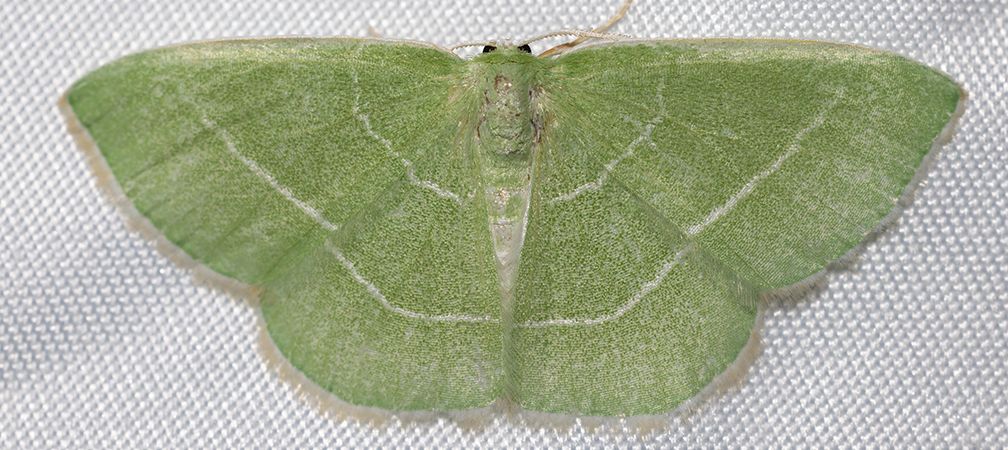
Fast forward to July 2025. I was checking my iNaturalist and saw there was a comment on one of my moth observations from the 2024 survey. Someone disagreed with my identification of what I believed to be a common white-fringed emerald, suggesting instead a species I hadn’t heard of – a Tuscarora emerald.
I quickly checked the range map, and my excitement spiked: this was a very rare moth, with only about fifty observations, all from the eastern United States – mostly localized populations in the Appalachians. If this was actually a Tuscarora emerald, it would likely represent the first record for Canada.
The identifier, Daniel Kluza (d_kluza on iNaturalist), a New Zealand-based biologist and iNaturalist taxonomy curator, pointed out a critical detail: our moth lacked the pure white spot on top of the abdomen which is present on the white-fringed emerald. This was a subtle difference, but potentially a decisive one. I needed a second opinion.
I reached out to Seabrooke Leckie, co-author of the Peterson Field Guide to Moths of Northeastern North America, and asked what she thought of it. Her response was unequivocal:
“I pulled out the Moths Of North America fascicle for this group to have a look at the official description of both species, Tuscarora and White-fringed, and I agree that this is Tuscarora. What a find!… Besides the presence/absence of the white spot at the base of the abdomen, the fascicle also says the white costa is very narrowly bordered inwardly by an apricot colour, and the AM and PM lines are wider than in White-fringed, both of which appear present here. There are no other eastern species that have both the white fringe and no markings on the abdomen.”
What makes this record especially meaningful is not just the rarity of Tuscarora emerald, but the way in which it was found. It was the result of methodical work by a team of volunteer community scientists, combined with the expertise of moth specialists. Not too long ago, access to such expertise was a significant roadblock, but it’s now easily facilitated through platforms such as iNaturalist.
We don’t know if this observation represents a previously overlooked population, a vagrant individual, or a northern range expansion driven by climate change. What is clear, however, is that protected places like Sydenham River Nature Reserve continue to demonstrate their conservation value in unexpected ways. When we take the time to look closely and collaboratively at under-surveyed groups like moths, we reveal hidden layers of biodiversity, uncovering the true richness of landscapes we thought we already knew.
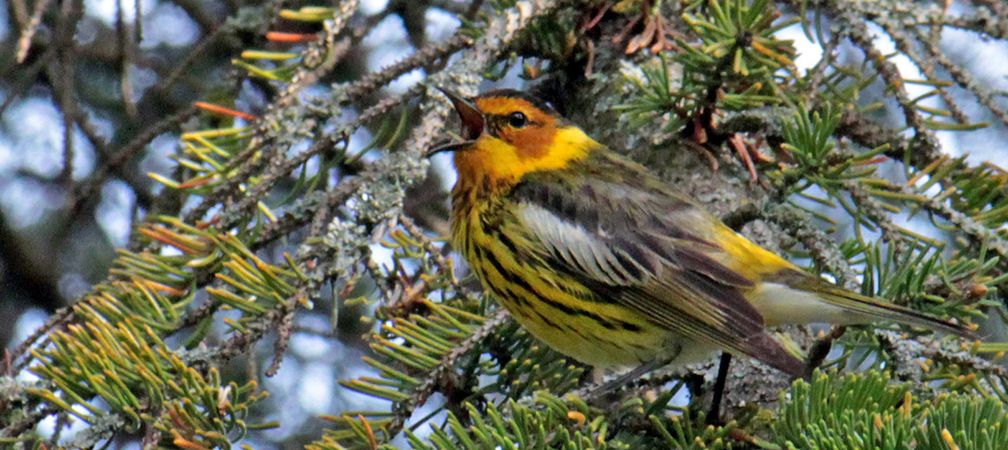
Spring migration in Thickson’s Woods starts with the lisps and whispers of golden-crowned kinglets flitting about in the leafless understory, and then — listen! — an endless, breathless song pumped out by the smallest set of lungs in the world, winter wren. Unless you have patience, persistence and a strong neck, don’t even try to spot pine warblers nosing about in the tops of the towering pines. Soon followed by yellow-rumped, black-throated green and blue, and magnolia warblers feeding at more-comfortable-for-binoculars elevations. By the time colourful Cape Mays and beautiful bay-breasted warblers are gobbling midges in spruce trees lining the waterfront trail, scarlet tanagers will be posing in the tops of the oaks, aglow in the morning sun. Plus, loons will be flying over, and red-necked grebes staging in the bay among amorous red-breasted mergansers, so be sure to check all habitats—lake, woods, marsh and meadow —when visiting this compact nature hotspot.
Want to know why so many birders visit Thickson’s Woods in the spring? Because so many migrants do, dropping in for a much-needed break during their long flights north. With a feast of hatching midges on tap, no songbird ever goes away hungry, says local naturalist Dennis Barry. And he should know, since he’s birded there since the 60s and lived there since the early 80s. Dennis knows when the beaked hazel will be in bloom, right before marsh marigolds open their golden faces at the foot of the north ridge. Knows when wood thrushes will be singing, about the same time ovenbirds arrive, screaming, “Teacher! Teacher! Teacher!”
Fate surely played a part in having Dennis on hand when Thickson’s Woods was gutted by loggers in September 1983. Having already spent ten years fighting to save Oshawa Second Marsh alongside another eco hero, Jim Richards, Dennis knew how to reach out for support and get things done, and it was very much thanks to him, and equally caring and committed Margaret Bain, that the woods were rescued and restored.
Put your money where your mouth is. The one sure way to protect precious wildlife habitat anywhere on the planet is to buy it, then look after it. That was the lesson we learned.
Saving Thickson’s Woods has been a labour of love for a great many folks these forty years plus. The exact right people served on the land trust board at each stage of the effort. Brian Steele, tireless treasurer for a quarter century now, has records of nearly 2,000 donors since he took over the books, and estimates 2,500 since the start. Most touching to me are the names on our “In Memoriam” list, many past donors themselves.
Through the years, birds and birders keep coming to this migration hotspot where the St. Lawrence and Mississippi River flyways intersect. The current checklist of birds is 329 species, not bad for just 26 acres of white pines and meadow.
Taking care of a woods includes worrying about the future, and praying you can leave it in capable hands. We’re deeply grateful that Ontario Nature, a keen, young, energetic group, is ready and willing to take on responsibility, ownership, protection. And that the Durham Region Field Naturalists will serve as local stewards.
One of my jobs and joys as Thickson’s Woods Land Trust secretary has been thanking supporters as I send their tax receipts. And now get to express our appreciation to Ontario Nature, and all its members, for coming forward and giving us great hope for the future.
On behalf of our famous “attack chickadees,” the family of foxes, and the multitude of moths, some 1,300, that live in Thickson’s Woods, plus all the visitors, human and avian, that stop by, we fervently thank you. Thank you so much!
Read Margaret’s full history of Thickson’s Woods Nature Reserve here.

 Login
Login