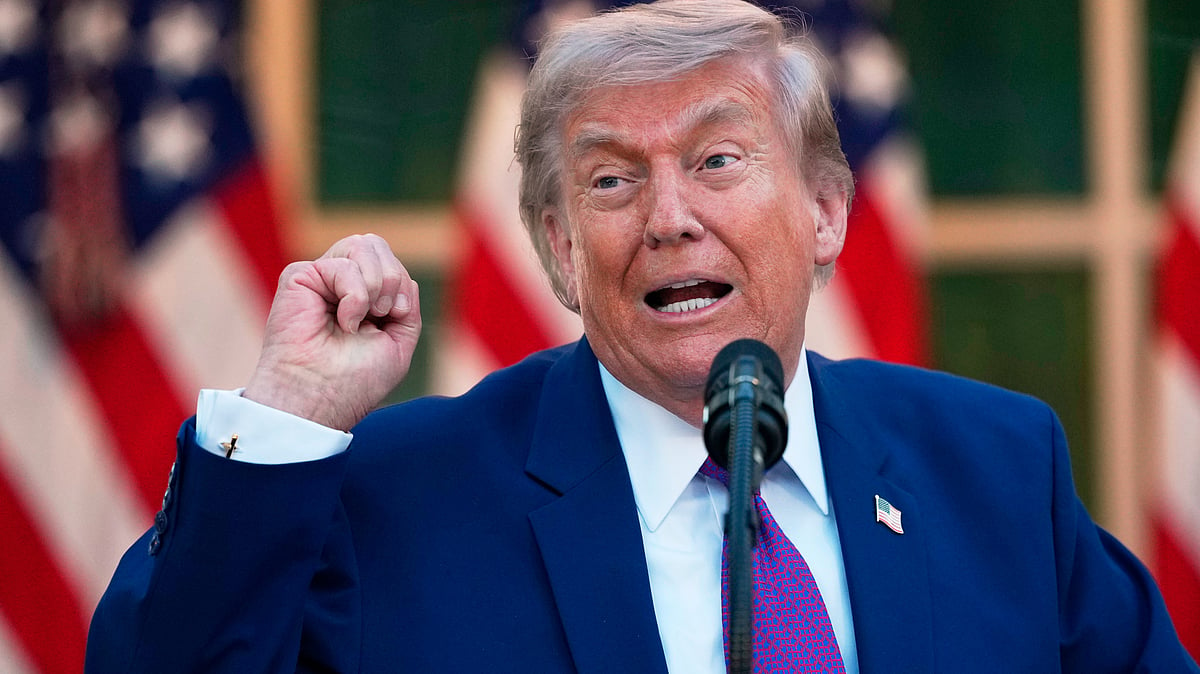
US President Donald Trump has asserted that Iran has agreed to a key US demand that it will not develop nuclear weapons, even as conflicting reports suggest Washington has introduced a revised and tougher negotiating framework to Tehran.
Speaking on Fox News, Trump said Iran had effectively accepted the central condition of the talks. “The one guarantee that I have to have is that there will be no nuclear weapons. They’ve agreed to that,” he said, without providing further details on the scope or verification of such an agreement.
The claim comes amid uncertainty over the status of negotiations, with reports from The New York Times and Axios indicating that the US has sent a modified proposal containing stricter terms. The contents of the revised framework have not been made public, and it remains unclear how Iran has responded.
❗️Iranian Parliament Speaker Mohammad Bagher Ghalibaf: We will not accept any agreement that does not produce tangible results
Speaking after being re-elected as Speaker of Parliament, Ghalibaf said Iran will not accept any agreement with the United States unless the rights of… pic.twitter.com/rvdXb8zcZY
— Daniella Modos - Cutter -SEN (@DmodosCutter) May 31, 2026
Iran’s parliamentary speaker and top negotiator Mohammad Bagher Ghalibaf pushed back strongly, warning that Washington cannot be trusted and insisting that any agreement must fully guarantee Iran’s rights.
“Iran will not accept any agreement unless its rights are fully secured,” Ghalibaf said, highlighting deep mistrust that continues to shadow the diplomatic process.
Iran maintains that its nuclear programme is strictly civilian in nature, while the United States and its allies continue to suspect it could be used to pursue weapons capability — a core dispute that has long stalled progress.
The diplomatic standoff is unfolding alongside wider regional instability, including reported Israeli military operations in southern Lebanon targeting areas linked to Hezbollah, as well as reported US action against a Gambia-flagged vessel allegedly attempting to reach an Iranian port.
With parallel military tensions and contradictory diplomatic signals, the nuclear issue between United States and Iran remains unresolved, with no clear breakthrough in sight.
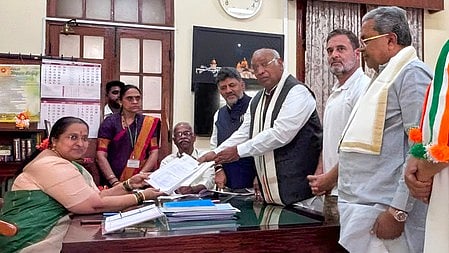
Congress president Mallikarjun Kharge on Friday filed his nomination papers for the upcoming Rajya Sabha elections from Karnataka, accompanied by senior party leaders including Rahul Gandhi, chief minister D.K. Shivakumar and former chief minister Siddaramaiah.
Kharge submitted his nomination at the Vidhana Soudha in Bengaluru ahead of the biennial Rajya Sabha elections scheduled for 18 June.
The filing of the nomination took place against the backdrop of growing unrest within the newly formed Congress government in Karnataka, with differences emerging over the allocation of ministerial portfolios.
Rahul Gandhi and Kharge arrived in Bengaluru earlier in the day and were received at the airport by chief minister Shivakumar, Karnataka Congress president B.K. Hariprasad, Siddaramaiah and other senior leaders.
During the visit, Gandhi planted and watered a sapling at Kempegowda International Airport before proceeding to the nomination event. Several senior Congress leaders, including party general secretary Randeep Singh Surjewala and minister M.B. Patil, were also present.
The Rajya Sabha election, meanwhile, is expected to be a key political event for the Congress, with Kharge's candidature carrying significant symbolic and organisational importance for the party.
SUBSCRIBE for the best Bollywood videos, movies and scenes, all in ONE channel https://www.youtube.com/@SadabaharHDSongs
Song : Sab Kuch Luta Ke Hosh Mein Aaye
Movie : Ek Saal (1957)
Actor(s) : Ashok Kumar, Madhubala
Singer(s) : Lata Mangeshkar
Music : Ravi
Lyrics : Prem Dhawan
Connect with us on :-
Facebook - https://www.facebook.com/ShemarooEnt
Twitter - https://twitter.com/ShemarooEnt
Instagram - https://www.instagram.com/shemarooent/?hl=en
SUBSCRIBE for the best Bollywood videos, movies and scenes, all in ONE channel https://www.youtube.com/@SadabaharHDSongs
Song : Sab Kuch Luta Ke Hosh Mein Aaye
Movie : Ek Saal (1957)
Actor(s) : Ashok Kumar, Madhubala
Singer(s) : Lata Mangeshkar
Music : Ravi
Lyrics : Prem Dhawan
Connect with us on :-
Facebook - https://www.facebook.com/ShemarooEnt
Twitter - https://twitter.com/ShemarooEnt
Instagram - https://www.instagram.com/shemarooent/?hl=en
GIFT (Gujarat International Finance Tec-City) is India’s first International Financial Services Centre (IFSC) that competes with global hubs like Singapore and Dubai. Among its various services, it also offers banking services for NRIs. This opens a new avenue to manage your foreign income in India. If you’ve been curious about it, this blog explores everything you need to know about a GIFT City account for upgrading your banking experience in India.
What is a GIFT City bank account?
A GIFT City account is essentially a foreign-current bank account that IFSC Banking Units (IBUs) offer. You can hold and make transactions directly in foreign currencies like USD, GBP, EUR, etc., with this global bank account.
It is ideal for cross-border transactions. A GIFT City combines global access with a familiar banking setup in India. You are eligible to open the GIFT City account as an NRI, OCI, or PIO. You can use the account to save, make seamless transfers, and explore international markets.
Key features and benefits of the GIFT City account
GIFT City account includes a host of features that enhance your banking journey as per the international standards within India. Some of them include:
Transact in foreign currency
With banking in GIFT City, you can hold and use your funds directly in currencies like USD, EUR, AUD, GBP, etc. This reduces the need for constant conversions and saves cost.
Access to global investment avenues
A GIFT City bank account opens up opportunities to explore international investments easily. Since your finances are already aligned with the global markets, you get easy access.
Tax-efficient structure
Under the IFSC framework, certain investments incur zero capital gains tax, no GST on offshore services, no STT on certain investments. This helps you earn efficiently from overseas markets.
Globally competitive interest rates
As the interest rates are linked to international benchmarks, your deposits get to grow in line with the global trends.
Simplified banking experience
Much like a regular NRI account, a GIFT City account also comes with seamless digital operations. You can perform day-to-day transactions through the convenient banking app.
Strong regulatory framework
The IFSCA, a government body, authorises banking activities within the GIFT City. Hence, you are assured of a transparent and globally compliant system.
Ease of remitting money
As the GIFT City global account is connected to the international markets, moving funds across borders is a breeze. There are no unnecessary delays or hefty charges.
Cheaper borrowing cost
You can access cheaper dollar loans or External Commercial Borrowing (ECBs) with your GIFT City bank account. This is possible thanks to IFSC entities that reduce borrowing costs and enhance capital access.
How to open a GIFT City bank account
The process of opening a GIFT City account is straightforward with a fully digitised system. Follow these simple steps:
Choose an IBU
Select a bank registered as an IBU. Compare the specialised bank-specific offers, the reputation, and service experience of each bank to finalise the GIFT City account.
2. Fill out the application
Provide your basic identity-specific details and contact information. If you need assistance, you can seek the help of a relationship manager.
3. Complete documentation
Provide basic documents like your passport, visa, residence proof, and PAN (if applicable). If you are an existing customer, you only need to fill out the application.
4. Activate your account
Once approved, you can activate the account by remitting funds in foreign currency directly from your overseas account.
Final words
As global financial services evolve, financial hubs like IFSC highlight growing potential. You can participate in this revolution as an NRI with a GIFT City bank account. It is easy to open through any of your preferred IBUs, and you can set it up in minutes. Once done, explore seamlessness of global transactions with India, investing in capital markets, and advanced investment avenues. The possibilities are endless for your foreign income to grow. This is yet another way to connect to your homeland besides NRI savings accounts.
What is a GIFT City bank account, and who can open one?
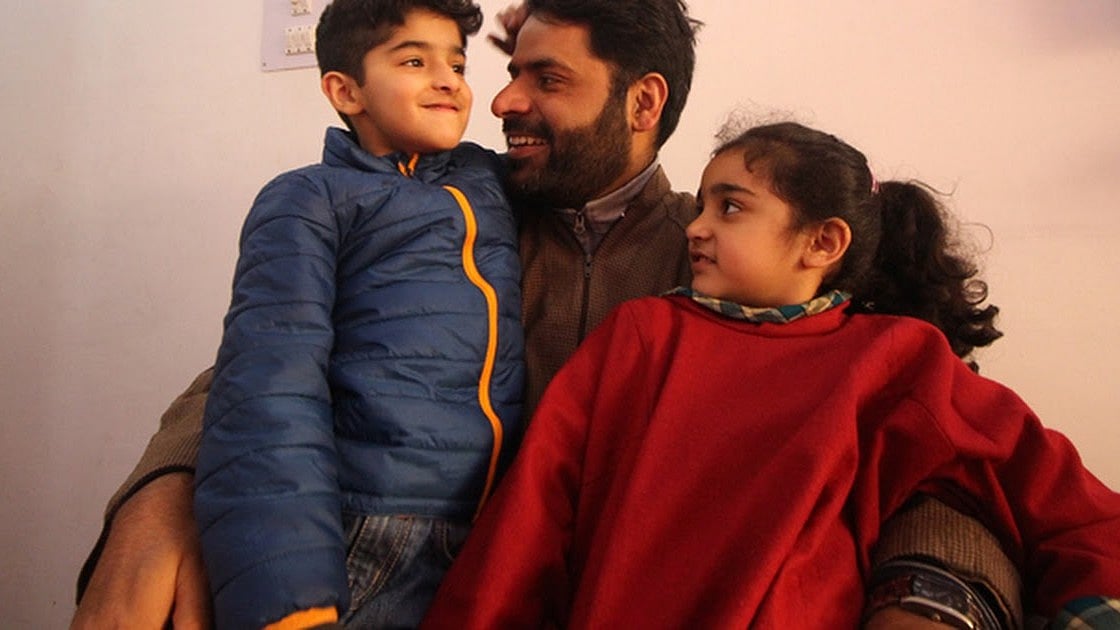
The Delhi High Court on Wednesday granted bail to Kashmiri human rights activist Khurram Parvez in a 2021 terror case registered by the National Investigation Agency (NIA) under the Unlawful Activities (Prevention) Act (UAPA), observing that the trial was unlikely to conclude anytime soon and reiterating that “bail is the rule” while denial is an exception.
A division bench of Justices Navin Chawla and Ravinder Dudeja took note of Parvez’s prolonged incarceration of nearly five years and his physical disability while granting relief.
Parvez, however, will continue to remain in custody as he is also an accused in a separate 2020 NIA case under the UAPA. His bail plea in that matter is pending before the trial court.
The High Court observed that the allegations against Parvez must be weighed against the length of time he has already spent behind bars and the slow pace of proceedings.
“The allegations must be tested against the long period of incarceration of the appellant and the fact that there is no likelihood of the trial ending soon,” the court said, adding that the right to personal liberty may outweigh the restrictions imposed under Section 43D(5) of the UAPA in such circumstances.
VIDEO | Delhi High Court grants bail to Khurram Parvez in an alleged terror funding case, advocate Swati Khanna, says, "Order will be uploaded in the evening, so do not know the (bail) conditions as yet. Khurram has two cases against him... thankfully he has got regular bail. In… pic.twitter.com/gQ5FtCGh3v
The bench also noted that Parvez is infirm and deserves special consideration. He lost a leg in a landmine blast in 2004, resulting in permanent disability.
The court recorded that the case is still at the stage of arguments on framing of charges and that the prosecution proposes to examine 197 witnesses if charges are framed, indicating that the trial could take several years to conclude.
As part of the bail conditions, Parvez has been directed not to leave the National Capital Territory of Delhi without prior permission of the court. He has also been barred from uploading, sharing or disseminating any anti-national material through social media or any other platform.
Parvez was arrested by the NIA on 22 November 2021 in a case involving allegations of terror funding, criminal conspiracy and waging war against the state. The agency had accused him of recruiting overground workers for the banned Lashkar-e-Taiba.
A prominent rights activist, Parvez was associated with the Jammu Kashmir Coalition of Civil Society (JKCCS), which documented and campaigned on issues including enforced disappearances, illegal detentions, torture and alleged extra-judicial killings in Jammu and Kashmir.
In a separate case registered in October 2020, the NIA alleged that several non-governmental organisations diverted funds meant for charitable activities towards secessionist and separatist activities in Jammu and Kashmir. That case remains pending.
Delhi HC grants bail to Kashmiri activist in UAPA case, cites prolonged incarceration
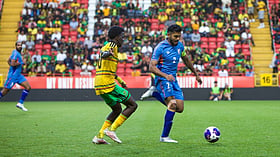
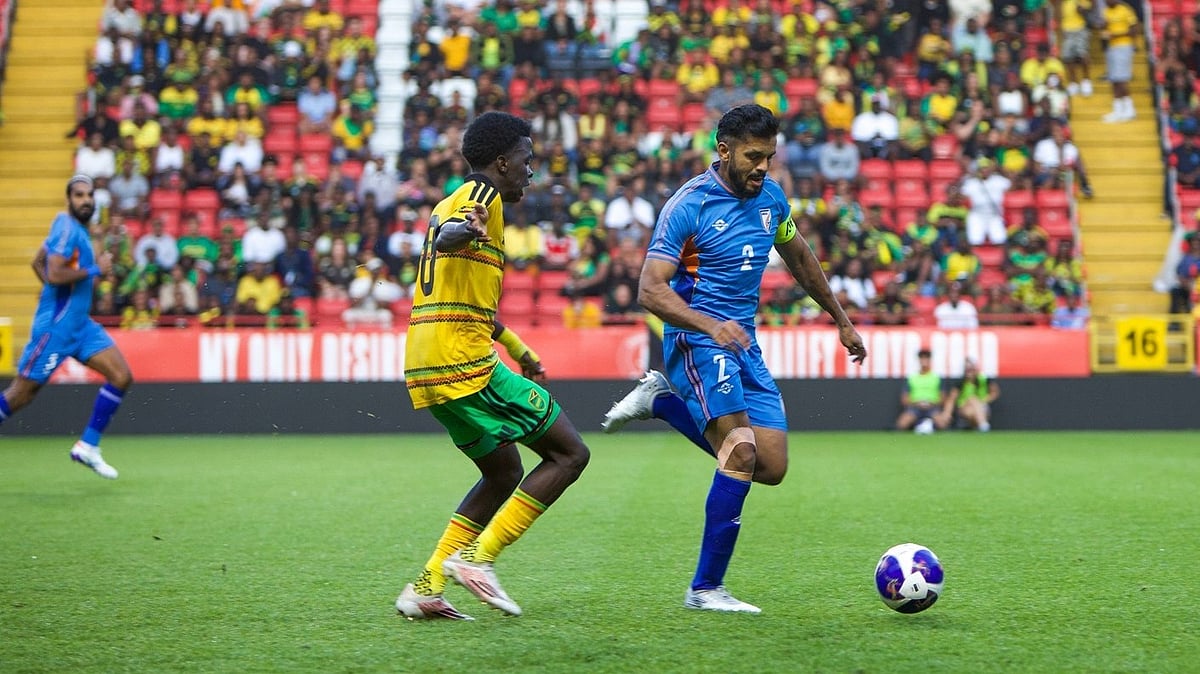
The Blue Tigers will have to vie for the third place in the four-nation Unity Cup in London after they suffered a 2-0 loss to a higher ranked Jamaica in the semi-finals at The Valley on Wednesday. They will take on Zimbabwe, who lost the other semi-final to Nigeria, for a podium finish on 30 May (Saturday) at 7 pm IST.
Ranked 136 in the world, India started as underdogs against the Caribbeans – who fielded an young team here but were still strong enough to win the day. Courtney Clarke’s stunning early strike in the eighth minute and Kaheim Dixon’s solo effort in the 78th minute ensured the Reggae Boyz marched into the final.
Khalid Jamil’s men, who were playing their first match on British soil since 2002, could hardly settle into rhythm as Jamaica struck early. A quick Jamaican counter sliced through India’s shape in the eighth minute, forcing Gurpreet Singh Sandhu into a sharp save from a tight angle. The danger was far from over as India failed to clear their lines and Clarke intercepted a loose pass before scoring in emphatic fashion. He shifted the ball onto his right foot before unleashing a breathtaking strike into the top-right corner beyond Sandhu’s desperate dive.
Jamaica, placed 71st in the FIFA rankings, continued to attack, stretching the Indian defence through the wings and exploiting spaces with alarming ease. Dixon nearly doubled the advantage in the 17th minute when he burst through on goal, but Sandhu stood tall and made a brave stop to keep India alive.
The Blue Tigers nearly found a lifeline in the 53rd minute after a mistake from the Jamaican defence and goalkeeper. Roshan seized upon a loose ball and played Rahim Ali through on goal after the striker had replaced Lalrindika at half-time. However, Ali had strayed offside, so Chhangte's follow-up finish into the empty net did not count.
The chance, though, transformed the momentum of the match. Jamil’s men tried to make a match of it in the second half, pushing higher up the pitch and probing the Jamaican defence with far greater intent. The Blue Tigers finally began asking questions, forcing Jamaica onto the backfoot during their best spell of the contest.
However, Dixon produced a moment of magic that put paid to all their hopes. The Charlton Athletic winger, playing at his home stadium, collected the ball near the edge of the area in the 78th minute and worked past the defenders. He then created space before drilling a low shot through Akash Mishra’s legs and into the far bottom corner beyond Sandhu.
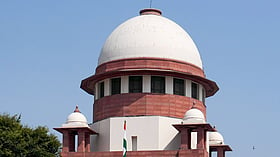
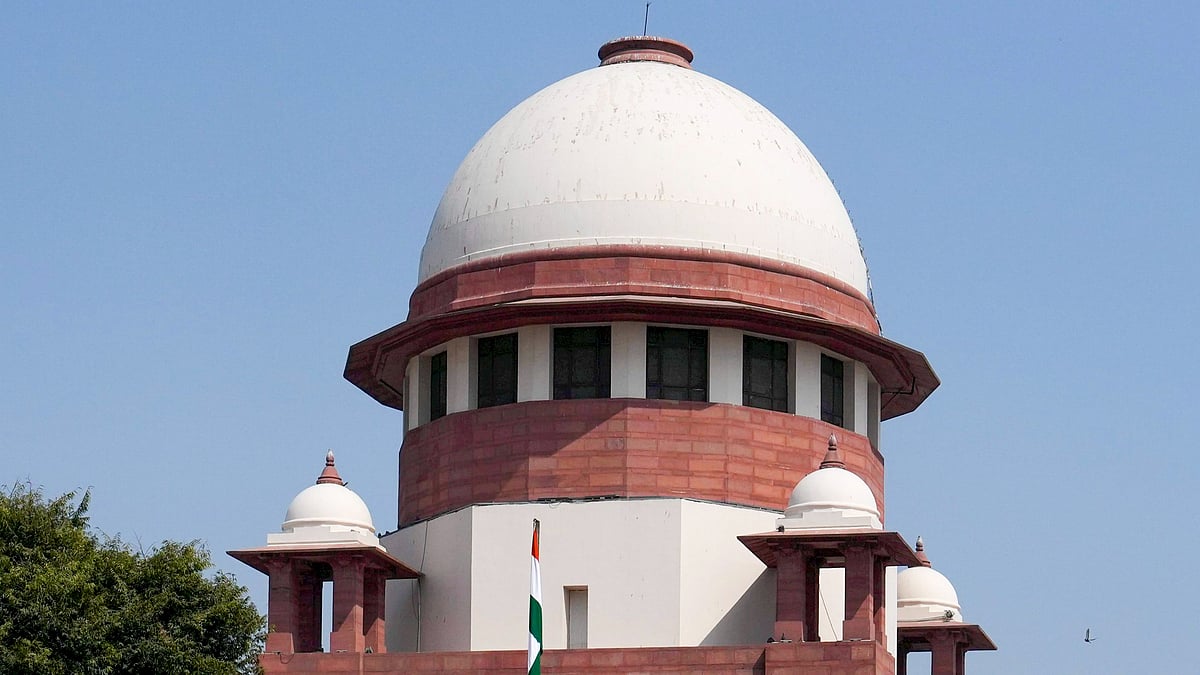
The Supreme Court on Wednesday acquitted a Sri Lankan national convicted under the UAPA (Unlawful Activities (Prevention) Act) for alleged involvement in efforts to revive the banned LTTE (Liberation Tigers of Tamil Eelam), holding that he had been falsely implicated due to mistaken identity and that the prosecution had failed to establish its case.
A bench of Justices Vikram Nath, Sandeep Mehta and Vijay Bishnoi set aside the conviction and five-year prison sentence imposed on the appellant, observing that the evidence on record clearly indicated that he was not the absconding accused known as “Sri”, whom investigators had been attempting to trace in connection with the case.
“It is, therefore, clearly a case where the appellant has been falsely implicated by being assigned the identity of another person, namely, the so-called absconding accused ‘Sri’ (A-5),” the bench said.
The court also criticised the investigating agency for what it described as “inaction and indolence”, noting that no material had been produced to show what efforts were undertaken to locate and apprehend the actual absconding accused.
The verdict came on an appeal challenging an April 2025 judgment of the Madras High Court, which had upheld the conviction and sentence awarded by a trial court in Tamil Nadu.
Case stemmed from alleged LTTE revival conspiracy
According to the FIR (First Information Report) registered in 2015, investigators received information regarding an alleged conspiracy to rejuvenate the banned LTTE.
The prosecution alleged that a person identified as “Sri” supplied 75 cyanide capsules and 60 grams of a chemical referred to as GPS-4, allegedly intended for the manufacture of cyanide, to another accused. The materials were purportedly meant to be transported to Sri Lanka for use in reorganising LTTE cadres and targeting rival Tamil leaders.
Several accused were subsequently arrested, tried and convicted. However, proceedings against the alleged conspirator “Sri” were separated after he was declared absconding.
The appellant was arrested on 16 December 2021 after investigators claimed that he was, in fact, the absconding accused operating under a different identity.
The Sri Lankan national consistently denied the allegation, maintaining that he had been wrongly identified and had no connection with the accused referred to as “Sri”.
Court finds conduct inconsistent with prosecution theory
Examining the evidence, the Supreme Court noted that the appellant had entered India legally in 2009 along with his wife and son using a valid Sri Lankan passport and a tourist visa issued by Indian authorities.
His passport identified him as “Ranjan”, the court observed.
The bench noted that after arriving in India, he registered himself with local police in Tamil Nadu as a non-camp refugee and resided in Tiruchirappalli for more than a decade without attracting any criminal complaint.
The court further observed that his wife and son had obtained Swiss visas in 2014, later moved to Switzerland and were eventually granted Swiss citizenship.
According to the judgment, the appellant subsequently applied for a Swiss visa through his family and obtained approval from the Swiss Embassy in New Delhi in July 2021, subject to police clearance from authorities in Tamil Nadu.
While awaiting that clearance, he was arrested and accused of being the absconding LTTE suspect.
“A person who is an absconding accused in a serious UAPA matter would not dare to apply to a foreign embassy for a visa and seek a police clearance certificate from the very police station in whose jurisdiction he admittedly resided under a false identity,” the bench observed.
Witness testimony found unreliable
A key factor in the conviction was the identification of the appellant by two prosecution witnesses who claimed he was the absconding accused “Sri”.
The Supreme Court, however, found significant shortcomings in their testimony.
The bench noted that both witnesses were Sri Lankan refugees residing in India and had obtained identity documents including Aadhaar cards, PAN cards and voter identity cards.
It questioned why no action had been initiated against them despite material suggesting they had projected themselves as Indian citizens through such documents.
The court also observed that neither witness had previously stated that the alleged accused “Sri” was also known as “Ranjan”.
“The belated introduction of this name, years after the alleged incident, renders their testimonies highly suspect,” the judgment said.
The bench further observed that the circumstances suggested the witnesses themselves were under scrutiny by investigators regarding the movement of relatives from Sri Lanka under false identities.
“Prima facie,” the court said, the witnesses appeared to have been persuaded to implicate the appellant as part of a bargain with investigators.
Conviction set aside
The Supreme Court noted that it had suspended the appellant's sentence in December 2025 after considering that he had spent less than a year in custody against a five-year sentence. He was subsequently granted bail and housed in a special camp in Tiruchirappalli.
Holding that the courts below had erred in accepting the prosecution's identification of the appellant as the absconding accused, the bench ruled that the conviction could not stand.
“The conviction based on this flawed identification cannot be sustained in the eyes of the law,” it said.
Allowing the appeal, the court directed that the appellant be released forthwith from the special camp.
The bench also clarified that he would be free to pursue his request to relocate to Switzerland in accordance with applicable legal procedures.
SC acquits Sri Lankan national in LTTE revival case, says he was falsely implicated
Description:-
The Official Youtube Account of India's Most Vibrant Political Movement - The Indian National Congress.
For more videos, subscribe to Congress Party channel: https://www.youtube.com/user/indiacongress
Follow Indian National Congress!
Follow the Indian National Congress on
Facebook: https://www.facebook.com/IndianNationalCongress
Twitter:https://twitter.com/INCIndia
Instagram: https://www.instagram.com/incindia/
YouTube: https://www.youtube.com/user/indiacongress
Description:-
The Official Youtube Account of India's Most Vibrant Political Movement - The Indian National Congress.
For more videos, subscribe to Congress Party channel: https://www.youtube.com/user/indiacongress
Follow Indian National Congress!
Follow the Indian National Congress on
Facebook: https://www.facebook.com/IndianNationalCongress
Twitter:https://twitter.com/INCIndia
Instagram: https://www.instagram.com/incindia/
YouTube: https://www.youtube.com/user/indiacongress
Description:-
The Official Youtube Account of India's Most Vibrant Political Movement - The Indian National Congress.
For more videos, subscribe to Congress Party channel: https://www.youtube.com/user/indiacongress
Follow Indian National Congress!
Follow the Indian National Congress on
Facebook: https://www.facebook.com/IndianNationalCongress
Twitter:https://twitter.com/INCIndia
Instagram: https://www.instagram.com/incindia/
YouTube: https://www.youtube.com/user/indiacongress
Description:-
The Official Youtube Account of India's Most Vibrant Political Movement - The Indian National Congress.
For more videos, subscribe to Congress Party channel: https://www.youtube.com/user/indiacongress
Follow Indian National Congress!
Follow the Indian National Congress on
Facebook: https://www.facebook.com/IndianNationalCongress
Twitter:https://twitter.com/INCIndia
Instagram: https://www.instagram.com/incindia/
YouTube: https://www.youtube.com/user/indiacongress
More than 57 billion Australian dollars (around $40.84 billion) worth of infrastructure in the Australian state of Victoria is vulnerable to climate-related extreme weather events, according to a new report released on Tuesday by Infrastructure Victoria.
The independent infrastructure advisory body warned that the value of infrastructure exposed to climate risks could rise by nearly 25 per cent over the next four decades as bushfires, floods and extreme heat intensify across the state.
The report assessed infrastructure assets worth approximately 318 billion Australian dollars and identified bushfires, flooding and prolonged heatwaves as the biggest long-term threats to Victoria’s transport, energy and public service networks.
According to the findings, infrastructure currently exposed to bushfire risk is valued at more than 23 billion Australian dollars, with that figure projected to exceed 30 billion Australian dollars by 2070.
Flooding already threatens assets worth over 22 billion Australian dollars, while infrastructure vulnerable to extreme heat is expected to more than double between 2030 and 2070.
Road and rail systems are likely to suffer the highest damage costs, particularly in Melbourne and major regional transport corridors. The report also warned that energy infrastructure and healthcare facilities face growing risks from floods, bushfires and heatwaves.
Infrastructure Victoria noted that extreme weather has already imposed a heavy financial burden on the state. Climate-related disasters cost Victoria an average of 2.7 billion Australian dollars annually in the decade leading up to 2016, while the devastating 2022 floods alone forced governments to spend about 3.5 billion Australian dollars on relief and recovery measures.
The report comes amid growing evidence of climate change impacts across Australia. According to the Australian Broadcasting Corporation, average temperatures in Victoria have risen by 1.2 degrees Celsius since 1910, contributing to more frequent and severe extreme weather events.
Infrastructure Victoria said targeted adaptation measures could significantly reduce future economic losses. Recommended strategies include improving drainage systems, using climate-resilient materials in road construction and strengthening infrastructure planning to withstand future climate shocks.
The report emphasised that early investment in resilience could deliver substantial long-term economic benefits, noting that every dollar spent on climate adaptation has the potential to save multiple dollars in future repair and recovery costs.
Australia’s climate varies widely across the continent, ranging from tropical conditions in the north to temperate climates in the south. Nearly 70 per cent of the country is classified as arid or semi-arid desert, making many regions increasingly vulnerable to the impacts of rising temperatures and extreme weather patterns.
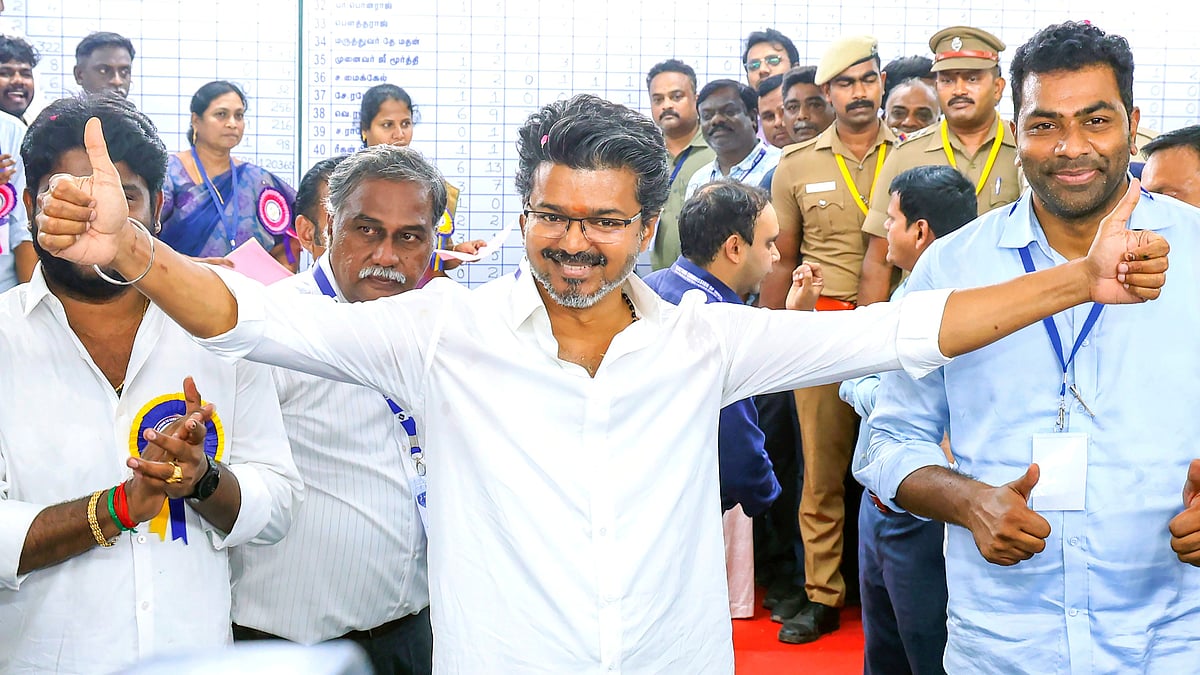
Tamil Nadu has delivered a verdict that resists easy interpretation. At the centre of the churn is Joseph Vijay Chandrasekhar, whose emergence has not merely added another player to the field but altered the grammar of politics in the southern state. In challenging the state’s entrenched duopoly of the DMK and AIADMK and successfully resisting a determined campaign by the resource-rich BJP, Vijay has positioned himself as the principal disruptor of a system that seemed immutable for decades.
For over five decades, Tamil Nadu’s political landscape was defined by a stable, deeply institutionalised bipolarity. The DMK and the AIADMK were not just parties competing for office but a political ecosystem of two players that had shaped welfare delivery, governance practices and the state’s distinctive political identity.
In Assembly elections through the 1990s and 2000s, their combined vote share frequently crossed 70 per cent. Even in closer contests, it rarely went below 60 per cent. The reins of government alternated between the two, but the system held. That system has now been shaken loose.
The numbers underline the scale of change. Across urban constituencies, the combined vote share of the DMK and AIADMK has declined by an estimated 8–12 percentage points compared with the previous election cycle. In Chennai, where bipolar contests once produced margins exceeding 15 per cent, several constituencies have recorded victory margins below five per cent.
Multi-cornered contests have replaced predictable outcomes. North Tamil Nadu, including Vellore, Tiruvallur and Kanchipuram, has seen a fragmentation of traditional vote banks. Here, Vijay’s TVK (Tamilaga Vettri Kazhagam) has drawn disproportionately from first-time voters and lower middle-class urban clusters that were once split between the DMK and AIADMK.
Anecdotal evidence suggests that in the industrial belt of Sriperumbudur and Hosur, younger workers and service sector employees have shifted allegiance to the TVK, drawn to its aspirational messaging that still retains cultural familiarity.
In western Tamil Nadu, historically a stronghold of the AIADMK, the shift has been more nuanced. The party retains pockets of strength among intermediate caste groups and agrarian communities, but its margins have thinned. TVK has not completely displaced the AIADMK but cut into its vote share to alter outcomes.
Triangular contests have replaced the earlier bipolar pattern in districts like Coimbatore, Erode and Salem. The Cauvery delta, for long a DMK bastion, continues to favour the party but with reduced margins. Welfare schemes and historical loyalty still hold, but even here, there is visible erosion among younger voters.
Southern Tamil Nadu, including Madurai, Ramanathapuram and Tirunelveli, presents a more complex picture, with caste alignments, local leadership and micro-level issues shaping outcomes alongside broader political churn.
Nearly 20 per cent of the electorate is now in the 18–29 age group. They are less bound to ideological inheritance and more responsive to leadership narratives, governance expectations and digital communication. “This is not a marginal shift in voting behaviour,” says C. Lakshmanan, former faculty at the Madras Institute of Development Studies. “Traditional loyalties are weakening, especially among younger voters.”
Cinema meets politics
Tamil Nadu has known the political power of cinema. M.G. Ramachandran transformed his screen persona into a welfare-driven political force. J. Jayalalithaa consolidated that legacy with a strong leadership model and expansive welfare programmes. M. Karunanidhi, on the other hand, anchored the DMK in ideological depth and organisational continuity. Each phase produced a stable axis of power.
The present moment is different, though, in that it is dissolving the old binary. Vijay’s rise is not sudden; it’s the culmination of a process. The Vijay Makkal Iyakkam, initially a fan network, evolved over two decades into a welfare-oriented organisation. Blood donation drives, disaster relief operations and educational assistance programmes created a grassroots presence that extended beyond fandom.
By the time TVK was launched, the network already had booth-level structures and district-level organisers. Local body election victories provided early evidence of electoral viability.
“This is not just star power,” says political observer Pradeep Damodaran. “It is years of organisational work.”
Cinema provided the emotional connect with his support base. His films Mersal, Sarkar, Master and Leo weren’t pure entertainers; they had a political sub-text. Mersal questioned taxation and public healthcare disparities. Sarkar invoked citizen rights and tangled with electoral malpractices. Master and Leo reinforced the image of an individual confronting entrenched power.
These narratives created a political persona ahead of Vijay’s plunge into active politics. “Cinema prepared audiences to accept him as a political figure,” says Lakshmanan.
A new era of coalition
Vijay’s political arrival, the end of Tamil Nadu’s old duopoly and a hung Assembly have forced the state into a reckoning with coalition politics, a departure from its history of stable single-party dominance.
At the time of writing, the Congress had offered conditional support to the TVK; the Left parties were still dragging their feet; Stalin had announced that the DMK would “not obstruct” the TVK government (if it comes into being) for the first six months and observe its functioning without interference.
The TVK, which has 108 seats, was 10 short of the 118 needed to get a ruling majority. According to some reports, the AIADMK had indicated its willingness to extend support from the outside, while others speculated that a breakaway faction may help it form the government.
Even in the midst of this churn, Tamil Nadu has resisted the national behemoth. With all the resources at its disposal, and even after running a determined campaign, with Prime Minister Modi trying to spin a narrative of civilisational continuity, the BJP has not been able to make significant inroads here, managing to win a solitary seat and 2.97 per cent of the vote.
Vijay’s ambivalence on identity issues, central to the DMK’s politics, and his avoidance of a direct confrontation with the BJP didn’t cost him in this election. In his acknowledgement of Modi’s congratulatory message the day after his victory, Vijay emphasised a commitment to governance that transcends political boundaries. The ambivalence of his public posture may be strategic, but it also makes observers wonder about his ideological moorings.
On the surface, Vijay situates himself within the symbolic universe of Dravidian politics. His gesture of garlanding Periyar and his invocation of Ambedkar and Kamaraj indicate that he draws on secular, Dravidian traditions. His interventions on issues like demonetisation, the Citizenship Amendment Act and the Sterlite protests have provided glimpses of his political credo. Yet these were still mainly gestures, that do not constitute a coherent ideological framework.
Some commentators have seen the Tamil Nadu election as the sun setting on Dravidian politics. But regional assertion and the principles of social justice and welfare remain deeply embedded in voter expectations. What has been challenged is the monopoly over these ideas. “The emotional contract between voters and parties has changed,” says Chennai-based political observer P. Sundar Rajan. “Welfare schemes are still valued, but they are not enough.”
Urbanisation has also played a hand. Tamil Nadu is nearly half-urban (>48 per cent), and exposure to diverse political narratives and the expansion of digital media have weakened the traditional networks of patronage.
If not by design, then simply via the availability of a third credible option, the electorate has forced every party to reassess its relevance. Power is now contingent. For Vijay, the next challenge is to articulate governance priorities and to forge out of his movement an organisation capable of governance.
“There is a difference between building a movement and running a government,” says Sundar Rajan. “The real test lies ahead.”
K.A. Shaji is a South India–based journalist who has chronicled rural distress, caste and tribal realities, environmental struggles and development fault lines. More of his writing here
The court said the allegations against Khuram Parvez, though serious, were based on the statement of a co-accused-turned-approver, who claimed to be an NIA informer, and were yet to be tested in trial.

 Login
Login