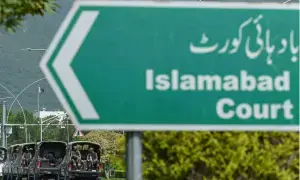
ISLAMABAD: A local court on Monday reissued non-bailable arrest warrants for Khyber Pakhtunkhwa Chief Minister Sohail Afridi over his continued failure to appear in a case registered under the Prevention of Electronic Crimes Act (Peca).
Senior Civil Judge Muhammad Abbas Shah directed the authorities concerned to arrest CM Afridi and produce him before the court. The order was passed after the chief minister failed to appear despite being summoned for the hearing.
The case was registered by the
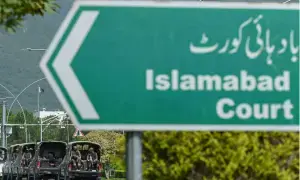
ISLAMABAD: A local court on Monday reissued non-bailable arrest warrants for Khyber Pakhtunkhwa Chief Minister Sohail Afridi over his continued failure to appear in a case registered under the Prevention of Electronic Crimes Act (Peca).
Senior Civil Judge Muhammad Abbas Shah directed the authorities concerned to arrest CM Afridi and produce him before the court. The order was passed after the chief minister failed to appear despite being summoned for the hearing.
The case was registered by the National Cyber Crime Investigation Agency (NCCIA), formerly known as the cybercrime wing of the FIA, over allegations of content deemed misleading against state institutions.
Expressing displeasure over the repeated absence of the accused, the court reissued the non-bailable warrants and adjourned further proceedings until June 18.
Physical remand
In a separate case, the same court handed vlogger Sohrab Barkat over to the NCCIA on a four-day physical remand.
The investigating agency produced the accused before the court and sought his physical custody for interrogation. After hearing the request, Judge Abbas Shah approved the four-day remand.
According to the agency, a case has been registered against Mr Barkat under relevant cybercrime laws. Investigators alleged that he uploaded a YouTube video related to the Joint Action Committee, which led to the registration of the case.
ISLAMABAD: The controversy surrounding the luxury flat once owned by former prime minister Imran Khan reached the Islamabad High Court again on Tuesday.
A division bench had already restrained the Capital Development Authority (CDA) from dispossessing buyers of One Constitution Avenue, including the man who purchased Mr Khan’s apartment, and issuing a stay order on intra-court appeals filed against a single bench verdict that had left their fate tied to the defaulting builder.
The flat originall
ISLAMABAD: The controversy surrounding the luxury flat once owned by former prime minister Imran Khan reached the Islamabad High Court again on Tuesday.
A division bench had already restrained the Capital Development Authority (CDA) from dispossessing buyers of One Constitution Avenue, including the man who purchased Mr Khan’s apartment, and issuing a stay order on intra-court appeals filed against a single bench verdict that had left their fate tied to the defaulting builder.
The flat originally owned by Mr Khan was sold directly to Shahid Naseer through the builder of the controversial project, M/s BNP’s Farooq Ahmed Sheikh.
A division bench, comprising Justice Mohammad Azam Khan and Justice Raja Inaam Ameen Minhas, heard the appeals filed by the residents of One Constitution Avenue, and directed the CDA not to take any coercive action against the occupants till the next hearing.
The dispute traces back to a 2005 lease agreement between the CDA and BNP (Private) Limited for a five-star hotel project, later converted into the luxury residential and commercial complex, One Constitution Avenue. The lease was terminated in 2016, restored by the Supreme Court in 2019 on stringent conditions, including payment of Rs17.5 billion in instalments backed by bank guarantees, and then cancelled again after BNP allegedly defaulted.
Last month, a single bench of the IHC upheld the CDA’s cancellation, ruling that third-party buyers would “sink or sail” with the original lessee. That verdict triggered panic among residents, with reports of officials breaking down doors to serve eviction notices.
Mr Naseer, who purchased the flat originally owned by the former prime minister, signed a serviced apartment booking agreement with BNP in July 2022 for a two-bed unit on the 11th floor of Tower C, for Rs93.575 million.
Mr Naseer has already paid Rs45.5 million — nearly 48 per cent of the total price — via wire transfer, according to the agreement available with Dawn. The apartment, described as approximately 1,970 square feet, was to be ready for possession by August 31, 2022, with BNP reserving the right to extend the deadline up to February 28, 2023.
That deadline has long passed. No completion certificate has ever been issued by the CDA for the project.
The agreement places most risks on the buyer. Clause 4 states that the risk of loss or damage to the apartment passes to the buyer on the completion date “irrespective of whether he has physically taken possession”. Clause 13 allows BNP to forfeit up to 25 per cent of the consideration if the buyer defaults on payments. Clause 12, which deals with default by the sub-lessor (BNP), gives the buyer the sole remedy of terminating the agreement after December 31, 2023, and getting payments back — less any amounts already paid to the buyer as a 6pc annual surcharge.
Court records show that 240 flats in the disputed project were allotted to the country’s power elite. The list included a former acting president (who served two non-consecutive terms), a former Senate chairman, a former prime minister, a former chief of air staff, former naval chief, two former chief justices of Pakistan, a former chief justice of the Lahore High Court, and a former defence minister.
Intriguing new facts have also surfaced in the court record, including a 2012 interim arbitration award issued by incumbent Defence Minister Khawaja Mohammad Asif — then a private citizen — and a former chamber president to resolve disputes between the two main partners of the project.
ISLAMABAD: Lawyers’ representatives from the federal capital on Tuesday demanded that future appointments to the Islamabad High Court (IHC) be made from among the Islamabad lawyers, as they voiced serious concerns over alleged corruption in the district judiciary.
The demands were made during a joint press conference held at the Islamabad High Court Bar Association following a meeting attended by representatives of the Pakistan Bar Council, Islamabad Bar Council, Islamabad High Court Bar Associa
ISLAMABAD: Lawyers’ representatives from the federal capital on Tuesday demanded that future appointments to the Islamabad High Court (IHC) be made from among the Islamabad lawyers, as they voiced serious concerns over alleged corruption in the district judiciary.
The demands were made during a joint press conference held at the Islamabad High Court Bar Association following a meeting attended by representatives of the Pakistan Bar Council, Islamabad Bar Council, Islamabad High Court Bar Association and Islamabad District Bar Association.
Among those present were Pakistan Bar Council member Raja Rizwan Abbasi, Islamabad Bar Council member Raja Aleem Abbasi, Islamabad High Court Bar Association President Syed Wajid Ali Gilani, Secretary Barrister Qasim Nawaz Abbasi, Islamabad District Bar Association President Chaudhry Naeem Gujjar and Secretary Khawar Dhaniyal.
Addressing the media, Raja Aleem Abbasi said lawyers deliberated for more than three hours on issues confronting the legal fraternity, particularly the performance of the subordinate judiciary. He alleged that corruption complaints were being reported within the district judiciary and urged the authorities to take notice.
Bars representatives allege corruption in lower judiciary, call for judicial reforms
He called upon the National Judicial Policy-Making Committee to formulate a mechanism to address corruption allegations and improve accountability in the lower courts. He also proposed transfers of district judges to other provinces as part of broader judicial reforms.
Referring to the composition of the IHC, Abbasi argued that appointments to the court should be made from lawyers practising in Islamabad. He said judges in provincial high courts are generally appointed from within their respective provinces and maintained that the same principle should apply to the federal capital.
“The Islamabad High Court belongs to Islamabad and appointments should be made from the Islamabad Bar,” he said, adding that the legal community rejected recent decisions of the Judicial Commission regarding appointments and sought amendments to the Islamabad High Court Act.
Abbasi warned they could convene a nationwide lawyers’ convention if their concerns remained unaddressed.
Islamabad High Court Bar Association President Wajid Ali Gilani endorsed the demands raised by bar representatives and said the legal fraternity would organise a larger convention if necessary.
Barrister Qasim Nawaz Abbasi called for immediate action against judges found involved in corruption. He also maintained that several lawyers from the Islamabad Bar were qualified candidates for elevation to the high court.
District Bar Association President Chaudhry Naeem Gujjar echoed concerns regarding the subordinate judiciary and alleged that judicial officers frequently justified decisions by citing instructions from higher authorities.
The lawyers’ representatives concluded by reiterating their demand that appointments to the Islamabad High Court be made primarily from the Islamabad Bar and that judicial reforms focus on restoring public trust in the justice system.
ISLAMABAD: More than five years after the passage of a landmark child protection law, key provisions of the Zainab Alert, Response and Recovery Act, 2020 — including the agency meant to issue rapid alerts for missing children — remain unimplemented, the Islamabad High Court was told on Thursday.
During the hearing of a writ petition filed by Sanila Khurram against the Federation of Pakistan and others, the court took notice of data submitted by the Islamabad Capital Territory (ICT) administratio
ISLAMABAD: More than five years after the passage of a landmark child protection law, key provisions of the Zainab Alert, Response and Recovery Act, 2020 — including the agency meant to issue rapid alerts for missing children — remain unimplemented, the Islamabad High Court was told on Thursday.
During the hearing of a writ petition filed by Sanila Khurram against the Federation of Pakistan and others, the court took notice of data submitted by the Islamabad Capital Territory (ICT) administration, according to which 562 criminal cases relating to missing children and child abuse were registered in the federal capital between 2022 and 2025.
The court noted that the Zainab Alert Act was enacted to protect children’s rights, including the right to life and protection from violence, abuse, neglect, abduction and exploitation, in line with Pakistan’s obligations under the UN Convention on the Rights of the Child.
Justice Arbab Muhammad Tahir observed that a careful reading of the preamble of the act showed the law’s clear intent, yet its enforcement remained elusive.
The Act envisages the establishment of the Zainab Alert, Response and Recovery Agency under Section 3, with its powers and functions enumerated in Section 5.
The court directed the Ministry of Human Rights to submit a comprehensive report addressing at least 11 specific areas of concern.
These include whether the agency has been established; what standard operating procedures or rules exist for issuing alerts; what technological framework has been developed for the Zainab Alert Act database; whether real-time information is being shared by law enforcement agencies; what penal action has been taken against delinquent officials under Section 9; and whether rules have been framed under Section 18 of the Act.
Sources indicated that the rules have still not been notified.
The court also sought details on legal aid mechanisms for victims, the constitution of the ICT Child Protection Advisory Board and the integration of the Zainab Alert Act database with the ICT Police.
The court demanded a centralised record of cases tried under the act, including the number of cases referred for prosecution, pending trial and concluded, as well as the average time taken for trial, particularly whether trials concluded within the period stipulated under Section 15 of the Act.
The Ministry of Human Rights was directed to send an officer well conversant with the facts, while the director general of the authority — if such an authority exists in operation — was ordered to appear in person before the court.
The ICT Police was also directed to submit its response. Justice Tahir adjourned the case until July 1, 2026.
ISLAMABAD: The Islamabad High Court (IHC) has reissued a notice to Pakistan Tehreek-i-Insaf (PTI) Chairman Gohar Ali Khan after the party failed to submit a written response to a petition seeking the closure of the X (formerly Twitter) account allegedly operated by party founder Imran Khan.
Justice Arbab Muhammad Tahir heard the petition filed by Advocate Ghulam Murtaza on Thursday.
During the hearing, Justice Tahir inquired whether any representative had appeared from the jail in connection wit
ISLAMABAD: The Islamabad High Court (IHC) has reissued a notice to Pakistan Tehreek-i-Insaf (PTI) Chairman Gohar Ali Khan after the party failed to submit a written response to a petition seeking the closure of the X (formerly Twitter) account allegedly operated by party founder Imran Khan.
Justice Arbab Muhammad Tahir heard the petition filed by Advocate Ghulam Murtaza on Thursday.
During the hearing, Justice Tahir inquired whether any representative had appeared from the jail in connection with the matter. Referring to a recent decision relating to Bushra Bibi, the judge directed counsel to study the ruling, observing that the court had already outlined the legal course of action in cases involving the alleged misuse of prison meetings.
The judge also instructed the law officer representing the Advocate General’s Office to ensure that the Advocate General reviewed the court’s earlier decision on the issue. Addressing a sub-inspector who appeared on behalf of the National Cyber Crime Investigation Agency (NCCIA), Justice Tahir directed that a proper law officer from the agency appear at the next hearing.
Scrutiny of challan completed in prohibited funding case
The court further told counsel for the Pakistan Telecommunication Authority (PTA) that specific questions would be framed for the next hearing regarding the regulator’s authority and responsibilities.
The PTA was directed to explain what action it could legally take as a regulatory body. The hearing was subsequently adjourned until Sept 10.
Prohibited funding case
Meanwhile, in a separate development, the scrutiny process of the challan in the prohibited funding case, formerly known as the foreign funding case, against Imran Khan and other accused has been completed by the court of Judge Abdul Ghafoor Kakar.
During the proceedings, Special Prosecutor Wasiq Malik informed the court that the Registrar’s Office had transmitted the challan for scrutiny.
After completing the review process, the banking court adjourned proceedings in the prohibited funding case until July 9. The case was registered by the FIA against the PTI founder and other accused persons.
Judicial Complex attack case
In another PTI-related case, Judge Tahir Abbas Sipra of the Anti-Terrorism Court expressed displeasure over the continued absence of Punjab’s ex-chief minister Pervaiz Elahi, a co-accused in the Judicial Complex attack case.
During the hearing, Elahi’s counsel submitted a request seeking exemption from personal appearance. However, Judge Sipra questioned why the former chief minister was appearing before other courts while repeatedly failing to attend proceedings in his court.
The judge warned that a medical board could be constituted to determine whether Elahi was genuinely unwell.
In response, Elahi’s counsel assured the court that his client would appear at the next hearing and requested one final opportunity. Accepting the assurance, the court adjourned the case until July 22.
The Judicial Complex attack case was registered at a CTD police station against PTI leaders and workers following violent incidents linked to court appearances by the party founder.
ISLAMABAD: Khyber Pakhtunkhwa Chief Minister Sohail Afridi on Wednesday filed a petition with the Islamabad High Court (IHC) seeking permission to meet former prime minister and PTI founder Imran Khan ahead of the provincial budget for the next fiscal year.
Speaking to reporters at the IHC alongside KP Finance Adviser Muzammil Aslam, the chief minister said a meeting with the PTI founder was essential as the provincial budget had been prepared and required his final approval. He maintained that
ISLAMABAD: Khyber Pakhtunkhwa Chief Minister Sohail Afridi on Wednesday filed a petition with the Islamabad High Court (IHC) seeking permission to meet former prime minister and PTI founder Imran Khan ahead of the provincial budget for the next fiscal year.
Speaking to reporters at the IHC alongside KP Finance Adviser Muzammil Aslam, the chief minister said a meeting with the PTI founder was essential as the provincial budget had been prepared and required his final approval. He maintained that the people of KP had given their mandate to the PTI founder, adding that consultation with him on the budget was necessary.
CM Afridi said the province was being deprived of its due share of resources and alleged that KP was being punished for supporting the PTI founder. He criticised the federal government’s development allocations, claiming the province had been ignored in the previous federal budget and development programme.
The chief minister also expressed concern over the country’s economic situation, saying priority should be given to the economy and the welfare of poor citizens. He alleged that terrorism had seen a rise in KP and accused the federal government of treating the province unfairly.
He announced that PTI would stage a protest outside Parliament during the budget session, which is expected to be held on June 10, and reiterated that, as chief minister, he was authorised to make decisions on behalf of the provincial government.
Aslam told reporters that in the last meeting with the PTI founder last year, he had consulted him on budget matters.
Aslam said the PTI founder had instructed that he be consulted before every budget is prepared. However, he said no meeting had taken place before the current budget exercise despite the importance of such consultations.
He said KP had received only a small allocation from the federal government’s development programme and claimed that only six provincial projects had been included in the Public Sector Development Programme (PSDP).
He argued that a meeting with the PTI founder was necessary for budget-related consultations and stressed that the proposed meeting would be non-political.
Imran has been in jail since August 2023. He has been serving a 14-year sentence in the £190 million corruption case and a 17-year sentence in the Toshakhana-2 case at Rawalpindi’s Adiala jail. The PTI regularly stages sit-ins outside Adiala jail on Tuesdays and Thursdays, the court-mandated days for meetings with Imran, which have remained suspended in recent months.
A day earlier, authorities had kept CM Afridi and Imran Khan’s sister Aleema Khan from meeting the incarcerated former prime minister in Adiala jail yet again.
ISLAMABAD: The Islamabad High Court (IHC) has set aside the government’s decision to deny foreign postings to several selected Trade and Investment Officers, ruling that executive authorities cannot deprive individuals of accrued rights on the basis of undisclosed intelligence reports that are neither shared with the affected persons nor produced before the court.
In a detailed 26-page judgement, Justice Raja Inaam Ameen Minhas declared unlawful the Ministry of Commerce’s decision to withhold
ISLAMABAD: The Islamabad High Court (IHC) has set aside the government’s decision to deny foreign postings to several selected Trade and Investment Officers, ruling that executive authorities cannot deprive individuals of accrued rights on the basis of undisclosed intelligence reports that are neither shared with the affected persons nor produced before the court.
In a detailed 26-page judgement, Justice Raja Inaam Ameen Minhas declared unlawful the Ministry of Commerce’s decision to withhold the appointments of successful candidates solely on the basis of adverse assessments attributed to the Intelligence Bureau (IB).
The petitioners were represented by advocates Kashif Ali Malik, Barrister M. Saad Buttar, and Syed Hasnain Ibrahim Kazmi, who argued that the government could not reverse a completed merit-based selection process through secret vetting reports that were never disclosed to the candidates.
They maintained that the petitioners had acquired vested rights after obtaining approval from the competent authority and completing all mandatory requirements for foreign postings.
Selected candidates had completed tests, interviews, training, pre-departure formalities
The dispute arose from the recruitment process for Trade and Investment Officers for Pakistan’s trade missions abroad, initiated in December 2024.
According to the record, the candidates successfully cleared written examinations, psychometric assessments, and interviews. They received approval from the prime minister, completed mandatory training, and fulfilled all pre-departure formalities.
Despite completing every stage of the process, several officers were denied final appointment letters after being declared “not suitable for posting abroad” by a special vetting agency. The court observed that the commerce ministry itself was unaware of the reasons behind the adverse recommendations and had acted merely on a bare conclusion communicated by the IB.

 Login
Login