❌

Normal view

  • βœ‡Dawn Newspaper Pak
  • CDA to involve PCB in revamping five grounds for first-class cricket none@none.com (Kashif Abbasi)
    ISLAMABAD: The Capital Development Authority (CDA) has decided to involve Pakistan Cricket Board (PCB) for revamping cricket grounds in federal capital. For five cricket grounds, including Shalimar, Diamond, National, Banigala, F-9 and Bhutto Cricket Ground, CDA will acquire the services of PCB for the preparation of pitches, provision of other facilities, and care of grounds. The PCB will use these grounds for first-class cricket matches and for its other professional tournaments. Other than
     

CDA to involve PCB in revamping five grounds for first-class cricket

ISLAMABAD: The Capital Development Authority (CDA) has decided to involve Pakistan Cricket Board (PCB) for revamping cricket grounds in federal capital.

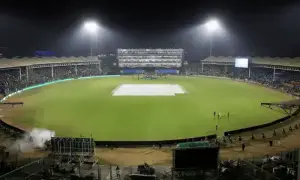
For five cricket grounds, including Shalimar, Diamond, National, Banigala, F-9 and Bhutto Cricket Ground, CDA will acquire the services of PCB for the preparation of pitches, provision of other facilities, and care of grounds.

The PCB will use these grounds for first-class cricket matches and for its other professional tournaments. Other than PCB events, the CDA said grounds will be available for local players.

When contacted, Member Environment Abdullah Khurram Niazi said: β€œThe grounds in question will remain part of CDA, PCB will repair, prepare pitches and will take care of these grounds and in return they will use them for PCB matches like first-class matches and grade II events. For the rest of the year, the grounds will be available for local players,” he said, adding that no individual will be allowed to charge a fee from CDA’s grounds and academies.

Civic agency retains control of grounds with PCB to only manage, prepare pitches for access to first-class, grade II events, says official

β€œWe have a complete plan for revamping cricket grounds and cricket academies in Islamabad,” he said, adding that CDA will get input from a couple of former test cricketers as well.

The member environment said the civic agency would also set up cricket academies for age-group cricketers, and the same would be outsourced through a competitive process with a fee cap to avoid exploitation. However, he said a dedicated academy for women’s cricket and children would be run by CDA itself.

β€œMoney-making from sports facilities is not our purpose; we want to provide maximum chances to youth to play cricket and other sports. We will take steps to ensure free grounds for club cricketers,” he said. However, he added that the CDA will charge corporate sectors for using these facilities, and β€œwe will ensure transparency in this process too through digitisation”.

Mr Niazi, who is also a former first-class cricketer, said besides cricket, special focus would also be paid on the promotion of football, hockey and other sports.

β€œCDA has large resources, which should be utilised for the betterment of citizens,” he said, adding that he has also planned a number of tournaments of various games.

β€œI am also planning to hold competitions sector-wise, like G-6 cricket or football team playing against G-7 teams. Hopefully, people of Islamabad will see major change in Islamabad,” Mr Niazi said, adding that on the direction of the interior minister and the chairman CDA, a number of sports activities have been planned.

It is relevant to note here that in the past, several cricket grounds of Islamabad were in possession of some individuals, who used to charge heavily, depriving professional cricketers.

However, some years ago, CDA retrieved all its grounds and started renting them out through online booking against Rs15,000 per day. Under this process, it was difficult for professional club cricketers and players associated with academies to arrange Rs15,000 per match. However, recently, CDA stopped renting out grounds.

Published in Dawn, June 11th, 2026

  • βœ‡Dawn Newspaper Pak
  • Literacy rate improves by 2pc, but education spending falls in 2025 none@none.com (Kashif Abbasi)
    ISLAMABAD: The literacy rate for individuals aged 10 and above in Pakistan rose from 61 to 63 per cent, while spending on education faced a decline, according to Economic Survey 2025-26. It stated that male literacy was 73pc and female at 54pc, reflecting a gradual progress and narrowing gender gap. Urban areas continued to have higher literacy rates with a total of 74 per cent (81 per cent for males and 68 per cent for females), while rural areas had a lower rate of 55 per cent (67 per cent for
     

Literacy rate improves by 2pc, but education spending falls in 2025

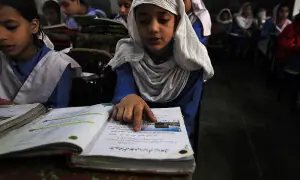
ISLAMABAD: The literacy rate for individuals aged 10 and above in Pakistan rose from 61 to 63 per cent, while spending on education faced a decline, according to Economic Survey 2025-26.

It stated that male literacy was 73pc and female at 54pc, reflecting a gradual progress and narrowing gender gap.

Urban areas continued to have higher literacy rates with a total of 74 per cent (81 per cent for males and 68 per cent for females), while rural areas had a lower rate of 55 per cent (67 per cent for males and 44 per cent for females).

Rural female literacy showed the most significant improvement. Punjab recorded the highest literacy rate at 68 per cent, followed by Sindh and Khyber Pakhtunkhwa, both at 58 per cent. Balochistan had the lowest rate at 49 per cent. The urban–rural divide persisted with urban Punjab at 78 per cent and rural Sindh at 39 per cent. Overall, the data highlighted steady but uneven progress with rural female literacy playing a key role in the observed improvements, despite continuing regional and gender disparities.

Expenditure

The survey stated that education expenditure stood at Rs962 billion during the financial year 2025 compared to Rs1251.06 billion in the previous year. Expenditure in year 2024-25 remained 0.8pc of GDP while in year 2022-23 it was recorded at 1.5pc of GDP. In 2021-22, it was 1.7pc of GDP, showing a constant decline.

In the year 2020-21, education expenditure was recorded at 1.4pc of GDP, while it was 1.9pc of GDP in 2019-20.

Meanwhile, the survey highlighted the issue of out-of-school children (OOSC), stating that OOSC in Pakistan had declined from 38 per cent in 2023 (male: 35 per cent, female: 42 per cent) to 28 per cent in 2025 (male: 25 per cent, female: 31 per cent), demonstrating significant progress across all provinces particularly in Balochistan where the proportion decreased from 69 per cent to 45 per cent, followed by Sindh (47 per cent to 39 per cent), Punjab (32 per cent to 21 per cent), and Khyber Pakhtunkhwa (30 per cent to 28 per cent).

Highlighting the issue of missing facilities, the report said around 65 per cent of schools in the country had access to electricity though there were disparities among provinces. Punjab and ICT have higher access, while Balochistan reports substantially lower coverage and therefore requires focused attention. Punjab and ICT also lead in the percentage of primary schools with water facilities, while Balochistan and AJK face challenges with only 23 per cent coverage. Toilet access in schools varies widely among provinces. Pakistan shows moderate access to boundary walls in schools with Punjab, Khyber Pakhtunkhwa and ICT at the forefront. As schools progress to higher levels, the availability of electricity, drinking water, toilets and boundary walls improves.

β€œEducation is the foundation of a better future for every child and a strong society. Pakistan’s large youth bulge can be transformed into a productive resource through effective investment in education. However, this requires improved access to quality and equity across all levels of education. In the face of demographic changes, technological advancements and governance challenges, education remains a vital tool for social stability and sustainable development. Recognising its importance, the government continues to prioritise the education sector through policy reforms and targeted investments,” read the report.

Published in Dawn, June 12th, 2026

❌
Subscriptions