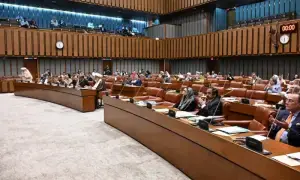
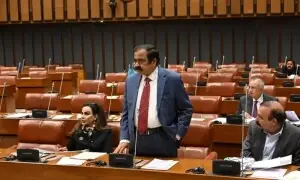
ISLAMABAD: Finance Minister Muhammad Aurangzeb on Friday laid a copy of the Finance Bill 2026 containing the Annual Budget Statement before the Senate amid a noisy protest by opposition members who chanted slogans rejecting the proposed budget.
Moving that the Senate make recommendations, if any, to the National Assembly on the bill as required under Article 73 of the Constitution, Mr Aurangzeb faced full-throated slogans from the opposition benches.
Senate Chairman Syed Yousaf Raza Gi
ISLAMABAD: Finance Minister Muhammad Aurangzeb on Friday laid a copy of the Finance Bill 2026 containing the Annual Budget Statement before the Senate amid a noisy protest by opposition members who chanted slogans rejecting the proposed budget.
Moving that the Senate make recommendations, if any, to the National Assembly on the bill as required under Article 73 of the Constitution, Mr Aurangzeb faced full-throated slogans from the opposition benches.
Senate Chairman Syed Yousaf Raza Gilani said members could submit notices for proposals, with reasons, to the Senate secretary by June 15.
“These recommendations should be with reference to the Finance Bill 2026 containing the Annual Budget Statement. Any recommendation having no relevance to the bill is outside the purview of Article 73 and hence not admissible,” the chairman explained.
Gilani sets June 15 deadline for proposals
Mr Gilani said that a member could not propose changes relating to expenditure charged upon the Federal Consolidated Fund under Article 82(1).
Proposals for the Finance Bill will be sent to the Senate Standing Committee on Finance and Revenue.
Recommendations pertaining to the PSDP will go to the Standing Committee on Planning, Development and Special Initiatives, which must forward them to the finance committee by June 17. The finance committee will incorporate those recommendations and present its report to the House by June 18.
The Senate will discuss the bill and adopt the committee’s report, making final recommendations to the National Assembly on June 19.
Parliamentary party leaders have been asked to provide names of their speakers in order of preference. As decided by the Business Advisory Committee, the Leader of the Opposition will open the budget debate. Party leaders may speak for up to 15 minutes, other members for up to 10 minutes.
The chairman said that guidelines for submitting budgetary recommendations had been placed on members’ desks, and the Pakistan Institute of Parliamentary Services had set up a budget desk at the National Assembly secretariat to assist lawmakers during the session. USB drives containing complete budget documents, provided by the government, were also placed on members’ tables.
At the outset, the Senate chairman welcomed Jian Chan, Jun Gochu and other delegates from the World Peace Forum of China.
ISLAMABAD: The Federal Investigation Agency (FIA) has taken action against over 100 officials for collusion with human smugglers since the 2023 Greece boat tragedy, the National Assembly’s Standing Committee on Interior and Narcotics Control was informed on Tuesday.
At least 209 people drowned and hundreds more were feared dead or missing after their overloaded boat capsized and sank in the open seas off Greece, in one of Europe’s deadliest shipping disasters in June 2023.
Briefing the committee
ISLAMABAD: The Federal Investigation Agency (FIA) has taken action against over 100 officials for collusion with human smugglers since the 2023 Greece boat tragedy, the National Assembly’s Standing Committee on Interior and Narcotics Control was informed on Tuesday.
At least 209 people drowned and hundreds more were feared dead or missing after their overloaded boat capsized and sank in the open seas off Greece, in one of Europe’s deadliest shipping disasters in June 2023.
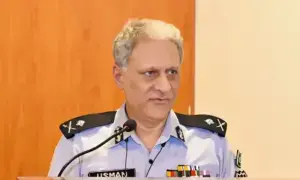
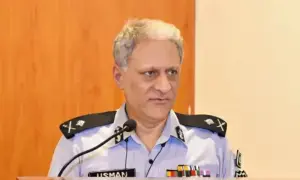
Briefing the committee today, FIA Director General Dr Usman Anwar said 132 enquiries were initiated, leading to 68 major and 36 minor penalties for officials who failed to follow the standard profiling mechanism and facilitated illegal migration.
He said 22,136 passengers were offloaded in 2026 after a strict assessment based on risk profiles. Deportations have also declined, with cases involving fake or forged documents dropping from 281 in 2024 to 13 so far in 2026.
“In 2024, a total of 35,459 passengers were offloaded, whereas deportations neared 68,877. In 2025, 39,786 were offloaded and deportations fell to 57,560,” Dr Anwar said.
“Due to strict profiling, deportation on fake documents has declined sharply.”
International concerns
The DG cited multiple concerns raised by international partners, including boat tragedies in the Mediterranean during smuggling attempts, illegal border crossings into the EU, and abuse of study visas in the UK and Cyprus.
“Pakistan is the 3rd largest student visa-receiving country of the UK, but around 10,000 misuse visas through asylum claims,” Dr Anwar said.
Eight UK universities have reportedly restricted student visa sponsorships for Bangladeshi students, while the UK has imposed restrictions on visa issuance for Afghanistan, Cameroon, Myanmar and Sudan, citing study visa abuse.
High-level EU delegations had also raised concerns over illegal migration, including crossings from Belarus into Poland. “Five hundred and eighty Pakistanis have not returned from Belarus,” he said.
Passengers departing for Cyprus on study visas often reroute to enter the EU, while Senegal and Mauritania routes are used to reach Spain’s Canary Islands.
Other challenges included beggary in GCC countries and stranded Pakistanis in Cambodia.
From 2024 to 2026, 24,922 passengers travelled to Cambodia, and 3,312 did not return to Pakistan. Many were working in scam operations or were subjected to bonded labour.
“Eighty per cent of travellers were on visit or tourist visas,” he said. Similarly, 7,721 passengers did not return from Azerbaijan, with 70 per cent on visit visas.
Dr Anwar revealed that attempts were made to use fake blue passports for travel to a third country, mainly originating from Dubai, Abu Dhabi and Qatar. He added that 175 individuals deported last month had travelled to Malaysia and Azerbaijan on valid visas.
“Screening was the only way to prevent illegal migration, and a free-for-all cannot be allowed,” said DG FIA.
Policy measures
The Prime Minister’s Office (PMO) issued eight directives to curb human smuggling, while a committee formed after the 2023 incident recommended enhanced vigilance on travel to high-risk countries from hotspot districts.
To address grievances, Standing Order No 02/2026 introduced a formal appeal and review mechanism for offloaded passengers.
“Supervisory scrutiny and documented reasons are mandatory,” Dr Anwar said. Continuous oversight of offloading decisions is maintained, and actions are taken only on approved risk indicators.
Citing Frontex data, the DG said illegal migration towards Europe declined by 26pc in 2025, with a 64pc drop recorded in January–February 2026 compared to the same period in 2025.
Deportations due to organised begging fell by 75pc in 2025, while deportations for fake or forged documents dropped by 31pc. Overall deportations were down 16pc in 2025, he said.
“The International Centre for Migration Policy Development, an EU-based organisation, has acknowledged Pakistan’s efforts against human smuggling and trafficking,” added Anwar.
Tech upgrades
The FIA is working on Advance Passenger Information and Passenger Name Record data for pre-risk assessment, e-gates for automated immigration control, and a mobile application for data collection called eIMMI.
“The IBMS and IT sections are being restructured in line with global standards,” said DG FIA, adding that a National Command and Control Centre is planned for integration of databases at airports, seaports and land border crossings.
An official from the Immigration and Passports Department (IMPAS) told the panel that 57,510 deportees are currently on the Passport Control List (PCL), commonly known as the black list.
It is a confidential register maintained by IMPAS that bars designated individuals from obtaining, renewing or using a Pakistani passport due to legal, security, criminal or administrative reasons.
Director Policy Shahid Riaz Gujjar said names are placed on the PCL under Rule 22 of the Passport Rules 2021 on written recommendations from Pakistani missions abroad or agencies such as Interpol, based on reports from host-country authorities.
He said names placed on the PCL on the recommendations of agencies, departments and courts are removed upon receipt of specific directions from the same forums.
The normal period of retention is five years, but it can be extended with justification.
Under SOPs issued by the Interior Ministry on March 11, 2025, individuals deported before May 8, 2023 should not be placed on the PCL as the two-year period has already lapsed. Those deported after May 8, 2023 will remain on the list for five years.
Persons deported for overstaying who later obtained a valid work visa or work permit will also not be placed on the PCL.
A committee constituted by the Ministry of Interior to review PCL policy has submitted its recommendations for approval.
The official further added that approvals for the issuance of passports against third and fourth lost passports were stopped “for further scrutiny” due to possible concealment of facts and misuse. Such cases are handled under Rule 15 of the Passport Rules 2021.
A separate committee was formed to propose policy on pending cases and its recommendations are awaiting approval.
Minister of State Tallal Chaudhry told the committee that there are restrictions on the issuance of a fresh travel document after the third or fourth lost passport.
“Many individuals report the loss of a second passport within a month. The IDs are sold and misused, bringing a bad name to the country,” he said.
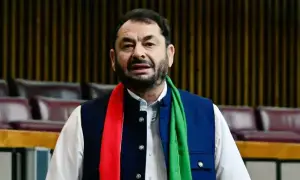
ISLAMABAD: The National Assembly (NA) on Thursday suspended PTI lawmaker Muhammad Iqbal Khan Afridi for the entire upcoming budget session, with Speaker Sardar Ayaz Sadiq accusing him of repeatedly violating the sanctity of the House through “inappropriate and unparliamentary” conduct.
Finance Minister Muhammad Aurangzeb will present the federal budget for the next fiscal year (FY26–27) in the NA on Friday.
“Iqbal Khan has violated the sanctity of the House multiple times through his inappropria
ISLAMABAD: The National Assembly (NA) on Thursday suspended PTI lawmaker Muhammad Iqbal Khan Afridi for the entire upcoming budget session, with Speaker Sardar Ayaz Sadiq accusing him of repeatedly violating the sanctity of the House through “inappropriate and unparliamentary” conduct.
Finance Minister Muhammad Aurangzeb will present the federal budget for the next fiscal year (FY26–27) in the NA on Friday.
“Iqbal Khan has violated the sanctity of the House multiple times through his inappropriate and unparliamentary behaviour,” the speaker said. He added that multiple complaints had been received about the lawmaker’s abuse of NA employees.
Sadiq said the MNA had also behaved improperly with the NA’s director general (media) and security officials.
“No leniency can be shown to such a member,” he remarked, before directing the sergeant-at-arms to remove the lawmaker from the hall.
The speaker further alleged that Khan had misbehaved with security personnel outside Parliament and had been involved in a scuffle with police at a checkpoint near Serena Hotel.
“Through his threatening conduct, Muhammad Iqbal Khan has undermined all parliamentary traditions,” he said, adding that the member had “misused his office”.
The MNA has been barred from entering Parliament House and its premises for the duration of the budget session.
The suspension followed a motion moved by PML-N legislator Farah Naz Akbar, which the House approved by a majority vote.
“During the proceedings of the National Assembly on April 3, 2026, Muhammad Iqbal Khan, MNA, was observed using abusive language towards the director general media of the National Assembly Secretariat and issuing threats. On multiple occasions, he has also misbehaved with police and security personnel deployed for security duties within the Secretariat as well as with the chair.”
“Furthermore, on May 13, 2026, he undermined the authority of the chair and lowered the dignity of Parliament by using abusive and threatening language against fellow members, thereby disrupting the decorum and discipline of the House. His conduct is unbecoming of a parliamentarian as he has repeatedly violated the sanctity of the House, disregarded the authority of the chair and willfully obstructed the proceedings and contravention of the rules.
“In view of the above, I hereby name him under Rule 21 of the Rules of Procedure and Conduct of Business in the National Assembly 2007,” the motion read out by Farah said.
The speaker elaborated that the suspended MNA would not receive any allowances, including travelling and daily allowances, for the session.
“Leave the House yourself; if you do not leave yourself, security personnel will forcibly take you out,” Sadiq told Afridi, who later left the House.
Minister of State for Interior Tallal Chaudhry informed the House that Iqbal Afridi’s son had applied for political asylum in Italy on a blue passport. The speaker referred the matter to the Standing Committee on Interior.
The sitting began under the speaker’s chairmanship but was briefly adjourned after Afridi pointed out the lack of quorum at the outset. Members were counted and the House was found short of the required number.
When the session resumed, Afridi again raised the issue of quorum. This time the count was complete. On his third attempt, the speaker ignored the call. “A quorum cannot be pointed out every half hour,” Sadiq said. “Even quorum has rules.”
When PTI Chairman Barrister Gohar Ali Khan sought the floor during the proceedings, the speaker said Afridi “would not be forgiven” if PTI members backed him.
Speaking in the House, Gohar said the PTI was the “largest party among 175 parties” and demanded a ruling from the speaker on arranging a meeting with its “founding chairman”, as opposition members staged a walkout from the NA.
Gohar said the party had earlier demanded a committee of the House under Syed Khursheed Shah. “When members of Parliament’s issues are not resolved, then who do we talk to?” he asked.
He added that the committee had met twice and no meeting had been called since. “For the past 34 weeks, we have not been allowed to meet the founder,” he said.
“We still miss Omar Ayub, Sahibzada Hamid Raza, Zartaj Gul and others today,” he added, referring to key PTI leaders sentenced last year to 10 years in prison in a case pertaining to the May 9, 2023 riots.
“We want a ruling from the speaker on this matter,” Gohar said. “If our voice is not heard, then we have called a joint parliamentary party meeting. If we are not heard, then we will decide the future.”
He asked the speaker to decide by tomorrow whether a meeting would be arranged or not. Following his speech, opposition members walked out of the House in protest.
Responding to the point, Sadiq said: “If they were members of the National Assembly, I would have issued their production orders.”
He said that three meetings had been arranged. “You yourselves broke that chain,” the speaker said, adding that the government no longer wanted to talk either.
Meanwhile, Defence Minister Khawaja Asif called on all political parties to respect the sanctity of Parliament, warning that political disputes should not be allowed to weaken democratic institutions.
Speaking in the National Assembly, he said leaders of the PPP and PML-N had endured imprisonment and political victimisation in the past but “never compromised on the dignity of Parliament”.
Despite facing legal and political challenges, he said, they used constitutional and legal forums for protest rather than disrupting institutions. Members of the Sharif family, too, had faced court cases, “but the democratic system was not undermined”, he added.
Taking aim at the PTI, the defence minister said the party had disrupted House proceedings for the past two years by tying its participation to its leader’s imprisonment.
“Institutions and the country are more important than individuals. Personalities come and go, but Pakistan remains,” he said.
Asif said parties were within their rights to seek legal and political relief for their leaders, but blocking parliamentary business weakened democracy. Legislation, he stressed, was Parliament’s core responsibility and protests must remain within democratic norms.
He claimed that many PTI lawmakers also wanted smooth proceedings, but repeated disruptions had damaged Parliament’s credibility.
ISLAMABAD: The Senate has surrendered Rs1.436 billion to the national exchequer after a year-long austerity drive, exceeding the Finance Division’s target by 500 per cent and setting what officials called a new benchmark for fiscal discipline.
The amount makes up 15.9pc of the upper house’s total budget for 2025-26, according to a statement issued by the Senate Secretariat on Monday.
Senate Chairman Syed Yousaf Raza Gilani ordered the expenditure rationalisation programme within his own office b
ISLAMABAD: The Senate has surrendered Rs1.436 billion to the national exchequer after a year-long austerity drive, exceeding the Finance Division’s target by 500 per cent and setting what officials called a new benchmark for fiscal discipline.
The amount makes up 15.9pc of the upper house’s total budget for 2025-26, according to a statement issued by the Senate Secretariat on Monday.
Senate Chairman Syed Yousaf Raza Gilani ordered the expenditure rationalisation programme within his own office before extending it across the secretariat. Gilani said the Rs1.436bn represented “actual, realised savings” and not projected cuts or deferred liabilities.
Among the measures, the Senate suspended 17 of the 18 procurement projects approved by its finance committee. Recruitment and non-essential spending were rationalised, while administrative overheads and operational costs were placed under “strict scrutiny”.
The official transport fleet was “substantially grounded”, fuel allocations were capped and monitored, and refreshments at meetings were discontinued. Committee proceedings were shifted to digital and virtual platforms to cut logistics costs and all non-essential foreign visits were suspended.
Despite an allocation of Rs60m for new vehicles this year, “not a single vehicle was procured”, the statement said. Additionally, on the chairman’s proposal, the Senate Finance Committee decided to forgo the allocation for the replacement of condemned official vehicles in the next fiscal year, a move expected to save a further Rs140m.
“Public office is a sacred fiduciary trust,” Gilani was quoted as saying. He added that the austerity drive was not a one-time exercise but part of a continuing commitment to “responsible governance and fiscal prudence”.
“Every rupee saved is a rupee returned to the people of Pakistan, in whose trust public resources are held,” the chairman said.
By placing the figures on public record, the Senate said it aimed to promote confidence in state institutions at a time when “economic prudence and efficient utilisation of public funds are national imperatives”.
“These savings are the cumulative result of sustained reforms and disciplined financial management undertaken over time. By placing these figures on public record, the Senate seeks to promote transparency, accountability, and public confidence in state institutions,” the statement said.
The chairman has made it clear that this is not a one-time initiative but part of a continuing commitment to responsible governance, fiscal prudence, and the highest standards of public service.
“Every rupee saved is a rupee returned to the people of Pakistan, in whose trust public resources are held,” Gilani was quoted as saying.
Separately, the National Assembly Secretariat has saved Rs4.5bn — or 27.3 per cent of its budget — for the current financial year through austerity measures, right-sizing and institutional modernisation, according to Speaker Sardar Ayaz Sadiq.
ISLAMABAD: Federal Investigation Agency Director General Dr Usman Anwar on Monday said that offloading was a “lawful, preventive, and protective measure” used only where credible risk indicators exist.
“The objective is to facilitate lawful travel while protecting the country’s citizens, safeguarding human lives, countering organised criminal networks, and preserving the country’s international reputation,” the FIA chief said while talking to reporters here.
ISLAMABAD: Federal Investigation Agency Director General Dr Usman Anwar on Monday said that offloading was a “lawful, preventive, and protective measure” used only where credible risk indicators exist.
“The objective is to facilitate lawful travel while protecting the country’s citizens, safeguarding human lives, countering organised criminal networks, and preserving the country’s international reputation,” the FIA chief said while talking to reporters here.
Dr Anwar said the FIA has intensified intelligence-led passenger screening at international airports, bringing illegal migration through Malawi to “zero” and cutting irregular flows to the EU by 64 per cent in early 2026. He said the measures target human smuggling, trafficking and visa abuse, and are meant to protect people from “exploitation, detention, deportation, trafficking, and loss of life on dangerous migration routes,” not to restrict genuine travel.
He said his agency has identified Belarus, Cyprus, Central Asian states and certain Eastern European transit corridors as routes “increasingly exploited by organised human smuggling networks” for onward illegal migration to Europe, he said. Malawi also emerged as a high-risk transit hub in 2025. Criminal facilitators, the DG said, lure vulnerable people with false promises of jobs, education, settlement and legal migration.
The FIA’s Annual Risk Analysis Report 2025 listed Southeast Asian cyber-trafficking, organised migrant smuggling networks, and transit migration through Eastern Europe and Central Asia as critical threats. It also noted a rising trend of migration and deportation to Central Asian countries among young residents of Khyber Pakhtunkhwa, besides hotspot districts of Punjab.
• Sanaullah says 12 reserved seats represent families displaced from held Kashmir• Opposition alleges ‘massive rigging’ in GB elections; PTI stages walkout• Minister tells lawmakers Rs5.4bn disbursed in fuel subsidy• House unanimously passes five bills
ISLAMABAD: Adviser to the Prime Minister on Political and Public Affairs Rana Sanaullah on Wednesday told the Senate that 12 reserved seats for refugees in the Azad Jammu and Kashmir (AJK) Legislative Assembly would not be abolished, saying they r
• Sanaullah says 12 reserved seats represent families displaced from held Kashmir • Opposition alleges ‘massive rigging’ in GB elections; PTI stages walkout • Minister tells lawmakers Rs5.4bn disbursed in fuel subsidy • House unanimously passes five bills
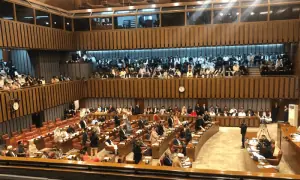
ISLAMABAD: Adviser to the Prime Minister on Political and Public Affairs Rana Sanaullah on Wednesday told the Senate that 12 reserved seats for refugees in the Azad Jammu and Kashmir (AJK) Legislative Assembly would not be abolished, saying they represented families displaced from India-occupied Kashmir.
Responding to a point raised by the upper house’s opposition leader, Allama Raja Nasir Abbas, Sanaullah said the seats could not be abolished through executive orders.
He added that all political parties in AJK, its parliament and other constitutional forums supported retaining refugee representation within the constitutional framework.
The adviser said the government had accepted 37 of the 38 demands put forward by the Jammu Kashmir Joint Awami Action Committee (JAAC).
“The government remained engaged with JAAC for several months,” he said, adding that a written agreement was signed after negotiations on 37 demands.
“The sole outstanding demand concerning refugee seats in the AJK Legislative Assembly involved constitutional and legal complexities,” he told the House.
On June 5, the AJK government designated JAAC a proscribed organisation under anti-terrorism laws.
Sanaullah said JAAC had initially emerged in 2023 with demands relating to electricity tariffs and wheat subsidies.
He added that the government addressed the committee’s major demands by providing electricity at Rs4 per unit, subsidised wheat and a Rs23 billion relief package for the region. He alleged that certain elements sought to create instability ahead of the upcoming elections in AJK despite repeated offers of dialogue.
“They knew the polls are due before August 4 and gave a call for protest on June 9 back in January,” he said, adding that peace and stability in AJK would be maintained in accordance with the law.
‘Massive rigging’
Opposition leader Raja Nasir Abbas alleged “massive rigging” in Gilgit-Baltistan’s June 7 general elections, saying the results were “against the wishes of the people”.
He warned that “rigging weakened public confidence” and said “creating a distance between the people and the system” would have dangerous consequences. He also referred to recent unrest in AJK, saying political interference would bring further turbulence.
“The ban on information gives rise to rumours and turbulence,” he said, adding that the people of GB had concerns about the “occupation of land and minerals by outsiders”.
After Deputy Chairman Syedaal Khan Nasar did not allow the opposition leader to continue speaking on the issue, PTI members staged a protest walkout. The deputy chairman said the opposition leader should contact the GB Election Commission if he had complaints.
Fuel subsidy
Finance Minister Muhammad Aurangzeb told the House that the government would continue efforts to protect low-income groups from higher fuel prices while maintaining economic stability.
Responding to a calling-attention notice by Senator Mohsin Aziz, he said Rs5.4bn had been disbursed so far under a targeted fuel subsidy programme, besides Rs4.61bn in support for small farmers amid rising international fuel prices.
He said an overall subsidy of Rs129bn was provided after tensions in the Middle East pushed up global oil prices. The government shifted from a general subsidy to a targeted programme for motorcycle owners, public transport users, transport operators and small farmers.
Around 800,000 motorcycle owners had benefited, while financial assistance ranging between Rs35,000 to Rs100,000 was provided to passenger and goods transport vehicle owners.
In the first phase, Rs3.5bn was distributed among more than 105,000 vehicle owners, while Rs1.9bn was disbursed among over 65,000 beneficiaries in the second phase through a transparent verification system.
The House unanimously passed five bills: the Motion Pictures (Amendment) Bill, the Travel Agencies (Amendment) Bill, the Pakistan Tourist Guides (Amendment) Bill, the Pakistan Hotels and Restaurants (Amendment) Bill, and the Pakistan International Airlines Corporation (Conversion) (Repeal) Bill.

 Login
Login