Normal view

  • ✇Popular Science
  • Can poppy seeds actually make you fail a drug test? RJ Mackenzie
    The opium poppy (Papaver somniferum) has a weird double life. The plant’s seeds give a tasty, nutty flavor to bagels, breads, and cakes in bakeries around the world. But the plant’s seed pods also give the class A drug heroin its numbing and euphoric effects.  That’s because the seed pods exude a milky substance called latex, which is rich in natural chemicals called opiates, such as morphine. Dried-out poppy latex is called opium, and the chemicals it contains can be used as medical-grade pa
     

Can poppy seeds actually make you fail a drug test?

2 June 2026 at 13:06

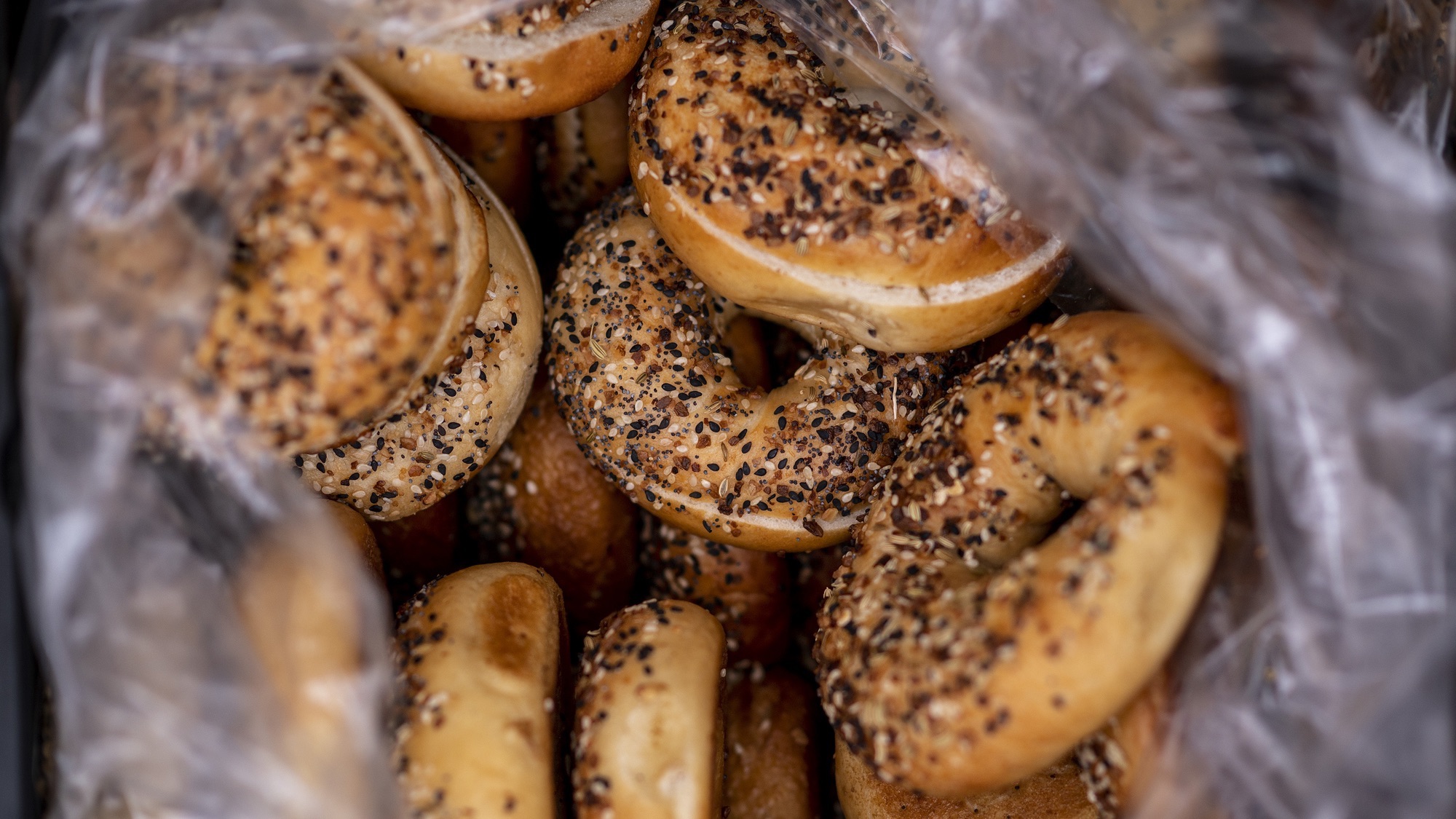
The opium poppy (Papaver somniferum) has a weird double life. The plant’s seeds give a tasty, nutty flavor to bagels, breads, and cakes in bakeries around the world. But the plant’s seed pods also give the class A drug heroin its numbing and euphoric effects. 

That’s because the seed pods exude a milky substance called latex, which is rich in natural chemicals called opiates, such as morphine. Dried-out poppy latex is called opium, and the chemicals it contains can be used as medical-grade painkillers or processed to make street drugs like heroin. 

This doesn’t mean that your next deli bagel is going to send you into a stupor, because processed poppy seeds are carefully washed of any residual latex. But the washing process isn’t so thorough as to remove all traces of opiates from your body. Here’s why anyone in a job that requires random drug tests should try their next bowl of porridge without adding any black little poppy seeds. 

Processing a poppy plant

The round structure that sits on top of a poppy plant’s stem is called a capsule. This is a pod that contains hundreds of tiny poppy seeds. The plant produces opiates, like morphine, codeine, and thebaine, within the capsule to help it grow. These are contained in the milky latex, which will drip from the pod if it’s broken or cut. 

A single poppy pod typically holds hundreds of tiny poppy seeds. Video: Poppy Seed Harvest!, @Freedom_Flare

During harvesting, poppies that have died and dried out are mechanically harvested, removing the above-ground portion of the plant. Crushing, sieving, or other cleaning techniques separate the seeds from the seed capsules. The seeds that later end up on our bagels and breads are washed seeds, meaning they are carefully cleaned after being separated from their seed capsules to remove any opiate-containing latex. 

This process means there isn’t any risk of getting high from washed poppy seeds. However, drug tests are incredibly sensitive, and these washed seeds may still trigger a positive result from trace chemicals

Urbah Viqar, a doctor at Central and Northwest London NHS Foundation Trust, says that if you eat “one to two teaspoons” of poppy seeds, then you could return a positive opiate result. Given that some poppy seed bagel recipes recommend sprinkling a teaspoon of seeds on a single bagel, these breakfast treats should be treated with caution if you might be tested for drugs. 

Importantly, opiates like morphine stay in your system for several days, so avoiding poppy seeds for a while before a drug test is a good idea, Viqar says. Some companies have developed low-opiate poppy seed blends to allow bagel enjoyers to get their fix without risks. 

But this isn’t the whole story. If you eat unwashed poppy seeds, the effects are radically different. 

Yes, you get high off unwashed poppy seeds

In 2023, Viqar heard reports that men were reporting to their family doctors complaining of constipation. These patients, mainly from the local Indian Punjabi community, weren’t blocked up by a lack of fiber. Instead, their symptoms were a consequence of their unwashed poppy seed addiction. 

Viqar explains that in some communities, unwashed poppy seeds have been a traditional remedy for generations. Without washing, the seeds retain the opiate-rich latex released during harvesting. As a result, consuming them can make you feel sleepy and relaxed. 

But opiates are, of course, highly addictive. Viqar and her colleague Noah Stanton, who is also a doctor at Central and Northwest London NHS Foundation Trust, wrote a review summarizing the cases of 16 men, nearly all from the Indian Punjabi community, who had become addicted to unwashed poppy seeds. 

“They start with a very small amount, maybe they’re just taking half a teaspoon,” explains Viqar. Many of the men would grind the seeds and consume them as a dry powder, or mixed with water, or brew them as tea. 

The effects of the unwashed seeds are milder than a powerful opioid like heroin, but that made the patients’ addiction more “insidious,” says Stanton. “It took place over a much more gradual time period,” he adds. The unwashed seeds produce a drowsy, sedative effect. 

But by the time Viqar and Stanton saw them, some of the men had seriously ramped up their poppy habit. Two men, who had each been consuming unwashed poppy seeds for over 15 years, were taking 20 tablespoons of seeds every single day. That dose would contain enough opiates to make someone without a strong tolerance overdose, said Viqar. 

Related 'Ask Us Anything' Stories

The risks of too many poppyseeds

An opiate overdose would likely slow breathing until the heart stopped. Viqar wasn’t able to point to any cases she was aware of where people had died from unwashed poppy seeds, but said that there was little research into what a safe limit might be. 

“You don’t know how much is a safe amount, how much is a lethal amount,” she explained. Long-term addiction could also impact a patient’s social life and relationships, said Stanton. Several of the men in the study worked with heavy machinery, which tends not to play well with opiate-related drowsiness. 

Both Viqar and Stanton said that better regulation was badly needed. Unwashed poppy seeds can be purchased in bulk in the United Kingdom and the United States at low prices. Awareness among clinicians would also help, they added. Drug screening questionnaires regularly ask about alcohol and drug consumption. A new question to add to the list, Viqar says, is “Have you ever used poppy seeds?”

In Ask Us Anything, Popular Science answers your most outlandish, mind-burning questions, from the everyday things you’ve always wondered to the bizarre things you never thought to ask. Have something you’ve always wanted to know? Ask us.

The post Can poppy seeds actually make you fail a drug test? appeared first on Popular Science.

  • ✇Popular Science
  • What did T. rex’s breath smell like? RJ Mackenzie
    Imagine the world millions of years ago. You’re in forest clearing bordered by tall conifers. Suddenly, the trees part and a Tyrannosaurus rex stomps into view. As it gets closer, the air fills with the smell of fear. And the smell of T. rex. It’s pretty pungent. But what exactly did T. rex’s breath smell like? Experts reckon it wasn’t pleasant.  In 2018, the Field Museum in Chicago opened a new exhibit centered around Sue, a 13-foot-tall, 40-foot-long T. rex fossil. Sue is one of the most co
     

What did T. rex’s breath smell like?

11 June 2026 at 13:01

Imagine the world millions of years ago. You’re in forest clearing bordered by tall conifers. Suddenly, the trees part and a Tyrannosaurus rex stomps into view. As it gets closer, the air fills with the smell of fear. And the smell of T. rex. It’s pretty pungent. But what exactly did T. rex’s breath smell like? Experts reckon it wasn’t pleasant. 

In 2018, the Field Museum in Chicago opened a new exhibit centered around Sue, a 13-foot-tall, 40-foot-long T. rex fossil. Sue is one of the most complete T. rex fossils ever found, and Ben Miller, an exhibition developer at the museum, wanted to make Sue’s exhibit as immersive as possible by stimulating visitors’ senses, including their sense of smell. 

“Everybody knows what a T. rex is about, but have they considered what its breath smells like?” he asks Popular Science

T. rex had very stinky breath

The exhibit incorporated a total of four different scents. Three were plant odors, and the fourth represented Sue’s breath. This last smell was, in short, awful. 

T. rex has fairly widely spaced teeth,” says Miller. “It would be eating mostly by swallowing things whole, and the result of that would probably be that it got a lot of bits of meat stuck in its mouth for long periods of time.” 

"Sue" the Tyrannosaurus Rex skeleton on exhibit in great entrance hall of the filed Museum, Chicago.
“Sue,” the most complete Tyrannosaurus Rex fossil ever found, on exhibit in great entrance hall of the Field Museum in Chicago. Image: Getty Images / Richard T. Nowitz

The team aimed to fashion a rotting meat smell to recreate this slightly unhygienic oral arrangement. The solution came from an unlikely source. 

“As it turns out, the way you can get that is there is a synthetic rotting corpse smell that is produced to train disaster response dogs.” 

The corpse stink was, at first, slightly too repulsive to unleash on the Field Museum’s unsuspecting visitors, so it was toned down slightly. 

What did a Late Cretaceous forest smell like?

Sue likely was too busy hunting to notice she was very much in need of a breath mint. But the massive dinosaur certainly would’ve been able to smell the world around her with great accuracy. So what did Sue’s forest world smell like?

While the fauna of this ancient world was different from ours, we can find approximations of many of these long-gone scents today. 

The other three scents Miller developed for the Field’s exhibit reflected the prehistoric forests T. rex once stalked across North America. In fact, the scents are more familiar than you might think. 

“By this point in time, 66 million years ago, flowering plants had pretty much taken over,” says Miller. To recreate the smell of the ancient forest, the team used three scents: ginger root, tulip poplar, and cypress.

The smells have been a part of Sue’s exhibit ever since, and have proved a hit with kids visiting the museum. 

Landscape painting of prehistoric rainforest
This illustration shows the lush temperate rainforest that sprung up on Antarctica during the Cretaceous. Image: Alfred-Wegener-Institut / J. McKay / CC-BY 4.0

What did dinner smell like to T. rex?

The Field isn’t the only museum to send visitors’ noses back in time. The Children’s Museum of Indianapolis’s Dinosphere exhibit incorporates scents into its immersive world, which transports visitors back to the Late Cretaceous period between 68 and 66 million years ago. 

In part of this display, a kiosk asks visitors to choose between three scented containers and decide which one represents something a T. rex would want to eat. 

Melissa Pederson, an exhibit developer at the Children’s Museum of Indianapolis, says that two scents were plants—magnolia and pine—which would be of little interest to the carnivorous T. rex

Pederson’s team wanted the third scent to mimic the dung of the duckbill dinosaur, Hadrosaurus. Pedersen says that the museum contacted a scent fabricator, who recommended that the best way to mimic the droppings of this large, plant-eating beast would be to use the scent excreted by a non-extinct, similarly large vegetarian. The team ended up with a jar of elephant dung scent. 

The jar’s odor wasn’t totally unpleasant, says Pederson. It’s “kind of a sweet scent,” she explains. 

Pederson says her museum’s scent experiments help immerse visitors in its exhibits. 

“It’s always the goal, in at least some capacity, to evoke emotion in our spaces.” 

Opening a window into a time long past, only to discover that some scents persist for millions of years, consistently draws a reaction from the kids and families exploring the museum. 

“In a lot of our spaces, the emotions we try to evoke are surprise and delight. We see a lot of that,” Pederson says.

In Ask Us Anything, Popular Science answers your most outlandish, mind-burning questions, from the everyday things you’ve always wondered to the bizarre things you never thought to ask. Have something you’ve always wanted to know? Ask us.

Related 'Ask Us Anything' Stories

The post What did T. rex’s breath smell like? appeared first on Popular Science.

❌
Subscriptions